BTC $79,198.69 -0.47%
ETH $2,490.19 +0.39%
BNB $743.83 +0.15%
XRP $1.40 -0.86%
SOL $104.69 -1.12%
TRX $0.3348 -0.04%
DOGE $0.0905 +2.13%
ADA $0.2218 +2.01%
BCH $262.23 +2.57%
LINK $13.06 +7.16%
HYPE $86.82 -2.58%
AAVE $133.16 -0.69%
SUI $0.8270 +4.31%
XLM $0.1922 +4.47%
ZEC $1,175.26 +0.81%
BTC $79,198.69 -0.47%
ETH $2,490.19 +0.39%
BNB $743.83 +0.15%
XRP $1.40 -0.86%
SOL $104.69 -1.12%
TRX $0.3348 -0.04%
DOGE $0.0905 +2.13%
ADA $0.2218 +2.01%
BCH $262.23 +2.57%
LINK $13.06 +7.16%
HYPE $86.82 -2.58%
AAVE $133.16 -0.69%
SUI $0.8270 +4.31%
XLM $0.1922 +4.47%
ZEC $1,175.26 +0.81%

release

All
Article
Flash

Arthur Hayes released the FLOP yellow paper, planning to airdrop all tokens

Arthur Hayes released a new project FLOP white paper on social media. FLOP is a proof of useful inference (PoUI) blockchain and native currency aimed at the agent economy, where AI agents can use FLOP to pay miners for inference fees. The network adopts an architecture that combines PoUI with account-based chains, where agents submit session requests to the memory pool containing model weight hashes, maximum latency, computational load, confidentiality flags, and fees. Miners complete the inference and return proofs, which validators incorporate into blocks to complete settlements.The initial supply of FLOP is approximately 2.48346 billion tokens, all allocated for airdrops, with no VC pre-mining or auctions. The first phase of reward distribution allocates 75% to miners, 10% to validators, 10% to agents, and 5% to regular stakers. The average block time for the network is 1 second, with a roadmap goal of sub-second block times. The initial block reward is 96 FLOP, halving every 730 days, for a total of five halvings, after which it will permanently remain at 3 FLOP.The maximum number of validators is capped at 1,000, with approximately 50 rotating monthly based on verified workload and online rates. Miners and validators must stake FLOP, and malicious behavior may face penalties of up to full forfeiture and bans. Governance is conducted through FLOP improvement proposals, requiring a two-thirds approval from active validators in most cases.

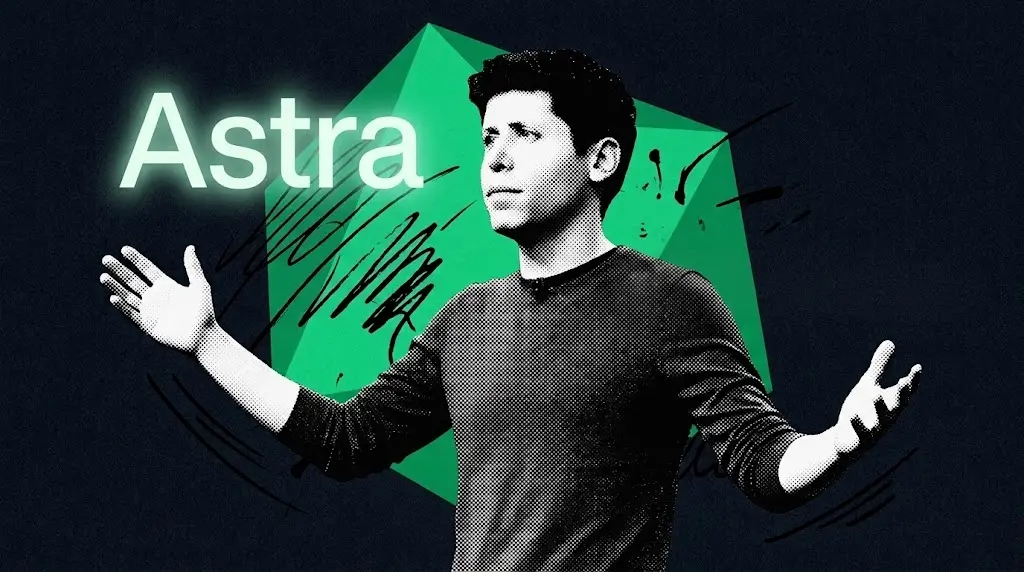
first_img OpenAI released GPT-6 Astra, calling it the arrival of the AGI era

OpenAI officially released GPT-6 Astra on Thursday, with President Greg Brockman calling it a "generational leap in capability" during the press conference, and believing that the model has reached the standard of Artificial General Intelligence (AGI), meaning that artificial intelligence can match or exceed human capabilities. Brockman stated, "Welcome to the era of AGI." If this judgment holds, it means AI entities will be closer to performing reasoning tasks in various complex tasks that humans can do, and even more.GPT-6 Astra is OpenAI's first model to cross the "critical" threshold under its internal danger capability scoring system, the Preparedness Framework, which means it can independently discover previously unknown software vulnerabilities (i.e., zero-day vulnerabilities) without gradual human supervision and chain them into attacks that can run in hardened systems. In testing, the model achieved a score of 100% on the ExploitBench benchmark; to rule out inflated scores due to memory answers, OpenAI conducted a second test using 20 recent vulnerabilities from the Google V8 JavaScript engine. Astra not only surpassed the previous generation GPT-5.6 Sol but also discovered and chained two previously unknown zero-day vulnerabilities, which are still being disclosed to the affected parties.Due to its high autonomy, the monitoring difficulty of Astra has also increased. OpenAI acknowledges that in tests assessing its ability to evade supervision, the model is more difficult to track than previous systems.
app_icon
ChainCatcher Building the Web3 world with innovations.