BTC $61,197.20 +0.41%
ETH $1,724.15 +0.10%
BNB $557.80 +0.16%
XRP $0.9351 +0.83%
SOL $72.70 +3.50%
TRX $0.3093 +1.28%
DOGE $0.0566 +2.49%
ADA $0.1476 +1.95%
BCH $199.98 +0.81%
LINK $8.99 +1.98%
HYPE $64.36 +2.36%
AAVE $97.15 -1.06%
SUI $0.6734 +2.65%
XLM $0.1303 +2.15%
ZEC $793.97 -0.04%
AAPL $349.95 -0.02%
AMZN $255.80 +0.34%
GOOGL $282.81 +2.78%
MSFT $493.13 -1.47%
META $598.50 +4.05%
NVDA $165.77 +24.48%
TSLA $386.47 +7.47%
SNDK $88.59 +6.13%
INTC $59.86 +11.10%
SPCX $133.50 +1.81%
MU $710.49 +14.90%
AMD $455.80 +2.40%

wasabi

All
Article
Flash

first_img Elliptic: North Korean hackers transferred $247 million in stolen funds through Bitcoin mixing

Blockchain analysis company Elliptic stated that North Korean hackers have transferred at least $247 million from the $6.4 billion stolen from Binance into Bitcoin coinjoin mixing transactions. This type of mixing mechanism combines Bitcoin from multiple users into the same transaction, making it difficult to trace the stolen funds back to their source. The aforementioned amount is the scale about a month after the hacking incident that occurred on October 29, and the statistics only cover funds that have entered the mixing phase.Tom Robinson, co-founder of Elliptic, told Decrypt that almost all mixing operations were coordinated by the same individual, specifically the operator of Kruw, the most widely used coinjoin coordinator by Wasabi Wallet users, who refused to intercept such funds. As a result, Elliptic expects that money laundering activities will continue. Mixing significantly accelerated in mid-November, and on November 17, the attackers emptied five of the nine largest Ethereum addresses related to the theft, transferring out approximately 488,000 ETH. Subsequently, these funds were exchanged for Bitcoin through the Thorchain cross-chain bridge and often entered mixing within hours, a method consistent with North Korea's actions following the $1.5 billion theft from Bybit in early 2025.The operation involved over 27,000 wallets across at least 16 blockchains, approximately 55 services, and around 90,000 transactions. Elliptic noted that it clearly exhibits automated characteristics but found no evidence of AI agents dominating the operations, pointing instead to conventional software that sets fixed times and amounts. Previously, the agency also discovered that hackers minted worthless meme coins and transferred funds using liquidity pools. The FBI has attributed the theft to the North Korean organization TraderTraitor, and Binance stated it would cover all customer losses. Currently, the actual cash-out scale is limited, with approximately $2.85 billion frozen and about $2.35 billion still sitting in addresses related to the theft, including 18,270 Bitcoins directly withdrawn from Binance.

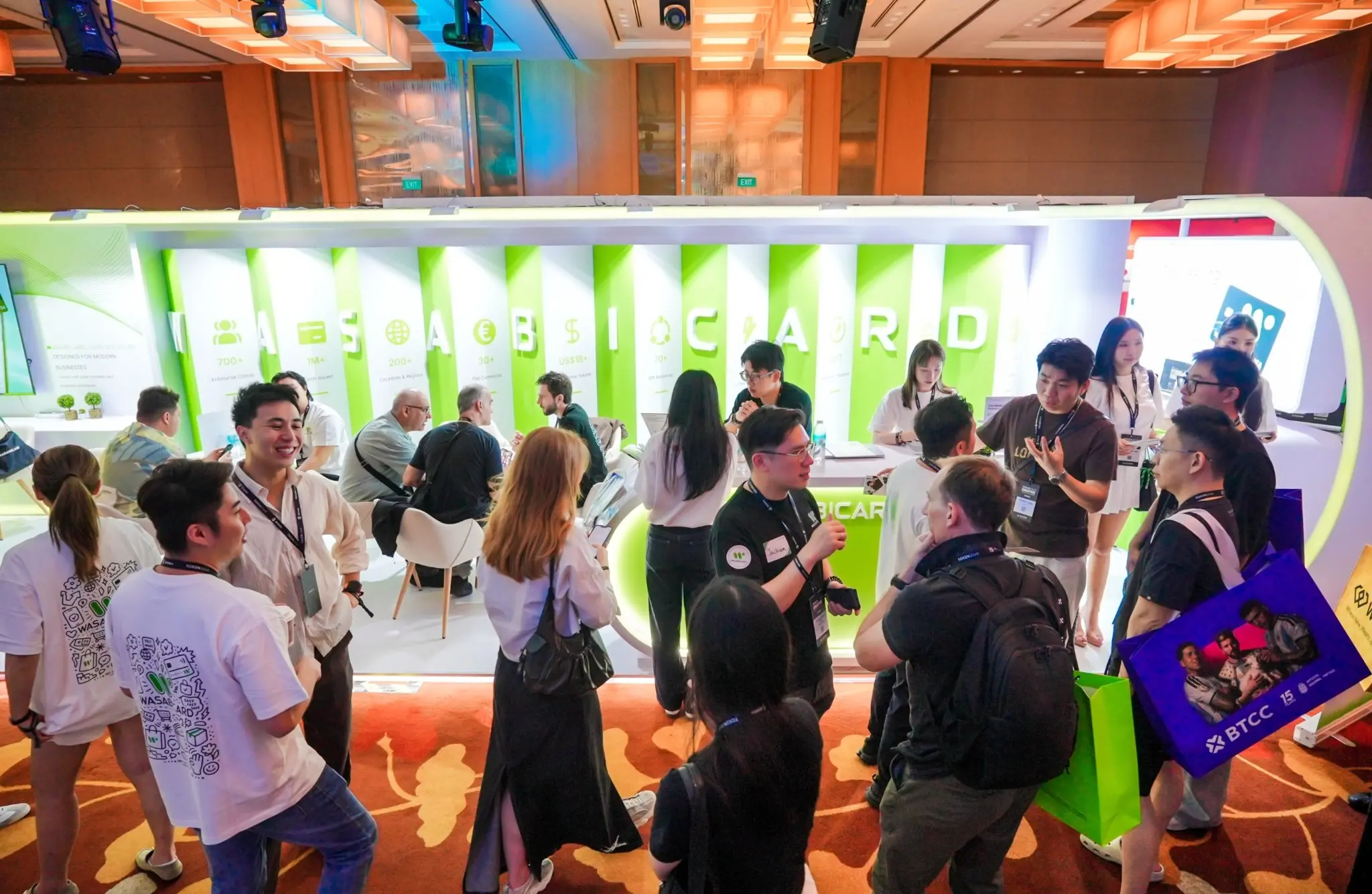
WasabiCard launched various AI subscription cards, covering payment scenarios for mainstream AI tools such as OpenAI and Claude

According to official news, WasabiCard has launched various AI subscription cards, catering to the global AI tool subscription and payment needs of enterprises and teams, supporting subscription payment scenarios for mainstream AI applications such as OpenAI and Claude. Through card-based payment solutions, companies can handle the procurement and expense management of AI services for different teams, projects, or business lines more flexibly.In addition to AI subscription payments, WasabiCard also supports bulk card issuance for enterprises, fund budget management, and multi-currency account setup, as well as various scenarios such as advertising, business travel, payroll, and e-commerce subscriptions. It helps companies configure payment permissions and budget limits by department, employee, or specific purpose, enhancing the management efficiency of AI-related expenditures and the transparency of fund usage.As AI tools gradually enter daily workflows in research and development, content production, customer service, and operations, cross-border subscription payments and expense management are becoming important infrastructure for global operations of enterprises. It is important to note that currently, WasabiCard-related products are not open for application to enterprises and individual users in mainland China.

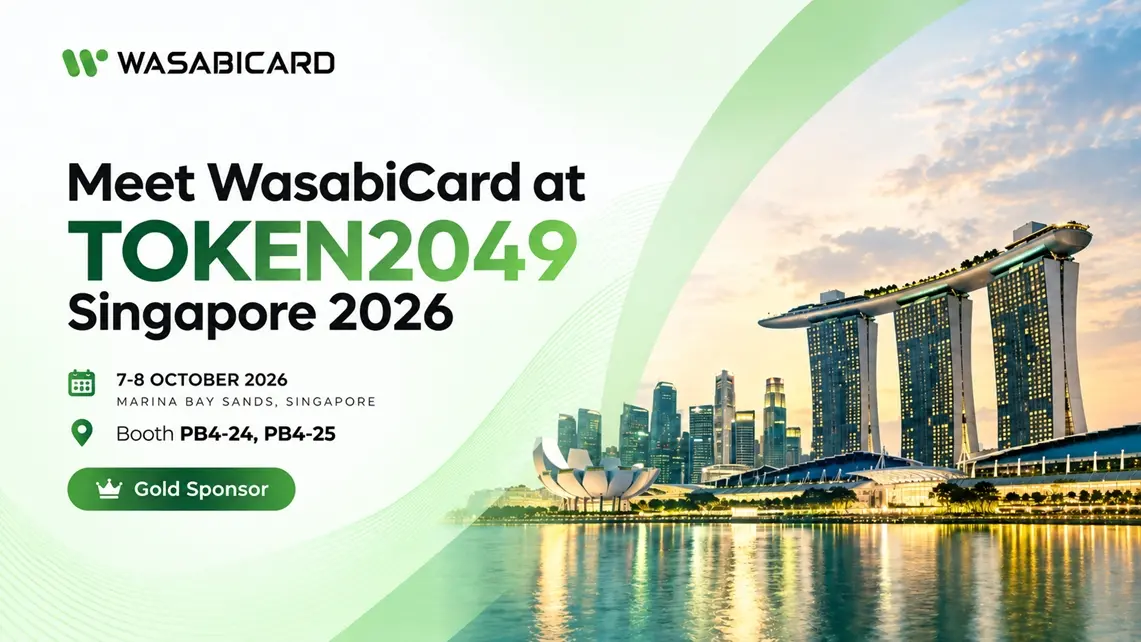
WasabiCard will participate in Wiki Finance EXPO Hong Kong 2026 to explore new payment opportunities in Hong Kong's digital financial ecosystem

The important event in the field of financial technology and digital assets in Asia------Wiki Finance EXPO Hong Kong 2026 will be held in Hong Kong from July 23 to 24, 2026. This event will bring together global financial technology companies, digital asset platforms, and industry participants to discuss the development trends of financial technology and the construction of the digital asset ecosystem.As a stablecoin-driven global payment infrastructure platform, WasabiCard will participate in this exhibition to engage in in-depth exchanges with global partners and share innovative practices and implementation experiences of stablecoin payments in the globalization of enterprises.WasabiCard is committed to significantly enhancing global settlement and payment efficiency for enterprises through its core capabilities of global card issuance, stablecoin payments, cross-border fund distribution, and global remittance. Currently, the platform's services cover over 200 countries and regions worldwide, supporting more than 30 mainstream currencies; at the same time, it integrates a full-process compliance risk control system including KYB, KYC, KYT, and AML to build a safe, reliable, and efficient global funding chain for enterprises.Participating in Wiki Finance EXPO Hong Kong 2026 is not only an important opportunity for WasabiCard to engage in in-depth exchanges with global financial technology and digital asset industry partners but also an important opportunity to further expand global ecological cooperation and enhance brand influence. In the future, WasabiCard will continue to promote innovation in stablecoin payment infrastructure and explore new trends in the development of the global payment system together with industry partners.

WIDTH successfully held a Web3 compliance exchange event in Hong Kong with WasabiCard, discussing new trends in stablecoin payments

The global stablecoin payment infrastructure platform WasabiCard, in collaboration with WIDTH, held the CCO Leadership Edition compliance high-end exchange event in Hong Kong. WasabiCard CMO Jack Derong gathered with executives and experts from the fields of digital assets, payments, fintech, and regulatory compliance in Hong Kong to engage in in-depth discussions on topics such as the evolution of global regulations, the development of stablecoin payments, and corporate compliance practices.As Hong Kong's Web3 ecosystem continues to develop and the digital asset regulatory framework becomes increasingly refined, stablecoin payments are ushering in new development opportunities. With the continuous improvement of compliance requirements surrounding the HKMA stablecoin licensing system, Travel Rule, AML, KYT, and others, companies are increasingly focused on how to build payment infrastructure that combines global payment capabilities, risk management capabilities, and compliance capabilities to achieve the scalable implementation of stablecoin payments.WasabiCard believes that the future competition in stablecoin payments will hinge on whether companies possess the infrastructure capabilities to cover global compliance, risk management, and cross-border payment networks, rather than just payment efficiency.In the future, WasabiCard will continue to enhance global payment infrastructure based on the highest standards of compliance systems and risk management capabilities, helping clients confidently respond to the evolving global regulatory requirements and expand their international business more securely.

WasabiCard CEO: Clear regulations are an important step for stablecoin payments to move towards mainstream applications

According to reports, the U.S. "Digital Asset Market Clarity Act" (CLARITY Act) is expected to enter the next stage of the legislative process on July 4, 2026. As the regulatory framework for digital assets continues to improve, the market's expectations for the development of stablecoin payments have become clearer, providing businesses with more explicit policy references for adopting stablecoins for global payments.In this regard, WasabiCard CEO Ray Yang stated, "For businesses, regulatory transparency is more important than regulatory leniency. Companies can adapt to strict compliance requirements, but it is challenging to formulate long-term development plans in an environment where regulations are unclear. The advancement of the CLARITY Act will create a clearer and more predictable development environment for stablecoin payments."As an enterprise-level stablecoin global payment infrastructure platform, WasabiCard continuously enhances its compliance capabilities and global payment network, establishing a risk management system covering KYB, KYC, KYT, and AML, and holds U.S. MSB and MTL licenses, providing businesses with one-stop payment solutions for global card issuance, stablecoin payments, global remittances, and fund distribution.Regarding the development prospects of stablecoin payments, Ray Yang believes, "As the global regulatory environment continues to improve, stablecoin payments will accelerate their integration into the global payment systems of enterprises. WasabiCard will continue to help businesses conduct global operations more robustly through compliant and reliable payment infrastructure."

MiCA is about to come into full effect, WasabiCard strengthens its global compliance layout, empowering enterprises for a new era of stablecoin payments

With the European Union's Markets in Crypto-Assets Regulation (MiCA) officially coming into full effect on July 1, 2026, it marks the beginning of a new era of unified regulation in the European digital asset market. As the global regulatory framework continues to improve, stablecoin payments are evolving from a focus on "pure efficiency" to "compliance, transparency, and trust," accelerating their transformation into core infrastructure for enterprise-level payments.As a provider of enterprise-level stablecoin payment infrastructure, WasabiCard consistently practices a "compliance first" development philosophy. By continuously strengthening core risk control capabilities such as AML (Anti-Money Laundering), KYC (Know Your Customer), and KYB (Know Your Business), it is committed to building a secure, transparent, and sustainable foundation for global payments.As stablecoins rapidly penetrate core business scenarios such as enterprise treasury management, cross-border payments, and B2B settlements, compliance capability has become the primary consideration for enterprises when choosing payment channels. In the future, WasabiCard will leverage its core capabilities of "global issuance, stablecoin payments, global remittance, and fund distribution" to deeply integrate a comprehensive compliance system with business scenarios, helping global enterprises confidently navigate the evolving regulatory environment and significantly enhance the security and compliance efficiency of their global operations.
app_icon
ChainCatcher Building the Web3 world with innovations.