Unveiling Web 3.0: Exploring the Past and Future of Web Technology

 First, we shape our interfaces; then, they shape us.
Author: Packy McCormick
Translator: Vivian
Editor: Iris Dong
Hi friends, happy Monday!
Football is back, fall in New York City is here, and life is good. This article is a bit shorter than the usual "Not Boring." Spend the extra 15 minutes enjoying a good cup of coffee, being with your family, or taking a walk outside.
I’m excited about a richer digital space, but the cost is a less rich digital space, rather than good old-fashioned IRL (In Real Life) time.
Let’s get started.
The Interface Phase
In October 1943, two years after the bombing destroyed the House of Commons during the Blitz in 1941, the House of Lords began debating how to rebuild. Some members of Parliament and Lords wanted to take this opportunity to rearrange the Parliament in a horseshoe shape, like the U.S. Senate and House of Representatives.
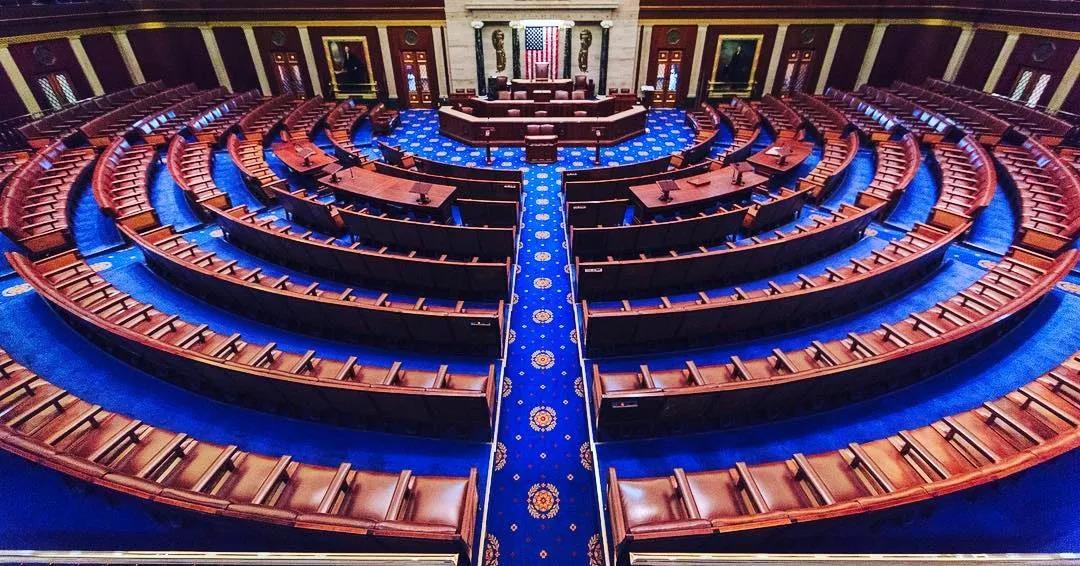
U.S. House of Representatives Chamber
Others believed that the "confrontational rectangular layout" before the bombing should be preserved. British Prime Minister Winston Churchill led the rectangular team. Churchill believed that the layout of the space itself was the reason for the British two-party system. The confrontational design—Conservatives on one side, Labour on the opposite—made debates "lively and vigorous." This design left no ambiguous space. You are either with us or against us.
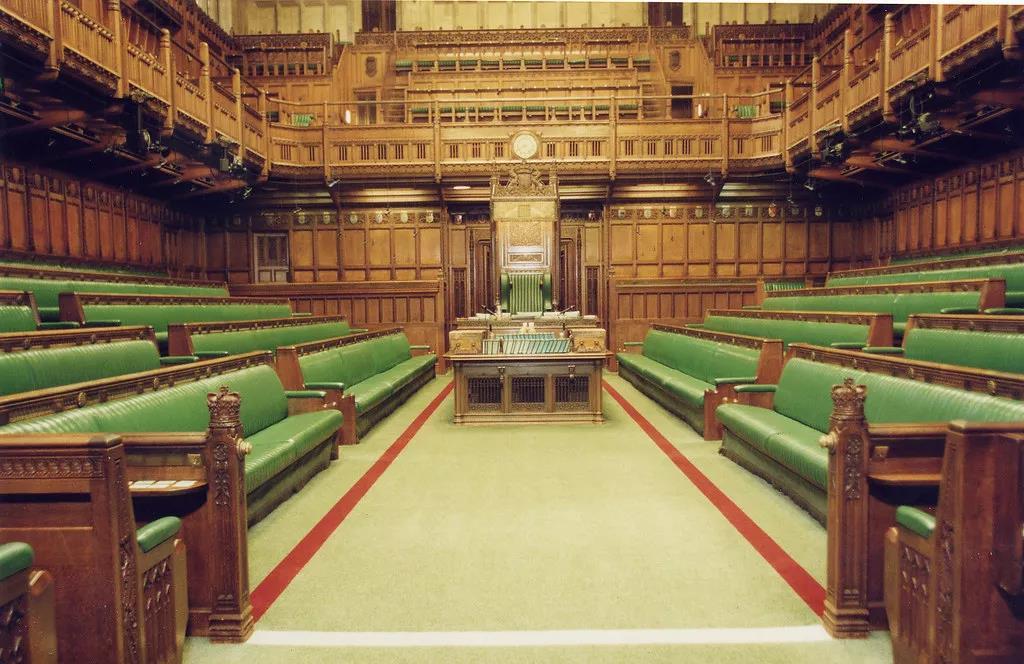
House of Commons Chamber
In a speech on October 28, 1943, Churchill famously stated:
We shape our buildings; thereafter, they shape us.
Churchill and his rectangular side won. To this day, members of Parliament can only switch allegiance by crossing the chamber in full view.
We shape our buildings; thereafter, they shape us. The spaces in which we live, work, and play shape how we live, work, and play.
Of course, Churchill was referring to physical buildings. The most advanced computer at the time was Colossus, which Alan Turing and his team used to break Axis codes during World War II. Its interface was a series of switches and dials. Only a handful of people in the world needed or knew how to operate it.
However, the spaces where we spend our time are increasingly digital .
Every new phase of the internet—Web 1.0, Web 2.0, and mobile—has relied on new digital spaces to attract consumers. From text-based to graphical to interactive to mobile applications, new interfaces have brought new applications. Each phase has been driven by new infrastructure beneath the surface, propelled by applications built on top of it, but each phase has also required new interfaces for widespread adoption.
We shape our interfaces; thereafter, they shape us.
While web3 applications like NFTs, DAOs, and DeFi are gaining traction, we are still interacting with web3 through web2 interfaces. If history is a guide, we will need new web3-native interfaces and spaces to bring billions of people into this ecosystem.
It may be too early, but there are already clues about new interfaces that may emerge. New digital spaces are surfacing on the internet and evolving every day. Wallets like MetaMask, Phantom, and Rainbow are changing how we log in and what we bring with us when we do.
Web3 worlds like Decentraland, Somnium Space, The Sandbox, and Cyber are reimagining how we experience and interact online.
Of course, they are early components of the Metaverse, but they are not necessarily the Metaverse itself. This is an article about the evolution of how we interact with the internet and each other online.
We spent much of 2021 at Not Boring HQ exploring web3, hoping to better understand what’s happening, but it’s still hard to feel the potential impact of web3 at a fundamental level while we are still using web2 interfaces.
Today, we will explore how these new interfaces and spaces are making web3 mainstream:
- Application-Infrastructure Loop
- A History of Incomplete Interface Cycles
- Web3 Interfaces
- Moving Towards the Future
A shortcut to studying new technologies is that they often follow old patterns.
Let’s take a look back before looking forward.
Application-Infrastructure Loop
A common saying in the Web 3.0 community is that we are in an infrastructure phase, and what we should be doing now is building that infrastructure: better base layers, better interoperability between chains, better clients, wallets, and browsers. The principle is: first, we need tools that make it easy to build and use applications running on the blockchain, and once we have those tools, we can start building those applications.
------Dani Grant & Nick Grossman, The Myth of the Infrastructure Phase, USV, 2018
In 2018, Nick Grossman and Dani Grant of Union Square Ventures wrote an article titled "The Myth of the Infrastructure Phase."
During the crypto winter of 2018, they kept hearing that crypto needed better infrastructure, and once that happened, people would be able to build those killer applications. However, the builders of infrastructure said they were building infrastructure, but no one was building applications on top of it! Why was that? Why was there this disconnect?
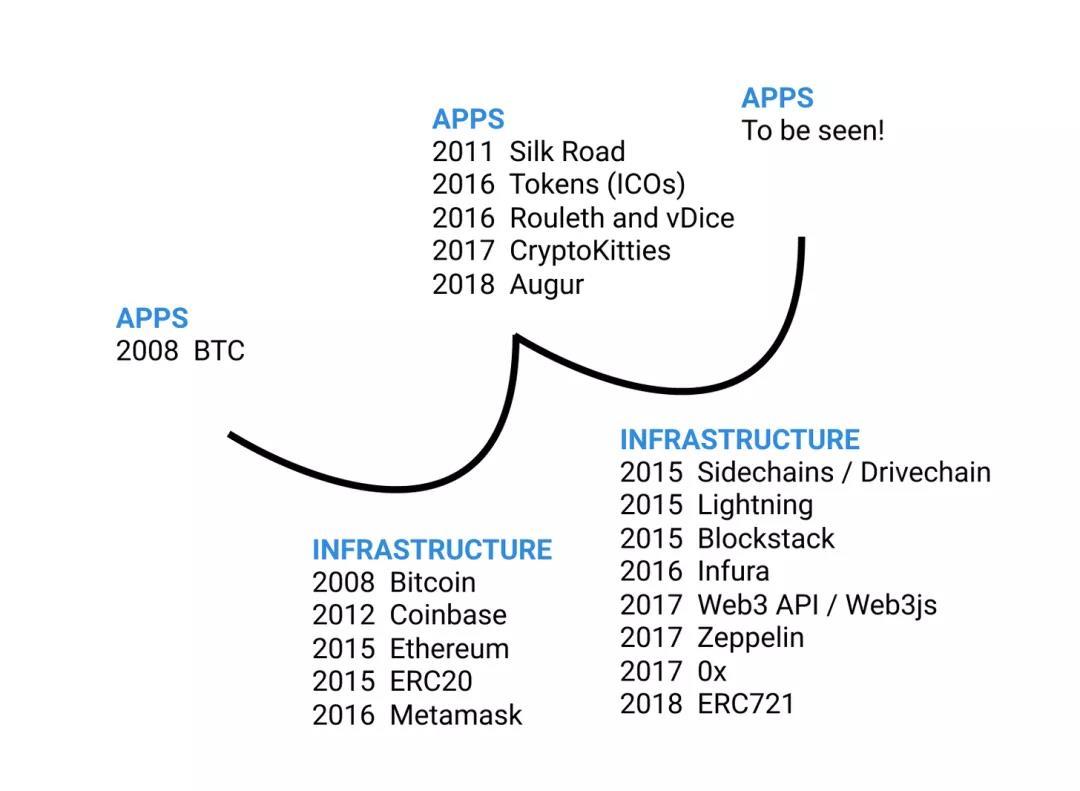
Grossman and Grant believed that crypto was at another inflection point in the application-infrastructure cycle, rather than the widely accepted "infrastructure phase." They wrote, "The history of new technologies shows that applications produce infrastructure," rather than the other way around.
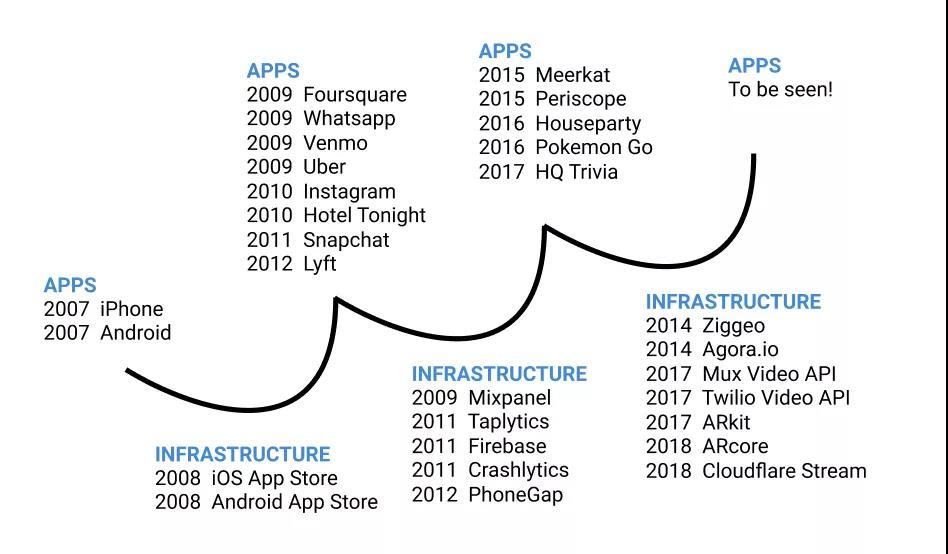
Source: Nick Grossman and Dani Grant, Union Square Ventures
First, builders build applications, then other builders build infrastructure to support those applications, and then that infrastructure supports new applications, which in turn require new supporting infrastructure, and so on. That’s how it has worked historically, from light bulbs to airplanes to iPhones, and that’s what’s happening in web3.
Source: Nick Grossman and Dani Grant, Union Square Ventures
Grant and Grossman’s classic 2018 piece has recently resurfaced as the explosive growth of new web3 applications has brought challenges:
Gas prices are too high!
DAOs are coordinating in chaotic tools.
The delays of Eth2 and the confusion of L2.
Scams are rampant.
Speculation reigns, the rich get richer.
Last week, Mike Dudas of Paxos Global and 6th Man Ventures tweeted that this article is very relevant to the current crypto environment. Kinjal Shah of Blockchain Capital tweeted, "We are in a frenzy of applications, about to enter a major infrastructure phase."
The application-infrastructure cycle is playing out in real time. For example, Grant and Grossman mentioned that ERC721 was the last piece of infrastructure being built.
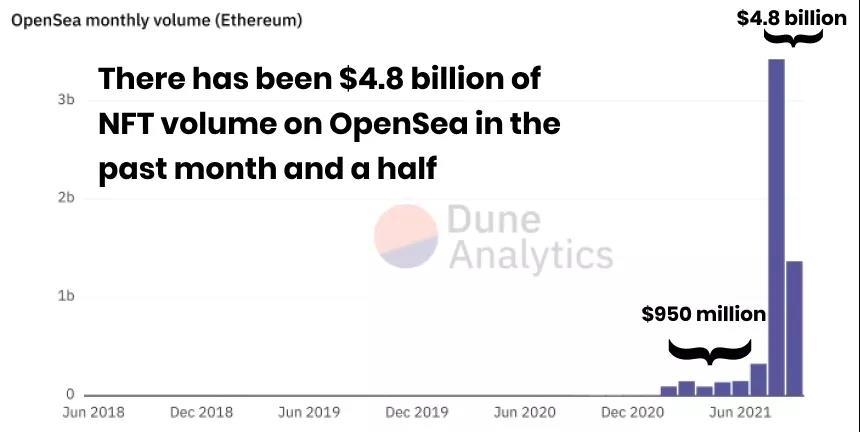
Invented in 2018, ERC721, the standard for non-fungible tokens (infrastructure), drove the NFT craze of 2021 (app). From February to July, $950 million worth of NFTs changed hands on OpenSea. In just the first 12 days of August and September, $4.8 billion passed through OpenSea.
@rchen8 on Dune
As a result of all this demand, the cracks in the infrastructure are showing. Gas fees, the price someone has to pay to Ethereum miners just to buy or mint an NFT, often crossed into the $300 range during the height of the frenzy. Currently, builders are deploying new infrastructure to address this issue.
New layer two scaling solutions will continue to increase speed and reduce transaction costs. Arbitrum, a new L2, launched on the Ethereum mainnet in early September, and its parent company Offchain Labs announced a $120 million funding round led by Lightspeed. In the past 24 hours, 14,260 ETH have been bridged from Ethereum to Arbitrum.
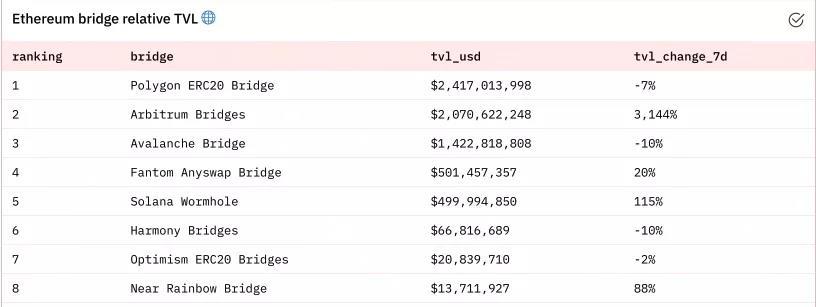
Bridges from Ethereum to L2s like Polygon, Arbitrum, Fantom, and Optimism, as well as other L1 bridges like Solana, Avalanche, and Near, are open and fluid. Polygon is in the lead, with a total value locked (TVL) of $2.4 billion, representing a significant portion of transaction volume.
@eliasimos on Dune
However, while the infrastructure will continue to improve, the bigger challenge right now is that we are interacting with web3 products through web2 interfaces.
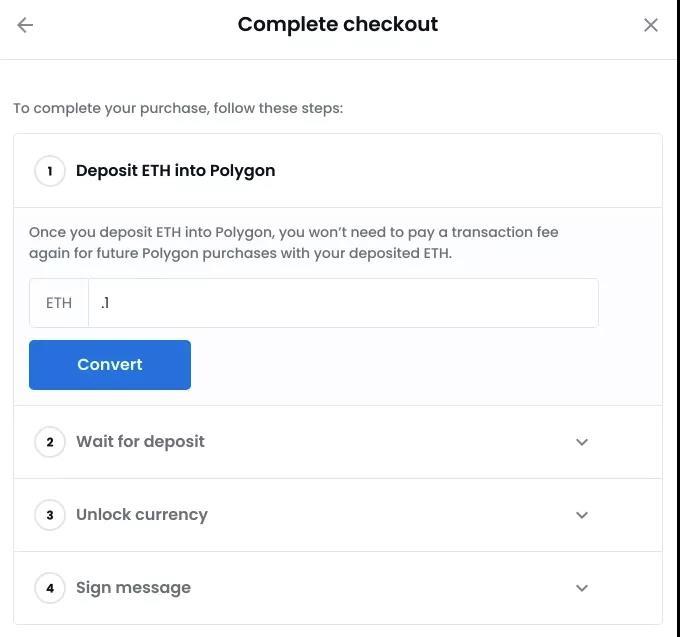
Some NFTs are already available on OpenSea via Polygon, with much lower transaction fees, but this requires "bridging" your ETH to Polygon (which costs gas), anxiously waiting for the deposit to go through, unlocking your Polygon ETH, and then signing a message to complete the transaction.
OpenSea
I’m quite satisfied with all of this, but it still makes me uneasy. (That is to say, 250,000 people have participated in at least one OpenSea Polygon transaction. Maybe I’m the ignorant one.) The infrastructure is forming; and the interfaces need updating too.
This is not a criticism of OpenSea. OpenSea is "killing it," and I’m a loyal fan. Its total transaction volume just surpassed 4 million. It has made it possible for a large number of early adopters to buy and trade NFTs. But it still looks and behaves like a web2 product, as do most web3 products.
People upload content, and others can interact with and trade that content. The infrastructure behind OpenSea is novel, and OpenSea abstracts away a lot of complexity, but OpenSea’s interface could have been built in 2015 or even 2010. eBay has been around since 1995.
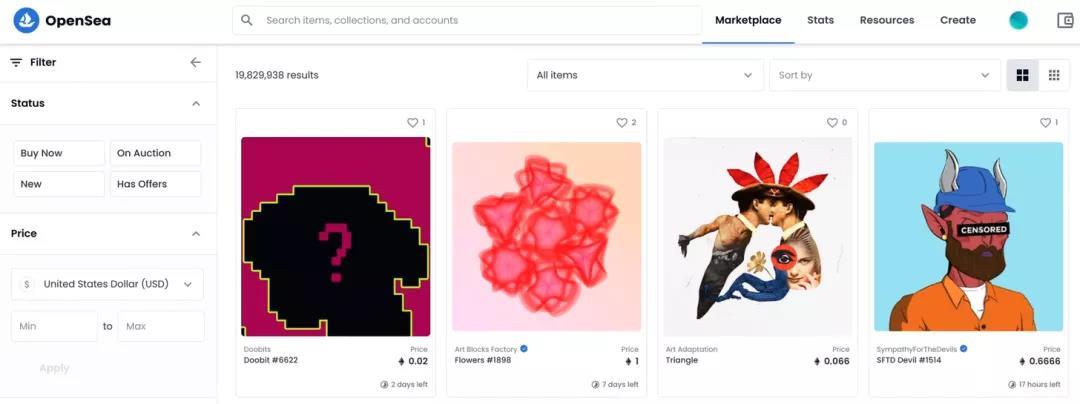
OpenSea Marketplace
It’s still too early. If web3 is to be as big as the internet with 4.66 billion users, from the number of people with MetaMask wallets (just over 10 million), it has penetrated less than 1% of the market. There is still a lot of work to do to attract a broader base of early adopters, even to "cross the chasm" to the early majority.
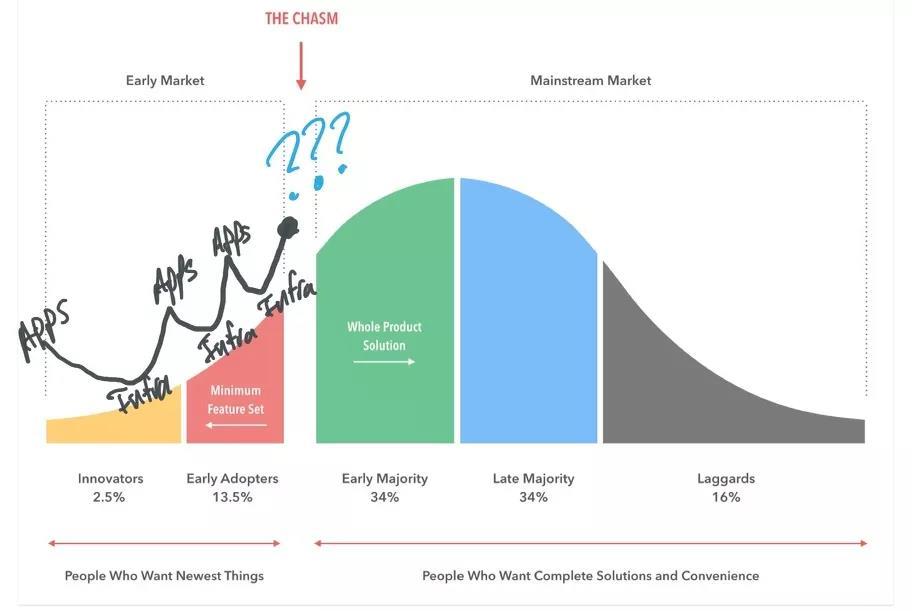
In previous articles, we have discussed some factors that will accelerate the adoption of web3 technology, and today we add another concept:
L2s and other layer 1 blockchains, like Solana, offer faster speeds and lower costs than Ethereum and Bitcoin, feeling more like the regular internet, which will bring new developers to the blockchain, who in turn will bring more users.
Businesses will bring their customers into web3 in more consumer-friendly and familiar ways, such as allowing them to buy NFTs with credit cards or using social tokens to reward loyalty and encourage certain behaviors, like attending live events.
More entrepreneurs will choose to build their next thing in web3, and some early-stage companies may pivot or figure out how to incorporate things like tokens and NFTs.
Application-infrastructure loop. In the ongoing application-infrastructure loop, better applications will lead to better infrastructure, which will lead to better applications, which will lead to better infrastructure.
However, at least according to the last three major consumer internet paradigm shifts, one component is still missing: new eras need new interfaces.
A History of Incomplete Interface Cycles
What we think of as the internet can be traced back to the Cold War, when the U.S. Department of Defense’s Advanced Research Projects Agency (ARPA) developed what would later become ARPANET, so the U.S. military could communicate over a connected distributed network.
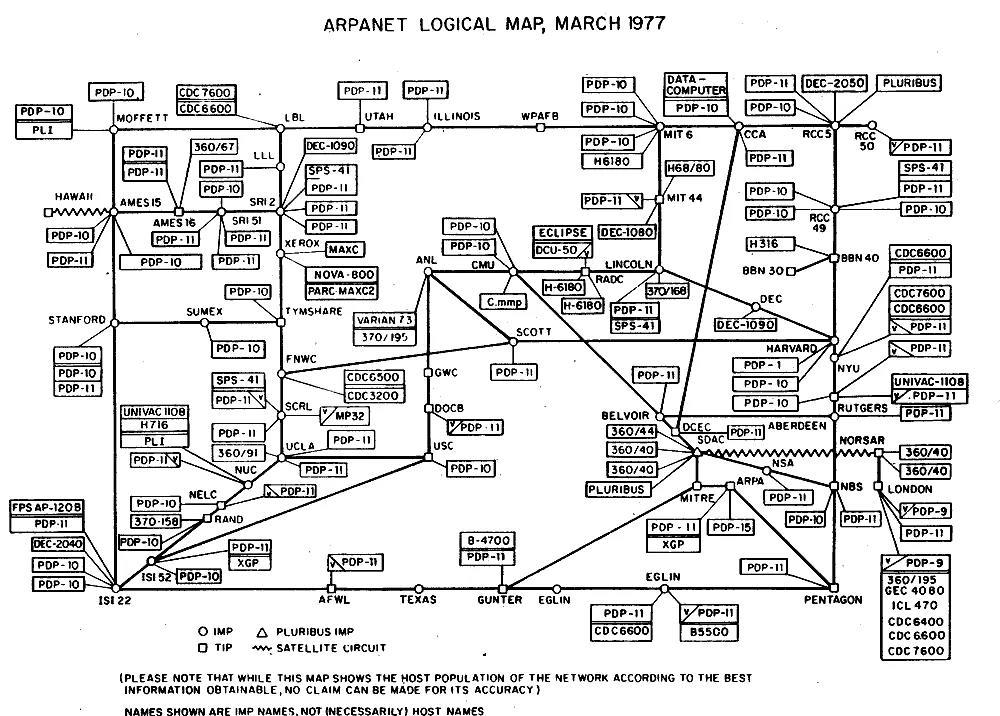
Source: Wikipedia
Mike Murphy described the history from ARPANET to the mobile internet in his 2019 Quartz article "From Dial-Up to 5G, a Complete Guide to Logging on to the Internet," briefly touching on the future of 5G.
Murphy explains that in the first thirty years of the internet, it was still a tool for academia, the military, and some nerdy patchers. When I was born in 1987, schools in 25 countries were already connected to ARPANET, and the military had spun off its own version, MILNET.
In the late 80s and early 90s, businesses and more tech-savvy civilians began to go online (Internet Relay Chat, the precursor to Slack and Discord, launched in 1988), but it was hard to use. This 1993 video, "Computer Chronicles—The Internet," is an interesting time capsule. It reminds me of my first interactions with computers through floppy disks, clunky keyboards, and blinking command line interfaces.
In the early 1990s, to use the internet, you had to know exactly what you were looking for, especially how to search for it in the command line.
In the book "Before the Web: The Internet in 1991," ZDNet’s Steven J. Vaughan-Nichols agrees: "Before the web appeared, the internet was almost entirely a text-based world… If that makes the pre-web internet sound like a place that only welcomed techies, you’re right, it was." (Sounds familiar.)
Then, in 1993, Marc Andreessen built Mosaic at NCSA and then left to create his own competitor: Netscape. "Before Netscape Navigator, the internet was an abstract concept primarily used by the military and academia," Alice Truong wrote in a 2015 Quartz article commemorating the 20th anniversary of Netscape’s IPO, "but Netscape’s graphical interface made the web accessible to the average person."
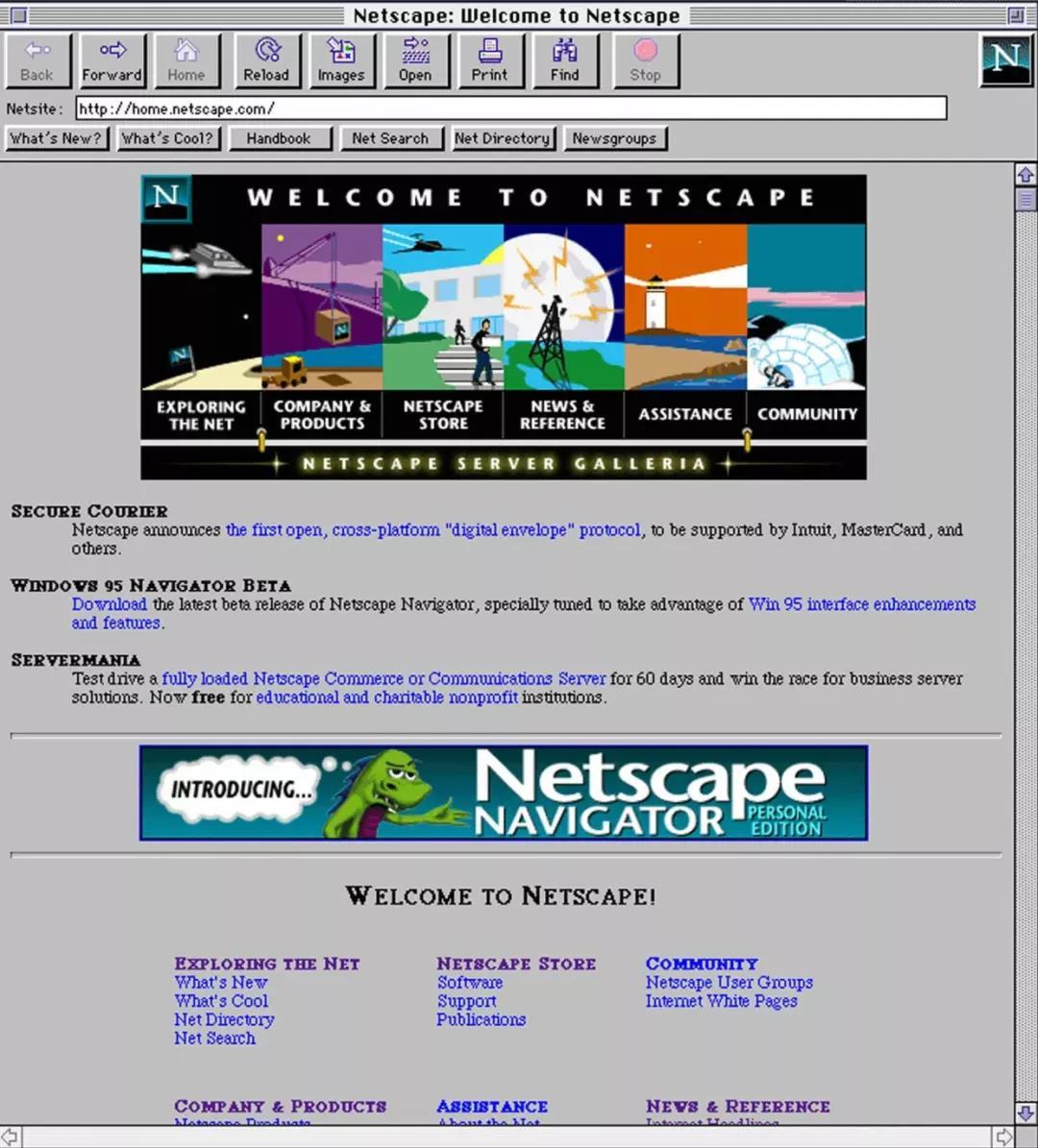
Netscape Navigator in August 1995, Source: Quartz
When internet service providers like AOL, Prodigy, and Earthlink brought people online through portals they controlled, Netscape opened the door to the open web and ushered in the era of Web 1.0. Over the past thirty years, there have been improvements in both applications and infrastructure—better computers, faster dial-up, email, IRC, the first websites, and the first web browsers (all created by Tim Berners-Lee).
-- A small subset of tech users utilized these improvements, but it was Netscape’s graphical interface that pulled people en masse into Web 1.0. Millions of people could browse static web pages on a "read-only" web.
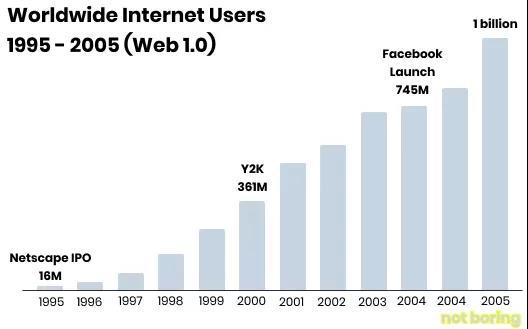
In 1995, when Netscape went public, there were 16 million internet users worldwide. By 2000, just five years later, there were 361 million internet users. By February 2004, when Mark Zuckerberg launched Facebook from his dorm room, there were 745 million people on the internet. By the end of the following year, there were 1 billion.
If Web 1.0 was the "read-only" era of the web, then Web 2.0 is its "read-write" era. It transformed the internet from a static book into a living canvas where users could express themselves and interact with people around the world in real-time. The same application-infrastructure-interface loop played out in Web 2.0.
The demand for Web 1.0 applications led to the establishment of infrastructure that made Web 2.0 possible. Just as the new millennium approached, the internet began to catch fire. Brian McCullough wrote on TED:
Before the bubble burst, telecom companies raised $1.6 trillion on Wall Street and issued $600 billion in bonds, laying down digital infrastructure across the country. This 80.2 million miles of fiber optic cable represented 76% of the total installed base of digital lines in the U.S. up to that historical moment, and it would mature the internet’s development.
Fiber optic cables opened the door to a faster, more reliable internet (and allowed people to use the phone and the internet simultaneously!). In 1999, Apple first included WiFi in laptops, freeing internet users from the shackles of Ethernet cables. The infrastructure powering the always-on web was forming.
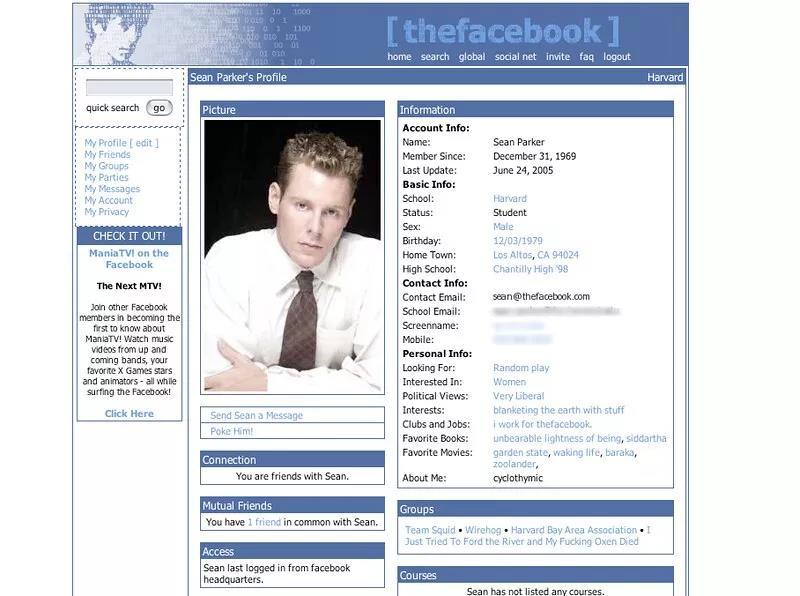
Meanwhile, on the application side, Blogger and LiveJournal, founded in 1999, allowed ordinary users to start publishing their thoughts online without needing to learn how to code. Facebook launched in February 2004 and introduced the "wall" in September of that year, allowing users to post a photo and some basic information about themselves for classmates to see.
Source: flickr
Digg launched in November 2004, enabling users to submit and vote on content. A year later, YouTube launched in 2005, allowing users to upload, search, and rate videos. Meanwhile, Facebook kept advancing—introducing photo tagging in 2005, the news feed in 2006, and the "like" button in 2007. Twitter launched in 2006. Web 2.0 was here to stay.
While Blogger and MySpace were precursors to Web 2.0, only a few people blogged, and MySpace peaked at just over 100 million users. The real-time, interactive interfaces of Facebook, YouTube, Twitter, and other social networks popularized Web 2.0 and pushed it across the chasm. Today, Facebook has over 2 billion users.
The last major paradigm shift before web3 was mobile. The internet on mobile phones can be traced back to the Wireless Application Protocol (WAP) launched in 1999. The Nokia 7110, released that October, provided its owner with basic capabilities, such as checking sports scores, headlines, or the weather (applications), but it burned through a lot of expensive data in the process.
As wireless coverage and speeds improved, data rates fell, and 3G was introduced in 2003 (an improvement in infrastructure), phone manufacturers began offering slightly simpler mobile browsers. But without Apple’s release of the iPhone in 2007 and the launch of the App Store in 2008 (and Android’s subsequent launch of the Play Store), the mobile internet might not have become ubiquitous.
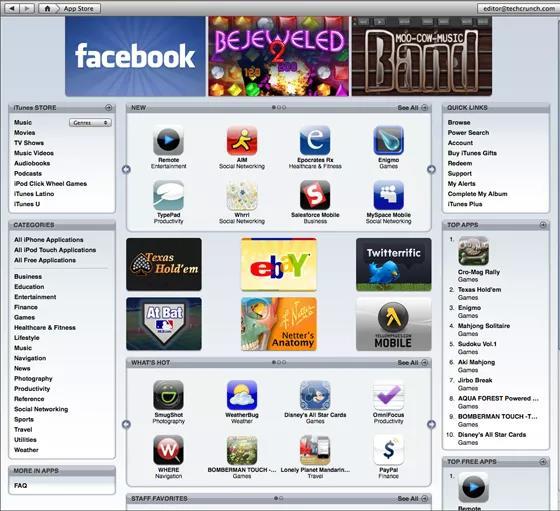
Mobile applications are a new interface on a new mobile computing platform. Without applications, it’s hard to imagine mobile-first products like Uber, Snap, and even Twitter and Facebook succeeding. Even today, accessing any of these products through a mobile web browser is a severely inadequate experience. The mass user base needs new interfaces to adopt new computing platforms.
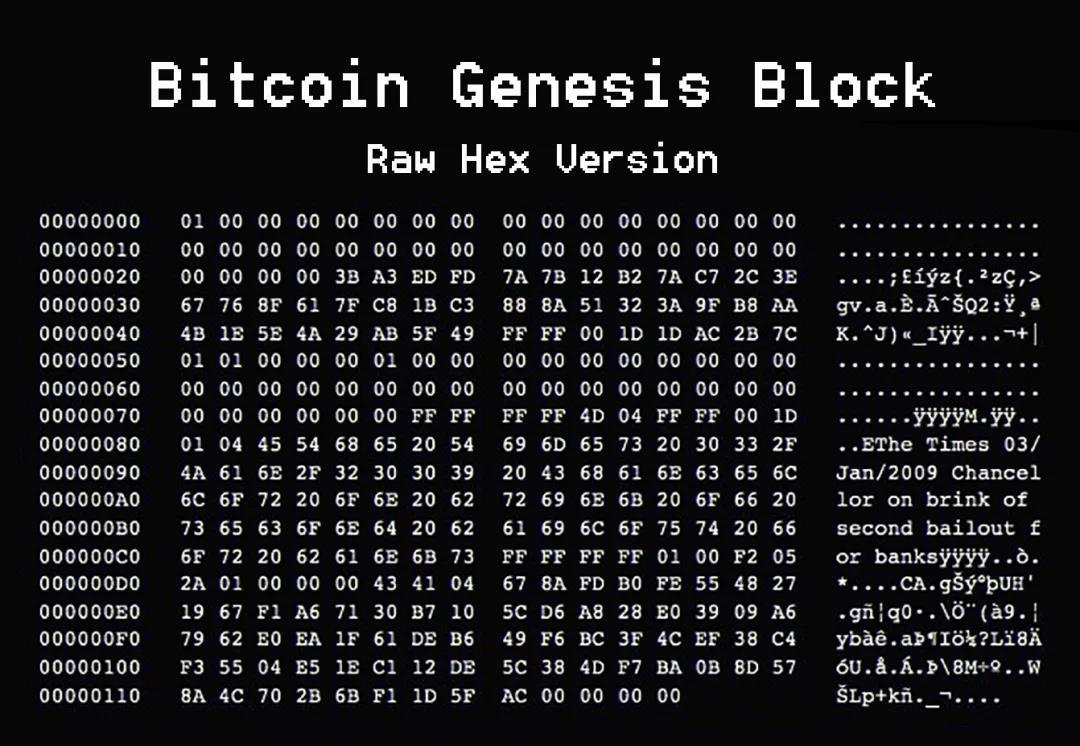
Web3 is next. It has been over 12 years since Satoshi Nakamoto launched the Bitcoin network by defining the genesis block.
Source: Wikipedia
Since then, over a trillion dollars of value has been created. Approximately 100 million people worldwide own BTC. 56 million people use Coinbase. 10 million people own a MetaMask wallet. In the past two years, DeFi and NFTs have seen a massive surge among innovators and some early adopters.
The demand for popular applications stimulates innovation in infrastructure, with new layer ones, layer twos, and protocols racing to fix issues and improve user experience.
Even so, the web3 experience remains complex, leaving most people confused except for the most specialized or dedicated. By injecting funds into the protocols themselves, web3 has been able to keep demand further ahead of user experience than in past paradigms, but that’s not enough to cross the chasm.
At best, if you count "ownership of Bitcoin" (often through centralized exchanges or products like Square) as adoption of web3, we are currently at the level of MySpace usage. At worst, if you think of web3 usage as interacting with wallets, we are close to the level of internet adoption in 1995.
The internet seems to have gone through not only an application-infrastructure cycle but also a super cycle of application-infrastructure-interfaces. After enough iterations of applications and infrastructure to prove early demand for new models, a new interface is needed to carry it across the chasm.
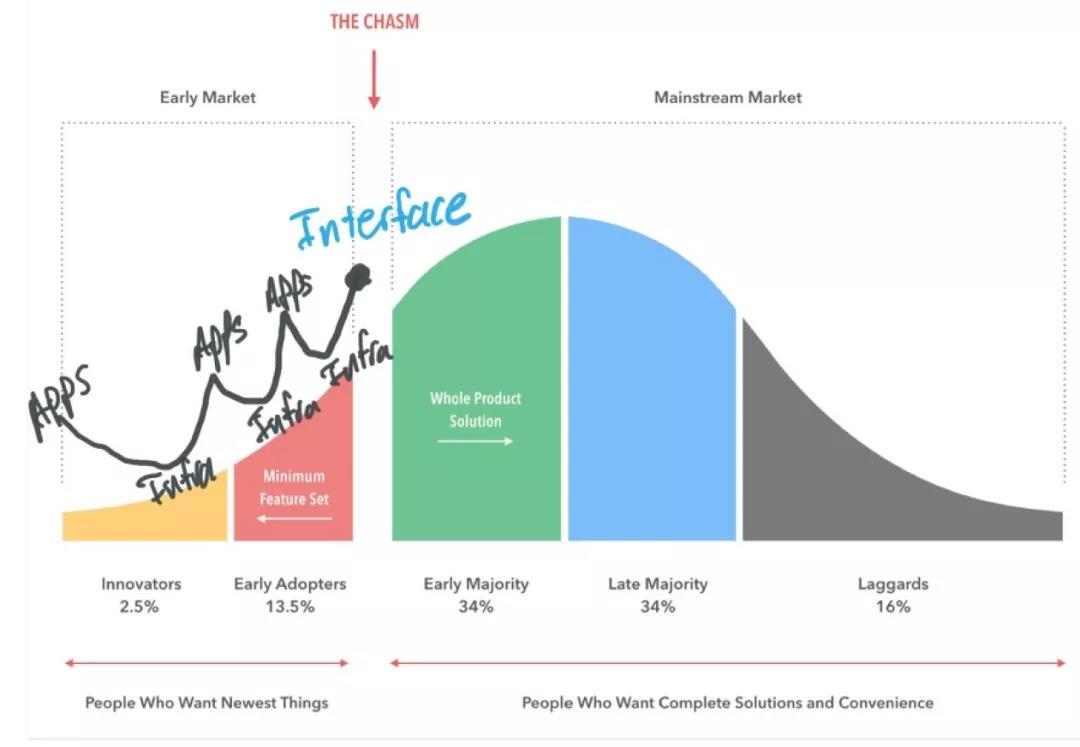
That’s where we are now. Web3 needs web3 interfaces.
Web3 Interfaces
First, we shape our interfaces; then, the interfaces shape us.
Web1.0: Graphical browsers made it easy for ordinary people to go online and led to an explosive growth of "read-only" websites, creating the web boom.
Web2.0: Interactive, real-time websites made it easy for ordinary people to connect, communicate, and create online.
Mobile Internet: Applications made it easy for ordinary people to do anything through their phones. From hailing a ride to making payments to playing games to working, "there’s an app for that."
The physical and digital spaces we interact with shape our experiences.
So, what will a breakthrough web3 interface look like? What will it enable people to do?
Interfaces for paradigm shifts do a few things:
- Abstract complexity
- Provide users with simple ways to harness much of the power of new technologies and assets
- Handle some of the messy things that new technologies create
- Create new experiences that previous interfaces couldn’t achieve
The web3 interface needs to add order to the beautiful chaos of decentralization and provide clear and meaningful utility for digital assets. It needs to break the false dichotomy between simple, consumer-friendly channels and powerful, crypto-native experiences.
It will need to wrap itself around the applications and infrastructure that have already been built, hiding complexity beneath the surface, and providing clean experiences. It will need to create a canvas for developers and users themselves to create the next million new applications.
Initially, the web3 experience will be primarily desktop-based. As the infrastructure catches up, I suspect we will see a seamless blend of desktop, mobile, VR, and AR, with a game-like interface persisting across mediums. VR will take share from desktop, and AR will take share from mobile, as both AR and VR will be able to provide richer experiences and make NFTs feel more "real."
Ultimately, the experiences it needs to provide must be so different and advantageous compared to what people get from the regular internet that they will want to make the leap, even if it means a little friction.
Let’s explore some possibilities.
Wallet First
Web3 starts with wallets.
Wallets are passports and bank accounts. Logging into web3 means connecting your wallet, and once you’re connected, you can consume, trade, and gain access to gated areas.
My three favorite wallets are MetaMask (for Ethereum browser login), Rainbow (for iOS and search wallets), and Phantom (for Solana browser login). If you don’t have one yet, go get one; you’ll need them.
In "New Internet Logic," John Palmer of PartyDAO writes that with NFTs:
The internet is now a place where everyone has inventory. The existence of programmable, interoperable digital objects will fundamentally change the logic of the internet.
What does that mean? When I log into a regular website, that website knows what I’ve done before on that site. For example, when I log into Amazon, Amazon knows what I’ve bought on Amazon, what credit cards I’ve used to buy things on Amazon, and where I want Amazon to ship the things I’ve bought.
It doesn’t know what I own elsewhere. It can only design a real experience for me based on my activity on Amazon.
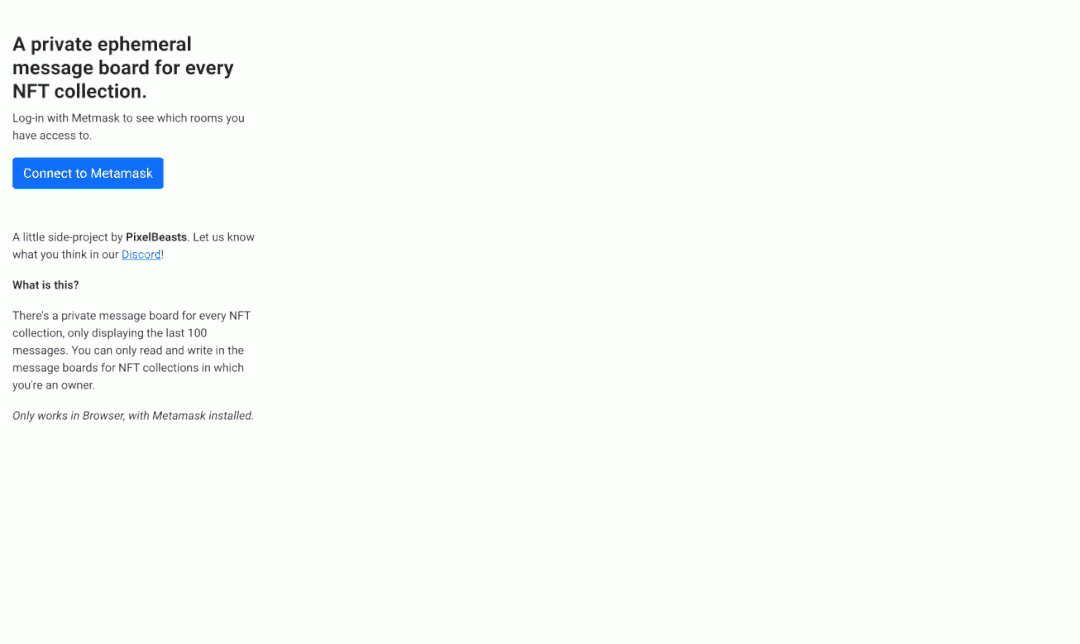
However, when you log in with your cryptocurrency wallet, that website knows anything you hold in that specific wallet and can grant you permissions and experiences based on what you bring with you. Last night, I discovered a new project that looks very simple but points to one way a wallet-first interface could work: Playground.

Playground
I had never been to the site before, but as soon as I connected my MetaMask, it knew what NFTs I owned and let me into a chat room with others who own those NFTs. Currently, Discord servers are using Collab.Land to grant access based on whether people hold certain tokens (like $FWB) or specific NFTs (like loot bags with sacred items).
In these cases, owners need to seek out and access communities one by one; the interesting thing about Playground is that it does that work for you, creating communities for all NFT holders. This is clearly not the design of the future, but it brings a subtle yet significant shift in how we interact with web3. As more new NFTs, DAOs, and tokenized communities emerge every day, discovery will become very important.
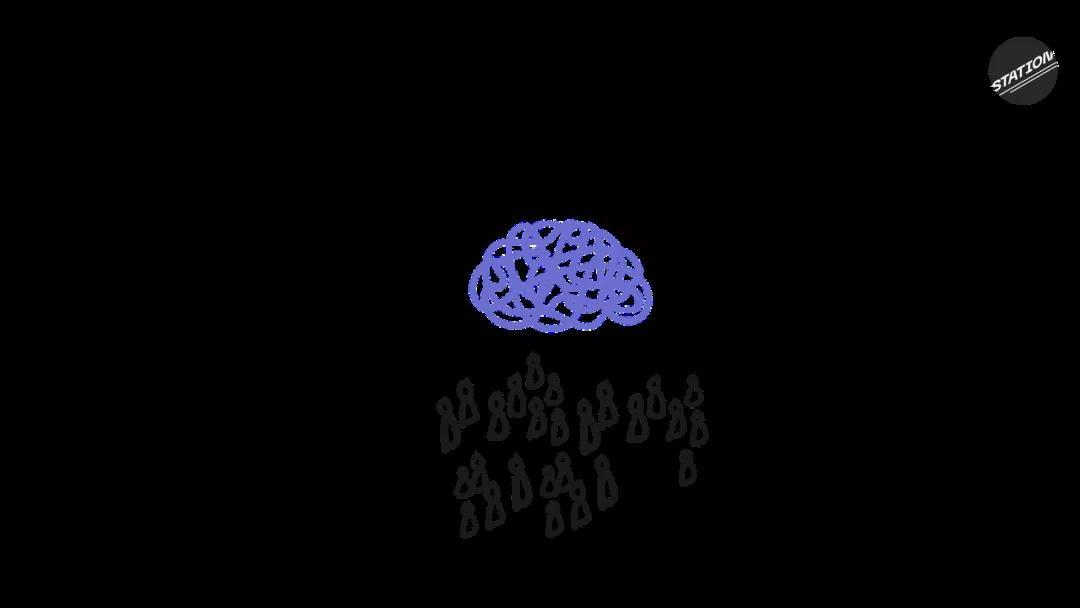
In its launch announcement, one of the web3 projects I’m most interested in, Station, emphasized how difficult it is to browse web3:
This infrastructure currently does not exist in cryptocurrency. Right now, it’s very difficult for newcomers, especially if they are not tech-savvy, to navigate this ecosystem made up of Discord servers and Telegram group chats.
Source: Station
Station plans to add a person’s web3 identity, not just based on what you own, like a wallet, but also on your contributions and the people you interact with. "The team wrote: "Everyone will have a profile on Station that aggregates their contributions across platforms, their interactions on-chain, the groups they represent, and their closest collaborators.
It’s not hard to imagine that a "profile" could serve as another wallet-like component of a new web3 interface, taking you to the places where your skills are most needed.
Wallets and profiles will play a crucial role in web3 interfaces. It’s likely that one of the existing wallets, or a new company like Crucible, will consolidate multiple wallets and profiles into a decentralized identifier, allowing users to carry their activities, contributions, relationships, and inventory with them wherever they go.
While I believe any solution that avoids users controlling their assets in a portable way will ultimately fail, a successful solution will make doing so as easy as possible.
But what will we access with our wallets and profiles? Where will we carry our assets and on-chain history?
Let’s dive into the Metaverse.
3D Spaces and Worlds
One of the things cryptocurrency excels at is giving digital assets physical properties.
Cryptocurrency behaves more like cash than bank-mediated digital currency. They are peer-to-peer, and if I send someone 1 ETH, that ETH flows from my wallet to theirs.
NFTs make digital items unique, ownable, and scarce, just like physical items.
I believe that the web3 interface will also have more physical properties than we are used to on the internet. Before diving into web3, I thought of the digital world and web3 as two separate concepts that should influence each other. Now, I believe the digital world is necessary to unlock the full value of web3, and web3 is necessary to unlock the value of the digital world.
The web3 interface will be a digital world accessed through wallets.
Video games are a great and obvious comparison. People spend billions of dollars purchasing virtual items, skins, and dance moves in games, but they cannot take those virtual items out of the game world. The web3 interface will be rich, immersive environments where most things are ownable, earnable, and transferable across worlds.
The digital world is the only interface where all of this ultimately makes sense, and creating these rich digital worlds that require and reward ownership and contribution is how web3 will bring the next billion people in.
As Matthew Ball eloquently writes, for the Metaverse to reach its full form, a lot needs to happen in terms of applications and infrastructure. Of course, many of today’s Metaverse-like worlds are clunky and toy-like, but there are some early signs of how it will work.
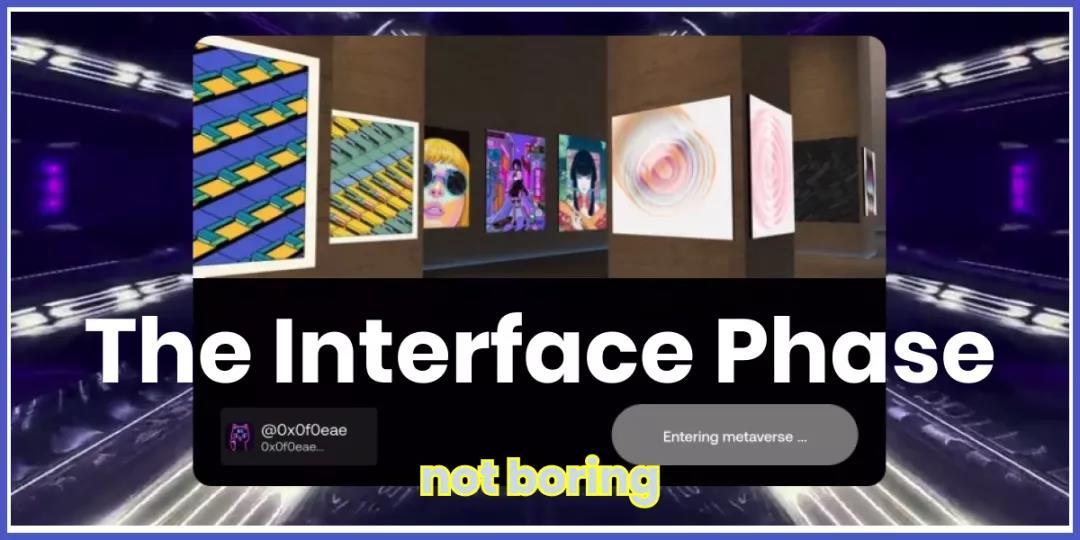
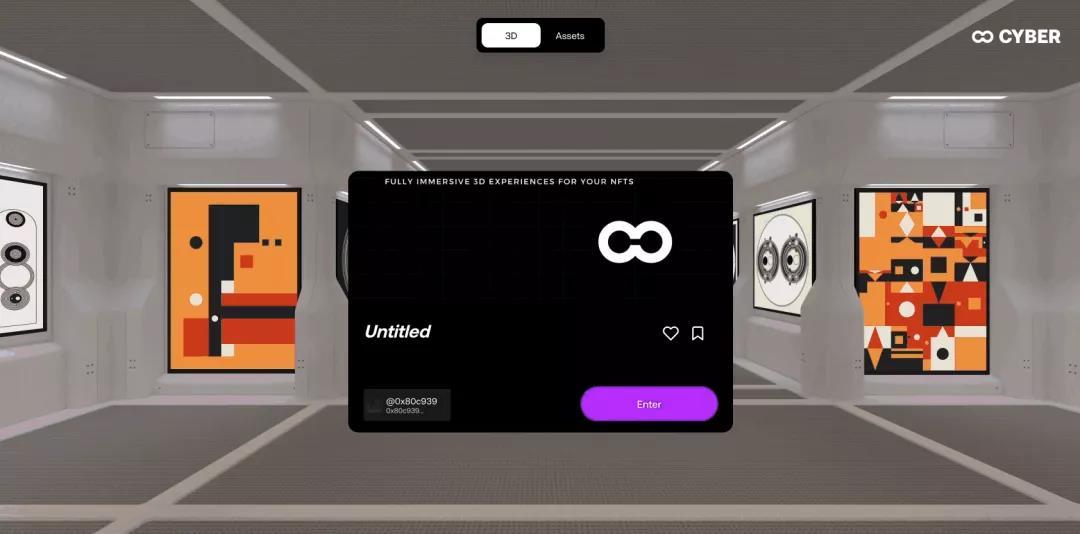
One of my current favorites is Cyber. Cyber offers NFT owners 3D galleries to showcase their digital art and audio. Collectors don’t need to buy land in the virtual world to get started; Cyber provides simple spaces for free, but they also allow 3D architects to design and sell upgraded spaces for collectors who want to give their NFTs a more stunning home.
Cyber takes a principled stance on ownership. Everything in the gallery is an NFT. All the artwork or sculptures on the walls, even the music playing in the space, needs to be owned and held by the wallet connected to the gallery. The gallery sounds better, but you can’t connect Spotify, so you’ll be incentivized to explore and support NFT-backed music.
This gives NFTs a real utility beyond status and sponsorship. Additionally, collectors may host events and performances, monetizing their collections and turning them into revenue-generating assets.
Importantly, while ownership is decentralized—you don’t need to hand over your NFTs to Cyber to display them—discovery is centralized. Cyber’s homepage allows visitors to explore popular, trending, and new galleries directly on the site, rather than needing to search people’s wallets to see their collections.
You should explore Cyber or even build your own gallery to try it out. Notable mentions include my friend Richard Kim’s gallery, which features some stunning generative art projects like Ringers, Fidenza, Chromie Squiggles, and The Eternal Pump…
And on the lighter side, the Banana Feast gallery is filled with CyberKongs praying, selling bananas, and breakdancing.
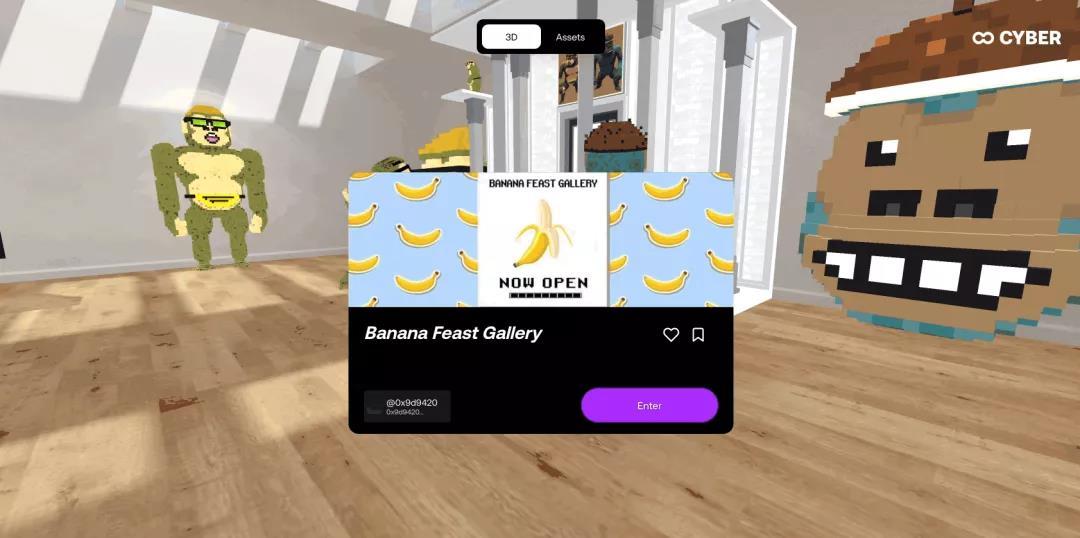
It’s still early, and I expect the experience will be greatly enhanced if you put on VR goggles, but seeing NFTs in a natural environment allows me to appreciate their value retention potential, understand the importance of owning NFTs, and feel proud to showcase them, realizing they are more than just JPEGs.
Diving into the Metaverse, three digital worlds seem promising but are waiting for the infrastructure to catch up to unlock the full experience: The Sandbox, Somnium Space, and Decentraland.
All three are native digital worlds that allow users to own plots as NFTs, build on those plots, and create experiences for themselves and others. Each of these companies has a public token that serves as in-game currency and governance token (SAND, CUBE, and MANA, respectively). Each takes a slightly different approach.
Decentraland is the oldest and most open—there are no specific use cases; landowners can choose what to build on their land, from cinemas to shops (see: Republic Realm’s Metajuku district) to residences.
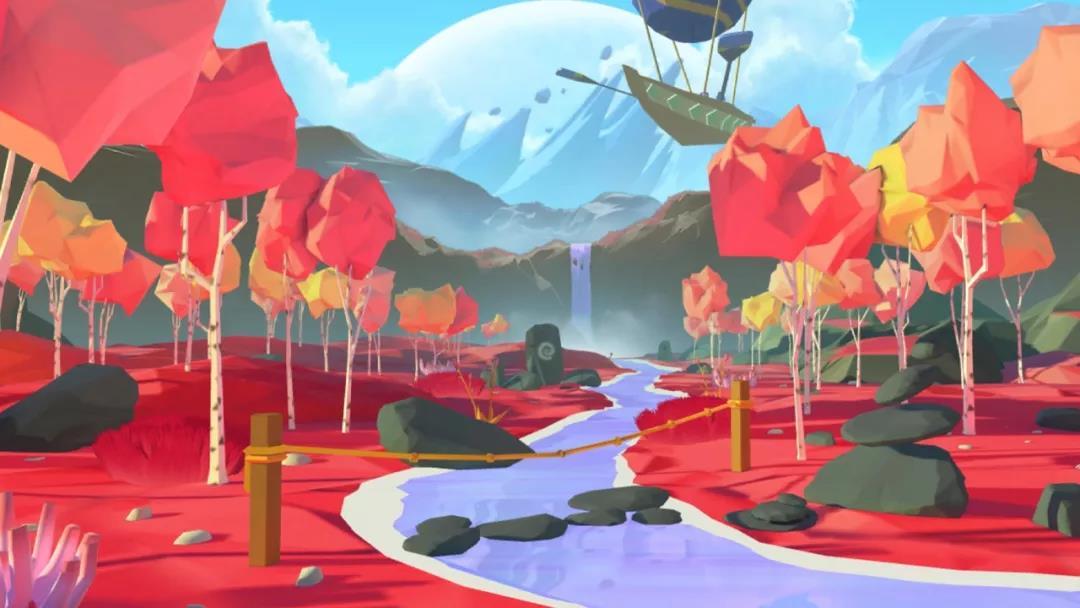
Decentraland
The Sandbox is a more game-focused world and is also the most willing to collaborate with established brands, like this Atari experience.
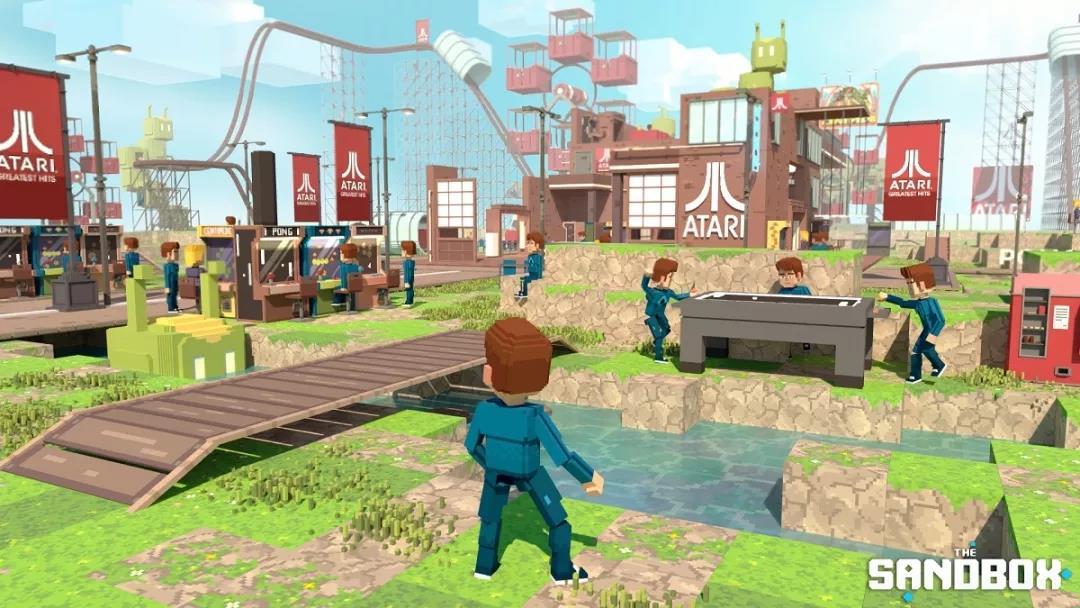
The Sandbox
Somnium Space is explicitly designed for virtual reality and supports body tracking and haptic suits to create the most immersive experience in all blockchain-based virtual worlds. This is the closest web3 gets to "Ready Player One."
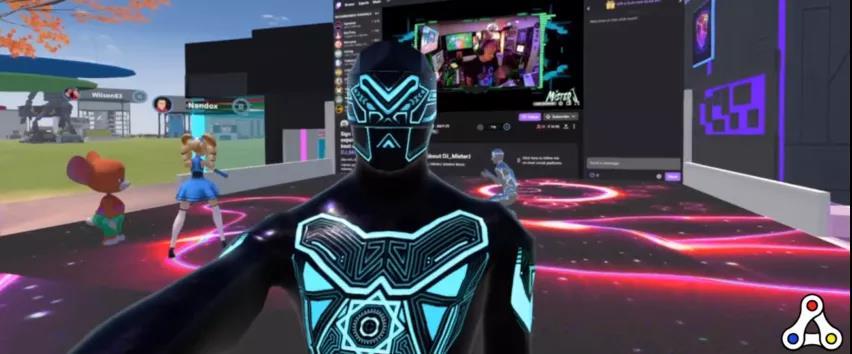
Somnium Space
I encourage you to roam Somnium Space, Decentraland, and The Sandbox. You may see the potential of these worlds and the challenges that need to be overcome for mass adoption. In the coming years, I suspect a few things will happen: game-like interfaces will become the interfaces of web3:
Immersive worlds like Cyber, The Sandbox, Somnium Space, and Decentraland will become richer and easier to navigate.
Non-crypto workplace collaboration companies like Teamflow will make their experiences more immersive and steal share from Zoom and Slack, making more ordinary users accustomed to the idea of being always online in digital spaces.
Even those web3 projects that are not virtual worlds will open shops in these worlds and add more game-like interfaces to the properties they own.
Programming tools like WebGL and three.js, as well as no-code builders like Typedream, will make websites more immersive and interactive. If you haven’t checked out the website for Family Office No. 10 in Yamaguchi, take a look for a glimpse into the future.
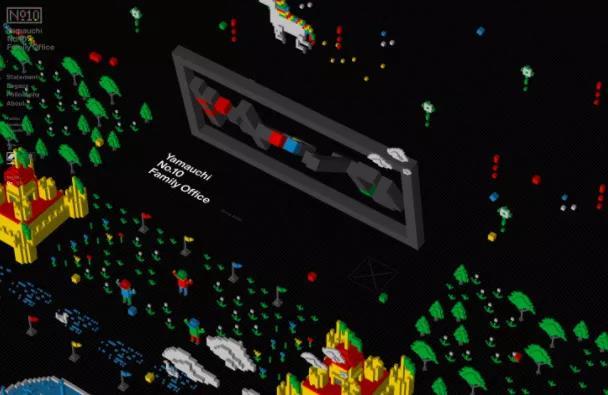
Yamaguchi Family Office No. 10
Cryptocurrency is the in-game currency for great online games, and to break into the mass consumer market, it needs to build game-like interfaces that celebrate the fun and unique properties that the underlying technology provides.
Bridging the Physical and Digital
I’m excited about the Metaverse for all the usual exciting reasons, but there’s a simpler reason: for the Metaverse to achieve sustained mass adoption, it needs to be better than the digital experiences we already have. If meeting in the Metaverse is worse than meeting on Zoom, people will continue to do what they know—meet on Zoom. No one is forcing anyone to use immersive 3D spaces.
But I also don’t think the Metaverse should or will replace physical spaces and interactions. Richer, more immersive web3 interfaces should not compete with the time we spend outdoors, exploring the physical world with family and friends.
Instead, they should compete with the two-dimensional digital experiences that many of us, as remote workers and internet citizens, spend most of our time in. I suspect that a decade from now, returning to the internet of today will feel a lot like returning to Web 1.0 feels now.
Web3 is not about replacing physical experiences but about becoming a bridge between physical and digital experiences, providing the same incentive toolkits that the digital world can currently use for the physical world. NFTs can serve as a scrapbook of your experiences—the concerts and games you’ve attended, the marathons you’ve run—and create a more complete view of self than currently exists in your MetaMask. NFT collectors and degenerates can also be climbers and violinists.
Loyalty programs could be replaced by social tokens, which serve purposes beyond just offering free coffee on your 13th cup. Your web3 experience will benefit from the understanding that the worlds you frequent have of you on-chain, as long as you’re willing to share.
I’m not worried about a utopian future because when you control your wallet and time, you can choose what information to share, with whom to share it, and which worlds you want to enter. It’s the responsibility of application and interface creators to build worlds and experiences worth your time.
Moving Towards the Future
Let me conclude with an important and obvious caveat: I am not a designer, nor an engineer, and I’m not even that smart. In the coming years, more creative and talented people will come up with ideas that will blow everything I’ve written out of the water, and others will join in to build even crazier experiences on top of those ideas.
That’s the allure of composability and compositeness. Based on conversations with builders smarter than me and explorations of new interfaces that have already been built, this is my best guess snapshot of how this phenomenon will develop.
Throughout the history of the internet, new interfaces have unleashed wave after wave of consumer demand. If new technologies are constrained by old interfaces, they cannot reach their full potential. This is not to say that every web3 site will look like a video game or incorporate 3D design—there are plenty of sites on the internet today that are not centered around user-generated content and real-time interaction.
But I do believe that beneath the surface of cryptocurrency lies so much complexity, with so many features being highlighted, that 3D, game-like environments are the right level of abstraction for ordinary users to understand it all.
First, we shape our interfaces; then, they shape us.
 Risk warning
 Risk warning


Popular articles