Foresight Ventures: Redefining NFT from the perspectives of music, four-dimensional, privacy, and interaction

 Currently, NFTs mainly appear in the form of artworks, including conceptual art and generative art. The investment logic of some NFTs is more similar to that of movies and games compared to traditional artworks, and is closely related to community and promotional efforts.
Source: Foresight Research
I. Overview
Current Situation:
NFTs are proof of ownership; they are receipts for your purchase of a work, not the work itself. Everything is connected, and NFTs are one of those connections.
Currently, NFTs mainly appear in the form of artworks, including conceptual art and generative art. The investment logic of some NFTs is more akin to that of movies and games, closely related to community and promotional outcomes.
Future:
The forms of NFTs will diversify; they will not only be images but will also commonly appear in the form of music, videos, and various HTML tags (SVG, iframe, Canvas).
New application scenarios for NFTs will emerge in finance, privacy, and social interactions. Meanwhile, the permanent storage of NFT metadata is essential, and in the future, Arweave will be able to do this well.
A Little Imagination:
NFTs will redefine art, music, and social interactions, perfectly combining technology and humanities, with creators as the architects of the new world.
II. Definition of NFT
A) Original Definition of NFT
NFT (Non-Fungible Token) refers to non-fungible tokens.
a) Non-fungible: Unique characteristics

In simple terms, non-fungible means that each NFT is different and cannot be exchanged directly. For example, Van Gogh's paintings have different themes and degrees of scarcity, so they cannot be exchanged directly. In contrast, two currencies (excluding commemorative notes, etc.) are directly interchangeable regardless of wear and where they have been.
Non-fungibility means that each NFT has a unique identifier, ensuring the uniqueness and scarcity of the NFT, but the scarcity and uniqueness of the work itself are not guaranteed.
b) Token: Traceable, tradable, and transferable on-chain
As a token, an NFT is a receipt for purchasing a work, a proof of ownership, and does not directly represent the work itself. At the same time, NFTs, as digital tokens, are convenient for circulation, publicly viewable, traceable, and verifiable for scarcity, embodying the advantages of the Web era. Of course, some may argue that the disadvantages of the Web have also been brought to NFTs, such as rampant piracy and lack of physicality. This is also a topic we will discuss later.
Is NFT Art?
The explosive phenomenon of NFTs in the crypto space seems to show no signs of weakening, with the floor prices of leading NFT projects rising steadily. More and more celebrities and large companies are starting to purchase NFTs, and even some absurd projects (like the selfie series of an Indonesian guy) have been hyped to sky-high prices. Chinese companies are also rushing to release their own unique NFTs.
However, these non-tradable (although many cautiously say they might be tradable in the future) and centrally stored (with access review "alliance" chains storage) "digital art" works perfectly omit the two properties of public chain NFTs, yet this does not prevent buyers from FOMO-ing and rushing in.

Sotheby's auction house defines NFTs as: "NFTs are the latest medium for digital art." Coupled with the emphasis on "digital art" when NFTs are released domestically, we seem to have implicitly accepted this definition that NFTs are artworks.
From a certain perspective, NFTs do resemble artworks: they are basically images, often incomprehensible, and usually come with sky-high prices. But is the positioning of artworks truly suitable for NFTs? NFTs are non-fungible tokens, or what exactly should they be?
B) Redefining NFT
First, NFTs are essentially not the works themselves, but receipts for purchasing the works, representing your ownership of a certain work. The value of NFTs lies in commercial value, historical value, mimetic value, and ostentatious value.
It is not easy for the public to accept the simplistic view of categorizing the NFT industry as the digital art industry. Most people (including myself) do not understand what should be considered art; perhaps only a few resonate or even experience a spiritual uplift in front of certain NFT artworks.
A more easily accepted and more fitting definition of NFTs might be: Some NFTs are similar to movies or games; they are digital art, but not the traditional artworks framed under museum lights.
Of course, there will indeed be many NFTs related to high art, but most art still consists of branches that are widely understood by the public, such as movies and games. By viewing NFTs through the lens of movies and games, we can easily understand the investment logic of NFTs.
Similarity Between NFTs and Movies, Games
- Essentially, what you buy is not the work itself, but an Access Code (like a movie ticket) or a proof of ownership.
- The cultivation of community and self-development, along with official promotion, is more important than the quality of the work itself.
- Projects may be hot for a while after launch, then cool down. They may heat up again when sequels are released.
- The participating artists, actors, or production teams are very important; they are the core of the project.
- Unlike artworks that have a lifespan of thousands of years and classic pieces, community aesthetics change rapidly, making it difficult to sustain popularity.
Investment Logic of NFTs
- The price of NFTs is highly correlated with the activity level of their community.
- Most projects are a wave, requiring a Roadmap to strengthen market consensus on their price.
- The entire market reflects a trend from Western aesthetic dominance to the development of multiculturalism and diverse communities.
- Innovative projects show market performance far exceeding that of fork projects.
- Similar to commercial films and art films, profile picture NFTs have a lower understanding cost, reflecting better price speculation.
Explaining NFTs Through "Movies/Games"
Ownership

Whenever NFTs are discussed, many people say, "If I right-click and save this thing, it's mine! Why pay for it!" In the internet age, the cost of copying something is lower than in the industrial age, almost to zero. As the image states, NFTs are indeed yours, but even if everyone knows it’s yours, they can still do whatever they want with your NFT.
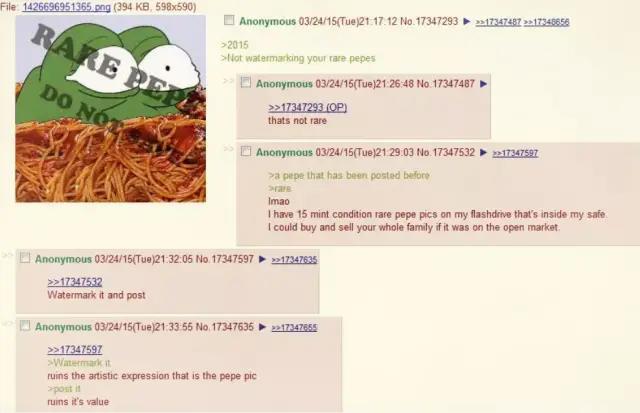
From the perspective of artworks, collectors still need to prove ownership of the artworks; others can also steal them, such as saving a photo of the Mona Lisa. However, we can clearly know from public information who the owners of these works are.
The value of artworks mainly comes from aesthetic value, including the background of the work, scarcity, fame, and copyright value (of course, public interest, etc.). The value of NFTs mainly comes from the identity and status value (ostentatious value) brought by ownership, as well as utility value (mainly from the potential for combinability).
Therefore, the simple aesthetic value being plundered does not significantly impact the value of NFTs, especially since most NFTs do not possess widely recognized aesthetic value.
From the perspective of movies and games, we can find all the pirated sources of movies on the internet and all the cracked versions of games. However, when we play movies or games on our tiny phone screens with mono sound, we lose the cinematic experience of a big screen and surround sound, as well as the experience of playing legitimate games. The experience of pirated versus legitimate is completely different, and the same applies to NFTs.

You can steal it, but it’s useless. Everyone knows it’s fake.
Moreover, the greatest ideal of any creator is to let their work spread. Our pirating actions actually play a positive role in some sense, facilitating the spread of the project. Every time I see someone extensively quoting research written by Foresight Research without attribution, I feel both furious and delighted.
Just like many directors will specifically check pirated DVD stalls to see if their works have been pirated, because being pirated can also be seen as a form of recognition for the creator. Of course, this point is not closely related to the concept of ownership, but it can clarify the significance of NFT piracy. Hiding a purchased work or storing it in a freeport warehouse in Switzerland is the most despicable form of collection. Culture
The NFT ecosystem has already spawned different organizations, much like various organizations in games. Various NFT clubs resemble fan groups of movies or games, holding various online and offline activities, forming communities, and engaging in secondary creations.

For example, the community of apes is very strong, and the community of Punks is also very strong. Displaying avatars can make one a big V on Twitter. An example from movies that comes to mind is the fan community of Jackie Chan creating Rotten Tomatoes. Classification
NFTs are also very similar to the classification of movies and games. We can explore the development path of NFTs based on the classification of movies and games.
Movies have comedy genres, like the Indonesian guy series; movies have popcorn types, similar to various avatar projects, simple and crude, numerous but hard to produce classics; games have sports and esports genres, similar to various GameFi NFT projects, which rely on the quality of the subject matter; movies and games have male or female-oriented classifications, similar to some recent high-quality projects featuring witches.
Movies and games also have series works, similar to various NFT projects with additional issues (Loot), which are prone to fizzling out, becoming worse with each release, with the first batch being the most valuable; movies and games also have adult-oriented types, and there are quite a few such NFTs (even with dedicated marketplaces like adult websites); movies also have sci-fi genres, which can be compared to NFT projects based on the concept of the metaverse, relying purely on imagination.
In the following sections, we will discuss how movies and games can be directly distributed as NFTs and how to achieve pure on-chain storage. Review
Like movies and games, NFT creation must be unreviewed; otherwise, barren soil can only cultivate deformed fruits. Some countries have extraordinary review mechanisms for movies and games, leading to a lack of culture in their film and game industries, with many movies and games becoming mere financial schemes.
Of course, I really enjoy some interesting secondary creations, like the one below, which gives a happy family-style ending to a movie, very festive, hard not to support.

This will also be a challenge that NFTs need to overcome. The dissemination of NFTs and the spread of communities may involve some sensitive content, which may lead to content censorship, which is very frightening. We will discuss this in the following sections.
III. Future Outlook for NFTs

A) NFTs on Arweave
One of the most important aspects of NFTs is: when you purchase an NFT, you do not receive the artwork (you can refer back to the example of the NFT being a Wife); you receive a token, and the content of the token is "I bought this work from a certain author," which is a receipt.
What we are actually buying is just a link to the work? And a receipt? That’s all. The intrinsic value of the NFT work may not change, but the act of "owning it" will gain value through community development and the expansion of its uses. Moreover, the act of "owning it" is digital, public (in most cases), and verifiable.
After understanding that NFTs are just links, we can raise the question: What if the author directly changes the file or URL? After all, many project parties currently use AWS or some decentralized subscription-based storage solutions to store files. If the project party does not want to renew, the file will be gone. This is where Arweave comes into play.

Permanent Storage of NFT Data
Arweave is a permanent storage network and is currently the only permanent storage decentralized network on the market. Arweave only requires a one-time payment to achieve at least 200 years of file storage, truly permanently storing images, videos, music, and various data.
Our NFTs, as links, are typically permanent and immutable on networks like Ethereum. The files that the links point to can achieve permanence through Arweave's permanent storage. The default NFT storage option on Metaplex on Solana is Arweave, and this approach itself is the optimal solution for NFT storage.

On Arweave, users or NFT projects can easily and quickly create a dedicated cloud drive, either publicly or privately; Verto.exchange can serve as an NFT marketplace, Koii is responsible for NFT minting, and Bundlr (their new website looks great) handles cross-chain uploads of NFT files.
In the future, other solutions may also emerge, such as using completely AR-native NFT project templates to create applications, or using SmartWeave's customized NFT contracts, etc.
Our files are permanent, but the links are not permanent; the gateway domain name of arweave.net still needs to be renewed annually. If Arweave's official site does not renew, or if our gateway fails, it may lead to inaccessibility.
The solution to this problem is to decentralize Arweave's gateway (ar.io is doing this!) and promote a prefix format like ar://, as well as introduce standards like ANS for decentralized domain names for files and users stored on the AR chain.
Intellectual Property and Usage Rights Issues in NFTs
Artistic plagiarism in NFTs has always been a hot topic, with one group strongly supporting IP regulations and another group strongly protesting against them. Both groups believe they will be the future of Web3.
The first argument is to execute the concept of intellectual property through blockchain, asserting that works and their creators are inseparable, thus Web3 must protect and implement more comprehensive intellectual property rules. The other group argues that since everything on-chain is provably sourced, there is no need to follow traditional intellectual property regulations, but rather to encourage open creativity.
They tend to view "old" intellectual property as a way to defend privilege, while the open nature of the internet and blockchain, along with community secondary creation, is the cornerstone of NFTs. Based on this, many mirror copies have emerged, such as CryptoPhunks and mphers, which are essentially profiting under the banner of Copy Left.
Technically, the management of intellectual property and usage rights is also closely related to the permanent storage of NFT data. If the entire NFT does not include metadata and authorization statements, then this data is completely mutable; if someone accuses you of infringement, you can simply change the data to avoid infringing on intellectual property and usage rights. This can also be resolved through Arweave.
For these two opposing voices, we do not need to argue about who wins or loses, but rather let both parties be satisfied. Those who want stricter usage rights management can register for strict usage rights management; those who want to open their IP and fully embrace community creation can adopt an open protocol like CC0, making NFT works public property.
There are already registries like Royalty Registry to record corresponding intellectual property and usage rights for NFTs. At the same time, Arweave's Atomic NFT standard can fully achieve this, packaging everything about the NFT, including usage agreements, for permanent storage.
We should not suppress any viewpoint but embrace all viewpoints. Technological progress is not driven by those who change themselves to adapt to the world, but by those stubborn individuals who insist on making the world adapt to themselves.
Embracing all viewpoints is also the spirit of Arweave. Recently, Arweave's founder, Sam, launched a task: to permanently store all news about the situation between Russia and Ukraine on Arweave. Sam requested the storage of all viewpoints, not just those that users deem correct. The correctness of viewpoints will naturally be determined by historians; what we should do is preserve all content without excluding any viewpoints.

The content of the above section is entirely from Pierre of arweave.news. If you want to learn more about Arweave's knowledge and viewpoints, arweave.news has a lot of in-depth content and perspectives suitable for study.
In summary, what we buy as NFTs is not the works themselves, so the permanent storage of the works and the permanent addressing of the works are essential. I believe Arweave will become the finishing touch and the last mile to complete the concept of NFTs.
B) Different Formats of NFTs
Currently, the format of NFT works is mostly images, which is why people often jokingly say that playing with NFTs is essentially playing with a bunch of JPEGs. Recently, we can see an increasing number of other formats of NFT platforms and projects emerging.
Music NFTs (.mp3)
Music NFTs have already become a mature NFT track. Music NFTs provide music creators with permanent royalties and permanent control over their works, linking NFTs permanently with creators; fans can "invest" in the artist's career by investing in the artist's NFTs. The overall revenue has been redistributed due to the emergence of NFTs, reducing the profits exploited by intermediaries, allowing creators and fans to directly gain more revenue.
Pianity

Among music NFT platforms, Pianity stands out by promoting the prosperity of the platform through a creative revenue distribution mechanism.
Pianity is a music NFT platform that proposes a model that can provide collectors with a certain annual return. The Pianity platform generates revenue from the primary sales and secondary trading of music NFTs, then distributes the revenue to each NFT holder based on the ratio of the value at which the user purchased the NFT to the total value of all NFTs.
Since the calculation method is based on the price at which the NFT was purchased, it may lead users to deliberately inflate the NFT price to obtain a higher distribution ratio, which in turn stimulates the market's distributable revenue to gradually increase, attracting traffic attention. Additionally, its token PIA belongs to the profit-sharing token type of Arweave, so users will receive not only the NFT revenue but also the monetization of Pianity's traffic.
The core of music NFTs is the reasonable redistribution of profits, and designs like Pianity allow collectors, creators, and platforms to enjoy reasonable returns, reflecting the true value of music NFTs. Async Art
Most platforms allow creators to NFT the entire music work, while Async Art can break the work down into subcomponents (note that this is not fragmentation). These subcomponents form two concepts: when the subcomponents are combined, they represent the entire music work; when the subcomponents are separated, they represent different layers (tracks) of the music work. Each subcomponent layer is tokenized.
When music artists create music, they use DAWs, and during the creative process, they will have different tracks, including drums, bass, vocals, etc. By adjusting these track layers, they can create new music works with similar styles but different details, similar to generative art in avatar projects.

Developers are the creators of Web3, and creators are the creators of NFTs. Async Art has innovative NFT creator tools that allow the creation of artworks to be programmable, data-driven (such as time variables), with permanent royalties and user-friendly features.
Not only music NFTs, but PFPs and other artworks can also use Async Art's creation tools, which not only bring the aforementioned advantages to artists but also greatly simplify the creation process and reduce a lot of development costs.

Async Art brings disassemblability and the possibility of secondary creation to music NFTs. The music industry has various sampling and remixing for re-creation; just one Canon has already given birth to countless variations.
Music is generated from the disassembly and creation of several notes, and secondary creation of music works will always be an important part of music. The emergence of Async Art fills this gap in music NFTs and is even closer to the original creative process than image NFTs.
Future of Music NFTs: Fan Economy
Currently, most music NFTs still focus on the music works themselves, but there is more space to explore regarding the audience of music, such as music subculture or the identities of artists or fans. The classification of music is diverse, and even within each genre, there are subdivisions. There are often rock listeners who look down on electronic music fans, and those who enjoy rap may not tolerate slow ballads. For music listeners, this is part of their personal identity and cognition, and this part can be reflected through NFTs.
Some may be die-hard fans of Nirvana, having listened to every song countless times; others may love Justin Bieber, attending every concert, but none of this can be verified or displayed until the emergence of NFTs.
NFTs can serve as proof of a fan's familiarity with a band and their works, even their purchasing power, acting like badges, and being traceable and immutable, serving as a certification of a music fan's identity. Fans can use this certification to showcase their activity level, thus earning more "loyal fan rewards." One example is: during concert ticket sales, fans can present their fan NFTs to prove they are loyal fans, thereby gaining "ticket purchase whitelists," avoiding being snatched by bots or scalpers.
At the same time, tickets as NFTs become verifiable and transferable, which is a huge demand for fans who have purchased overpriced scalper tickets but cannot enter the concert. The ticketing market, including concert tickets and movie tickets, is expected to reach $72.3 billion in 2022.
Music is a social and imaginative universal language that has created countless fan and community cultures. At the same time, music NFTs also bridge the gap between fans and creators, making creators in the Web3 era realize that the quality of works is more important than quantity. We look forward to more creative and innovative projects in music NFTs to explore future paths.
Video NFTs (.mp4)

The medium with the least information density is text, followed by images, then music, and finally the most rich and intuitive is video.
Video NFTs allow creators to directly receive their deserved earnings, rather than being exploited by platforms. A video with millions of views can only earn revenue from a portion of the ad revenue given by the platform.
Glass.xyz
Among video NFTs, there is a platform called Glass.xyz. Glass.xyz primarily sells high-quality MV NFTs, which are closely related to the music NFTs mentioned earlier, as almost all concepts related to music NFTs are perfectly embodied here. At the same time, Glass.xyz innovatively created a PRISM NFT protocol aimed at solving the liquidity and distribution issues of NFTs.
On the Glass.xyz platform, the revenue issue for creators is very well addressed. A video may only have a few dozen views, but the creator can earn hundreds of dollars from loyal fans, which is more motivating for creators and promotes the positive development of the entire industry compared to centralized video platforms.

The main issues with video NFTs are storage and browsing. This problem is not difficult to solve. We can use centralized cloud services (a not-so-good solution) or use Arweave for storage and meson.network to solve bandwidth issues.
SVG, iframe NFTs (\)
For Web3, applications are basically running on browser web pages. The skeleton of a web page consists of various HTML tags. Besides music and video, we can also explore other HTML tags, such as SVG and iframe.
SVG is a vector graphic format that, compared to ordinary images, resembles images drawn on a web page through stroke descriptions. By adding some inline CSS animations, SVG can achieve very cool animated NFTs, and unlike pure .gif formats, it won’t blur when enlarged, offering higher image quality. SVG can be directly stored in contract code with just a string. For example, Uniswap V3's LP NFT is completely stored on-chain as base64 SVG.
Iframe is a webpage tag embedded within a webpage, essentially a complete HTML page (like a small map embedded on a restaurant website). Through the iframe tag, we can embed entire pages into the preview box of OpenSea. Each NFT of this project is an independent web game.
Since it is an iframe, you can directly try it out in OpenSea. Different DApps can also embed other web NFTs into their own pages in the form of iframes. The use of iframes brings infinite possibilities and combinability to NFTs in the Web. Who can resist playing a game of Alien Invasion while slacking off?
There are actually other NFT projects playing with HTML tags, and we will continue to discuss them in later chapters.
Web3 is the next generation of the Web, and DApps are usually web-based, which means developers need to keep up with W3C standards. We look forward to NFTs making more innovations based on HTML, CSS, and DOM standards.
Matrix NFTs
Matrix NFTs mainly refer to NFT works as a 2D or 1D list (which can be understood as similar to QR codes). These projects basically use a matrix as metadata, combined with independent "renderers" to create specific images for the matrix. A typical example is a map project, where the NFT points to a 2D list, representing rows and columns, with each element representing different resources on the map.
Additionally, there are more novel concepts like AI NFTs. ASM adds the concept of a brain to character roles, allowing players to purchase brain NFTs to give characters "souls." The brain here also exists as a matrix NFT similar to a genetic concept, containing a Genome matrix, and then paired with ASM's own models to explain the DNA of each brain.

The most fun and combinable part of matrix NFTs is that through different renderers, ecosystems can establish their own renderers to reuse an NFT, which is completely the classic gameplay of Loot.
C) Truly "Artistic" NFTs

In this section, we will reconnect NFTs with art, returning to the logic of digital art, exploring some NFTs that embody pure artistic concepts. Some works in NFTs will innovate new art and revive certain characteristics inherent in art itself.
Typically, valuable artworks appear in the form of paintings and sculptures. Recently, more and more "traditional" artists have begun to release their works in the form of NFTs, making NFTs increasingly attractive to them. The art world is undoubtedly the most imaginative and conceptually driven market. For decades, the art market has been trying to liberate itself from physical objects through reasonable media.
Conceptual Art
Conceptual art originates from Duchamp, who believed that an artwork fundamentally represents the artist's thoughts. Conceptual art departs from materiality, replacing physical objects with ideas. The work in the image below is an example of conceptual art; you can explore its background story and the artist's intent. You can buy the physical object in the work, but there is no such thing as art; there are only artists and concepts.

Conceptual art consists of ideas, not the realization of ideas. When purchasing a conceptual artwork, what you receive is merely a certificate recording ownership (Wow, this sounds just like an NFT). In other words, each conceptual artwork is a Meme.
Anyone can perform a conceptual artwork, but only the owner can perform it "authentically." The certificate of conceptual art is essentially a simulated NFT, conveying nominal ownership of an abstract concept. Conceptual art has failed; the traditional art world still desires to flaunt tangible artworks, as the ownership of abstract concepts in conceptual art is too abstract, selling nothing but air (concepts).
NFTs solve the problem of conceptual art. NFTs attract collectors who focus on digital art and do not care about physical collections, while also building an automated and transparent NFT market on a public network with verifiable public ownership.
Interactive Art NFTs
Interactive art is a form where the author sets rules to provide a meta-work, encouraging visitors to participate in changing the form of the work. For interactive art pieces on the internet, the author writes code, and visitors click and click, causing the work to change. A good example is Flash mini-games; I consider them a form of "interactive art."

Another concept closely related to digital interactive art is Creative Coding, which is coding for the sake of being cool, not for utility, which is very artistic. Digital interactive art and Creative Coding can essentially be considered the same thing. If we were to find an embodiment of this in HTML, it would be the Canvas tag.
After discussing so many concepts, it may not be easy to understand; for example, the little thing below from Rick and Morty is interactive art + Creative Coding. Clicking and dragging the mouse can provide a very entertaining experience.

Olta.art
A very interesting project in interactive art is Olta.art. The platform features entirely interactive NFTs that you can directly click into and operate. Words cannot describe such an interactive experience; it is very artistic.
The interactive experience is the selling point of interactive art + Creative Coding NFTs. This is similar to watching a movie or listening to an opera; you pay to watch the big screen and high-quality sound in a cinema, buying a 90-minute pleasurable experience. The more virtual and experiential something is, the more it is worth cherishing.
Fourth-Dimensional NFTs
Time is a very seductive concept. Everyone experiences time differently, but for us, time is an ever-advancing creator + destroyer.
Bitcoin and Ethereum are both constantly ticking "clocks." The blockchain is a random Gaussian clock that relentlessly moves forward. Moreover, the clocks of Bitcoin and Ethereum can sometimes even be reversed; interestingly, for animals, the faster the ticking, the shorter the lifespan.
Many NFT artworks revolve around the passage of time, making some changes. For example, Alien Clock or Moon in Moon. "Multidimensional life is watching this clock, contemplating the impermanence of existence and the infinity of the universe." Of course, the concept of "time" as we understand it is different in higher-dimensional spaces.

There are also projects that deal with the cycles of time, such as WeirDAO's gN(dReaM^16)Gm. Day after day, we experience the rising and setting of the sun, which gives us some understanding of time.

Or perhaps streaming payments can also be considered a blockchain work related to time.

The concept of time is closely related to blockchain; NFTs, in many cases, serve as proof of time, proving that one participated in certain activities or possessed certain knowledge a long time ago. NFTs that change based on the element of time can be considered unique and distinctive artworks in the blockchain.
Customized NFTs
Initially, the significance of portraits was based on religion or rituals, until the early Renaissance, when the first batch of personal portraits emerged in Europe. Besides royalty, some wealthy individuals could also request portraits. Each portrait had unique characteristics of the person depicted, moving away from the previous uniform and rigid state.

The Three Talismans of the Ming Dynasty and Contemporary Crypto Punks
For example, Pixel Portraits creates customized NFT works in the style of Crypto Punks. Users pay a certain fee and ask the community to help create according to their requirements. Most of the works created so far are also related to celebrities.
This also signifies the gradual integration of NFTs with reality; original NFTs were purely virtual products, but when people truly have the opportunity to decide what should be created, they still choose characters and story images they understand in reality.
An increasing number of customized works can be seen as a renaissance of NFTs. This allows people to break free from mere speculation and enjoy the cultural, artistic, and humanistic atmosphere of the NFT circle.
D) Privacy NFTs
In most cases, buying NFTs is to "show off" on the public blockchain network, but as mentioned earlier with music and video NFTs, works in these forms are relatively not so easy to show off. For instance, sharing music, long texts, and videos in social circles rarely gets attention, while selfies, being more concise, attract more focus.
At the same time, the primary purpose for collectors purchasing music and video NFTs is often to support creators they believe in or see potential in, making the question of public visibility less important. This has gradually nurtured the demand for privacy NFTs.
Moreover, a blockchain version of OnlyFans is also a wonderful thing. Privacy NFTs become even more important, as we do not want some of our personal preferences to be exposed on the public network.
Privacy NFTs generally include Unlockable Content, hidden content that only the NFT owner can view. Below is an example of Unlockable Content (imagine your favorite OnlyFans creator), but it is not an NFT. The difference between privacy NFTs and traditional pay-per-view is that the distance between creators and collectors is closer, and both parties gain more.
Currently, major public NFT markets like OpenSea offer Unlockable Content options for individual NFTs, but only support Markdown format text and cannot directly upload files.
In the Cosmos ecosystem, there is Secret Network, which has an NFT market called Stashh. Stashh tends to create globally default privacy NFTs, with additional privacy settings for NFT collections (such as hiding collections and owners). For individual NFTs, there are more permission controls for locking, and NFT attributes exist in Key and Value forms.
You can set the NFT's fully public attributes (similar to ordinary OpenSea NFT attributes), protected attributes (Key public, Value only visible to the NFT owner), and fully private attributes (entire attributes only visible to the NFT owner). However, it still cannot directly upload files, only presenting private content in the form of links or plain text. Quentin's NFT was sold on Secret Network.
A more elegant implementation method is Darkblock. Darkblock connects the creation of privacy NFTs, allowing not only text uploads but also uploads of almost all formats of Unlockable Content. On Darkblock's page, you can directly drag and drop files for upload, and the files will be stored in Arweave's permanent network.
Here’s an extra point of knowledge: files stored in Arweave are not necessarily public; you can encrypt files yourself, and files uploaded through Ardrive also support private uploads via AES256-GCM and cloud drive IDs.
We look forward to privacy NFTs. Privacy NFTs will provide creators with more choices; for private content, creators can mint it in a private form, protecting the privacy of collectors while bringing them closer to fans.
E) Financial and Game NFTs
Financial NFTs
Art NFTs have a market of about $50 billion, game NFTs have $10 billion, and digital trend NFTs have a market of $1 trillion. The market for financial NFTs is much larger than the sum of these.
The ownership of Uniswap V3's LP is issued through NFTs. There are now dedicated markets for financial NFTs, such as Solv. In terms of representing ownership, NFTs can precisely optimize some issues.
However, personally, I do not feel that this has particularly explosive potential, as it seems to be NFTs for the sake of NFTs; rather, art-related NFTs excite me the most. I hope the future development of financial NFTs proves me wrong.
Game NFTs
In-game items and characters as NFTs represent a huge gameplay opportunity. I won't elaborate on the well-known projects. What’s more interesting is the perspective of traditional game companies on NFTs.
By adding asset NFTization and Play-to-earn, game manufacturers share some of the profits with users, but there are also many blockchain game projects that profit by selling NFTs. Game NFTs mostly exist as expensive entry tickets. For a considerable number of players, playing to earn is not a very gaming thing.

Traditional gamers have a natural resistance to blockchain technology, as mining has indeed contributed to the sharp rise in hardware prices. When news of multiple traditional game manufacturers preparing to issue NFTs emerges, it often receives opposition from many players. Games like CS:GO have created very good economic systems without relying on NFTs, and these manufacturers can earn plenty without needing to offend a portion of players by adopting new technologies.
Whether to use NFTs, when to use NFTs, and how to use NFTs are new questions for game manufacturers.
F) Cross-Chain NFTs
What has been united must be divided; what has been divided must be united. Cross-chain is the ultimate goal of blockchain and Web3. Currently, there are countless token cross-chain protocols, but NFT cross-chain is often overlooked. Everyone is obsessed with token cross-chain because it requires spending money to do things on different chains.
However, NFT cross-chain is usually (seemingly) solved under the multi-chain support and aggregation of markets or social protocols. But whenever a new ecosystem emerges, there will always be imitation NFTs of avatar NFTs on the Ethereum chain, proving that the issue of NFT cross-chain has not been resolved.

Axie Infinity directly hard-migrates NFTs to its sidechain; Cool Cats issues different series on different chains; Fast Food Nouns stakes NFTs from the Ethereum chain and then "clones" them to other chains, where the cloned NFTs cannot be transferred and can only be used for gaming; Immutable Apes X has created a tool.
They allow NFTs on L1 and Immutable X to move back and forth; Trove and Mural are doing L1 NFT custody to achieve cross-chain; or there are projects like UMA working on the composability of cross-chain NFTs, where an NFT on one chain has an Action that can cause an NFT on another chain to change accordingly.
For cross-chain NFTs, my view is still to differentiate by project or by NFT type to provide different cross-chain services, as achieving a global unified NFT is fraught with difficulties and hard to implement. The vision for cross-chain NFTs is still very grand and is a key ultimate path for the future multi-chain universe.
III. Conclusion
NFTs are a new paradigm in the art world and the Web, a crossroads of technology and humanities, perfectly combining and innovating both.
25 years ago, John Doerr predicted: "The internet is the greatest and most legitimate wealth creation activity in the history of this planet." Today, Crypto has taken the baton from the internet, becoming the greatest wealth creation movement. The position of NFTs within this is undeniable; the greater the controversy, the greater the value. When Woodrow Wilson first learned about the concept of NFTs, she remarked that it was as surprising as her first encounter with the internet.
When we look at NFTs, we see not just JPEGs, but the community creations and meme culture of Pepe, the community cohesion of avatar projects, the combinability of Loot, the innovation of true art, the relationship between creators and fans, and reflections on power. Almost all assets in the world exist in a non-fungible form; NFTs will redefine the world. NFTs are far more beautiful than imagined.
 Risk warning
 Risk warning