Messari: Detailed Analysis of Filecoin's Q2 Operational Data and Ecological Progress

 In the second quarter, Filecoin saw growth in protocol revenue, storage transaction volume, and the number of ecosystem projects.
Written by: Mihai Grigore, Sami Kassab, Messari researchers
Compiled by: iambabywhale.eth, ForesightNews
Key Points:
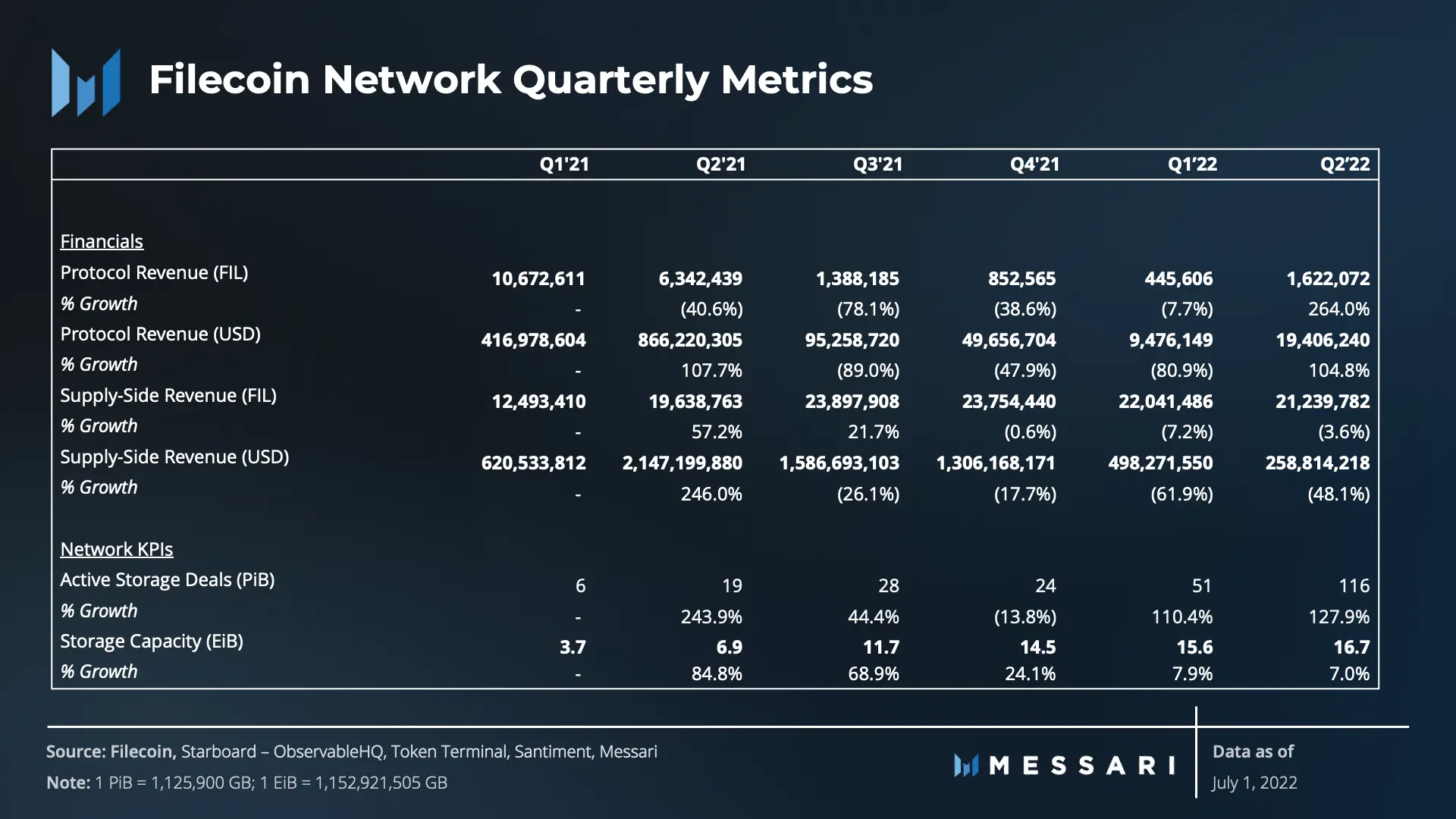
- The second quarter of 2022 was a strong growth quarter for Filecoin, with active storage transactions increasing by 128% quarter-over-quarter and network storage capacity growing by 7% quarter-over-quarter.
- In FIL terms, protocol revenue increased by 264% quarter-over-quarter, but due to the HyperDrive upgrade in July 2021 that reduced network transaction fees, this figure decreased by 74% year-over-year.
- As storage providers continue to expand their operations in Europe and the United States, supply-side revenue in FIL terms only decreased by 4% quarter-over-quarter.
- The number of projects based on Filecoin grew by 32% in the second quarter of 2022, indicating a healthy development of its ecosystem.
Network Revenue
The Filecoin blockchain is jointly utilized by demand-side (i.e., storage users) and supply-side (i.e., storage providers) participants. Any storage transaction or proof requires network fees based on the transaction. All network participants—whether demand-side or supply-side—must pay this fee to interact with the network.
According to our recent in-depth analysis of Filecoin's revenue structure, protocol revenue is the total of all network fees, excluding the "tips" charged by block miners to expedite transactions, while "tips" along with token rewards paid to storage providers constitute the supply-side revenue.
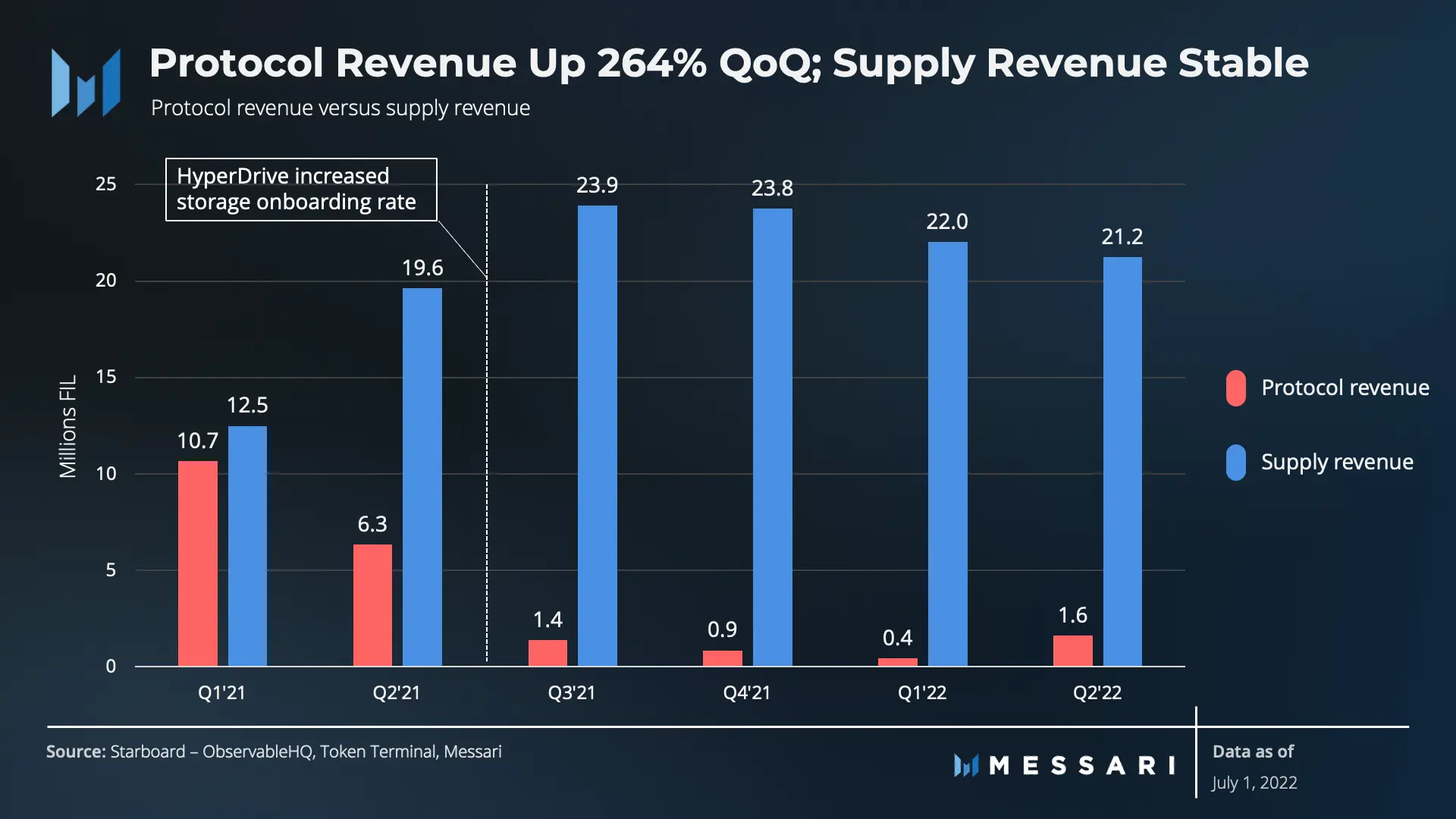
The protocol revenue of the Filecoin network increased by 264% quarter-over-quarter. This is the first positive growth quarter for protocol revenue in five quarters. However, it still decreased by 74% compared to the same period last year.
This low level of protocol revenue is due to the HyperDrive network upgrade. Launched in July 2021, HyperDrive is a mechanism that expands throughput to 10-25 times its original capacity. A key update of HyperDrive is the aggregation of storage proofs, which significantly reduces congestion and frees up block space. While the HyperDrive upgrade benefits most network participants, it has reduced protocol revenue due to the decrease in transaction fees.
In FIL terms, supply-side revenue decreased by 4% quarter-over-quarter, and in USD terms, it decreased by 48%. Near-zero storage fees have impacted supply-side revenue as they limit the income of storage providers. Potential future revenue sources for storage providers may include other fees, such as those from smart contract applications or decentralized computing services. Currently, near-zero storage fees are achievable due to the dynamics between supply and demand on the network, as described below.
Network Storage Supply
Storage Capacity Growth
Filecoin's open market strategy and incentive mechanisms enable storage providers to offer storage capacity, participate in transactions, and engage in price competition. By paying block rewards in the network's native token (FIL), Filecoin incentivizes storage providers to contribute storage capacity to the network.
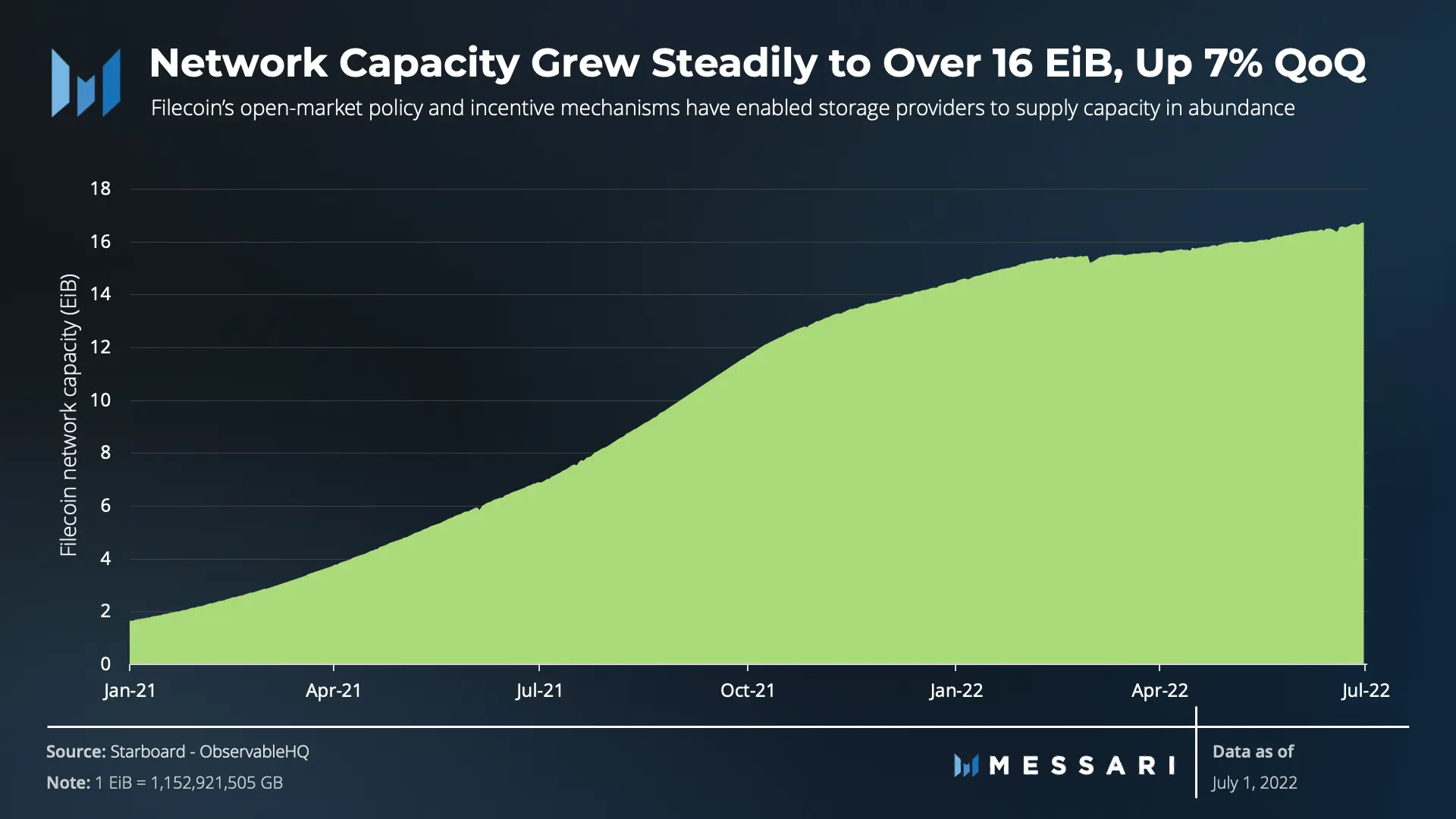
Regardless of overall market conditions, Filecoin's committed storage capacity has steadily increased over the past six quarters. As of the second quarter of 2022, the network's storage capacity exceeded 16 EB, a 7% increase from the previous quarter. This network capacity is equivalent to over 65,000 copies of Wikipedia or 1,600 complete movie archives from Netflix.
Storage Capacity Distribution
Filecoin's storage capacity is provided by over 4,000 decentralized storage providers distributed globally.
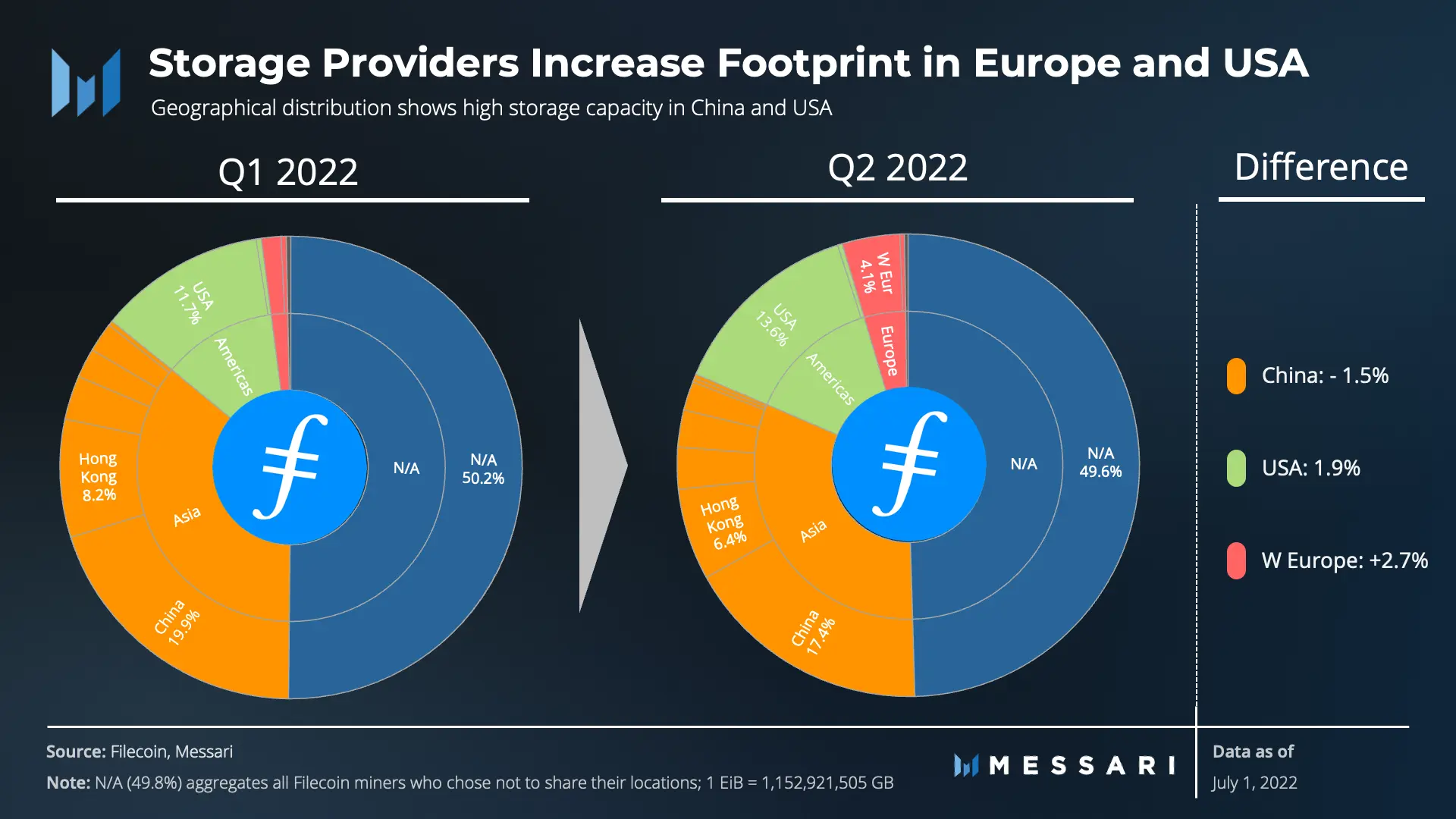
Data shows that nearly half of the storage providers choose not to disclose their locations, with higher storage capacity in Asia (32%) and North America (14%). Throughout the second quarter of 2022, storage providers became more geographically diverse: network capacity has gradually been replaced by storage providers from other regions. Notably, storage providers increased their operations in Western Europe (+3%) and the United States (+2%) to partially offset regulatory concerns in China.
Prominent examples of storage providers built on the Filecoin network around the world include: Seal Storage (Canada and the United States), Non-Entropy (Japan), Origin Storage (Hong Kong, Singapore, United States), and Dcent (Netherlands).
The dynamics of the supply side only reflect one aspect of network activity, while the other side is reflected in demand.
Network Demand
Growth of Storage Transactions
Filecoin's demand comes from storage in both Web2 and Web3 domains. The most direct indicator of Filecoin network demand is the amount of data stored in active storage transactions between storage users and storage providers.
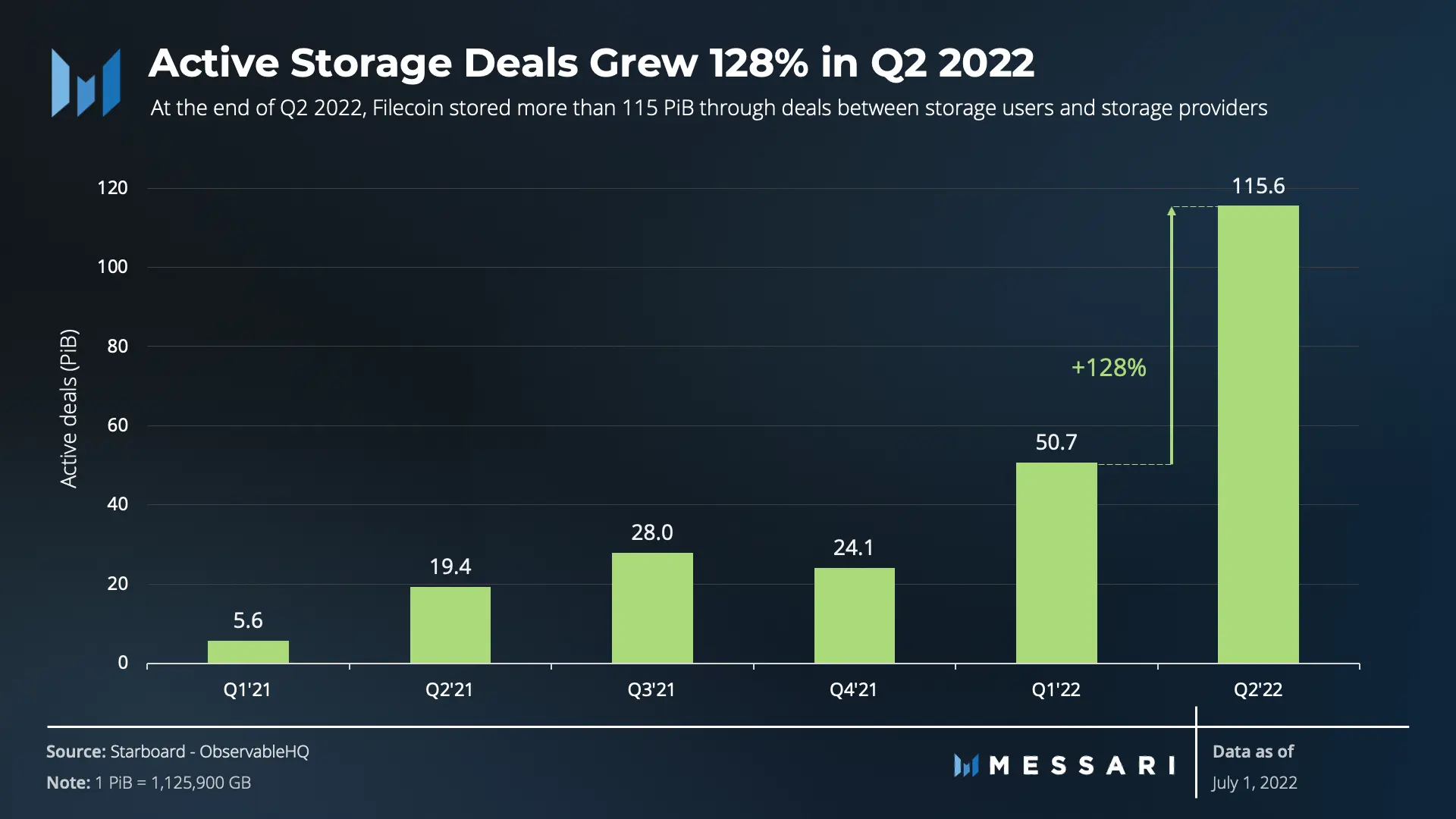
By the end of the second quarter of 2022, Filecoin stored over 115 PB of data through active transactions, a 128% increase from the previous quarter. This can be attributed to the low, nearly zero fees charged to users for storing data.
Storage Transaction Details
To prevent storage providers from gaming the network rewards and to increase useful storage capacity on Filecoin, the Filecoin Plus incentive program was developed. This program incentivizes storage providers to participate in transactions of verified data by increasing their chances of winning block rewards. To compete for storage transactions, storage providers continuously lower fees. This has led to storage being offered at little to no cost.
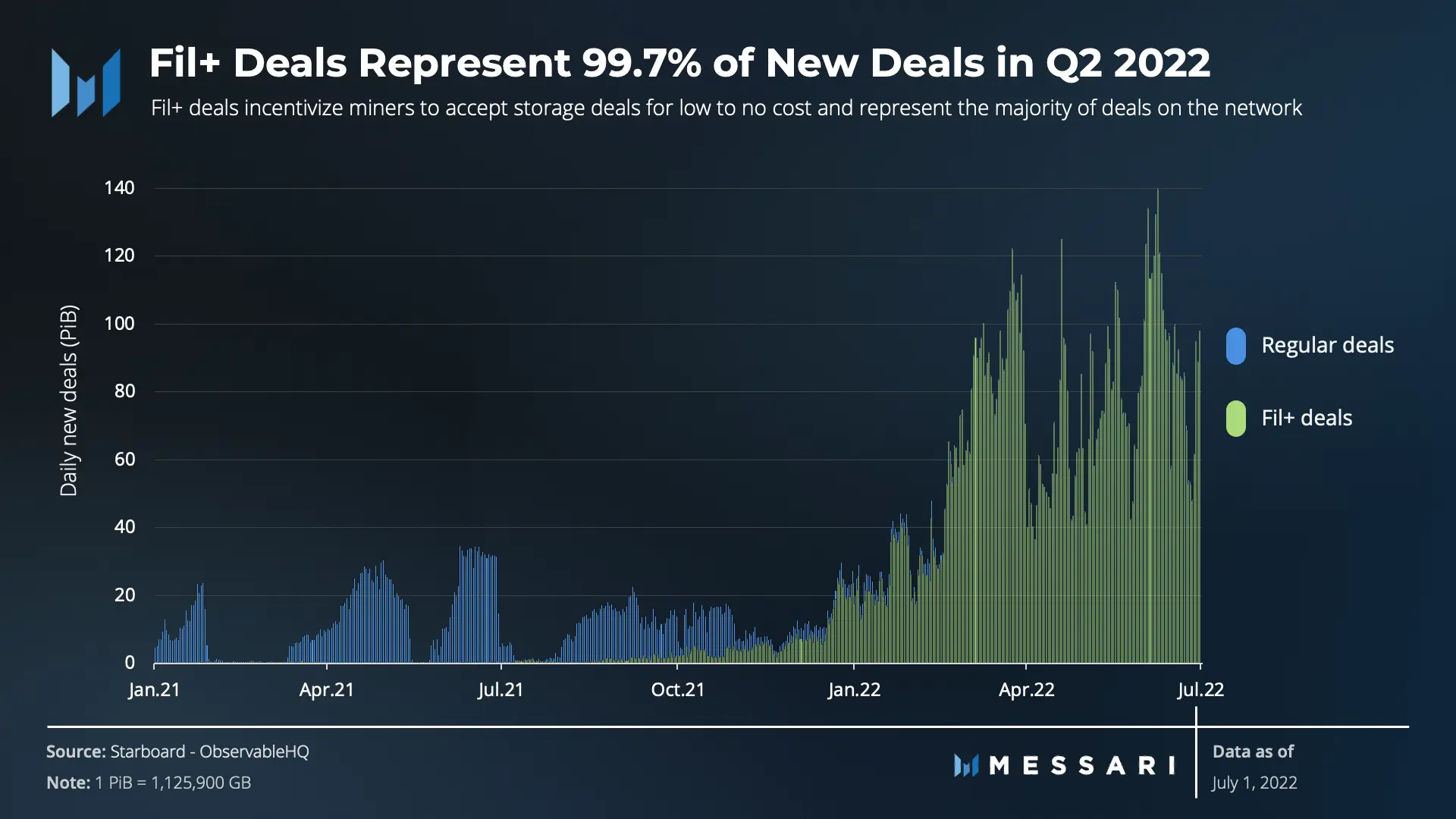
Since the fourth quarter of 2021, there has been a transition from Filecoin Regular (unverified data transactions) to primarily Filecoin Plus (verified data transactions). This shift corresponds to a sustained upward trend in Filecoin Plus transactions. Filecoin Plus transactions accounted for over 99% of all new transactions in the second quarter of 2022. The substitution of Filecoin Plus transactions for Filecoin Regular transactions, combined with a significant increase in new transactions, indicates that the verified data incentive mechanism is functioning as planned.
Filecoin Plus further enabled two major services: NFT.Storage and Web3.Storage, both designed to provide fundamentally free storage on Filecoin. These services offer a simple user interface for end users and act as aggregators, bundling data from multiple users and storing it with storage providers.
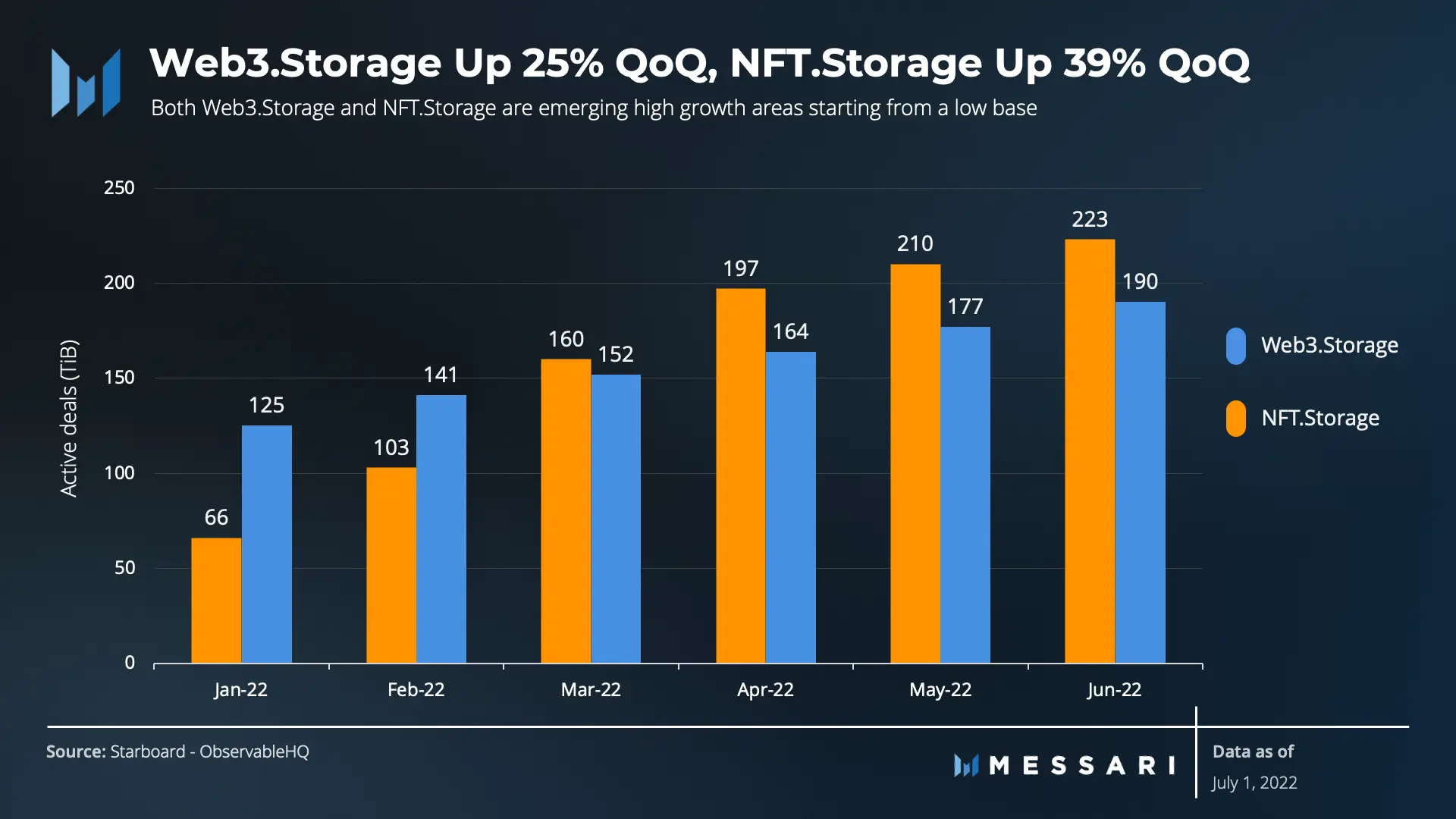
NFT.Storage is a service that provides a simple user interface specifically for storing NFT content and metadata on Filecoin. It focuses on achieving permanent redundant storage through dedicated IPFS servers managed by NFT.Storage and Filecoin. The simplicity of the service has attracted a wide range of users, from individual artists to large marketplaces like OpenSea, MakersPlace, MagicEden, Holaplex, and Project Galaxy, for permanent NFT storage.
Similar to NFT.Storage, Web3.Storage is a service that simplifies the process of storing and retrieving Web3 data on Filecoin for developers and end users. It emphasizes making it easy for developers to integrate Filecoin storage into their applications.
By participating in the Filecoin Plus incentive program, both Web3.Storage and NFT.Storage are able to provide storage on the Filecoin network without charging end users additional fees. Overall, both services experienced significant growth in the second quarter of 2022—Web3.Storage grew by 25%, while NFT.Storage grew by 39% quarter-over-quarter. The launch of the Filecoin Plus program not only made strides in generating demand but also fostered collaboration in incubating new businesses and use cases built on Filecoin.
Ecosystem Development
Filecoin is actively supported by multiple organizations with a shared goal of developing the Filecoin ecosystem, including Protocol Labs, Filecoin Foundation, and Outercore. Together, they form the ecosystem working group. The responsibilities of the ecosystem working group participants include maintaining and upgrading the underlying protocol, supporting ecosystem development, and facilitating governance.
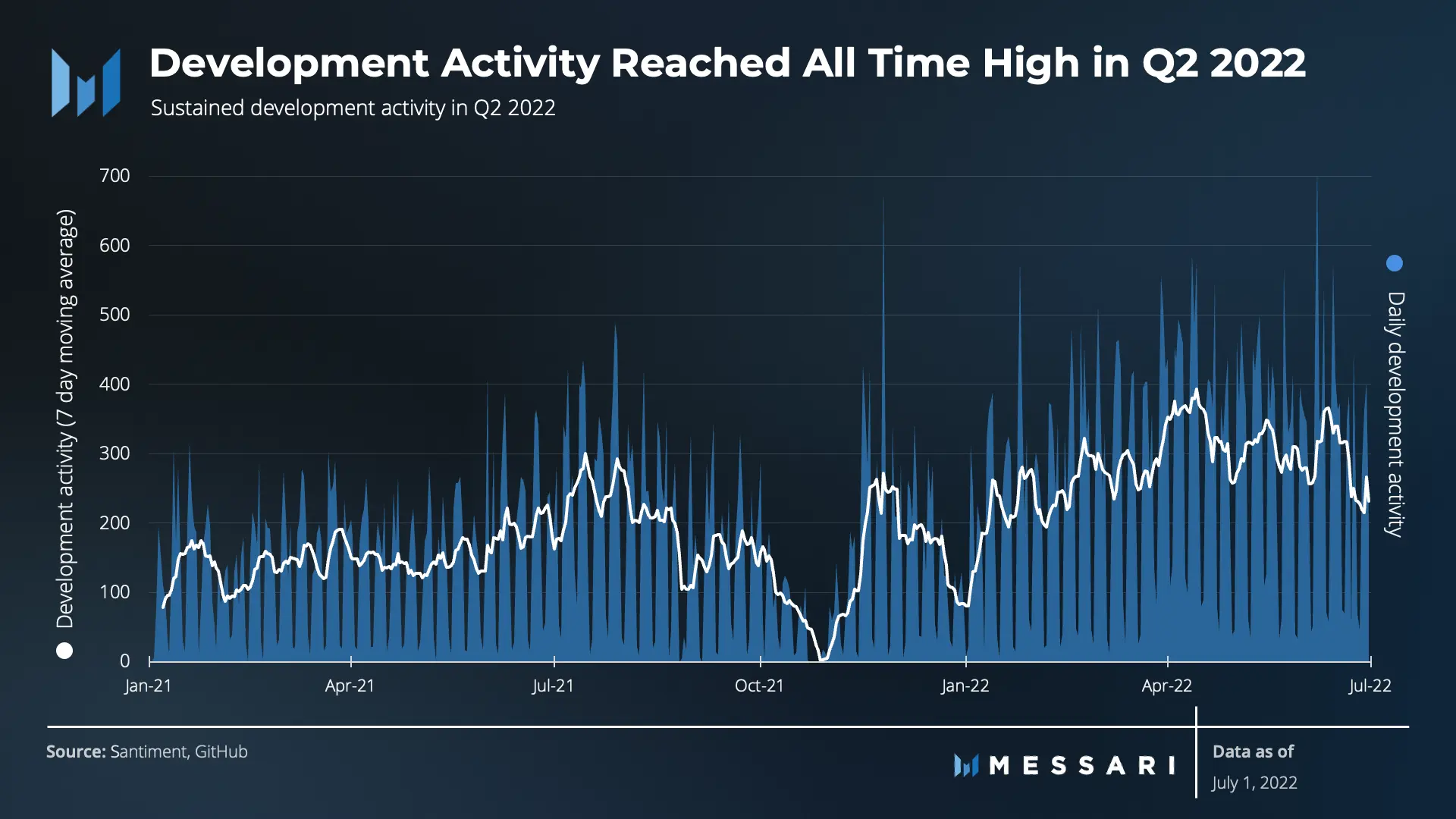
These efforts have translated into Filecoin's development activity reaching an all-time high in the second quarter of 2022. The ecosystem has been actively expanding channels for developers and builders through activities such as hackathons, accelerators, grants, mentorship, and growth support. This has resulted in a 32% quarter-over-quarter increase in projects built on Filecoin. A significant portion of this growth comes from new projects participating in accelerators, increasing from 29 in the previous quarter to 114 in the second quarter of 2022, nearly a fourfold increase.
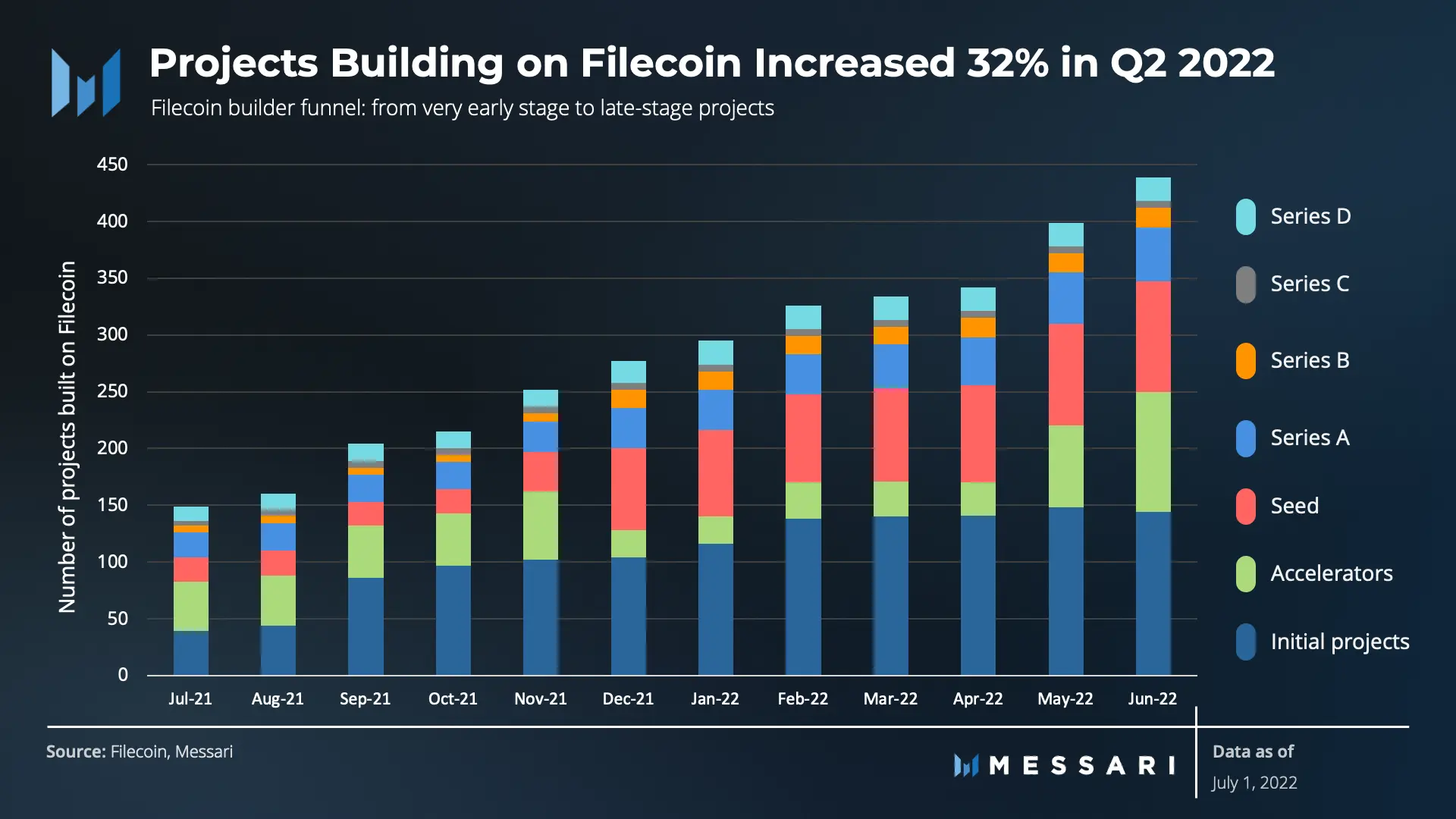
Currently, there are over 450 projects being built on Filecoin. The Filecoin ecosystem is directed towards various use cases: from decentralized storage of NFTs to music and video streaming, to the metaverse and gaming.
 Risk warning
 Risk warning