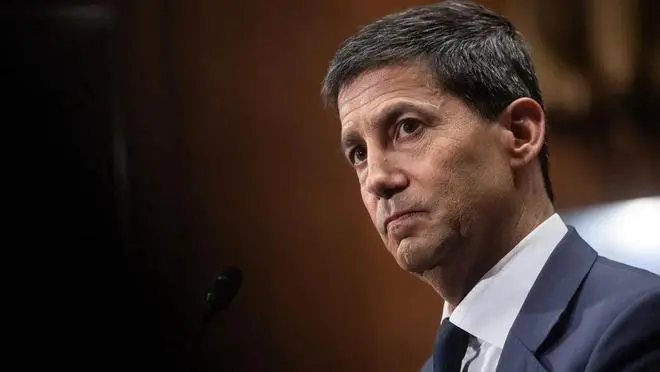
SBF discusses regulation: how stablecoins are classified, the SEC's regulation of spot issues, and the impact of a clear regulatory framework on the industry

 What is the direction of regulation? Are tokens classified as securities? What issues does current regulation face?
Source: FTX
As cryptocurrencies move towards the mainstream, the U.S. Treasury, SEC, CFTC, and regulatory agencies around the world are looking to regulate cryptocurrencies. This article will summarize recent regulatory trends and focus on FTX founder SBF's views on regulation, helping readers understand the current regulatory landscape.
FTX founder Sam Bankman-Fried (SBF) was a guest on the well-known blockchain podcast “UNCHAINED” last week. In the podcast, SBF discussed various regulatory issues, including the regulation of stablecoins, the risk management of algorithmic stablecoins and crypto lending platforms, and the impact of clearer regulatory frameworks on the industry.
For many crypto supporters, the best regulation is no regulation at all. However, following the collapses of TerraUSD, LUNA, and Three Arrows Capital, officials have had to consider the financial risks posed by cryptocurrencies from the perspective of investor protection.
SBF stated that over the past six to nine months, regulation has begun to emerge from various angles, including stablecoin regulation, whether tokens are classified as securities, the regulatory authority of the SEC and CFTC, and CFTC's futures regulations, among others.
He further analyzed that global trading platforms like FTX will need to expand their business in many countries, which can be done through locally regulated companies to ensure compliance. However, this is merely "compliant operation."
The real question is: what is the direction of regulation?
SBF indicated that for trading platforms, core operations involve trading platforms, clearing houses, matching engines, and trading front-ends. These operations are separated in traditional financial markets, so operating a trading platform requires clarifying which licenses are necessary to apply for.
Additionally, the current definition of whether a token is classified as a security is still unclear to regulators. These uncertainties are reasons why crypto startups are struggling to move forward.
SBF believes that currently, lawmakers prioritize consumer protection and industry regulation:
"I think the three pillars of regulation are stablecoin regulation, market regulation, and token registration. Among these, stablecoin regulation is the most frequently mentioned by legislators. Market regulation focuses on which agency regulates and how to legislate. The emphasis of token registration is mainly on determining whether it is a security."
It's like waiting for a new regime and new system, somewhat ambiguous.
Is a token a security?
Recently, the two major U.S. regulatory agencies, the SEC and CFTC, have been debating the regulatory authority over cryptocurrency spot markets. The main point of contention is: Is a token a security?
The SEC's position is to regulate cryptocurrencies under existing securities laws. In other words, if the way a cryptocurrency operates and profits is similar to traditional securities, it will be classified as a security.
Furthermore, under the Howey Test standards, tokens are likely still considered securities because these tokens may fall under "investment contracts" as long as the purchase of tokens meets: 1.) the investor invests, 2.) the investment is made to the same entity, 3.) there is a reasonable expectation of profit, and 4.) profits come from the efforts of a certain entity.
SBF summarized the SEC chairman's support for "Congress granting the CFTC more regulatory authority over non-security cryptocurrencies." He believes the SEC's position is:
The CFTC will regulate the spot and futures markets for "non-security" cryptocurrencies.
The SEC will regulate crypto spot markets and manage the issuance of security-type tokens.
However, this raises several questions, including:
Who regulates the futures and derivatives of security tokens?
Who regulates stock tokens?
Are stablecoins considered securities?
Nevertheless, he believes these discussions are valuable. The regulatory decisions arising from these discussions will benefit investor protection, mitigate risks, and prevent fraud.
SBF's views on stablecoins
Stablecoins are also a major regulatory focus. Unlike the other two areas, the recent calls for stablecoin regulation have come from the two major U.S. monetary regulatory agencies: the Federal Reserve and the Treasury.
Federal Reserve Vice Chair Lael Brainard stated in September at a banking conference that stablecoins, due to their structure, can easily allow risks to permeate the core financial system.
SBF believes that while stablecoins are all intended to be stable, they differ significantly in essence, so he categorizes stablecoins into four main types:
100% reserved stablecoins: Stablecoins that are 100% backed by U.S. dollars and short-term U.S. debt, such as USDC and USDP;
Debt-like stablecoins: Also 100% reserved, with most reserves in U.S. dollars and government bonds, and a small portion in corporate bonds, such as USDT;
Stablecoins like MakerDAO: Backed by over-collateralized cryptocurrencies like ETH or reserves of stablecoins;
Algorithmic stablecoins like TerraUSD: High-risk and flawed algorithmic stablecoins.
He stated that distinguishing between stablecoins is essential for effective regulation.
The first type is the safest stablecoin, theoretically, even in a liquidation crisis, its price would not fluctuate at all. Tether's USDT is essentially closer to a "debt instrument," with some investment portfolios (reserves) containing corporate bonds, so during turbulent times, it may experience a 2% depreciation (1 USD to 0.98 USD).
The third type carries higher risks; although it is over-collateralized, in extreme situations, it may experience a 20% depreciation. He believes that while such stablecoins are feasible, they typically do not meet the public's expectations for stablecoins and should include product disclaimers.
The last type should not even be classified as a stablecoin.
"What I mean is, this (TerraUSD) is a cool concept, but its risks are incredibly high… I wouldn't consider it a stablecoin, so if you're going to launch TerraUSD, it shouldn't be packaged as a stablecoin. At the very least, something like TerraUSD should have a lot of disclaimers and maintain the highest standards for customer understanding of the product."
Although TerraUSD is called a stablecoin and has a mechanism similar to MakerDAO, leading the public to believe it is stable, in reality, the mechanism linking TerraUSD and LUNA causes a massive increase in LUNA supply when a large amount of TerraUSD is sold off. Once the supply of LUNA increases, its price drops, leading to further sell-offs of TerraUSD, effectively reducing the market demand for both TerraUSD and LUNA, creating a death spiral.
A clear regulatory framework benefits the crypto industry
Currently, the overall economy is the biggest variable for the crypto market, but compared to the stock market, the crypto market is relatively stable. SBF believes that if we assume the economy stabilizes, then regulations will be the biggest shock to the crypto market:
"Compared to what is happening in the stock market, I think the crypto market is relatively stable. If the regulatory framework becomes clearer in the future, especially with U.S. regulatory agencies allowing the industry to operate according to rules while achieving consumer protection, this has been the biggest positive for many years, and I believe we may be close to (clarity in regulatory frameworks)."
This aligns with the views of CFTC Chairman Rostin Behnam. At the end of last month, Rostin Behnam stated at New York University that as long as regulatory agencies can provide clear guidelines, cryptocurrencies can grow normally according to market expectations, and the price of Bitcoin could potentially double.
Regulation increases investor protection
For CeFi startups like Three Arrows Capital and Celsius, SBF believes that more lending transparency mechanisms should be introduced to help users understand the risks they are taking on.
Three Arrows Capital was originally the largest hedge fund in the crypto space, filing for bankruptcy in July, reportedly due to liquidity issues caused by holding too much LUNA. However, the situation worsened due to the lending relationships between Three Arrows Capital and other lending platforms, leading to a series of liquidations.
SBF believes this is somewhat similar to the 2008 financial crisis, where excessive credit expansion, combined with a lack of transparency in the entire system, led to the actions of a few individuals affecting the entire crypto market, ultimately impacting the users of lending platforms.
"Increasing the transparency of loans and borrowing may help resolve some issues, allowing the public to understand the risks they are taking when investing in lending platforms like Voyager. I believe that information disclosure and transparency can lead to more investigations by regulators into such CeFi."
Regulation should simplify complexity
SBF believes that the current discussions around regulation mainly focus on how far regulation should go. He thinks the real focus should be on narrowing the scope of complex regulatory issues and providing broad directions for the most core issues.
He gave an example: if the regulatory authority prioritizes consumer protection, it should focus on areas where risks exist. Various regulations should be based on consumer protection, rather than adding more regulatory rules that leave the industry confused, which not only increases regulatory difficulties but also fails to provide the necessary consumer protection.
Regarding stablecoins, SBF hopes that regulatory agencies will truly delve into the U.S. dollar/government bond accounts of stablecoin issuers, making their balance sheets as transparent as possible. If issuers make mistakes, they should be promptly corrected and fined heavily, rather than introducing a third party that does not aid regulation, making it difficult for stablecoin issuers to operate and ultimately making it harder to protect investors.
"Not all regulations on the industry can protect users; some will only add confusion, while others will be beneficial for investor protection. How to protect users while simplifying regulations and making them easier to comply with is my core philosophy on regulation."
 Risk warning
 Risk warning




Popular articles