How should investors hedge against risks under the "storm" of cryptocurrency?
 With the SEC's lawsuits against Binance and Coinbase, the cryptocurrency market is experiencing a major shock. In the midst of panic, how should investors hedge their risks?
Author: BitpushNews Asher Zhang
With the U.S. SEC filing lawsuits against Binance and Coinbase, the crypto market is experiencing a massive shock. In the face of panic, how should investors hedge their risks? Who are the biggest beneficiaries in the crypto market behind this crisis? In the short term, has the risk in the crypto market ended with the SEC's lawsuits? In the long run, what huge opportunities does the crypto market face after the "crisis"?
1. With the U.S. regulatory hammer falling, how should investors hedge risks?
Since the U.S. SEC filed lawsuits against Binance and Coinbase, there is no doubt that both Binance and Coinbase have been severely impacted, leading to a panic outflow of funds; in comparison, the outflow of funds from Binance has been even more severe.
According to Bitpush reports, data from blockchain analysis firms Nansen and Glassnode show that from last Monday to Thursday, the three exchanges—Binance, Coinbase, and Binance US—saw a net outflow of $3.1 billion through the Ethereum network, with Bitcoin (BTC) experiencing a net outflow of $864 million. Among them, Binance had a net outflow of $2 billion in Ethereum over four days. This metric includes ETH and all Ethereum-based tokens. Meanwhile, Bitcoin saw a net outflow of $838 million (31,868 BTC). Coinbase's net outflow in Ethereum reached $1 billion, with a total net outflow of $25 million in Bitcoin. Binance US had a total net outflow of $75 million in Ethereum. Since the SEC's lawsuits, approximately $4 billion has flowed out from Binance, Coinbase, and Binance US.
In addition to the obvious outflow of funds from Coinbase and Binance, the SEC has listed 10 crypto assets as securities in its lawsuit against Binance, including BNB, BUSD, SOL, ADA, MATIC, ATOM, SAND, MANA, AXS, and COTI. In the lawsuit against Coinbase, 13 crypto assets were listed as securities by the SEC, including SOL, ADA, MATIC, SAND, AXS, CHZ, FLOW, ICP, VGX, and NEXO. Under long-term regulatory actions, a total of 67 tokens have been classified as securities by the SEC. Among them, there are 2 tokens with a market cap of over $10 billion, namely BNB and XRP. There are 10 tokens with a market cap between $1 billion and $10 billion, including SOL, ICP, TRX, ATOM, NEAR, and other native tokens. There are 11 tokens with a market cap between $100 million and $1 billion, including well-known projects like SAND, MANA, AXS, and native tokens like ALGO and LUNC. A total of 31 tokens have a market cap of less than $100 million. From the market performance, the tokens named by the SEC have generally seen significant declines.
So, how should investors avoid risks? According to Bitpush reports, data from CoinGecko shows that after the SEC filed lawsuits against cryptocurrency exchanges Coinbase and Binance, the trading volume of the top three decentralized exchanges (DEX) surged by 444%. Especially between June 5 and June 7, the daily trading volume of Uniswap V3 (Ethereum), Uniswap V3 (Arbitrum), and Pancakeswap V3 (BSC) accounted for 53% of the total DEX trading volume in the past 24 hours, increasing by over $792 million. Additionally, the trading volume on DEX Curve, which supports stablecoin trading, skyrocketed by 328%.
After the SEC's lawsuits against centralized exchanges, the market demand for DEX has significantly increased, and DEX may gradually move to the center stage of crypto trading; in terms of token performance, currently, Bitcoin is the only one showing strong resilience, and it is also recognized by major U.S. regulatory agencies as a non-security token, with relatively lower risks.
2. After the competition, Bitcoin may become the biggest beneficiary
Since the beginning of this year, the "new cultural movement" of Bitcoin has been developing vigorously; subsequently, the crypto market faced U.S. SEC regulation, which again struck most crypto assets, especially PoS-based public chain tokens. After the competition among public chains, Bitcoin seems to be becoming the biggest beneficiary.
According to Bitpush reports, Twitter founder Jack Dorsey tweeted on June 6 that currently there are only three scalable anti-censorship technologies—Tor, Bitcoin, and the Nostr protocol—that are still in a niche market, indicating that most people in the world do not really care about censorship issues. Indeed, these technologies are currently not available or not easy to use, but one day the situation will change. Additionally, Pierre Rochard from Riot Platforms commented on Coinbase's regulatory issues, stating that Coinbase should pivot back to its roots and focus on Bitcoin, to which Jack Dorsey retweeted and expressed 100% agreement. Barry Silbert, founder and CEO of DCG, also tweeted that in the series of lawsuits initiated by the SEC, no PoW tokens have been classified as "securities," and he believes in BTC, LTC, XMR, ETC, and ZEC.
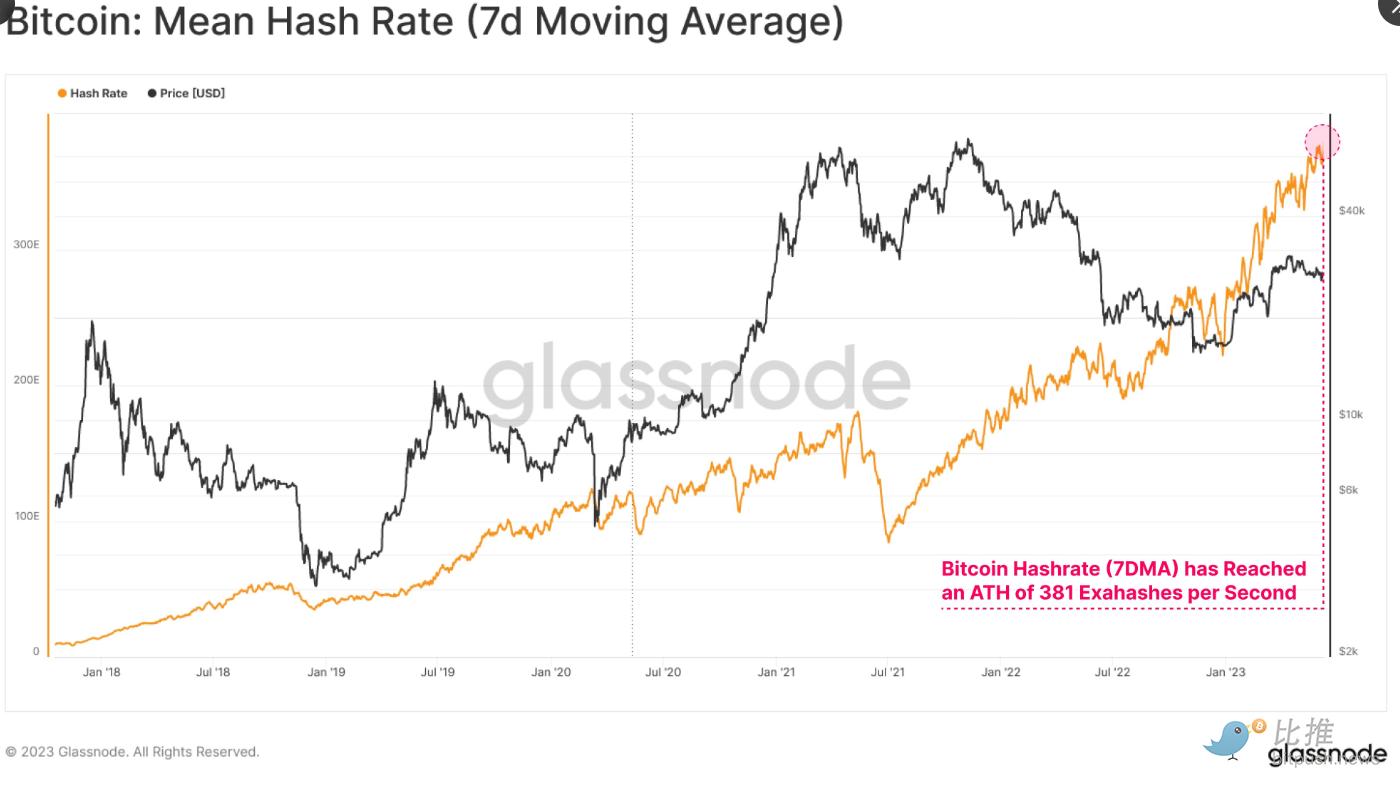
From on-chain data, Glassnode shows that HODLing remains a major market dynamic, as steadfast HODLers maintain their resolve in adversity, sending Bitcoin Supply Last Active Bands to new ATHs. Supply lasting over 1 year: 68.4%; supply lasting over 2 years: 55.5%; supply lasting over 3 years: 40.1%; supply lasting over 5 years: 28.9%. Notably, we can observe a significant increase in the supply lasting over 2 years, as a large number of tokens purchased during the miner migration from May to July 2021 have remained stagnant, surpassing the maturity threshold.
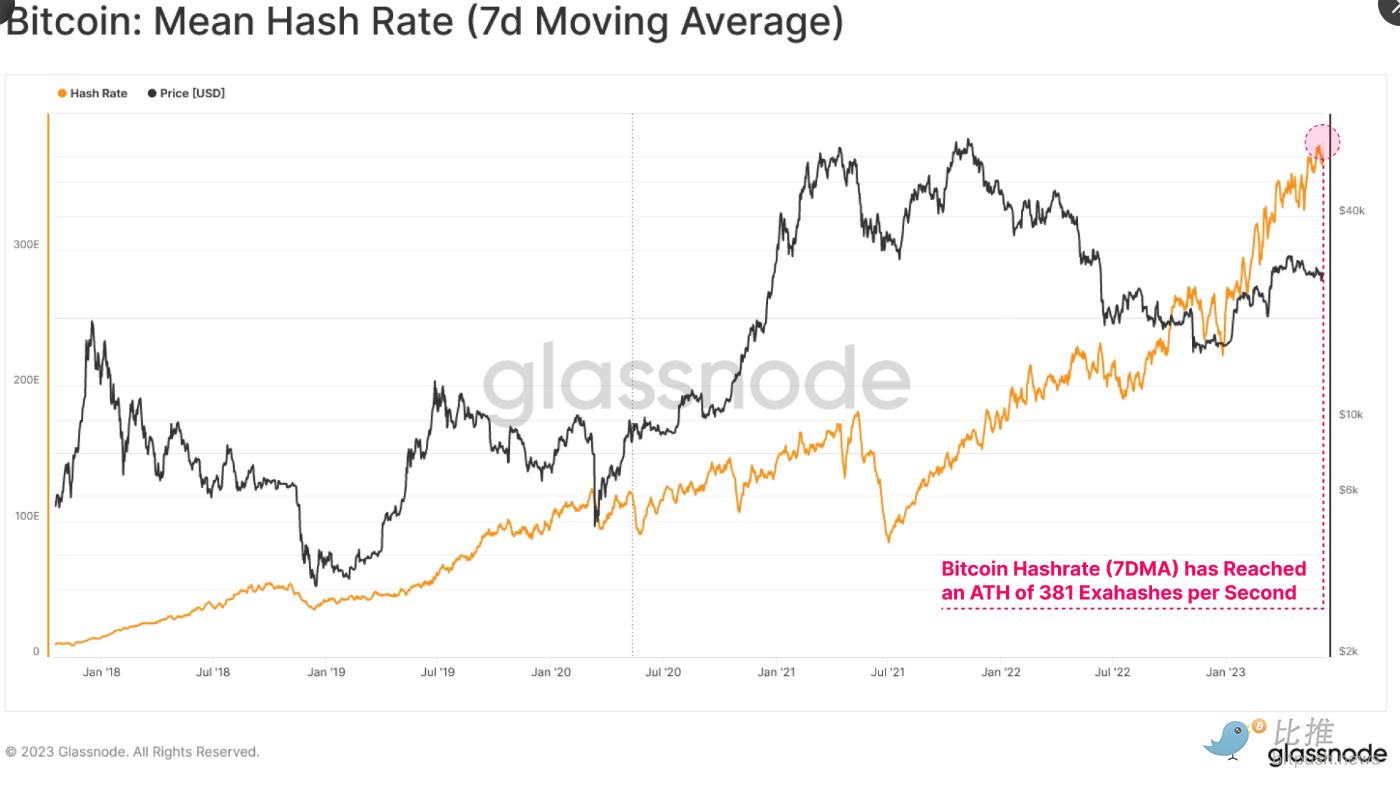
CryptoChan (@0xCryptoChan) also tweeted that the percentage of long-term holders' BTC chips flowing into exchanges daily is greater than 0.025%, marked in red; less than 0.025%, marked in blue. This percentage has remained quite stable over the past month or two, and in the face of the recent regulatory wave from the U.S., long-term holders remain unfazed.
3. Under the regulatory wave, what "crisis" and "opportunity" will the crypto market face?
In the SEC's lawsuit, the SEC accuses CZ of claiming that the Binance.com platform does not serve Americans, while in fact, CZ instructed Binance staff to assist certain high-net-worth American clients in evading controls—by changing IP addresses through VPNs or setting up offshore companies for KYC; additionally, CZ actively solicited American investors to trade on the Binance platform through his social media and other internet posts to retain American investors. Furthermore, the SEC accuses Binance of misappropriating customer assets through Merit Peak and Sigma Chain. From the SEC's lawsuit, it appears that the SEC's accusations are supported by many statements from Binance's internal and related executives, which may not be baseless. In the short term, Binance faces the possibility of having its assets frozen by the SEC.
Overall, the lawsuit between Binance and the SEC is expected to be protracted and may very well reach the U.S. Supreme Court; however, if the SEC does freeze Binance's assets, Binance's liquidity may face rapid depletion, as the U.S. is accustomed to long-arm jurisdiction. If Binance encounters a crisis, it will have a significant negative impact on the entire crypto market, which is expected to see an overall decline; although Bitcoin is likely to remain strong, it is still expected to experience a certain degree of decline. According to Bitpush reports, a federal judge has postponed the temporary restraining order against Binance.US, and the SEC and Binance.US will continue negotiations, suggesting a potential turning point in the market, but the risk of freezing Binance's U.S. assets cannot be said to be completely eliminated. From a technical chart perspective, the current MA200 is an important support level for Bitcoin, with prices around $23,600.
In the medium to long term, the recent lawsuits initiated by the SEC may ultimately accelerate regulatory legislation for the crypto market in the U.S. In addition to Binance, the SEC has also filed a lawsuit against Coinbase, which is a publicly traded company in the U.S. with a large user base. The lawsuit against this exchange may stimulate Congress to take proactive action regarding cryptocurrency regulation. The calls from various market participants are becoming increasingly urgent. According to Bitpush reports, Coinbase CEO Brian Armstrong stated in an interview that there is a power struggle between the SEC and CFTC, and Coinbase has been "caught in the middle" of this territorial dispute between the two agencies. As both sides have failed to reach an agreement on the status of cryptocurrencies as securities or commodities, the industry needs clarity. To clarify this, Congress must intervene and legislate. Until there is legislation, the crypto industry will rely on case law, which will emerge from the SEC's lawsuit against Coinbase last week.
U.S. legislative bodies have also begun to recognize the seriousness of the situation and have started holding hearings, which can be seen as preparatory work for legislative efforts. According to Bitpush reports, Patrick McHenry, chairman of the U.S. House Financial Services Committee, announced that a hearing titled "The Future of Digital Assets: Providing Clarity for the Digital Asset Ecosystem" will be held on June 13 at 2:00 PM Eastern Time (June 14 at 2:00 AM Beijing Time). Jeremy Allaire, co-founder and CEO of Circle, announced the testimony he will present at the digital asset hearing in the U.S. House Financial Services Committee, strongly urging for expedited legislation. Jeremy stated, "The actions taken by the U.S. government in the coming years will have a significant impact on the dollar's competitiveness for decades to come. The stablecoin bill is a crucial piece of legislation and the first step in creating a regulatory framework, which will also have far-reaching effects beyond the digital asset market. Now is the time for the U.S. to lead in setting global rules. With the right regulatory framework, stablecoins and blockchain networks can scale to support billions of users and trillions of dollars in payment activity."
4. Conclusion
Overall, the core targets of the SEC's regulatory actions are twofold: one is centralized exchanges like Binance and Coinbase, and the other is most PoS-based tokens; this has led to a surge in DEX trading volume, while PoW public chain tokens like Bitcoin have shown relative resilience. Additionally, with the SEC's lawsuits against Coinbase and others, the significance of the cases and the intense market controversy have made congressional legislation urgent. Ultimately, whether through congressional legislation or court rulings, these developments will profoundly impact the crypto industry, ushering the U.S. crypto market into an era of "rule of law" regulation. Furthermore, in a certain sense, what we are currently experiencing is undoubtedly an important milestone for crypto assets and the crypto market in truly entering the traditional financial market.
 Risk warning
 Risk warning



Popular articles