Arthur Hayes' latest long article: The AI bubble is the biggest opportunity
 Core Viewpoint

 The bull market has arrived, I buy in with my eyes closed. Take advantage of the crowd that hasn't woken up yet, take advantage of the AI bubble that hasn't burst.
Original Title: The Butterfly Touch
Original Author: Arthur Hayes, Co-founder of BitMEX
Original Translation: BitpushNews
AI Optimism
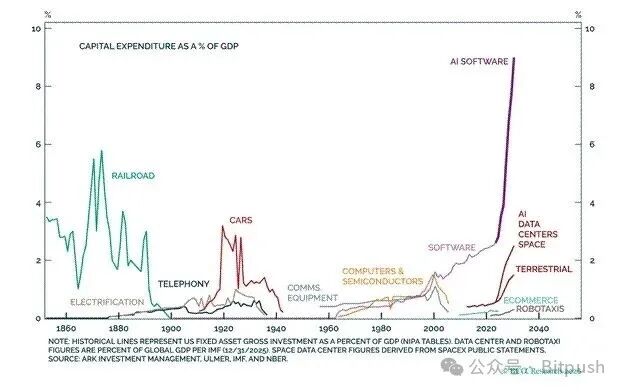
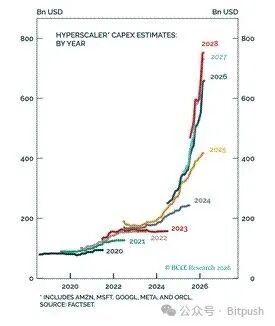
The capital expenditure (CAPEX) supporting AI model training and inference is unprecedented in the history of human civilization. Many believe that this investment in intelligence will create value for humanity that is unlike any previous technological development. I agree; however, as humans, we always tend to go overboard. In this universe, infinity and perfection are unattainable. Therefore, when anticipating a future driven by machine intelligence, we may build excessively.
AI proponents cite nationalism as a reason to lavish funds, but patriotism should not be tagged with a price… Both the US and China believe that AI and technological hegemony are crucial for the survival of their territories.
Tech giants are also eager to sell them horror stories: What will happen if the other side gains hegemony in machine intelligence first? Objectively speaking, both leaders have witnessed how the proliferation of AI and drones has led to victory and are convinced of it. Thus, they will ensure that the primary economic and military goal is to further build the most efficient machine intelligence domestically.
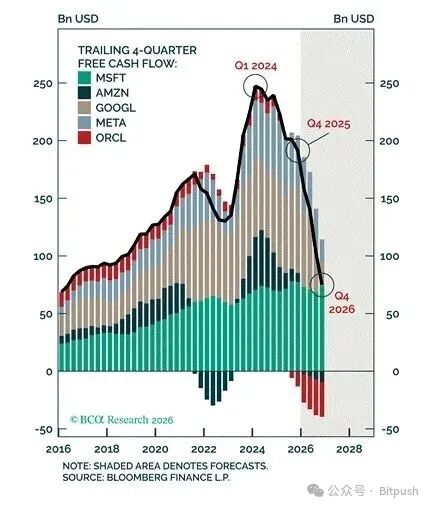
In the United States, so far, most AI CAPEX has come from the operating cash flow of the most profitable software companies. However, considering the scale of current and future expenditures, financing needs to be increased through credit channels.
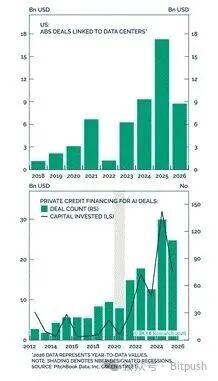
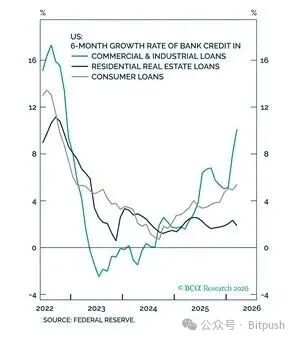
In China, banks are slowing down funding for real estate and shifting to fund the tech industry. Besides expenditures related to data centers, both the US and China continue to invest in increasing power supply.
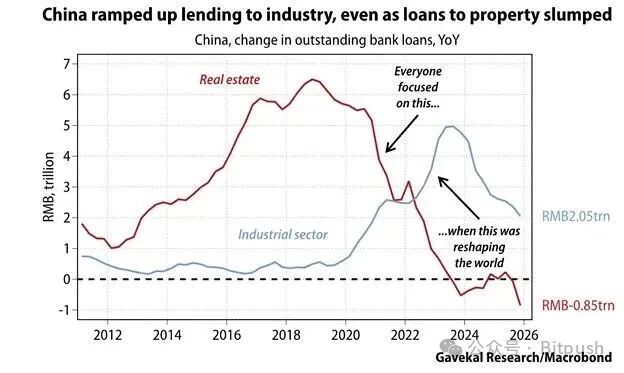
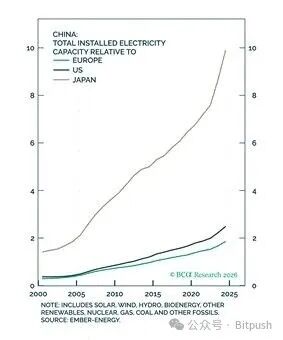
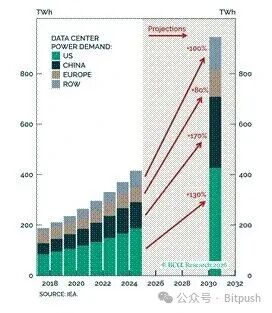
That is to say, central banks are creating more fiat currency and loosening financial conditions.
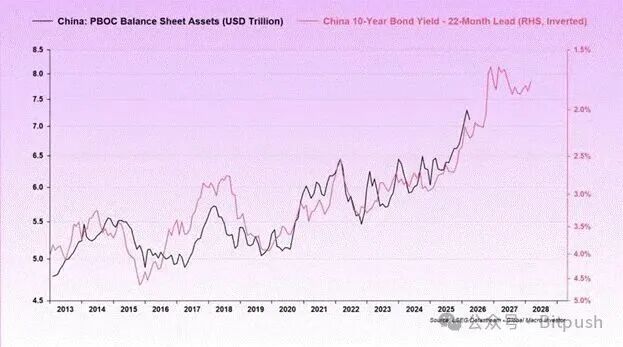
The combination of political will (to win the AI race) and financial will (to fund construction through money printing and loans) creates a perfect environment for cryptocurrencies. The units of fiat currency tomorrow will far exceed those of today, and the rate of change is accelerating due to the surge in AI and electrification expenditures. As the cost of unit intelligence decreases, the complexity of tasks executed by AI increases, which means computational power consumption grows exponentially; this is the essence of the "Jevons Paradox."
Additionally, there is the "Red Queen Effect": as competitors improve model efficiency, the AI CAPEX invested by a company quickly depreciates. This leads to further increases in spending to create better models to outperform competitors, while also rendering the hundreds of billions (soon to reach trillions) invested by competitors obsolete. Therefore, unless hindered by exogenous market events, AI CAPEX spending will expand indefinitely.
When Will This Frenzy End?
I believe two events will occur almost simultaneously and change people's views on the necessity of spending trillions to build AI.
Market indigestion: A massive and financially irresponsible AI-related IPO or acquisition occurs, leading the market to be unable to bear it. This will awaken the market from its frenzy, and people will begin to question whether machine intelligence is really worth that much money.
Political shift: The 2028 US election. The rise in prices of raw materials, labor, especially electricity, caused by large-scale AI construction is unpopular in many regions. Moreover, 90% of Americans do not hold significant stocks and cannot benefit from soaring stock prices. Politically, it is very easy to garner votes by opposing AI, focusing on the value of human labor, and curbing inflation.
But at this moment, the liquidity of the US dollar and the Chinese yuan will continue to rise. Bitcoin and cryptocurrencies will benefit from this.
Every Country, Sweeping the Snow in Front of Their Own Door
Trump bombed Iran, showing little concern for the war's impact on the global economy. Or perhaps he does care, but the assumption that this year's "special military operation" could win quickly has proven overly optimistic. The US has been blessed with cheap energy (fossil fuels) and fertile land. Things may become more expensive, but even if the Strait of Hormuz is partially closed, Americans will not starve—unless politicians decide to spend money on Fallujah instead of food stamps.
However, the people in Europe, Africa, and much of Asia are not so fortunate. Unfortunately, the political elites in these countries mistakenly believe that American politicians will consider their food and energy shortages when deciding whether to launch another war that threatens the flow of basic commodities. These countries, trusting the US, have stored their surpluses in dollar-denominated financial assets instead of building pipelines, trade routes, or stockpiling essentials.
Marco Papic from BCA Research puts it best:
"The entire globe—literally—is connected for the sake of American hegemony… Why is Germany's defense insufficient against Russia? Because… America. Why do most Gulf countries have almost no energy transport infrastructure avoiding the Strait of Hormuz? Because… America. Why is global manufacturing concentrated in China? Because… America."
Due to the inability to obtain fertilizers or fuel, investment decisions in these countries will undergo drastic changes. When you cannot obtain food and energy due to a war you did not participate in, holding US Treasury bonds or S&P 500 ETFs becomes meaningless. To compensate for these deficiencies, sovereign nations will marginally liquidate dollar assets in the future, turning to invest in infrastructure, defense, and physical goods.
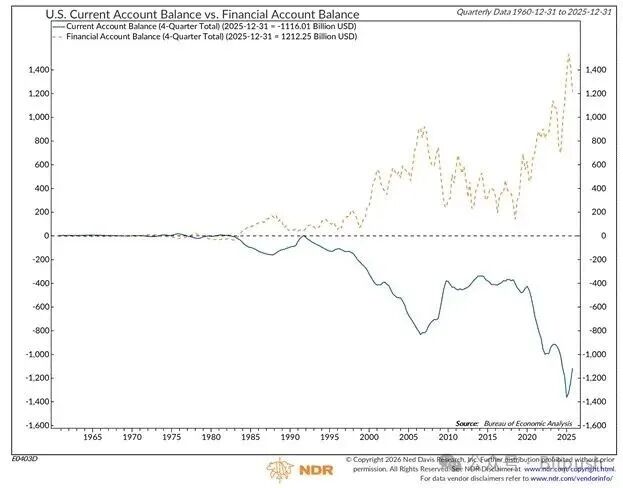
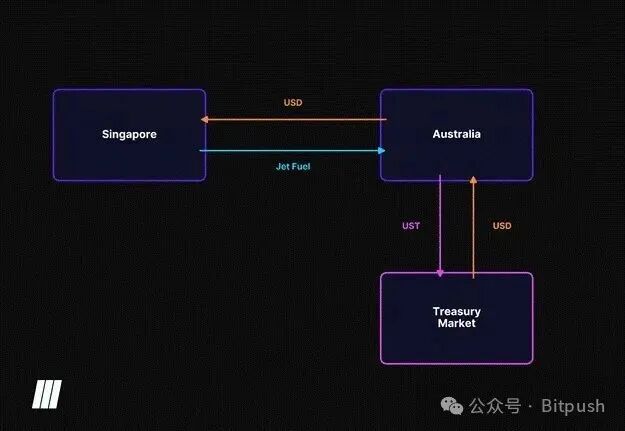
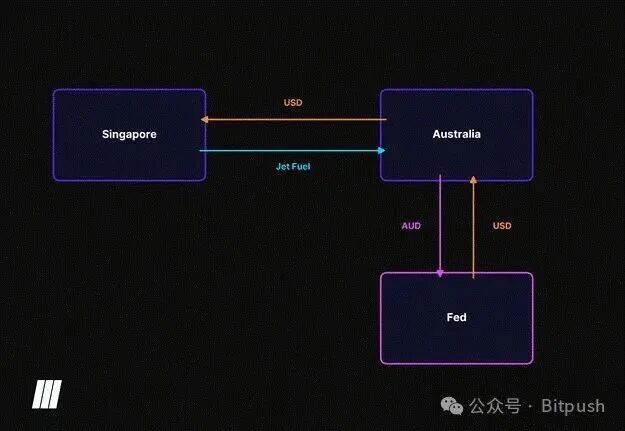
This poses a problem for the US financial market, as the proportion of foreign holdings is significant. If left unchecked, the slow liquidation of dollar assets will lead to a market downturn. US Treasury Secretary Bessent and other decision-makers understand this. They have two options: encourage the use of dollar swap lines or modify banking regulations.
"Bad" Australia: Selling US Treasuries to buy jet fuel.
"Good" Australia: Borrowing dollars from the Federal Reserve to buy jet fuel.
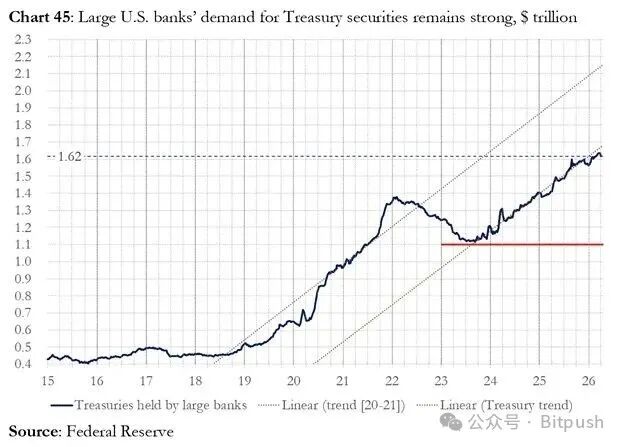
If the US market needs more momentum to offset the sell-off by sovereign nations, regulations can be loosened to allow banks to hold more US Treasuries and US stocks. Relaxing capital requirements related to eSLR (supplementary leverage ratio) is a move in this direction.
Since the establishment of the petrodollar system in the 1970s, storing surplus savings in dollar assets has been "best practice." But today, holding dollar assets no longer guarantees you a shipment of fertilizers or oil. "Just-in-time" is dead, and "Just-in-case" will endure. This is a structural trend that will last for decades. This means that monetary policymakers must maintain a loose financial environment to fill the gap left by foreigners investing their savings in physical infrastructure rather than "illusory dollar financial assets."
Higher + Longer
War is inflationary, and the US-Iran conflict is no exception. AI CAPEX and infrastructure construction serve as excuses to increase lending. Politicians support money printing out of necessity, both real and perceived. This is why Bitcoin has outperformed other major risk assets like gold and US tech stocks since February 28.
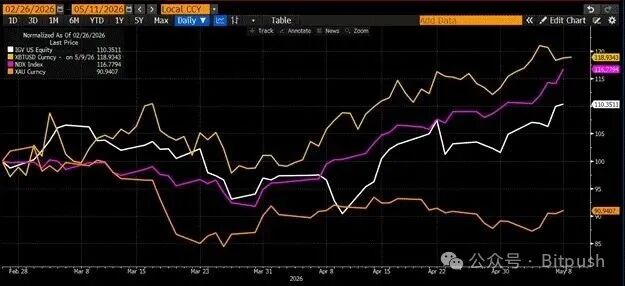
Bitcoin bottomed at $60,000 earlier this year, backed by trillions of dollars and yuan yet to be created, and returning to $126,000 is a foregone conclusion. Many bears refuse to participate in this round of the market because Bitcoin's performance over the past 24 months has lagged behind tech stocks and gold. They do not understand why Bitcoin remains effective as a hedge against currency debasement. But it will show extreme sensitivity to the expansion of fiat currency liquidity. I expect the upward momentum to intensify, and when it breaks $90,000, many bullish options sellers will be forced to cover, making the upward trajectory explosive.
I do not know how high Bitcoin can go, but I will adjust the risk of the Maelstrom portfolio to the maximum unless a major change occurs. By the time of the midterm elections in November, the US political attitude towards AI and inflation may become very negative, which could be a small bump in the upward process.
But remember: high oil prices do not hurt Trump as much as people imagine. MAGA is destined to lose in California (where energy policies lead to the highest oil prices in the US), but $100 oil and infrastructure rebuilding in Venezuela and the Middle East will benefit the oil and gas industry in the states where Trump's supporters reside. As long as money can be put in the pockets of ordinary Americans, Trump still has time to win re-election. So, go for it, baby, S&P 500 to 10,000 points!
It's time to play with shitcoins. Besides our already heavily invested Hyperliquid ($HYPE) and Zcash ($ZEC), my next favorite is $NEAR. My next article will explain our argument: why the "privacy narrative" combined with "Near Intents" will create positive cash flow for the protocol. This will completely reverse the token's sluggish price performance and create a huge catch-up opportunity, propelling it rapidly towards its historical peak from years ago.
Now is a bull market; close your eyes and hit the buy button. There will be a time to sell, but not now. Don't mess it up; let's go crazy together.
 Risk warning