How did DAI's 8% excess "risk-free interest rate" come about?

 Where does the 8% "risk-free" return come from? Is there a Ponzi scheme behind it? Is this return sustainable? Why is MakerDAO doing this?
Author: bocaibocai.eth
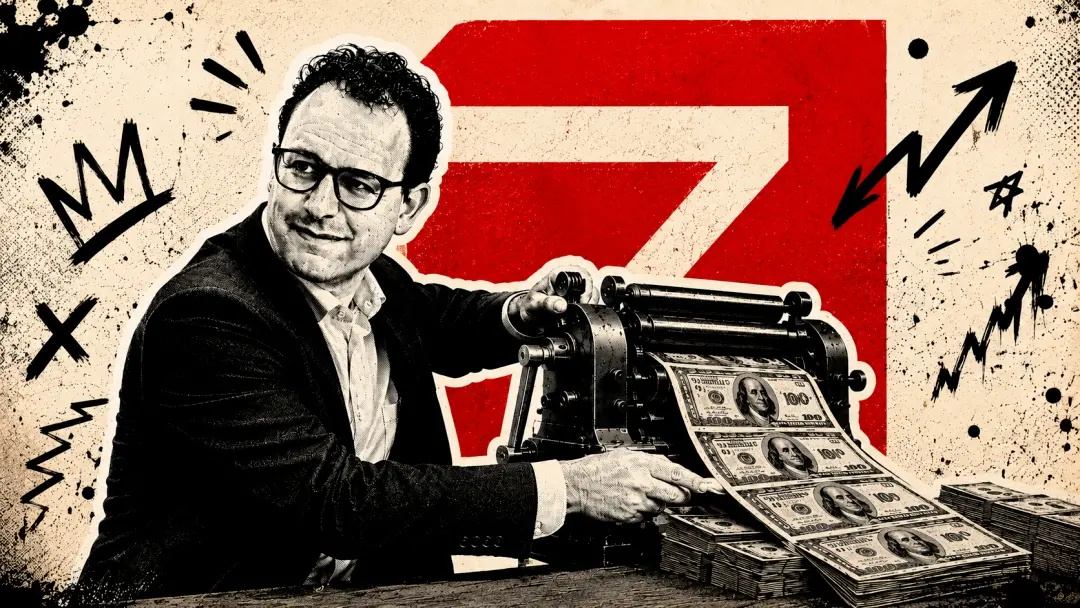
Just today, MakerDAO officially adjusted the DAI deposit interest rate of its lending protocol Spark Protocol to 8%, which is higher than the current yield on U.S. Treasury bonds, the stablecoin's "risk-free rate." This raises questions about whether this high yield is backed by a Ponzi scheme. Let's discuss where this 8% "risk-free" yield comes from. Is it a Ponzi scheme? Is this yield sustainable? Why is MakerDAO doing this?
Limited by personal understanding, please feel free to point out any errors; this does not constitute any investment advice. Where does the 8% "risk-free" yield come from? RWA has been a hot topic of discussion in the industry recently, and MakerDAO has become a highly关注的 RWA concept project due to its introduction of a large number of RWA assets. The logic behind why MakerDAO wants to introduce RWA assets can be found in this article.
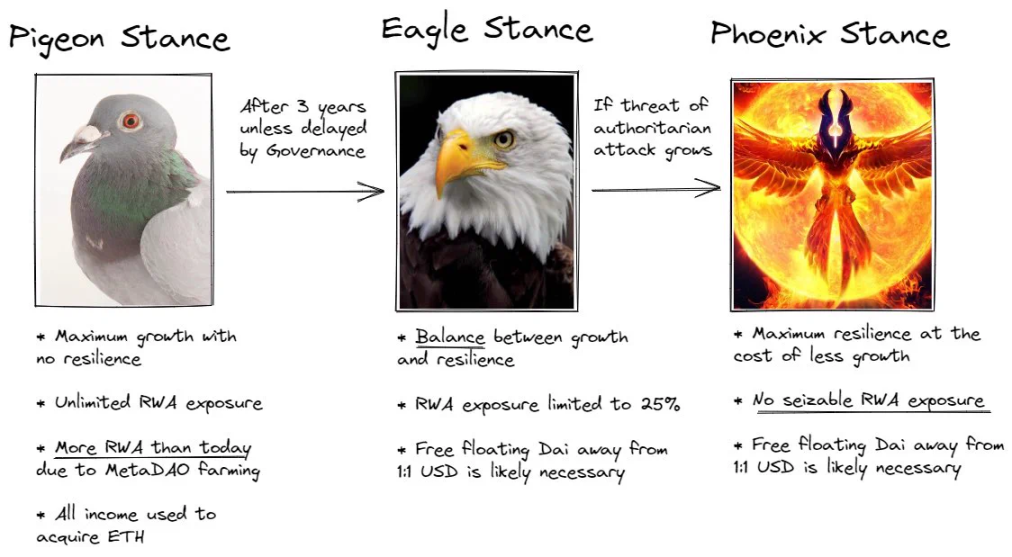
In simple terms, MakerDAO's goal in introducing RWA assets is to diversify the assets it supports through external credit capabilities, and to leverage the long-term additional income from U.S. Treasury bonds to help stabilize the DAI exchange rate, increase the elasticity of issuance, and reduce DAI's dependence on USDC by incorporating U.S. Treasury bonds into its balance sheet, thereby minimizing single-point risk.
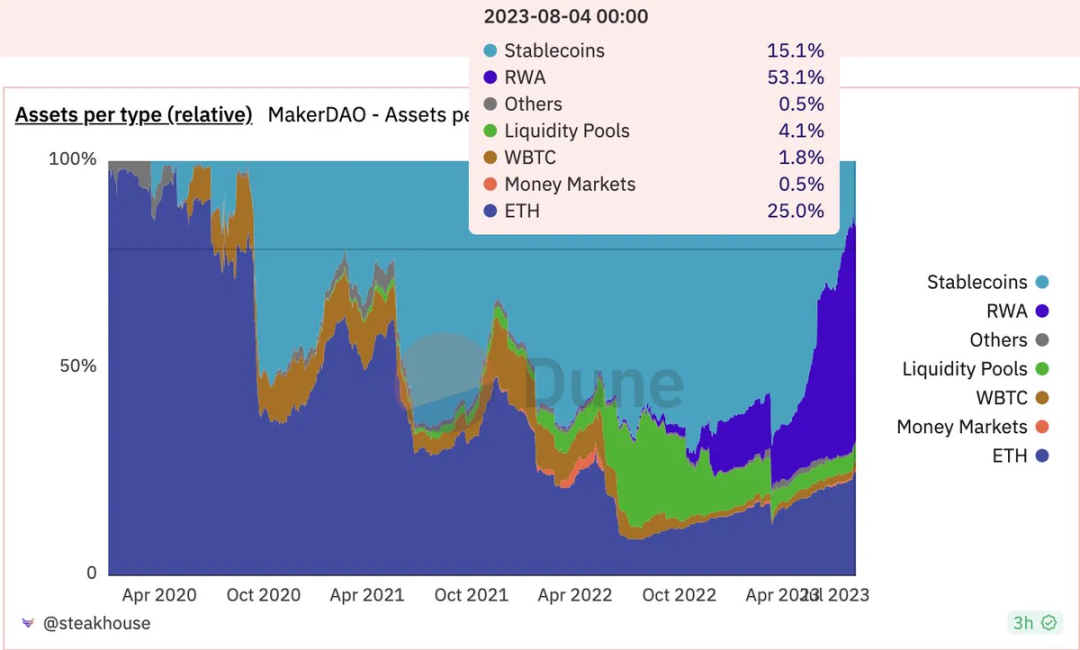
The introduction of a large number of RWA assets has also brought significant additional income to MakerDAO. We can see through Dune that the proportion of RWA assets has already exceeded half of the entire MakerDAO protocol's balance sheet.
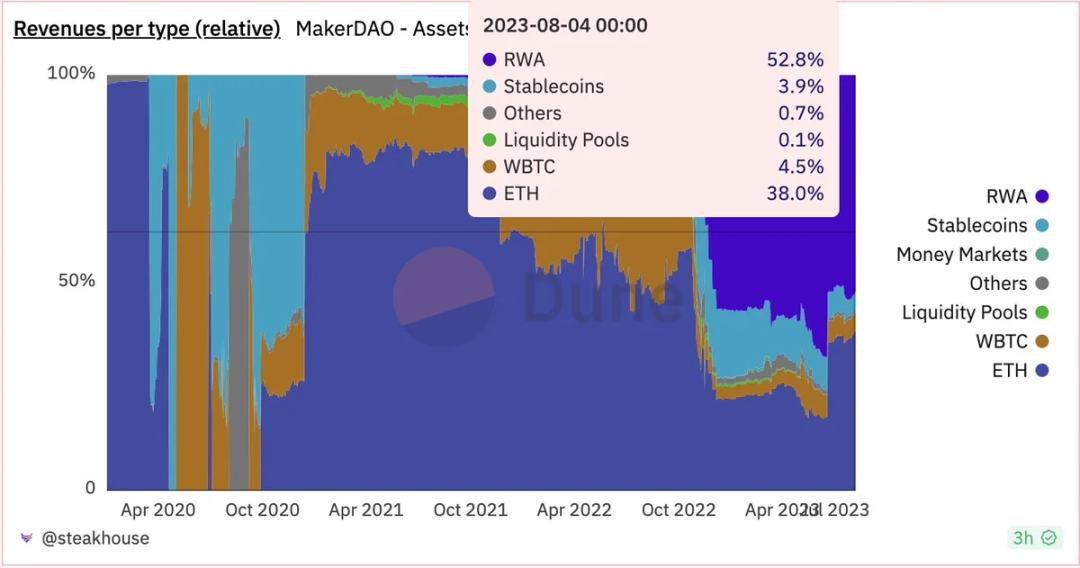
A large number of income-generating RWA assets have brought more revenue to MakerDAO. We can see that currently, more than half of MakerDAO's revenue comes from income-generating RWA assets, most of which are U.S. Treasury bonds, which have a risk-free rate of about 5%. Ultimately, this income goes into MakerDAO's pocket rather than to DAI holders.
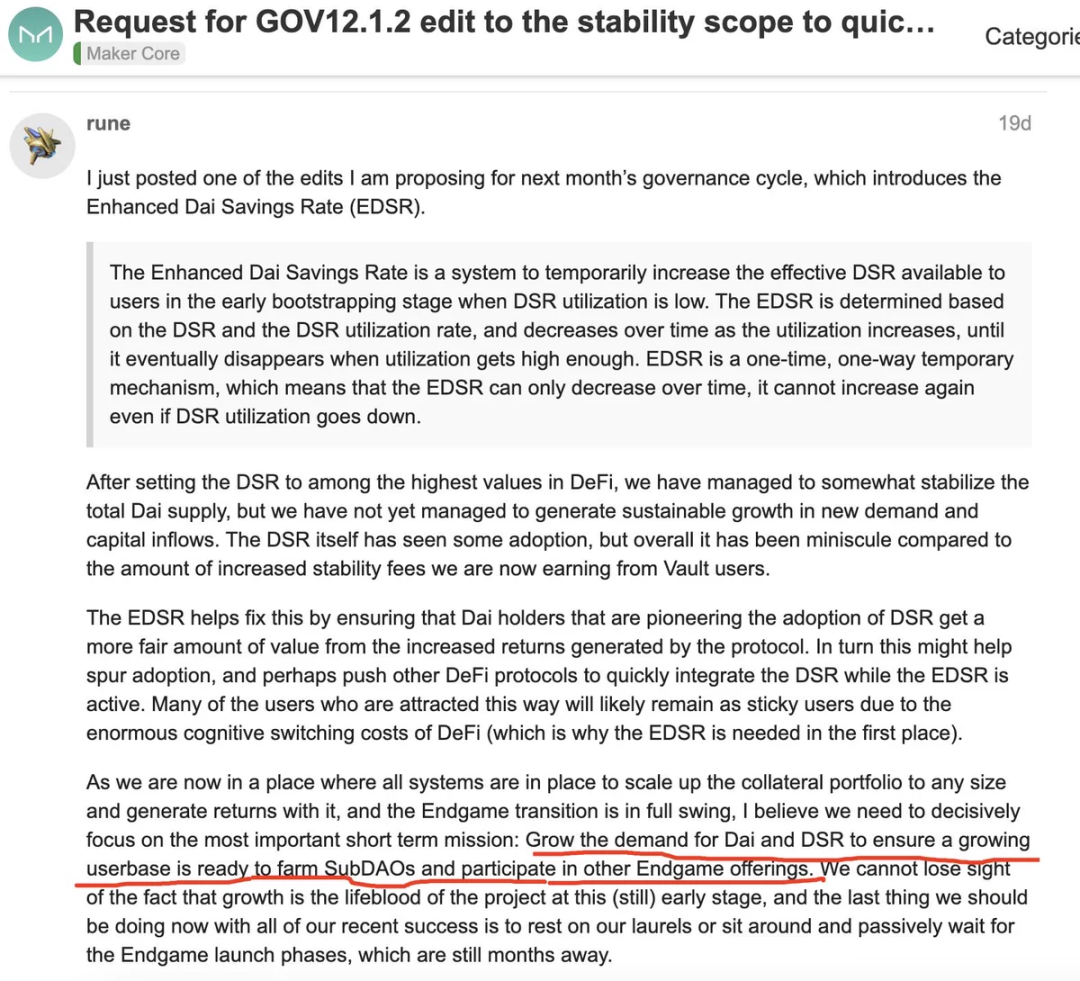
So the source of the 8% yield is clear: the MakerDAO protocol earns a significant profit from income-generating RWA assets and then uses this profit to pay the 8% interest. But why do this? According to MakerDAO founder Rune, the purpose of setting the yield at 8% is to increase demand for DAI and DSR, ensuring a continuously growing user base participating in SubDAO and other parts of the Endgame.
In simple terms, it is about increasing the demand for DAI, more DAI = more collateral = more money to buy income-generating RWA assets = more revenue, while also advancing the progress of the Endgame plan, which is MakerDAO's vision for achieving complete decentralization.
So, is this 8% yield sustainable?
To put it simply, it is not sustainable, because this 8% interest rate is actually a one-time "promotional event." We can see in the discussions about raising the DSR rate that Rune mentioned the introduction of a new mechanism: Enhanced Dai Savings Rate (EDSR), which is used to temporarily increase the effective DSR available to users during the early stages when DSR utilization is low.

In plain language, it means that not many people were earning interest in the early DSR, so a one-time high interest rate is created to attract users. EDSR will be determined based on DSR and DSR utilization rates and will gradually decrease as utilization increases, ultimately disappearing when utilization is sufficiently high. EDSR is a one-time, unidirectional temporary mechanism, meaning it can only decrease over time; even if DSR utilization declines, it cannot be increased again.
In other words, this 8% interest rate is a one-time "promotional event." As more DAI is deposited into the DSR and reaches a threshold, this rate will unidirectionally decrease and cannot be increased again. According to Rune, when the DSR utilization rate reaches 50%, this excess rate will disappear, and MakerDAO will never incur a loss. In simple terms, MakerDAO is sharing part of its protocol income with DAI holders.

To summarize, MakerDAO has spent a lot of money to buy a lot of RWA and earned a lot of money, then adjusted the interest rate to 8% to share some profits with DAI holders to increase the demand for DAI and its user base. Once more people start earning interest, this rate will decrease until it returns to normal levels.
 Risk warning
 Risk warning