







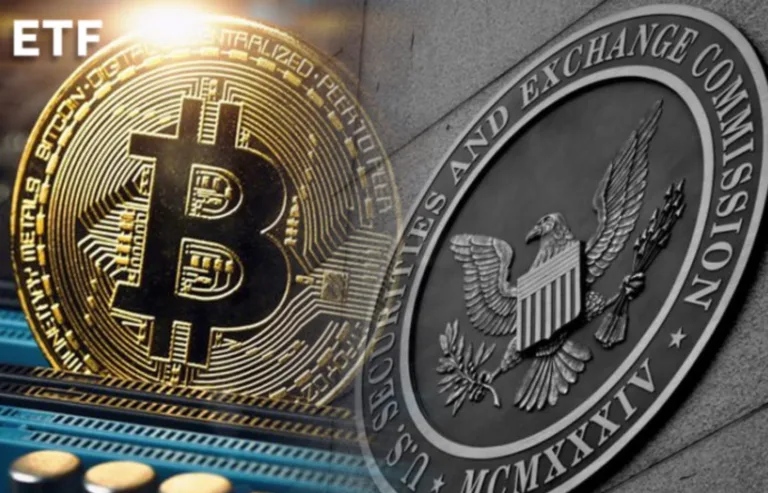
Is the approval imminent? How did the Bitcoin spot ETF finally get approved by the SEC?

 The SEC's approval is a meticulous process that takes into account various factors, including custody, market regulation, liquidity, and the arbitrage mechanism of the ETF.
Original Author: Susie Violet Ward
Original Title: 《How is a Bitcoin ETF Approved by the SEC?》
Compiled by: Luffy, Foresight News
Overnight, the news that BlackRock's iShares Bitcoin Trust has been listed with the U.S. Securities Depository Clearing Corporation caused a stir in the crypto market, leading Bitcoin to surge directly to a new annual high of $35,000. The euphoric market seems to suggest that the approval of a spot Bitcoin ETF is just around the corner. But is the approval of a spot Bitcoin ETF really imminent? What conditions does it need to meet? An article by Forbes contributor Susie Violet Ward explains the conditions and steps for the SEC to approve a spot Bitcoin ETF, compiled by Foresight News as follows:

The concept of a spot Bitcoin ETF has long been a topic of interest in the Bitcoin and investment communities. Although the U.S. Securities and Exchange Commission (SEC) has yet to approve such funds, understanding the modern regulatory framework proposed by the SEC can help you gain insight into how a spot Bitcoin ETF may ultimately be approved.
The difference between a spot ETF and a traditional ETF lies in its focus on tracking the real-time price of a specific asset, providing investors with enhanced liquidity options and more favorable tax strategies. These additional benefits make spot ETFs increasingly attractive investment tools for various market participants.
Transition from Traditional to Modern
Typically, financial institutions wishing to launch an ETF must submit a comprehensive application to the SEC. This proposal outlines the ETF's structure, objectives, and risk factors. A proposal from the SEC in 2018 aimed to streamline this process by replacing hundreds of individual exemptions with a single rule. ETFs that meet specific conditions can be listed directly without obtaining separate exemptions, thereby accelerating the listing timeline.
SEC Review Based on a Rules Framework
After the application, the SEC reviews the proposal, focusing on investor protection and market integrity. Under the modernized framework, a set of standard conditions will apply to all ETFs. This "rules-based framework" aims to provide a fair competitive environment for most ETFs and protect investors.
Although the SEC's duty is to protect investors, its handling of spot Bitcoin ETFs has raised questions about the extent to which it effectively fulfills this duty. The SEC has expressed a willingness to approve alternative financial products like Bitcoin futures ETFs, but some critics argue that such products do not provide direct exposure to Bitcoin like spot ETFs do. This has even prompted lawmakers to write an open letter to SEC Chair Gary Gensler urging the commission to clarify its position.
Evaluation Criteria
During the review process, the SEC will assess the following key factors:
- Custody: The SEC evaluates the custody mechanisms for Bitcoin, examining how assets are securely held to prevent theft or fraud.
- Market Surveillance: The SEC reviews whether the Bitcoin market has adequate surveillance to prevent manipulation, fraud, or other illegal activities.
- Liquidity: The liquidity of the Bitcoin market is examined. The SEC wants to ensure that the ETF can be traded easily without causing significant price discrepancies.
- Arbitrage Mechanism: The application must detail how the ETF's price will track the price of Bitcoin. An effective arbitrage mechanism is crucial for maintaining the ETF's price in line with its net asset value.
During the ETF approval process, the SEC often engages in repeated dialogue with applicants. This is typically to clarify details, request more information, or discuss potential issues. The process is ongoing and may require multiple rounds of communication before a decision is made.
Public Opinion and Transparency Requirements
The SEC frequently opens a window for public comment, which remains crucial even under the modernized framework. Additionally, the proposed rules require daily portfolio transparency on the ETF's website, which may apply to spot Bitcoin ETFs to ensure investors are informed about the fund's holdings in real-time.
Custom Baskets and Website Disclosure
Spot Bitcoin ETFs operating under the proposed rules will be allowed to use "custom baskets," which do not reflect a proportionate representation of the fund's portfolio. The modernized framework also emphasizes website disclosure, requiring ETFs to disclose historical information regarding premiums, discounts, and bid-ask spreads.
Final Steps: SEC Decision and Approval
After a comprehensive assessment and consideration of public comments, the SEC makes a final decision. If approved, the ETF can begin operations immediately and be listed and traded on major stock exchanges. This provides investors with a regulated way to track Bitcoin and its price movements.
Conclusion
The process for the SEC to approve a spot Bitcoin ETF is moving in the right direction. The SEC's approval is a meticulous process that considers various factors, including custody, market surveillance, liquidity, and the ETF's arbitrage mechanism. Public opinion is a key component, allowing stakeholders to express their concerns or support. The timeline for approval may be uncertain, but approval will provide investors with easier access points.
Cathy Wood has stated that when the SEC finally agrees, it may approve all spot Bitcoin ETFs simultaneously. This could clarify the chaotic regulatory environment.
As Bitcoin continues to mature, the approval of spot Bitcoin ETFs seems inevitable, with many experts claiming that we may see multiple approvals by the end of this year.
 Risk warning
 Risk warning