4E Platform: Understand Bitcoin Halving 2024 in 1 Minute

 Bitcoin halving is an important economic phenomenon that occurs every four years, reducing the rewards for Bitcoin mining by half. This mechanism was designed by Bitcoin's creator, Satoshi Nakamoto, to simulate the scarcity of precious metals, ensuring the limited supply of Bitcoin and the stability of its monetary value. Halving not only affects Bitcoin's inflation rate but also has a profound impact on mining behavior, miner earnings, and the entire Bitcoin economy.
Bitcoin halving is an important economic phenomenon that occurs every four years, reducing the rewards for Bitcoin mining by half. This mechanism was designed by Bitcoin's creator, Satoshi Nakamoto, to simulate the scarcity of precious metals, ensuring the limited supply of Bitcoin and the stability of its monetary value. Halving not only affects Bitcoin's inflation rate but also has profound impacts on mining behavior, miner earnings, and the entire Bitcoin economy.

History of Bitcoin Halving
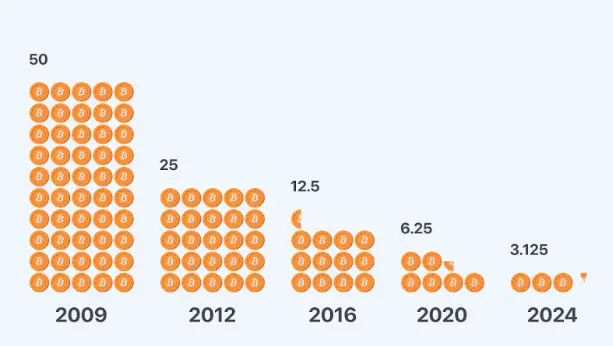
The history of Bitcoin halving dates back to the first halving in 2012, when the block reward was reduced from 50 Bitcoins to 25 Bitcoins. Subsequently, in 2016 and 2020, the rewards were further reduced to 12.5 and 6.25 Bitcoins, respectively. The next halving is expected to occur on April 20, 2024, when the reward will drop to 3.125 Bitcoins. This process will continue until the maximum supply of Bitcoin, 21 million, is reached, which is expected to be completed around 2140.
Post-halving Bitcoin Inflation Rate Will Be Half of Gold's
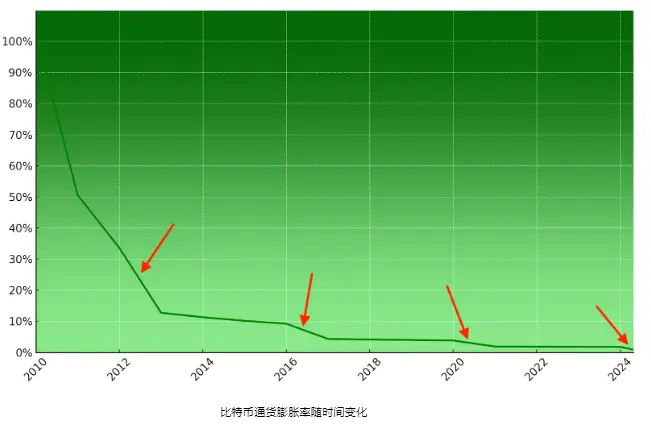
Halving has a significant impact on Bitcoin's inflation rate. After each halving, the rate at which new Bitcoins are produced slows down, leading to a decrease in the inflation rate. For example, after the first halving, the inflation rate dropped from about 25% to 11.78%; after the second halving, it fell from 8.34% to 4.09%; and after the third halving, the inflation rate further decreased to 1.77%. It is expected that after the fourth halving, the inflation rate will drop to 0.85%, making Bitcoin's inflation rate approximately half that of gold, highlighting Bitcoin's scarcity.
Bitcoin Inflation Rate Over Time
Impact of Halving on the Market
For miners, halving is a challenging time. Although the reduction in block rewards means a halving of income, historically, the rise in Bitcoin prices often compensates for this loss. Halving encourages miners to seek more efficient mining methods, driving innovation in mining technology. At the same time, halving strengthens the comparison between Bitcoin and traditional fiat currencies, which may face inflation and devaluation risks due to unlimited printing by governments.
Bitcoin halving also has significant effects on market dynamics. Historical data shows that Bitcoin prices often experience significant fluctuations before and after halving. Market participants typically anticipate that the reduction in supply will lead to price increases, thereby driving prices up before the halving. After halving, although there may be price fluctuations in the short term, in the long run, Bitcoin's deflationary characteristics and limited supply make it an attractive asset, and Bitcoin usually experiences significant bull markets.
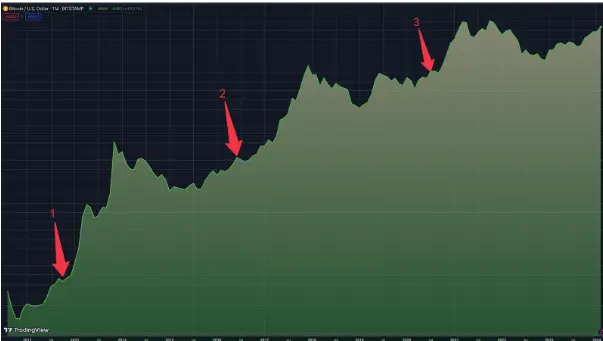
Price Changes Before and After the First Three Halvings
In summary, Bitcoin halving is a key mechanism in the Bitcoin economic model that maintains the currency's scarcity and value stability by slowing the production of new coins. This event not only affects miner earnings and mining behavior but also has profound impacts on Bitcoin's market performance and economic model. As future halving events continue to occur, Bitcoin's deflationary nature will become more evident, further solidifying its status as digital gold.

With the approval of the U.S. Bitcoin spot ETF and the approaching halving narrative, the cryptocurrency market is experiencing unprecedented attention and development opportunities, with a massive bull market on the horizon. The 4E platform, as a global leading trading platform and a global partner of the Argentina national football team, is committed to providing a stable and efficient trading experience, ensuring that users can trade smoothly during this bull market and enjoy deep market access and optimized services. Welcome to choose the 4E platform and share in the cryptocurrency investment feast!
 Risk warning Risk warning