Trump shouts to establish a "Bitcoin superpower," but mining companies are struggling to hold on?

 Trump's tariff policy is at odds with his ambition to promote the development of the Bitcoin mining industry in the United States.
Original Title: A False Start on the Road to an All-American Bitcoin
Original Author: Joel Khalili, Wired
Original Translation: AididiaoJP, Foresight News
Trump's Bitcoin Mining Ambitions
Trump promised to make the United States the global capital of Bitcoin mining. However, recent comprehensive tariff policies have put this ambition in a dilemma.
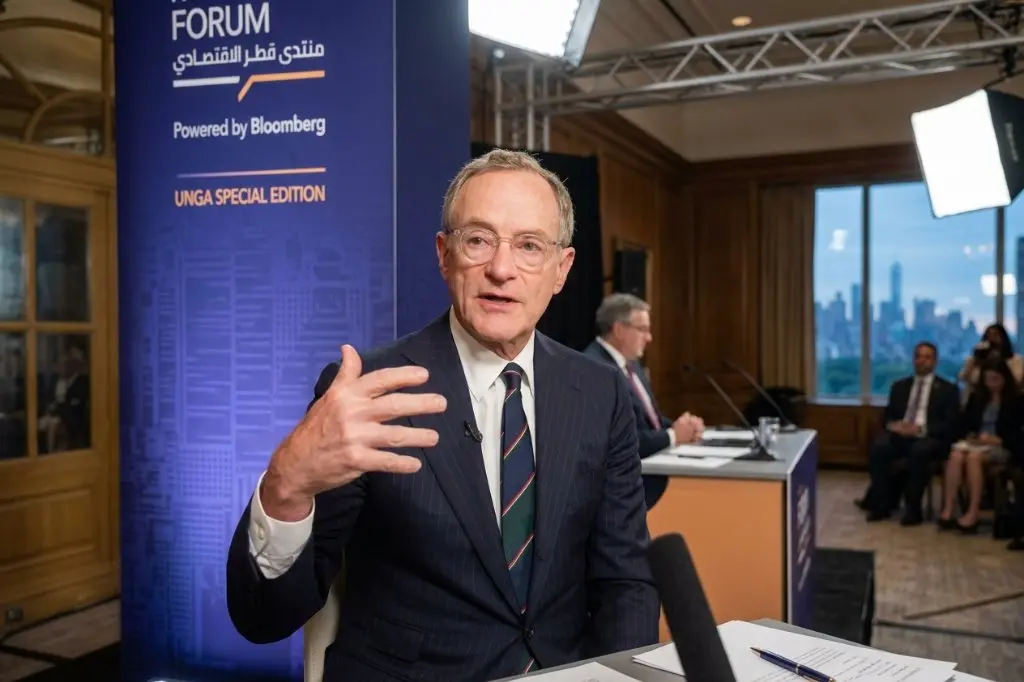
U.S. President Trump paused briefly, enjoying the enthusiastic applause from the audience. At the cryptocurrency conference "Bitcoin 2024," facing a crowd of fervent Bitcoin believers, he outlined his plan to turn the U.S. into a superpower in Bitcoin mining.
"I want Bitcoin to be mined, minted, and produced in the U.S.," he told the audience, "You will be very happy with me—you will be thrilled."
Since returning to the White House, Trump has largely fulfilled his campaign promises: he has begun establishing a national Bitcoin reserve, replaced the heads of regulatory agencies that were toughest on crypto companies from the previous administration, and appointed a "crypto czar" to set clear regulatory rules for the industry. However, in the critical area of Bitcoin mining, the actions of this U.S. president have so far been contradictory, as he supports domestic mining companies while simultaneously increasing the operational costs of the industry through tariff policies.
The Dual Nature of Tariff Policies
On April 2, Trump announced punitive new tariffs on 57 countries, including a tariff of 55% on goods from China, and tariffs ranging from 24% to 36% on goods from Indonesia, Thailand, and Malaysia (where Chinese companies produce some mining machines). This policy has posed challenges for U.S. mining companies, including Trump's newly established mining company "American Bitcoin," which rely on Chinese suppliers and are facing soaring hardware costs.
However, these tariffs also bring a glimmer of hope: they may support small domestic mining machine manufacturers, as U.S.-made mining machines are not affected by the new import tariffs.
Whether U.S. hardware manufacturers can truly seize this opportunity largely depends on their potential customers and whether U.S. mining companies can withstand the economic impact of the tariff policies.
To ensure supply chain stability, mining companies typically sign long-term procurement agreements with hardware manufacturers. Now these companies are faced with a tricky problem: they may need to pay high tariffs on unfulfilled orders for Chinese mining machines.
Under pressure from rising costs, many U.S. mining companies have begun to adjust their business direction, turning to artificial intelligence (AI) and other data center businesses to seek more stable profit sources. This trend puts the vision of a "Bitcoin superpower," where U.S. companies mine using U.S.-made machines on U.S. soil, at risk of faltering right from the start.
"If things continue to develop this way, the mining business will continue to be pushed out of the U.S.," said Chris Bendiksen, head of Bitcoin research at investment firm CoinShares. "We may have already witnessed the peak of the U.S. mining industry."
White House spokesperson Kush Desai refuted claims that tariffs could undermine Trump's Bitcoin mining ambitions in a statement to WIRED magazine.
"Two things can be done simultaneously," he said. "We can both promote domestic hardware manufacturing through tariff policies and use energy policies to reduce the operational costs of Bitcoin mining companies."
The Hardware Arms Race in Bitcoin Mining
Bitcoin mining is essentially a hardware arms race. Mining companies must continuously upgrade their equipment to ensure their computing power is sufficient to outpace competitors, thereby winning the right to process transaction blocks and earn Bitcoin rewards.
In this field, two Chinese manufacturers, Bitmain and MicroBT, almost monopolize the global market. The Cambridge Centre for Alternative Finance (CCAF) estimates that these two companies together control 97% of the mining machine market share.
Despite numerous challengers attempting to break this duopoly in recent years, none have made breakthroughs in hardware performance or production costs. "The road is littered with the corpses of failures," Bendiksen commented.
The new tariff policies have forced many U.S. mining companies that rely on Chinese machines to reassess their supply chain strategies and seek alternatives.
Analysts believe that Santa Clara-based mining machine manufacturer Auradine may be one of the biggest beneficiaries. The company has struggled to shake the market dominance of Bitmain and MicroBT since its founding three years ago. However, following Trump's announcement of new tariffs, Auradine has seen a surge in customer inquiries.
"We are seeing unprecedented market interest," said Auradine co-founder and CEO Rajiv Khemani. "Miners want to ensure they can hedge against tariff risks in any policy environment."
To seize this opportunity, Auradine recently launched a new generation of Bitcoin mining machine product lines and raised $153 million in Series C funding. Khemani revealed that the company is about to announce a batch of high-profile clients signed after the tariff policy was implemented.
MARA Holdings' Strategy
One of Auradine's star clients is MARA Holdings, a U.S.-listed mining company that not only participated in Auradine's founding but also holds an equity stake of $85.4 million in the company.
MARA CEO Fred Thiel stated that although Auradine's machines currently account for only a small portion of the company's operational equipment, they represent about 50% of new orders in 2025.
"In an environment where geopolitical risks and tariff risks coexist, if U.S.-made mining machines are priced the same as Chinese-made machines, which would you choose? The answer is obvious," Thiel said. "If one day the U.S. government suddenly bans the import of Chinese mining machines, and you've already paid a $300 million order deposit, your situation will be extremely passive."
However, whether Auradine can truly benefit from the tariff policies still depends on whether U.S. mining companies can withstand the impact of tariffs on their existing orders.
The current timing is particularly challenging for mining companies. Although the rise in Bitcoin prices has brought some profit margins, factors such as intensified industry competition, declining transaction fees, and reduced Bitcoin block rewards have significantly compressed mining companies' profit margins.
At the same time, mining companies are also facing fierce competition from AI companies, which, with ample funding, are vying for the limited energy resources in the U.S. The latest forecasts from the U.S. Department of Energy indicate that by 2028, the electricity consumption of the AI industry could reach 22% of the total electricity consumption of U.S. households.
Bitcoin mining companies operating in the U.S., including Riot Platforms, Bitfarms, MARA, CoreWeave, Core Scientific, and Hut 8, have all begun seeking diversified development, exiting the mining market, and repurposing their facilities for AI training and high-performance computing. Only a few large companies, such as CleanSpark, remain focused on Bitcoin mining.
"Miners have always been savvy electricity buyers; they are like vultures on the power grid," Bendiksen described. "But now, AI companies are willing to pay higher electricity prices, further squeezing the survival space for mining companies."
MARA's CEO Thiel believes that merely raising tariffs is not enough to force Bitcoin miners out of the U.S. Compared to energy costs, the impact of hardware import tariffs on the overall operating costs of mining companies is relatively small.
However, in an already challenging market environment, the cumulative effect of tariff policies undoubtedly exacerbates the industry's difficulties.
"Typically, such shocks lead to industry consolidation," analyzed Thiemo Fetzer, an economics professor at the University of Warwick. "We are likely to see small miners being eliminated as rising equipment costs and increased supply chain uncertainty make their survival more difficult."
Global Strategies of Mining Companies
Faced with challenges in the U.S. market, many mining companies are beginning to expand their operations overseas to avoid tariff risks.
"Why are we developing international business? Because it reduces the risk of a single policy," said one executive. "As a Bitcoin miner, you must remain flexible."
At the same time, Chinese mining machine manufacturers Bitmain and MicroBT are also accelerating their plans for domestic production in the U.S. to bypass tariff barriers.
"We are actively investing in the U.S. market, including local manufacturing," said Irene Gao, president of Bitmain's mining business.
Currently, Bitcoin mining companies are generally in a wait-and-see mode. Before the 90-day pause on Trump's new tariffs ends in July, the ultimate impact remains unclear, leading many companies to delay hardware procurement decisions.
"Everyone is watching to see how the tariff policies will ultimately play out," Khemani said.
The Contradiction of Trump's Policies
On the surface, Trump's tariff policies seem to contradict his ambitions to promote the development of the U.S. Bitcoin mining industry.
"These tariffs are clearly destructive," Bendiksen bluntly stated.
To achieve both goals—supporting U.S. mining machine manufacturers and ensuring the survival of mining companies in the U.S.—the Trump administration may need to employ other policy tools, such as promoting energy infrastructure development to lower electricity costs for mining companies.
The White House claims that a series of recent executive orders will help reduce energy prices in the U.S. However, the reality is that many mining companies are still scaling back domestic operations and shifting to AI or other fields.
"Trump's promise of 'All-American Bitcoin' now seems to be mere rhetoric," Bendiksen summarized. "It feels more like catering to nationalist sentiments rather than a genuine industrial policy."
 Risk warning
 Risk warning




Popular articles