HashWhale Crypto Weekly | Bitcoin Dips Amid Double Kill, Mining Shows Resilience (7.26-8.01)

 This week's market overall presents the structural characteristics of "high-level fluctuations + double dip down," especially during the two rounds of deep corrections on July 31 and August 1, where the market showed clear signs of pressure at high levels. Short-term risk sentiment quickly intensified, and the trend gradually shifted from a strong fluctuation to an adjustment phase. Against the backdrop of increased price volatility, Bitcoin mining still maintains stable profitability, and the overall operation of the industry demonstrates strong resilience.
Author, Editor: Monkey
1. Bitcoin Market
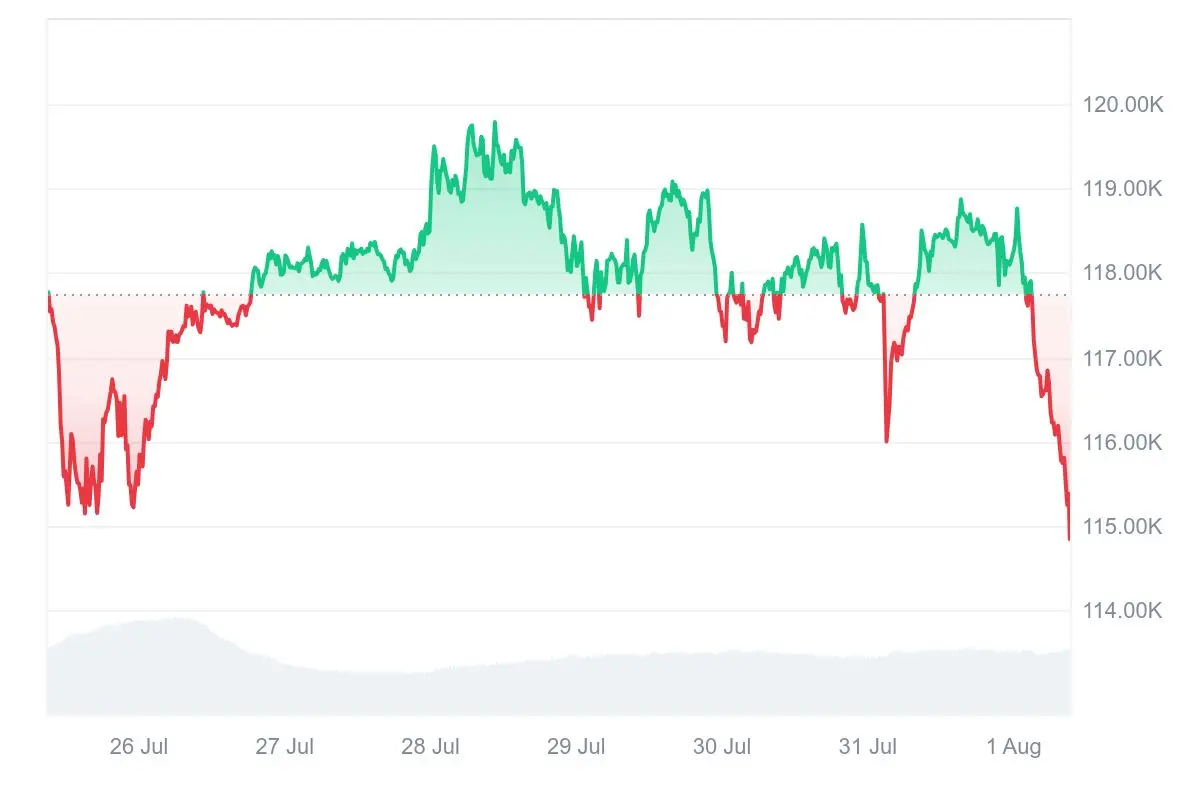
From July 26 to August 1, 2025, the specific trend of Bitcoin is as follows:
July 26: Bitcoin showed a significant rebound, with the price starting at $115,844, gradually oscillating upwards. After reaching $117,768 around noon, it slightly corrected before continuing to rise, hitting an intraday high of $118,257 in the evening, and then consolidating around the $118,000 level. This indicates that short-term bulls are attempting to solidify the upward foundation.
July 27: The market continued the upward trend from the previous trading day, briefly correcting to $117,903 after opening, but there was clear buying support below. Subsequently, the bulls gradually gained strength, pushing the price up to $118,365. Although it later fell back to $117,905, the bearish momentum was limited. In the evening, the bulls accelerated their advance, closing before the end of the day at $119,009, setting a new high for the period, and market bullish sentiment intensified.
July 28: The bulls maintained their strength, quickly breaking through the previous high after opening, soaring to $119,501. Although there were two small corrections during the day, the bullish rhythm was not interrupted, and the intraday high was further refreshed to $119,788. However, the upward momentum weakened afterward, and the market entered a profit-taking phase, with the Bitcoin price starting to correct, gradually falling to $118,814. Despite attempts to stabilize at this position, the upward movement failed, and in the evening, it fell again to $118,008, indicating that the short-term upward trend had come to an end.
July 29: Bitcoin found initial support around $118,000, and after a brief rebound at the beginning of the session, the trend remained weak, further retreating to $117,441. A quick rebound followed, bringing it back above $118,000, where it maintained high-level oscillation. However, the bears pressed again, causing the price to drop sharply to $117,490. The bulls reacted quickly, pushing the price up to $118,739. The upward trend continued to $119,083, and although there was a correction in the evening, it still held at $118,976. The day ultimately closed at $117,369, showing a "high rebound and fall" pattern.
July 30: Continuing the weak pattern from the previous day's close, Bitcoin faced downward pressure after opening, dropping to a low of $117,187, where it found short-term support. The bulls attempted a counterattack, and after a period of oscillation, the market gradually stabilized and began to trend upwards, forming a clear ascending channel, with the low points continuously rising, reaching a maximum of $118,467 during the day. However, high-level pressure emerged, and the bears quickly counterattacked, causing the price to drop sharply to $117,472. Both sides fiercely contested around $118,000, with the bulls pushing the price to a short-term rebound of $118,613, but it failed to stabilize and fell back to around $117,700, reflecting that the short-term trend remained in a range-bound oscillation pattern, with direction still unclear.
July 31: Bitcoin experienced severe volatility during the day, with a sudden deep correction after opening, quickly dropping from $117,790 to a low of $116,000. The bulls quickly intervened, pushing the price back up to $117,218. The market then entered a phase of oscillating upward, gradually climbing and reaching $118,872 at one point during the day. However, high-level pressure emerged again, and after a slight correction to $117,855, it rebounded again, reflecting fierce competition between bulls and bears at critical positions. The day ultimately closed at $118,283, essentially recovering all intraday losses, exhibiting a "deep drop and rapid rise, high-level oscillation" V-shaped trend characteristic.
August 1: The oscillation pattern of Bitcoin further expanded, with a brief spike to an intraday high of $118,764 after opening, but it soon encountered strong pressure, and the market quickly turned to a bearish dominance, resulting in a continuous downward trend. The price dropped from the high to $117,557, $116,482, and $116,049, failing to find effective support, and bearish sentiment continued to release. Ultimately, Bitcoin temporarily stopped falling around $115,296, recording the largest drop of the day. As of the time of writing, the Bitcoin price was reported at $115,516, with a maximum intraday drop of 2.73% (based on the highest point of $118,764). Overall, the market shifted to a correction after repeated oscillations at high levels, with further downside risks still possible in the short term, necessitating attention to the effectiveness of support around $115,000.
Summary
This week, the market exhibited a "high-level oscillation + double kill downward" structure, particularly reflecting market pressure at high levels during the two deep declines on July 31 and August 1, with short-term risk sentiment rapidly intensifying, and the trend gradually shifting from oscillation to a correction phase.
In the first half of the week (July 26 to 28), Bitcoin continued the rebound momentum from the previous weekend, oscillating upward from $115,844 to a maximum of $119,788, setting a new high for the period, indicating relatively positive bullish sentiment. However, starting from July 28, signs of profit-taking at high levels emerged, and the Bitcoin price entered a phase of "high-level oscillation --- pullback --- re-peak --- re-pullback" repeated oscillation. From July 28 to 31, the Bitcoin price successively retreated to $117,441, $117,187, and $116,000, forming a gradual downward trend, but the bulls were still able to organize rebounds, maintaining an overall consolidation range above $118,000, oscillating narrowly between $118,000 and $119,000. From July 31 to August 1, market sentiment changed dramatically, with concentrated bearish forces releasing, resulting in two deep declines forming a "high-level double kill" pattern, breaking the previous oscillation balance.
In the short term, market bullish and bearish divergences have intensified, with significant pressure above $118,000, while $115,000 has become an important support area. If $115,000 cannot be effectively maintained, Bitcoin may continue to seek support downward, further entering a consolidation phase. Investors need to closely monitor changes in market trading volume and the gains and losses of key technical levels to determine whether a directional breakout occurs.
Bitcoin Price Trend (2025/07/26-2025/08/01)
2. Market Dynamics and Macroeconomic Background
Capital Flow
1. Large Holder Rebalancing and Whale Behavior
According to Glassnode data, large wallets (holding over 1,000 BTC) reduced their holdings by approximately 13,800 BTC from July 26 to 29, mainly selling in batches as Bitcoin prices approached $118,000.
During the same period, exchange inflows exceeded outflows for the first time, indicating that some funds may have entered to stabilize in stablecoins or other assets while waiting for opportunities. The growth of new addresses and daily active users both showed a decline, indicating a cooling enthusiasm among retail investors (active users fell below 850,000).
2. Large Sell-offs Successfully Absorbed, Limited Price Volatility
Galaxy Digital representatives sold approximately 80,000 BTC (≈$900 million) from July 17 to 25, creating a historic level of trading, with the market experiencing minimal impact. The price briefly dipped to $116,000, then rebounded above $119,000. This event indicates a significant increase in maturity in the Bitcoin market, with institutions and execution capabilities able to support large transactions without triggering severe price volatility.
3. Decline in Long-term Holder Supply Ratio of Bitcoin
On July 30, Glassnode data showed that the supply ratio of long-term holders to short-term holders (LTH/STH) decreased by 11% within 30 days, indicating that funds are continuously shifting to the circulating market. Meanwhile, the market share of Ethereum futures open contracts rose to nearly 40%, reaching the highest level since April 2023, showing that investor attention is shifting from Bitcoin to Ethereum. This data is at a historical high of the top 5%.
4. Derivatives Market: Continued High Trading Volume for ETH and Altcoins
The capital flow in the derivatives market is showing structural changes. By the end of July, the market share of Ethereum futures open contracts rose to nearly 40%, a new high since April 2023, positioned in the top 5% of historical data, indicating that capital and speculative enthusiasm are shifting from Bitcoin to Ethereum.
According to CryptoQuant data, ETH has recently risen by 170%, just 23% away from its historical high. SharpLink announced the purchase of 438,190 ETH for $1.3 billion, becoming one of the catalysts for this round of price increase. Meanwhile, trading in ETH and altcoin contracts continues to heat up.
Data shows that as of July 31, the total trading volume of Ethereum and altcoin futures contracts reached $22.36 billion, setting a new high in nearly five months, with such contracts accounting for 83% of the total in centralized exchanges, while Bitcoin futures only accounted for 17%. The market structure is gradually transitioning from "Bitcoin dominance" to "multi-asset resonance."
5. Continuous Inflows into ETFs
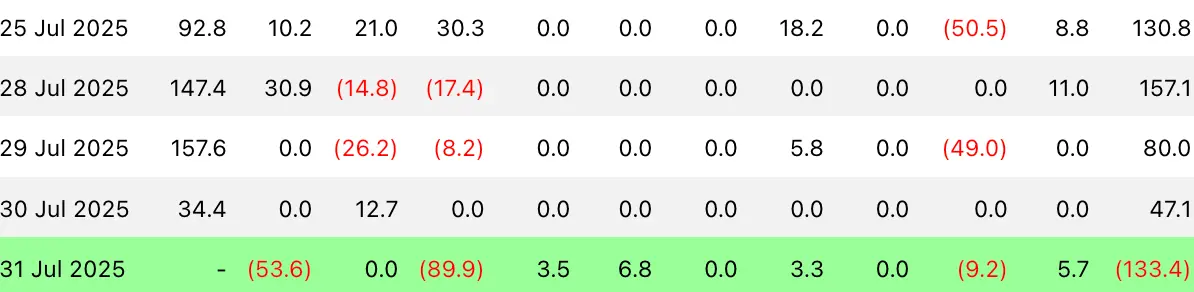
Daily ETF inflow/outflow details for this week:
July 28: +$157.1 million
July 29: +$8 million
July 30: +$4.71 million
July 31: -$133.4 million
ETF Inflow/Outflow Data Image
ETF products continue to attract capital, with a clear trend of institutional allocation. Although there was a slight net outflow recorded on July 31, the overall weekly pattern still maintained a net inflow.
Additionally, Nate Geraci, president of The ETF Store, pointed out that as of 2025, companies have raised nearly $86 billion through ETFs to purchase Bitcoin and other crypto assets, which is more than double the total amount raised from IPOs in the U.S. in 2025. This data highlights Wall Street's increasing emphasis on crypto assets, with ETFs gradually becoming an important channel for mainstreaming crypto assets.
Technical Indicator Analysis
1. Relative Strength Index (RSI 14)
According to Investing.com data, as of August 1, 2025, Bitcoin's 14-day Relative Strength Index (RSI) was 27.573, significantly falling below the technical threshold of 30, indicating an "oversold" area. The current RSI is at an extremely low level, which typically suggests pessimistic market sentiment and heavy selling pressure, with short-term price downward momentum tending to be released. Such situations historically often precede short-term technical rebounds or stabilization. Although the RSI has entered the oversold zone, there has not yet been a clear reversal signal (such as RSI divergence or significant rebound). If the RSI continues to maintain between 25-30 in the coming days, and the price stabilizes or shows low-level oscillation, it may form a bottom divergence structure, indicating potential bottoming or rebound opportunities. However, if the RSI further drops below 25 or even lower, it will release extreme panic signals and increase market concerns about Bitcoin further probing support levels.
2. Moving Average (MA) Analysis
5-day Moving Average (MA5): $117,499
20-day Moving Average (MA20): $117,366
50-day Moving Average (MA50): $112,037
100-day Moving Average (MA100): $102,271
Current Market Price: $115,091
MA5, MA20, MA50, MA100 Data Image
Short-term perspective: The current price has fallen below MA5 and MA20, indicating a clear weakening of the short-term trend, with bears in control. A death cross structure has formed between MA5 and MA20, suggesting that the short-term trend direction may continue to probe downward.
Medium to long-term perspective: Although the current price remains above MA50 and MA100, the gap between the price and MA50 is narrowing. If it continues to decline, it may form a medium-term death cross, exacerbating the depth and cycle of the trend adjustment. From the overall observation of the moving average system, it shows a flattening top and gradually turning downward, reflecting that the market is experiencing a switch in momentum after a long period of high-level oscillation.
Technical conclusion: The arrangement of MAs (short-term bearish, medium-term critical, long-term still bullish) suggests that the market is in the early stage of adjustment evolving into the mid-term. If it subsequently falls below MA50 ($112,037), it will constitute a technical breakdown, potentially triggering deeper pullbacks, with attention needed on support levels in the $110,000 to $105,000 range.
3. MACD Analysis
According to Investing.com data, as of August 1, the MACD fast line was -631, with the histogram remaining negative and expanding. The MACD currently shows a clear bearish divergence pattern, with the fast line continuously probing downward below the zero axis, and the histogram momentum increasing, indicating that the bearish trend is strengthening, and market sentiment remains under strong selling pressure. There has not yet been a significant divergence between MACD and price trends, suggesting that the current downward trend has not shown clear signs of momentum exhaustion. The MACD maintains a bearish trend, releasing a mid-term "Sell" signal; if the histogram shortens and forms a golden cross, it can be seen as a precursor to a trend reversal; currently, caution should be exercised regarding a "continuation of the drop" structure, meaning that after a short-term rebound, it may probe lower again.
4. Key Support and Resistance Levels
Support Levels: The current short-term key support levels for Bitcoin are sequentially at $115,000, $116,000, and $117,000. From the market operation structure over the past seven days, the effectiveness of support in this area has been repeatedly validated, with relatively solid buying power. Around July 26, the BTC price twice dipped near $115,000, quickly finding support and showing significant rebounds, indicating concentrated capital intervention below this range. In the deep correction on August 1, $115,000 again played a supportive role, halting the downward trend and further solidifying its key position. On July 30, the price twice fell to around $117,000 and found support, forming short-term support. On July 31, despite a brief sharp drop, the BTC price quickly dipped to $116,000 but rebounded strongly to $117,000, and after a brief consolidation in that area, continued upward momentum, breaking above $118,000, indicating that the bulls still have the initiative in this range. Overall, the $115,000-$117,000 range constitutes the core support zone of the current market; if it maintains above this area, it will further solidify the short-term bullish structure; however, if it falls below $115,000, attention should be paid to the secondary support below.
Resistance Levels: The current short-term resistance structure for Bitcoin is relatively clear, with the first pressure level below at the $118,000-$119,000 range, and above that, the key integer level of $120,000. On July 28, the BTC price briefly broke above $119,000 but failed to stabilize due to insufficient momentum and selling pressure above. Subsequently, on July 29 and 31, Bitcoin faced strong resistance at the $119,000 level during upward break attempts, indicating that this position has become a core barrier for short-term breakthroughs. The area around $118,000 is a technically dense area where bulls and bears frequently clash, serving as a barometer for judging market strength. As for $120,000, it is not only a previous high but also has the attributes of a psychological integer barrier; without significant positive news or volume support, breaking above it remains a considerable challenge. Currently, the $118,000-$120,000 range constitutes the main pressure zone for Bitcoin in the short term; only a volume breakout and stabilization above $120,000 could lead to further upward space for the market.
Comprehensive Assessment
Overall, Bitcoin is currently in a "high-level oscillation + double kill pullback" structure, particularly reflected in the significant emotional fluctuations and loosening of positions in the market after the pressure at high levels during the consecutive deep declines on July 31 and August 1, with the trend gradually shifting from the previously strong oscillation state to a short-term adjustment phase. The current market shows significant bullish and bearish divergences, with clear pressure above $118,000, while $115,000 has become a key defensive line for the stage. If the price cannot stabilize above this support, Bitcoin may enter a new round of consolidation or probing downward. Conversely, if it can steadily operate above the support zone, the short-term bullish structure is expected to be rebuilt, and there may be opportunities for upward momentum again. It is recommended that investors closely monitor the evolution of the $115,000-$120,000 range, focusing on volume changes and macro sentiment indicators for risk control and trading decisions.
Market Sentiment Analysis
1. Sentiment Overview
This week, Bitcoin market sentiment exhibited a dynamic evolution characteristic of optimistic in the first half of the week and cautious in the second half. Prices continued to oscillate within a high range, with significantly increased volatility, reflecting that the market is in a sensitive stage of directional choice. At the beginning of the week, prices tested the phase high points, with market risk appetite rising, and capital sentiment being relatively active, with bulls dominating the market; however, as prices approached technical resistance levels, market expectations gradually diverged, and sentiment turned cautious, with an increase in wait-and-see atmosphere. As the week progressed, the market experienced two rapid deep corrections, resulting in significant short-term washouts and triggering intense emotional fluctuations. Overall, market sentiment evolved from optimism to caution, and then to significant fluctuations, trending towards a wait-and-see stance, with notable psychological volatility among investors.
Specifically, the price started a short-term upward trend from around $115,000 on July 26, reaching a maximum of $119,788 on July 28, accumulating an increase of nearly 4% in the short term, significantly warming the market bullish atmosphere, with FOMO (fear of missing out) sentiment gradually spreading, driving a rebound in market activity. However, starting from the evening of July 28, Bitcoin's trend shifted to a high-level wide oscillation pattern, and from July 29 to 31, it underwent a corrective pullback, with the low points gradually declining, indicating that bullish momentum began to weaken, and sentiment also fell in tandem, with some investors turning to conservative operations. By July 31 and August 1, the market experienced two consecutive sharp drops, with intensified short-term trading sentiment, reflecting that the market entered an unstable oscillation zone, with increased emotional volatility and short-term uncertainty.
2. Key Sentiment Indicators (Fear and Greed Index)
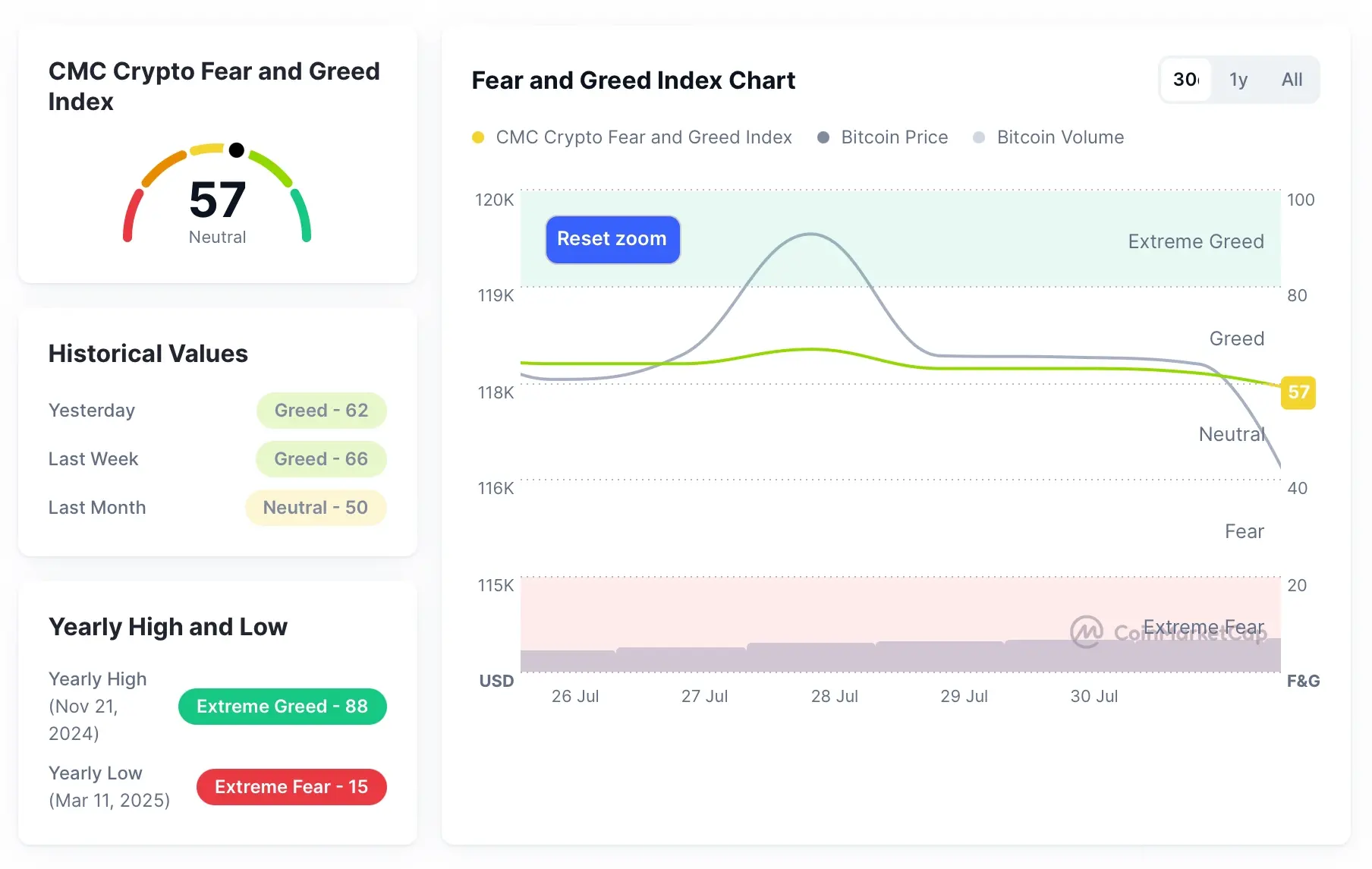
As of August 1, the Fear and Greed Index was reported at 57, situated at the lower edge of the "Greed" zone, having retreated from previous highs, reflecting that while current market risk appetite still exists, it has shifted from previous exuberance to a relatively cautious state, with investors showing a stronger risk control awareness at current high levels.
Reviewing this week (July 26 to July 31), the daily values of the Fear and Greed Index were: 64 (Greed), 64 (Greed), 67 (Greed), 63 (Greed), 63 (Greed), 62 (Greed). The index maintained between 62 and 67 this week, with limited overall volatility, remaining in the "Greed" zone, indicating that overall investor confidence is still present, but marginal sentiment has shown some cooling. Structurally, the index peaked on July 28, coinciding with Bitcoin's phase high, and then gradually retreated, reflecting that the market experienced emotional pullbacks after failing to reach new highs, with some capital beginning to reduce positions for risk aversion, leading the market into a stage of contention and divergence.
Additionally, there is a certain degree of divergence between the sentiment indicators and price trends: although prices remain in a high range, the Fear and Greed Index has not synchronized to create new highs, instead continuing to decline, indicating that the current market has entered a high-level contention state, with insufficient emotional support potentially exerting pressure on prices. From the perspective of investor behavior, medium to short-term traders generally began to reduce risk exposure, tending to wait for clearer market directional signals.
Fear and Greed Index Data Image
Macroeconomic Background
1. Federal Reserve and Powell Dynamics
On July 30, the FOMC meeting decided to maintain interest rates in the 4.25%-4.50% range, but two committee members voted against it (dissent), marking the first time since 1993, weakening market expectations for rate cuts before September. Overall, the market expects that the Federal Reserve will not easily loosen monetary policy, and Bitcoin, as a risk asset, has shown caution, weakening at one point. Some believe that if the Federal Reserve releases a more "dovish" signal, Bitcoin will benefit, but this meeting did not provide any significant hints.
2. Trump, Policies, and Regulatory Trends
The White House released a digital asset report titled "Strengthening American Leadership in Digital Financial Technology," emphasizing the promotion of the Genius Act and Clarity Act, clearly opposing the issuance of a central bank digital currency in the U.S., while proposing to maintain and implement a "strategic Bitcoin reserve" policy (although the report did not mention new purchase plans).
Trump continues to pressure Powell, criticizing him for not being aggressive enough in rate cuts, even considering replacing the Fed chair, raising concerns about the independence of the central bank and increasing inflation expectations, putting pressure on the dollar.
3. Macroeconomic Liquidity and ETF Dynamics
A Citi report pointed out that Bitcoin's recent rise is mainly driven by ETF inflows and overall institutional adoption, with the impact of traditional miner costs and stock-to-flow models diminishing. Last week, Bitcoin ETF net inflows were approximately $72 million, marking the seventh consecutive week of net inflows, indicating that institutional demand remains strong. Ethereum ETFs performed even better, with a single-week net inflow of $1.8 billion, showing a trend of capital flowing towards Ethereum. M2 money supply grew by 2.3% cumulatively in 2025, with a monthly growth of 0.63% in May and June, becoming an important basis for bulls' optimism about Bitcoin.
4. Strong Dollar Rebound, Global Markets Under Pressure
The strong rebound of the dollar has put pressure on global markets. Contrary to previous expectations that Trump's tariffs and fiscal policies would weaken the dollar and the U.S. market, strong economic data, AI-driven stock market rises, and reduced concerns about the U.S. outlook have changed these views. The dollar is expected to see its first monthly increase in 2025, while Europe and emerging markets, which previously benefited from anti-dollar sentiment, now face pressure. A strong dollar typically suppresses the attractiveness of non-dollar assets like Bitcoin, potentially leading to short-term capital outflows from the crypto market, putting pressure on Bitcoin prices. However, in the long term, if the dollar oscillates at high levels, investors may still seek Bitcoin as an inflation hedge.
5. Indian Economy: Trump's Tariffs Impact Growth Expectations
Trump announced a 25% tariff on Indian goods, expected to cut India's economic growth by about 40 basis points in the 2025-26 fiscal year. Economists warn that additional tariffs could further drag down India's economy. As an emerging market economy, India's slowdown may weaken local demand for crypto assets, but due to restrictions in the traditional financial system, the demand for cryptocurrencies in asset diversification and cross-border capital transfers remains strong.
6. Global Economic Outlook: IMF Lowers Growth Expectations
The International Monetary Fund (IMF) noted in its July 2025 World Economic Outlook Update that the global economy faces downside risks. The global growth rate for 2025 is projected at 3.0%, a downward revision of 0.2 percentage points from previous expectations. The trade environment remains fragile, and tariffs may be raised again after the "pause" period, leading to a potential 0.3% decline in global output in 2026. The slowdown in global economic growth and escalating trade tensions may prompt more investors to view Bitcoin as "digital gold," seeking asset hedges, thereby driving up Bitcoin demand. However, economic uncertainty may also increase market volatility.
3. Hash Rate Changes
From July 26 to August 1, 2025, the Bitcoin network hash rate exhibited fluctuations, as detailed below:
On July 26, the overall network hash rate fluctuated slightly, dropping from 1.0345 ZH/s to 951.31 EH/s during the day, then slightly rising to 1.0011 ZH/s in the evening, and ending the day at 961.34 EH/s, slightly below the day's high. On July 27, the hash rate showed an overall downward trend, continuously dropping from 974.62 EH/s to 885.01 EH/s and 840.79 EH/s, ending the day slightly up at 851.42 EH/s, indicating a weakening trend in miner computing power release. On July 28, the hash rate experienced dramatic fluctuations, quickly rising from 847.64 EH/s to 1.0792 ZH/s, setting a new high for the period, but then significantly retracting to close at 863.24 EH/s, showing significant intraday volatility and indicating increased network computing power volatility. On July 29, the hash rate continued to decline, quickly dropping from the high to a low of 687.43 EH/s. Although it briefly rebounded to 732.71 EH/s, it fell again to 684.61 EH/s, closing at 715.03 EH/s, indicating that some miners may have temporarily gone offline or migrated their computing power. On July 30, the hash rate rebounded from the low to 878.97 EH/s, although there was a brief pullback in between, it maintained an upward trend overall, reaching a maximum of 913.66 EH/s during the day, and ending slightly lower at 840.51 EH/s, indicating a slight recovery in miner activity, but still not stable. On July 31, the hash rate continued to rise, gradually climbing from 835.58 EH/s to 1.0521 ZH/s, essentially recovering to the level at the beginning of the week, indicating that network computing power is beginning to regroup, with increased miner activity.
From July 26 to August 1, the Bitcoin network hash rate exhibited strong volatility overall. From the 26th to the 27th, the hash rate continued to decline, reflecting that some miners were temporarily offline or reducing computing power due to factors such as electricity prices, climate, or maintenance. From the 28th to the 29th, the hash rate experienced dramatic oscillations, undergoing rapid increases and deep pullbacks, with a fluctuation range of nearly 400 EH/s, significantly disturbing network stability. From the 30th to the 1st, the hash rate entered a phase of repair, gradually recovering to the 1 ZH/s level, indicating that some miners have come back online, and network activity has increased.
Overall, the significant rises and falls in hash rate during this period reflect that the current distribution of network computing power still has considerable uncertainty, potentially influenced by external variables such as climate conditions, electricity costs, and equipment operation status. Although there was some recovery towards the end of the week, the network has not yet shown a stable upward trend, and continuous attention is needed on how changes in computing power may affect subsequent block intervals, block confirmation times, and mining difficulty adjustments.
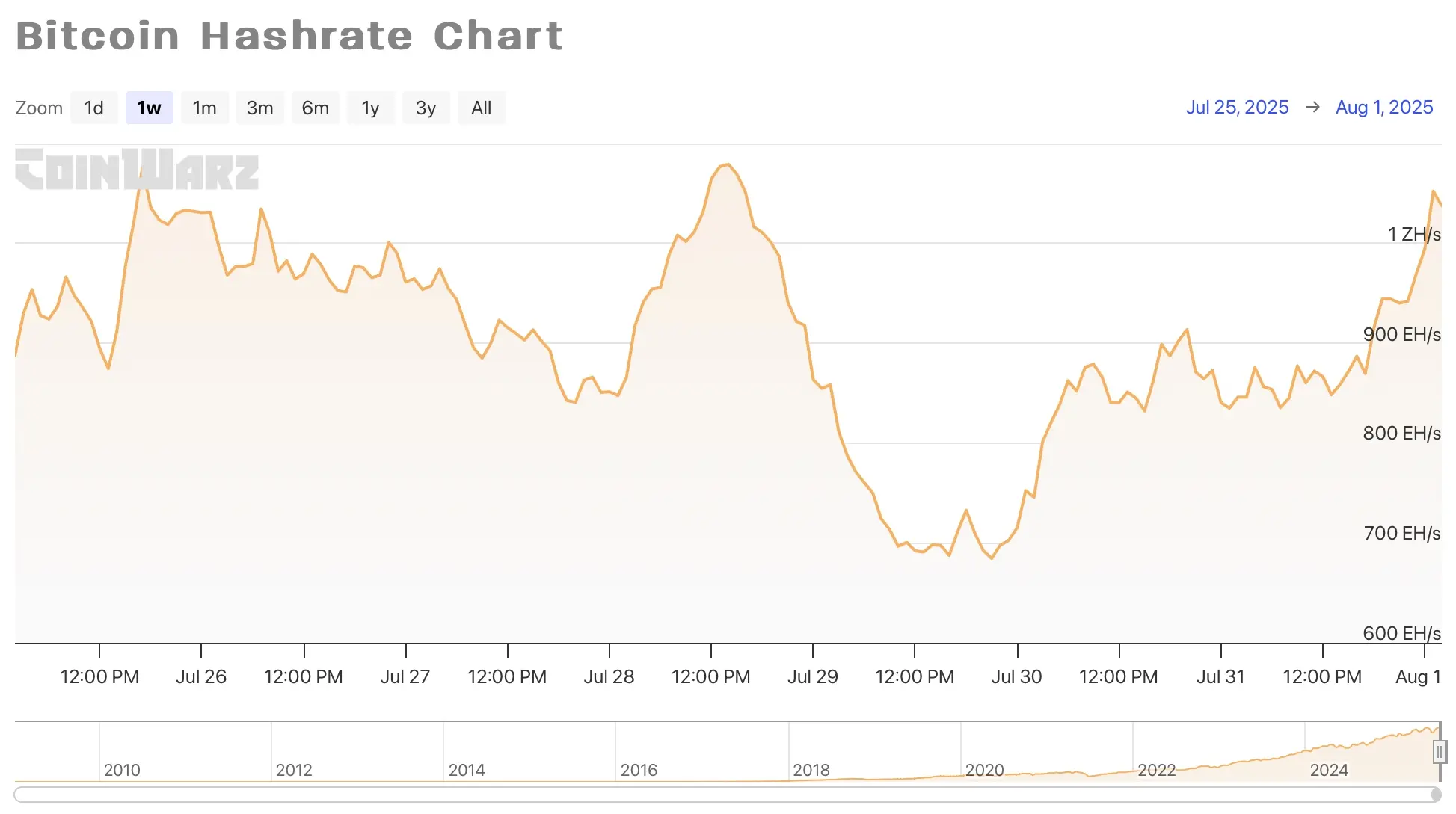
Weekly Bitcoin Network Hash Rate Data
From the data over the past six months, the Bitcoin network hash rate has shown a steady upward trend. Despite occasional dramatic fluctuations in the short term, the overall trend reflects miners' optimism about the long-term prospects of the Bitcoin network and the support of efficient mining machines. Since the beginning of 2025, the hash rate has continuously risen from the 700-800 EH/s range, currently stabilizing at the 800-1000 EH/s level, with periodic breakthroughs above 1 ZH/s, indicating the formation of a new round of computing power expansion cycle.
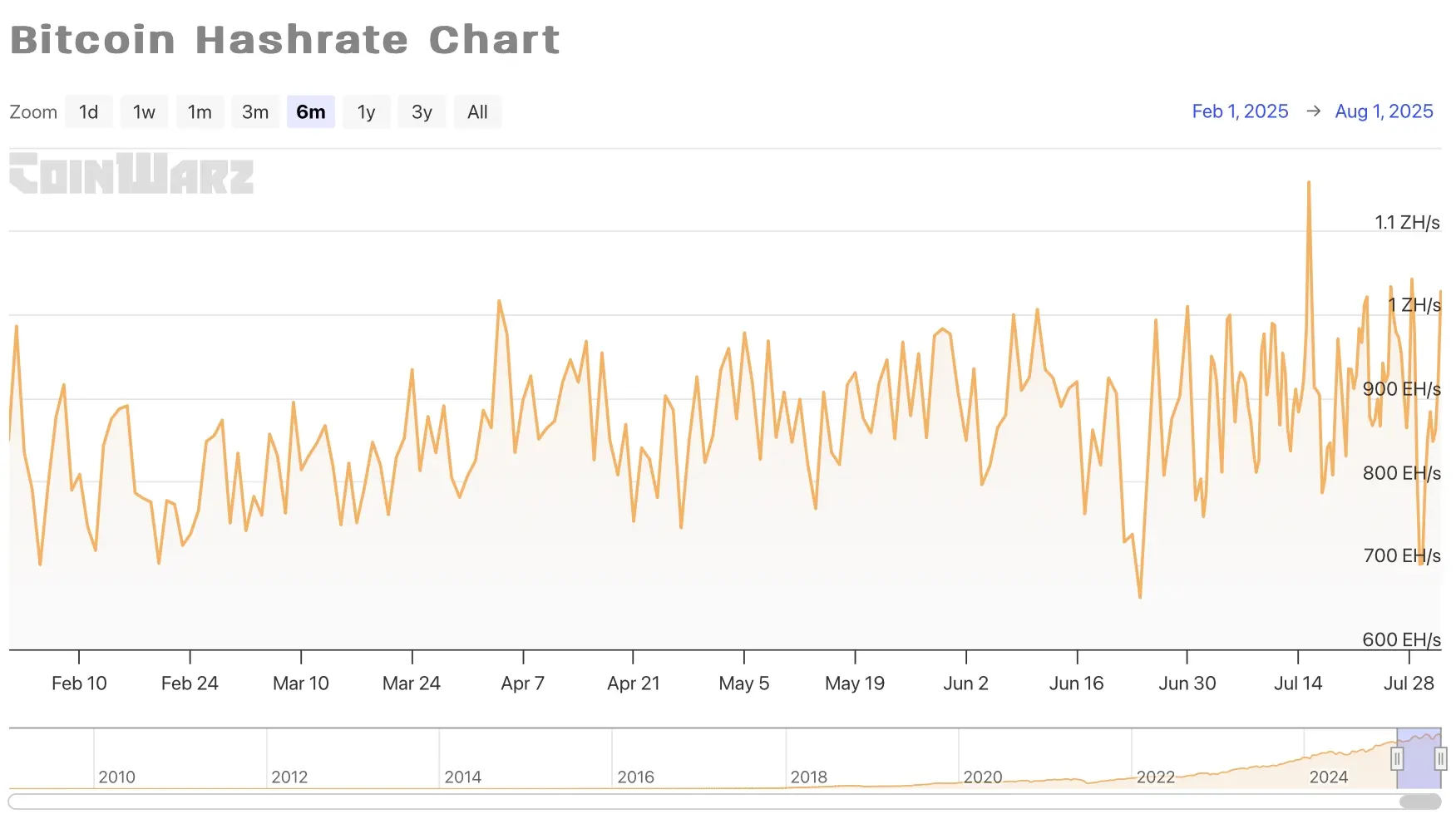
Six-Month Bitcoin Network Hash Rate Data
From an annual perspective, the growth of the hash rate is even more pronounced. The hash rate of the Bitcoin network during the same period in 2024 was around 550-700 EH/s, while the current level is nearly double that. This trend indicates that despite the impacts of market fluctuations, changes in the electricity environment, and other multiple variables, the Bitcoin network continues to maintain excellent growth resilience, reflecting the accelerated entry of industrial capital and the ongoing optimization of mining infrastructure globally.
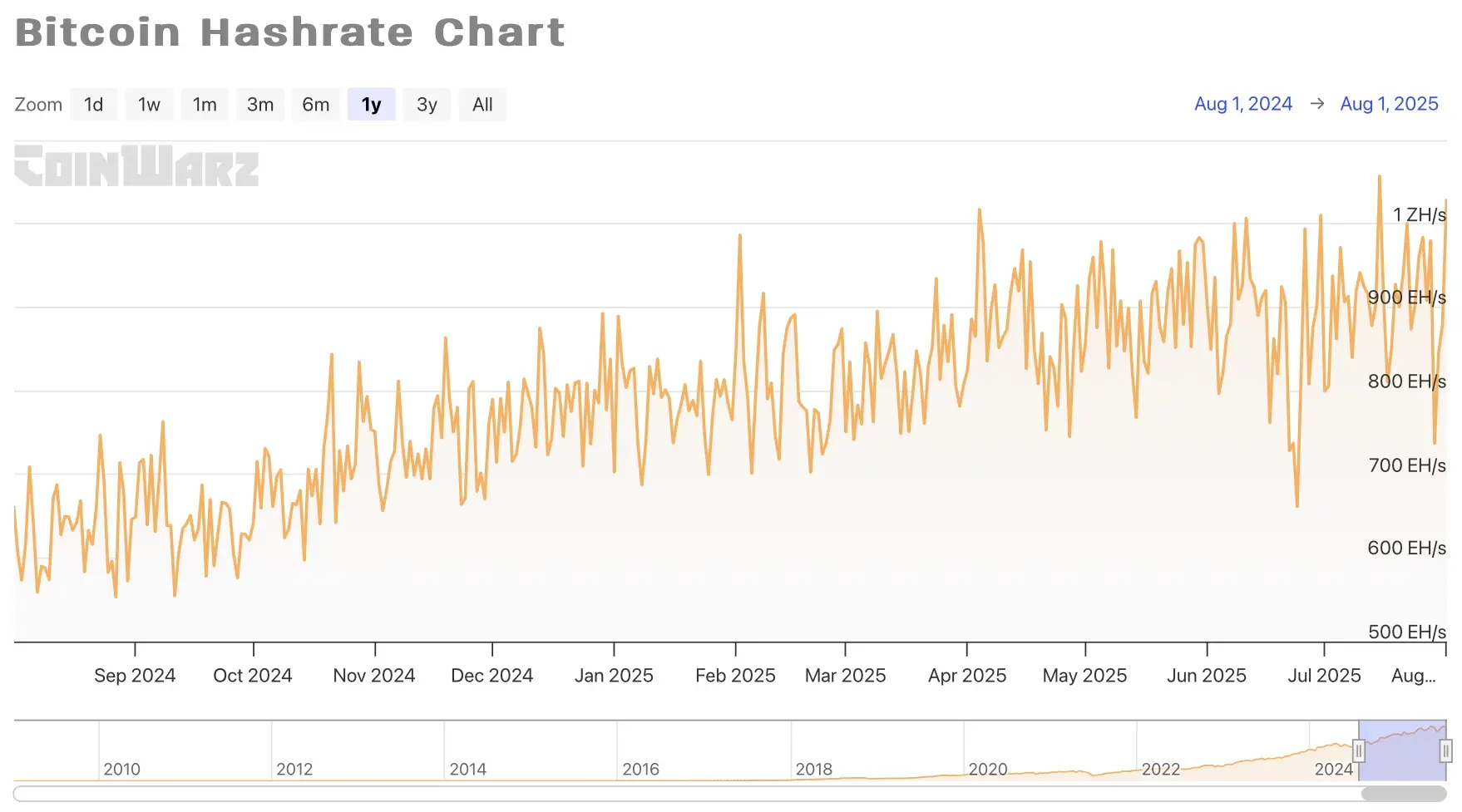
Annual Bitcoin Network Hash Rate Data
4. Mining Revenue
According to YCharts data, the daily total revenue of Bitcoin miners (including block rewards and transaction fees) for this week is as follows:
July 26: $57.61 million;
July 27: $52.74 million;
July 28: $57.40 million;
July 29: $44.26 million;
July 30: $52.50 million.
Overall, the miners' daily revenue this week fluctuated around $52 million to $58 million, maintaining a stable overall trend with slight fluctuations compared to the previous week. Notably, on July 29, miner revenue saw an abnormal decline, recording only $44.26 million, the lowest point of the week. Combined with on-chain data, the number of confirmed transactions on the Bitcoin blockchain on July 29 was significantly lower than on other dates, showing a temporary decline in transaction activity. The decrease in transaction volume directly compressed the total amount of transaction fees for that day, thereby dragging down overall miner revenue. This phenomenon indicates that the frequency of on-chain interactions still plays an important role in contributing to miners' fee income. Typically, such declines in transaction activity may be related to price consolidation, increased investor wait-and-see sentiment, or network congestion adjustment mechanisms.
From the perspective of daily revenue per unit of computing power (Hashprice), according to Hashrate Index data, as of August 1, Hashprice was reported at $57.41 per PH/s per day, slightly down from the same period last week, reflecting that miners' unit revenue is facing some compression pressure. On July 31, Hashprice dropped to a weekly low of $57.97, and on August 1, it further decreased from an intraday high of $58.90 to $57.17, indicating that the market is relatively sensitive to multiple factors such as Bitcoin price decline, reduced transaction fees, and fluctuations in overall network computing power in the short term.
From a longer-term perspective, Hashprice is at a mid-low level on a monthly basis, reflecting a relatively balanced state between current Bitcoin prices, network difficulty, and fee levels; while observing quarterly trends, Hashprice remains at a relatively mid-high level, indicating that miners still have certain profitability under the current market environment. It is worth noting that if Bitcoin prices continue to decline, on-chain activity does not show significant recovery, and overall network computing power continues to grow, unit revenue may be further squeezed. Attention should be paid to the subsequent difficulty adjustment rhythm and changes in on-chain fees and their potential impact on Hashprice to judge the marginal changes in miners' profitability.
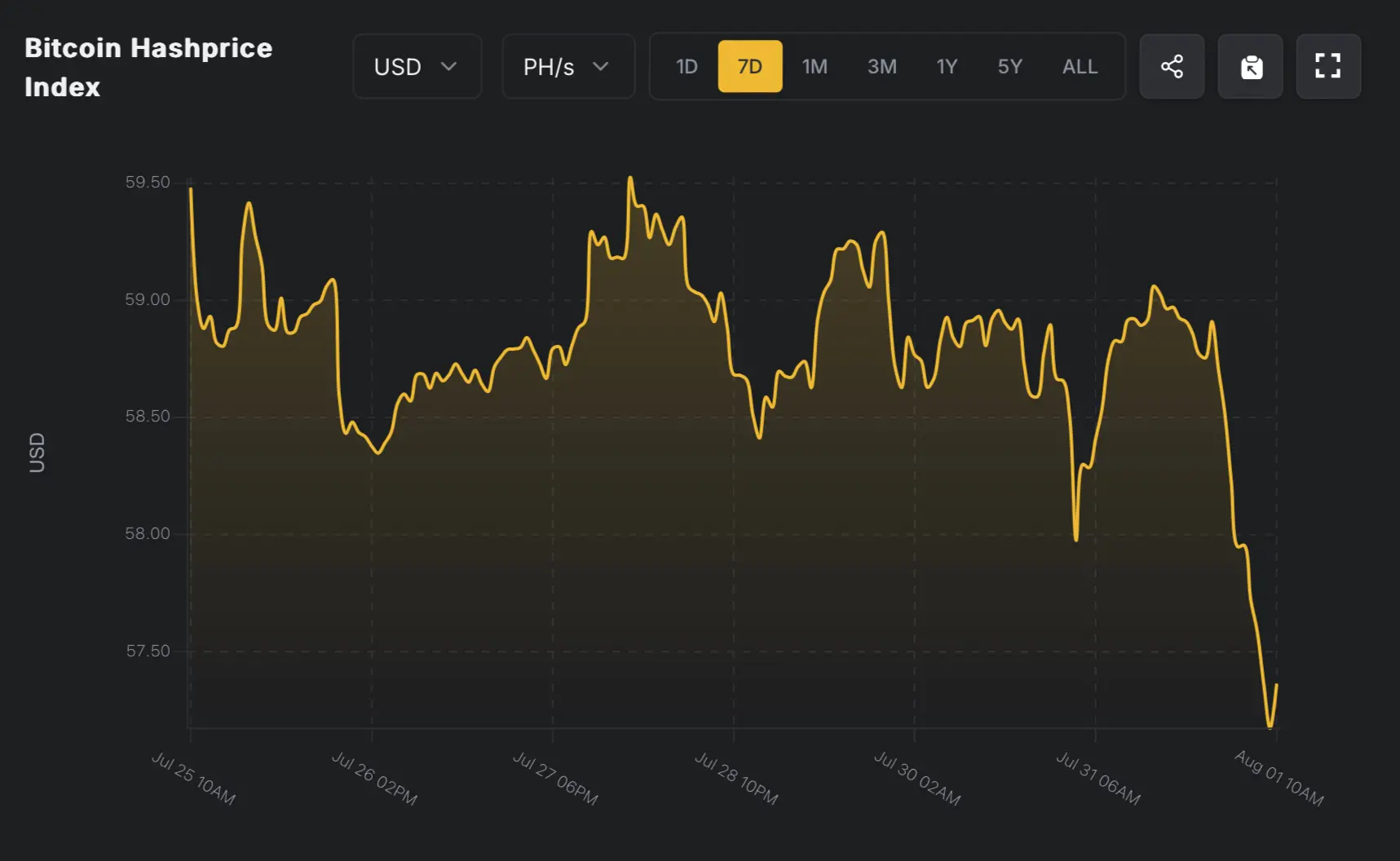
Hashprice Data
5. Energy Costs and Mining Efficiency
According to CloverPool data, as of August 1, 2025, the total network computing power of Bitcoin has risen to 905.37 EH/s, with mining difficulty at 127.62 T. The next difficulty adjustment is expected to occur on August 8, with a decrease of approximately 0.31%, bringing the difficulty down to 127.23 T. This reflects that recent fluctuations in network computing power are triggering the protocol's adaptive adjustment mechanism. Overall, the total network computing power remains at a historical high range, indicating that mainstream miners maintain strong block production capabilities under efficient operational conditions.
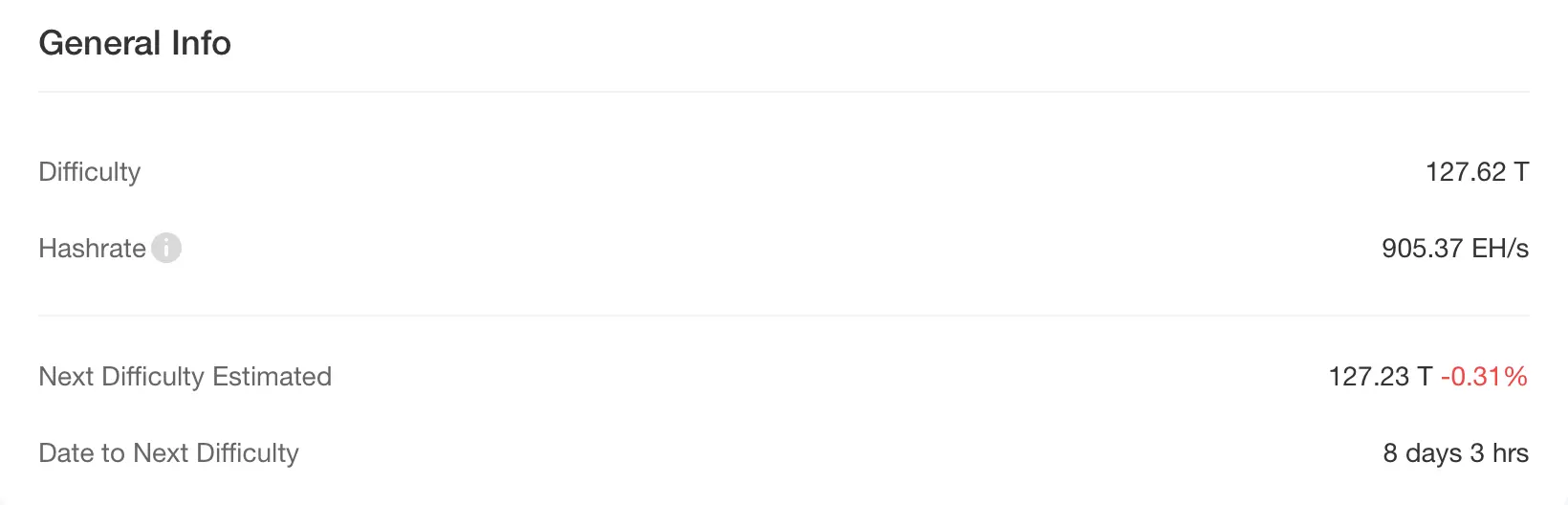
Bitcoin Mining Difficulty Data
From the perspective of mining costs, according to MacroMicro's latest model calculations, as of July 30, 2025, the unit production cost of Bitcoin is approximately $99,208.77, while the spot price during the same period is $117,831.19, resulting in a mining cost-to-price ratio of 0.79, meaning that miners still have about 20% gross profit margin on average. Compared to the data on July 26, where the unit cost was $93,178.64 and the spot price was $117,947.37, the corresponding cost ratio was 0.80; as of August 1, the cost ratio remains at 0.79. Overall, the mining profit margin has remained stable over the past week, with profitability still relatively considerable.
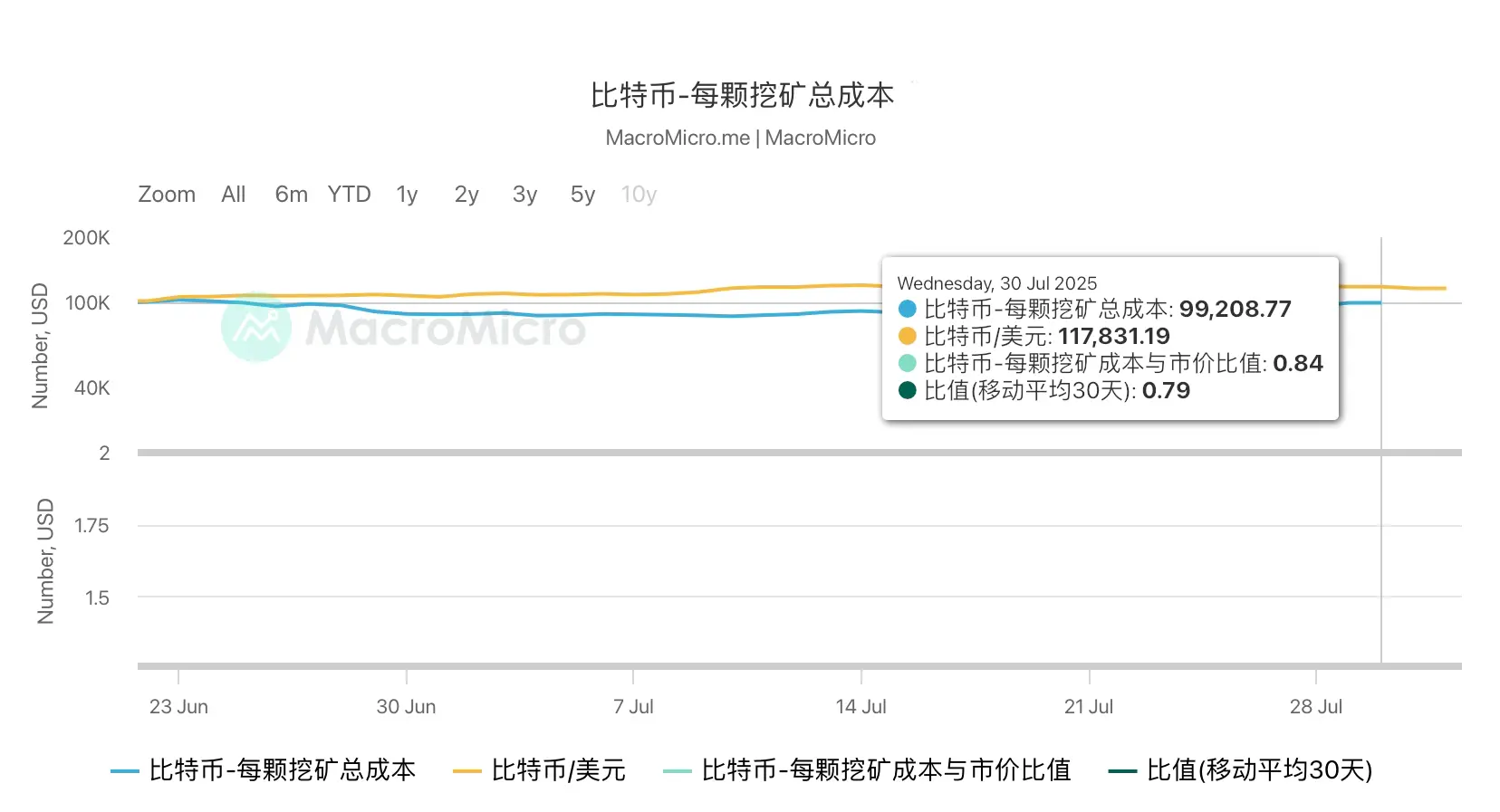
Total Mining Cost per Bitcoin Data
At the same time, the on-chain indicator Puell Multiple remains in the range of 1.03 to 1.41, indicating that the value of block rewards received by miners daily is still higher than the one-year historical average, reflecting that mining income is running at a high level. In terms of daily issuance, from July 26 to 30, the daily new output stabilized between 428 and 479 BTC, with a steady network supply rhythm, exerting limited impact on the spot market. The total market capitalization of the crypto market fluctuated between $2.2 trillion and $2.4 trillion, indicating that the market has a strong capacity to absorb new supply, and the positive relationship between price and cost continues.
In summary, Bitcoin mining has maintained a stable profit state this week, with mainstream miners effectively controlling marginal costs through efficient equipment, energy optimization, and scale advantages. Although the overall network computing power has fluctuated slightly, under the current price support and healthy on-chain revenue indicators, the overall operation of the industry still shows resilience. Attention should be paid to the potential impacts of rising energy costs, price fluctuations, and changes in the policy environment on marginal mining operations, especially as inefficient models or high-energy-consuming mines may gradually exit the network, further optimizing the mining ecosystem.
6. Policy and Regulatory News
Pakistan's Minister of State for Blockchain Affairs: Population Structure Will Drive Bitcoin Adoption to Achieve "Leapfrog Development"
On July 27, it was reported that Bilal Bin Saqib, Pakistan's Minister of State for Cryptocurrency and Blockchain Affairs, stated that the country's population structure makes it a major catalyst for Bitcoin adoption, with the potential to allow Pakistan to achieve "leapfrog development" beyond developed countries.
Bin Saqib stated in an interview: "Global policies have changed, not just in Pakistan, but all over the world." The Pakistani government began regulating cryptocurrencies in November 2024.
The country has 40 million crypto wallets, ranking among the top five countries in terms of cryptocurrency adoption, which the minister attributes to Pakistan's young population structure.

Related Image
U.S. Department of Justice Files to Seize Over $2.4 Million in Bitcoin Related to Ransomware Group Chaos
On July 29, it was reported that the U.S. Department of Justice had filed a civil lawsuit in the Northern District of Texas on July 24, seeking to seize previously confiscated crypto assets.
It is reported that the FBI's Dallas office seized approximately 20.29 BTC from a crypto address on April 15, currently valued at over $2.4 million. The related assets are linked to members of the ransomware organization Chaos, involving illegal activities such as money laundering and computer extortion. This group has carried out multiple cyberattacks in the Northern District of Texas and other areas.
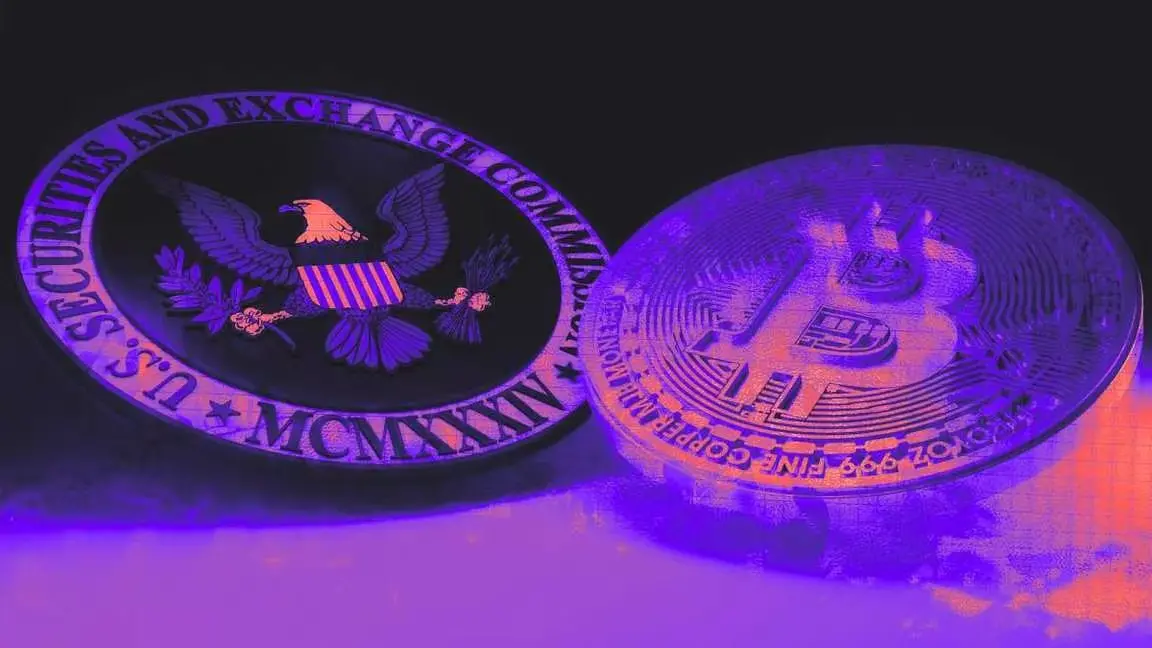
U.S. SEC Approves "Physical Creation and Redemption" for Bitcoin and Ethereum ETFs and Eases Options Position Limits
On July 30, it was reported that the U.S. Securities and Exchange Commission (SEC) officially approved the "physical creation and redemption" mechanism for Bitcoin and Ethereum spot ETFs on July 29, covering products from several institutions including BlackRock, Ark21, Fidelity, VanEck, and Franklin Templeton. This adjustment will make fund operations more efficient and cost-effective.
The SEC also approved applications for combination funds containing Bitcoin and Ethereum spot assets, Bitcoin ETF options products, and eased certain options position limits. Chairman Paul Atkins described this move as "part of establishing a more rational regulatory framework," which will benefit the depth and vitality of the U.S. crypto market.
Analysts expect that subsequent ETF applications tracking altcoins will also support the physical creation model.
Related Image
White House Task Force Report: Promoting the Construction of a Digital Asset Regulatory Framework, Omitting Details on Bitcoin Strategic Reserves
On July 30, it was reported that the White House Digital Asset Market Task Force will release an important report today, proposing several recommendations for digital asset regulation. The report suggests that the Securities and Exchange Commission (SEC) and the Commodity Futures Trading Commission (CFTC) immediately enable digital asset trading at the federal level and provide clear guidance for market participants on registration, custody, trading, and record-keeping.
The report also addresses several key areas: supporting the integration of decentralized finance (DeFi) technology into the mainstream financial system; promoting the development of innovative financial products through regulatory sandboxes; advancing the implementation of the stablecoin regulatory framework GENIUS; and clarifying tax guidelines for cryptocurrency mining and staking activities. Notably, the report opposes the issuance of central bank digital currencies (CBDCs) and recommends formulating relevant legislation to prohibit them. The report also suggests establishing clear capital rules for banking services to crypto enterprises, improving the transparency of crypto enterprises' access to bank accounts.
What remains unaddressed—at least in the preview of the report—are specific details about the federal government's progress and plans regarding the reserve of Bitcoin or other digital assets. Nevertheless, for those who have experienced over a decade of regulatory uncertainty in the crypto space, seeing a complete set of clear rules gradually taking shape in the U.S., the world's most important crypto market, is still very encouraging.
7. Mining News
An Independent Miner Successfully Mined a Bitcoin Block and Received 3.154 BTC, Worth Approximately $372,000
On July 27, Cointelegraph reported that an independent miner successfully mined Bitcoin block 907283, receiving a reward of 3.154 BTC, valued at approximately $372,000.
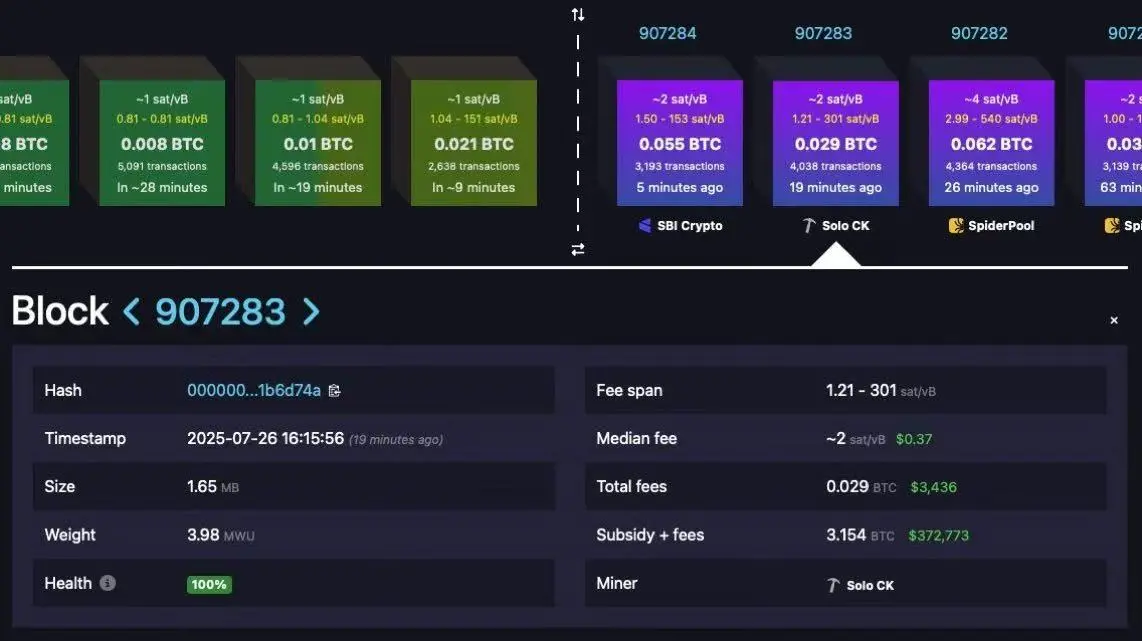
Related Image
Nasdaq Plans to Delist Bitcoin Mining Company Argo Blockchain Due to Low Stock Price, Company Applies for Hearing to Contest
On July 30, it was reported that London-based Bitcoin mining company Argo Blockchain (Nasdaq code: ARBK) has been notified by Nasdaq of plans to delist due to its stock price being below $1 for an extended period. The company has failed to maintain the minimum bid requirement since the beginning of the year, triggering a delisting deficiency notice on July 15, with the current stock price at $0.31, significantly down from $16.60 at the time of its IPO in 2021.
Argo stated it would appeal to the Nasdaq hearing committee, and its stock can continue to trade during the hearing. The company has not disclosed any plans to boost its stock price, such as a reverse stock split, and has admitted it cannot guarantee the success of the appeal or compliance restoration. The mining company previously sold its largest Texas mining facility, Helios, in 2022 to avoid bankruptcy and currently operates a hydroelectric mining facility in Quebec, Canada.
Data: Over 3,500 Websites Targeted by Covert Cryptocurrency Mining Attacks
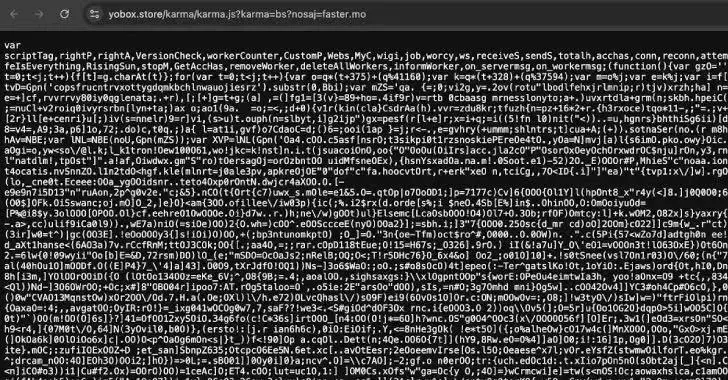
On July 30, it was reported that security research firm c/side recently disclosed that over 3,500 websites have been attacked by hackers, embedding covert JavaScript cryptocurrency mining programs. Attackers utilized Web Workers and WebSocket technology to secretly mine while users browse the infected websites.
Related Image
Indonesia Increases Taxes on Cryptocurrency Exchanges and Miners
On July 30, it was reported that the Indonesian government updated its tax policies for the cryptocurrency industry, increasing taxes on traders and miners while eliminating buyers' value-added tax (VAT) obligations. It is reported that in addition to increasing income tax, the new tax framework raises the VAT on crypto miners from 1.1% to 2.2%. Additionally, the department has eliminated the 0.1% special income tax rate on cryptocurrency mining. Such income will be taxed at individual income tax or corporate tax rates, which will take effect in 2026.
8. Bitcoin News
Global Corporate Bitcoin Holdings Dynamics (This Week)
El Salvador (Country):
On July 27, it was reported that El Salvador increased its holdings by 8 BTC over the past week, bringing its total holdings to 6,250.18 BTC.Monochrome (Australia):
On July 29, it was reported that Australia's Monochrome spot Bitcoin ETF (IBTC) holdings rose to 962 BTC.
Public Company Bitcoin Treasury Dynamics (This Week)
Metaplanet Increases Holdings by 780 BTC
On July 28, Japanese listed company Metaplanet increased its holdings by 780 BTC, valued at approximately $92.5 million, bringing its total holdings to 17,132 BTC.The Smarter Web Company Raises Approximately £19.68 Million Through Share Placement to Increase Bitcoin Holdings
On July 28, UK-listed company The Smarter Web Company raised approximately £19.68 million through a new share placement, with funds primarily intended to expand its Bitcoin treasury. The company previously held 1,825 BTC. On July 30, the company announced the purchase of 225 BTC at an average price of $118,080 each, increasing its total holdings to 2,050 BTC.
H100 Group Raises a Total of $114 Million to Purchase Bitcoin
On July 28, Swedish-listed company H100 Group announced it has raised approximately $114 million, continuing to advance its Bitcoin reserve strategy.MARA Holdings Issues Convertible Bonds to Raise $950 Million
On July 28, U.S.-listed company MARA Holdings raised $950 million through the issuance of 0% interest convertible bonds, intended for increasing Bitcoin holdings, repaying old debts, and general purposes.SQNS Announces Increase of 755 BTC
Earlier reports indicated that SQNS announced earlier today that it had increased its holdings by 755 BTC at an average price of $117,296 (including fees). As of July 25, 2025, the company's total Bitcoin holdings reached 3,072 BTC.
Bakkt Sells Loyalty Business and Raises Funds to Purchase Bitcoin
On July 29, Nasdaq-listed company Bakkt announced the sale of its loyalty business for $11 million and plans to raise funds through a public offering of stocks and warrants for purchasing Bitcoin and supplementing operating capital.ZOOZ Launches Bitcoin Strategy with $180 Million Private Placement
On July 29, U.S. company ZOOZ announced a $180 million private placement to launch its Bitcoin treasury reserve plan, with participants including well-known institutions like Pantera Capital and FalconX.Twenty One Capital Becomes the Third Largest Corporate Holder Globally
On July 30, Twenty One Capital's holdings increased to 43,514 BTC, ranking as the third-largest corporate Bitcoin holder globally.
Strategy Purchases Another 21,021 BTC, Setting a Record for Fundraising
On July 30, Strategy, led by Michael Saylor, announced an increase of 21,021 BTC, bringing its total holdings to 628,791 BTC. This fundraising of $2.521 billion is the largest U.S. IPO of 2025.3E Network Technology Group (China) Plans to Establish Bitcoin Crypto Reserves
On July 28, 3E Network Technology Group completed its first private placement delivery, planning to use part of the funds to purchase Bitcoin and establish a crypto treasury system.
Profusa Invests $1 Million to Purchase Bitcoin
On July 30, Nasdaq-listed company Profusa announced that it invested $1 million to purchase Bitcoin according to its crypto treasury strategy. The company stated it will continue to use Bitcoin and other digital assets to hedge against macroeconomic uncertainties.Belgravia Hartford Secures $5 Million in New Financing for Bitcoin Purchases
On July 30, Canadian-listed company Belgravia Hartford announced it completed a $5 million convertible bond financing with Round 13 Digital Asset Fund, planning to use the entire amount for increasing Bitcoin holdings (currently holding 40.77 BTC), with further announcements to follow upon completion of the purchase.Phoenix Group Announces Establishment of a Bitcoin and Solana Treasury Worth Over $150 Million
On July 31, UAE-listed company Phoenix Group announced the formal establishment of a Bitcoin and Solana treasury valued at over $150 million as part of its long-term reserve strategy. The company currently holds 514 BTC and over 630,000 Solana.
"Rich Dad Poor Dad" Author: Sometimes, Gold, Silver, and Bitcoin Are the Best Choices
On July 26, it was reported that Robert Kiyosaki, author of "Rich Dad Poor Dad," again called for holding Bitcoin: "Sometimes, holding real gold, silver, and Bitcoin is the best choice."

Related Image
LD Capital Founder: The Market Has Fully Entered a Long Bull Market, Traditional Four-Year Cycle Patterns May Disappear
On July 27, it was reported that LD Capital founder Yi Lihua stated on social media, "The market has fully entered a long bull market, and the traditional four-year cycle pattern may no longer exist. Stablecoins and blockchain are the best opportunities for the beautiful country to globalize the dollar. With cryptocurrency investments in one hand and stablecoins earning interest in the other, the market will continuously attract new users and capital. The biggest recent hotspot is the cryptocurrency stock model, which is indeed an innovative invention. The crypto market is relatively small compared to the U.S. stock market, and as BTC and ETH succeed, mainstream coins like SUI, BNB, SOL, TON, LTC will take this opportunity to rise further, followed by smaller coins. Those with professional research and information capabilities can seize opportunities. Lastly, I advise against shorting and to stay away from the shorting circle."
Southeast Asian Ride-Hailing Giant Grab Now Accepts BTC and Other Cryptocurrencies for Payments in the Philippines
On July 28, it was reported that Southeast Asian ride-hailing giant Grab's users in the Philippines can now top up their GrabPay wallets using cryptocurrencies.
This feature is made possible through Grab's collaboration with payment service provider Triple-A and local digital asset exchange PDAX. Users can recharge their GrabPay wallets using various cryptocurrencies, including Bitcoin, Ethereum, USDC, and USDT.

Related Image
Bridgewater Founder Ray Dalio: Investors Should Allocate 15% of Assets to Gold and Bitcoin
On July 28, it was reported that Bridgewater founder Ray Dalio suggested in The Master Investor Podcast that investors allocate at least 15% of their portfolios to gold and Bitcoin to hedge against the increasing risks in the bond and stock markets.
He pointed out that the macroeconomic risks arising from rising U.S. government debt have not been fully priced in by the market and could trigger significant declines. Dalio stated that he personally "strongly prefers" gold over Bitcoin and is skeptical about Bitcoin becoming a central bank reserve currency. He believes Bitcoin has shortcomings in transaction privacy and may face protocol security risks.

Related Image
Galaxy Report: Strategy and Other Crypto Financial Firms' Cryptocurrency Holdings Have Surpassed $100 Billion
On July 31, it was reported that according to a report released by Galaxy Research, companies including Strategy, Metaplanet, and SharpLink have accumulated a total of $100 billion in digital assets. The report noted that Bitcoin financial companies hold the vast majority of the share, with over 791,662 BTC on their books, valued at approximately $93 billion, accounting for 3.98% of the circulating supply. Ethereum financial companies hold 1.3 million ETH, valued at over $4 billion, accounting for 1.09% of the Ethereum supply.
Additionally, according to a previous report by The Block, the total value of ETH treasury reserves held by 64 entities has surpassed $10 billion, including publicly listed companies, crypto exchanges, DeFi protocols, non-profit organizations, and federal government reserve assets.
 Risk warning Risk warning