Scan to download
BTC $67,170.12 -1.23%
ETH $1,970.71 -0.98%
BNB $611.08 -1.89%
XRP $1.46 +0.63%
SOL $82.51 -2.99%
TRX $0.2798 -0.35%
DOGE $0.0998 -0.35%
ADA $0.2805 -0.88%
BCH $556.04 -0.97%
LINK $8.69 -1.84%
HYPE $29.02 -2.29%
AAVE $125.58 -2.11%
SUI $0.9501 -2.61%
XLM $0.1650 -0.82%
ZEC $279.66 -4.34%
BTC $67,170.12 -1.23%
ETH $1,970.71 -0.98%
BNB $611.08 -1.89%
XRP $1.46 +0.63%
SOL $82.51 -2.99%
TRX $0.2798 -0.35%
DOGE $0.0998 -0.35%
ADA $0.2805 -0.88%
BCH $556.04 -0.97%
LINK $8.69 -1.84%
HYPE $29.02 -2.29%
AAVE $125.58 -2.11%
SUI $0.9501 -2.61%
XLM $0.1650 -0.82%
ZEC $279.66 -4.34%

mining

Analyst: The daily net buying volume of Bitcoin is still greater than the mining volume, but the decline in tech stocks may lead to continued pressure on Bitcoin

According to DL News, Shawn Young, chief analyst at MEXC Research, stated that cryptocurrency traders are expected to drive Bitcoin prices back to $100,000. Shawn Young said, "Although buyers are not purchasing digital assets on a large scale like they did a few months ago, the amount of Bitcoin they buy daily still exceeds the daily mining output. This creates a net positive supply dynamic that could trigger a short-term rebound." Some analysts warn that the situation could worsen.Bloomberg Intelligence analyst Mike McGlone even predicts that Bitcoin prices could evaporate by 85%, eventually falling to $10,000. His reasoning is that the soaring stock market has siphoned off market volatility, while gold and silver have outperformed Bitcoin as safe-haven assets. Additionally, the industry seems to have lost confidence in President Trump's push for cryptocurrency, which will drive prices lower.Researchers like Ben Harvey from crypto investment firm Keyrock believe that Bitcoin's next move will not be determined by internal crypto factors but will depend on macro factors such as the Federal Reserve's interest rate cuts and institutional investors buying Bitcoin ETFs. Bloomberg data shows that concerns over an AI spending bubble have triggered a surge in credit default swap trading—these complex financial contracts were almost ignored a year ago. These contracts are similar to insurance, paying out when companies cannot repay their debts.Currently, Alphabet's nearly $900 million debt and Meta's nearly $700 million debt are linked to these contracts. This means that hedge funds are increasingly using these derivatives to hedge against downside risks. In other words, investors are hedging against a significant market sell-off that could drag down Bitcoin prices.Tech stocks, referred to as "AI panic trades," have been under pressure since January. The BlackRock flagship tech ETF (which tracks industry leaders like Microsoft, Oracle, and Palantir) has seen a decline of just over 23% year-to-date.Analysts expect that large tech companies will increase their borrowing from $165 billion in 2025 to $400 billion this year to invest in AI data centers, which could total trillions of dollars in investment costs—if AI projects fail to generate returns, investor risks will increase. Young stated that Bitcoin trading trends are aligning with tech stocks, thus "being the first to bear the impact of liquidity or capital shifts."

Bitcoin miners enter the "surrender phase": production costs inverted, both hash rate and stock prices under pressure

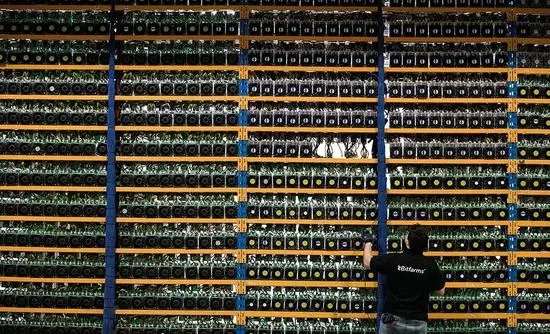
Bitcoin mining has entered a severe phase, with unit hash rate revenue dropping to a historical low of about $35/PH. Affected by a significant market correction, the price of Bitcoin has fallen over 50% from its 2025 peak of $126,000, currently hovering around the $60,000 range. Against this backdrop, the average production cost of a single Bitcoin across the network is approximately $87,000, about 45% higher than the current market price, marking the first large-scale "underwater operation" since the bear market of 2022.CryptoQuant defines the current phase as the "surrender phase," characterized by the accelerated shutdown of old mining machines and a noticeable contraction in overall network hash rate. As a result, the stock prices of listed mining companies such as MARA Holdings and Riot Platforms have dropped over 20% this week, with funds flowing towards more stable traditional assets like gold.Meanwhile, North America's mining hubs (especially Texas) are facing severe winter storms, forcing some mining farms to limit power usage to ensure the stability of the civilian power grid. Coupled with miner exits, the network experienced a historic difficulty adjustment of about 11% on February 9. However, due to the significant drop in coin prices, the profitability recovery effect from the difficulty adjustment is limited.The industry's "Miner Profitability Sustainability Index" has fallen to 21, indicating that, except for a few operators with low electricity costs and high efficiency, most miners have completely compressed profit margins. For companies with electricity prices above $0.05 per kilowatt-hour or those still using older model mining machines, this difficulty adjustment is unlikely to reverse the risk of total shutdown.To cope with the "2026 mining winter," leading companies are accelerating their transition to artificial intelligence (AI) and high-performance computing (HPC). IREN and Core Scientific have redirected some of their data center power capacity to support generative AI businesses to secure more stable long-term contract revenues. Recently, Bitfarms announced a complete exit from Bitcoin mining to focus on its AI strategic transformation.
app_icon
ChainCatcher Building the Web3 world with innovations.