From Speculative Assets to Productive Resources: RWA is Reshaping On-Chain Lending

 RWA upgrades highly volatile crypto collateral to real assets that can generate stable cash flows, injecting the value of the real economy into DeFi lending and reshaping capital efficiency and risk structure.
Author: @sanqing_rx
1. DeFi Hits a Wall, What Next?
The decentralized finance (DeFi) lending market is the pride of the crypto world. But today, this engine seems to be lacking power. Why? Because it has been spinning in a closed loop: using highly volatile crypto assets (like ETH, WBTC) as collateral to borrow U or other highly volatile crypto assets.
It's like a poker game entirely participated in by speculators, where the chips on the table fluctuate wildly, causing everyone's hearts to race up and down. This model has led to three inescapable deadlocks:
Low "capital efficiency": To borrow $100, you have to pledge crypto worth $150 or even $200. These collateral assets themselves don’t generate much "yield," leading to a large amount of capital being tied up.
Terrifying "death spiral": When a bear market hits, the prices of collateral and borrowed assets plummet simultaneously. This triggers large-scale chain liquidations, and the sell-off further drives down prices, creating a vicious cycle that puts the entire system on the brink.
Disconnection from the "real world": Fundamentally, the returns from this financial game come almost entirely from capital flows within the crypto circle, with little relation to the real value creation of the physical economy.
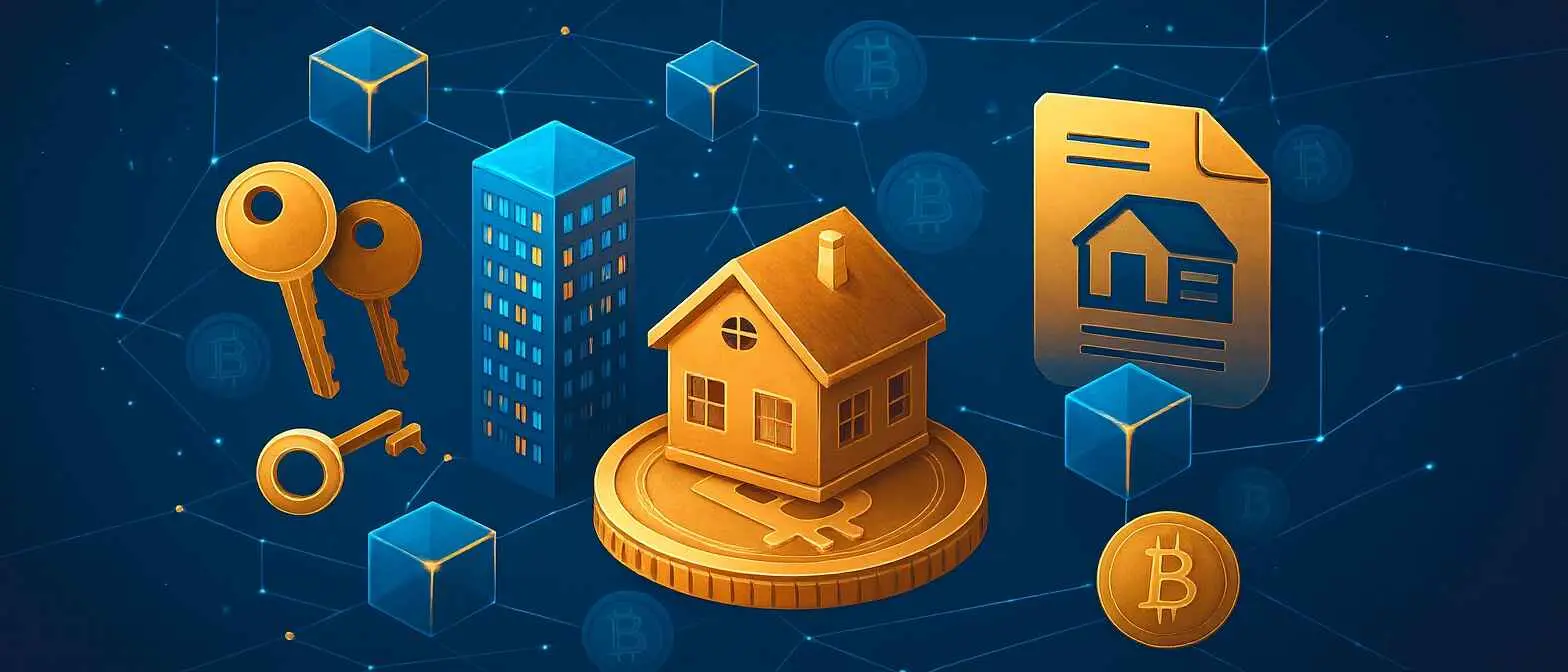
Just as DeFi seems to hit a ceiling, a new door is opening. That is to bring real-world assets (Real-World Assets, RWA) — those tangible items that can generate stable cash flows — onto the blockchain as a new form of collateral.
Imagine that what you are pledging is no longer a volatile token, but a set of apartments that generate stable rental income, or a U.S. Treasury bond that pays dividends regularly. The essence of this transformation is upgrading DeFi collateral from "speculative assets" to "productive assets." It no longer creates credit out of thin air but injects real money from the physical economy into DeFi, which is both a necessary path for DeFi to mature and a stress test for its infrastructure.
2. How to "Move" a House onto the Blockchain?
Sounds cool, but how exactly does it work? Turning a property into a token that can be used as collateral on Aave, Morpho, or other platforms hinges on building a "trust bridge" that spans the legal world off-chain and the code world on-chain.
The process is roughly as follows:
Asset Packaging and Isolation (Legal Wrapper): First, the RWA project will establish a "special purpose vehicle" (SPV), like a legal safe. The original owner of the asset (like you) will "sell" the property to this SPV. This step is crucial as it ensures that even if you go bankrupt, the assets in this safe remain intact, protecting the interests of token holders.
Value Assessment and Title Confirmation (Audit & Valuation): Before being placed in the safe, lawyers and professional appraisal firms will intervene to ensure that the property title is clear and provide a fair market valuation. All steps must be legal, compliant, and verifiable.
Tokenization: Once everything is ready, the "key" — the RWA token representing ownership or income rights of the property — will be "minted" on-chain through a smart contract. Each token legally corresponds to the rights of that asset from the real world.
After completing these three steps, an RWA token carrying real-world value is born. It is not air but "hard currency" supported by legal and cash flow.
3. The "Negative Cost Borrowing" Magic
The theory is rich, but what about reality? RealtyX recently launched its own property token (RST, RealtyX SPDD Token) collateral pool through the open-source code of the lending protocol Morpho.
Operational Model: Users can deposit their RST, representing the income rights of Dubai properties, into Morpho to borrow stablecoins. During the borrowing period, the property token you used as collateral will continue to generate rental income for you.
Standing on the Shoulders of Giants: RealtyX did not build a complex lending protocol from scratch but established itself on the proven Morpho, allowing it to focus on its core business.
Saying Goodbye to "Brutal Liquidation": In traditional DeFi, once the value of collateral falls below a threshold, it is ruthlessly and immediately liquidated by bots. RealtyX designed a "scheduled liquidation" mechanism: liquidation will only be triggered during a fixed weekly time window when the loan-to-value ratio (LLTV) exceeds the limit. This gives borrowers enough time to top up or repay, alleviating the awkwardness of RWA's poor liquidity.
When the annual rental yield of your property exceeds your borrowing annual interest rate, you can borrow money while making money, unlocking unprecedented imagination for asset holders.
4. Why RWA is a Game Changer for Lending?
The most exciting advantage of RWA collateralized lending is the significant enhancement of capital efficiency. Let's do some math:
Traditional DeFi Model:
You pledge ETH worth $1,000, borrowing $700 stablecoins at a 70% collateral rate, assuming an annual borrowing interest rate of 5%.
Your annual net cost is: ($700 × 5%) - $0 (ETH itself generates no yield) = $35RWA Collateral Model:
You pledge a property token worth $1,000, which generates 8% net rental income annually. You also borrow $700 stablecoins at a 5% interest rate.
Your annual net cost is: ($700 × 5%) - ($1,000 × 8%) = $35 - $80 = -$45
In the latter case, you not only obtain $700 in liquidity for free but also earn a net profit of $45 each year. When collateral shifts from "speculative goods" to "means of production," the entire economic model of the lending game is completely overturned.
Moreover, for the lending protocol itself, introducing RWAs like tokenized U.S. Treasuries adds a "ballast" to the balance sheet that is lowly correlated with the crypto market, enhancing the system's stability and risk resistance.
5. Trends and Opportunities
Bringing trillions of dollars of real assets onto the blockchain, RWA x DeFi is undoubtedly the grand narrative of the next decade.
Evolution Directions:
Risk Management Innovation: The biggest highlight in the future will be how protocols creatively solve the "liquidation paradox." In addition to RealtyX's time window model, there may emerge "last buyer" liquidity pools provided by professional market makers or protocol DAOs.
Technological and Regulatory Evolution: Modular lending protocols (like Morpho), Layer 2 networks, and the entry of traditional giants like BlackRock will collectively drive down technological costs and clarify global regulatory frameworks.
Investment Opportunities:
Infrastructure Layer (Selling Shovels): RWA price-feeding oracles, compliance identity protocols, token issuance platforms.
Asset Layer (Direct Gold Mining): Directly invest in high-quality, cash-flow-generating RWA tokens themselves, such as RealtyX's property tokens or Ondo's U.S. Treasury tokens, to earn stable returns.
Protocol Governance Layer (Investment Gold Mine): Actively integrate RWA into DeFi protocols.
Conclusion
RWA asset collateralized lending marks the evolution of DeFi from a closed digital game into a powerful tool that can empower the real economy. It aims to solve an ancient and massive problem: how to provide a global and efficient financing solution for illiquid but valuable real assets.
The road ahead is long, filled with trial and error and exploration. The core dramatic tension always arises from the contradiction between DeFi's "immediacy" and the "delayed" nature of the real world. But regardless, the gears have begun to turn. DeFi has taken a solid and decisive step toward a more sustainable and practically valuable future.
 Risk warning Risk warning