Ronin's Glamorous Transformation: From Ethereum Sidechain Back to L2

 Ronin is the Nintendo of the crypto world, potentially reigniting hope for blockchain games.
Written by: 1912212.eth, Foresight News
On August 15, Ronin announced its transformation from an Ethereum sidechain to an L2 solution. Just 5 months ago, Ronin had only announced the expansion of its DeFi business and the integration of games and consumer Dapps as a sidechain. Why has it embarked on a return journey overnight?
Four years ago, Ethereum's scalability roadmap was still in its early stages. Ronin stated that the situation is now vastly different. Ethereum is "making a comeback." Both transaction costs and speeds have reached unprecedented ideal levels. As the underlying infrastructure for popular Web3 games like Axie Infinity, this strategic shift for Ronin not only marks the resurgence of the "Ethereum boom," but may also signal the evolution of game blockchain towards a more mature and scalable direction.
Former Winners
The origin of the Ronin network dates back to 2021, developed by the Sky Mavis team specifically for the phenomenon that is Axie Infinity. At that time, the high gas fees and congestion issues on the Ethereum mainnet had become pain points for gamers, leading to the emergence of Ronin as a sidechain that provided a low-cost, high-throughput trading environment.
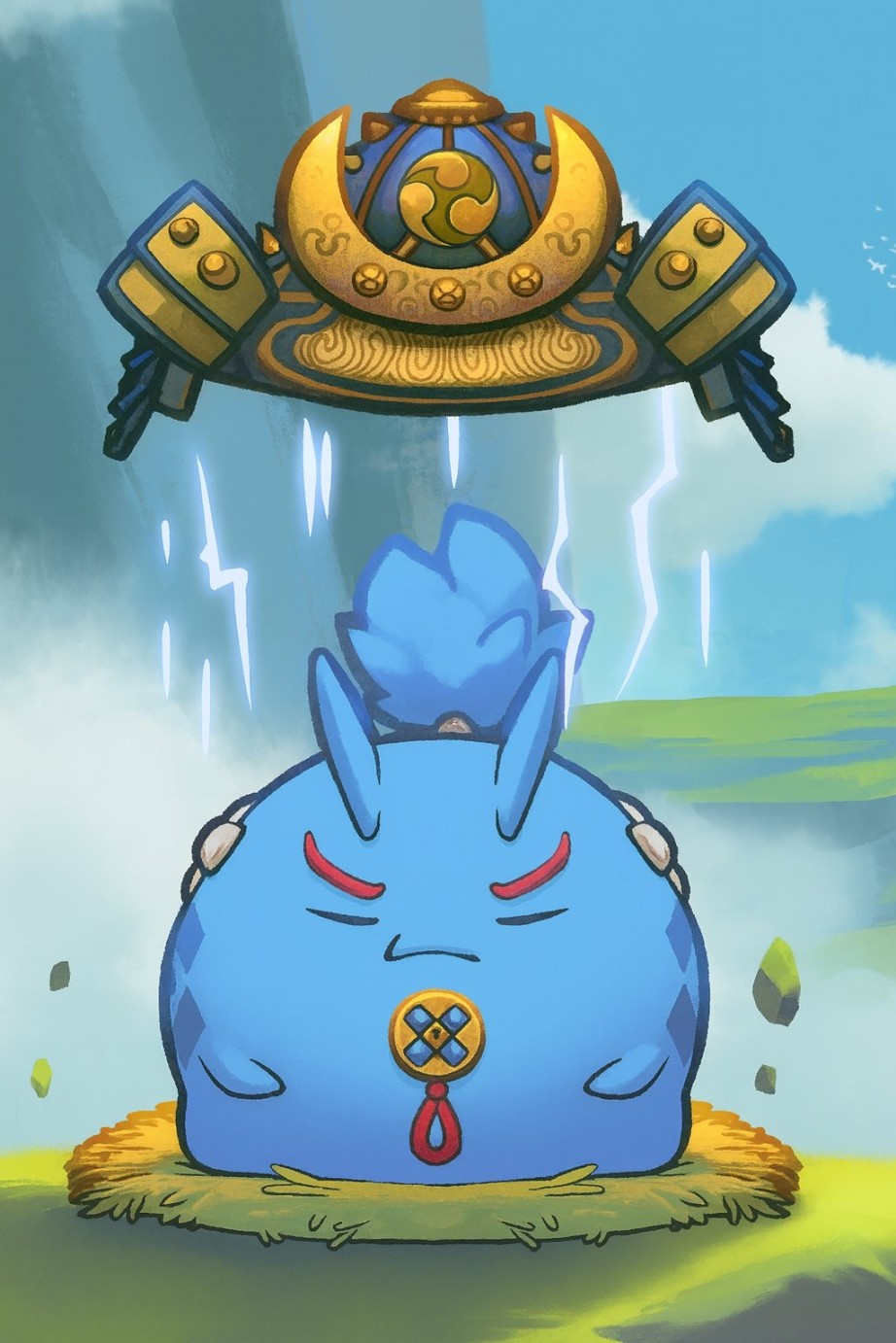
At its peak, Axie Infinity attracted millions of players, and Ronin's daily active users once exceeded 1 million, driving the global popularity of the "Play-to-Earn" model.
However, the good times did not last long. In March 2022, Ronin suffered the largest hack in history, losing assets worth up to $625 million. This incident exposed the shortcomings of sidechains in terms of security and decentralization, leading many to believe that Ronin would decline.
Nevertheless, the Sky Mavis team demonstrated remarkable resilience by upgrading the validator mechanism, transitioning to a Delegated Proof of Stake (DPoS) consensus, and collaborating with institutions like Binance to successfully restore the network. In August 2024, Ronin also persuaded white hat hackers to return $10 million worth of ETH through communication, avoiding further financial losses.
By 2025, Ronin had re-emerged, with daily active wallets stabilizing at over one million, and games within its ecosystem, such as Pixels, Lumiterra, and Fishing Frenzy, remained active. According to data from its official website, the total on-chain DEX trading volume has reached $9.41 billion, with total NFT trading volume at $6.47 billion, and the current total TVL has risen to $750 million, with wallet downloads reaching 31 million.
Limitations of Sidechains Becoming More Apparent
The catalyst for this transformation lies in the limitations of the sidechain model. With the rapid development of the Ethereum ecosystem, while sidechains can provide independence, they often sacrifice security sharing and liquidity integration with the mainnet.
The Ronin team clearly stated in their announcement: "Ronin is returning to Ethereum, becoming Layer 2." This decision is not a sudden whim, but a trend in the industry. By 2025, multiple Layer 1 chains such as Celo and Cronos are migrating to L2 architectures, highlighting the advantages of L2 in inheriting Ethereum's security while achieving high TPS (transactions per second).
According to data from the Ethereum Foundation, L2 solutions have increased the overall network TPS to over 100,000, driving global adoption. Ronin's transformation will leverage zero-knowledge proof (zk) technology to build zkEVM (zero-knowledge Ethereum Virtual Machine), which not only maintains compatibility with Ethereum but also significantly reduces transaction costs and delays.
Ethereum's Comeback
One key reason for Ronin's choice to return to Ethereum and transform into a Layer 2 solution is Ethereum's strong recovery in Q3 2025, with ETH stabilizing above approximately $4,600 in mid-August, close to its all-time high.
The market's renewed confidence in Ethereum is also attributed to the explosive activity within its ecosystem.
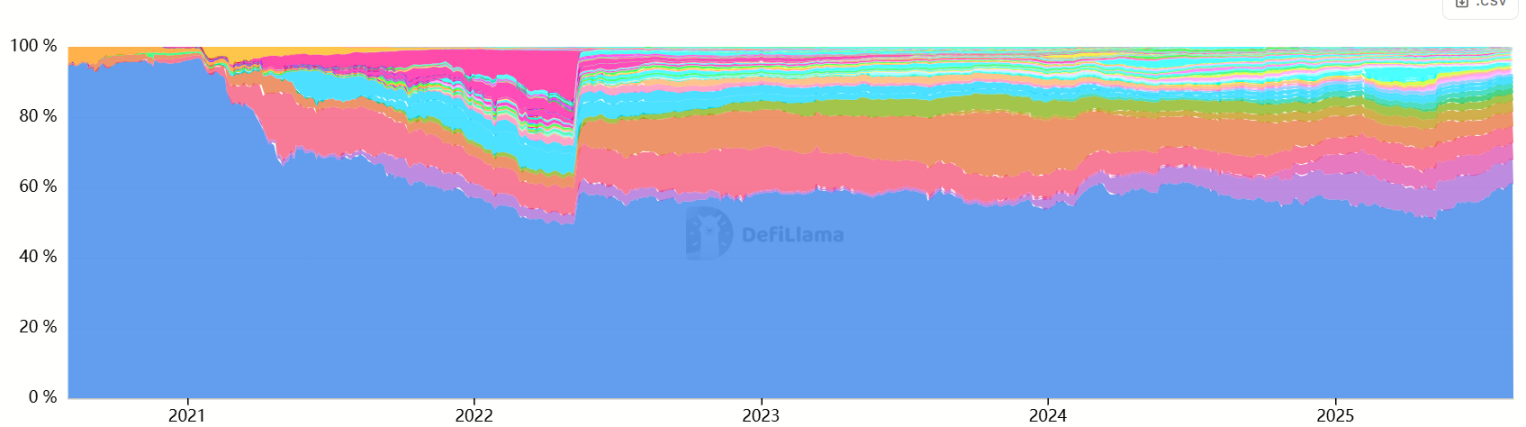
According to DefiLlama data, the total locked value (TVL) in Ethereum's DeFi has exceeded $94.55 billion, far surpassing Solana's $10.83 billion, still holding the dominant position in the DeFi market. This level of activity provides Ronin with a large user base and liquidity pool, ensuring that game assets can circulate within the broader Ethereum ecosystem post-transformation, achieving higher adoption rates.
Furthermore, Ethereum's future technological roadmap further enhances the attractiveness of L2 projects. Following the Dencun upgrade in 2024, the Pectra (Prague-Electra) hard fork in Q1 2025 has been successfully deployed, significantly improving network scalability, reducing costs, and optimizing the staking mechanism. Looking ahead, Ethereum plans to advance the Fusaka upgrade by the end of the year, which is the first major upgrade focusing on underlying performance optimization since the Pectra upgrade, including several core Ethereum Improvement Proposals (EIPs). Fusaka will significantly increase blob capacity, allowing Layer-2 rollups (such as Arbitrum and Optimism) to process more data and reduce costs, helping transaction throughput reach tens of thousands of TPS.
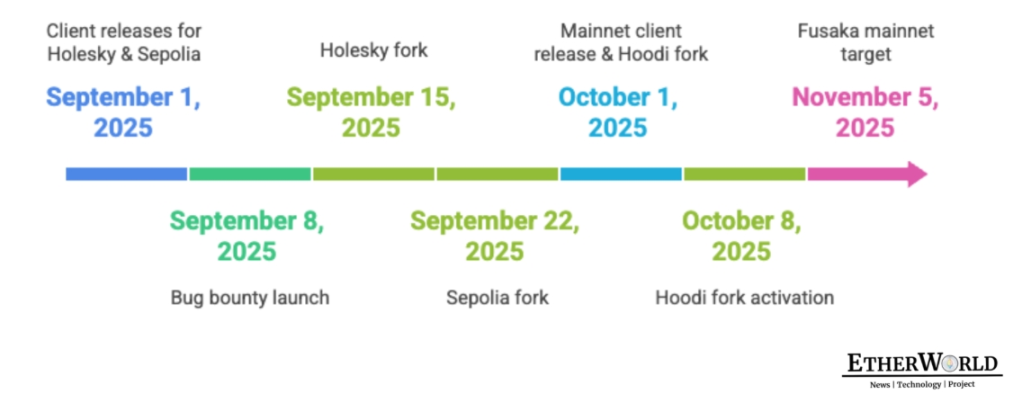
Additionally, post-upgrade, node operating costs will decrease through Verkle trees and PeerDAS, lowering device requirements, which is beneficial for a more decentralized network—including the development of mobile and light client ecosystems.
For Ronin, this attractiveness means a shift from an isolated sidechain to a thriving "modular" ecosystem, aiding its long-term competitiveness in the Web3 gaming space.
Migration to be Completed by Q2 2026, Token to Launch New "Allocation Proof"
In terms of specific transformation details, Ronin plans to complete its migration by Q2 2026, using Polygon's Chain Development Kit (CDK) as a foundation. Ronin will benefit from Ethereum's strong security and decentralization, with transaction speeds increasing by 12 times.
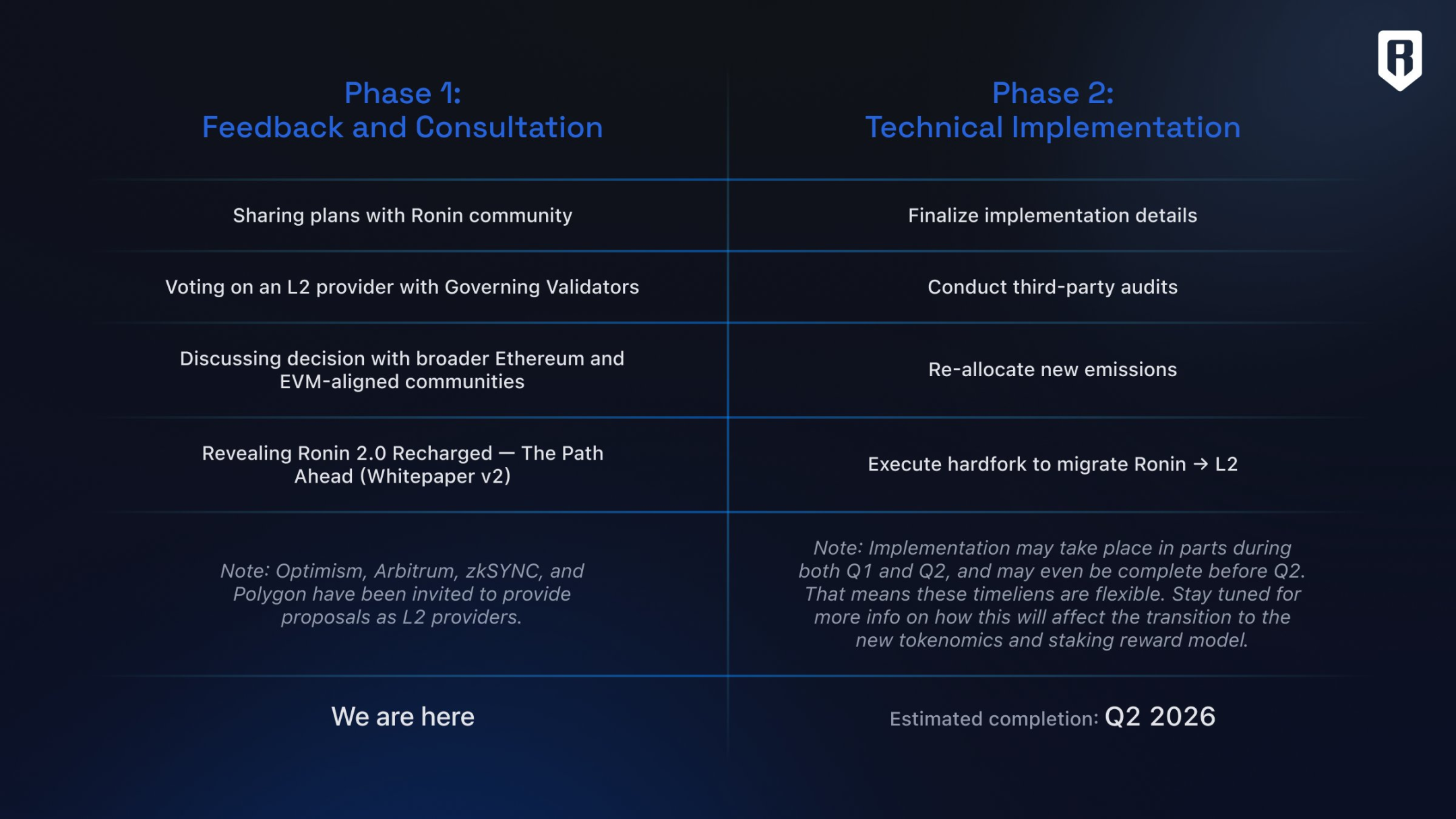
The speed increase is crucial for games like Axie Infinity, allowing players to conduct NFT transactions and in-game economic activities more smoothly. Additionally, developers will benefit immensely. Ronin will position itself as "Ethereum's gaming engine," attracting more third-party builders to deploy custom L2 chains. New projects such as Cambria Duel Arena, Fableborne, and Angry Dynomites have emerged within the ecosystem, leveraging L2's DeFi integration to achieve seamless fusion of gaming and finance.
It is worth mentioning that after the migration, RON token rewards will also be distributed to builders through a new "allocation proof" model.
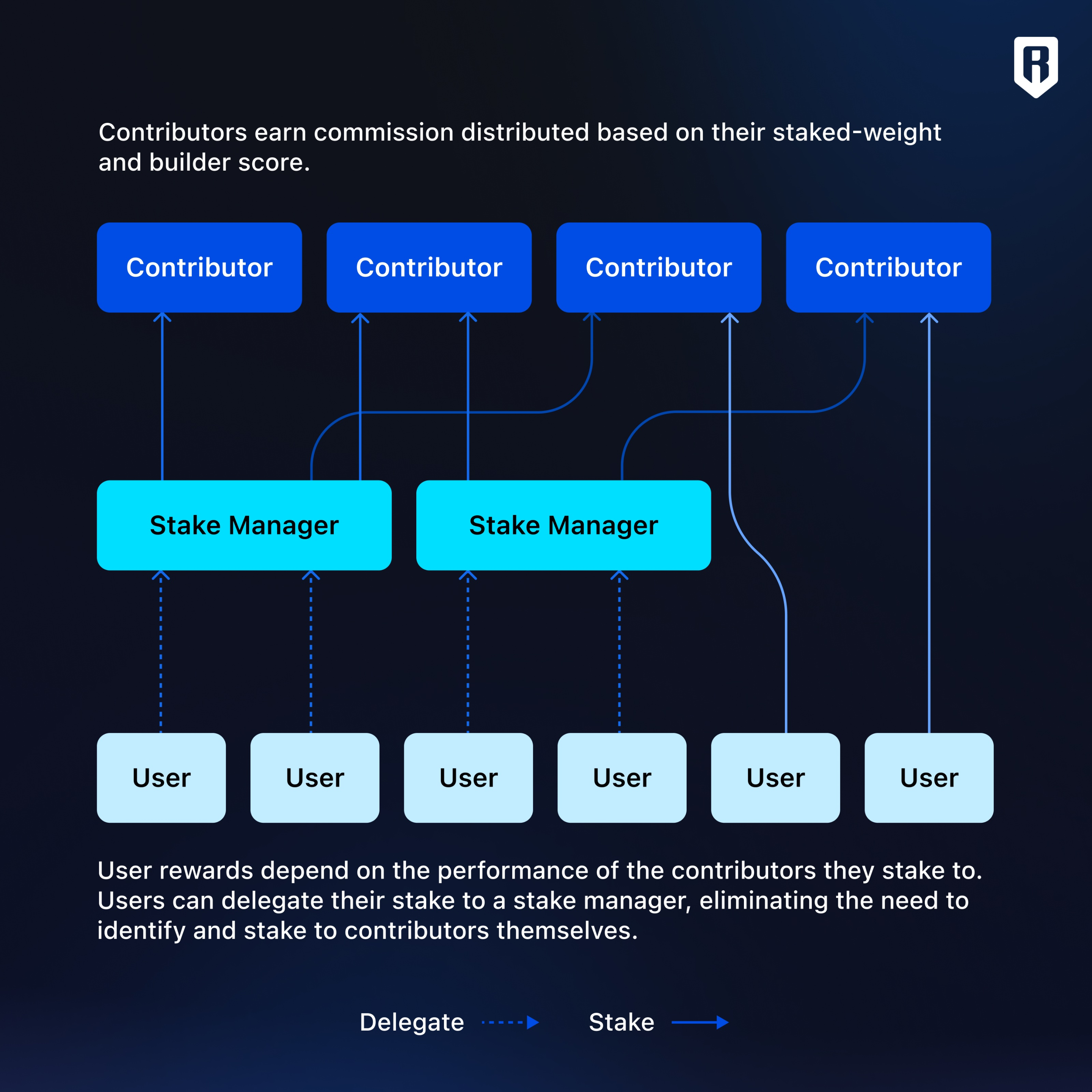
In recent years, RON rewards have primarily flowed to Governing Validators and Regular Validators to incentivize them to secure the network. However, after this upgrade, RON rewards will flow to both Governing Validators and Contributors. This will strengthen the incentive connection between builders and users, creating a new virtuous cycle centered around the RON token.
Sky Mavis co-founder Jihoz once said, "Ronin is the Nintendo of the crypto world." As the migration progresses, Ronin may hope to reignite the hopes of chain games.
 Risk warning
 Risk warning