After 1384 days, Ethereum finally reached a new historical high. Where is the next milestone?

 About to reach a market value of 600 billion USD, ranking as the 25th largest technology company in the world.
After 1384 days, Ethereum has finally reached a new price high in this cycle.
On August 23, following a significant "dovish" speech by Federal Reserve Chairman Powell the night before, expectations for a rate cut in September surged, leading to a broad increase in dollar assets. A few hours later, Ethereum surged by 14% to reach $4887, setting a new all-time high in its 11-year history, with a market capitalization exceeding $586 billion, ranking 25th among global tech companies, surpassing well-known firms like Mastercard and Netflix.
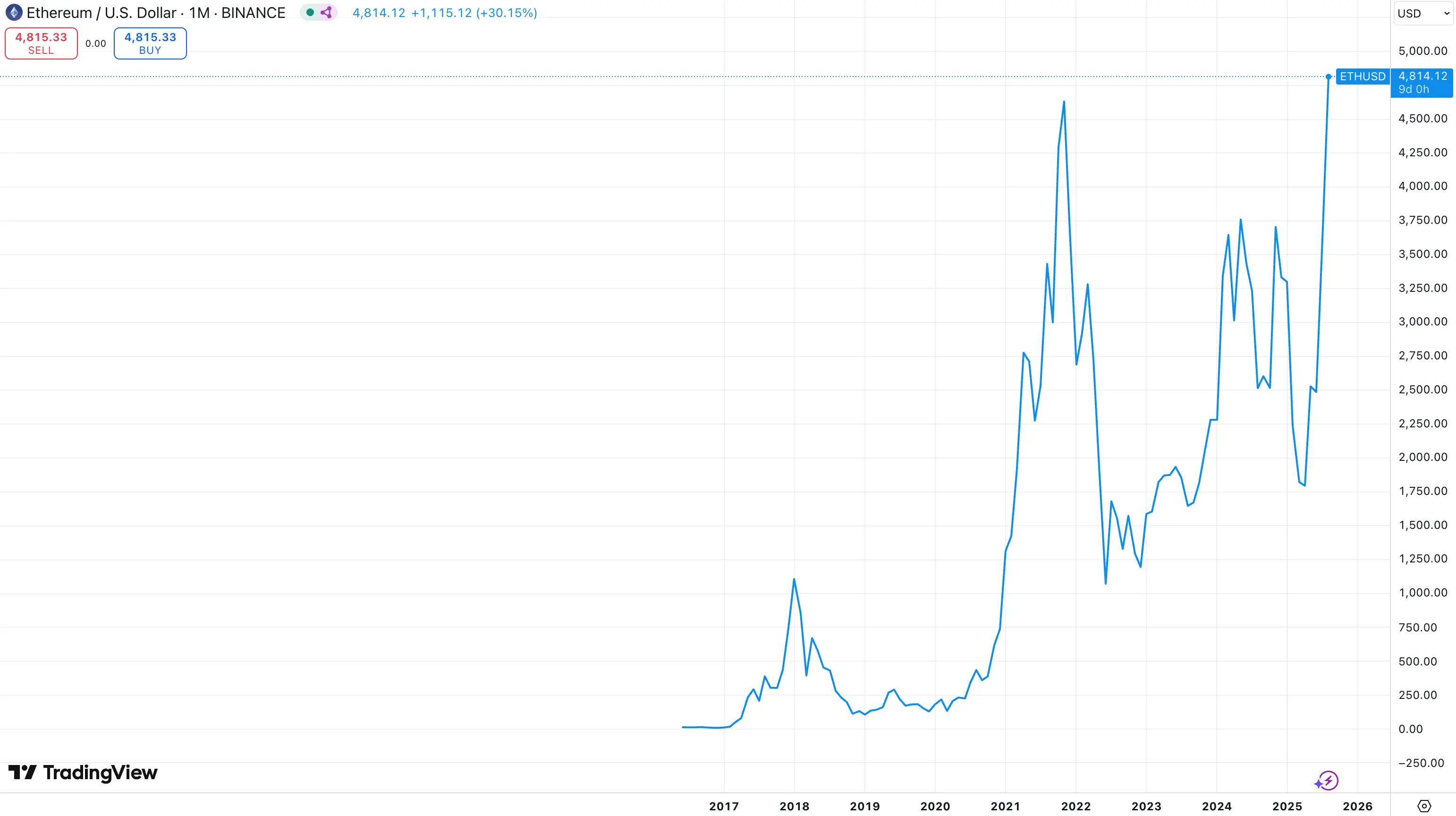
ETH historical price chart; Source: TradingView
If Bitcoin completed its transition from a retail asset to an institutional asset in the last cycle, then Ethereum's new high may signify its entry into its own "sovereign narrative moment." Wall Street's Ethereum "call master" Tom Lee likened this strategic positioning to a "sovereign call option"—when Ethereum is widely adopted by global financial and AI infrastructures, companies holding substantial stakes will find themselves in a unique position.
Sean McNulty, head of derivatives trading for Asia-Pacific at digital asset brokerage FalconX Ltd, stated that funds are flowing from Bitcoin to Ethereum, constituting a "huge positive sentiment shift driven by strong spot ETF inflows, increasing corporate financial adoption, and broader tailwinds from stablecoins."
This statement encapsulates why Ethereum is reaching new highs at this moment. Its delay is not absence but rather waiting—waiting for sentiment and funds, policies and technologies to converge at the same time. Now, that moment has finally arrived. For Ethereum, this is not just a price leap but also a narrative switch.
Enhanced Rate Cut Expectations
The shift in the macro environment has become a key driving force behind Ethereum's breakthrough to new highs. As the U.S. job market continues to weaken and core inflation gradually recedes, market bets on the Federal Reserve cutting rates this year have significantly increased.
Behind this trend are the signals released by Federal Reserve officials in recent statements. Powell rarely acknowledged at the Jackson Hole central bank conference that "the risk balance is changing"—inflation risks still exist, but the pressure from deteriorating employment is rising rapidly. Under such dual pressures, the focus of monetary policy is shifting from "maintaining high interest rates" to "moderate easing."
The market reacted swiftly, with CME's "FedWatch" tool indicating that the probability of a 25 basis point rate cut in September is nearing 90%. For risk assets, this not only means lower funding costs and improved liquidity but also represents the emergence of a policy turning point. Coupled with institutional buying and Ethereum's own narrative switch, this new high for ETH is viewed by many traders as a cyclical turning point rather than just a technical breakthrough.
Public Companies Buying, Buying, Buying!
If there has been any change in Ethereum's fundamentals this cycle, the biggest difference is that it has gained the same entry from U.S. companies as Bitcoin's MicroStrategy.
On May 27, 2025, Nasdaq-listed company SharpLink Gaming announced a significant strategic move, reaching a $425 million financing agreement through a private investment in public equity (PIPE), planning to use the net proceeds to purchase Ethereum and make ETH its primary reserve asset. Notably, the lead investor in this transaction was Ethereum infrastructure development company Consensys Software Inc.
Since then, enterprises and small public companies have increased their Ethereum allocations, with more Ethereum treasury companies becoming the vanguard of this upward trend. As of August 2025, according to CoinGecko data, a total of 17 companies/institutions hold 1,749,490 ETH, valued at approximately $7.5 billion. Bitmine acquired 833,000 ETH within a month, accounting for nearly 1% of the global total supply, directly establishing its position as "the world's largest publicly listed ETH treasury company."
The logic behind this is that holding ETH not only allows for potential appreciation but also generates over 3% in native returns through PoS staking, creating a long-term sustainable financial return. This is different from Bitcoin treasury strategies that rely solely on price speculation; it is more akin to operating an infrastructure-type asset, combining capital appreciation with cash flow. On August 10, Ethereum co-founder and Consensys CEO Joe Lubin stated, "Treasury companies may drive ETH's market cap to surpass BTC within a year."
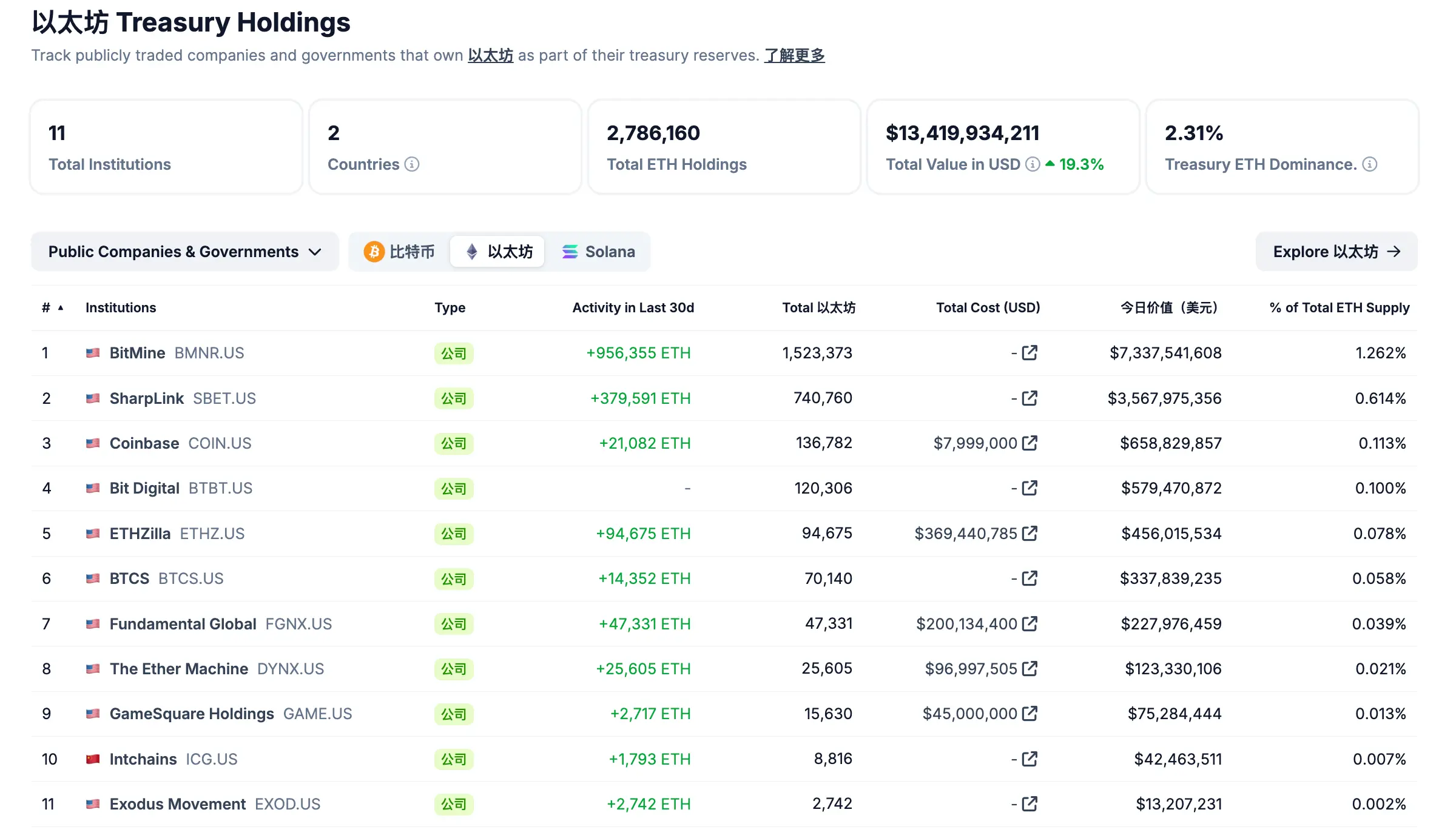
Geoffrey Kendrick, global head of digital asset research at Standard Chartered Bank, stated that Ethereum treasury companies are now "very worthwhile investments," more attractive to investors than U.S. spot Ethereum ETFs. The net asset value (NAV) multiple of Ethereum treasury companies—i.e., market cap divided by the value of held ETH—has "started to normalize" and is expected to remain above 1, making it a better investment target than U.S. spot ETH ETFs.
Kendrick pointed out that since June, Ethereum fund management companies have purchased 1.6% of all circulating ETH, comparable to the purchasing speed of ETH ETFs during the same period. By August 15, according to strategicethreserve data, the total ETH holdings of Ethereum treasury companies and ETFs exceeded 10 million, accounting for about 8.3% of the current total supply.
Ethereum ETF Inflows Exceed Bitcoin
Ethereum spot ETFs have finally seen a surge in net inflows over the past year. According to Farside data, cumulative inflows have exceeded $2 billion since July 4, quietly attracting $8.7 billion in funds during the first full operating year, with AUM reaching $15.6 billion. This sustained institutional buying has built a stable buy wall in the market.
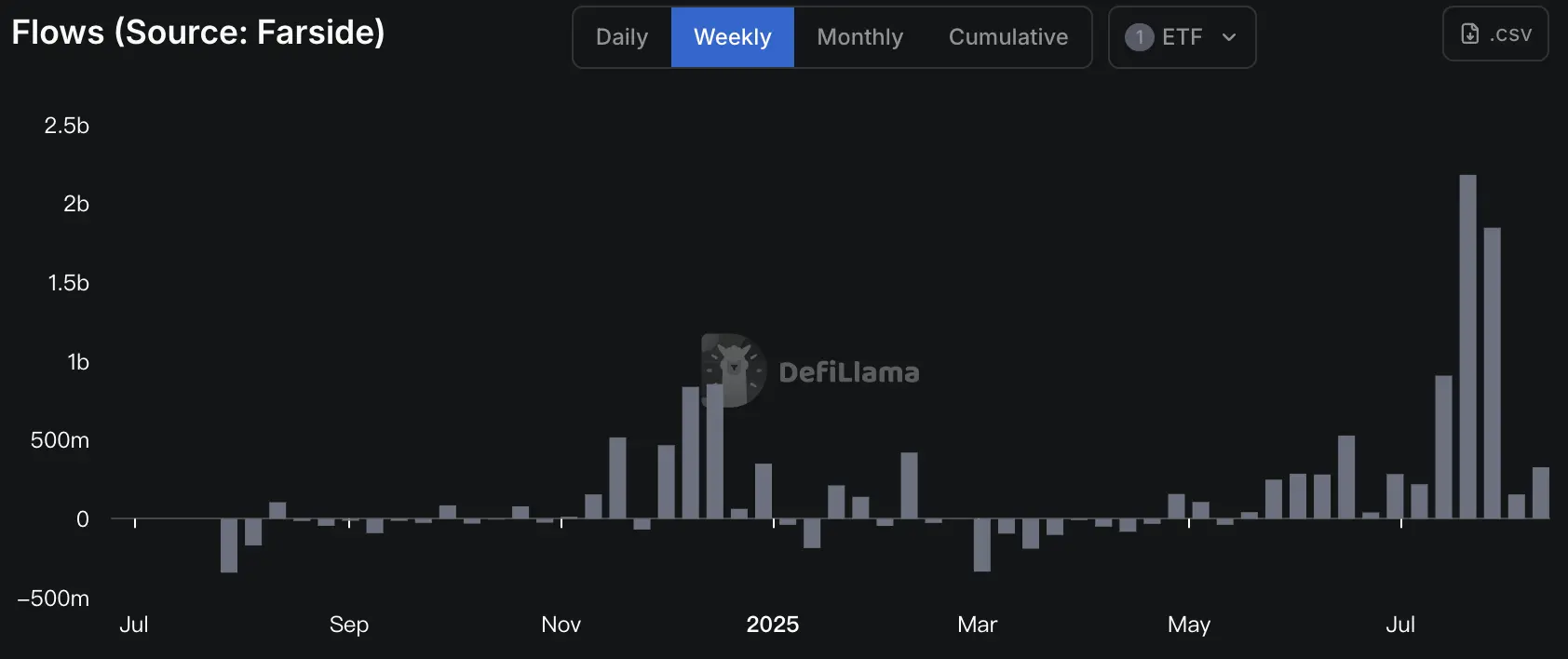
A more significant recent signal is that the amount of ETH bought by ETFs has surpassed that of Bitcoin.
On August 8, total inflows into ETH ETFs reached $461 million, while BTC only saw $404 million. BlackRock purchased $250 million in ETH, Fidelity bought $130 million in ETH, and Grayscale acquired $60 million in ETH.
Unprecedented Policy Benefits
On the narrative level, Ethereum's policy tailwinds are not just verbal commitments but are gradually transforming into institutional support.
The most direct change comes from the gradual clarification of the compliance path for ETH staking—regulatory agencies in some U.S. states have begun to recognize the accounting treatment of staking income under a licensed framework, meaning institutions can disclose staking-related income more transparently in their financial reports.
At the same time, the successful advancement of a series of stablecoin bills has also provided growth expectations for large stablecoins issued based on ETH (such as USDC, USDT). The core provisions require reserve transparency, on-chain verifiability, and inter-state payment interoperability, which will directly strengthen Ethereum's central position in the issuance and settlement network of stablecoins.
More strategically, the SEC and Treasury's joint "Project Crypto" initiative is adjusting the regulatory framework, shifting from a defensive stance to encouraging innovation in DeFi and blockchain financial products. Under this policy tilt, Ethereum, with its absolute advantages in DeFi TVL (approximately 59.5% of the total) and stablecoin trading volume (about 50%), naturally becomes the primary recipient of the benefits.
The gentle policy shift not only reduces concerns for institutional investors but also opens the door for long-term funds such as pensions and insurance funds to enter the market.
On August 7, 2025, an executive order signed by Trump marked a significant moment in U.S. financial history. It allowed U.S. retirement savings accounts (401(k)) to officially invest in "alternative assets," including cryptocurrencies, private equity, and real estate. From then on, an asset class that had been marginalized by the mainstream financial system was officially included in the nearly $9 trillion U.S. retirement plan.
Click to learn about job openings at ChainCatcher
Recommended Reading:
Backroom: Tokenization of information, a solution to data redundancy in the AI era? | CryptoSeed
 Risk warning
 Risk warning