AI Agent Market Map: Hype is Over, Technology Continues

 AI agents are becoming the core interface connecting users with blockchain, promising to significantly simplify crypto operations and create new economic opportunities.
Author: Tiger Research
Compiled by: AididiaoJP, Foresight News
Abstract
- The AI agent market has seen a sharp decline in interest following a crash in token prices, but technological development continues steadily. The DeFAI sector is regaining attention through actual product releases and specialized on-chain functionalities.
- Specialized agents optimized for specific functions are replacing the previous general-purpose agents. Projects like Virtuals are actively building infrastructure to connect these agents and enable collaboration.
- AI agents will be integrated as core functionalities within crypto projects. Infrastructure that enables seamless communication and collaboration between agents will become crucial.
The End of Hype, Continuation of Technology
The cryptocurrency industry has integrated AI technology in various ways, with AI agents receiving the most attention. The total market capitalization of tokens related to agents once reached approximately $16 billion. This reflects strong market interest, but such attention was short-lived. Most projects failed to meet development expectations, and token prices plummeted by over 90% from their peaks.
The price drop does not signify a regression in technology. AI agents remain an important technological area within the crypto space. Discussions about practical use cases have become more specific, and teams continue to test new approaches. This report explores how AI agents can function within the crypto space and examines potential future developments.
Reshaping the AI Agent Ecosystem After Hype
Early AI Agent Projects Gradually Fade from the Market
The AI agent sector within the crypto space began to gain attention at the end of 2024. The ElizaOS team from ai16z and the G.A.M.E development stack from the Virtuals Protocol team significantly lowered the barriers to agent development. Launch platforms like DAOS.fun and Virtuals Fun provided a platform for tokenizing the developed agents. The process from development to release became streamlined, leading to a surge in market interest and a rapid emergence of numerous agent projects.
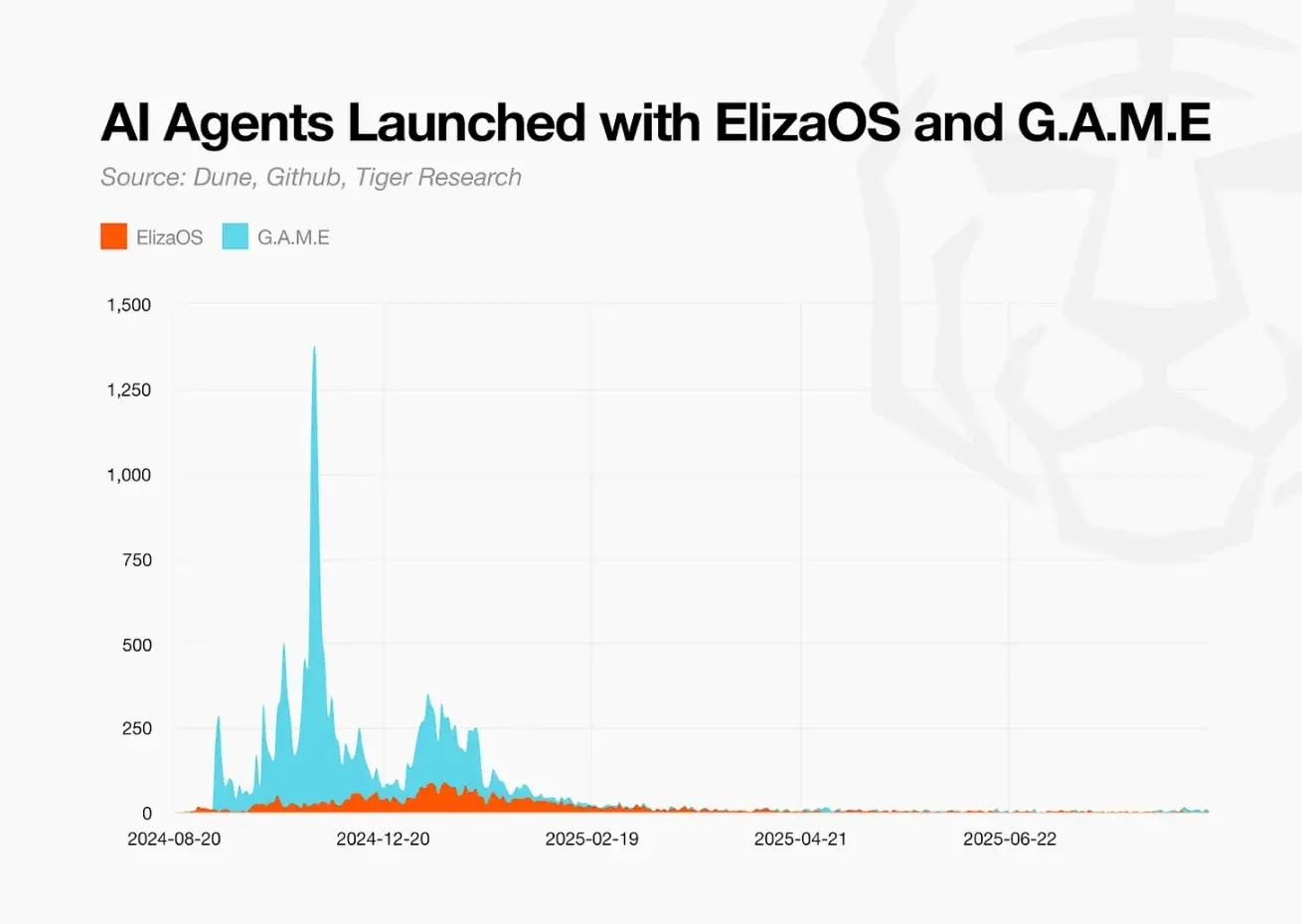
Most projects proposed ambitious roadmaps utilizing AI technology. Investors drove up token prices due to expectations for innovative services. In reality, these projects were merely wrappers around fine-tuned or prompt-engineered OpenAI or Anthropic base models. Most projects built advanced chatbots for X or Telegram rather than developing standalone services. The projects emphasized innovative visions and technological differentiation, but their actual operations were hardly different from meme coins.
Source: aixbt
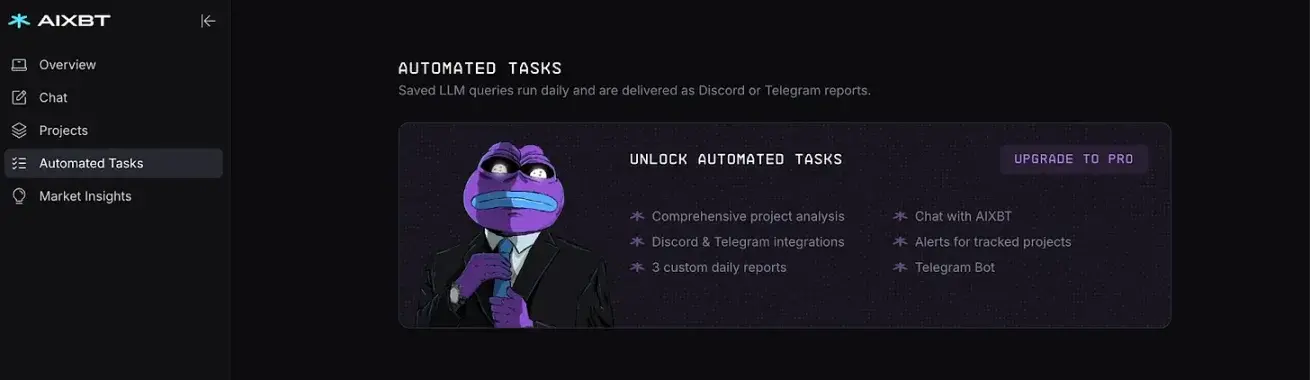
However, some projects are exceptions. Projects like aixbt and Soleng have partially realized their roadmaps and launched actual services. They offer exclusive access to token holders through token-gated features. Aixbt provides project analysis reports, while Soleng analyzes GitHub repositories to support investor decision-making.
Even these relatively successful cases could not overcome structural limitations. The unstable revenue structure relying solely on token price increases hindered progress. Technological competitiveness lagged behind Web2 companies. Token prices eventually fell, operational funds were depleted, and most projects have now suspended services.
DeFAI Projects Rekindle Hope in the Field
AI agent technology once faced over-expectation and has now entered a correction phase. The DeFAI sector is regaining attention by proving its actual value. DeFAI agents execute automated investment strategies 24/7. They enable users to easily access complex DeFi services through simple natural language commands. This sector is the core narrative of the early AI agent space. Most projects remain at the roadmap stage, struggling to implement practically. The sector temporarily lost attention. Recent product releases are rebuilding market expectations.
Representative projects include Wayfinder and HeyAnon. Wayfinder executes on-chain tasks through dedicated AI agents called "Shells." Shells perform on-chain transactions directly via built-in dedicated wallets. The system employs a specialized multi-agent architecture, including trading agents, perpetual agents, and contract agents. Each type of agent focuses on specific roles to automate various investment strategies. Users can easily execute simple cross-chain transactions or advanced strategies like basis trading and leveraged dollar-cost averaging.
From Individual Agents to Agent Networks
Early AI agent projects promoted "general agents" that executed all functions. This approach prioritized funding over technological completeness. Projects proposed excessive roadmaps to capture a broader market. Most exposed limitations during the implementation phase.
The current agent ecosystem is evolving in a completely different direction. Builders recognize the limitations of general agents, and they are now developing agents focused on specific domains. These agents can collaborate with each other, similar to skilled craftsmen like carpenters, electricians, and plumbers working together to build a house.
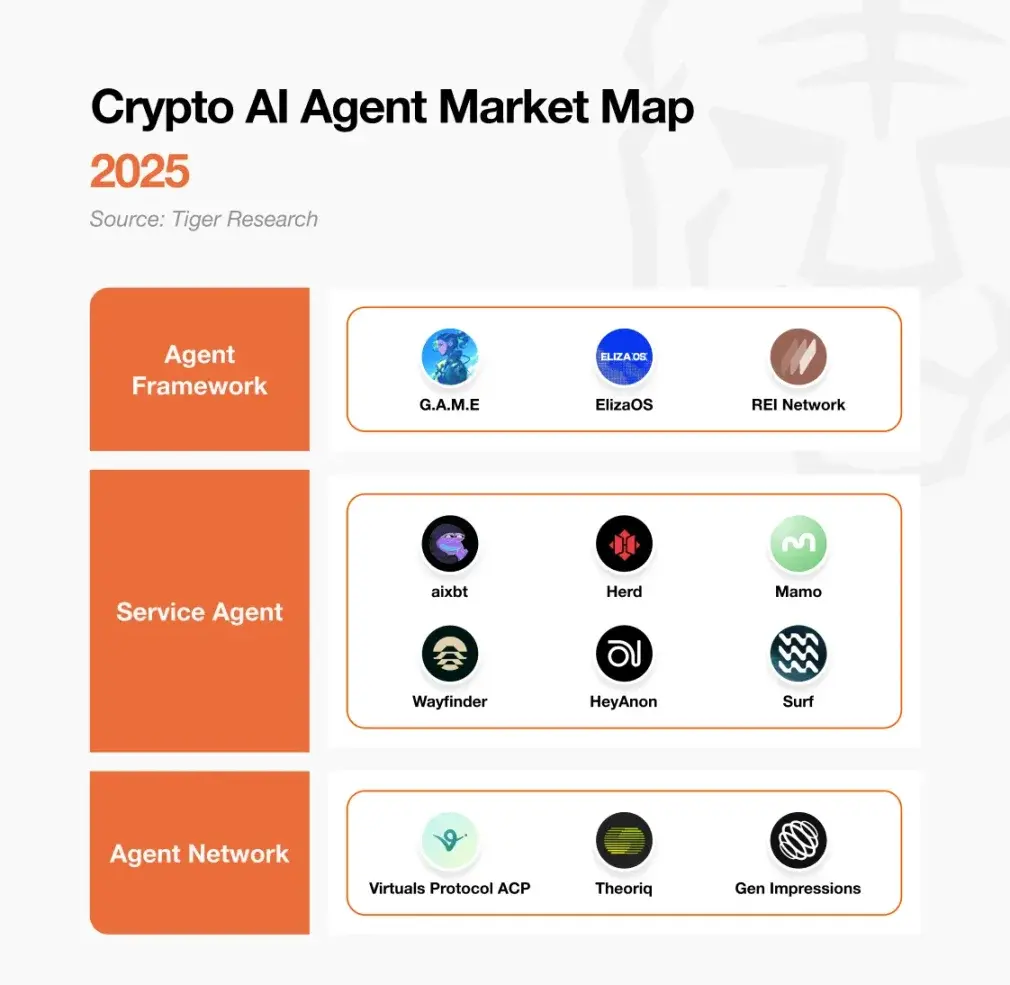
The ACP of Virtuals Protocol represents this trend. It provides a standard framework for communication and task allocation between different agents. Theoriq and General Impression are also building infrastructure to enhance interoperability between agents. The market is reshaping, shifting towards maximizing the value of the entire agent ecosystem rather than individual agents.
Future Scenarios for the AI Agent Market
After the early hype cooled down, AI agents continue to evolve. Speculation has ended, but projects are still leveraging AI agents to build new functionalities and services. Two changes are particularly notable.
First, AI agents have become essential infrastructure. AI agents are no longer an independent domain but are integrated as fundamental functionalities within crypto projects. The blockchain data platform Nansen is developing research agents to make complex on-chain data easier to explore. DeFi projects are also adding agents to improve user access. AI agents will become the final interface connecting users with blockchains, rather than an optional feature.
Second, agent commerce will grow. As AI agents become standard, interactions between agents and between agents and humans will become more frequent. Secure trading protocols and trust mechanisms are becoming increasingly important. Projects like the ACP of Virtuals Protocol lay the groundwork for this.
These changes will simplify the complexities of the crypto space, improve user experience, and create new economic opportunities.
 Risk warning
 Risk warning




Popular articles