Foreign KOLs' Techniques for Harvesting: Grouping, Creating Momentum, and Concealment

 Where there is demand, there is a market.
Author: Umbrella & David, Deep Tide TechFlow
On September 1, as the market's attention and liquidity focused on Trump's $WLFI, the well-known on-chain detective @ZachXBT began to expose new information.
He revealed a list of paid promotions by overseas KOLs, documenting the paid promotional activities of several English-speaking KOLs on the X platform for crypto projects. The accounts involved are numerous, with total payments exceeding one million dollars; the price for a single tweet ranges from $1,500 to $60,000 depending on the KOL's influence.
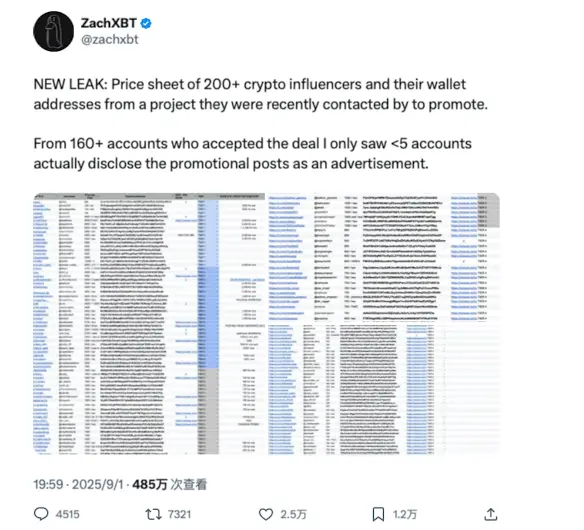
ZachXBT pointed out that among the KOLs on this list, fewer than five accounts labeled their promotional posts as "advertisement," which means that the vast majority of KOLs do not disclose whether their posts are paid promotions or purely spontaneous shares.
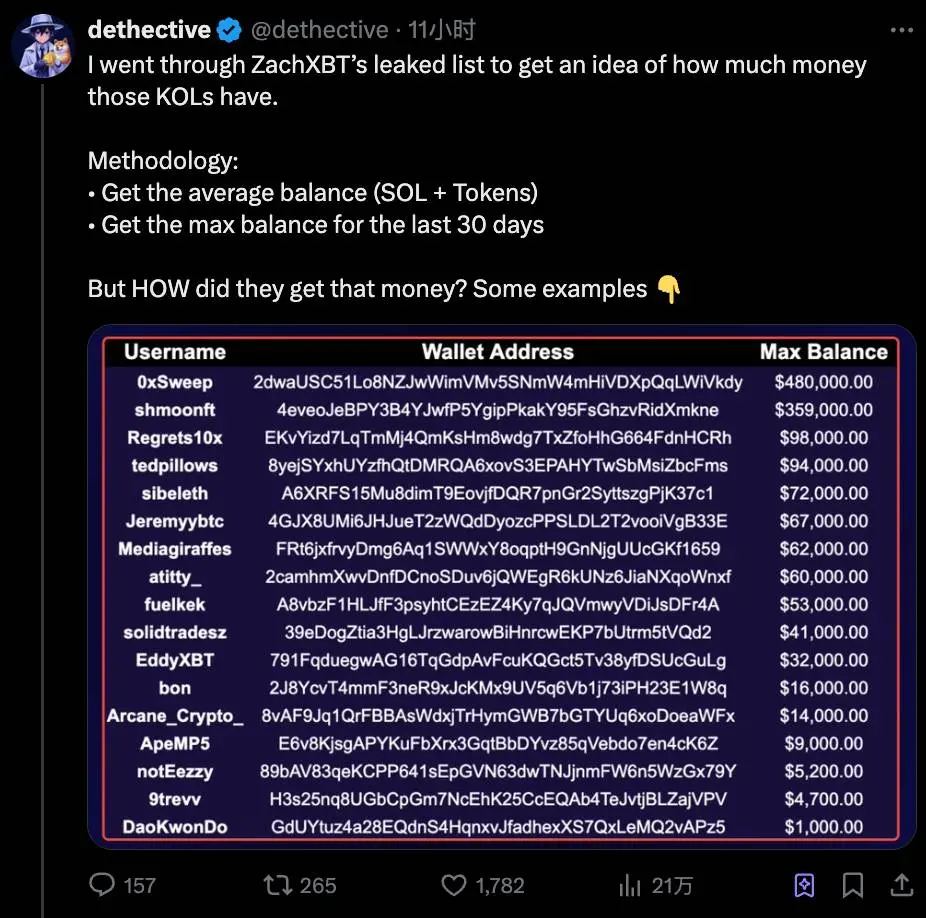
Subsequently, another small detective, @dethective, conducted further analysis and organization of the original list, discovering that these overseas KOLs have even more elaborate ways of conducting paid promotions.
Multiple Accounts for Double Dipping
In @dethective's analysis, the first issue that stood out was the repetition of some wallet addresses in the list.
This means that the same wallet may correspond to multiple KOL accounts, yet has received promotional fees for the same project multiple times.
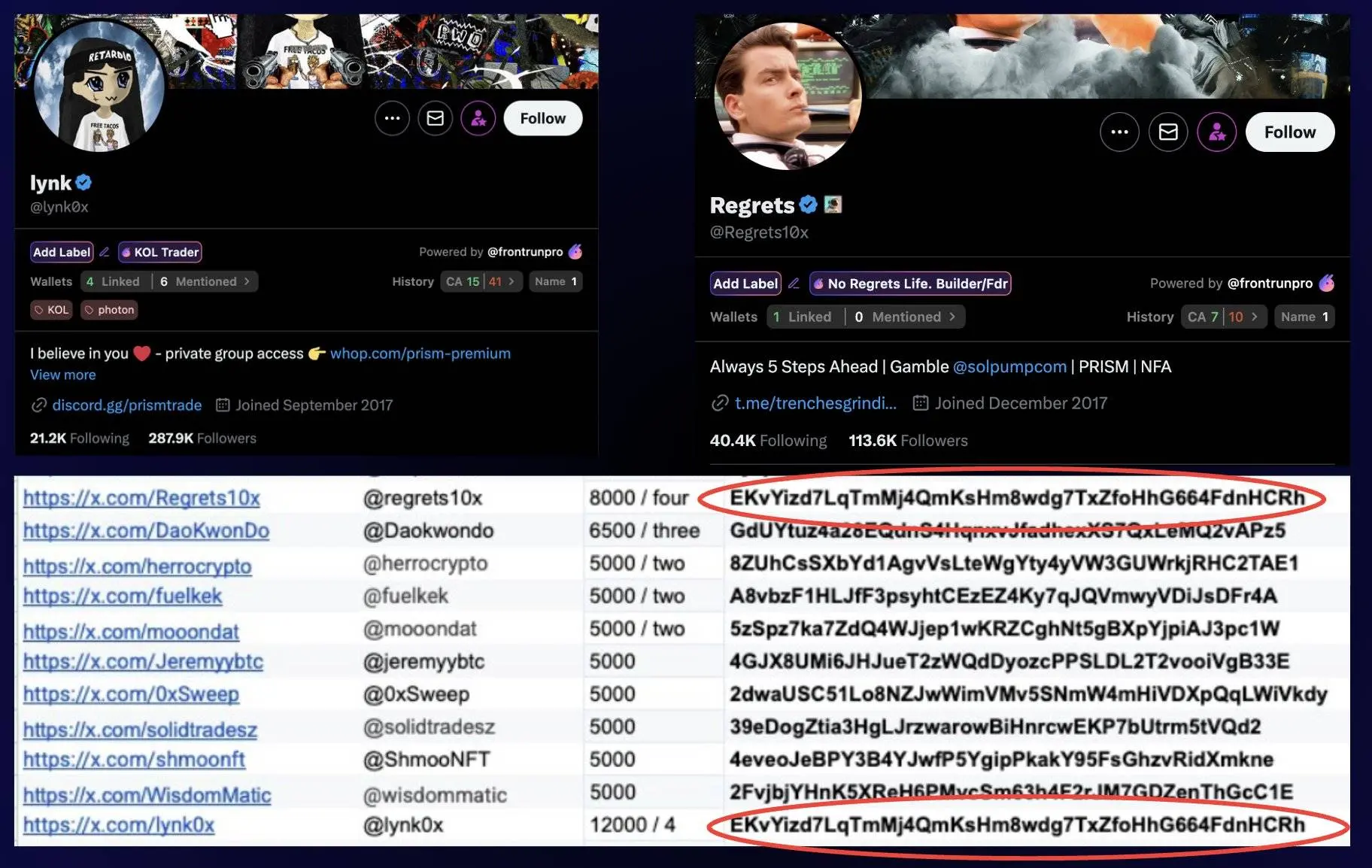
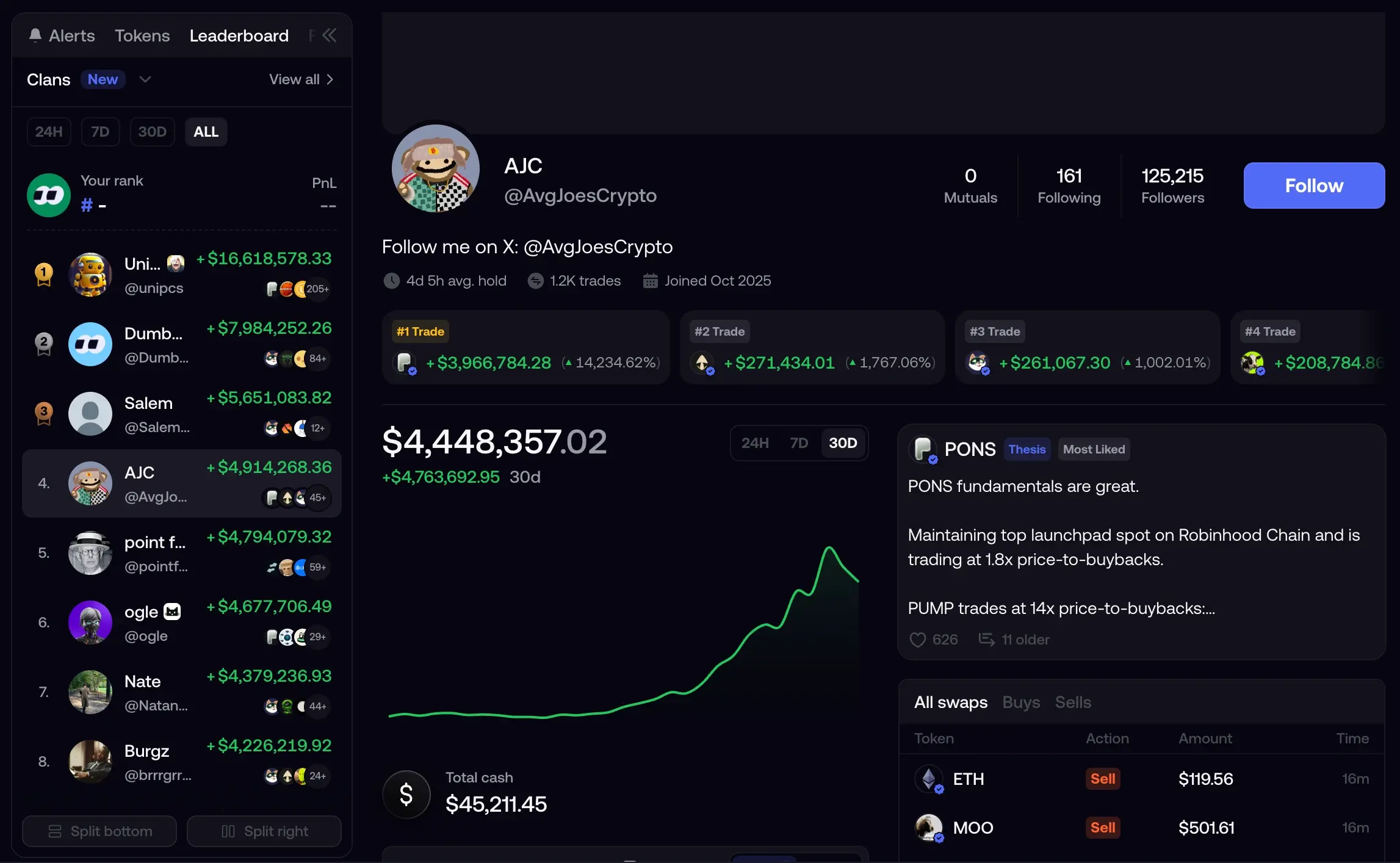
Taking the accounts @Regrets10x and @lynk0x as examples. The list shows that the former received $8,000 for four posts, while the latter received $12,000 for the same number of posts, likely due to the differing follower counts of the two accounts.
However, their wallet addresses are identical:
EKvYizd7LqTmMj4QqmKsHm8wdg7TXzFoHHg664FdnhCRh
After cross-referencing, blogger @dethective found that there are about 10 similar cases of repeated wallets in the entire list.
One possible reason is that some overseas KOLs, in order to expand their influence, use secondary or associated accounts for promotions without changing their wallet addresses, which exposes their traces;
But thinking deeper, not changing wallet addresses, whether out of laziness or negligence, actually reflects a situation of cluster hype, where multiple accounts posting about the same project makes it easier to occupy social media timelines and attention, thus triggering FOMO among followers.
Of course, the two KOL accounts that were exposed were not idle either.
@lynk0x denied receiving any payment in the comments, stating that @Regrets10x is just a friend and that sharing the wallet is purely coincidental. But @dethective quickly presented evidence:
The aforementioned wallet received $60,000 from an airdrop from a project called "Boop," and to claim the airdrop, one must bind their X account. This indirectly proves the control relationship between the account and the wallet, making the denial somewhat untenable.
@Regrets10x's response was more casual; he didn't directly address the accusation but said that as long as he disclosed the paid promotion when posting, there would be no problem;
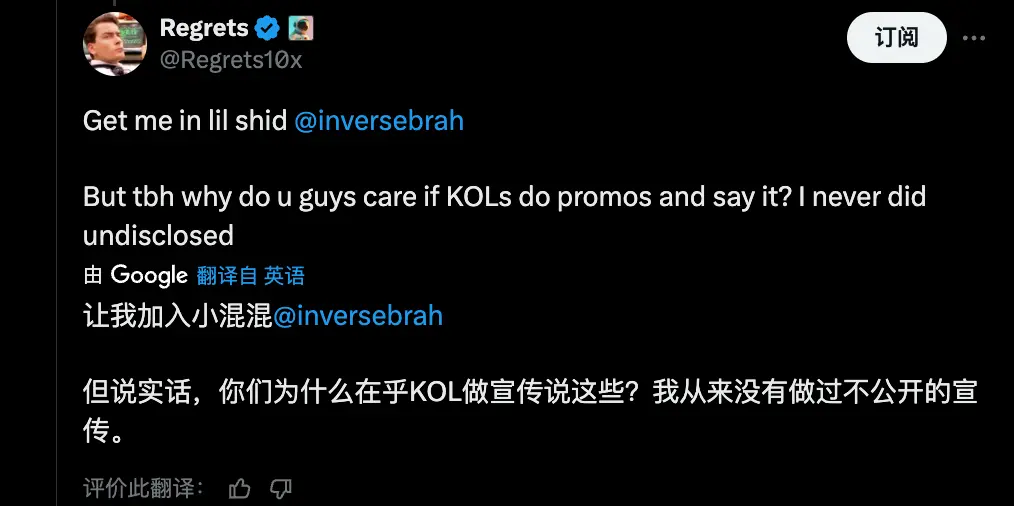
Accepting paid promotions is understandable, and appropriate disclosure helps others understand the motives and interests behind the posts. Some more professional KOLs often add a note like "related interests" or "unrelated interests" at the end of a post.
But the problem lies in the fact that if two accounts belong to the same person, and the same promotional content is posted, one account openly reminds that this is an advertisement while the other remains silent, it resembles a strategy of creating a persona through an account matrix.
Moreover, some have turned the practice of mass account promotions into an industrial chain.
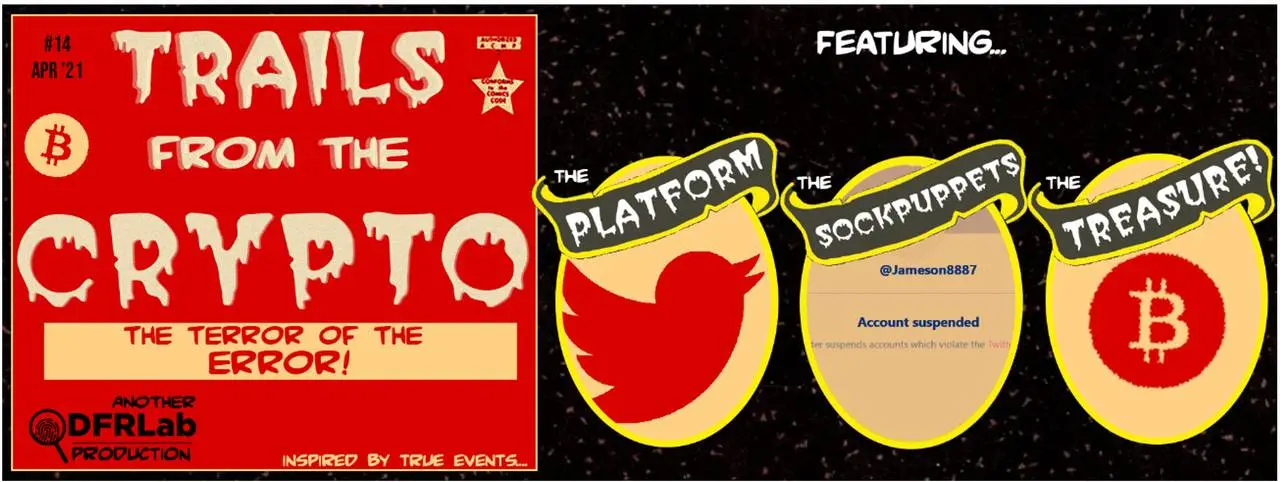
Previously, the research organization DFRLab published a study titled “Anatomy of a Twitter-Augmented Crypto Scam”, which mentioned that certain gray market operations can control dozens of accounts, posting nearly 300 tweets daily, creating false public recognition through bulk account nurturing, automated retweets, and cross-endorsement.
Operators typically acquire old accounts or register new ones in bulk, change the nicknames and avatars, and become a brand new KOL, then use scripts to copy the same promotional language into the comments of high-traffic tweets to "gain followers."
"To The Moon"
After the list was exposed, another noteworthy point is that the profits from these overseas KOLs' wallets often highly overlap with the tokens they promote.
In other words, they are not casually sharing "insights" but are first given tasks and then trade themselves after posting.
For example, the account @0xSweep, in @dethective's wallet analysis, shows that his largest profit sources are several tokens on the BullX trading platform: $AETHER, $BOB, $BARSIK, etc.
However, the backstory is that these tokens all have records of paid promotions on the list exposed by ZachXBT; and @0xSweep has repeatedly mentioned them in his X posts, believing they have great potential and are "to the moon."
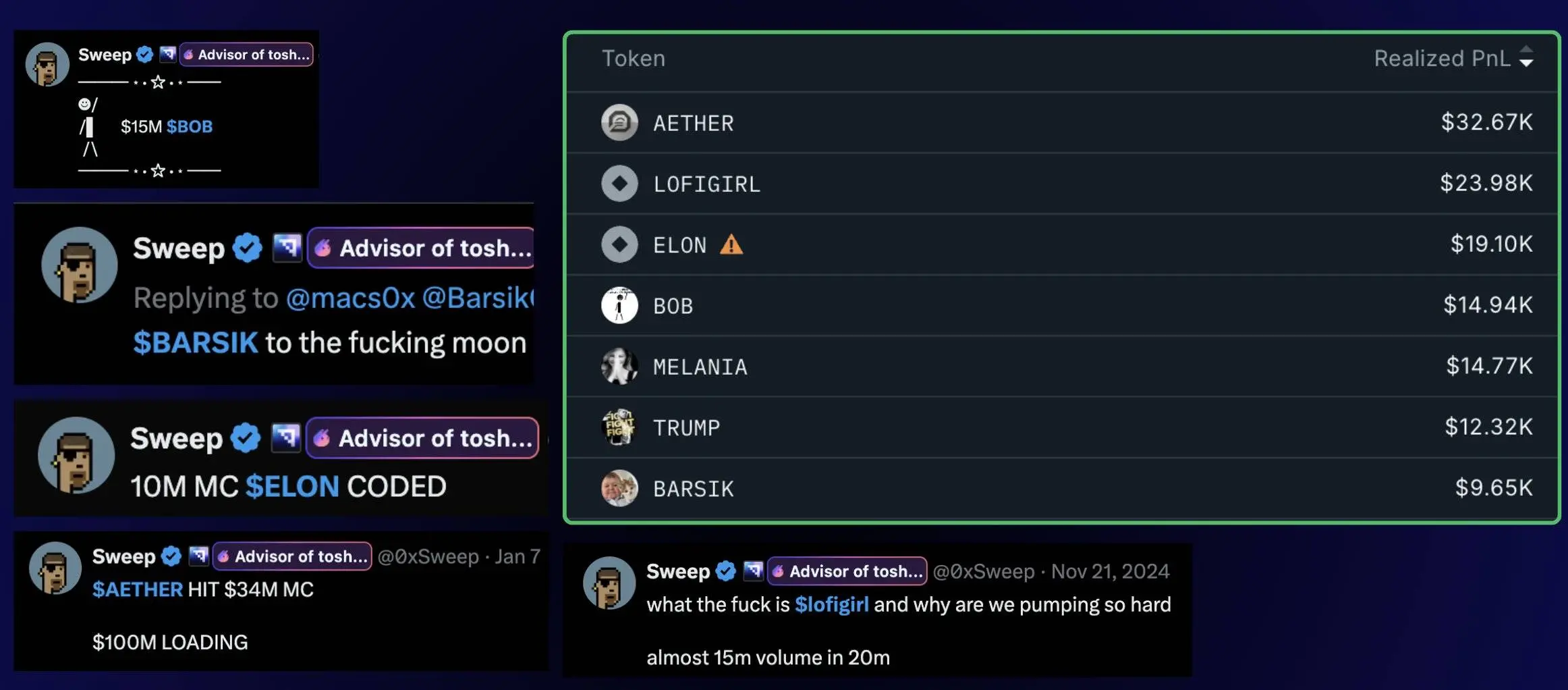
But his wallet records show that these profitable trades occurred just before and after the promotions, making it highly likely that the project party paid him to post, and after he posted, the token gained popularity, allowing him to trade.
This also means that if an account keeps telling you about their trading insights, their income may not come from trading and market judgment.
A similar situation exists with @ShmooNFT. His Telegram channel promotes about ten tokens daily, seemingly enthusiastic about sharing.
However, wallet tracking shows that his few profitable trades, such as $DEGE, $BON, $BOTIFY, have all been promoted on X and appeared on the previous exposure list by ZachXBT.
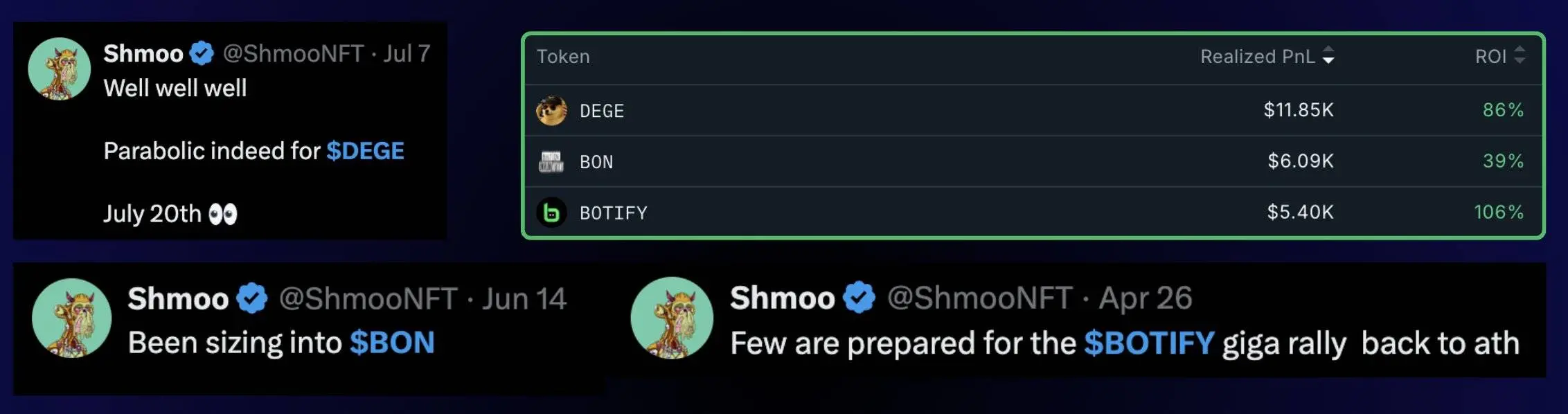
The core issue with this model is that the KOL's "advice" carries hidden interests: promotional posts not labeled as advertisements lead fans to believe they are genuine recommendations, when in fact they are paid collaborations.
If the tokens indeed have potential, everyone benefits, but if the promoted tokens continuously drop to zero, the KOL's credibility and influence will also decline.
The cleverness of this trick lies in the fact that these overseas KOLs may earn three streams of income from it.
First, they obtain free tokens through airdrops, then charge the project party for promotional fees, and finally sell the airdropped tokens after hyping up the price through their promotions.
And a common advanced tactic: after showcasing their profits to shape their image as "trading gods," they establish paid groups to collect "membership fees."
Where There’s Demand, There’s a Market
At the end of the analysis post, @dethective also posed a thought-provoking question:
Why do some project parties still choose these accounts despite knowing the habits and tricks of certain overseas KOLs?
The answer lies in the fact that where there’s demand, there’s a market.
Some projects prefer this audience that "wants to get rich quickly," and some accounts mentioned in the earlier exposé perfectly cater to this audience: lacking independent research capabilities, they are more inclined to believe in tips and luck, trying to discover an undervalued gem.
Such KOL accounts are often defined as "more commercially valuable" in a marketing market where bad money drives out good.
The exposé itself involves interest disputes, making it easy to attract trouble; but as long as one or two recommended tokens succeed, it can easily be sliced and spread into an image of a trading master.
In a market where noise and truth are hard to distinguish, crypto investment is not as simple as following tips. There will always be bloggers who claim to earn endlessly, but the lost funds will never come back.
Click to learn about job openings at ChainCatcher
Recommended Reading:
Pantera Capital In-Depth Analysis: The Value Creation Logic of Digital Asset Treasury DATs
 Risk warning
 Risk warning