2.8 billion net profit cannot hide the mNAV crisis: Strategy's battle to defend the Nasdaq 100 index
 Core Viewpoint

 Strategy Q3 financial report, mNAV approaching the critical line and DAT model risks
Original Author: Eric, Foresight News
On the evening of the 30th local time in the United States, Bitcoin DAT's first stock, Strategy, announced its third-quarter financial report. The report shows that Strategy's revenue for the third quarter was $3.9 billion, with a net profit of $2.8 billion and a diluted earnings per share of $8.42.
As of local time October 26, 2025, Strategy held a total of 640,808 Bitcoins, with a total value of $47.44 billion, and the cost per Bitcoin has risen to $74,032. Since the beginning of 2025, the return on Bitcoin has been 26%, amounting to $12.9 billion in earnings. Strategy's Chief Financial Officer Andrew Kang stated that based on the forecast of Bitcoin reaching $150,000 by the end of the year, Strategy's total operating income for 2025 is projected to be $34 billion, with a net profit of $24 billion and a diluted earnings per share of $80.
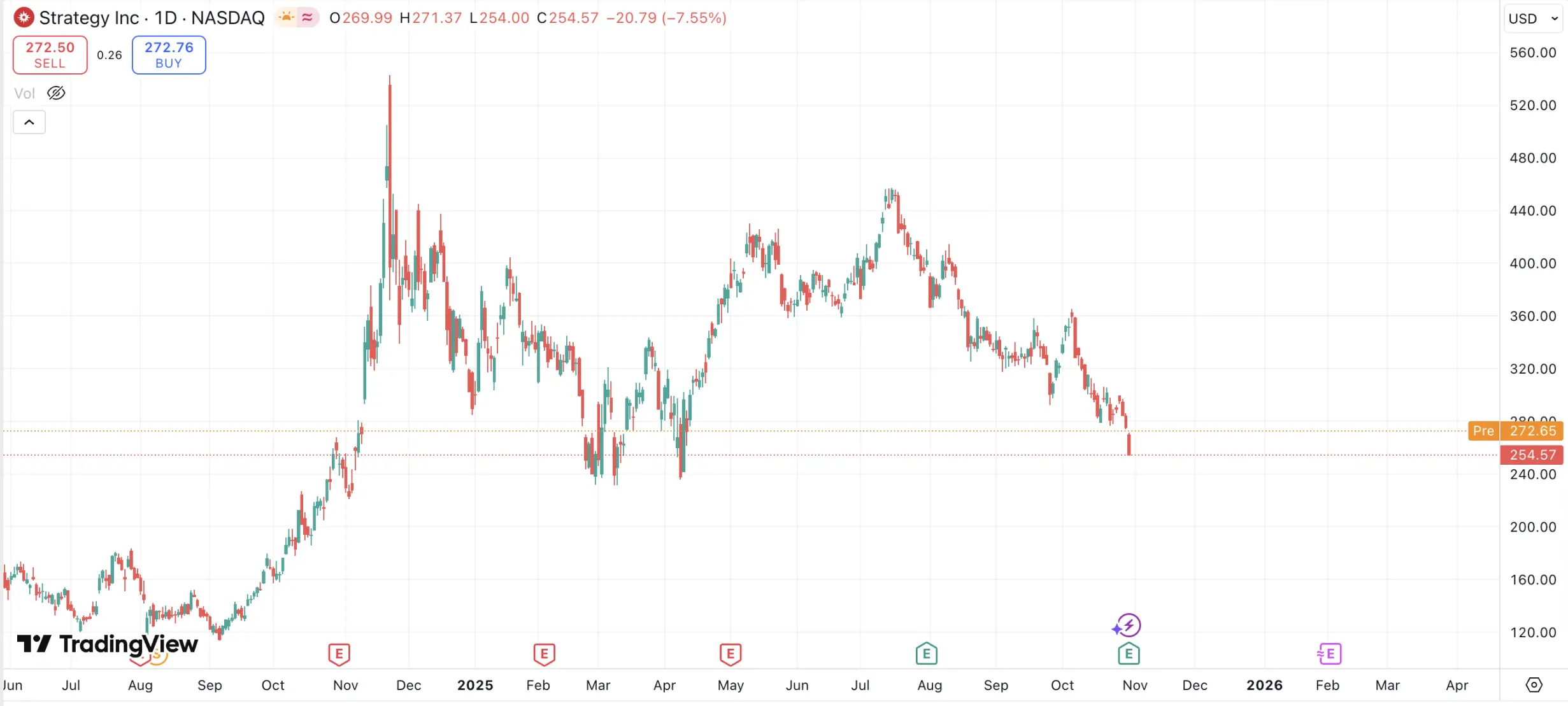
The Bitcoin-related data from Strategy is generally public and does not cause much market reaction. However, influenced by the rebound in Bitcoin's price today and the company's optimistic expectations, Strategy's stock price rebounded in after-hours trading yesterday and in pre-market trading today. As of the time of writing, the MSTR price has rebounded from yesterday's closing price of $254.57 to around $272.65 in pre-market trading.
According to the financial report, Strategy obtained a net income of $5.1 billion through common stock, STRK, STRF, STRD, and STRC sale plans during the three months ending September 30, and as of October 26, Strategy still has a financing limit of $42.1 billion.
It is worth noting that the current price of Bitcoin has risen more than 40% compared to its low point this year, while MSTR's closing price yesterday was only about 6% away from its low point this year. Although the stock price movements in after-hours trading yesterday and pre-market today indicate that the market still recognizes this financial report in the short term, investors have begun to express concerns about Strategy or the DAT company's model.
mNAV Approaching the Lifeline
According to StrategyTracker data, Strategy's mNAV (the ratio of market value to the total value of held Bitcoins) has reached 1.04. Even when calculated based on diluted shares, this number is only 1.16, very close to 1. If the mNAV reaches 1 or even falls below 1, it means that buying the company's stock is no longer more valuable than directly purchasing the corresponding cryptocurrency.
In the financial report meeting at the end of July this year, Strategy promised, "Unless it is to pay preferred stock dividends or debt interest, we will not issue additional MSTR common stock when mNAV is below 2.5 times." However, just two weeks later, it canceled that restriction in the submitted 8-K document and added an exception clause stating, "If the company believes that issuing additional shares is beneficial, it may continue to issue stock when mNAV is below 2.5 times."
In the recent financial report, Strategy also re-explained the rules for issuing common stock through ATM:
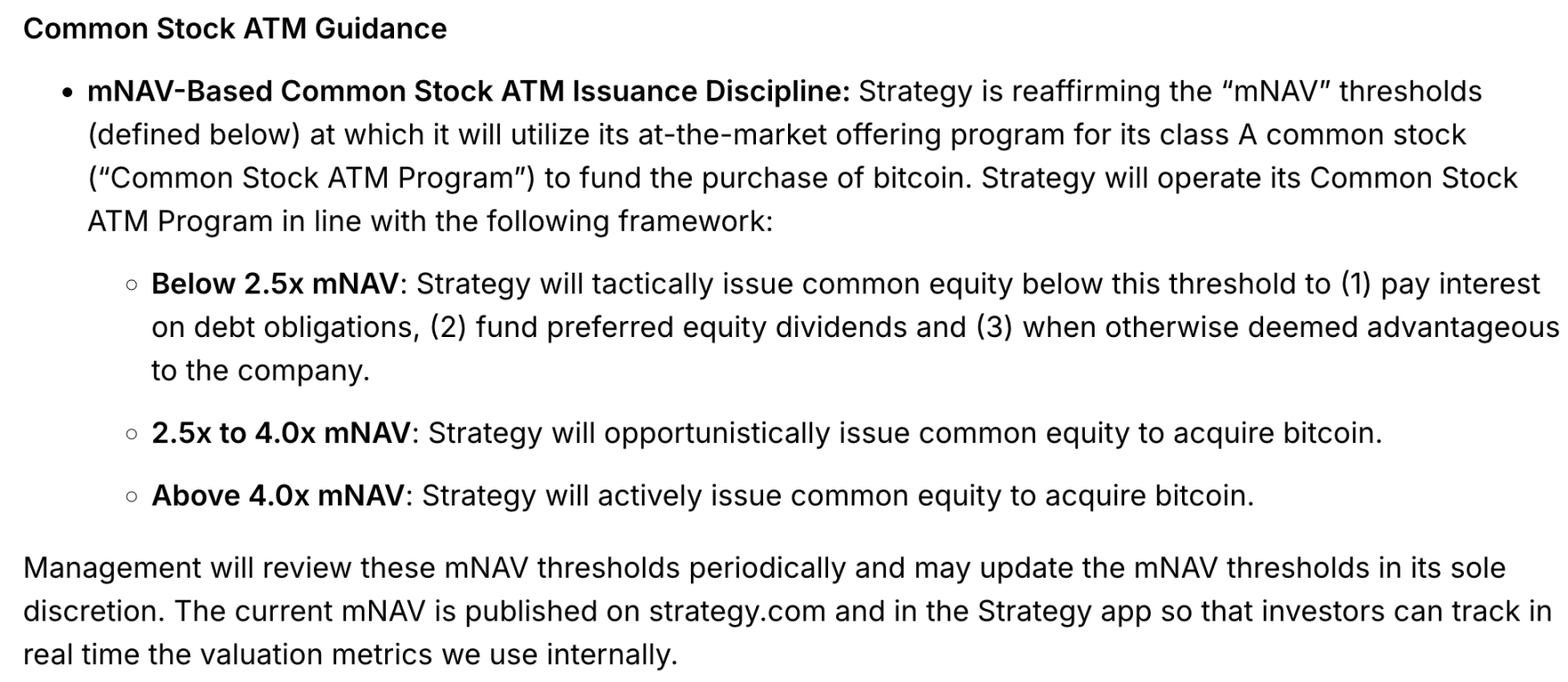
Although issuing common stock when mNAV is below 2.5 is still prioritized for paying debt interest and preferred stock dividends, the reality is that it is now also possible to use common stock ATM financing to purchase Bitcoin when mNAV is below 2.5, and the financing methods for purchasing Bitcoin have expanded beyond just common stock ATM. The mNAV calculated from official data by Strategy is 1.25, higher than third-party statistics. Although it has a more complex calculation method, ordinary investors tend to focus more on the simple ratio of total market value to the total value of held Bitcoins, which is 1.04.
Additionally, Strategy has also retained the possibility of adjusting the mNAV baseline, which undoubtedly adds more variables. In the first three quarters of this year, the number of Bitcoins purchased by Strategy was 81,785, 69,140, and 42,706, respectively. The continuous rise in Bitcoin prices has been accompanied by a gradual decrease in the number of purchases, indicating that Strategy has long recognized potential issues.
If Strategy's mNAV falls below 1, it could significantly impact the overall value of DAT. A few days ago, Ethereum DAT company ETHZilla chose to sell $40 million worth of Ethereum for stock buybacks, aiming to pull back the mNAV value. On the same day, Japan's Metaplanet, the second-largest Bitcoin DAT company, also announced a stock buyback plan. Although this plan does not involve selling held Bitcoins, the pressure on mNAV has led the two largest publicly traded Bitcoin buyers globally to choose to slow down.
Excluded from the Nasdaq 100 Index?
During the trading session of U.S. stocks last night, some investors in the Web3 community speculated that MSTR's recent weak performance might lead to Strategy being kicked out of the Nasdaq 100 Index by the end of this year.
Strategy was officially included in the Nasdaq 100 Index components last December, which caused its stock price to briefly surge above $500. However, even though Bitcoin prices have reached new highs since then, MSTR has not surpassed its previous high.
In fact, the possibility of Strategy being removed from the Nasdaq 100 components this year is almost zero. Components can be removed from the Nasdaq 100 only under basic circumstances such as transforming into a financial company, changing listing locations, insufficient liquidity, or violating listing regulations. Additionally, it can only happen if the market capitalization ranking directly falls outside the top 125 or remains outside the top 100 for an extended period, or if the weight falls below 0.1% of the index's total market value for two consecutive months, and there are suitable replacements.
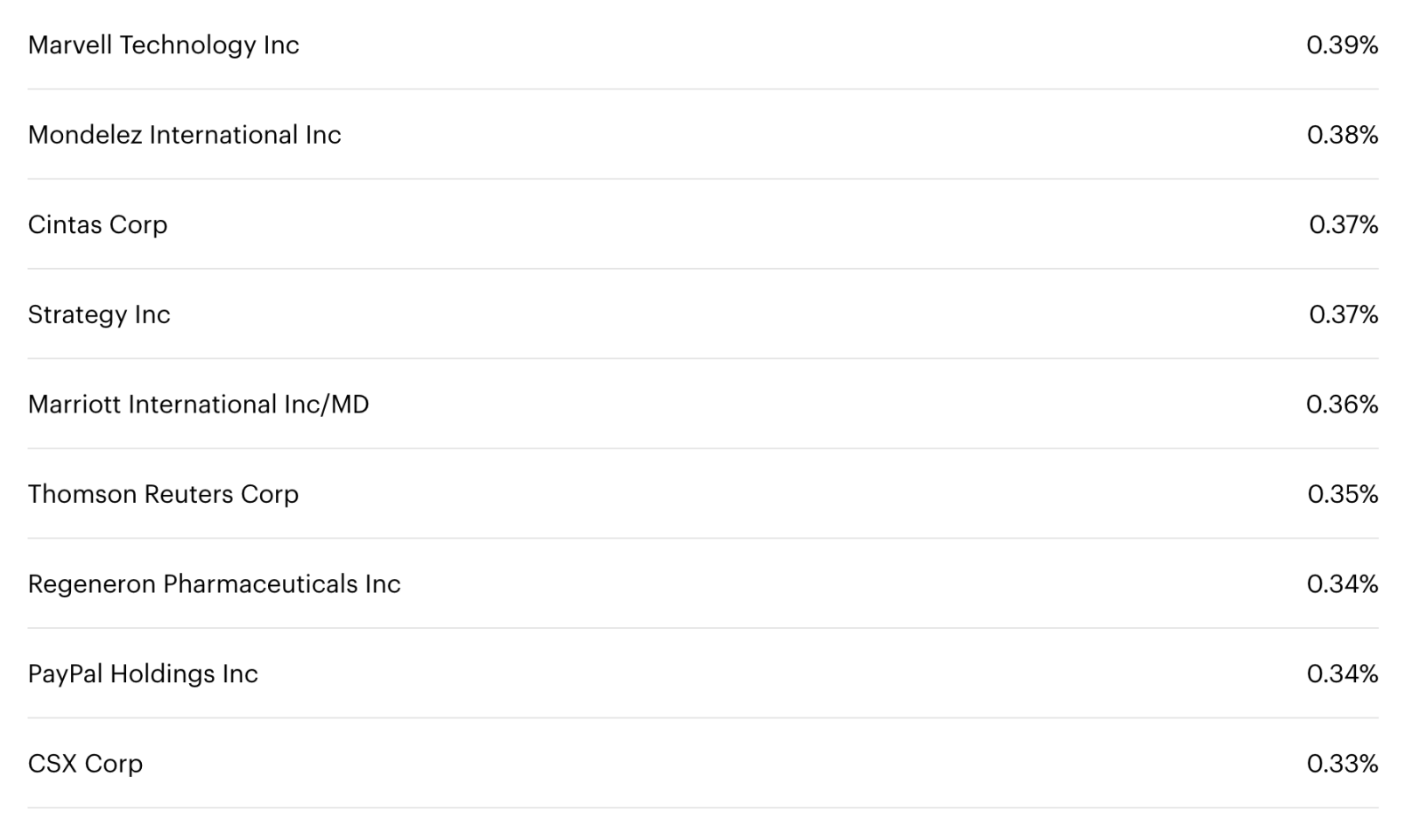
According to QQQ holdings, Strategy currently has a weight of about 0.37%, and its market capitalization has not fallen outside the top 100. The index's adjustments at the end of the year are based on data from the end of October, so it appears that Strategy remains safe this year.
There was a period of enthusiasm for DAT companies in the market this year, but I must remind that the operations of such companies are fundamentally based on a market consensus rather than a financial mechanism. The company's market capitalization can indeed fall below the value of the assets it holds. An article published by the Daily Economic News in August this year showcased a good example: Sohu, an early internet "orphan," had a market capitalization for a long time that was less than the cash held by the company and was worth less than the office buildings it constructed.
Strategy can still continue to operate because new entrants are constantly participating in the DAT game, and its "pioneer" status has restrained many vested interests. However, if the market suddenly decides to abandon recognition of such a "game mechanism," the strategy of investors continuously purchasing new shares based on the ratio of the company's market value to the value of held Bitcoins could become ineffective, and the risks involved may be greater than most people imagine.
Even if such a mechanism can continue, the ongoing frenzy for AI attracting attention and funds may lead to continued weakness in Bitcoin prices, which would significantly increase pressure on Strategy in the short term. The continuation of the DAT model can have a considerable positive impact on industry development, but it is also essential to remain vigilant against the short-term risks brought by stress tests.
After all, the $2.8 billion profit is merely investment income, and there has never been a guaranteed winner in investing.
 Risk warning Risk warning