Morning News | The U.S. Senate has passed a procedural vote on the "government shutdown ending plan"; approximately 4.64 million bitcoins have been transferred from dormant wallets this year; the public sale of Monad tokens will start on November 17

 Overview of Important Market Events on November 10
整理:ChainCatcher
Important News:
- The U.S. Senate has passed a procedural vote on the "end government shutdown plan"
- Data: "Binance Life" market cap briefly surpassed $200 million, with a 24-hour increase of 25%
- Coinbase Institutional Report: October sell-off is a bottoming phase before the next rise, not a cycle top
- Trump announces at least $2000 tariff dividends for Americans, triggering a rise in cryptocurrency prices
- CZ: Do not buy accounts I follow; I will unfollow immediately if I find them for sale
- Bank of England proposes a £20,000 cap on individual stablecoin holdings
- Data: Approximately 4.64 million bitcoins have been transferred from dormant wallets this year, worth over $50 billion
What important events have occurred in the past 24 hours?
The U.S. Senate has passed a procedural vote on the "end government shutdown plan"
According to ChainCatcher, the U.S. Senate has officially passed a new continuing appropriations bill that will fund the government until January 30 to end the shutdown. All voting results have been counted, with 60 votes in favor and 40 against.
Data: "Binance Life" market cap briefly surpassed $200 million, with a 24-hour increase of 25%
ChainCatcher reports that possibly influenced by market recovery and positive expectations for spot trading, the market cap of "Binance Life" briefly surged to $212 million, currently reported at $200 million, with a 24-hour increase of over 25%. The average price of the top 10 holding addresses has risen about 35% today, approximately $0.151.
Other popular memes on the BSC chain have seen significant pullbacks after a brief rise. Additionally, several addresses had made large purchases of "Binance Life" on November 7, but most have liquidated their positions today after making profits.
ChainCatcher reports that Coinbase Institutional released a monthly report stating that the sell-off in October is not the end of the cycle but rather a necessary adjustment. Excess leverage has been cleared, the fundamentals remain solid, and institutional investors are quietly returning. Smart capital is gathering around EVM chains, risk-weighted assets (RWA), and yield protocols—indicating that investors are selectively reinvesting in risk rather than withdrawing.
Key conclusions: Leverage levels have improved, but liquidity gaps still exist; capital is rotating rather than flooding in—selective investment remains crucial; macro risks persist, but structural demand is strengthening. The institution believes this is a bottoming phase before the next rise, not a cycle top.
RootData: ERA will unlock approximately $4.65 million worth of tokens in a week
ChainCatcher reports that according to token unlocking data from Web3 asset data platform RootData, Caldera (ERA) will unlock approximately 18.08 million tokens, worth about $4.65 million, at 3 PM Beijing time on November 17.
ChainCatcher reports that after U.S. President Trump announced plans to pay most Americans a "minimum" of $2000 in tariff dividends, cryptocurrency prices experienced a moderate increase.
BTC rose about 1.75% in the past 24 hours, surpassing $103,000; ETH increased about 3.32%, exceeding $3,487. This rise occurred after a generally sluggish weekly market, with the CoinDesk 20 index recovering from a nearly 15% weekly decline. However, experts point out that this payment plan requires congressional approval to be executed, and current tariff revenues are far below the funds needed for the payments.
Data: James Wynn has been liquidated 12 times again in the past 12 hours due to market rebound
ChainCatcher reports that according to Lookonchain monitoring, due to the market rebound, James Wynn (@JamesWynnReal) has been liquidated 12 times again in the past 12 hours. After facing 45 liquidations in the past two months, James Wynn had a profitable trade but did not take profits and instead continued to increase his position, ultimately being liquidated again. His account currently has a balance of only $6,010.
CZ: Do not buy accounts I follow; I will unfollow immediately if I find them for sale
ChainCatcher reports that Binance founder CZ reminded community members not to buy accounts he follows, stating that he will immediately unfollow if he finds any accounts for sale. He added that if anyone finds relevant accounts for sale, they can notify the team via private message or comments ("interns"). CZ stated that his following behavior is random, usually in support of active, friendly, and valuable individuals in the community.
Bank of England proposes a £20,000 cap on individual stablecoin holdings
ChainCatcher reports that the Bank of England has proposed that 60% of the assets supporting stablecoins can be held in short-term UK government bonds, and at least 40% must be held at the Bank of England.
The Bank of England proposed a £20,000 cap on individual stablecoin holdings, while the limit for corporate holdings is £10 million.
Stablecoins transitioning from the regulatory framework of the UK's Financial Conduct Authority (FCA) can have up to 95% of their reserve assets invested in short-term government bonds.
ChainCatcher reports that according to Bitcoin.com News, on-chain analyst James Check shared data indicating that this year, approximately 4.64 million BTC (worth over $50 billion) have been transferred from dormant wallets. Analysts point out that this has contributed to Bitcoin's sideways market trend to some extent.
Arthur Hayes: Bitcoin and ZEC will see a rise
ChainCatcher reports that BitMEX co-founder Arthur Hayes tweeted, "The U.S. government is back to doing what it does best: printing money and distributing benefits. BTC and ZEC will see a rise."
ChainCatcher reports that according to Jinshi, U.S. House Speaker Johnson stated that he believes there are enough votes to pass the temporary appropriations bill.
Brazilian central bank official: has banned algorithm-based stablecoins
ChainCatcher reports that according to Jinshi, Brazilian central bank official Vivan stated that crypto companies should assess the appropriateness of allowing customers to engage in complex cryptocurrency-related operations, and has banned algorithm-based stablecoins, prohibiting the buying and selling of these assets. So far, the agreements reached remain valid, but stablecoin activities must cease.
Currently, the tax issues surrounding cryptocurrencies remain unchanged. The definition and timeframe for taxing cryptocurrency transactions equivalent to foreign exchange transactions will be determined by the tax authority.
Coinbase: Monad token public sale will start on November 17
ChainCatcher reports that Coinbase announced on social media that the public sale of Monad tokens will start on November 17.
ChainCatcher previously reported that according to The Wall Street Journal, Coinbase will launch a token sales platform for retail investors, allowing purchases before the tokens go live on its exchange.
It is reported that the first ICO project will be Monad.
Meme Popularity Rankings
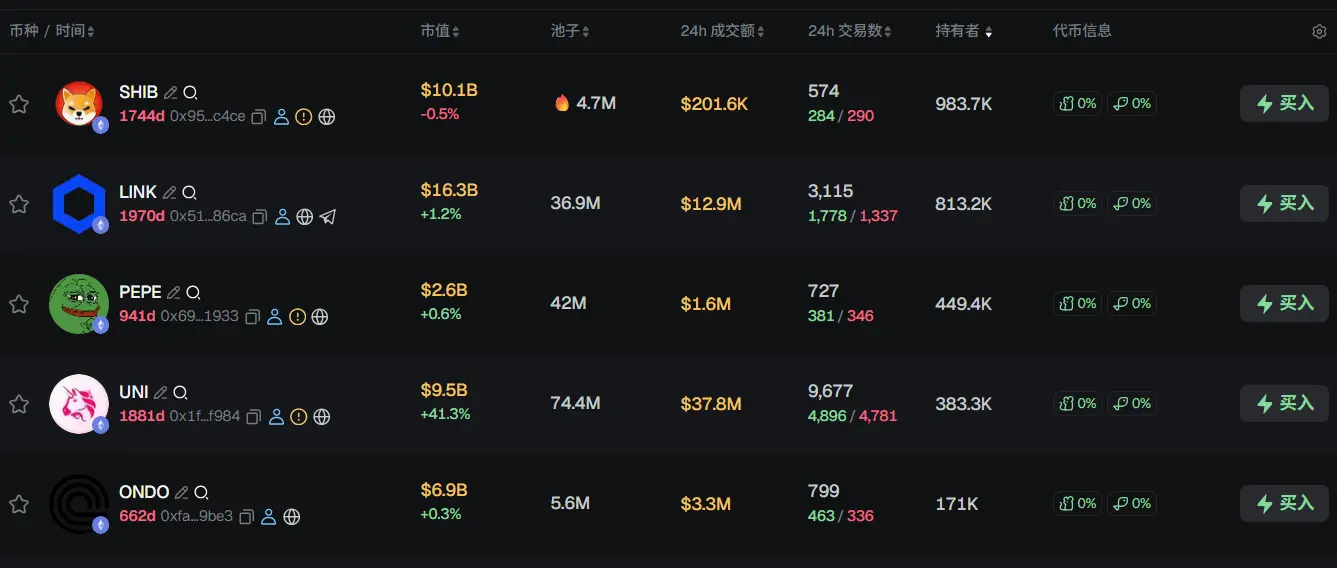
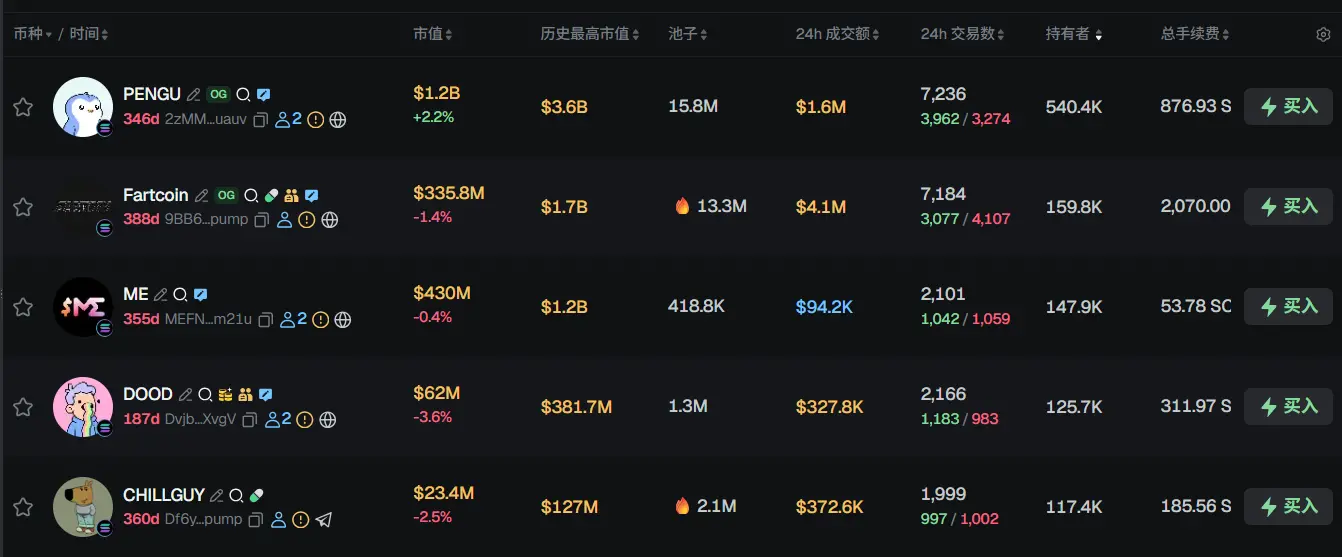
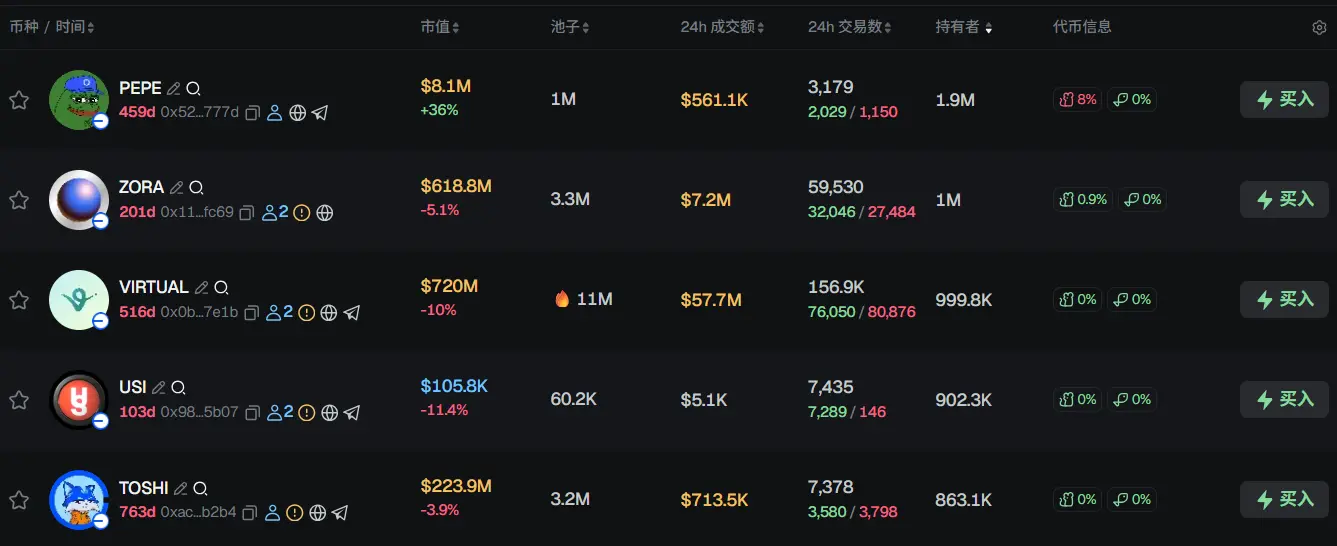
According to meme token tracking and analysis platform GMGN market data, as of November 11, 09:00,
The top five popular ETH tokens in the past 24 hours are: SHIB, LINK, PEPE, UNI, ONDO
The top five popular Solana tokens in the past 24 hours are: PENGU, Fartcoin, ME, DOOD, CHILLGUY
The top five popular Base tokens in the past 24 hours are: PEPE, ZORA, VIRTUAL, USI, TOSHI
What are some interesting articles to read in the past 24 hours?
Stop packaging high-risk investments as stablecoins
The world of stablecoins has never lacked stories, but it lacks a respect for risk. In November, stablecoins encountered issues again.
A stablecoin called xUSD experienced a flash crash on November 4, dropping from $1 to $0.26. As of today, it continues to decline, having fallen to $0.12, evaporating 88% of its market cap.
$8 billion, 50 projects, the next Stream could appear at any time. Before that, please remember a simple common sense: when a product needs to attract you with extremely high annual returns, it must be unstable.
Who is rewriting the dollar? The real battlefield of stablecoin public chains
In the second half of 2025, the once somewhat abstract concept of stablecoin public chains was illuminated by two extremely specific numbers.
On one side are the two recent deposit plans from Stable. The first phase was filled almost instantly by large holders; the second phase was oversubscribed, with total deposits exceeding $2.6 billion and the number of participating wallets surpassing 26,000. This shows that with a sufficiently clear narrative and sufficiently certain assets, liquidity can migrate in a very short time.
On the other side is Plasma, which was the first to issue tokens and open its mainnet. Although its DeFi TVL has declined, it still ranks eighth among all public chains with approximately $2.676 billion, surpassing many heterogeneous chains and L2 "big brothers" like SUI, Aptos, and OP, and is regarded as one of the "strongest projects" of this round. Its founder Paul Faecks, at just 26 years old, sits at the helm of this chain, propelling Plasma into the spotlight overnight with a market cap of tens of billions and a highly "strategic" airdrop plan.
In recent days, while the overall market has continued to weaken, a group of "old coins" has risen against the trend, sparking a frenzy.
As mainstream narratives become increasingly fatigued, these long-dormant names have reappeared at the top of the gainers' list. They are not the creators of new stories but shine again amidst the ruins of the old era. Some view it as a "return of the veterans," while others believe it is merely a momentary curiosity of new capital. Regardless, in a phase of low liquidity and scarce hotspots, the unexpected excitement of old projects has become a mirror reflecting market sentiment.
Rewriting the 2018 script: U.S. government shutdown ends = Bitcoin price will soar?
Looking back at the U.S. government shutdown and Bitcoin prices, it can be observed that the 35-day shutdown from 2018 to 2019 (the longest record at that time) coincided with the end of the crypto bear market, with Bitcoin dropping from about $4014 to a low of $3600, a decline of about 6-10%, reflecting the general sell-off of risk assets during economic uncertainty. After the shutdown ended, Bitcoin rose for seven consecutive days in early 2019, initiating a five-month surge with an increase of nearly 300%, rebounding to over $5000 from the low.
The current market environment is vastly different; factors such as institutional funds brought by ETFs, global monetary policy divergences, and uncertainties surrounding the Trump administration may lead to a different rebound trajectory this time. History can serve as a reference, but it cannot be completely replicated.
 Risk warning
 Risk warning