Deconstructing DAT: Beyond mNAV, how to identify "real" and "fake" hoarding of coins?
 Core Viewpoint

 The only iron rule for investing in DAT is: ignore the premium bubble and only invest in the true flywheel with continuous growth in "per share coin amount."
Original Title: Deconstructing DAT: Building Deep Analysis Beyond mNAV
Original Authors: @sui414, @0xallyzach, @cosmo_jiang, Pantera Capital
Original Compilation: @kokii_eth
Abstract
• 80/20 Distribution Pattern: The DAT industry exhibits a power-law distribution, with leading projects in each category capturing the vast majority of market share, while long-tail projects struggle to survive. Despite the presence of bubbles, DATs based on real assets and differentiated treasury strategies still represent significant financial innovation.
• Value and Sentiment Divergence: mNAV often obscures long-term value drivers. Our growth-driven decomposition model separates fundamental compounding growth from market sentiment. Data shows that companies like BMNR and HSDT continue to see per-share value growth, while the decline in most DAT stock prices is primarily due to sentiment contraction, not fundamental deterioration.
• Fragile Flywheel Effect: DATs rely on reflexive capital cycles—issuing stock to grow the treasury when at a premium, and defending per-share value when at a discount. This is particularly challenging in a declining market. Companies like Bitmine manage prudently, while some aggressive issuers dilute shares, harming long-term sustainability.
• Dual Evaluation Framework: A complete assessment must focus on 1. Fundamental value growth independent of sentiment; 2. Issuance and treasury management—whether management responds responsibly to market conditions. Both factors jointly determine whether DAT is creating or eroding value.
• Data Infrastructure Gap: The industry urgently needs structured comparable data, including establishing disclosure standards, enhancing transparency, and optimizing operational practices. Stronger data transparency will drive industry maturity and safeguard investor rights.
2025 marks the arrival of DAT Summer, as DATs like Bitmine (BMNR), Sharplink (SBET), and Solana Company (HSDT) enter the mainstream, rapidly expanding the field. The total market capitalization of the 30 BTC, ETH, and SOL DATs we track has reached $117 billion. However, following market shocks, the initial hype has begun to cool.
Despite ongoing market noise, most investors still evaluate DATs through the narrow lens of mNAV (Market Cap / Net Asset Value ratio), failing to grasp the underlying mechanisms of their core value, treasury strategies, or issuance discipline.
To address this, we have compiled this report referencing the DAT dashboard constructed by our partner Pantera, aiming to foster discussion, clarify misunderstandings, and establish a more rigorous DAT evaluation framework.
What are Digital Asset Treasuries (DATs)?
Digital Asset Treasuries (DATs) are one of the most intriguing financial experiments in today’s public markets. They are publicly traded companies with a balance sheet primarily composed of digital assets, allowing investors to gain indirect exposure to BTC, ETH, SOL, and other digital assets through the stock market. This means investors can trade in a regulated environment via traditional brokerage accounts, avoiding the complexities of on-chain platforms.
Unlike ETFs or trusts, DATs are operational companies rather than passive investment vehicles. They can directly hold, trade, or even stake digital assets, issue new shares, or raise funds, forming actively managed treasury tools whose value is linked to both the underlying digital assets and the company's capital management strategies.
A typical DAT starts with a small public company or newly listed vehicle (SAPC) that holds digital assets, with its net asset value (NAV) reflecting the total fair value of holdings, while market capitalization (MCAP) represents the market's pricing of the same asset exposure—often trading at a premium or discount due to market sentiment, liquidity, and management confidence.
Some DATs, like BTC's Strategy, have a business model centered on using equity financing to continuously increase target assets. Other DATs explore staking yields, derivative exposures, or diversified portfolios, layering returns on top of price exposure.
For investors, DATs serve as a bridge between traditional finance and on-chain assets:
• For retail and institutional investors, DATs provide regulatory clarity, broker accessibility, and compliance compatibility, allowing them to gain exposure to digital assets through familiar channels.
• For the crypto ecosystem, DATs create new channels for capital inflow, increasing the circulation scarcity of underlying assets, supporting staking infrastructure, and deepening secondary market liquidity.
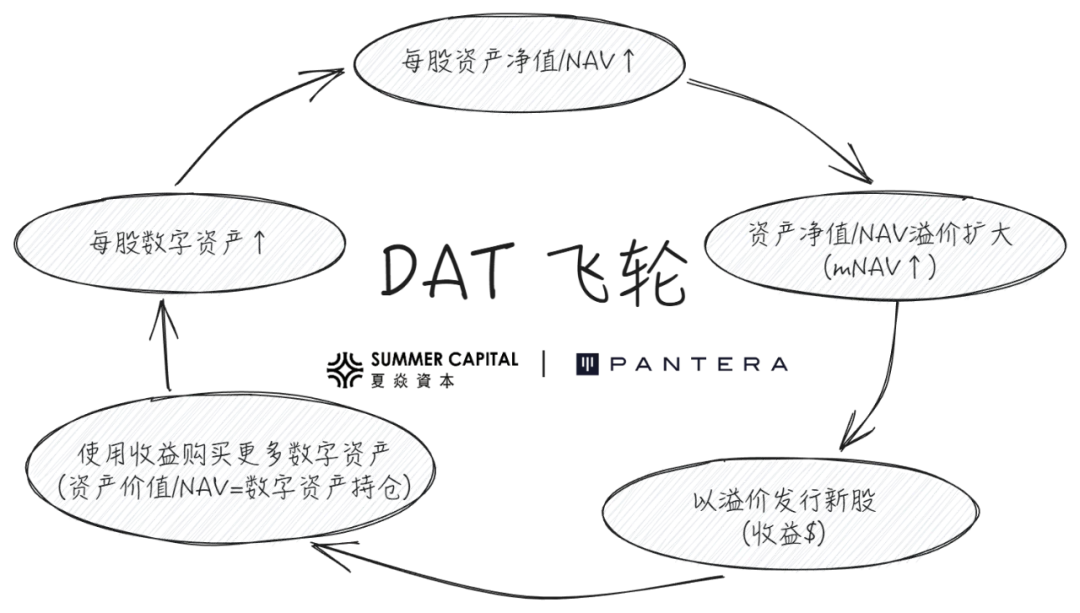
Many companies and institutions participate in DAT issuance through PIPE (Private Investment in Public Equity), with their investment logic based on the "forward flywheel" illustrated below:
However, there are many doubts about DATs in the market:
• This forward flywheel can easily be seen as an eternal bull market engine, but what happens when both mNAV and the underlying digital asset prices fall?
• PIPE investors often acquire shares at prices set before the DAT announcement (usually lower than retail), which is frequently questioned as insider trading or harvesting retail investors.
• Trading above NAV is seen as problematic because retail investors are forced to pay a high premium; trading below NAV is also viewed as problematic because it requires selling assets to repurchase shares.
This article will address these concerns through data analysis, clarify misunderstandings, explain the true meanings of various metrics, and share the DAT evaluation methodology.
1. Core Metric Analysis: mNAV and Its Limitations
Since March 2025, the total market capitalization of the 30 DATs we track has risen from $88 billion (mainly due to Strategy/MSTR) to approximately $117 billion, covering the three major digital assets: BTC, ETH, and SOL. However, market discussions continue to overly focus on the single metric of mNAV, neglecting its true meaning and other important indicators.
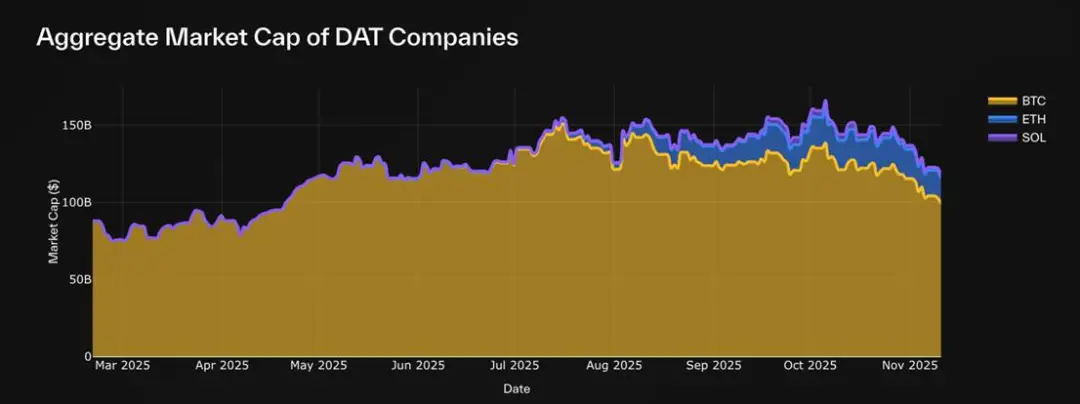
Market Capitalization Growth Trend of DAT Companies (Based on 30 Tracked Assets)
DATs are essentially publicly traded stocks, and evaluation must focus on two key factors:
• Company Value (NAV/Net Asset Value): Reflects the true value of the company. For DATs, this refers to the total liquid assets held on the balance sheet—including digital assets and unallocated cash equivalents. The core value drivers for the company are not traditional operating profits but rather the holding and growth of digital assets.
• Market Value (MCAP/Market Capitalization): The market's assessment of the company's value, calculated by multiplying the stock price by the total number of outstanding shares.
Net Asset Value (NAV)

NAV reflects the fundamental value of the assets held, but its specific composition varies by company. Some companies hold cash reserves, short-term government bonds, or other equities, while others hold convertible bonds or warrants, making NAV difficult to standardize. Existing dashboards often use simplified formulas, with some extending to include debt and convertible instruments.
Multiple NAV (mNAV)
While NAV reflects the company's underlying assets, it does not capture the market's assessment of these assets. This is where market capitalization comes in: the real-time assessment of the company's value by the market.
The relationship between market capitalization and NAV provides the most closely watched metric in the DAT space: mNAV (NAV Multiple).
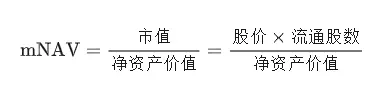
mNAV represents how much the market is willing to pay for each dollar of net asset value:
• mNAV > 1 → Indicates that the market has an optimistic view of the company's prospects or believes the company has growth potential. The market values the company higher than its assets on the balance sheet, usually considering expected future per-share token growth.
• mNAV < 1 → Reflects a skeptical market attitude. Investors may be concerned about equity dilution, question management's discipline, or believe the company's digital asset exposure has not effectively translated into shareholder value.
Essentially, mNAV is an emotional multiplier built on fundamentals, revealing the market's belief in the ability of DATs to accumulate digital asset holdings.
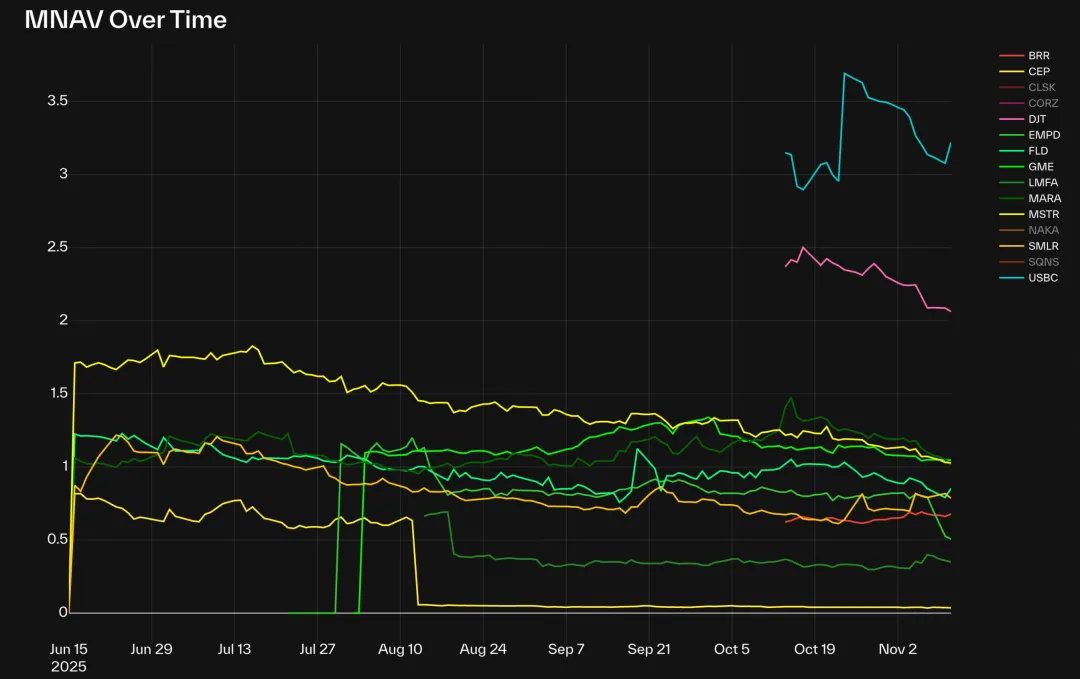
BTC DATs' mNAV Multiples (Excluding CLSK, CORZ, NAKA, and SGNS)
As of today, in the BTC DAT category, Strategy (MSTR), GME, and MARA are all close to 1.0 following recent market adjustments. However, most other BTC DATs have mNAVs below 1.0, with EMPD being the lowest at around 0.5.
New DATs like DJT and USBC currently have mNAVs around 2-3, reflecting the speculative nature of early DATs. A few exceptions include CLSK at about 4 and CORZ close to 7, both AI data center companies (formerly BTC miners), indicating that despite overall market normalization, specific narratives or structural factors continue to drive premiums.
The ETH DAT market is similar: BMNR, SBET, and GAME trade around 1x mNAV, reflecting fair value pricing; BTBT and COSM have higher multiples because these companies possess profitable business lines beyond digital asset holdings, which the market may not view as pure DAT evaluations.
Among the Solana DATs with PIPE shares registered, only HSDT trades at a slight premium of 1.12x (as of November 12, 2025), while the others are slightly below 1, indicating that market trends align closely with fundamentals, cooling from earlier cycles.
Premiums and Discounts
Premiums/discounts are essentially another presentation of mNAV, measuring the market's trust or speculative degree regarding the company's treasury value, expressed in relative prices rather than multiples. High premiums signify leverage, strong sentiment, or operational excess returns, while discounts typically reflect concerns about equity dilution or weak capital discipline.


The dashboard shows extreme premium cases like COSM and CORZ at around 800%, often due to the market valuing based on existing core business rather than DAT attributes.
Per-Share Digital Assets
Evaluating the intrinsic growth of DATs requires tracking both digital asset holdings and the number of outstanding shares. Healthy DATs strive to achieve growth in both metrics: increasing digital asset holdings to enhance the scale of underlying assets and issuing new shares to raise funds to support growth. While new share issuance dilutes existing shareholders' equity, if the asset growth rate exceeds the new share issuance rate, this dilution can actually yield benefits.
The key derived metric, per-share digital assets, measures how much digital asset each share effectively represents, reflecting the extent of shareholder exposure amplification. An increase in per-share digital assets indicates that the funds raised from issuance are being used for asset growth rather than offsetting equity dilution.

Among the 30 tracked DATs, few companies have managed to maintain a stable upward trend in per-share digital assets. Notable exceptions include Strategy (MSTR), BMNR, HSDT, ETHM, BTCS, CEP, and UPXI.
Experience shows that many DATs, even with strong early performance, can experience sharp equity dilution due to large new share issuances. In contrast, the aforementioned companies maintain continuous growth without significant declines, indicating a more prudent strategy in balancing capital issuance and asset accumulation.
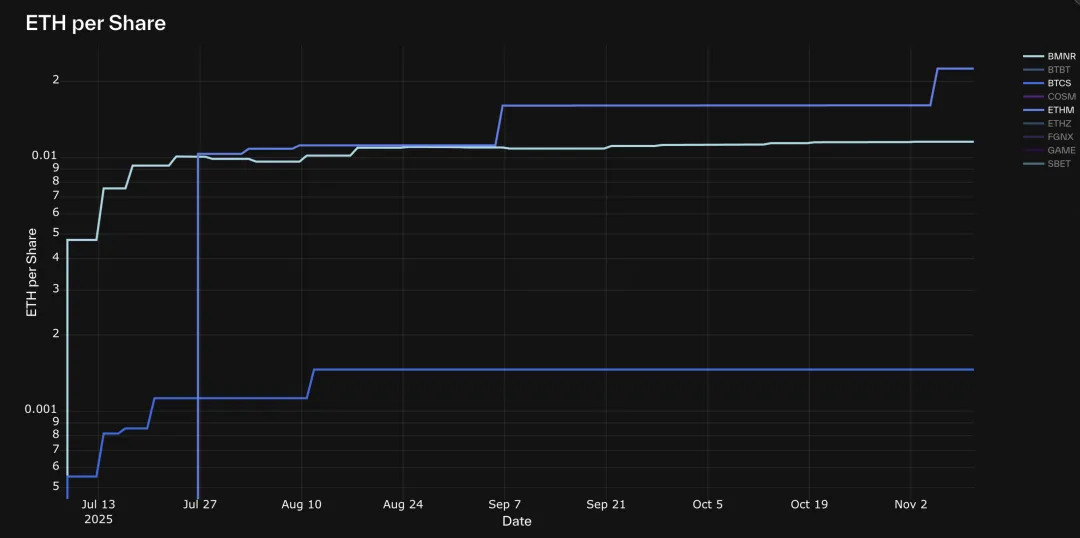
ETH DATs with Continuous Growth in Per-Share Assets: BMNR, ETHM, BTCS
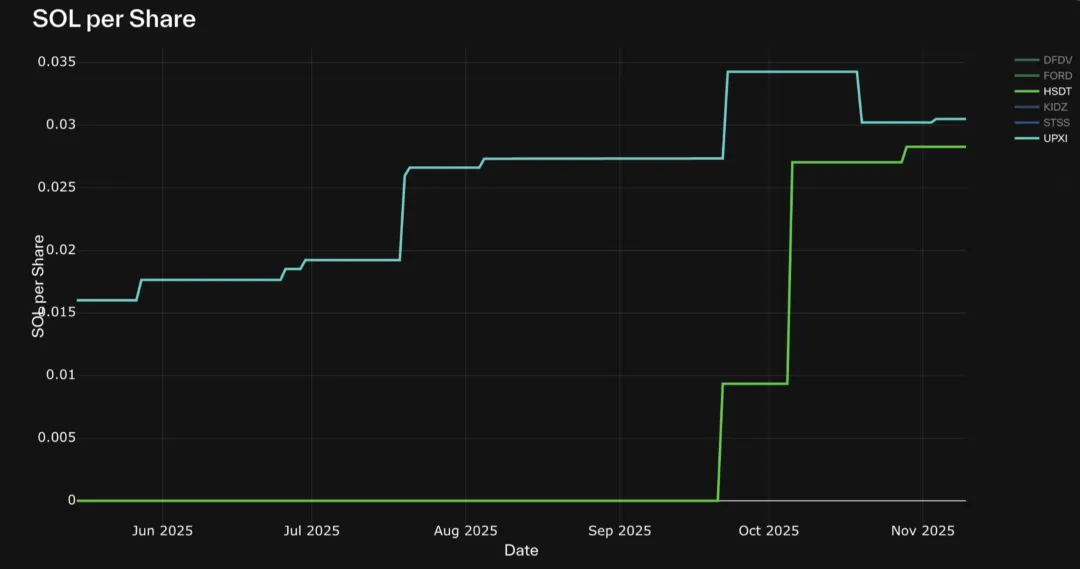
SOL DATs with Continuous Growth in Per-Share Assets: HSDT, UPXI
Other Market Indicators
In addition to company-level metrics, several comparative indicators help measure the position of DATs within the broader ecosystem:
• Market Share (by NAV, market cap, or trading volume): Measures the relative dominance of different DATs across various digital assets. Since each DAT stock represents different underlying asset values, comparing raw trading volumes may be misleading; turnover rate (trading volume / market cap) more accurately measures liquidity and activity.
• Asset Supply Ratio %: The proportion of tokens held by DATs relative to the total supply, reflecting their systemic impact on the underlying ecosystem.
In the BTC DAT space, Strategy has a significant dominant position: holding 83.3% of the total BTC DAT holdings (accounting for 3.22% of total BTC supply), capturing 72% of the category's market cap. GME and BRR show notable increases in trading volume share, reflecting heightened retail activity.
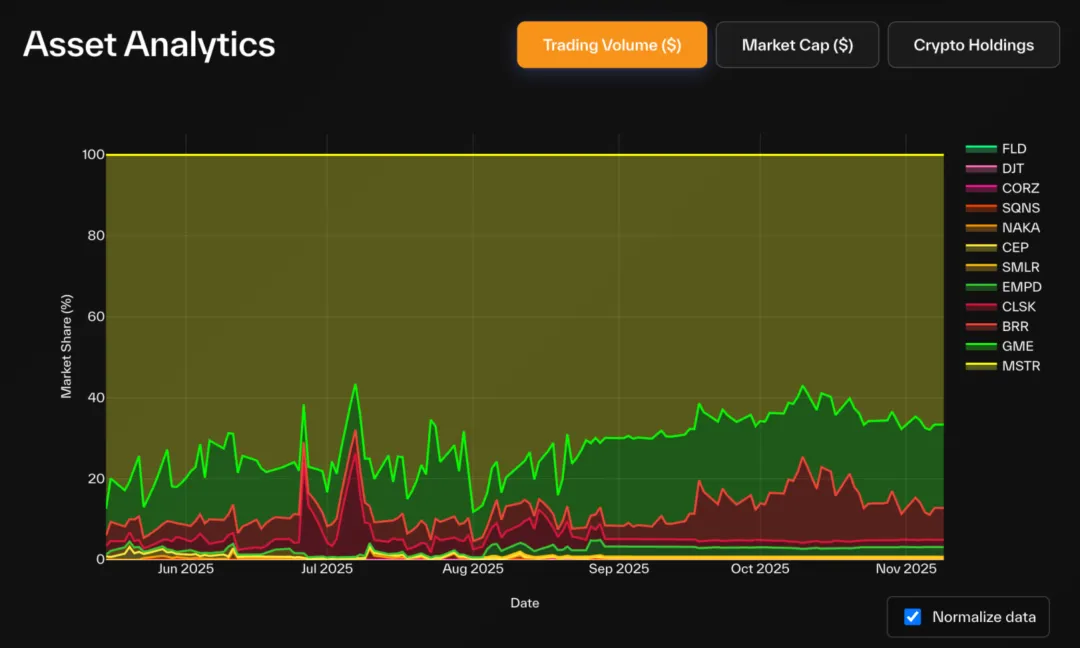
BTC DATs Trading Volume (USD) Market Share
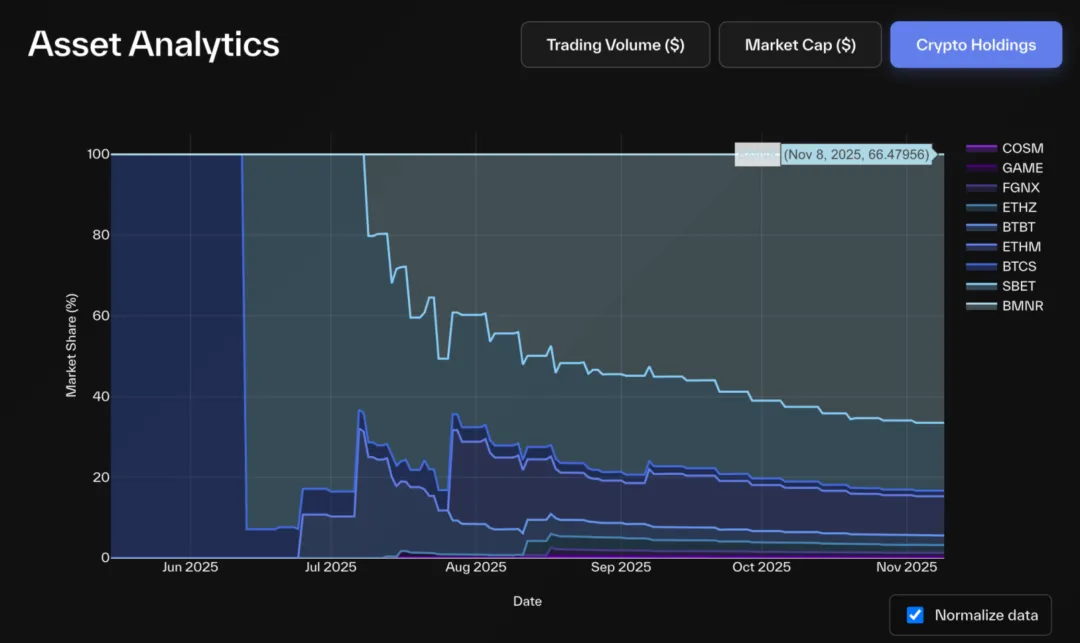
ETH DATs Crypto Asset Holdings Market Share
In the ETH DAT segment, Bitmine also leads: holding over 66% of total ETH DAT holdings (approximately 2.9% of ETH supply), accounting for 68% of market cap and 85% of trading volume. The second-largest player, SBET, holds about 16-20% of ETH holdings and market cap, while BTBT ranks third (around 6%).
The Solana DAT market has a lower concentration: FORD leads with a market cap of 45% and SOL holdings of 44%. HSDT, DFDV, STSS, and UPXI each hold about 13-14% of the holdings, but Solana Company (HSDT) leads its peers with approximately 22% market cap share.
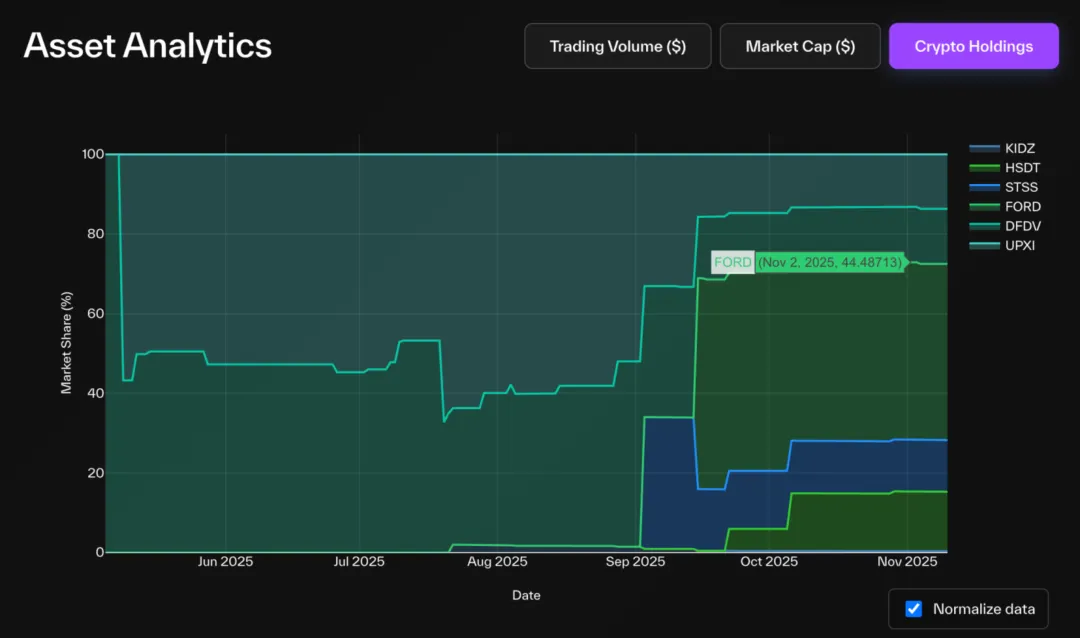
SOL DATs Crypto Asset Holdings Market Share
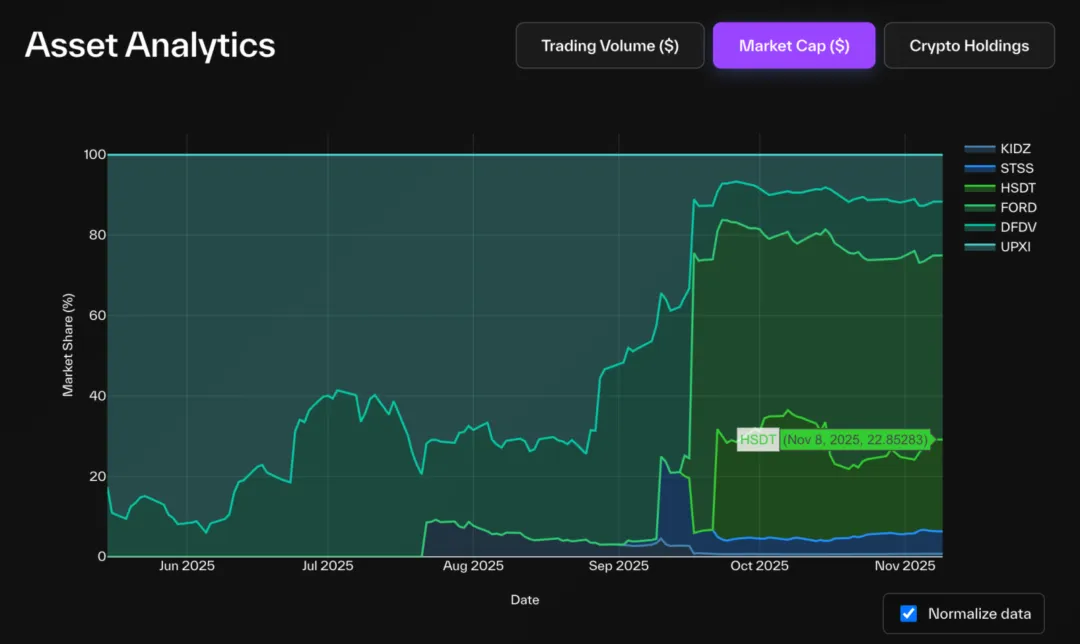
SOL DATs Market Cap Market Share
Interestingly, in terms of trading volume, the situation is reversed: DFDV and UPXI lead in activity over FORD. Historical trends indicate that these two are pioneers in the Solana DAT category, and this advantage seems to persist even as FORD later achieves a higher NAV; the trading momentum and market attention maintained by early entrants remain difficult to shake.
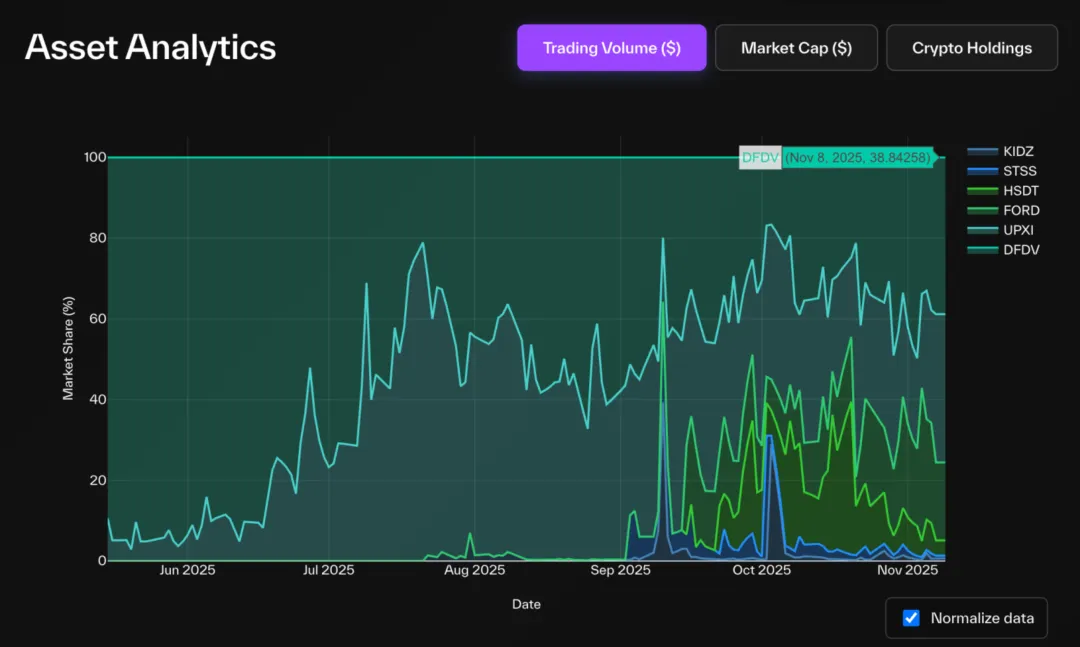
SOL DATs Trading Volume (USD) Market Share
2. Limitations and Misunderstandings
While the definitions are simple, tracking these fundamental metrics is not easy—primarily because SEC filing data is neither real-time nor standardized like on-chain data.
The best format for balance sheet accounting comes from the 10-Q form, but it is only released quarterly. Many companies use custom-designed or branded PDF files, making extraction more difficult. Even when data is consistently reported in the same format, it is often embedded in text files that require semantic parsing. Additionally, each company reports project formats differently, considering their equity structures and financial asset differences, which is understandable.
Sources for holding updates can be very fragmented—some companies do not even file with the SEC but disclose changes through Twitter, press releases, or media interviews.
Nevertheless, most stock market metrics (such as price and trading volume) are relatively standardized. However, tracking the number of outstanding shares remains challenging—companies are not required to report daily through filings, and many dashboards rely on third-party APIs that obtain data from market makers or banks, often with delays of several days.
One best practice comes from Bitmine, which reports its digital asset holdings weekly (sometimes more frequently) through 8-K filings.
When interpreting DAT data, it is essential to be aware of how these data challenges distort the metrics:
• Holding Updates
• Low Frequency (monthly/quarterly) leading to outdated NAV, inflating mNAV or premiums
• Some DATs hold DeFi tokens, NFTs, other stocks, or semi-liquid assets, complicating asset valuation
• Share Updates: Failure to file large issuance or repurchase declarations will affect estimated market cap, mNAV, premiums/discounts, and per-share digital assets.
We have identified some common blind spots in public reporting:
• Pro-Forma Accounting: Most dashboards rely solely on reported outstanding shares, neglecting the potential exercise of previously issued warrants. In PIPE transactions for DATs, warrants are often bundled with PIPE shares, with exercise prices typically equal to or higher than the PIPE share price. At any time after the exercise date, as long as the stock trading price exceeds that level, warrants can be exercised—this is a reasonable action for holders. Since exercised warrants increase the number of outstanding shares but do not necessarily increase corresponding value, they significantly dilute key metrics. Including these unexercised warrants in simulated calculations can more accurately reflect potential dilution effects and the true risk exposure of shareholders.
• Prefunded Warrants: These warrants have received proceeds and are included in NAV, but the corresponding shares have not yet been issued. In many cases, these warrants have exercise prices close to zero, meaning that once exercised, they will increase the share count without new proceeds—resulting in a one-sided dilution effect. We believe these warrants should be counted as outstanding shares; otherwise, the resulting mNAV calculations will underestimate market cap while overestimating NAV, creating an imbalance.
• Pending Mergers and PIPE: When a company announces a new PIPE, cash proceeds are often reflected in NAV updates before the shares are officially issued through S-3 filings. If share adjustments are not made, the per-share NAV denominator is underestimated, artificially inflating the metric. The following diagram summarizes the main types of share issuance plans and their impact on outstanding shares.
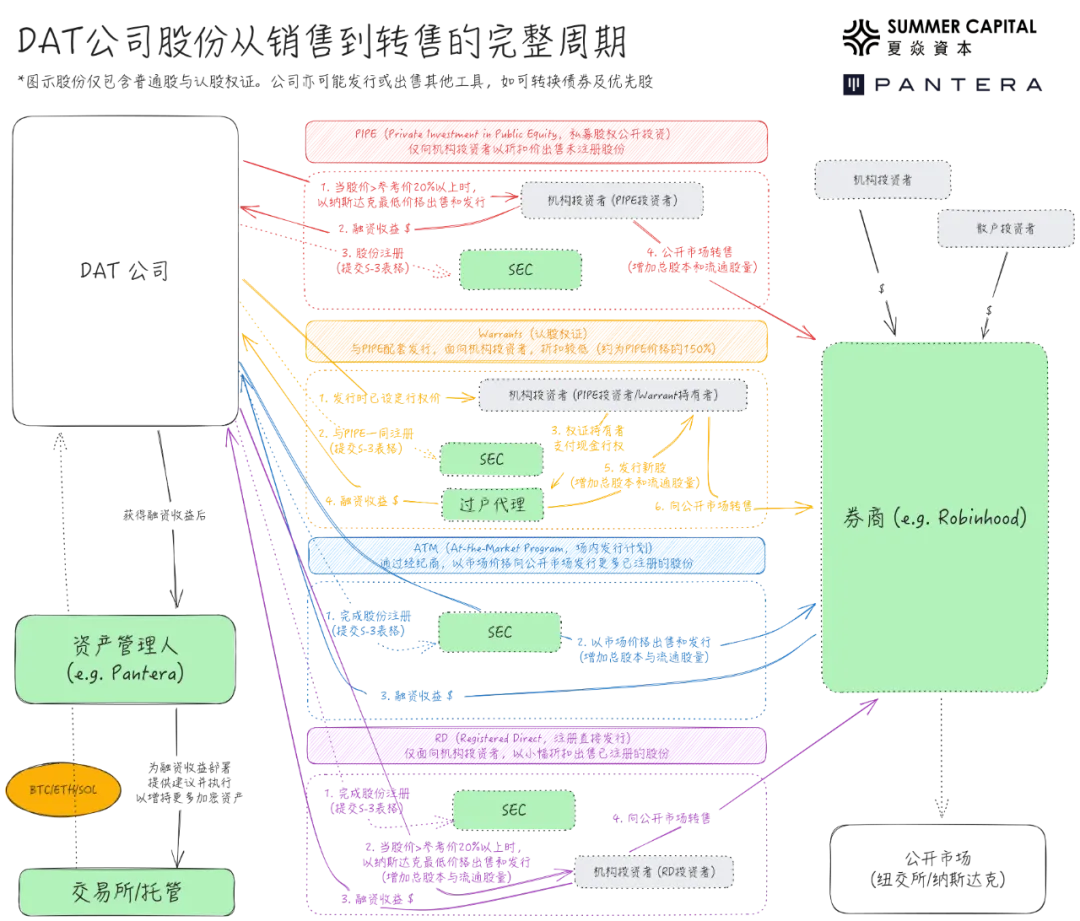
Debt Data and Derivative Exposure: With the exception of Artemis, very few dashboards currently include debt liabilities or leverage exposure information. This omission distorts NAV, especially for DATs employing structured yield or staking strategies.
Considering debt, adjusted NAV (and adjusted mNAV) should reflect the true book value. This allows for a clear comparison between pure treasury exposure DATs (like MSTR) and mixed operational DATs (like BMNR or SBET). What role does debt play in DAT management? In traditional finance, companies issue debt to finance growth while protecting shareholder ownership. In the DAT space, the motivation is similar. Equity issuance means selling future earnings to new shareholders, diluting existing shareholder equity. In contrast, debt issuance means borrowing against existing assets without causing equity dilution (if managed properly). Thus, DATs utilize debt to expand on-chain asset scale without reducing per-share digital asset value.
Due to these complexities, Pantera has constructed the DAT dashboard—aiming to present a clearer and deeper overview. In addition to data cleaning and standardization, the goal is to advance the dialogue: comparing DATs with the broader stock market, not just within their own category; and advocating for higher on-chain transparency by tracking treasury wallets, yield generation, and other on-chain activities in future versions.
3. Choosing the Right Metrics
Relying solely on mNAV cannot comprehensively reflect DAT performance. Below is our summary of the most valuable analytical framework when conducting a thorough evaluation of DAT performance.
Growth Drivers and Fundamental Pricing
If we view the stock price of DAT companies as a product of several potential growth factors (per-share token growth, token price, and market sentiment), we can decompose it to see the true drivers of performance rather than pure narratives.
Formally, we can express the stock price at time t as:
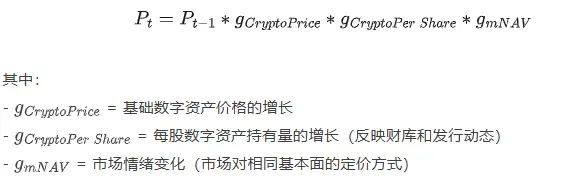
This decomposition method allows us to isolate each factor and independently track the true drivers of price fluctuations:
• When the stock price declines, we can examine whether this is due to cooling market sentiment, falling fundamental asset prices, or deteriorating company fundamentals—conversely, which of these factors drove the stock price up.
• It also helps us see through the noise—for example, when a company's intrinsic value continues to grow while the market price declines.
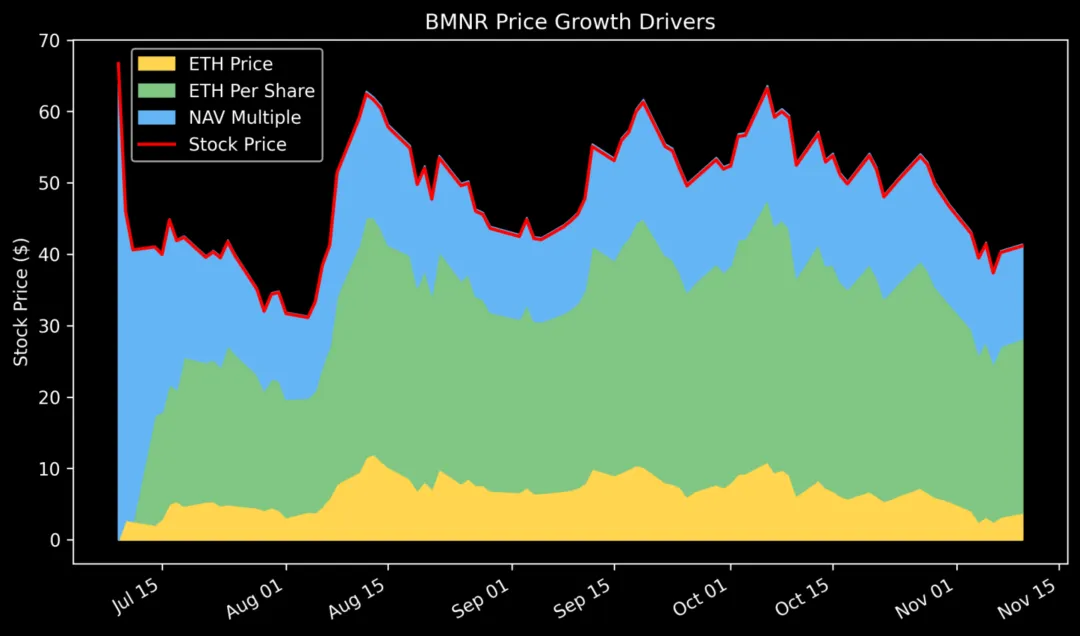
When we decompose the price growth of Bitmine (BMNR), we find that since its launch, the per-share ETH has steadily increased, while mNAV (the sentiment multiplier) has significantly contracted. This indicates that its fundamentals remain strong, with only the market speculation layer cooling down.
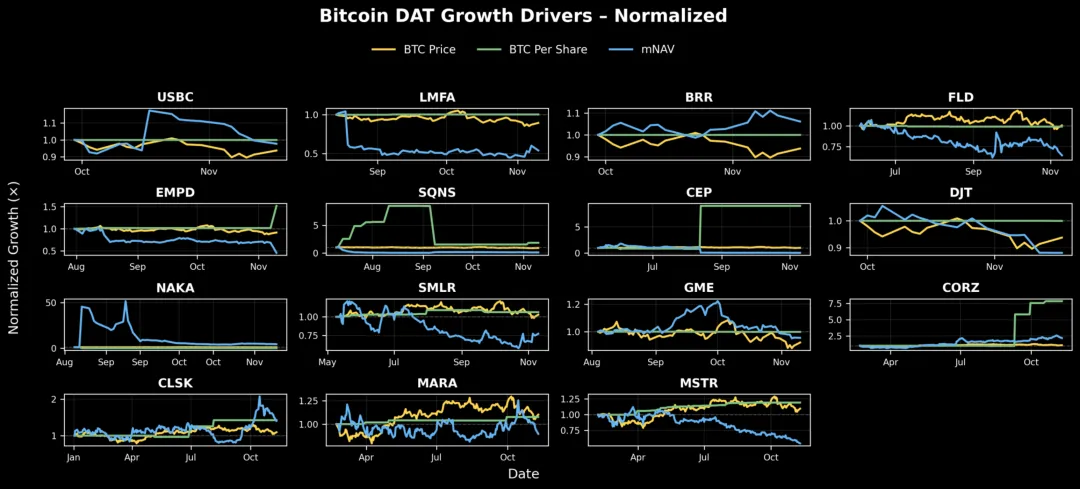
Summarizing this framework into three growth factors, we can chart DAT companies by category to assess their overall health:
BTC DAT: Most fundamental value growth remains relatively stable, with MSTR, CLSK, and CEP showing a clear upward trend. In contrast, while SMLR, FLD, DJT, LMFA, and EMPD maintain stable fundamentals, market sentiment for these companies has sharply declined since tracking began, which is the primary reason for their stock price drops. The only DAT showing actual value decline is SQNS.
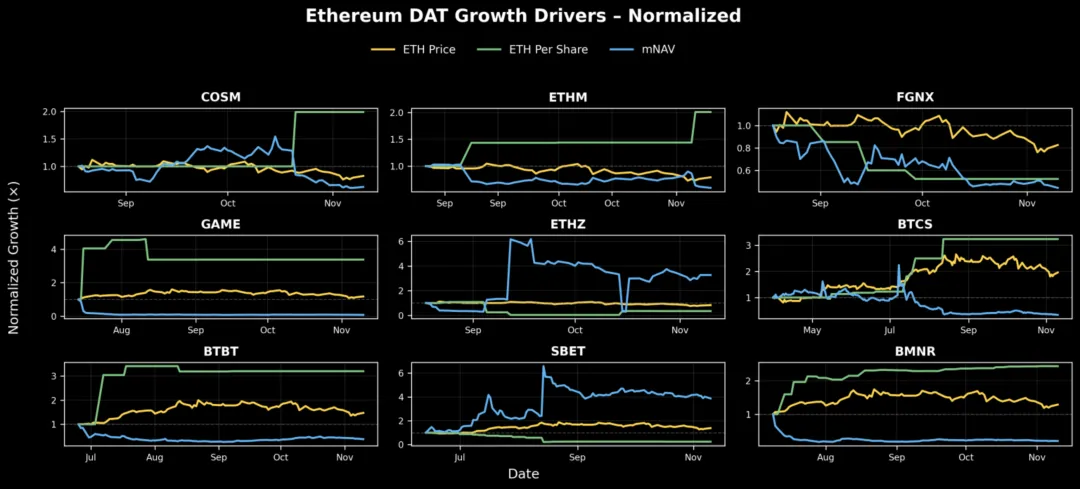
ETH DAT: As category pioneers, ETHZ and SBET benefited from initial market sentiment increases, despite per-share ETH remaining relatively stable. Subsequently, BMNR, ETHM, BTCS, BTBT, and GAME all saw steady per-share value growth, even as their mNAV growth showed a downward trend—possibly indicating they launched near the market cycle peak. FGNX is an exception, experiencing severe equity dilution and a sharp decline in market sentiment, leading to significantly underwhelming performance.
SOL DAT: HSDT's per-share SOL growth is the most significant, tripling from October to the report's release; UPXI also shows steady growth, albeit on a smaller scale. DFDV benefited from rising market sentiment, but its per-share SOL declined during the same period, indicating that the increase was driven more by market sentiment than by fundamentals. Meanwhile, both FORD and STSS saw significant expansions in mNAV, but their fundamental value growth remained flat, indicating that performance was driven by market sentiment rather than balance sheet dynamics.
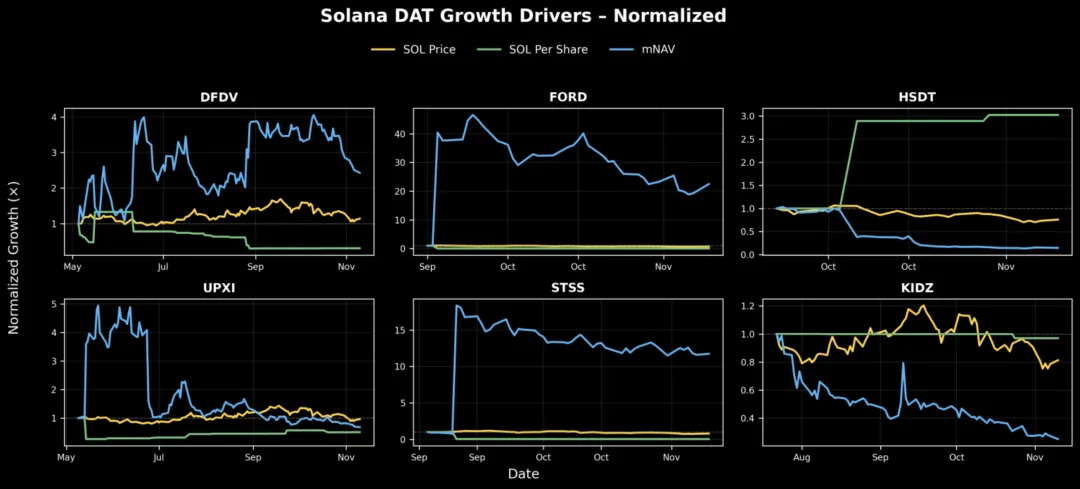
Fundamental Pricing
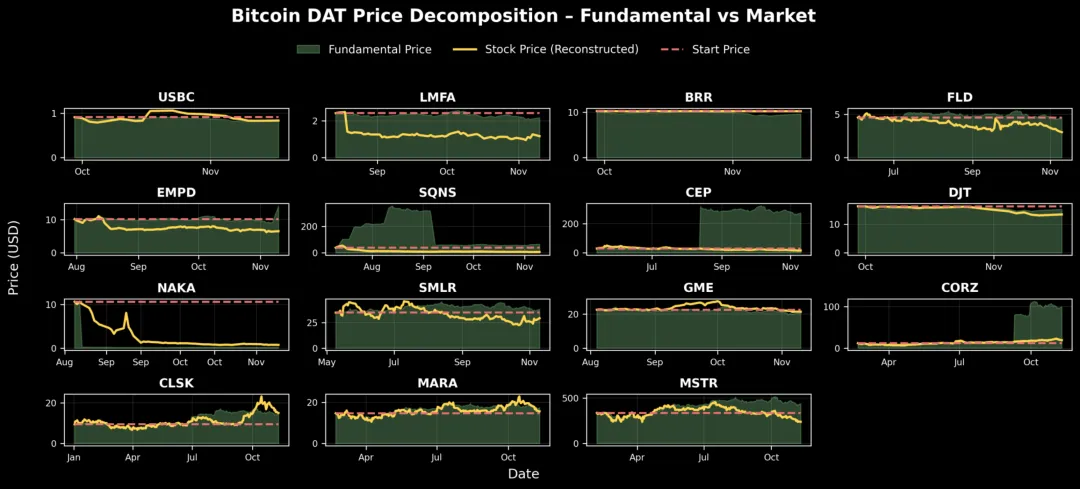
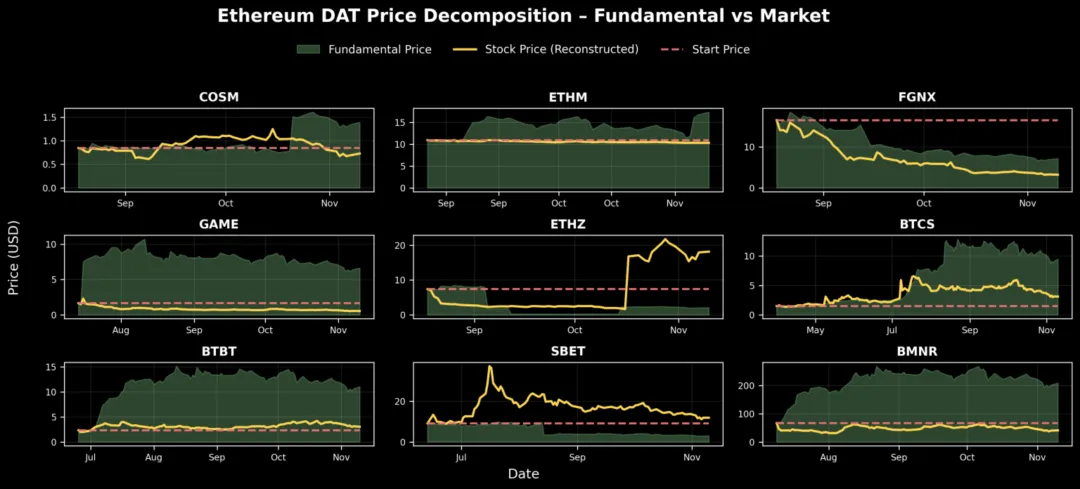
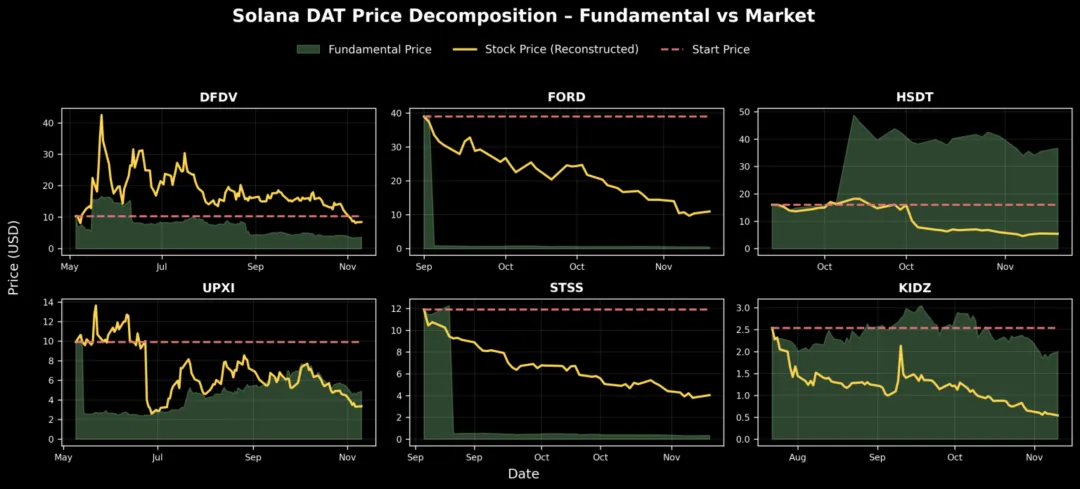
As shown in the above chart, most DAT companies have experienced phases of market cooling or contraction since their launch. To understand their potential development trajectories, we can further reconstruct each company's theoretical fundamental price—essentially answering the question: "If market conditions were the same as on the day of the DAT's launch, what would today's stock price be?"
In other words, if you had held a share of stock since the company's inception and allowed the company to gradually accumulate inventory and issue shares over time, what would the actual value of that share be today?
The following chart shows that several DAT companies—HSDT, BMNR, BTBT, BTCS, CORZ, and CEP—have steadily increased their fundamental value, but their stock prices have not fully reflected this due to changes in market conditions. Since their establishment, these companies have seen significant growth in fundamental metrics, even as overall market sentiment has contracted.
Share Issuance and Dilution
The success or failure of DAT companies depends on their equity issuance discipline. A key dimension in evaluating DAT companies is how management responds to market conditions—whether they take strategic actions in response to changes in market sentiment or react passively.
• When mNAV > 1: The company has the opportunity to issue shares at a premium. The key issue is issuance discipline; overly aggressive issuance will erode per-share digital assets, depress per-share NAV, and ultimately destroy market sentiment. Disciplined issuers responsibly expand their issuance scale, while reckless issuers play the so-called "infinite ATM game."
• When mNAV < 1: The challenges are greater. A valuation multiple below 1 indicates a lack of market confidence in the company's capital discipline, liquidity, or funding management strategies. The market may price in expectations of future equity dilution, fearing that management will continue to issue shares during periods of low market sentiment. This may also indicate inefficient capital usage, where the company fails to convert its digital asset exposure into shareholder value.
Sustained mNAV below 1 can break the DAT flywheel effect. The company can no longer issue new shares at a premium without diluting existing shareholder equity. If forced to issue, per-share digital assets decline further, damaging trust and losing the ability to grow equity. Over time, this dynamic may reduce the company to a "zombie DAT": a static holding company trading below liquidation value.
When mNAV falls below 1, the correct approach is to take defensive measures and restore credibility: halt all equity issuance (including ATM and PIPE) and prioritize protecting per-share digital assets as a core metric. The company must also enhance transparency and financial reporting—releasing wallet proofs, dashboards, and regularly updated NAV to demonstrate that it is a clean, verifiable financial package rather than an opaque shell. If liquidity allows, repurchasing shares at prices below NAV can enhance returns and send a strong confidence signal, often restoring premium levels. Management can also leverage on-chain yields—staking ETH, participating in re-staking, or earning yields from financial assets—to naturally boost NAV growth and convert passive asset holdings into income sources. Finally, the company must strengthen its narrative, positioning itself as a clear and reliable representative of specific assets or ecosystems, as investor trust often returns when investment ideas are clear.
For DATs with mNAV < 1, the correct strategy is to protect per-share value, enhance transparency, and rebuild trust. By studying issuance data, share repurchases, and capital management behaviors, we can understand which companies choose value-adding paths and which continue to dilute equity.
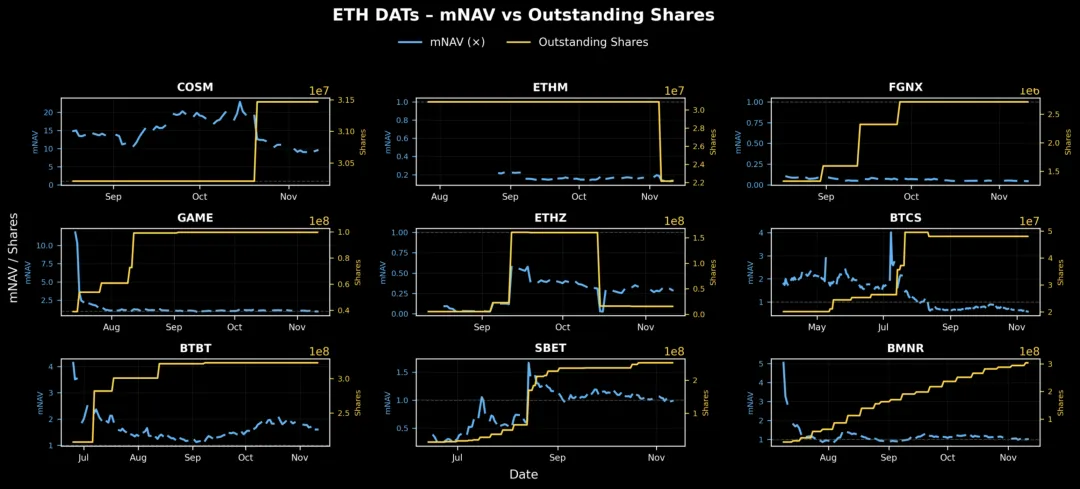
Data shows that the best-managed DATs have historically been able to protect shareholder leverage during economic downturns—laying the groundwork for rebounds when market sentiment recovers.
As shown in the above chart, ETH DATs exhibit significant differences in equity issuance and market sentiment management. Most companies show a gradual increase in the number of outstanding shares—indicating possible PIPE or ATM issuances.
BMNR's data shows that its stock issuance and mNAV change patterns are more gradual compared to peers. This sets a benchmark for how the company can responsibly scale—using equity as a growth tool without disrupting the mNAV growth flywheel.
BTBT, GAME, and BTCS experienced sharp, sudden increases in outstanding shares, while mNAV remained stable or declined, but their issuance timing was still reasonable, as it occurred when mNAV trading prices were above 1, within a premium window.
In contrast, FGNX and ETHZ conducted large-scale issuances when mNAV < 1, effectively issuing shares during market weakness rather than waiting for favorable market conditions—this is a typical characteristic of weak capital discipline. For FGNX, early and aggressive dilution when mNAV was close to zero resulted in a destructive dilution event, erasing investor leverage and long-term confidence. However, ETHZ briefly showed signs of corrective measures, reducing its share count in mid-October, helping its mNAV rebound from below 0.2 and partially restore balance.
4. Open Questions for Further Research
Pantera's dashboard data also opens new avenues for research:
• Unlock Events: How much do they contribute to price declines?
• PIPE Investor Returns: Which transactions in the DAT space achieve positive returns? How do results change when adjusted for underlying token performance (e.g., relative to spot ETF returns)?
• Market Microstructure: How do PIPE pricing announcements affect trading behavior?
• mNAV Dynamic Modeling: Is there a quantifiable relationship between issuance/repurchase and mNAV recovery?
More work is needed in DAT data, calling for the establishment of more comprehensive data standards. Stock data is much more chaotic than on-chain data: inconsistent formats, low update frequencies, and no unified model. To legitimize DAT as an asset class, we need open, standardized APIs for companies to report financial updates daily, covering:
• Issued Shares (including prefunded and PIPE shares)
• Treasury Holdings by Asset Class
• Warrant and Debt Data
Just as on-chain data transparency drives DeFi analysis, this layer of financial data transparency can change the way capital flows into DATs.
5. Conclusion
DATs are neither angels nor demons; neither saviors nor villains.
They represent a new form of capital formation—an innovative investment tool that operates in both directions: helping digital assets appreciate while providing financial institutions with leveraged exposure with accompanying on-chain yields. They are not perpetual motion machines, as the flywheel can break under market shocks; rather, they require disciplined strategies and execution from asset management companies. At their best, DATs can release meaningful value for both sides of the ecosystem:
• For traditional investors, they provide regulated, liquid, and yield-enhanced exposure to digital assets—often offering additional on-chain yields that ETFs or trusts cannot provide.
• For the crypto ecosystem, they channel traditional market funds directly into token treasuries—anchoring asset values within a compliant structure and enhancing liquidity.
• If managed well, they can amplify the positive feedback loop between capital markets and digital asset fundamentals: rising mNAV leads to new issuances, new funds flow into digital asset purchases, and the cycle continues to develop upward.
In this sense, DATs serve as the "second cornerstone" of digital assets: institutionalizing capital inflows while providing investors with new, yield-enhanced investment opportunities.
Certainly, criticisms are real and often instructive:
• Some DATs are merely speculative shells lacking genuine operational strategies, serving as short-term tools for PIPE investors to exit to retail, essentially akin to Memecoins;
• The market does not need dozens of DATs tracking the same assets. If capital management strategies or governance methods lack differentiation, an oversupply of DATs will only increase market noise and undermine trust in the model. Similarly, there is no need to establish DATs for hundreds of digital assets that lack long-term value, especially those operated by teams with low credibility, lack of community recognition, or limited technological innovation. Such expansion could reduce DATs to speculative fads rather than reliable financial tools;
• The death spiral (mNAV < 1) remains the most challenging issue. DATs inherently amplify exposure to an already highly volatile asset class, and once market sentiment shifts, the extent of discounts can quickly widen. However, mNAV < 1 typically signals misalignment rather than collapse. Investors may reflect weak capital discipline, concerns about equity dilution, or inefficient capital management rather than failures of the underlying digital assets themselves. Excellent operators can reverse the situation through transparent communication and strict equity management.
Ultimately, holding DATs requires a dual belief from market participants:
• A long-term bullish outlook on the underlying assets—believing their prices will rise over time and seeking leveraged exposure through active equity vehicles;
• Trust in the operators' execution and capital discipline—as Fundstrat's Tom Lee points out, mNAV < 1 is illogical; a competent management team will ultimately pull the stock price back to parity.
If both hold true, a lower mNAV is not an alarm but merely a temporary phenomenon of market sentiment mispricing the actual balance sheet value.
The core of DATs lies in representing a new type of investment tool—they help digital assets accumulate lasting value while providing financial institutions with a regulated, yield-enhanced pathway to participate in the future development of the digital asset era.
Recommended Reading:
Rewriting the 2018 Script, U.S. Government Shutdown Ends = Bitcoin Price Will Soar?
$1 Billion Stablecoin Evaporates, What’s the Truth Behind the DeFi Chain Reaction?
MMT Short Squeeze Event Review: A Carefully Designed Money-Making Game
 Risk warning Risk warning




Popular articles