Dialogue with Raoul Pal: The 2026 Turning Point in the Five-Year Cycle, Choosing the Right Assets for Long-Term Holding Without Relying on Luck
 Core Viewpoint

 People's anger often stems from the mismatch between their expectations of time and reality.
整理 & 编译:深潮TechFlow
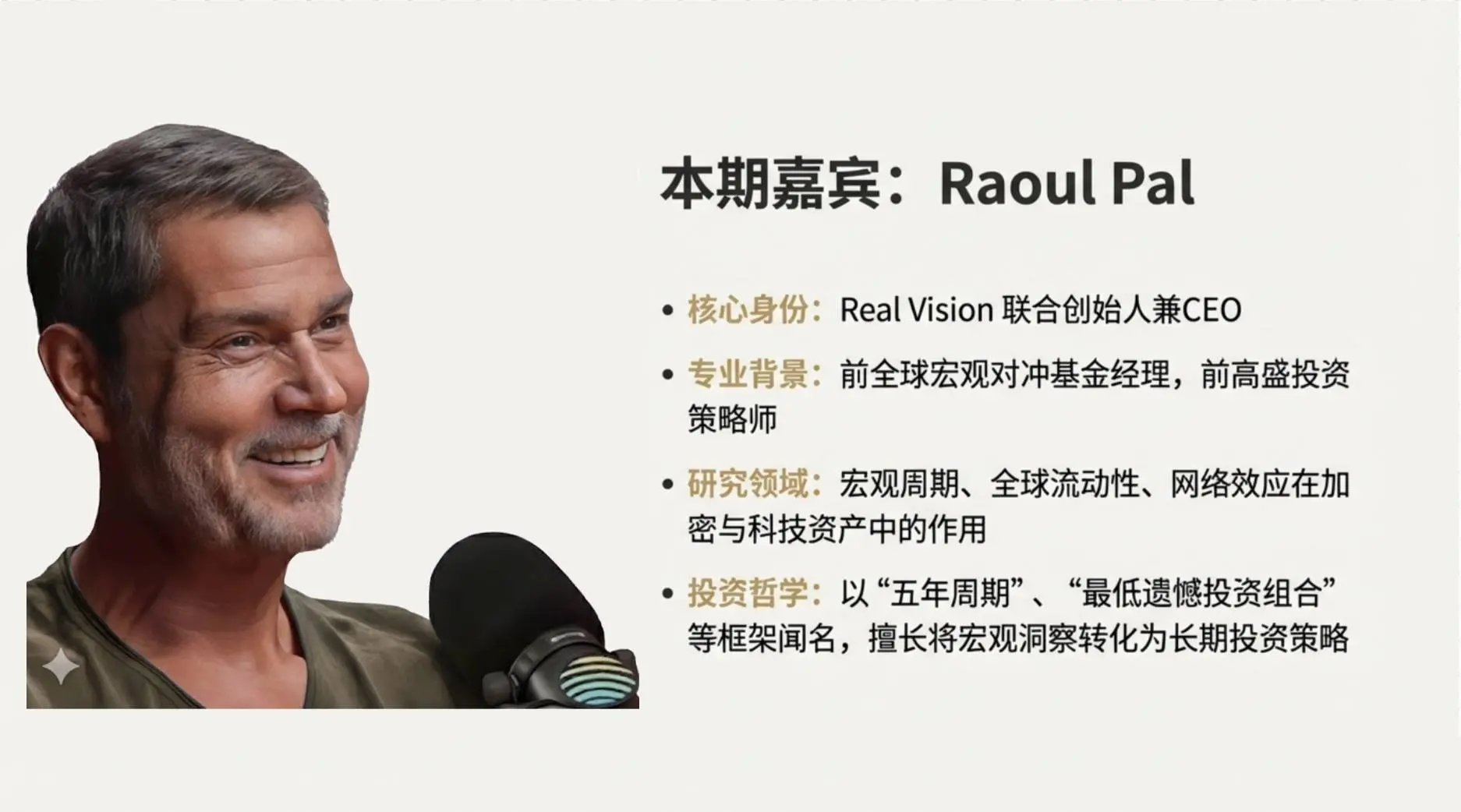
Guest: Raoul Pal, Founder and CEO of @RealVision
Host: Kevin Follonier
Podcast Source: When Shift Happens and Raoul Pal The Journey Man
Original Title: Raoul Pal: How to make it in Crypto in 2026 (without getting lucky) | E152
Release Date: December 18, 2025
Key Takeaways
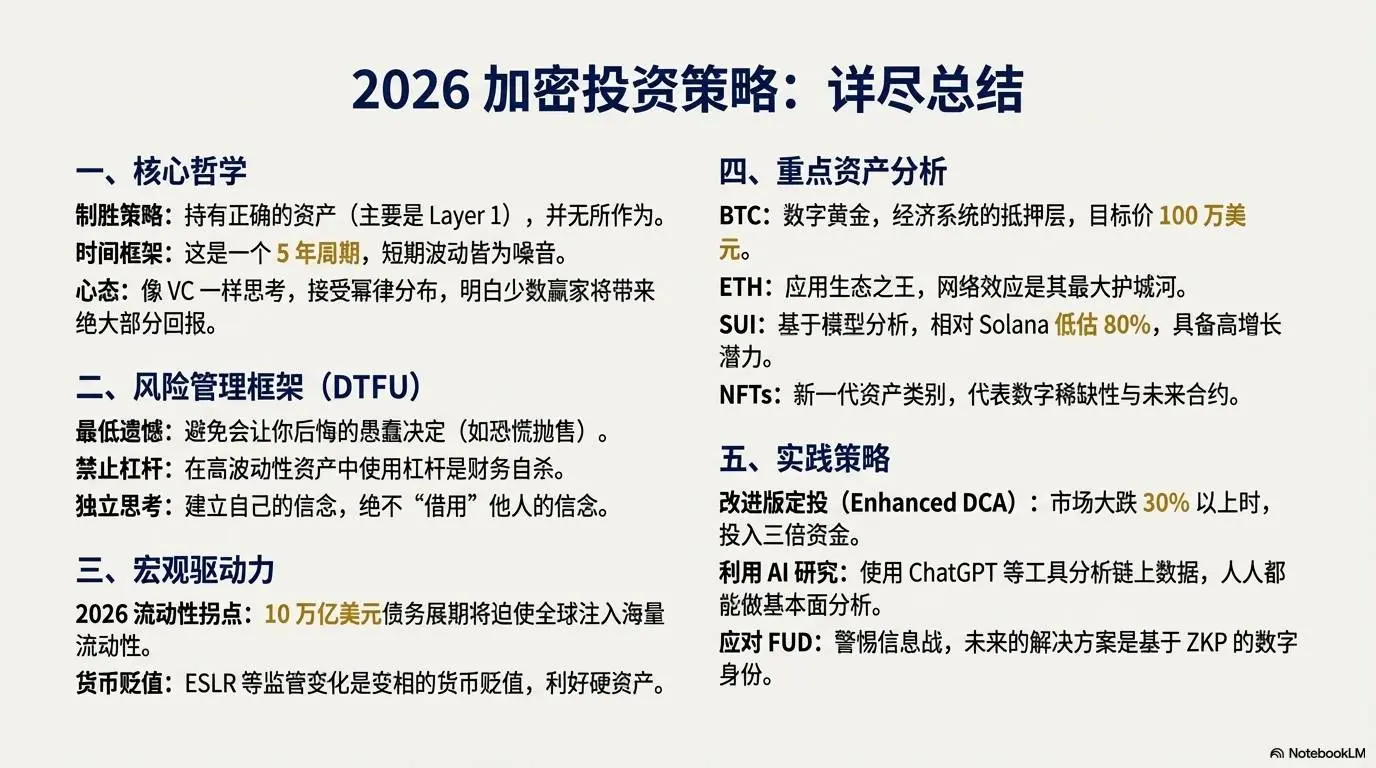
Raoul Pal shared his investment framework on how to succeed in the cryptocurrency space in 2026 without relying on luck: choose the right assets, hold them long-term, and be patient. He believes that while many are paralyzed by short-term market fluctuations, the overall development of cryptocurrency is just beginning, and we are only 3% of the way to its goal of reaching a $100 trillion market.
"When more people are scared off by short-term fluctuations, the real opportunity lies in long-term liquidity and network effects." In his latest interview, Raoul Pal provided a non-lucky investment framework for 2026: extend the cycle from four years to five years, seize the window of real liquidity coming in, hold quality assets driven by adoption, and manage the portfolio with a principle of 'minimum regret.'
Highlights
The market has bottomed out.
Bitcoin will become a better store of value than gold.
Liquidity is the most dominant macro factor currently.
Real liquidity demand will appear in 2026.
Crypto investment is actually a long-term battle, but many people want to see immediate results.
I originally thought the crypto market cycle was four years, but now I extend it to five years.
People's anger often stems from mismatched time expectations and reality.
I haven't heard anyone at Coinbase say the market is over; on the contrary, they all believe everything is just beginning.
There's a classic saying in brokerage accounts: the best-performing clients are often those who have passed away.
It's unrealistic to pin all hopes and dreams on cryptocurrency, but for many, it may be their only way out.
I've learned not to get caught up in who makes me unhappy or what problems happened at work today. Most things aren't important; what's important is whether you're moving towards your set goals.
Long-term trends are easier to predict, while short-term ones are difficult.
Humans learn through experience and lessons. Now, we have a new generation of investors. They need to learn through mistakes to gradually grow and overcome difficulties.
The key to success in the crypto space in 2026 is holding the right assets and sticking to your beliefs, rather than relying on others' opinions.
Some tokens will still cause investors to lose money even with increased liquidity because they are inherently bad investments.
The "minimum regret portfolio" is designed so that when you look back at your investments, you won't regret hasty actions, avoiding foolish investment decisions.
Most people never do research. They just say, "You told me this project would succeed." But the question is, how much do they really understand about the project?
Many people invest by "borrowing belief," like "a certain big shot said this project is good, so I bought it." But in reality, this reflexive cycle often leads to poor decisions.
Zcash is the last true privacy token and the last opportunity in the cryptocurrency space that could bring 1000x returns.
After Bitcoin, only two protocols have truly broken the traditional mold: one is Ethereum, which achieved programmability; the other is Zcash, which focuses on privacy protection.
I might choose to buy in during the next down cycle, which I expect to occur in 2027, by then Zcash may become one of my investment targets.
The cryptocurrency market is currently a $3.5 trillion asset class, and we could reach a $100 trillion market cap in 10 years, meaning we have only traveled about 3% of the way.
All game assets are essentially NFTs or non-fungible contracts, meaning that all future game assets will exist in the form of NFTs.
You need to understand that you can't get everyone on the lifeboat; some people don't want to be helped.
If I believe the total market cap of crypto will reach $100 trillion in the future, I will focus on that long-term goal rather than worry about Bitcoin dropping 30% last week.
For quality assets like Solana, even if the price drops, I will hold firmly because I value its long-term potential.
From "God" to "Fool" Every 6 Months
Host: On the internet, your reputation is always polarized. Every six months, you might be hailed as a "God," only to be called a "fool" again. How do you deal with this?
Raoul Pal:
Those who criticize me often don't understand my entire body of work; they just focus on specific points. I've tried filtering accounts in the comments section to distinguish between verified and unverified accounts, and the differences are significant. I believe a lot of criticism is actually manufactured, and there may even be some state actors involved in spreading discontent through the comments section. They attack anyone and any topic for various reasons.
Host: Can you elaborate? Is it possible that bots are involved? Or is someone pulling the strings behind the scenes?
Raoul Pal:
I think it could be both. Some accounts in the comments section are very suspicious; for example, they have been registered for only three to six months, follow only me, and specifically attack certain points of mine. When you look further into these accounts' activities, you'll find they have posted almost no original content, just retweeting information, and then suddenly posting fierce criticism. Some state actors may have realized that attacking different people and events in this way can effectively spread discontent. Ordinary users see these comments and get angry, further amplifying that negative sentiment.
Of course, I also acknowledge that some criticism comes from real users who may misinterpret or misplace blame. However, many comments are malicious. Now, Twitter has rolled out some features that show account origin information, but even so, those behind the scenes may use VPNs to disguise their location, such as showing they are from the U.S. or other countries, making this issue difficult to resolve.
FUD on the Internet and State Actors
Host: **You mentioned state actors
 Risk warning
 Risk warning