Morning News | Grayscale applies to convert its Near trust into an ETF fund; Hong Kong stablecoin licenses expected to be issued later this year; Dogecoin Foundation to launch "Such" payment app
 Overview of Important Market Events on January 21
整理:ChainCatcher
Important News:
- Dogecoin Foundation launches "Such" payment app, expected to go live in the first half of 2026
- Paul Chan: Stablecoin licenses expected to be issued later this year, adopting an active and prudent approach to developing digital assets
- Grayscale applies to convert its Near Trust into an ETF fund
- U.S. Treasury officially includes Bitcoin in national strategic reserves
- Tokenization startup Cork completes $5.5 million seed round financing, led by a16z and CSX
- Category Labs plans to repurchase MON tokens through the open market in the first half of the year
- Bitpanda plans to launch a unified investment platform integrating stocks, ETFs, and cryptocurrencies
What important events happened in the past 24 hours?
Category Labs plans to repurchase MON tokens through the open market in the first half of the year
According to ChainCatcher, the development team of Monad, Category Labs, recently announced on social media platform X that the company may repurchase MON tokens worth up to $30 million on the open market in the first half of 2026, in accordance with applicable laws and regulations.
The announcement emphasized that any purchase decisions will be made solely by Category Labs, which reserves the right to initiate, suspend, or terminate the purchases, and does not constitute a commitment to purchase any specific quantity of tokens. The statement reflects the company's intention to consider opportunistic purchases based on market conditions.
Tokenization startup Cork completes $5.5 million seed round financing, led by a16z and CSX
According to ChainCatcher, Cork, a tokenization startup, announced the completion of a $5.5 million seed round financing, co-led by Andreessen Horowitz (a16z), CSX, and Road Capital, with participation from 432 Ventures, BitGo Ventures, Cooley, DEPO Ventures, Funfair Ventures, G20 Group, Gate Labs, Hyperithm Gate, IDEO Ventures, PEER VC, Stake Capital, and WAGMI Ventures.
Cork aims to build a "programmable risk layer" that seeks to make the implicit risks in real-world assets transparent and tradable through tokenization. Its infrastructure allows asset managers, issuers, and others to create customized swap markets to enhance the redemption liquidity, risk transparency, and market confidence of on-chain assets. This tool can also be used to assess the risks of native crypto products such as stablecoins and staked tokens. The team plans to launch the first production-grade risk markets in the coming months and expand collaborations with treasury and asset issuers.
According to ChainCatcher, Ripple President Monica Long made predictions about cryptocurrencies for 2026, stating that four areas will drive institutional adoption of cryptocurrencies.
Stablecoins will be fully integrated into global payment systems: As Visa, Stripe, and major institutions integrate them into payment processes, B2B transactions will become a growth engine.
Institutional cryptocurrency investment will become mainstream: By 2026, about 50% of Fortune 500 companies will hold cryptocurrencies or develop formal DAT strategies, actively holding tokenized assets, on-chain treasury bonds, stablecoins, and programmable financial tools.
Custody consolidation: M&A transactions in the cryptocurrency sector reached $8.6 billion in 2025, primarily driven by institutional investor participation. By 2026, more than half of the top 50 banks globally are expected to establish at least one new custody relationship.
Integration of blockchain and artificial intelligence: Asset management companies will utilize AI models and blockchain infrastructure to dynamically adjust allocations to tokenized assets and stablecoin yield protocols, fully leveraging the 24/7 operation of on-chain markets.
Trump: The U.S. stock market fell yesterday because of Greenland, it will double in the future
According to ChainCatcher, Trump stated that the stock market's decline yesterday was due to Greenland, and that the market drop is insignificant as it will double.
Additionally, Trump stated, "I will support NATO 100%, but I'm not sure they will support us."
David Sacks: After the passage of the cryptocurrency market structure bill, banks will fully enter the cryptocurrency field
According to ChainCatcher, White House AI and crypto chief David Sacks stated that after the legislative passage of the cryptocurrency market structure bill, banks will fully enter the cryptocurrency field.
Vitalik proposes to introduce a native DVT staking mechanism in the Ethereum protocol layer to enhance security and decentralization
According to ChainCatcher, Ethereum co-founder Vitalik Buterin recently proposed a "native DVT (Distributed Validator Technology)" solution at the Ethereum Research forum, suggesting that DVT be directly embedded into the Ethereum staking protocol layer to enhance network security while promoting decentralization at the validator level.
According to the proposal, validators can register multiple independent keys and operate collectively as "group validators"; only when a set threshold number of key signatures is reached will block proposals or attestations be considered valid. This mechanism can significantly reduce the risk of single points of failure or nodes being compromised, leading to validator downtime, while still maintaining existing slashing protections under reasonable threshold settings.
Vitalik pointed out that unlike current DVT solutions that rely on external coordination layers and complex deployments, native DVT will be directly embedded into the protocol itself. Validators holding multiple minimum staking thresholds (32 ETH) can set up to 16 keys and specify signature thresholds, effectively forming a validator identity composed of multiple standard nodes. He noted that the performance overhead of this design is minimal, only adding one additional delay for block production without affecting attestation delays, and is compatible with any signature scheme, helping to reduce reliance on long-term potentially risky cryptographic assumptions.
In terms of decentralization, Vitalik believes that native DVT will allow individuals and institutions to participate in staking more easily in a "self-custodied, fault-tolerant" manner, rather than relying on large staking service providers, thereby improving the decentralization metrics of the Ethereum validator set (such as the Nakamoto coefficient). The proposal is still in the early discussion stage and will require broad evaluation and consensus from the Ethereum community.
Citrea launches government bond-backed stablecoin ctUSD, issued by MoonPay
According to ChainCatcher, Bitcoin application layer Citrea, supported by Founders Fund and Galaxy Ventures, has launched a native dollar stablecoin Citrea USD (ctUSD), issued by MoonPay and supported by M0 technology, fully backed by U.S. short-term government bonds and cash.
Despite Bitcoin's market cap exceeding $1 trillion, most capital remains in a passive store of value due to a lack of native yield generation and trading settlement infrastructure. Existing Bitcoin financial activities rely on bridged or externally issued stablecoins, leading to fragmented liquidity and increased risk. ctUSD provides a unified USD settlement layer for the Bitcoin market, supporting BTC-collateralized lending, trading, and settlement directly on the Bitcoin network without the need for bridging tokens.
This stablecoin complies with GENIUS Act regulatory guidelines and can be used in the U.S. (excluding New York) and over 160 other countries.
U.S. Treasury officially includes Bitcoin in national strategic reserves
According to ChainCatcher, U.S. Treasury Secretary Scott Bessenet announced during the World Economic Forum in Davos that the U.S. government will stop selling seized digital assets and will transfer all Bitcoin currently held by the Department of Justice and the Treasury into the "U.S. Strategic Bitcoin Reserve." Under this policy, Bitcoin obtained primarily through criminal and civil asset seizures will be permanently retained and will no longer be subject to regular auctions by the U.S. Marshals Service.
Bessenet stated that this move aims to "stop the loss of sovereign digital wealth" and views the more than 200,000 Bitcoins currently held by the U.S. as a long-term value reserve on the national balance sheet to hedge against traditional currency fluctuations. Bessenet also emphasized that the strategic Bitcoin reserve will achieve "budget-neutral" expansion through law enforcement seizures and will not use taxpayer funds for open market purchases. The relevant assets will be managed by the Federal Reserve and will not be sold or transferred unless extreme national economic emergencies occur.
Analysts believe this decision signifies the first time the U.S. has elevated Bitcoin to a strategic asset status close to that of gold at the policy level, potentially weakening the long-standing "government sell pressure" and having a demonstrative effect on the digital asset policies of major global economies.
According to ChainCatcher, Hong Kong Financial Secretary Paul Chan stated yesterday (January 20, Davos time) during his participation in the World Economic Forum annual meeting in Davos that financial and technology can mutually promote each other. Taking digital assets as an example, this financial innovation not only enhances the transparency, efficiency, inclusiveness, and risk management of financial services but also directs capital more effectively to the real economy; moreover, finance is a key force in supporting and empowering technological development.
Chan pointed out that Hong Kong, as an international financial center, adopts an active and prudent approach to developing digital assets and promotes responsible and sustainable market development based on the principle of "same activities, same risks, same regulations." Since 2023, Hong Kong has issued licenses to 11 virtual asset trading platforms and expects to issue stablecoin licenses later this year. Additionally, the Hong Kong government is leading by example in promoting tokenization development, including issuing three batches of tokenized green bonds totaling approximately $2.1 billion and launching a regulatory sandbox to encourage application innovation.
According to ChainCatcher, cryptocurrency trading platform Bitpanda announced that it will launch a unified investment platform that integrates stocks, ETFs, cryptocurrencies, and precious metals into a regulated application.
The expanded platform will go live on January 29, allowing users to access over 10,000 stocks and ETFs, as well as Bitpanda's existing cryptocurrency and metal products.
ChainCatcher previously reported that Bitpanda is preparing for an initial public offering (IPO) in Frankfurt as early as the first half of this year, with a valuation sought in the range of €4 billion to €5 billion.
Grayscale applies to convert its Near Trust into an ETF fund
According to ChainCatcher, Grayscale has submitted an S-1 filing to the U.S. Securities and Exchange Commission, applying to convert the Grayscale Near Trust into a Grayscale Near Trust ETF. Currently, the trust shares are traded on the OTCQB market under the ticker "GSNR."
Once the registration statement attached to its prospectus becomes effective, the trust intends to list these shares on the New York Stock Exchange Arca (referred to as "NYSE Arca") with the ticker still as "GSNR."
According to ChainCatcher, the daily transaction volume of crypto-native payment cards surged 22 times from December 2024 levels, reaching nearly 60,000 transactions by mid-January 2026, with a daily transaction value of nearly $4 million. Etherfi currently dominates the market, accounting for about 50% of transaction volume, with other competitors including Gnosis, Metamask, and Solayer.
Many cards offer yield through DeFi lending protocols, allowing users to earn balance returns while maintaining spending flexibility. Meanwhile, issuers are still optimizing their economic models, with significant differences in incentive structures and fee arrangements among different providers.
According to ChainCatcher, 23pds, Chief Information Security Officer of Slow Mist Technology, disclosed that a new type of security vulnerability has emerged in the Snap Store application store on the Linux platform, where hackers can hijack expired domains to take over application publisher accounts and inject malicious code into crypto wallet applications.
Attackers monitor and register expired developer accounts associated with domains in the Snap Store, using these domain emails to trigger password resets, thereby taking over the identity of publishers with long-term reputations. The tampered applications disguise themselves as well-known crypto wallets like Exodus, Ledger Live, or Trust Wallet, with interfaces nearly indistinguishable from the originals.
It has been confirmed that the publisher domains storewise[.]tech and vagueentertainment[.]com have been hijacked. These malicious applications will trick users into entering their "wallet recovery phrases," and once submitted, sensitive information will be sent to the attackers' servers, resulting in the theft of digital assets.
According to ChainCatcher, Galaxy CEO Mike Novogratz stated on platform X that the cryptocurrency market structure bill may fail due to the lack of consensus on stablecoin yields among various parties, which reflects the dominance of U.S. politics over sound policy. Banks do not want crypto platforms to offer rewards to users. If the bill is rejected, the current situation seems to be what banks fear. If this interferes with the market structure bill, the blame will fall on the banks and the Republican and Democratic senators supporting them, while the biggest losers will be American consumers. He hopes that calm minds will prevail.
Mike Novogratz added that gold prices indicate that the dollar is rapidly losing its status as a reserve currency, and the sell-off of long-term bonds is also not a good sign. Bitcoin has been disappointing due to ongoing sell-offs, and its price needs to break through $100,000 to confirm a return to an upward trend.
Dogecoin Foundation launches "Such" payment app, expected to go live in the first half of 2026
According to ChainCatcher, the official corporate department of the Dogecoin Foundation, House of Doge, has partnered with Nasdaq-listed Brag House Holdings to develop the mobile application "Such," expected to launch in the first half of 2026.
The app combines a self-custody wallet with built-in merchant tools called Hustles, helping users spend Dogecoin and enabling merchants to accept payments. It reduces friction between both parties in transactions, allowing individuals and small businesses to start providing services and managing Dogecoin payments with minimal clicks.
Development began in March 2025, with a 20-person team from Melbourne, Australia, based on the Dogecoin Foundation's open-source technology. A closed beta version will be released before the public launch.
White House: Victories, expulsion actions, and memes will continue to emerge
According to ChainCatcher, the official White House account posted on platform X, stating that victories, expulsion actions, and memes will continue to emerge.

Meme Popularity Rankings
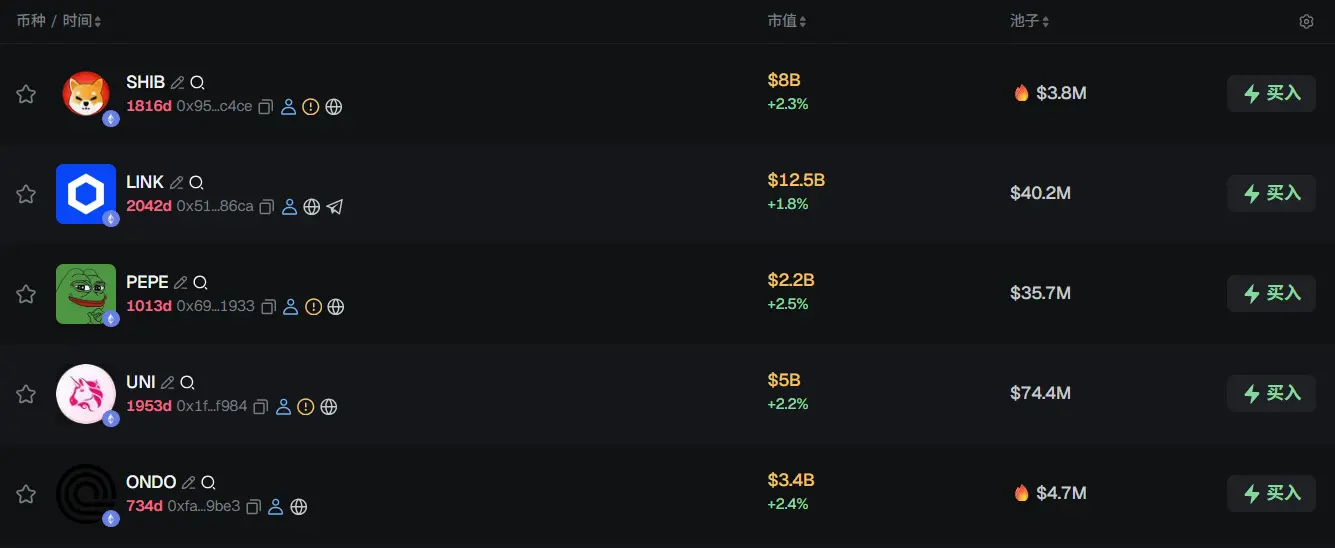
According to meme token tracking and analysis platform GMGN, as of January 22, 09:00,
The top five popular ETH tokens in the past 24 hours are: SHIB, LINK, PEPE, UNI, ONDO
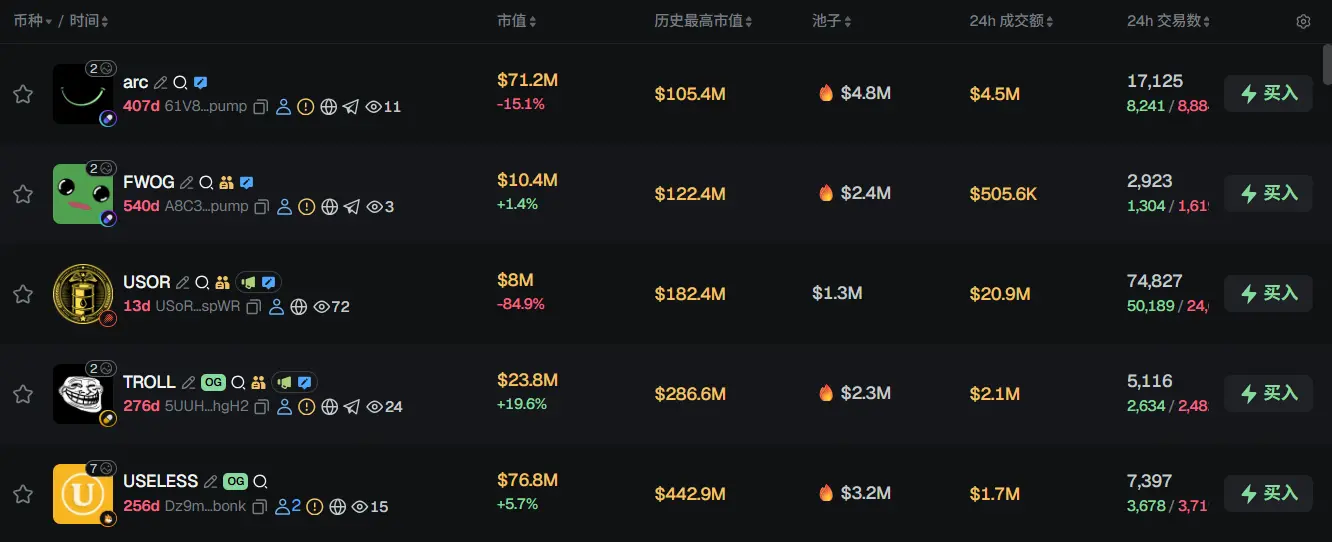
The top five popular Solana tokens in the past 24 hours are: arc, FWOG, USOR, TROLL, USELESS
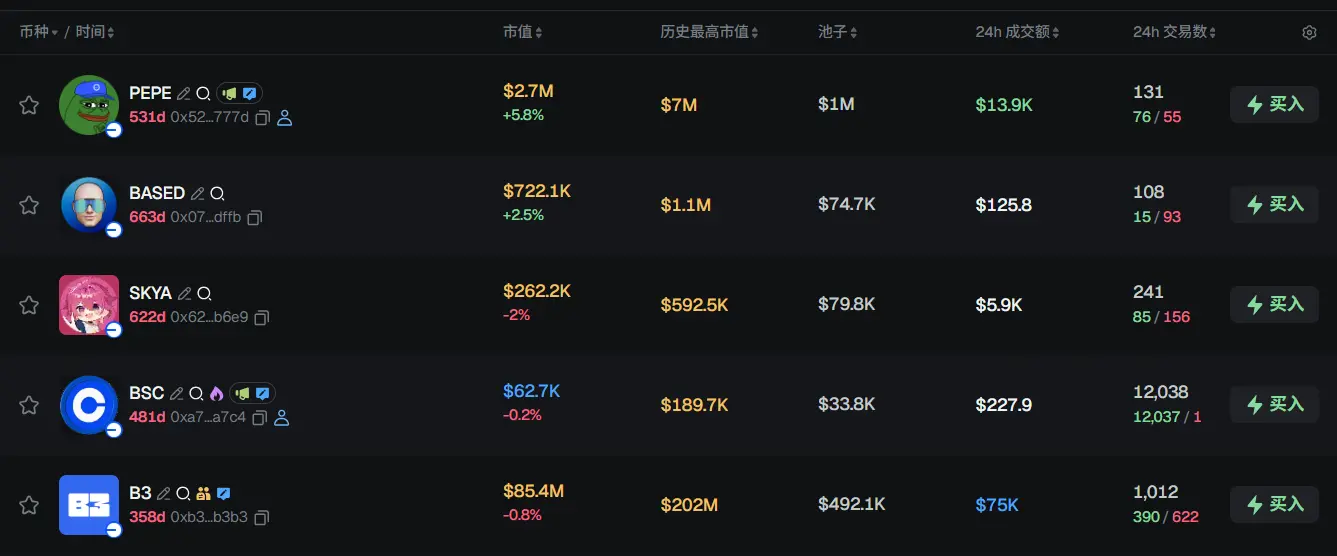
The top five popular Base tokens in the past 24 hours are: PEPE, BASED, SKYA, BSC, B3
What are some interesting articles to read in the past 24 hours?
SKR open for claiming, is Solana Mobile worth paying attention to?
With Solana Mobile officially launching its native token SKR today (21), marking its incentive mechanism has officially shifted from the "random wealth effect" of the first-generation phone Saga to the more scalable and sustainable "mobile ecological economy" transformation of the second-generation Seeker.
This article details the token economic model of SKR and presents a neutral observation on its long-term development: exploring the potential future challenges faced by Solana Mobile and how SKR serves as a "launch lever" to drive the growth of its open platform application ecosystem.
Phoenix is not just an asset packaging protocol, but a complete financial system native to RWA. Faced with the current situation where $17 billion in RWA assets are fragmented, silent, and disconnected from the rapid flow of DeFi on-chain, Phoenix has launched a solution consisting of a unified settlement layer (PUSD) and a smart yield engine, aiming to transform static real-world cash flows into composable DeFi protocols.
Robot Ventures partner: In the era of AI agents, the Turing test is outdated
Every AI researcher I know is now facing the same nightmare: they spent five years building God, only to find that God needs a credit card and permission from Apple to exist.
The model wars are over. Not because anyone won, but because winning and losing no longer matter.
Looking back over the past few years, the so-called traffic explosion has been driven almost entirely by airdrop expectations and speculative games, rather than stemming from genuine communication needs.
SocialFi has overly emphasized "Fi" while neglecting "Social." With the withdrawal of the Lens founding team and the detour of Farcaster, the initial grand narrative of Web3 social "disrupting traditional social giants" has completely fallen apart.
 Risk warning
 Risk warning


Popular articles