Beyond the cycle, defining the future: BIT held a global asset strategy sharing conference in Hong Kong to discuss the new paradigm of Web3 and traditional markets
 This sharing session presents a clear path for the digital asset industry to move towards the next stage from multiple dimensions such as macro cycles, market structure, and institutional evolution: transitioning from narrative-driven to structure-driven, from a single market to cross-market integration, and from experimental exploration to institutionalization and development.
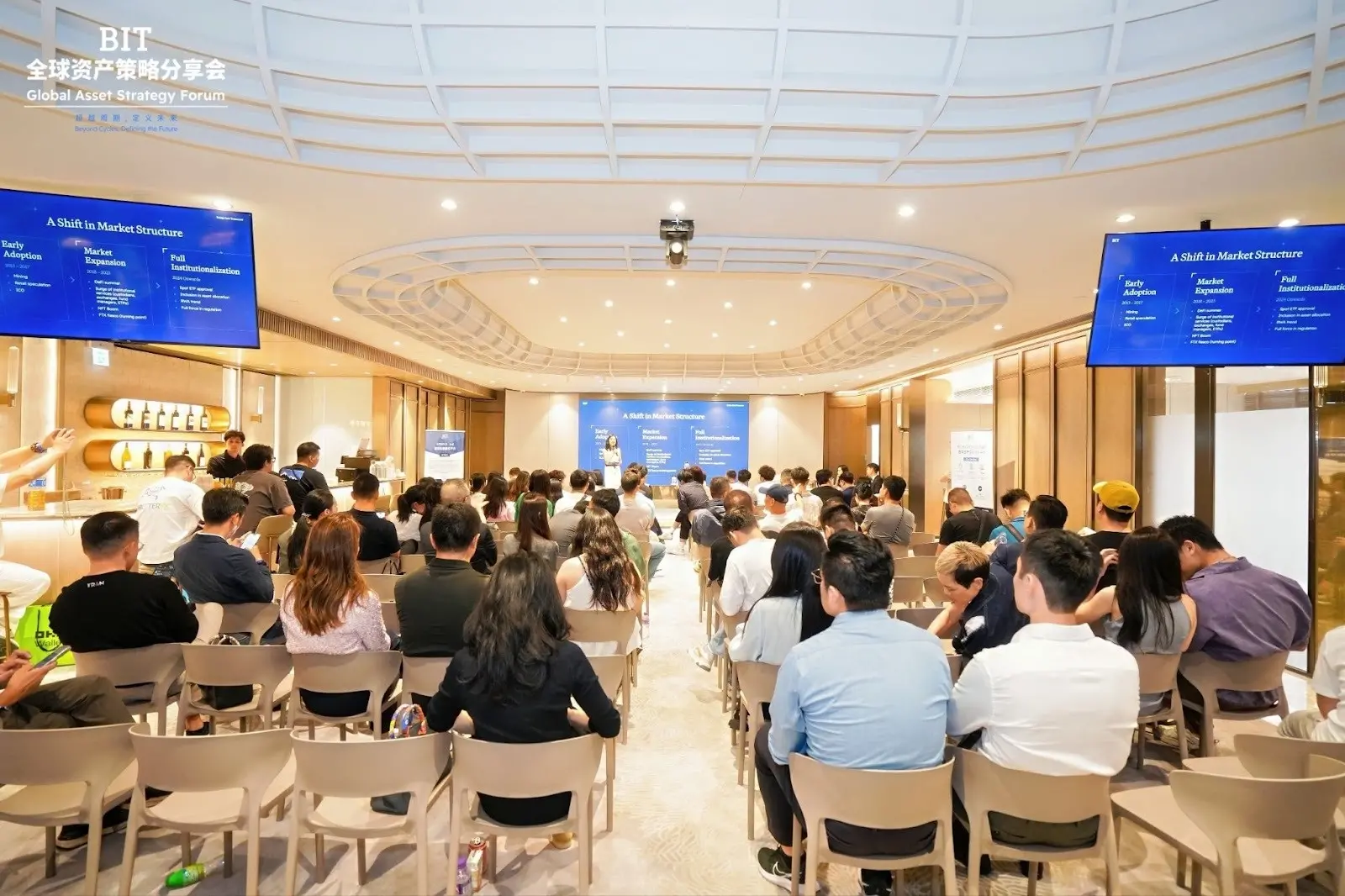
In the context of a continuously differentiated global macro environment and the reshaping of asset allocation logic, the global digital asset financial services group BIT held the "Global Asset Strategy Forum" in Central Hong Kong on April 22, 2026, with the theme "Beyond Cycles, Defining the Future." The event gathered several industry representatives from financial institutions, crypto platforms, and professional service organizations, including BIT Founding Partner & CCO Cynthia Wu, BIT CBO Wendy Sun, Cactus Custody CEO Daniel Lee, BIT Asset Management head Daniel Yu, BIT Brokerage head Elio Cui, and Matrixdock BD head Josh Wu, among others; Colin Wu, the editor-in-chief of Wu said, renowned financial blogger Roger Lee, and guests from institutions such as OSL, JunHe LLP, and Ondo Finance also participated.
Focusing on core topics such as cross-market investment opportunities, regulatory paths for compliant stablecoins, and the roles of gold and silver in the digital economy, several guests engaged in in-depth discussions from different professional perspectives, exploring a new paradigm of asset allocation in the Web3 era, from macro trends to asset structures.
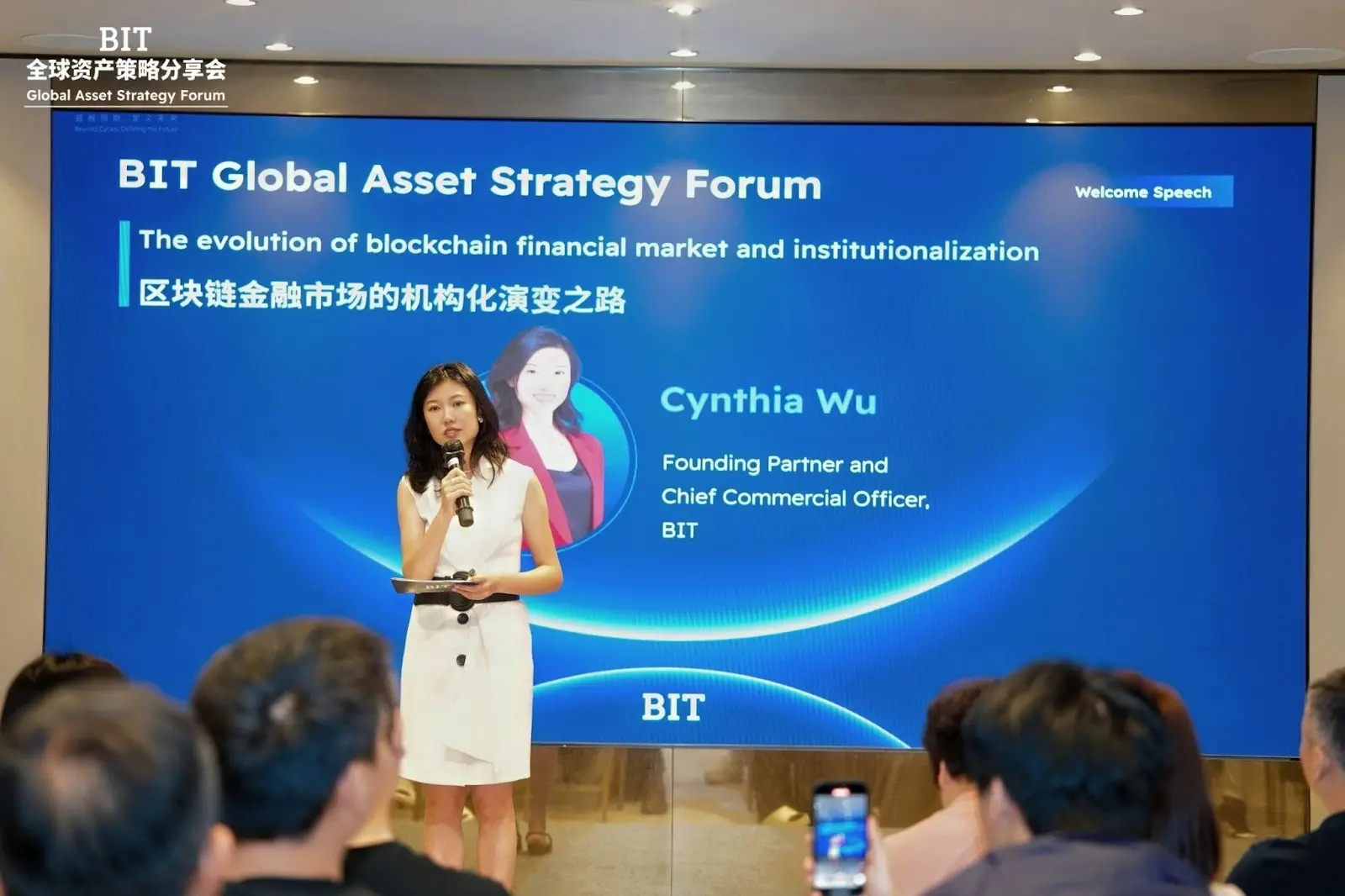
In her opening speech, BIT Founding Partner & CCO Cynthia Wu reviewed the evolution of the blockchain financial market and pointed out that the industry is entering a new stage of comprehensive institutionalization. From the early stage driven by mining and retail speculation, to the expansion phase driven by DeFi and NFTs, and now to the current development stage under the backdrop of gradually clearer regulations, the approval of spot ETFs, and the rise of RWA, digital assets are accelerating their integration into mainstream asset allocation systems.
She emphasized that this transformation is reflected not only in the changes in participants but also in the continuous improvement of infrastructure, risk management, and compliance systems. Compared to the traditional financial asset market, which has a scale of up to $400 trillion, on-chain assets are still in the early stages, and RWA will become an important bridge connecting the two. In this context, building financial infrastructure and asset systems aimed at institutions will be a key direction for the next stage of industry development. At the same time, Cynthia also shared BIT's brand connotation, emphasizing the connection between traditional finance and digital assets based on integrity and trust, jointly constructing a financial system oriented towards the future.
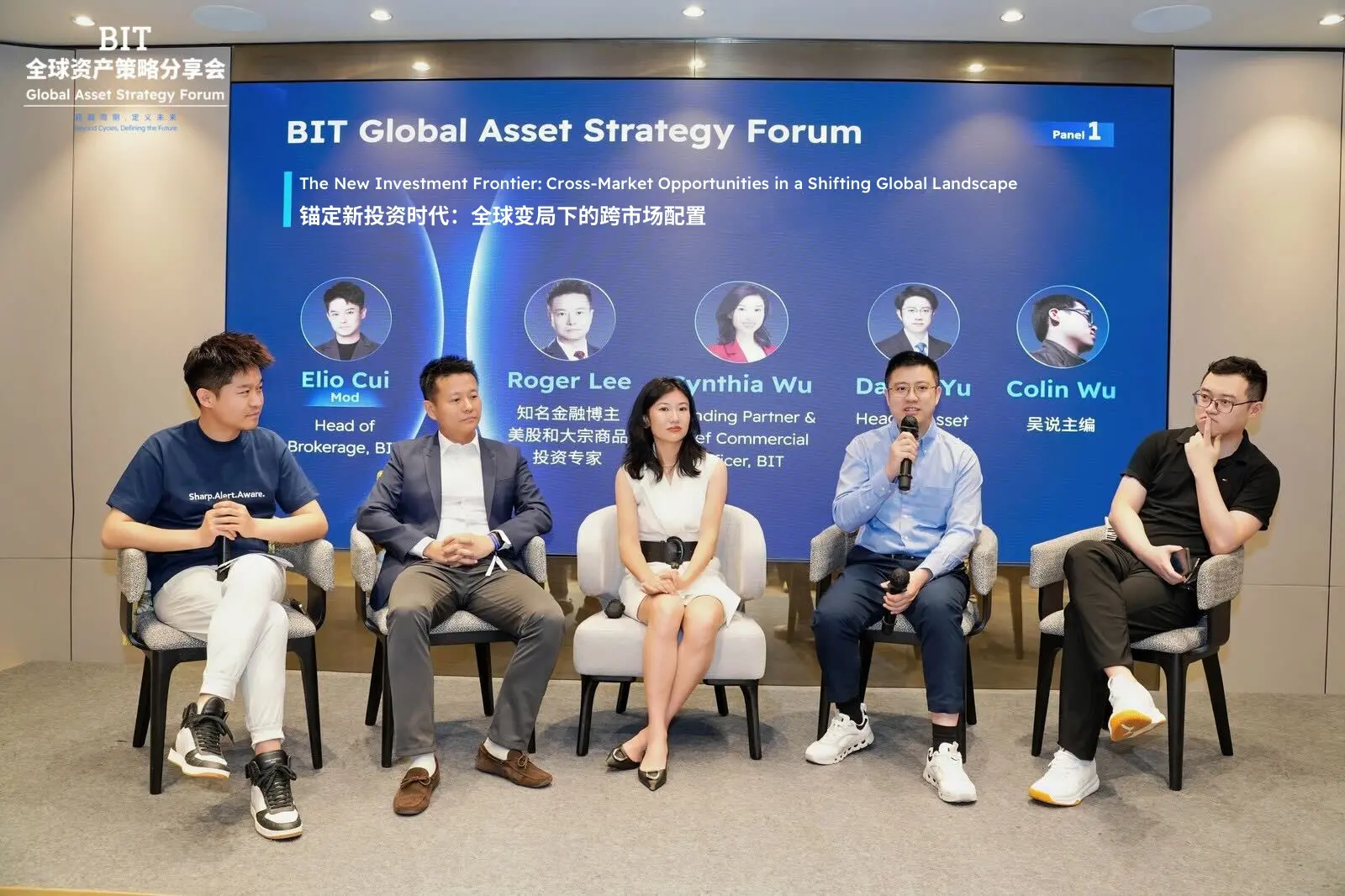
In the first discussion on Web3 and traditional market trends, the guests generally agreed that a significant structural "reversal" is occurring between the two. On one hand, the Web3 market is gradually returning to rationality, shifting towards profit and fundamentals, while the model relying solely on token issuance is cooling down; on the other hand, the traditional stock market, driven by the AI boom, is expanding in valuation and sentiment, with funds and attention continuing to concentrate on U.S. stocks. This trend reflects a phase reallocation of funds: some funds that were originally active in the crypto market are flowing into traditional markets with stronger certainty and industrial narratives. In this context, the demand for cross-market allocation is rising, and traditional assets such as U.S. stocks are gradually becoming an important focus for digital asset investors.
From a macro and industrial perspective, the current market environment also supports risk assets. The U.S. economy is exhibiting a "Goldilocks environment," maintaining a relative balance between growth and inflation, while the commercialization of the AI industry is accelerating, driving rapid growth in corporate revenues and further strengthening market confidence. In contrast, the crypto market remains highly volatile, while the stock market emphasizes industrial chain logic and forward-looking layout capabilities, especially in the AI hardware and infrastructure sectors, where investment opportunities rely more on medium- to long-term judgments. Overall, funds, narratives, and structural opportunities are being redistributed, pushing both markets into a new phase.
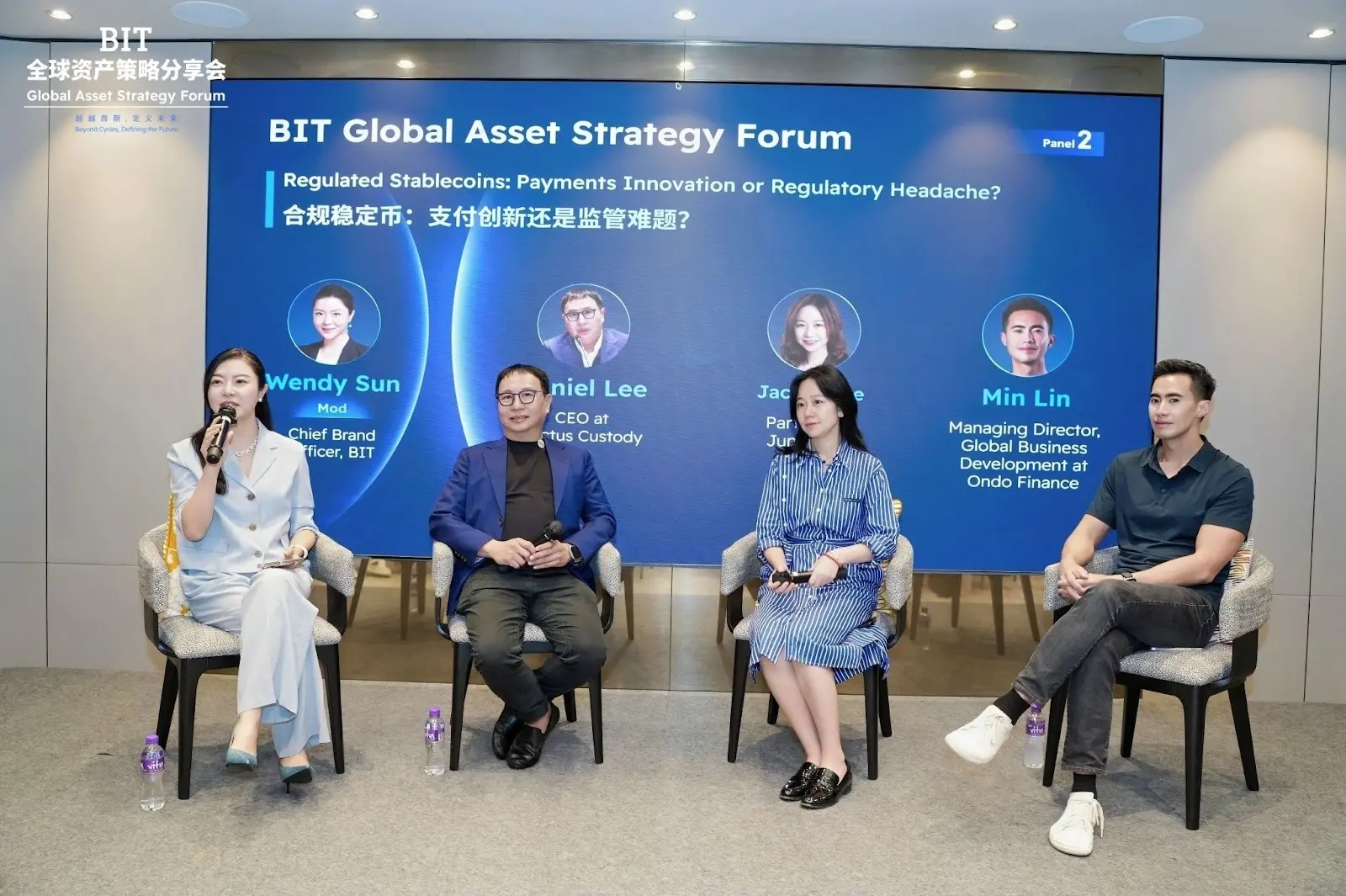
In the roundtable discussion on compliant stablecoins, the guests engaged in in-depth discussions on regulatory paths and trust mechanisms. As major jurisdictions such as the U.S., Hong Kong, the EU, and Singapore gradually advance relevant legislation, stablecoins are being gradually incorporated into clear regulatory frameworks. The attendees generally believe that "compliant stablecoins" need to obtain regulatory recognition or hold licenses in their respective regions and be backed by fiat currency as underlying assets; in contrast, algorithmic stablecoins still face significant uncertainty regarding compliance.
In terms of trust mechanisms, the guests pointed out that the recognition basis for stablecoins is undergoing a transformation—from the so-called "stablecoins" in the early regulatory context to now being formally included in legal expressions, reflecting a change in regulatory attitudes. At the same time, around core issues such as stability, reserve adequacy, and regulatory visibility, the industry is gradually forming a consensus: ensuring payment capabilities through adequate reserves and enhancing transparency and regulatory visibility through on-chain tracking technologies. Overall, the trust basis for stablecoins is shifting from a single credit endorsement to a system supported by assets, structures, and regulation. Wendy Sun also stated that at this stage, compliant stablecoins are beginning to gain a clearer institutional positioning.
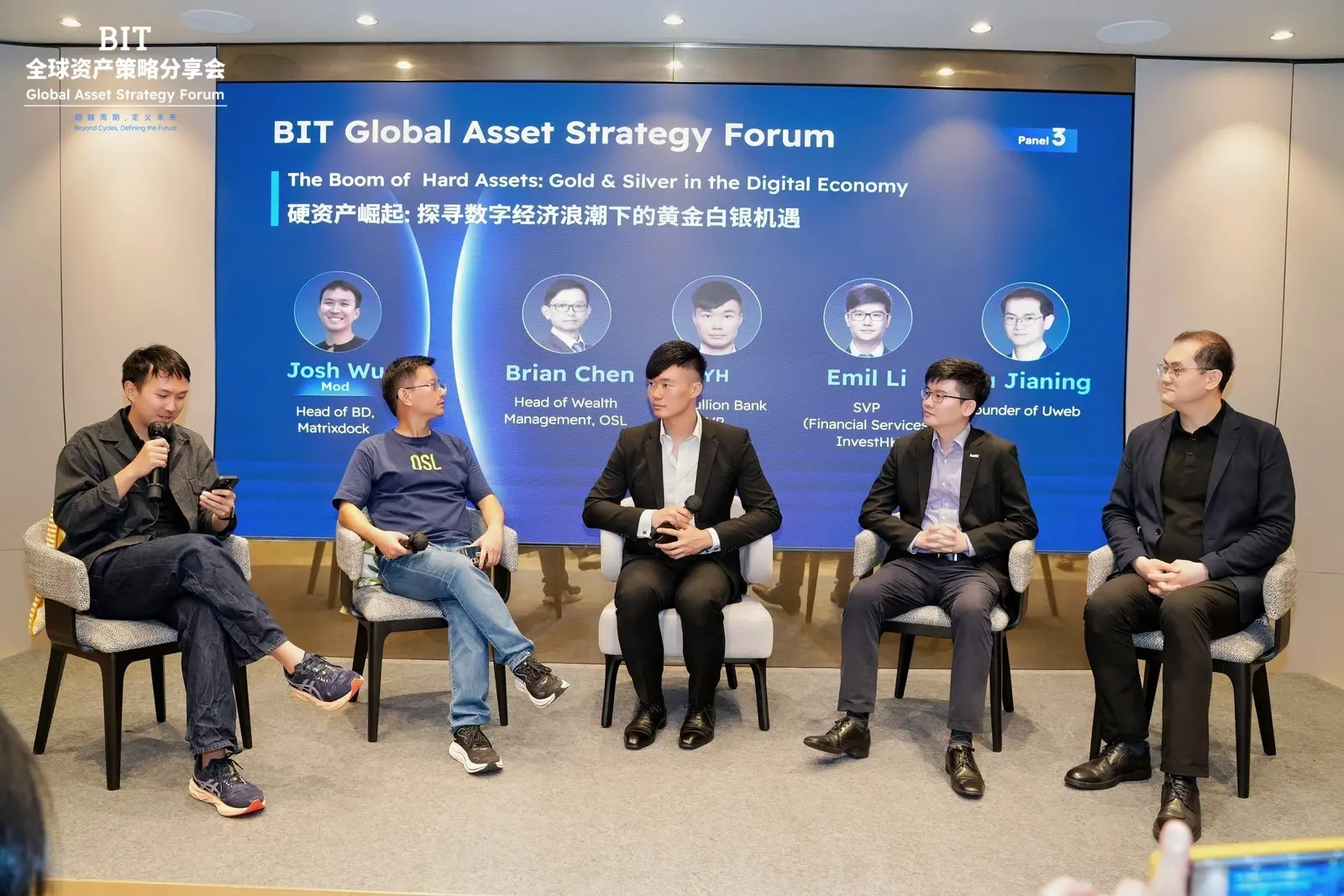
In the RWA thematic discussion, the guests analyzed the price logic and structural characteristics of precious metal assets such as gold. Overall, gold, as a typical low-risk asset, has its price performance highly correlated with the U.S. dollar interest rate cycle and liquidity environment: during the interest rate decline phase, the opportunity cost of holding gold decreases, while a weaker dollar also drives its relative appreciation. Additionally, geopolitical factors, fluctuations in energy prices, and changes in monetary policy expectations can further amplify the volatility and upward momentum of gold prices.
From a supply and demand structure perspective, the supply of precious metals has certain rigidity and is difficult to significantly increase in the short term, while central bank purchases of gold provide long-term support for prices, though they are not the dominant factor in the short term. Overall, the core of pricing assets like gold still lies in macro interest rates and liquidity expectations. In this context, precious metals with "low-risk attributes + macro hedging capabilities" are becoming one of the most representative types of underlying assets in the RWA system.
This sharing session presented a clear path for the digital asset industry to move towards the next stage from multiple dimensions, including macro cycles, market structures, and institutional evolution: from narrative-driven to structure-driven, from single market to cross-market integration, and from experimental exploration to institutionalized and institutional development. In this process, whether it is compliant stablecoins, RWA asset systems, or infrastructure construction aimed at institutions, they are essentially answering the same question: how to build a financial system with a stronger trust foundation.
This is also the core direction emphasized by BIT: based on trust, connecting different markets, assets, and participants, building a long-term sustainable financial structure above cyclical fluctuations.
Disclaimer: This article is only a summary of industry summit viewpoints and macro trend sharing, and does not constitute any investment advice, financial product recommendation, or trading invitation. The market carries uncertainties and various risks, and the viewpoints mentioned in this article are for reference only.
 Risk warning


Popular articles