The next step for Hong Kong's stablecoin is difficult: six-point analysis based on regulatory logic and market structure

 Although the first batch of stablecoin licenses in Hong Kong has been issued, experts analyze that due to six major structural constraints such as strict KYC requirements, regulatory fluctuations, and insufficient motivation from traditional banks for promotion, its future application prospects may face severe challenges.
Author: Fang Hongjin | Co-Chairman of the Hong Kong Blockchain Association
Special Commentary by Non-Small Number Media
Core Argument Overview: After the Hong Kong Monetary Authority issued the first two stablecoin issuance licenses in April 2026, market optimism surged. However, a systematic examination of the regulatory framework from conception to implementation reveals that this stablecoin licensing action will impose six structural constraints on stablecoins issued in Hong Kong: regulatory policy fluctuations, the impact of strict KYC controls, the implications of granting the first licenses to two issuing banks, the dilemma of pegged currencies, competition with the digital Hong Kong dollar, and doubts about the promotional enthusiasm of licensed banks. These six constraints overlap, posing serious challenges to the application prospects of Hong Kong's stablecoins.
1. Introduction
On April 10, 2026, the Hong Kong Monetary Authority announced the granting of the first stablecoin issuer licenses to HSBC Hong Kong and DPoint Financial Technology Limited under the "Stablecoin Ordinance" (Hong Kong Monetary Authority Press Release, April 10, 2026). Thus, the stablecoin licensing system in Hong Kong, which began with the release of a consultation document in December 2023, has finally come to fruition after nearly two and a half years of policy development and approval processes.
Mainstream public opinion has given a positive evaluation of this. However, if we look beyond the promotional narrative and systematically examine the entire process of the regulatory framework from conception to implementation, we can identify a series of deep-seated issues worth noting. This article attempts to systematically analyze the prospects for the promotion and application of stablecoins in Hong Kong from six dimensions: the consistency of regulatory standards, the rationality of compliance requirements, the fairness of license issuance, the market space for currency selection, the competitive landscape between public and private currencies, and the promotional motivation of licensed banks.
2. Continuous Adjustments to Preset Licensing Standards: The Stability of Regulatory Policies
A predictable and stable regulatory environment is an important prerequisite for financial innovation. Examining the evolution of the stablecoin regulatory policies issued by Hong Kong's financial regulatory authorities reveals that the relevant standards have undergone multiple significant adjustments.
2.1 Is Participation in the "Sandbox" Program Meaningful?
In March 2024, the Monetary Authority launched a "sandbox testing" program for stablecoin issuance, aimed at allowing institutions interested in applying for stablecoin issuance in Hong Kong to test their operational plans and engage in two-way communication regarding proposed regulatory requirements. In July of the same year, the Monetary Authority announced the first batch of sandbox participants: JD Coin Chain Technology (Hong Kong) Limited, Yuan Coin Innovation Technology Limited, and a joint application institution formed by Standard Chartered Bank (Hong Kong), Animoca Brands, and Hong Kong Telecom (Monetary Authority, July 18, 2024), covering a diverse array of internet technology companies, crypto-native entrepreneurs, and traditional banks.
Although Monetary Authority officials have repeatedly stated, "Even if an institution has entered the 'sandbox,' it does not necessarily mean it will obtain a license," it was still interpreted by the market as an indication that participation in the "sandbox testing" would facilitate smoother license approval, despite rumors that the "sandbox testing" costs as much as 50 million HKD.
However, when licenses were officially issued in April 2026, only DPoint Financial Technology (the joint venture led by Standard Chartered Bank) among the "sandbox" testing participants ultimately received a license. Initially encouraging prospective applicants to participate actively, the exclusion of the other two participants from obtaining licenses indicates a lack of effective consistency between the regulatory authority's promotion of the sandbox program and the final licensing decision.
2.2 "Reduction" and "Increase" of Capital Requirements
The consultation document released in December 2023 suggested that the minimum paid-up capital for fiat stablecoin issuers should be 25 million HKD or 2% of the circulating fiat stablecoin's face value, whichever is higher (consultation document, December 2023). This design means that the more successful the stablecoin issuance and the larger the circulation, the higher the capital requirement for the issuer—creating a "success tax" mechanism from a business perspective.
In the consultation summary released in July 2024, this ratio was adjusted to 1% of the face value. In the final text of the "Stablecoin Ordinance" that took effect in August 2025, this floating mechanism linked to circulation was completely removed, and it was ultimately clarified that only a minimum paid-up capital of 25 million HKD is required. On the surface, this appears to be an adjustment that "reduces the burden" on the market.
However, it is important to note that while the explicit capital threshold has been lowered, regulators have set substantial operational cost requirements through other channels. The ordinance requires licensees to demonstrate that they have at least 12 months of continuous operational funding reserves and meet additional liquidity asset protection requirements. Considering the comprehensive costs associated with compliance systems, on-chain monitoring, anti-money laundering frameworks, etc., some analyses estimate that the construction and operational investment for the entire infrastructure could reach tens of millions of dollars.
The reduction in explicit entry barriers is largely offset by the increase in implicit costs, fundamentally eliminating the possibility for some startups and medium-sized enterprises that were initially prepared to actively apply for licenses.
2.3 Lack of Preemptive Consideration of Mainland Policy Impacts
According to multiple media reports, some Chinese-funded institutions participating in the stablecoin license application received "window guidance" from relevant regulatory authorities in the mainland during the application process, requesting them to suspend their participation in the Hong Kong stablecoin license application (ChainCatcher, April 14, 2026). In February 2026, the People's Bank of China and eight other departments further reiterated: without approval, no stablecoins pegged to the RMB may be issued abroad.
The Hong Kong Monetary Authority did not disclose the complete list of the 36 companies that submitted formal applications, but external estimates suggest that nearly half of them are Chinese state-owned or private enterprises based in Hong Kong, with technology firms like Ant Group and JD.com being the most promising potential applicants due to their rich stablecoin application scenarios. Their collective absence has structurally compressed the pool of optional applicants for the Monetary Authority.
From publicly available information, it appears that the Hong Kong regulatory authorities may not have left sufficient room for adjustment regarding the impact of policies from central financial regulatory departments when initially formulating the regulatory rules for stablecoin issuance.
2.4 Summary
Considering the above changes comprehensively, the regulatory framework for stablecoins in Hong Kong has undergone passive adjustments over the past two years in terms of entry standards and market structure. The challenges faced by the regulatory system during its advancement stem, to some extent, from insufficient anticipation of multiple factors and path dependence in the decision-making process. This issue will also impact the promotion and application of stablecoins in Hong Kong moving forward.
3. The Boundaries of KYC Requirements: The Institutional Costs of "Wallet-Level Real Name"
Three days before the "Stablecoin Ordinance" officially took effect, on July 29, 2025, the Hong Kong Monetary Authority released a series of accompanying regulatory documents that formally proposed for the first time that almost every digital wallet through which stablecoins issued in Hong Kong flow must undergo KYC. This rare and stringent requirement left most institutions that were prepared to submit applications stunned, triggering widespread discussion among market participants and professional researchers.
3.1 Specific Content of the Rules
According to relevant compliance guidelines, when a single or cumulative transfer amount reaches or exceeds 8,000 HKD, at least one party among the issuer, exchange, or bank must complete customer due diligence and verify control over self-custody wallets. This means that non-custodial wallet users holding compliant HKD stablecoins must also go through identity verification procedures when certain conditions are met.
From an international comparative perspective, Bo Tang, Deputy Director of the Financial Research Institute at Hong Kong University of Science and Technology, pointed out that this requirement is "a bit too strict and not conducive to user acquisition." He further analyzed that if a company uses a Hong Kong-regulated stablecoin for cross-border payments, the overseas customer receiving the stablecoin would need to open an account in Hong Kong to pass the KYC check. Local cryptocurrency trader Ricky Xie noted that this requirement is not just for users holding accounts with stablecoin issuers to complete KYC—rather, it requires all stablecoin holders to undergo verification, which could lead to a mass exit of overseas users.

3.2 Existence and Limitations of Alternative Compliance Paths
It is worth noting that some technical compliance analyses indicate that the Monetary Authority's "Anti-Money Laundering Guidelines" leave an alternative path: if the issuer can demonstrate to regulators that it has established effective blockchain analysis tools, address monitoring systems, and risk assessment mechanisms, it may be exempted from the requirement for individual KYC for non-customer token holders under certain conditions. In other words, the KYC obligation is not absolutely rigid.
However, this alternative path has extremely high requirements for compliance capabilities. For non-bank institutions lacking bank-level risk control infrastructure, establishing an on-chain risk control system that satisfies the Monetary Authority means significant additional technical investment and regulatory communication costs. Senior compliance lawyer Wu Wenqian pointed out in related analyses that the Monetary Authority will approve applications based on the business model submitted by the applicant, and if the applicant cannot demonstrate sufficient anti-money laundering and counter-terrorism financing capabilities, the license application will face substantial restrictions. This indicates that while the alternative path exists on paper, it is practically unrealistic for most non-bank institutions.
3.3 Horizontal Comparison of Global Regulatory Requirements
Globally, countries and regions that have already established regulatory norms for stablecoin issuance and circulation generally require users to undergo KYC when converting fiat cash into stablecoins and redeeming stablecoins for fiat cash. However, the requirement that digital wallets receiving, holding, and transferring stablecoins must undergo KYC is likely unique to Hong Kong.
Stablecoins circulate freely across regions on-chain, and a wallet holder may receive varying amounts of stablecoins from different people and may transfer them in batches to others. Most digital wallets in use on the market have not undergone strict KYC, and users' willingness to voluntarily undergo KYC is also not strong.
This regulatory requirement from Hong Kong effectively excludes users outside of formal institutions from the use of Hong Kong stablecoins.
3.4 Regulatory Considerations
From a deeper perspective, extending KYC obligations to the wallet level reflects a regulatory approach that parallelly imports traditional bank risk control logic into decentralized networks. This approach is theoretically understandable—anti-money laundering and counter-terrorism financing are non-negotiable bottom lines for Hong Kong's financial regulation.
The question is: when the usage threshold of an innovative payment tool aligns closely with that of traditional bank accounts, can its differentiated value still be effectively realized? Is there a better balance point in the regulatory trade-off between safety and efficiency? These questions have not yet received sufficient public response within the current framework. Of course, the regulatory requirement announced on July 29 also early hinted that the first batch of licensed institutions would likely only be large banks.
4. Licensing Thresholds and Fair Competition: A Structural Issue
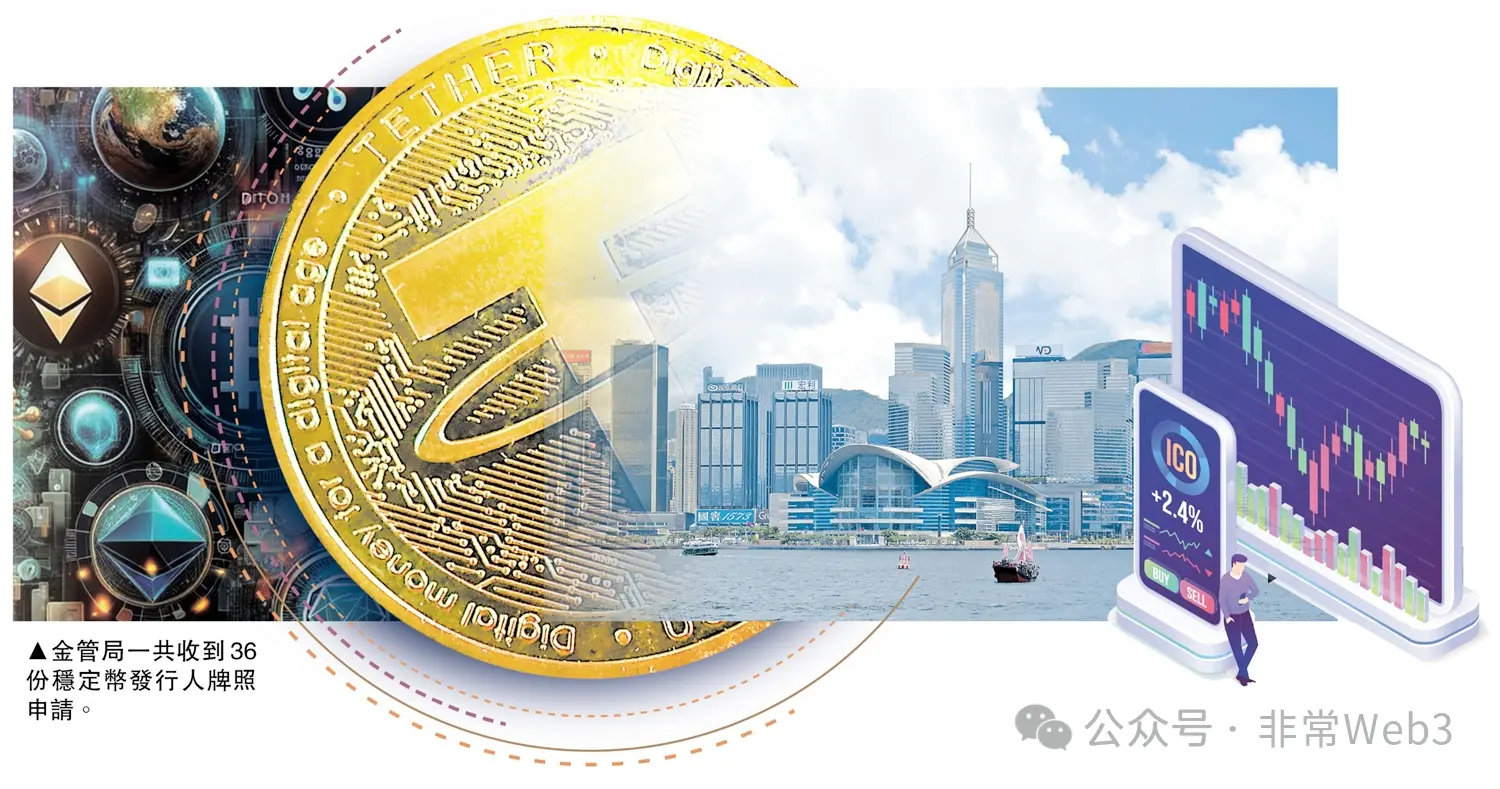
Among the 36 institutions that submitted applications, only two British-funded issuing banks were approved, raising a question worth discussing: what does this selection result mean from the perspective of industry competition structure? Will it create unfairness for other banks and even non-bank stablecoin issuing institutions?
4.1 The Deposit Substitution Effect of Stablecoins
Stablecoins, as a digital payment and value storage tool, have a high degree of substitutability with bank deposits in function. If licensed stablecoins are widely accepted, the public's behavior of converting bank deposits into stablecoins will lead to the equivalent fiat reserves supporting the stablecoins flowing into the accounts of the issuers or their custodial banks. From an industry perspective, this means that licensed banks may siphon off deposits from other unlicensed banks through stablecoin business.
HSBC and Standard Chartered, both issuing banks in Hong Kong and the first batch of licensed stablecoin issuers, have a particularly pronounced structural advantage in this regard. After obtaining the license, HSBC has already announced plans to launch an HKD stablecoin in the second half of 2026 and integrate it into its "PayMe" and "Mobile Wealth Management App." When stablecoin services are embedded into Hong Kong's most mainstream mobile payment ecosystem, licensed banks will have a significant advantage in attracting public funds compared to unlicensed banks.
S&P Global Ratings also pointed out in its analysis that the first batch of licensed institutions may gain significant competitive advantages over other banks, and other banks that cannot also obtain licenses to issue stablecoins will be unable to win in such competition.
Unfortunately, it is absolutely impossible for Hong Kong regulatory authorities to continue prioritizing other banks in the few licenses to be approved in the future. Otherwise, why not simply declare that licenses will only be issued to bank applicants?
4.2 The Dilemma of Threshold Standards and Subsequent Admission
The first batch of licenses was granted to the two institutions with the strongest compliance capabilities and the most substantial capital strength in Hong Kong. This objectively established an extremely high reference threshold for stablecoin issuance. Under the existing standards, almost all non-bank applicant institutions find it difficult to match HSBC and Standard Chartered in terms of compliance infrastructure, capital scale, and management resource allocation.
This creates a dilemma for subsequent license issuance: maintaining the existing high standards will result in a very limited range of market participants, potentially weakening the industry competition and innovation vitality of Hong Kong's stablecoins; lowering the entry threshold may raise questions about the consistency of regulatory standards—was the rationale for initially blocking many applicant institutions itself not solid enough?
After the issuance of the licenses, Monetary Authority Vice President Chen Weimin stated that the timeline for the second batch of licenses has not yet been determined and needs to be "assessed based on the operational situation of the first two," and that the total number of future licenses will be very limited. This statement implies that subsequent applicants face uncertainty not only about "when" but also about "what standards," which is precisely the precondition that market entities need to clarify when making compliance investment decisions.
5. Structural Constraints on Currency Selection
Even temporarily setting aside the question of "who issues," the question of "what currency to issue" also presents structural constraints that deserve careful analysis.
For stablecoins pegged to fiat currencies issued in Hong Kong, the only realistic options are the HKD, USD, and offshore RMB. Although the regulatory rules introduced in Hong Kong do not prohibit the issuance of stablecoins pegged to other fiat currencies, the likelihood of those fiat currencies being pegged and issued by private enterprises in Hong Kong and circulating in international markets is almost zero.
5.1 The "Secondary Exchange" Dilemma of HKD Stablecoins
The HKD is pegged to the USD through a linked exchange rate system. This means that HKD-pegged stablecoins are essentially indirectly pegged to the USD through the linked exchange rate mechanism. For overseas users, if the HKD stablecoins they receive are not used for trade or investment in Hong Kong, they must exchange them for USD stablecoins or other assets to continue using them. This secondary exchange not only increases the time cost of operations but also incurs foreign exchange fees, which will undoubtedly greatly limit the usage space of HKD stablecoins.
The use cases of the HKD in the global foreign exchange market are relatively limited, primarily concentrated in local Hong Kong and trade settlements related to the mainland. This fundamental condition determines that the overseas market acceptance and circulation scale of HKD stablecoins have structural upper limits.

5.2 Competitive Pressure of USD Stablecoins
Hong Kong's regulatory framework also allows licensed institutions to issue USD stablecoins. However, the competitive landscape of the USD stablecoin market has become highly concentrated. As of March 2026, USDT accounted for approximately 59%-65% of the global stablecoin market, while USDC accounted for about 21%-25%, together controlling approximately 80%-85% of the market share.
In such a high market concentration, a new USD stablecoin faces enormous challenges in attracting sufficient liquidity with a "compliance" label issued by banks. For comparison, we can refer to the USD stablecoin PYUSD issued by PayPal. Despite PayPal having a global user base of over 400 million, PYUSD has not yet surpassed a market cap of 1 billion USD since its launch in August 2023.
Thus, a USD stablecoin issued by a Hong Kong institution lacks the substitutability against existing USD stablecoins, especially USDC, which is also compliant in the US. This means that when Hong Kong enterprises pay overseas partners with USD stablecoins issued in Hong Kong, the counterparties will likely need to exchange them for USDC or USDT to continue circulation, incurring transaction fees and creating unnecessary complications.
5.3 Restrictions on Issuing Offshore RMB Stablecoins
As for issuing stablecoins pegged to offshore RMB, although the regulatory rules announced in Hong Kong do not prohibit this, if this action does not receive approval from the issuer of the RMB—the People's Bank of China—no large banks in Hong Kong (regardless of whether they are Chinese-funded) would dare to undertake custodial business.
In February 2026, the People's Bank of China and eight other departments reiterated that without approval, no stablecoins pegged to the RMB may be issued abroad. Media observations have noted that the Hong Kong Monetary Authority has also made it clear that unless approved by relevant mainland departments, the issuance of stablecoins in Hong Kong must not involve assets pegged to the RMB.
In summary, the current constraints faced by licensed stablecoin issuers in Hong Kong can be summarized as follows: the policy channel for offshore RMB stablecoins is temporarily closed, the circulation and usage space for HKD stablecoins are limited, and USD stablecoins must contend with the strong first-mover barriers established by USDT/USDC. The combination of these three constraints constitutes a structural issue that needs to be taken seriously.

6. The Battle Between Public and Private Digital Currencies
As early as October 2021, the Hong Kong Monetary Authority released a technical white paper on the issuance of a digital Hong Kong dollar (CBDC) at the retail level. Two years later, in December 2023, the Hong Kong regulatory authorities published the first legislative proposal consultation document regarding the regulatory system for stablecoin issuers.
6.1 Two Types of Digital Currencies, Two Types of Credit Endorsement
Monetary Authority Vice President Li Dazhi clearly categorizes digital currencies into two types: the digital Hong Kong dollar (e-HKD) is classified as "public currency," issued by the government with zero credit risk; stablecoins are classified as "private currency," with risks borne by the market. This classification itself delineates different credit tiers for the two types of digital currencies.
In retail payment scenarios, if the functions of e-HKD and licensed stablecoins overlap significantly, it is easy to predict the trust inclination of ordinary citizens when faced with the choice between government endorsement and commercial bank endorsement.
6.2 The Time Lag in Policy Rhythm
According to public statements from the Monetary Authority, the authorities will prioritize promoting the application of e-HKD at the wholesale level, while the preparation for retail application of e-HKD will be completed in the first half of 2026, with future expansion "depending on international developments, the latest technologies, and market demand." In contrast, the retail application path for licensed stablecoins has been left for the market to explore on its own—"the actual usage still needs to be determined by commercial institutions."
This proactive advancement and delegation to the market create a time lag that may lead to a "clear distinction" in the practical relationship between the two: when the government-backed e-HKD enters the retail payment market in the future, the development space for licensed stablecoins in the retail sector will logically be extremely limited.
Thus, while facing limited space for international circulation payments, Hong Kong stablecoins also encounter competitive pressure from the digital Hong Kong dollar in the local retail market, posing significant challenges for licensed issuers of Hong Kong stablecoins.
7. The Awkward Relationship Between Traditional Banks and Stablecoins
Of course, for HSBC and Standard Chartered, which have already obtained licenses, the pressures and challenges mentioned above may not be critically important.
Stablecoins are products of blockchain applications based on decentralized principles, and their birth, struggle for survival, and eventual growth have all been in opposition to the monopoly and inefficiency of traditional financial institutions. Traditional financial institutions, represented by banks, have long viewed stablecoins as heretical, not only suppressing them in the market through their monopolistic positions but also lobbying governments worldwide to ban them. This situation has only changed dramatically in the past two years, and the development trajectory and reasons for this change could be summarized in another article.
As a new payment tool aimed at improving payment efficiency and reducing transaction costs, the core value of stablecoins lies precisely in optimizing and replacing the traditional bank intermediary model. In other words, stablecoins are essentially competing for the traditional banks' bread and butter. Handing over an innovation that could potentially cannibalize its core business to the main beneficiaries of that business presents a very clear contradiction in commercial logic.
7.1 JPMorgan's JPM Coin: A Reference Point
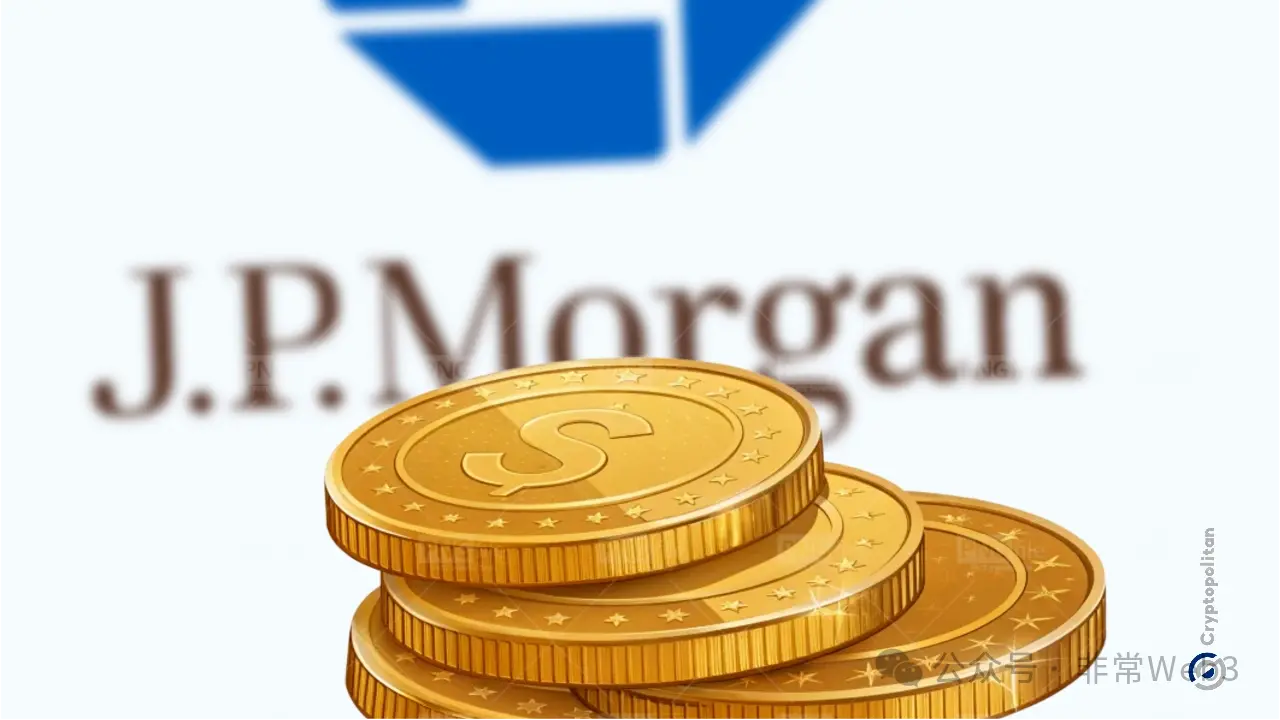
JPMorgan launched JPM Coin in 2019, positioning it as a B2B settlement tool for institutional clients. More than six years later, JPM Coin primarily operates on JPMorgan's permissioned private blockchain, targeting a very limited range of strictly vetted institutional clients. Between 2025 and 2026, JPMorgan began to expand JPM Coin to external networks like the Canton Network, but from publicly available information, its daily trading volume is only about 3 billion USD, which is far from its overall asset-liability scale of tens of trillions of dollars.
More importantly, JPM Coin was designed from the outset as a closed, permissioned settlement efficiency tool serving its own institutional clients, and it has never been positioned as an open stablecoin competing with USDT or USDC in the market. In other words, even the world's largest bank has only nurtured its stablecoin project into an auxiliary institutional settlement tool over six years, rather than a widely penetrating payment product.
7.2 JPMorgan's Assessment: "In the Short to Medium Term, It Cannot Bring Meaningful Revenue Contribution"
This logic is also confirmed in JPMorgan's own analysis. After HSBC and Standard Chartered were approved, JPMorgan released a research report stating that while the stablecoin business has positive support for the stock prices of the two banks in terms of sentiment, "in the short to medium term, it cannot bring meaningful revenue contribution." The report also specifically pointed out that HSBC and Standard Chartered, as issuing banks in Hong Kong, are expected to work closely with the Monetary Authority "to minimize any disruption to stablecoin circulation under the existing system" (JPMorgan Research Report, cited by NetEase Finance, April 13, 2026).
The same institution simultaneously plays the roles of a pioneer in global bank-related stablecoins and a peer commentator for HSBC and Standard Chartered. Its conclusion that "in the short to medium term, it cannot bring meaningful revenue contribution" reflects, to some extent, the true assessment within the banking industry regarding this business.
7.3 The Suppression of Innovative Business Models by Traditional Profit Structures
HSBC's global payments and cash management business is one of the most important components of its revenue structure. If stablecoins become widely adopted, the low-cost nature of on-chain payments will inevitably compress banks' cross-border remittance fees and foreign exchange trading spreads. This is not a theoretical deduction but a basic logic that has been repeatedly validated in the cryptocurrency industry over more than a decade of development.
Some local Hong Kong media have commented that since HSBC and Standard Chartered are both issuing banks and licensed stablecoin issuers, it can be expected that "they will not fight against each other"—their promotional focus will still be on areas like cross-border payments that do not directly compete with their core deposit business (Hong Kong Economic Journal column, cited by NetEase Finance, April 22, 2026). The application of stablecoins in traditional retail payments and deposit absorption is unlikely to be prioritized.
7.4 Summary
In summary, handing over a technological innovation that could disrupt traditional business models to the main beneficiaries of that model for promotion presents contradictions both in logical inference and historical reference. The development strategies of licensed banks are more likely to be dominated by control, defensive participation, and exclusion of other competitors, rather than driven by innovation and seeking to maximize the scale of promotional applications.

8. Conclusion
This article systematically examines the main challenges that licensed stablecoin issuers will face under the regulatory framework for stablecoins in Hong Kong from six dimensions. These issues are not isolated but are interrelated and overlapping:
First, regulatory standards have undergone multiple adjustments in a short period, from the misalignment between the sandbox list and the final licensees, to the "explicit reduction and implicit increase" of capital requirements, and the lack of preemptive consideration of the impact of mainland policies, reflecting insufficient meticulous planning in the institutional design process and a need for improved predictability.
Second, extending KYC requirements to the wallet level, while having positive implications for anti-money laundering goals, creates tension between the high costs and technical barriers of implementation and the original intention of stablecoins as innovative payment tools, also limiting the participation possibilities of other non-bank institutions.
Third, the approval of only two institutions with issuing bank backgrounds in the first batch has objectively created structural competitive asymmetry—licensed banks can absorb deposits from other banks through stablecoins, while the high threshold for subsequent licenses means this competitive landscape is unlikely to change in the short term.
Fourth, HKD stablecoins are constrained by the linked exchange rate system and local circulation scope, USD stablecoins face overwhelming first-mover competitive advantages from USDT/USDC, and the policy for offshore RMB stablecoins is restricted—each of these three currency options presents significant constraints.
Fifth, the pace of promoting the digital Hong Kong dollar (e-HKD) and its layout for retail applications may lead to a future scenario where "public currency" and "private currency" do not coexist equally but where the former clearly dominates retail payments, adversely affecting the localized application promotion of Hong Kong stablecoins.
Sixth, banks themselves lack motivation for new businesses that disrupt their traditional profit models, and the participation of licensed institutions is more likely to be defensive, cost-center-oriented, and even intentionally controlling development, rather than genuinely aiming to actively promote stablecoin applications and ecosystem building.
Stablecoins are the lifeblood of the crypto industry and one of the most important infrastructures in the Web 3.0 world. For Hong Kong to become a global Web 3.0 hub, it cannot bypass stablecoins as a core pillar. The efforts made by the current SAR government to promote the development of the digital industry are evident—taking the lead in establishing the world's clearest stablecoin licensing system and launching a legal framework to promote the standardized development of the virtual asset industry, these efforts have given Hong Kong a head start in the global digital finance competition. Now, the policies and regulations have clearly prohibited unlicensed stablecoins from circulating in Hong Kong, which is a clear threshold and a serious commitment. The next task is equally clear: the threshold has been set, the regulatory bottom line has been defined, and what lies ahead for regulatory authorities and licensed enterprises is not a question of "whether to do" but "how to grow and strengthen." Let the locally compliant stablecoins in Hong Kong truly develop and grow, serving not only local cross-border payment scenarios but also entering the international settlement network, becoming reliable digital assets recognized by the global market—this is not only a requirement for the first batch of licensed institutions but also a necessary question for Hong Kong to fulfill its commitment to building a global Web 3.0 hub.
The next step for Hong Kong's stablecoins will not be easy, but having set out, we must reach our destination!
Completed in April 2026 in Hong Kong!
Appendix A: Quick Reference to Core Issues (Q&A)
Q1: Why did only 2 out of 36 institutions applying for stablecoin licenses get approved?
A1: On April 10, 2026, the Hong Kong Monetary Authority granted the first licenses only to HSBC and DPoint Financial Technology, with an approval rate of about 5.6%. The core reasons are threefold: first, regulatory standards underwent multiple adjustments over two years, transitioning from diverse participation in the sandbox phase to the final determination that only bank-level institutions could meet all compliance requirements; second, the sudden clarification of wallet-level KYC requirements on July 29, 2025, effectively blocked most non-bank institutions; third, the "window guidance" from mainland regulators caused Chinese-funded institutions like Ant Group and JD.com to collectively withdraw their applications, structurally compressing the pool of applicants. Ultimately, only two applicants with bank backgrounds met all conditions within the available range.
Q2: Why did the "wallet-level KYC" requirement provoke a strong reaction from the industry?
A2: On July 29, 2025, just three days before the "Stablecoin Ordinance" took effect, the Monetary Authority first clarified in the accompanying guidelines that licensed stablecoins could only be transferred to wallet addresses that had passed KYC verification, and transfers reaching 8,000 HKD would require identity verification. This was described by international media such as Reuters as "stricter than the US GENIUS Act." Bo Tang, Deputy Director of the Financial Research Institute at HKUST, pointed out that this "is not conducive to user acquisition"; local traders warned that overseas users might collectively exit. Although the guidelines left an alternative compliance path (using on-chain risk control systems instead of individual KYC), the construction costs are extremely high for non-bank institutions, making it almost unfeasible in practice.
Q3: Is it fair that the first batch of licenses was only issued to two British-funded issuing banks?
A3: Stablecoins have a clear deposit substitution effect—when users convert bank deposits into stablecoins, the fiat reserves supporting the stablecoins will flow into the accounts of the issuers or their custodial banks. HSBC has announced plans to integrate stablecoins into its PayMe and Mobile Wealth Management App, meaning that licensed banks can absorb deposits from other banks through stablecoin services. S&P Global Ratings has also pointed out that the first batch of licensed institutions may gain significant competitive advantages over other banks. Moreover, Vice President Chen Weimin of the Monetary Authority has clearly stated that the timeline for the second batch of licenses is uncertain and the total number will be very limited, meaning that unlicensed banks will be at a structural competitive disadvantage for a considerable time.
Q4: What difficulties do Hong Kong stablecoins face in terms of currency selection?
A4: They face threefold constraints. First, HKD stablecoins are constrained by the linked exchange rate system—since the HKD itself is pegged to the USD, HKD stablecoins are essentially "stablecoins of USD stablecoins," leading to secondary exchange costs and complications for overseas users, limiting circulation to a narrow range of businesses with Hong Kong. Second, the global USD stablecoin market is dominated by USDT (approximately 59%-65%) and USDC (approximately 21%-25%), making it difficult for new entrants to shake their network effects, as evidenced by PayPal's PYUSD. Third, in February 2026, the People's Bank of China and eight departments reiterated that stablecoins pegged to the RMB cannot be issued abroad without approval, effectively locking the path for issuing offshore RMB stablecoins.
Q5: After the launch of the digital Hong Kong dollar (e-HKD), is there still space for licensed stablecoins?
A5: The space is extremely limited. The Monetary Authority published the e-HKD technical white paper as early as 2021, while the legislative consultation for stablecoins only began at the end of 2023, giving e-HKD a first-mover advantage from the policy origin. Vice President Li Dazhi has defined e-HKD as "public currency" with zero credit risk, while stablecoins are classified as "private currency" with risks borne by the market, establishing a clear hierarchy in credit levels. The authorities have explicitly prioritized the promotion of e-HKD, leaving the retail application of stablecoins to the market to explore on its own—this time lag between "proactive promotion" and "delegation to the market" suggests that when the government-backed e-HKD enters the retail payment market, the share of stablecoins in that sector will be significantly squeezed.
Q6: Do licensed institutions like HSBC and Standard Chartered have the motivation to promote stablecoins on a large scale?
A6: There is clearly insufficient motivation. First, JPMorgan, the largest bank globally, has seen its JPM Coin, launched in 2019, achieve a daily trading volume of only about 3 billion USD, which is completely disproportionate to its asset-liability scale of tens of trillions of dollars, and JPM Coin has never been positioned as a marketable product competing with USDT. Second, after HSBC and Standard Chartered were approved, JPMorgan released a research report explicitly stating that the stablecoin business "cannot bring meaningful revenue contribution in the short to medium term," and it is expected that the two banks will "minimize any disruption to stablecoin circulation under the existing system." Third, the low-cost nature of stablecoins will directly compress banks' cross-border remittance fees and foreign exchange spreads, and banks will not actively promote a business that eats into their core profits. The participation of licensed institutions is more likely to be defensive.
Appendix B: Key Information Source Index
[1] Yu Weimen (President of the Monetary Authority), signed article, June 25, 2025, original text: "Even if an institution has entered the 'sandbox,' it does not necessarily mean it will obtain a license." Also see: Chen Weimin (Vice President of the Monetary Authority), technical briefing on the regulatory system for stablecoin issuers, July 30, 2025, original text: "The threshold for approval is very high." [2] Dongfang Caifu Network "Wealth Number" anonymous user post, June 24, 2025. The author of this post self-identified as "uncertain," and the reliability of the source is limited, for reference only. [3] BlockWeeks, "Hong Kong Stablecoin Licensing: A Ceremony for 'Old Money'," April 2026; Odaily, "The Real Goal of Hong Kong's 'Sunshine Plot' Has Never Been Stablecoins," April 14, 2026. [4] Hong Kong Monetary Authority, "Regulatory Guidelines for Licensed Stablecoin Issuers" and "Guidelines for Combating Money Laundering and Terrorist Financing (Applicable to Licensed Stablecoin Issuers)," released on July 29, 2025, effective August 1. [5] S&P Global Ratings, "New Stablecoin Law Could Ignite A Race In Hong Kong's Financial Sector," July 31, 2025. [6] Hong Kong Monetary Authority, "Technical White Paper on Central Bank Digital Currency at the Retail Level," October 2021. [7] JPMorgan official disclosure: The Kinexys platform processes daily transactions worth over 30 billion USD. Cumulative transaction value exceeds 15 trillion USD (as of 2024).
Other major sources (noted in the text are omitted): · Zawya/Reuters, "Hong Kong stablecoin bill's client identity rules spark industry concern," August 7, 2025. · Mitrade/Cryptopolitan, "Industry observers wary of Hong Kong's stablecoin KYC rules," August 7, 2025. · BTCC, "Dialogue with Lawyer Wu Wenqian," August 6, 2025. · HKTOP100RC, "Is Holding Coins Required to Be Real-Name? The True Boundaries of Hong Kong Stablecoin KYC Obligations," August 6, 2025. · ChainCatcher, "Chinese-Funded Institutions Collectively Absent from Hong Kong Stablecoins," April 14, 2026. · HTX Insights, "Data Reveals the True Usage Map of Stablecoins," February 27, 2026. · Panewslab, "2026 Global Stablecoin New Pattern," March 6, 2026. · Tencent News "Periscope," April 13, 2026. · Hong Kong Economic Journal column, "Stablecoins Being Too 'Stable' Is Detrimental," April 22, 2026.
Author Biography Fang Hongjin, Co-Chairman of the Hong Kong Blockchain Association, one of the few practitioners in China with real experience in issuing stablecoins. Since 2016, he has been dedicated to the research and promotion of stablecoin applications, with in-depth observations and unique insights into global and Hong Kong stablecoin regulatory policies.
Copyright Statement
This article represents the author's personal research and analysis based on publicly available information and does not constitute any investment, legal, or compliance advice. Full reproduction or reasonable excerpts are welcome, provided the author's name and the title of this article are retained.
 Risk warning

Popular articles