SK Hynix employees in China who were hit by the critical strike: bonuses are less than 5% of those of Koreans
 Core Viewpoint
 SK Hynix employees in South Korea received year-end bonuses exceeding 3 million RMB, with insiders revealing a significant disparity in treatment between China and South Korea. The AI storage super cycle may continue to drive up the prices of consumer electronics.
Original Text丨Su Yang
Editor丨Xu Qingyang
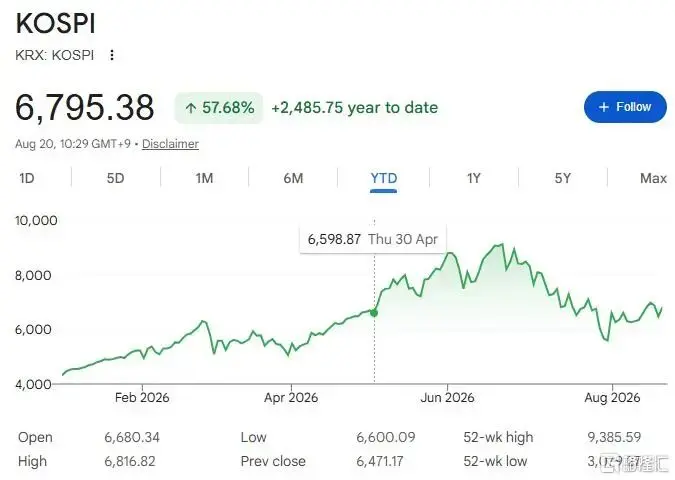
With SK Hynix's market value continuously reaching new highs, the "year-end bonus forecast" adds some drama to the booming storage sector.
Recently, it was reported that driven by a surge in storage demand due to AI, the South Korean company SK Hynix, a core storage supplier, is expected to reach an operating profit ceiling of 250 trillion won in 2026. According to the 10% dividend rule, the average year-end bonus could exceed 3 million yuan.
SK Hynix Performance Data
South Korean media cited the opinion of a matchmaking company, stating that "the matchmaking for SK Hynix employees is now unconditionally rated as A-level," and variety shows even joked that SK Hynix's work uniforms are "highly valuable."
Investment bank Macquarie Securities even predicted that SK Hynix's operating profit will reach 447 trillion won in 2027. If the dividend rule remains unchanged, in 2027, the average bonus could be about 1.29 billion won, close to 6.1 million yuan.
In response to Yicai, SK Hynix confirmed the authenticity of the 10% operating profit distribution rule and emphasized that since the annual performance for 2026 and next year has not yet been determined, the bonus scale cannot be predicted, subtly denying the accuracy of the 6.1 million yuan bonus package.
The high year-end bonus forecast may not be accurate, but there is a significant difference in bonuses between employees in China and South Korea.
"We have removed the bonus cap, but the bonuses in China are not increasing," said an SK Hynix employee in China. "In Korea, bonuses are settled once a year, while here in China, it's twice a year."
The employee revealed that if they distribute 3 million in bonuses, the Chinese employees would receive less than 5%, which amounts to about 150,000 yuan. "It's not that everyone gets 150,000; it will be adjusted based on KPI ratings. The higher the rating, the higher the bonus. At my highest, I received just over 100,000."
This employee has been with SK Hynix for over 10 years and has a technical background.
In the super cycle of the storage industry, the expectation of high year-end bonuses has led to media reports stating that storage has surpassed doctors and lawyers to become the most favored position in the matchmaking market in South Korea.
However, compared to the current boom, the downturn in the storage cycle presents a different picture.
In the 2023 fiscal year, the global semiconductor industry is in a "winter period," with SK Hynix's total annual revenue declining by about 27% year-on-year to 32.77 trillion won, and a net loss of 9.14 trillion won. "The lowest point was around 2023-2024, with no bonuses, it was 0," the aforementioned SK Hynix employee revealed.
Regarding the sensationalized topic of "average bonuses of 3 million+ and 6 million+," many industry professionals have raised doubts, emphasizing that averages are not representative.
"An average is possible, but it definitely can't mean everyone gets 3 million. Executives get more, engineers get hundreds of thousands, and operators can be satisfied with 100,000," said a semiconductor industry worker. "For example, TSMC engineers can earn around 1 million yuan annually."
"I look at my income and then see the numbers posted online; the gap is too large," the aforementioned SK Hynix employee explained the differences in year-end bonuses between Chinese and Korean employees, saying, "They (Korean employees) have higher monthly salaries, and bonuses are distributed based on the proportion of 12 months' salary."
Currently, SK Hynix has three main factories in mainland China, located in Wuxi, Dalian, and Chongqing, with Wuxi primarily handling DRAM business, Dalian being the NAND factory established after acquiring Intel's assets, and Chongqing serving as a packaging and testing base. Sales companies in Shenzhen, Beijing, and Shanghai provide technical support.
According to job postings on Liepin for the Dalian factory, the monthly salary for related engineering positions generally ranges from 10,000 to 30,000 yuan, with a promise of a 13th month salary, and senior engineer positions can reach up to 35,000 yuan per month.
In addition to salaries, SK Hynix also provides regular benefits such as annual leave for Chinese employees; for example, support positions in sales do not require overtime, but there are no stock-related incentives.
"Management positions are all held by Koreans; Chinese people cannot be in management," emphasized the aforementioned SK Hynix employee.
Several former employees of Korean companies have stated that companies generally do not provide stock incentives to Chinese employees. In the view of a former Samsung employee, Chinese companies resemble sales entities, similar to the concept of national-level agents.
"There are now mainland Chinese people entering middle management, and TSMC is the same," said Wu Zihao, a former TSMC factory expert and CEO of Ronghe Semiconductor Consulting. "It's normal for Korean factories to have more Koreans, but as they operate longer in mainland China, local management will also rise; it's not so absolute."
From the industry's and companies' predictions, storage will continue to be a hot topic in the next 2-3 years, with "matchmaking memes" and "work uniform memes" constantly emerging.
At the first-quarter earnings meeting, SK Hynix's Chief Financial Officer stated that in the next three years, demand represented by HBM is likely to continue exceeding supply, and related growth will continue to revolve around B2B demand, a signal also reflected in SK Hynix's official press release.
SK Hynix stated: "Although the first quarter is usually a seasonal off-peak period, market demand remains strong driven by the expansion of AI infrastructure investment. The company has continued to maintain its performance growth by expanding sales of high-value-added products such as high-bandwidth memory (HBM), large-capacity server DRAM modules, and enterprise solid-state drives (eSSD)."
In summary, all of the above are typical B2B customer demands.
This also means that if storage manufacturers like SK Hynix do not increase capacity support for consumer products, the topic of memory price increases that we have been discussing will continue to impact consumer products and drive a wave of price increases, and "electronic gold" will continue to trouble cyber players.
 Risk warning