SemiAnalysis lengthy article: Anthropic's gross profit is approaching that of SaaS companies, with a valuation of $6 trillion that will surpass Nvidia
 Core Viewpoint

 The AI laboratory is not just a money-burning research ivory tower. It can be a high-margin, high-retention, high-growth commercial machine.
Author: Z Finance
Anthropic is proving to the world that AI laboratories are not just ivory towers of research that burn money. It can be a high-margin, high-retention, and fast-expanding business machine.
In July 2026, Anthropic quietly submitted an IPO application to the SEC. Three months later, a financial portrait dissected by the SemiAnalysis Tokenomics Model emerged: the third-quarter GAAP operating profit (EBIT) exceeded $1 billion, with an operating profit margin of 6%; annual recurring revenue (ARR) skyrocketed from $9 billion at the end of 2025 to over $60 billion now.
During the same period, its old rival OpenAI was still losing money, with a second-quarter EBIT profit margin of about -100%.
This is the first time since the industrialization of AI that a leading laboratory has used clean profit numbers to tell the market: the business model of large models has been validated.
Why go public now?
Anthropic is not short of money. Since its establishment, it has raised over $100 billion, has achieved profitability on a non-GAAP basis, and maintains a robust gross margin. In a time when super unicorns like Stripe and Databricks are choosing to stay in the secondary market, why is Anthropic eager to restart its IPO?
The answer lies in the computing power ledger.
SemiAnalysis predicts that by the end of 2030, the combined computing power demand of OpenAI and Anthropic will exceed 100GW. This means that over the next five years, approximately 90GW of net new computing power supply will be needed, while only 2.5GW was added throughout 2025, and 5GW is expected to be added in 2026. The total available computing power for both companies is just over 6GW.
The computing power shortage in the first quarter of 2026 has already made users feel the impact: throttling, downtime, and service degradation. Anthropic's CFO Krishna Rao admitted in an Invest Like the Best podcast in early May that the demand at that time far exceeded the available supply.
Going public has three strategic significances:
First, it opens up equity and debt financing channels. Training the next generation of models, leasing more computing power, signing new data center leases—these all require capital investments measured in "billions of dollars." The public market means faster and cheaper financing capabilities.
Second, it alleviates corporate concerns about large contracts with audited public financial reports. When a Fortune 500 company considers signing an API contract worth hundreds of millions of dollars annually, it needs a supplier that can provide a clear view of its financial status.
Third, it helps win the talent war. In an era where AI researchers' salaries rival those of professional sports stars, equity that allows employees to cash out at any time is the hardest currency for retaining top talent.
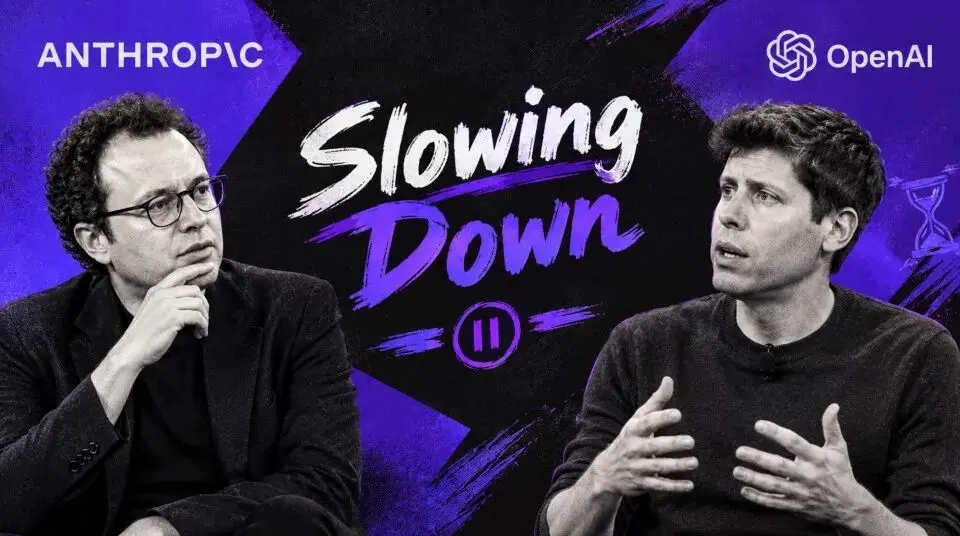
There is a deeper reason for Anthropic's eagerness to go public. This is a game against OpenAI, where the first to go public will gain an asymmetric advantage.
The rules of the capital market are as follows: the first high-growth company to enter the public market automatically becomes the "valuation anchor" in investors' minds. Its revenue growth rate, profit margin, net dollar retention (NDR), and market cap/revenue ratio will serve as benchmarks for the entire industry's valuation. Companies that go public later, no matter how excellent, must negotiate based on this anchor point—if their financial metrics are better, they can enjoy a premium; if worse, they must accept a discount.
Anthropic's strategy to go public ahead of others is very clear. Its current financial metrics are comprehensively ahead of OpenAI: 6% EBIT profit margin vs -100%, over 60% gross margin vs a gross margin dragged down by free users, and 500% NDR vs an undisclosed NDR.
Once Anthropic is priced at 20 times ARR (approximately a $6 trillion market cap), this valuation benchmark will be solidified in the market. If OpenAI goes public later, investors will naturally ask one question: Is OpenAI's ARR quality higher or lower? Is its profitability stronger or weaker? Is its growth sustainability better or worse?
The answer is not optimistic for OpenAI. OpenAI bears the heavy cost burden of 950 million free users, with over 65% of its revenue still coming from subscriptions, meaning its revenue ceiling and gross margin ceiling are both lower than Anthropic's. If OpenAI is forced to go public at a "discounted valuation compared to Anthropic," its financing costs will be significantly higher than Anthropic's, further impacting its reinvestment capability.
This is a form of "first-mover advantage" in the capital market. The first to go public defines the valuation rules, while the later entrants can only play within this framework. Similar to how Amazon defined the e-commerce valuation paradigm after its IPO in 1997, eBay defined the valuation logic for platform companies. Anthropic clearly recognizes this; it has chosen not a "convenient" window for going public, but a "strategic" one.
How Claude Code rewrites the rules of the game
If ChatGPT is the "iPhone moment" for consumers, then Claude Code is the turning point for the B2B market.
This programming assistant, which exploded onto the scene in early 2026, now accounts for over 7% of all submissions on GitHub. It has directly driven a rocket-like surge in Anthropic's ARR: from just $9 billion at the end of 2025, it increased by $3 billion in January 2026, $7 billion in February, and another $11 billion in March. It surged to $30 billion in just one quarter.
The core of this growth engine is not the subscription model, but usage-based billing.
In Anthropic's revenue structure, API (charged by token usage) accounts for as much as 75-85%, while subscription revenue only accounts for 15%. This stands in stark contrast to OpenAI: in the first quarter of 2026, over 65% of OpenAI's revenue still came from subscriptions. The consumer business accounts for only about 5% of Anthropic's ARR, while OpenAI's corresponding figure is about 40%.
However, Anthropic's consumer business is not insignificant either. Its free monthly active users (MAU) currently number about 55 to 60 million, with a conversion rate of about 9%, significantly higher than OpenAI's approximately 6%.
The advantage of the API model is that there is no revenue ceiling. The subscription model charges a fixed fee per seat, meaning that regardless of how much a customer uses, the monthly fee remains fixed at $20 or $200. The API charges by token, meaning the more complex the agent workflow deployed by the customer and the larger the volume of data processed, the more Anthropic earns, without needing to add a new "customer."
A set of numbers disclosed by CFO Krishna Rao is shocking: Net Dollar Retention (NDR) is 500%. This means that for those old customers who existed in the first quarter of 2025, their spending in the first quarter of 2026 was five times that of the same period last year. Specifically, the $2 billion ARR from old customers in Q1 2025 ballooned to $12 billion by Q1 2026, accounting for 40% of Anthropic's total ARR of $30 billion at that time.
This 500% NDR is driven by the exponential consumption of tokens by agentic workflows. Traditional chat interactions consume only a few hundred tokens, while a single task by an automated coding agent can burn millions of tokens. Blended token pricing (comprehensive average unit price) has significantly decreased since 2024, with the consumption curve bearing the entire burden of growth.
Network effects of the API model: usage flywheel and exponential retention
The reason the API model is more suitable for the AI era than the subscription model lies in its creation of a network effect that the subscription model cannot reach. It is not a network effect between users, but a self-reinforcing flywheel of "usage-revenue-R&D-better models-more usage."
The essence of the subscription model is a "head tax": each customer pays a fixed fee, and revenue growth depends on linear growth in the number of customers. The essence of the API model is a "usage tax": customer usage can grow exponentially over time, and revenue can also grow exponentially.
This is why good companies in the SaaS industry have an NDR around 120%, and excellent companies can reach 150%, while Anthropic can achieve 500%. This is not competition on the same scale.
What does a 500% NDR really mean? Let's understand it in the context of the industry. Snowflake's NDR reached 170% during its high growth period, considered a miracle by the market; Datadog reached 140% at its best, which was enough to drive investors crazy. Anthropic's 500% means that its old customer base contributed five times more revenue within a year. This is not due to price increases, but because the agent workflows deployed by customers are rapidly expanding in depth and breadth.
The self-reinforcing mechanism of this flywheel is as follows: the more customers use → the more revenue Anthropic earns → the more funds can be invested in training better models → stronger model capabilities attract more agent workflows → customers use more. Each step accelerates the next. Under the subscription model, no matter how much customers use, the supplier does not earn more money; under the API model, every use by customers fuels the supplier's R&D engine.
This is precisely why Anthropic's API business can achieve a gross margin of over 80%, with almost all incremental revenue being profit, and these profits are reinvested in training, forming a moat of technological advantage. Subscription companies cannot achieve this because their revenue growth is linear, while under the API model, revenue growth can be exponential.
From -94% to over 60% gross margin leap
The economic model of AI laboratories is not complicated: invest in R&D for new models, purchase or lease computing power for training and inference, and then sell this computing power to customers through tokens.
However, in 2024, Anthropic's gross margin was still -94%, meaning that for every $1 in revenue, it lost nearly $1 in costs. Today, this number has jumped to over 60%.
The leap in gross margin comes from three levers:
New models are priced higher. Each time a frontier model is released, the initial pricing is significantly higher than the previous generation.
Inference efficiency has greatly improved. New acceleration chips, better inference frameworks, and smarter caching strategies allow the same watt of computing power to produce more tokens. The ARR corresponding to each megawatt (MW) of computing power for Anthropic was $16 million nine months ago and is expected to reach $60 million later this year.
The cost of computing power is basically fixed. When each watt of computing power can generate more revenue, the incremental gross margin approaches 100%.
The gross margin of the API business is particularly impressive, exceeding 80%. Even after deducting 20-30% revenue sharing with channels like AWS Bedrock and the new computing power leased at double the market price, Anthropic's overall gross margin still has ample room for upward movement.
OpenAI is at a clear disadvantage in this dimension. It supports over 950 million free users, with an average monthly service cost of about $0.70 per user, which drags down its overall gross margin by 20-30%. A simple calculation shows that if both companies achieve $100 billion ARR, OpenAI's gross profit will be $25 billion less than Anthropic's.
The underlying mechanism of gross margin leap: technology-economics coupling analysis
Anthropic's ability to raise its gross margin from -94% to over 60% in 18 months appears to be the combined effect of three levers, but at a deeper level, it is an industrial process of technology-economics coupling.
The so-called technology-economics coupling refers to a positive feedback loop between technological advancement and economic benefits: improvements in model inference efficiency (technical side) reduce the cost of computing power per token (economic side), while revenue growth (economic side) in turn provides funding for larger-scale training investments (technical side).
Once this loop is activated, improvements in gross margin are not linear but accelerating.
Specifically, the mechanism of gross margin leap can be broken down into two parallel curves.
The first curve is the output curve of unit computing power: Anthropic's ARR per megawatt of computing power increased from $16 million to $60 million, a 275% increase in nine months. This is driven by the new generation of inference chips, more efficient model architectures, and smarter caching strategies.
The second curve is the pricing power curve: each time a frontier model is released, Anthropic has the ability to set prices significantly higher than the previous generation—because better models mean customers are willing to pay a higher unit price for stronger capabilities.
The intersection of these two curves is the point of gross margin leap. When the output of unit computing power continues to rise while data center costs remain basically fixed, the incremental gross margin approaches 100%. The marginal cost of selling one more token is almost zero. This economic characteristic is remarkably similar to the early development path of cloud computing: AWS experienced a similar gross margin expansion from the early low-margin infrastructure construction phase to the high-margin operational phase after scaling.
A steady-state gross margin of over 75% means what? This number is close to the level of the best companies in the SaaS industry. Salesforce's long-term gross margin is around 75%, while ServiceNow is around 78%. If Anthropic can ultimately reach this range, it means that the economic model of AI laboratories is essentially not "capital-intensive manufacturing," but "light-asset software." This is a paradigm-level determination—it will decide whether Anthropic should enjoy manufacturing valuations (8-12x EBITDA) or software valuations (20-40x EBITDA) in the capital market.
EBTIT: The birth of a new industry metric
Below gross margin, laboratories also have training/R&D costs and other operating expenses. SemiAnalysis has proposed a new metric: EBTIT (Earnings Before Training, Interest, and Taxes)—the true cash flow profit margin of the inference business after excluding training investments. Anthropic's EBTIT profit margin reached 36% in the second quarter of 2026.
The birth of this metric itself is a landmark event in the industrialization process of AI.
Anthropic's third-quarter GAAP EBIT reached $1 billion, and its net new ARR growth rate exceeded OpenAI's, while the latter is sitting in the abyss of -100% EBIT profit margin. This is a world of difference.
EBTIT addresses a core issue that has long plagued AI industry analysis: the scale of training investments is so large that it completely obscures the true profitability of the inference business. For example, Anthropic currently invests over 60% of its revenue in training and new model research—this expense is fully accounted for in the current period under GAAP, but it is essentially a "capital expenditure": today's training investment is for tomorrow's model capabilities, and tomorrow's model capabilities will bring higher revenue and profits.
Similar industrial moments have occurred in history. In the 1980s, with the rise of the cable television and mobile communications industries, EBITDA was invented as a new metric because these capital-intensive industries needed a way to demonstrate "real cash flow after depreciation and amortization." EBITDA later became the standard language for valuation across the entire TMT industry. EBTIT is in the same historical position: it provides AI laboratories with a clear way to express themselves. "If we exclude training investments, my inference business is a high-margin software business."
Anthropic's 36% EBTIT profit margin means that for every $1 of revenue generated by the inference business, after deducting operating costs and inference costs, $0.36 remains—this number is close to the operating profit margin of the best SaaS companies. If training investments gradually decrease to 40-50% of revenue in the coming years (due to diminishing marginal returns on model capabilities and the expansion of the inference business), Anthropic's GAAP operating profit margin will naturally trend towards the EBTIT level.
It is foreseeable that EBTIT will become the standard language for valuing AI laboratories in the next 2-3 years. As more AI companies go public, investors will need a unified framework to compare their "true profitability"—EBTIT is that framework.
Anthropic currently invests over 60% of its revenue in training and new model development. It is expected that by 2030, the allocation of computing power between training and inference will reach 48:52, almost evenly split. This means that even while maintaining high-intensity reinvestment in R&D, Anthropic will still be able to remain profitable under GAAP.
The deep divergence of business models: B2B API vs consumer subscriptions
The divergence between Anthropic and OpenAI is not just a difference in product strategy, but two completely different business paths.
Anthropic's path: API-first, usage-based billing, B2B at its core. Customers pay for the tokens they actually consume, with no usage limits and no ceiling on seats. The success of Claude Code has amplified the leverage effect of this path to the extreme. The usage of a single developer can grow exponentially as the agent workflow deepens.
OpenAI's path: consumer-first, subscription model, massive free tier. The viral spread of ChatGPT has brought nearly 1 billion weekly active users, but the computing power consumption of the free tier is like an ever-running money printer. OpenAI is working hard to pivot. The release of the 5.5 model and Codex has accelerated the API business again, and B2B API has become the main source of monthly net new ARR. But it still bears the heavy burden of its consumer business.
This structural difference directly determines the reinvestment capability.
SemiAnalysis's model shows that in 2027, Anthropic will have $160 billion available for reinvestment (training, R&D, computing power procurement) after deducting COGS, while OpenAI will only have $92 billion. This means Anthropic can invest nearly $70 billion more each year to train better models, sign more computing power contracts, and widen the technological gap.
TaaS (Token-as-a-Service) is becoming a channel to amplify this advantage.
Through channels like AWS Bedrock, Azure Foundry, and Google Vertex, about 15-20% of Anthropic's ARR comes from indirect sales, while this figure was only 5-10% a quarter ago. The channel advantages of hyperscalers cannot be ignored: enterprise customers can use multiple models under the same cloud contract, leverage existing compliance frameworks, and avoid lengthy vendor review processes.
The TaaS market itself is exploding. SemiAnalysis estimates that by the second quarter of 2026, the TaaS market ARR has reached $28 billion, with the three major cloud providers accounting for 85% of the share. For Anthropic, although it has to share 20-30% of its revenue with channels, it gains scaled access to Fortune 500 customers—which is much more cost-effective than building its own enterprise sales team.
The irreversibility of the two paths: why OpenAI finds it hard to "turn around"
Anthropic and OpenAI have chosen two completely different paths, and there is a key difference between these two paths: irreversibility.
From day one, Anthropic has been B2B-first. It does not have the inertia drag of 950 million free users, nor the brand recognition anchored in consumers by "ChatGPT," nor the organizational structure and cultural genes centered around consumer products. Its entire business system, from product design to pricing strategy, from sales team to customer success system, is built for the API and usage-based billing model. This means Anthropic can move forward at full speed on this path without any burdens.
OpenAI, on the other hand, is completely different. It has the most well-known consumer brand in the AI field, ChatGPT, with 950 million weekly active users, and over 65% of its revenue comes from subscriptions. These figures sound like advantages, but in the context of a business model transformation, they constitute a huge "gravity." Every consumer user is a fixed cost. With an average service fee of $0.70 per month, when the user count reaches the billion level, this cost becomes a structural drag on gross margin.
The deeper issue lies in the cultural inertia of the organizational structure. An organization centered around consumer products has its decision logic, incentive mechanisms, and talent structure designed around "user growth" and DAU. Shifting to B2B means redefining core KPIs, restructuring the sales team, and redesigning the product roadmap, which is a fundamental reshaping at the DNA level.
Microsoft took a full decade to transition from Windows to cloud computing, partly because the Windows business was too successful. So successful that there were sufficient reasons within the organization to resist any changes that might encroach on it. OpenAI today faces a consumer business that is similarly too successful. ChatGPT is the most recognized AI brand globally, and any attempt to deprioritize or weaken its status will inevitably encounter significant internal resistance.
The deep strategic significance of the TaaS channel for Anthropic lies in this. By selling through hyperscaler channels like AWS Bedrock, Anthropic not only gains a sales channel but also acquires a risk management tool to "hedge against model uncertainty." If Anthropic's self-developed model encounters bottlenecks in technological iteration, customers on the TaaS platform can easily switch to other model suppliers. This flexibility reduces the risk of customers being locked into a single model, thereby accelerating the decision speed of enterprise customers to adopt AI. For Anthropic, the TaaS channel is a "win-win" strategy: either customers continue to use its models (revenue secured), or they switch (but still within the same ecosystem, with future opportunities to win back).
Risks and variables: budget contraction, open-source competition, regulatory shadows
Anthropic's narrative is not without cracks. SemiAnalysis has listed several risks worth noting in its report:
Token Budgeting (budget contraction). This is the hottest topic in the market recently. Companies like Coinbase have publicly discussed reviewing the ROI of AI spending. However, SemiAnalysis's research shows that this "budget tightening" mainly occurs in companies that have over-expanded in the early stages. Anthropic's official data indicates that the average monthly spending of Claude Code enterprise users is only $150-250, with 90% of users spending less than $30 per day.
"The story of token maxxing is just the tail end of the distribution. Most users who continue to spend significantly are enjoying extremely high returns on investment. The spending of the world's top 2000 companies on AI is still negligible compared to their overall IT budgets."
Open-source competition. If Google DeepMind and Meta SuperIntelligence produce competitive models in the programming field, token pricing will face downward pressure. However, SemiAnalysis believes that even if it becomes a "four-horse race," Anthropic's net new ARR is unlikely to turn negative. The latest and best intelligence always commands a premium, and the expansion of workloads and the release of new models will continue to drive growth.
Regulatory blockades. This is the systemic risk that Anthropic cannot afford to ignore. If the U.S. government restricts the release of frontier models on security grounds, Anthropic's commercial advantages will be rapidly eroded. Well-funded hyperscaler competitors will seize the opportunity to catch up, and Chinese laboratories can acquire frontier capabilities through distillation.
Cybersecurity: the next S-curve. Beyond risks, SemiAnalysis particularly emphasizes the potential of cybersecurity as the next growth vertical. The capabilities unlocked by the Mythos/Fable series of models are expected to accelerate ARR at a faster pace than Claude Code in the second half of the year. The number of customers paying over $100,000 annually has grown sevenfold in the past year, and the number of customers paying over $1 million annually has increased approximately 42 times in the past two years.
Computing demand
The probability framework for risk assessment: investing is not about betting on a single outcome.
For high-growth, high-uncertainty assets like Anthropic, the most effective way to assess risk is not to simply list risks but to establish a probability assessment framework—categorizing each risk by likelihood and impact, and assessing its controllability.
High-probability risks:
Increasing share of TaaS channels compressing profit margins. TaaS channels (AWS Bedrock, Azure Foundry, etc.) currently account for 15-20% of Anthropic's ARR, and this proportion is rapidly rising. The revenue-sharing ratio is between 20-30%, meaning that for every dollar of revenue sold through TaaS, Anthropic can only retain 70-80 cents.
As the share of TaaS increases, the overall gross margin will face some compression pressure. However, this risk is highly controllable. The customer acquisition efficiency and scalability advantages brought by aaS can offset some of the margin compression; moreover, Anthropic always retains direct sales channels as pricing anchors.
Medium-probability risks:
Intensified open-source competition leading to token pricing pressure. If Google DeepMind, Meta SuperIntelligence, and Chinese open-source models catch up to Claude's capabilities in programming, inference, etc., token pricing will face downward pressure. This risk can be partially hedged through technological leadership—Anthropic's EBTIT advantage means it has more funds for training the next generation of models to maintain capability gaps. However, if the entire industry enters a "price war" phase, even the best models may not maintain a premium.
Low-probability but high-impact risk: regulatory blockades.
This is the most concerning "black swan" risk. If the U.S. government restricts the release or export of frontier models on AI safety grounds, Anthropic's commercialization process will be severely disrupted. This risk cannot be predicted probabilistically; it can only be scenario-planned. In the most optimistic scenario, regulation will only increase compliance costs; in the most pessimistic scenario, regulation could freeze Anthropic's core product release pace for 6-12 months. For any investor betting on Anthropic, this risk must be included in stress tests.
Investing is not about betting on a single outcome but managing probability distributions. Anthropic's investment logic is that the returns from high-probability scenarios (sustained high growth, margin expansion) are sufficient to cover potential losses from low-probability scenarios (regulatory crackdowns, intensified competition).
$6 trillion valuation: crazy or reasonable?
The benchmark valuation given by SemiAnalysis is: 20 times the ARR at the end of 2027, assuming the ARR reaches $300 billion by then (corresponding to a monthly net new ARR of about $15 billion in 2027). This means Anthropic's enterprise value will reach $6 trillion, surpassing the current largest company in the world.
This number does sound exaggerated. But when broken down, it is based on a set of relatively conservative assumptions:
Anthropic's current average monthly net new ARR is already over $10 billion. The release of the Fable model, the ramp-up of new customers, and the S-curve of new verticals like cybersecurity will push the net new ARR from $10 billion to $15 billion per month—this is an assumption that does not require "miracles" to achieve. The penetration rate of the world's top 2000 companies and Fortune 500 in cutting-edge AI products is still very low, with significant room for both seat deployment and per capita usage expansion.
Historical references also support this valuation logic. Snowflake, Datadog, and Cloudflare traded at valuations above 50 times forward revenue before the SaaS and cloud optimization cycles of 2022-2023. The growth rate, retention rate (NDR 500%), and profit margin expansion trajectory of AI laboratories far exceed those of traditional SaaS.
More critically, Anthropic is demonstrating that AI laboratories can be an excellent business:
Gross margins are approaching the mid-range of 75% (with incremental margins nearing 100%)
Training/R&D accounts for 48% of total computing power, with continuous investment but a declining proportion
Other operating expenses are controlled at 20% of revenue
Long-term EBIT/FCF profit margins can reach 30-40%, comparable to the best software companies in history
SemiAnalysis summarizes a core point: the cumulative EBTIT advantage is the moat. By 2028, Anthropic's cumulative EBTIT advantage over OpenAI is expected to reach $250 billion. Every dollar of EBTIT advantage can be converted into more training computing power, better models, and a larger frontier capability gap—while a larger capability gap brings stronger pricing power and higher EBTIT.
"Since the first quarter of 2024, a cumulative investment of $8 billion in training has resulted in today's $60 billion ARR—this is an extremely impressive ROIC. It is not hard to imagine how the S-curves of new verticals like cybersecurity, biotechnology/healthcare, and finance will push up laboratory ARR while enhancing model capabilities. The flywheel of high-margin inference API revenue will fund the widening intelligence gap for the next generation of models."
Valuation sensitivity analysis: value anchoring in four scenarios
$6 trillion is a benchmark valuation, but investment decisions need to be based on considerations of multiple scenarios. Based on SemiAnalysis's data and assumptions, we can construct a sensitivity analysis framework with four scenarios:
Baseline scenario: $6 trillion. Assuming the ARR reaches $300 billion by the end of 2027, valued at 20 times ARR. This requires the monthly net new ARR to increase from the current $10 billion to $15 billion—considering the multiple driving factors such as the release of the Fable model, new verticals in cybersecurity, and the ramp-up of new customers, this is a "high probability achievable" assumption. In this scenario, Anthropic will surpass the market capitalization of the current largest company in the world.
Optimistic scenario: $10 trillion. Assuming the ARR reaches $400 billion by the end of 2027, valued at 25 times ARR. This requires two conditions to be met simultaneously: first, the S-curves of new verticals like cybersecurity and biotechnology must simultaneously explode, driving net new ARR growth beyond expectations; second, Anthropic must enjoy a valuation premium in the capital market as the "leader in AI industrialization" (similar to the premium AWS enjoyed in the early days of cloud computing). A 25 times ARR valuation sounds high, but considering the 500% NDR, 80%+ API gross margin, and long-term profit margin targets of 30-40%, this number is not more exaggerated than the top companies during the SaaS boom.
Conservative scenario: $3 trillion. Assuming the ARR reaches $200 billion by the end of 2027, valued at 15 times ARR. This means a slowdown in net new ARR growth—possibly due to intensified competition (open-source models squeezing pricing space), TaaS channel revenue sharing compressing profit margins, or macroeconomic recession leading to contraction in corporate IT budgets. Even in this conservative scenario, Anthropic will still rank among the top 10 most valuable companies in the world.
Pessimistic scenario: $1.5 trillion. Assuming the ARR reaches $150 billion by the end of 2027, valued at 10 times ARR. This requires multiple negative factors to overlap: a severe global economic recession, regulatory blockades delaying model releases by more than 6 months, and intense price wars triggered by open-source competition. Even in this "almost everything goes wrong" scenario, Anthropic's valuation will still exceed the market capitalization of most current tech giants.
The key variables can be summarized into three: net new ARR growth rate (determining revenue scale), gross margin trajectory (determining profit quality), and evolution of the competitive landscape (determining valuation multiples).
Among these three variables, the net new ARR growth rate is the most critical, as it directly determines the scale of ARR, which is the largest multiplier in the valuation formula.
The real value of this sensitivity analysis lies not in precise predictions, but in finding that "even conservative estimates are quite considerable" value anchor. Even in the pessimistic scenario, Anthropic's valuation stands at $1.5 trillion, which itself illustrates the magnitude of the capitalization potential of the AI industrialization.
Paradigm shift in the capital structure of the AI industry: from VC-driven to public market-driven
Anthropic's IPO is not just a story of one company going public. It marks the starting point for the entire AI industry's capital structure reshaping, a paradigm shift from venture capital-driven to public market-driven.
The historical financing model of this industry has been as follows: AI laboratories rely on private financing from VCs and strategic investors (like Microsoft, Google, etc.) to support training and computing power investments. OpenAI has raised over $100 billion cumulatively, and Anthropic has also come a long way on this path. But the problem is that the trillion-dollar capital demand cannot be met solely by VCs. The annual total investment in the global VC industry is about $300-400 billion, with a limited proportion directed towards AI. When the training costs of a single laboratory reach hundreds of billions of dollars and the costs of computing power procurement reach thousands of billions, the private market's funding pool is no longer sufficient.
The public market provides two tools that the private market cannot offer.
The first is the scale effect of equity financing: a large public company can complete a multi-billion dollar issuance in a matter of weeks, without needing to negotiate terms one by one like in private financing.
The second is the capability for long-term debt financing: AI infrastructure construction (data centers, power, chips) has typical infrastructure characteristics—huge upfront investments, stable cash flows, and asset lifespans of 20-30 years. Such assets are best matched with long-term debt rather than equity financing. After going public, Anthropic can issue corporate bonds or even explore structures similar to infrastructure REITs to finance computing power infrastructure.
The financing wave of hyperscalers is a different facet of the same trend. Alphabet recently completed a massive $84.75 billion equity financing, and Meta is also set to follow suit. The purpose of these financings is clear: to fund AI computing power construction. Over the next 2-3 years, this ecosystem, including Anthropic, OpenAI, Google, Microsoft, Meta, and Amazon, will require trillions of dollars in financing each year—this is no longer just "tech stock investment," but a new asset class being born.
When Anthropic knocks on the door of the public market with a $1 billion quarterly net profit, it is not just opening its own financing channel but also the door for the entire AI industry to transition from "research experiments" to "industrial capital." Looking back over the next decade, this IPO may be seen as the inaugural year of AI capitalization.
When Dario Amodei left OpenAI to found Anthropic in early 2021, the viral spread of ChatGPT was still 18 months away, and the commercialization of large models was nearly zero. Just a few years later, Anthropic and OpenAI together account for about $100 billion ARR, and a clear winner has emerged in the profitability race.
Anthropic's IPO is not just a story of one company going public. It marks the starting point for the entire AI industry's capital structure reshaping—super-large-scale cloud service providers have issued over $100 billion in equity this year, and in the next 2-3 years, this ecosystem will require trillions of dollars in financing to support computing power construction.
When Anthropic knocks on the door of the public market with a $1 billion quarterly net profit, it also rings the alarm for OpenAI.

 Risk warning


Popular articles