AI panic spreads, U.S. stock futures for memory chip stocks fall broadly, SK Hynix plunges 15.4%, marking the largest drop in history, crude oil rises, gold falls
 Core Viewpoint

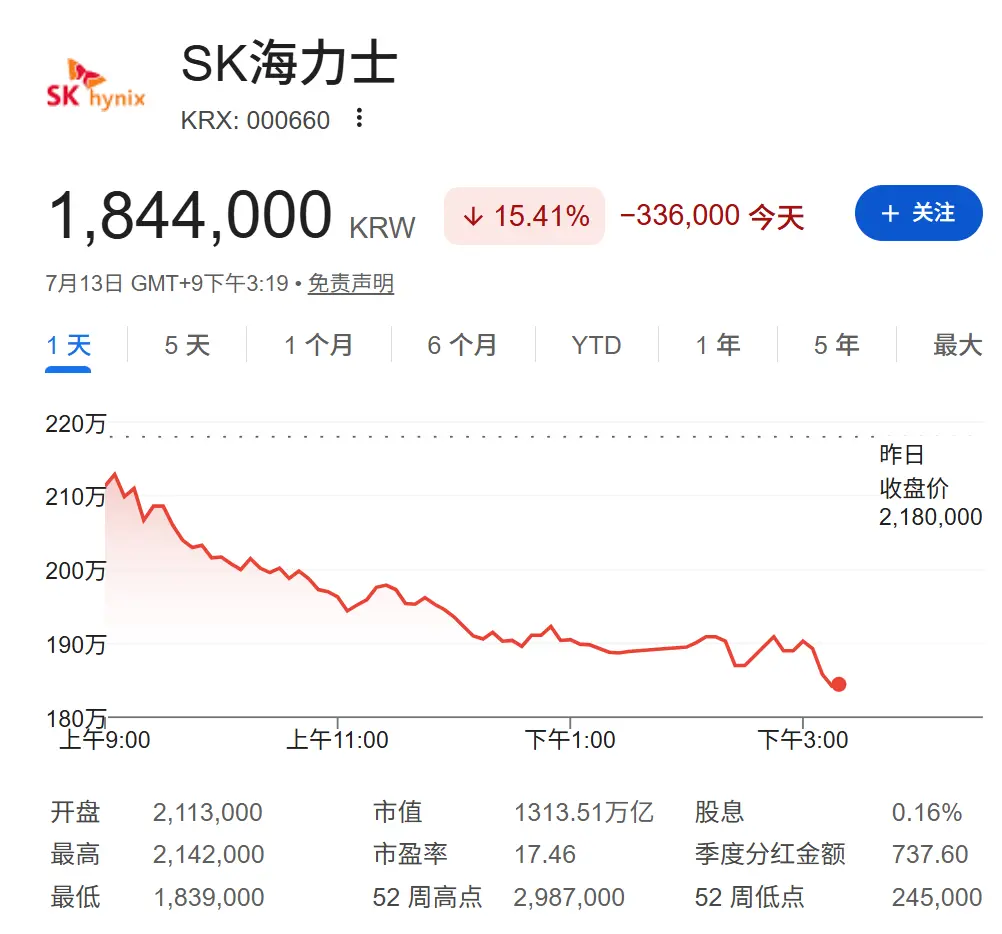
 Before the US stock market opens, storage chip stocks are generally down, with Micron Technology falling about 6%, Seagate Technology down about 4%, Western Digital down about 6%, and SanDisk down about 7%. SK Hynix's stock price plummeted by 15.4%, marking the largest drop in history. Gold fell by 1.3%, priced at about $4065 per ounce; silver dropped nearly 3%, priced at about $58.20 per ounce.
A "short essay" from a South Korean brokerage caused SK Hynix to plummet 12%, putting pressure on the entire storage sector. The U.S. military launched a new round of strikes against Iran, escalating tensions in the Middle East and shaking global markets.
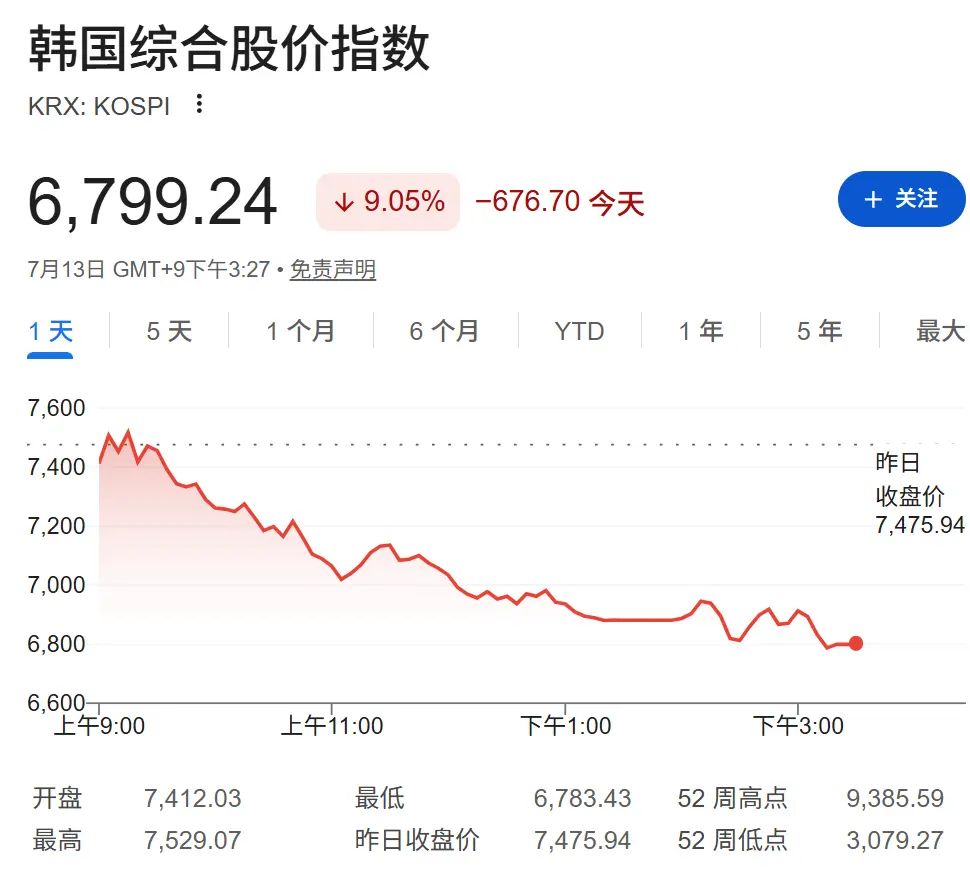
On Monday, ahead of the U.S. stock market opening, storage chip stocks fell broadly, with Micron Technology down about 6%, Seagate Technology down about 4%, Western Digital down about 6%, and SanDisk down about 7%. SK Hynix's stock price plummeted 15.4%, marking the largest drop in history, while Samsung fell nearly 11%, with the two major heavyweight stocks jointly causing the Korean Kospi to trigger its seventh circuit breaker this year. The trigger was a performance forecast that was 8% below market expectations, compounded by a profit-taking wave after the $26.5 billion ADR listing "good news" was fully priced in. Deeper issues include insufficient pricing elasticity for HBM, capacity expansion, and a supply-demand gap due to slowing demand, which is creating real cracks in the market's valuation logic for storage chips.
Crude oil prices surged, and U.S. Treasury yields climbed. According to CCTV News, the U.S. Central Command announced that at 5 PM Eastern Time on July 12, the U.S. military began a new round of strikes against Iran, aiming to "continue to weaken its ability to attack vessels passing freely through the Strait of Hormuz." In Iran, explosions were reported in multiple areas, including Abbas Port and Sirik, in the early hours of the 13th. Meanwhile, precious metals like gold weakened, and the dollar strengthened.
This round of tensions coincides with a critical market juncture — the U.S. earnings season is about to begin, with Goldman Sachs and JPMorgan set to announce results on Tuesday, and inflation data will also be released this week, raising concerns that rising energy prices may further boost inflation.
- Ahead of the U.S. stock market opening, storage chip stocks fell broadly, with Micron Technology down about 6%, Seagate Technology down about 4%, Western Digital down about 6%, and SanDisk down about 7%.
- The European Stoxx 50 index opened down 0.5%, the German DAX index fell 0.5%, the UK FTSE 100 index rose 0.1%, and the French CAC 40 index fell 0.3%.
- The Nikkei 225 index closed down 1.9%, at 67242.73 points. The Tokyo Stock Exchange index closed down 0.7%, at 4007.49 points. The Korean KOSPI index closed down 8.9%, at 6806.93 points. SK Hynix's stock price plummeted 15.4%, marking the largest drop in history.
- Nasdaq 100 index futures fell 1.3%, and European stock market futures also indicated a decline of about 1% before the market opened.
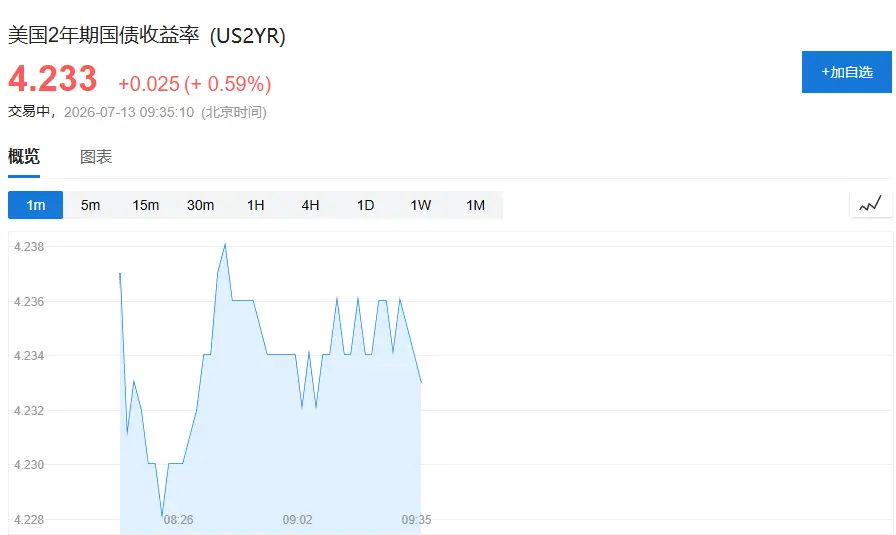
- U.S. Treasuries faced widespread selling, with the two-year Treasury yield, sensitive to policy rates, rising 2 basis points to 4.23%, the highest level since February 2025. Australian and Japanese government bond yields also fell.
- The dollar strengthened across G10 currencies. The dollar index rose 0.2%.
- Gold fell 1.3%, trading at about $4065 per ounce; silver fell nearly 3%, trading at about $58.20 per ounce.
- The cryptocurrency market weakened simultaneously, with Bitcoin dropping over 2% to about $62,700, dragging the broader crypto market down.
The stock market is under pressure across the board, with South Korea leading the decline
The Korean KOSPI index closed down 8.9%, at 6806.93 points. SK Hynix's stock price plummeted 15.4%, marking the largest drop in history. The Nikkei 225 index closed down 1.9%, at 67242.73 points. The Tokyo Stock Exchange index closed down 0.7%, at 4007.49 points.
In news, South Korean President Lee Jae-myung announced the establishment of a "Future Response Fund" to channel excess tax revenue into effective future investment projects. Government support will be directed towards three major projects: chips, AI data centers, and physical AI.
The significant correction in SK Hynix is partly due to profit-taking pressure following a 13% surge on the first day of its American Depositary Receipt (ADR) listing last Friday. Korea Investment & Securities predicts that SK Hynix's second-quarter operating profit may be 8% lower than market expectations, due to the company's high revenue share from high bandwidth memory (HBM), which limits the potential for average price increases. The firm believes that the upward momentum in the New York market has been fully digested, and the stock may face significant profit-taking and arbitrage closing, closing with a long upper shadow.
The Nikkei 225 index opened down 0.1%, with the decline later expanding to 1%. Shoji Hirakawa, Chief Global Strategist at Tokai Tokyo Intelligence Lab, stated, "If the attacks between the U.S. and Iran escalate again, it could become a negative catalyst for the market. During periods of rising geopolitical risk, investors tend to favor sectors with strong profitability, which means semiconductor stocks may remain relatively resilient."
Crude oil surges, market worries about inflation and interest rate outlook
The uncertainty in the Strait of Hormuz directly pushed oil prices higher. Brent crude rose over 3%, trading at $78.50 per barrel; WTI crude futures increased by 4.2%, trading at $74.40 per barrel, marking one of the largest single-day increases in recent times.
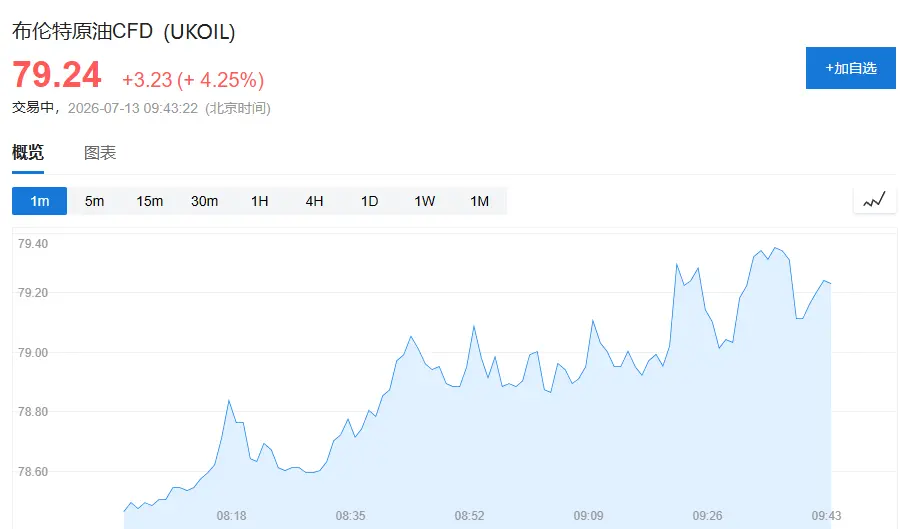
The surge in oil prices reignited market concerns about inflation. The previous week, oil prices recorded the largest weekly increase since mid-May. Traders subsequently placed significant bets on the Federal Reserve tightening monetary policy further — the interest rate swap market is currently pricing in nearly 40 basis points of cumulative rate hikes by the Fed before December, a significant increase from about 15 basis points in early June.
The U.S. Treasury market is also under pressure. The two-year Treasury yield, sensitive to interest rates, rose 3 basis points to 4.23%, the highest level since February 2025; the ten-year Treasury yield also increased by 3 basis points to 4.59%. Australian and Japanese government bond yields rose simultaneously. Bloomberg strategist Mark Cranfield pointed out that if oil prices remain strong, U.S. Treasuries will face further downward pressure, and the linkage effect of oil prices, bonds, and the dollar will continue to play out in the short term.
Gold weakens, dollar strengthens
In contrast to oil prices, precious metals faced broad pressure. Spot gold fell 1.1%, trading at $4073 per ounce; silver fell 1.8%, trading at $58.82 per ounce; platinum and palladium also weakened.
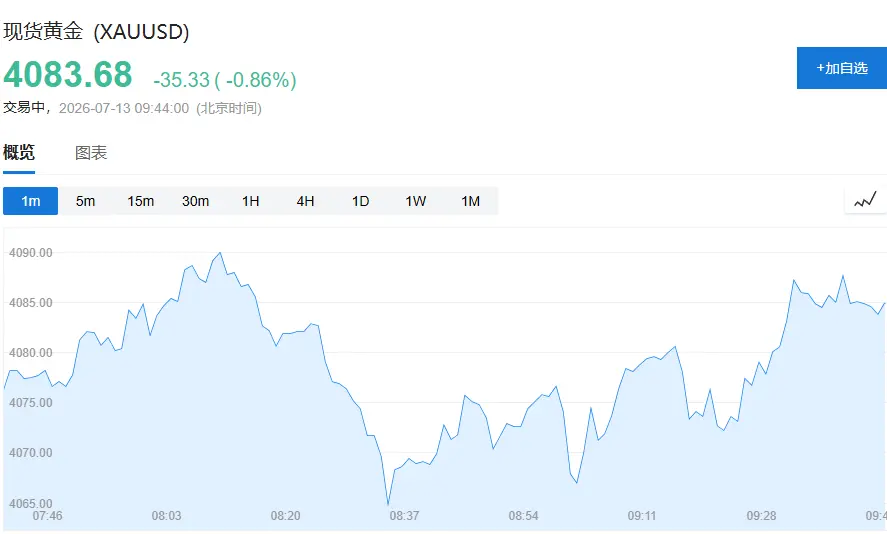
Notably, gold has fallen over one-fifth since the outbreak of the Iran war at the end of February this year, ending a three-year bull market. A wave of large-scale profit-taking briefly pushed gold prices below $4000 for the first time since November last year. The rise in oil prices has raised inflation expectations, thereby strengthening rate hike expectations, which is the core logic behind the pressure on gold.
The dollar, on the other hand, strengthened across the board, with the Bloomberg dollar spot index rising 0.2%, the euro falling 0.2% to $1.1397, and the yen falling 0.2% to 162.00 per dollar. Bitcoin briefly fell but recovered some ground, trading around $64,175.
This week to watch: inflation data, earnings season, and central bank direction
The market faces multiple tests this week. U.S. inflation data will be released soon, and whether the continued rise in energy prices can further boost the CPI will be a key observation point. Federal Reserve Chairman Kevin Warsh will also attend a congressional hearing for the first time, marking his first public statement since taking office, and the market will closely monitor his latest remarks on the interest rate outlook.
Regarding earnings season, Goldman Sachs and JPMorgan will be the first to disclose results on Tuesday, which will be the first major test of whether corporate profits can support the market rally driven by optimism in artificial intelligence. The Asian market will focus on China's second-quarter economic growth data and the Bank of Korea's interest rate decision to assess the extent to which weak domestic demand is dragging down the economy.
 Risk warning



Popular articles