Daily Observation of Cryptocurrency Concept Stocks: FATF Warns of Billions in "Underground Integration," Organized Crime Develops "Custom Stablecoins" to Resist Freezing

 Released on July 17, 2026. The global trend of compliance for crypto assets is facing a serious "barrel effect." According to the latest industry compliance report released by the Financial Action Task Force (FATF), although 83% of jurisdictions worldwide have implemented the "Travel Rule" for virtual assets through legislation, many countries are still lagging in implementation. This has led organized crime groups and terrorist financiers to abuse stablecoins to transfer billions of dollars in illegal proceeds, and even begin developing "proprietary stablecoins" to counter asset freezes by law enforcement agencies.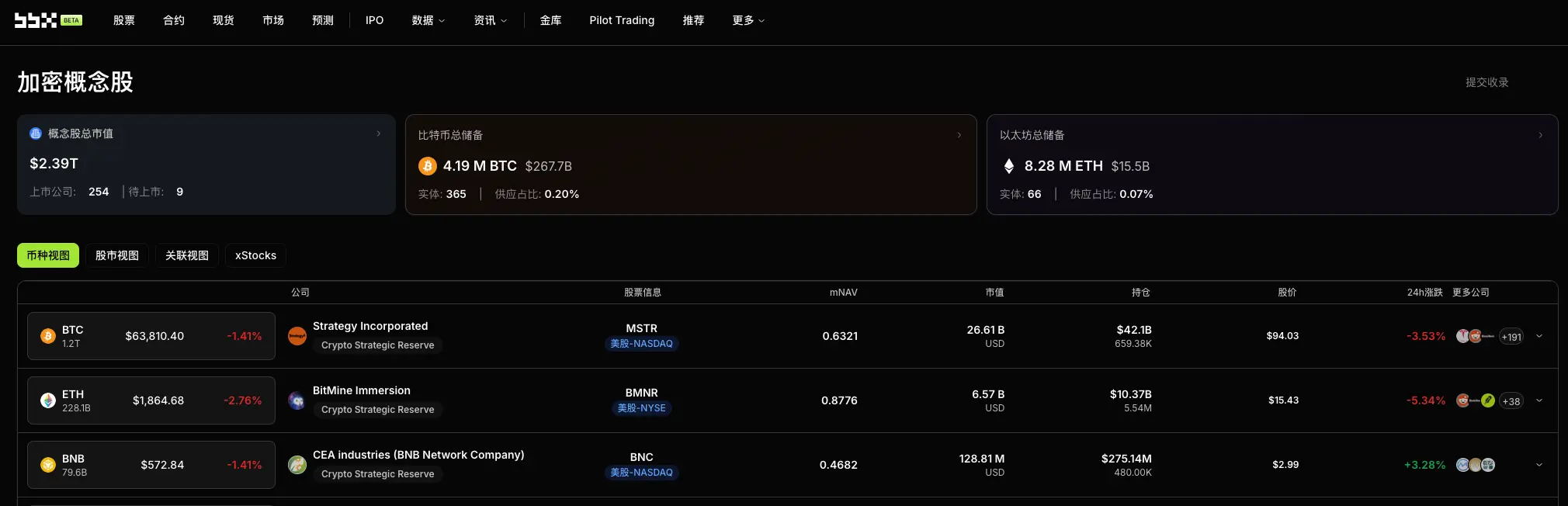
Travel Rule Compliance Rate Rises to 83%: Regulatory Walls Built but "Large Gaps Remain"
As the global standard setter for anti-money laundering and counter-terrorist financing, the Financial Action Task Force (FATF) has conducted a comprehensive review of the compliance progress of global Virtual Asset Service Providers (VASP) for 2026 in its latest document.
The data clearly indicates that with the legal advancement of regulations in various countries, 83% of the surveyed jurisdictions have currently implemented the "Travel Rule" through legislation, a significant leap from 73% in 2025, with another 11 jurisdictions rapidly advancing related implementation work. However, FATF Chairman Gilles Thomson pointed out sharply that the "passage" of the legislation does not equate to "implementation." Many jurisdictions still face significant systemic vulnerabilities due to insufficient technical penetration in identifying black market VASP activities, addressing offshore illegal platforms, and tracking anti-money laundering in decentralized finance (DeFi).
The Escalation of Stablecoin Warfare: Criminal Networks Forge "Proprietary Stablecoins" to Resist Judicial Seizure
Among the alarming warnings disclosed in this FATF report, the most shocking to the global compliance finance community is the "malicious evolution" of geopolitical high-risk actors and organized crime networks in the utilization of stablecoin technology.
The report notes that the abuse of stablecoins by terrorist financiers and North Korean-related network actors has continued to increase in 2026. More confrontationally, while criminals previously relied on mainstream stablecoins issued by Tether or Circle for money laundering, some international criminal networks have begun to independently develop "Proprietary Stablecoins" in response to increasingly stringent "address blacklisting and freezing" measures from centralized issuers. These customized on-chain tokens completely strip away the freezing and seizure interfaces of centralized control in their underlying smart contracts, thus establishing a "underground anti-freeze network" that is entirely detached from the global banking clearing system and the oversight of traditional law enforcement agencies.
Shocking Billions in Dark Currents: Major Cross-Border Cases Exposed in Cambodia and Spain
To illustrate the dire consequences of these vulnerabilities, the FATF cited several shocking cases of cross-border money laundering and fraud in its report:
One typical case shows that a Cambodian financial services group laundered at least $4 billion over a four-year period from 2021 to 2025, utilizing obscure digital asset cross-border clearing channels; meanwhile, in Europe, the Spanish Civil Guard successfully dismantled a massive cryptocurrency investment fraud network involving approximately €460 million in June 2025. These nominal money laundering and fraud amounts, ranging from hundreds of millions to billions of dollars, are continuously being globally transferred through regulatory gaps where the "Travel Rule" has not yet been fully implemented.
The Bidirectional Game of Corporate Treasury Allocation and Underlying Anti-Money Laundering Defense Lines
Summarizing the latest global cryptocurrency industry and regulatory landscape as of mid-July, the market is exhibiting a strong sense of fragmentation and collision. On one hand, we see top listed banking consortiums like South Korea's KB Financial Group (KRX: 105560) and capital forces like ORANGE JUICE continuously building grand cryptocurrency treasuries and ecological matrices through compliant trusts, formal funds, and industrial profits in the micro secondary market; but on the underlying defense line, the "anti-detection" technological evolution of underground black industries is also forcing regulators to further upgrade their toolkits. As FATF Chairman Gilles Thomson has called for, if governments and the private sector cannot fully tighten their penetrative cooperation on offshore VASP and DeFi in the second half of 2026, this dark current of hundreds of billions in scale will continue to pose a significant erosion of the compliance consensus within the mainstream financial system.
Source: https://bbx.com/ Cryptocurrency Concept Stock Information Database, compiled based on yesterday's announcements from global listed companies and SEC/TSE disclosure documents.
 Risk warning




Popular articles