Bitcoin mines are turning into AI factories
 Core Viewpoint
 From Bitcoin mining farms to OpenAI data centers, companies like Crusoe and CoreWeave are transforming into AI, driven by the electricity, talent, and capital accumulated during the last Crypto cycle, which is now flowing on a large scale to the new battlefield of computing power.
Written by: Little Cake
In Abilene, Texas, on a site of about 1,000 acres, eight H-shaped data centers are gradually coming online.
This is the first large campus of OpenAI's "Interstellar Gate" project. The entire project is planned for a capacity of 1.2 gigawatts, with the first two buildings already operational while the others are still under construction.
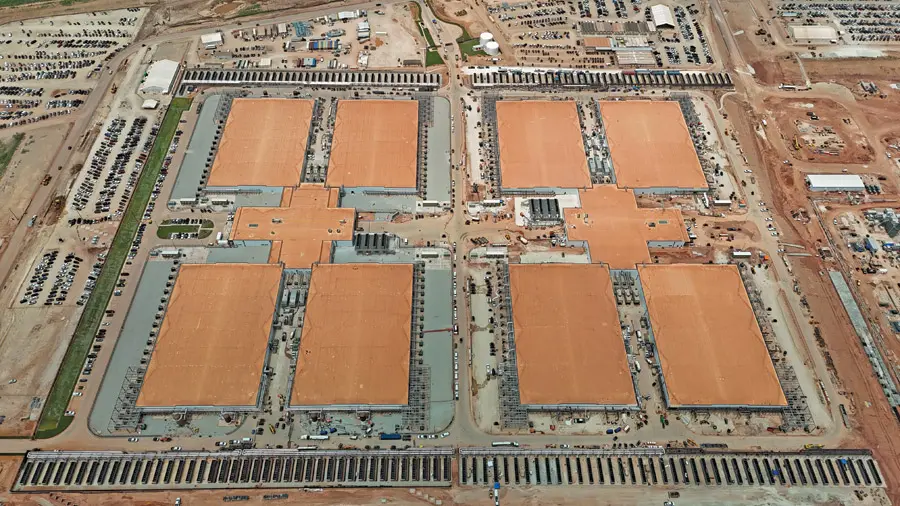
The campus is operated by Oracle, and the developer behind it is called Crusoe, which initially focused on Bitcoin mining.
Founder Chase Lochmiller was a partner at the crypto fund Polychain Capital.
In 2018, he and his childhood friend Cully Cavness discovered that oil fields in the U.S. were burning off large amounts of stranded natural gas every day. They moved power generation equipment and mining machines to the wellheads, using the gas that would otherwise be wasted to mine Bitcoin.
The logic of this business is simple: Find electricity in remote areas and convert it into computing power in a very short time.
Seven years later, customers have shifted from the Bitcoin network to OpenAI. By 2025, Crusoe will sell its Bitcoin business, which includes over 425 modular data centers, to NYDIG and focus on developing AI.
Crusoe's transformation seems significant, but its core capability has remained unchanged: finding electricity, building data centers, and operating and maintaining them.
Like Crusoe, many companies and individuals have successfully transitioned from Crypto to AI. They do not come from the same company like the PayPal mafia, nor do they have a common organization. What connects them are three types of assets left over from the last Crypto cycle:
- Electricity, land, and grid connection permits controlled by mining companies;
- Engineers and entrepreneurs trained by Crypto companies;
- Capital accumulated during the last bull market.
After 2022, these three types of assets began to flow into AI simultaneously.
Mining companies sell electricity to AI, not mining machines
"The biggest contradiction for humanity's future is the growing demand for data processing versus limited computing power."
In 2019, Bitmain founder Wu Jihan wrote this in his article "The Beauty of Computing Power," directly stating that this is why Bitmain invested in AI chips.
At that time, this statement seemed like a public relations phrase, but looking back six years later, it resembles a pre-written prophecy.
In February 2026, Wu Jihan's mining company Bitdeer announced it had cleared all Bitcoin inventory to provide liquidity for building AI data centers, showing a strong determination to transition from Crypto to AI.
The transformation of Bitcoin mining companies to AI is often misunderstood by the public as "turning mining machines into AI servers," but the reality is different.
Most Bitcoin mining machines are ASIC chips that can only execute specific hash algorithms and cannot be used to train large models. Even the GPUs left over from Ethereum mining farms are difficult to meet today's large AI clusters' requirements for networking, video memory, liquid cooling, and reliability.
The truly valuable assets for mining companies are the data centers already connected to the power grid.
Building an AI data center, the most challenging part is often not purchasing GPUs but finding hundreds of megawatts of stable power, obtaining land, substations, transmission lines, and construction permits. This process can take years, and mining companies have already completed a lot of preliminary work in North America, Northern Europe, and the Middle East to reduce mining costs and ensure compliance.
As Bitcoin mining profits decline and AI companies are willing to sign long-term high-price contracts, mining companies naturally begin to change clients.
CoreWeave was one of the first to complete the transformation.
In 2016, three commodity traders placed a GPU on a pool table in their Manhattan office and began mining Ethereum. After the Crypto winter arrived, they took advantage of falling prices to acquire a large number of second-hand graphics cards, subsequently expanding their business into film rendering and machine learning.
This company was initially called Atlantic Crypto but later changed its name to CoreWeave. Its IPO documents show that before 2022, most of the company's revenue still came from cryptocurrency mining; afterward, the Crypto business was completely halted.
Today, CoreWeave has become a leading AI cloud company supported by Nvidia, and its path is being replicated across the entire crypto mining industry.
In 2026, TeraWulf signed a data center lease with Anthropic for approximately 401 megawatts over 20 years, with an initial contract value of about $19 billion;
Cipher Mining signed a 300-megawatt, approximately $5.5 billion, 15-year agreement with AWS;
Core Scientific will provide a large amount of data center capacity to CoreWeave on a long-term basis.
Hut 8 signed two consecutive 15-year leases at the Beacon Point campus in Texas, each with a base contract value of about $9.8 billion.
IREN disclosed a new contract totaling $2.8 billion after reaching a $9.7 billion cloud service agreement with Microsoft in July 2026.
According to CoinShares statistics, as of the first quarter of 2026, publicly listed mining companies had announced over $70 billion in AI and high-performance computing contracts. Meanwhile, the unit revenue from Bitcoin mining had once dropped to about $30 to $35 per PH/s per day, and a number of mining farms using old equipment or facing high electricity prices were nearing losses.
Mining companies have transformed from computing power facilities of the crypto era into computing power infrastructure of the AI era, still riding the wave.
From OpenSea to OpenRouter
In addition to mining farms, people in the Crypto industry are also migrating to AI.
Alex Atallah is the co-founder and former CTO of OpenSea. At the height of the NFT boom, OpenSea's monthly trading volume once exceeded $4 billion. In July 2022, Atallah left the company to prepare for a new venture.
In 2023, he founded OpenRouter.
OpenRouter addresses a straightforward problem: with the increasing number of large models, varying in price, speed, and capability, developers do not want to re-integrate APIs for each model company. Through OpenRouter, they only need to connect one interface to access hundreds of models and automatically allocate requests based on price, performance, and availability.
By 2025, OpenRouter completed a total of $40 million in financing, with a valuation of about $500 million.
In May 2026, it completed a $113 million Series B financing led by CapitalG, raising its valuation to about $1.3 billion. In the past six months, the amount of tokens processed by the platform weekly grew from 50 trillion to 250 trillion.
What OpenRouter does is not entirely the same as OpenSea, but the business structure is quite similar.
OpenSea aggregates NFT buyers and sellers, while OpenRouter aggregates models, computing power suppliers, and developers. The former facilitates digital asset transactions, while the latter facilitates inference requests. The product has changed, but the ability to build markets and integrate fragmented supply has not.
Some traces of Crypto are even directly retained in the product. On the OpenRouter registration page, alongside Google and GitHub logins, there is still a MetaMask option, and the platform also accepts USDC payments.

Fal.ai is another example.
Founder Burkay Gur participated in building a machine learning platform at Coinbase and started his company in 2021, initially developing machine learning data pipelines and deployment tools.
After the open-sourcing of Stable Diffusion, they found that while there were more and more image and video models, the inference speed was slow, deployment was troublesome, and GPU utilization was low. Thus, Fal.ai shifted its focus to generative media inference.
This choice quickly paid off.
By mid-2025, Fal.ai's annualized revenue was approaching $95 million. In December of the same year, the company completed a $140 million Series D financing led by Sequoia Capital, reaching a valuation of $4.5 billion. Companies like Adobe, Canva, and Perplexity are using its generative media infrastructure.
Using Crypto money to support AI
Mining companies provide electricity and data centers to AI, while capital accumulated during the Crypto cycle enters AI in another way.
The most direct example is Jed McCaleb.
He created the crypto exchange Mt.Gox and later co-founded Ripple and Stellar, becoming one of the earliest billionaires in the Crypto industry.
In 2023, McCaleb's Navigation Fund allocated about $500 million to purchase 24,000 Nvidia H100 GPUs in one go and established Voltage Park to rent GPUs to AI companies and research institutions.
He did not create another public chain but converted the money earned from Crypto into the most scarce assets in the AI industry.
In 2026, Voltage Park merged with AI development platform Lightning AI, with the valuation given for the merged entity being about $2.5 billion. The wealth accumulated from the last crypto cycle thus transformed into the balance sheet of an AI cloud company.
The investment portfolio left by SBF, the founder of the now-collapsed crypto exchange FTX, provides an even more dramatic case.
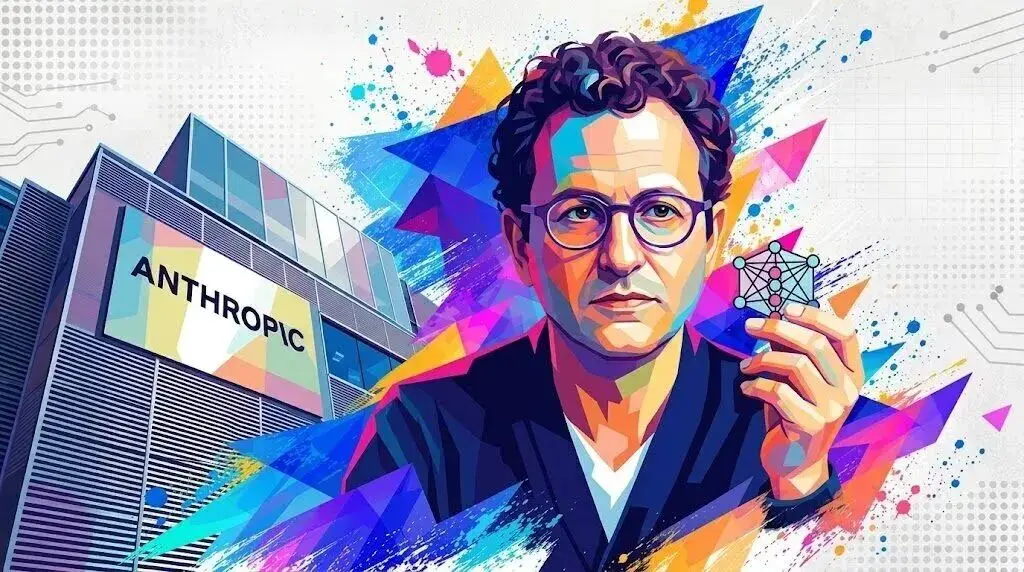
In 2022, SBF invested $500 million in the then-unknown Anthropic, holding about 13.5%. After FTX's bankruptcy, the liquidation team sold these shares in batches in 2024, recovering about $1.3 billion. Today, Anthropic's post-investment valuation has reached $96.5 billion. Assuming FTX had not sold its shares, its stake would still be about 6.7%, corresponding to a value of about $65 billion, equivalent to about 130 times the initial $500 million investment.
The story of Cursor is even more extreme.
In April 2022, SBF's fund Alameda participated in the early financing of Anysphere with $200,000, which later launched the AI programming tool Cursor. After FTX entered bankruptcy proceedings, the liquidation team sold this stake for $200,000 in April 2023, almost breaking even.
In June 2026, SpaceX announced it would acquire Anysphere in a $60 billion all-stock transaction. According to public reports, Alameda initially held about 5% equity. If we completely ignore the dilution from Anysphere's subsequent financing, the paper value of this stake could reach $3 billion, equivalent to 150 times the initial $200,000 investment.
This cannot simply be interpreted as SBF being an investment genius; a more accurate understanding is that before the release of ChatGPT, the most aggressive and risk-tolerant capital from the Crypto bull market had already begun to seek AI projects.
During the boom of the Crypto market, a large amount of capital believed in two judgments: Computing power would become increasingly valuable, and software networks could expand globally in a very short time. AI just happens to meet both conditions.
Therefore, after Crypto capital entered AI, it purchased not only graphics cards but also funded new technologies and organizational experiments.
Nous Research is a typical case.
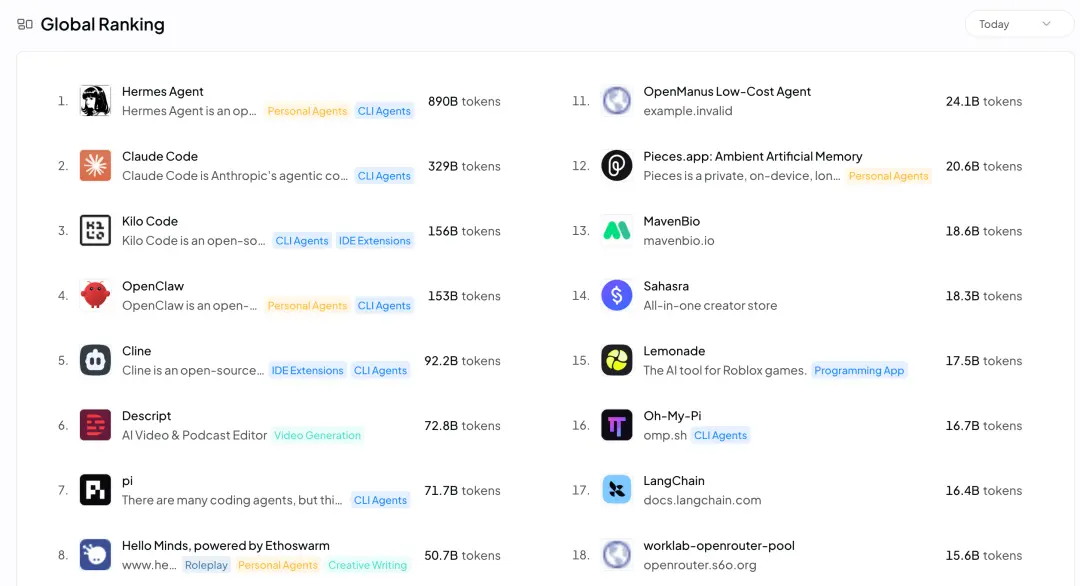
The Hermes Agent developed by Nous is an open-source AI agent that can accumulate long-term memory and automatically generate skills. According to statistics from OpenRouter, Hermes Agent Token has the highest global call volume, surpassing Claude Code.
In 2025, the crypto investment firm Paradigm led a $50 million Series A financing for Nous Research.
According to reports at the time, this financing corresponded to a valuation of about $1 billion for its yet-to-be-issued tokens. Previous investors in Nous included crypto VC Distributed Global and former Coinbase CTO Balaji Srinivasan.
In addition to Hermes, Nous is also developing Psyche, a distributed model training network built on Solana.
Traditional AI labs need to concentrate a large number of GPUs in the same data center. Psyche aims to validate another route: connecting GPUs scattered across different regions and belonging to different participants to jointly train models, coordinating training progress, verifying participants, and allocating rewards through smart contracts.
At this stage, Psyche remains an experiment, and the testnet tokens have been explicitly marked by the official team as having no economic value, but it represents another impact of Crypto capital entering AI.
OpenAI also seriously considered a similar direction early on.
OpenAI was established in 2015 as a nonprofit organization, but the funding needed for cutting-edge models quickly exceeded what a donation model could support. By the end of 2017, Sam Altman and Greg Brockman had begun discussing new financing structures, one of which was token issuance.
Subsequent internal emails revealed that the team seriously studied issuing tokens in early 2018. Musk explicitly opposed it, believing that token issuance would severely damage OpenAI's credibility. OpenAI later added that by the end of January that year, the team had gradually lost interest in this proposal.
OpenAI ultimately chose to establish a for-profit entity and received substantial investment from Microsoft, but Sam Altman did not leave Crypto.
In 2019, he co-founded Worldcoin with Alex Blania and Max Novendstern. This project uses iris recognition devices called Orb to verify that a user is a real and unique human, establishing an identity and payment network through World ID and WLD tokens.
From Crusoe, CoreWeave to OpenRouter, Fal.ai, and Nous Research, these stories filled with survivor bias do not imply that Crypto companies transitioning to AI have a higher chance of success.
Mining companies have left behind electricity, land, and grid connection permits; exchanges and Web3 companies have trained a group of engineers familiar with distributed systems, GPU scheduling, and global products; the wealth created by rising tokens has transformed into capital for purchasing graphics cards, investing in model companies, and funding technological experiments.
Crypto has not magically transformed into AI; it has merely transferred the resources left over from the last cycle to the next industry that needs them more.
 Risk warning