The options market enters a new paradigm: Evolution of the 2026 H1 landscape and key features
 Core Viewpoint

 Deribit's monopoly position is loosening, and Bybit's share has jumped to second place globally.
Author: momo, ChainCatcher
Introduction
In 2026, the cryptocurrency options market experienced a significant shift in its landscape. The long-dominant Deribit saw a noticeable decline in market share for the first time, while cryptocurrency CEX platforms continued to expand their influence. Bybit's trading volume and share surged to become the second largest globally, and market competition is gradually evolving from "one dominant player" to "one strong player with many others." Meanwhile, new categories of options, such as gold (XAUT), have been launched, indicating that options products are beginning to break through the boundaries of crypto-native assets and explore a wider range of asset classes.
Although the current options trading volume accounts for only about 2.4% of the entire cryptocurrency derivatives market, making it a relatively niche segment, the market has already entered a new development stage in terms of competitive landscape, user structure, and product innovation. This report compiles data from platforms like CoinGlass to analyze the development of the cryptocurrency options market in the first half of 2026 from multiple dimensions, including market size, competitive landscape, trading platform performance, and product innovation.
Core Insights and Data
Market size shows resilience and remains in a high growth phase. In the first half of 2026, the total trading volume of the options market reached $867.5 billion, a 12% increase compared to the same period in 2025; the average monthly open interest (OI) was about $42.5 billion, roughly on par with the first half of 2025. However, options account for only about 2.4% of the entire cryptocurrency derivatives market, far below the levels of equity derivatives in traditional financial markets, indicating significant growth potential.
Deribit's monopoly loosens, and the market enters a "one strong player with many others" phase. Deribit's share fell from 66.2% in 2025 to 41.8%, while the three major cryptocurrency CEX platforms combined for 49.1%, nearly splitting the market evenly, transitioning from a single dominant player to a more diverse competition.
Bybit's trading volume share jumps to second, with retail becoming the main growth driver. Bybit's share surged from 9.3% to 22.4%, increasing by nearly 20 percentage points in 12 months. Its Volume/OI ratio reached 20.7, indicating that the scale of retail flow is no longer negligible.
Different options markets show differentiated competitive landscapes. Deribit still leads with 55.3% of BTC options; Bybit ranks first in ETH options with 38.0%; in SOL options, Deribit (50.0%) and Bybit (40.0%) form a strong duo, with Binance in third at 10.0%.
Category expansion opens new space, and the RWA track is worth observing. The launch of XAUT (gold) options indicates that options tools are beginning to extend beyond crypto assets. If options products for real-world assets like gold can gain traction, the market space will expand from "crypto options" to a larger cross-asset derivatives market, and the dimensions of competition will also upgrade.
I. Overview of the Cryptocurrency Options Market
1. The cryptocurrency options market shows resilience and remains in a growth phase
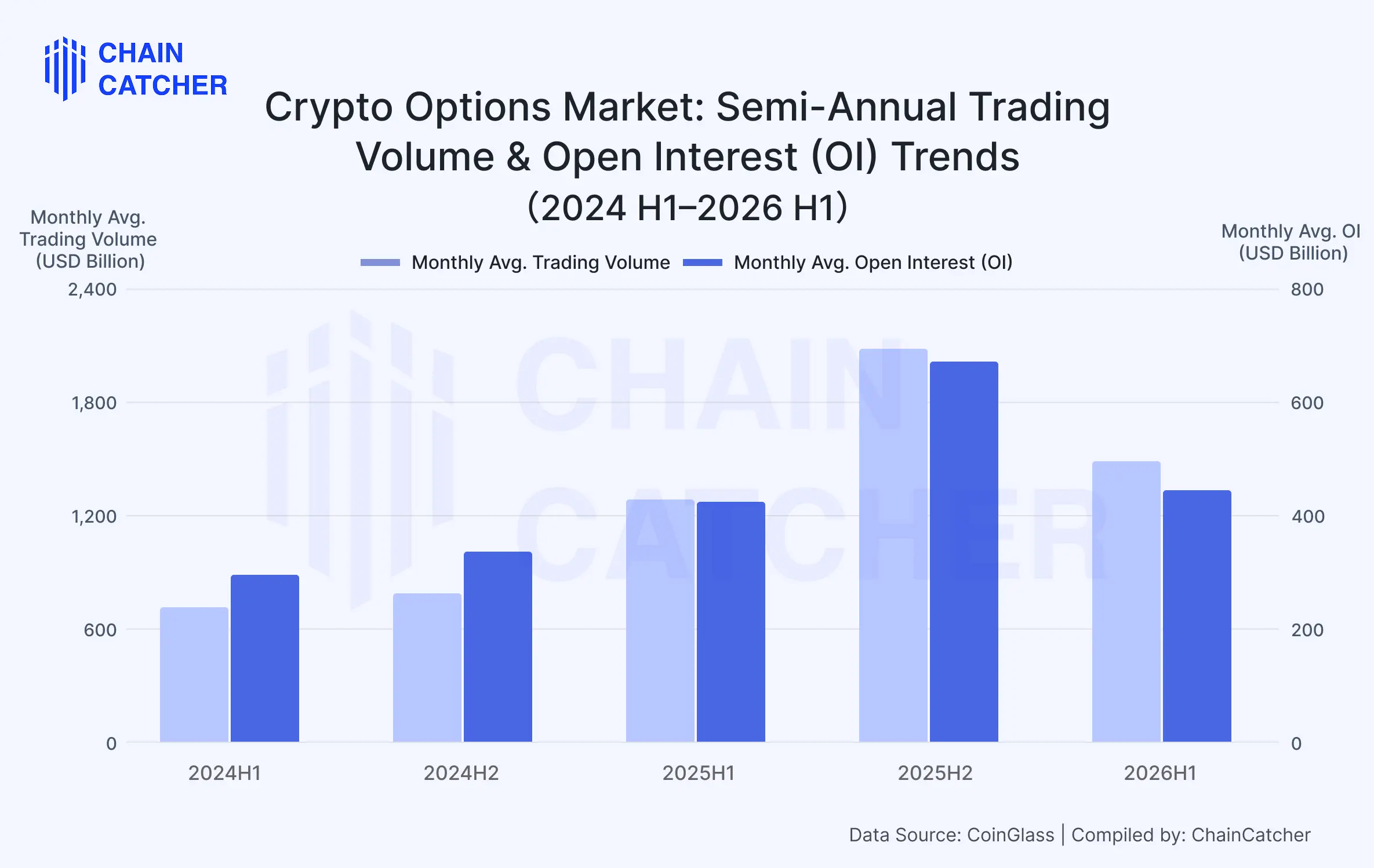
In the first half of 2026, the global cryptocurrency options market accumulated a trading volume of $867.5 billion, averaging about $144.6 billion per month.
This represents an approximate 12% increase compared to the same period in 2025 ($774.6 billion). Looking at a longer time frame, the growth trend is even more pronounced; in the first half of 2024, the total market trading volume was only $491.2 billion; by the second half of 2025, it reached $1.25 trillion, growing over 150% in just over a year.
In terms of capital accumulation, the average monthly open interest (OI) for the entire market in the first half of 2026 was about $42.5 billion. Although it has declined from the peak in the second half of 2025, it remains roughly on par with the first half of 2025, indicating that the market has maintained a high level of capital even after the previous round of cooling.
While the market size continues to expand, options still belong to the "low penetration" product category compared to the entire cryptocurrency derivatives market.
In 2025, the total trading volume of cryptocurrency options was approximately $2.03 trillion, while the total trading volume of the entire cryptocurrency derivatives market was about $85.7 trillion, with options trading volume accounting for only about 2.4%. In traditional financial markets, stock and index options typically constitute an important part of derivatives trading, indicating that cryptocurrency options are still in the early stages of development.
This means that current industry competition is more focused on the incremental market rather than zero-sum competition in the existing market, leaving significant room for penetration in the future.
2. Growth structure begins to change: BTC remains dominant, but emerging markets are rising
From the perspective of different assets, BTC remains the absolute core of the cryptocurrency options market.
In the first half of 2026:
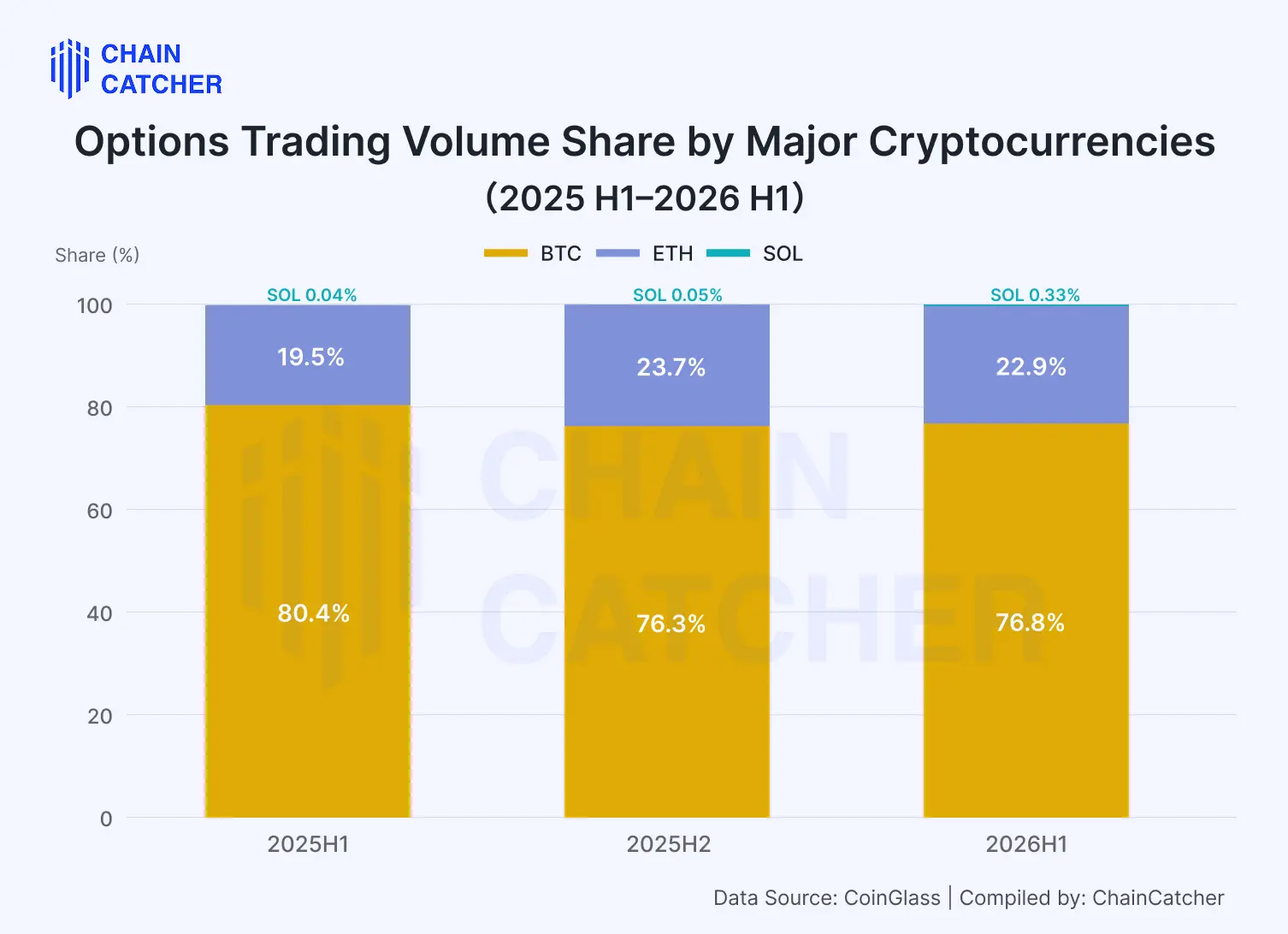
- BTC options trading volume was $665.85 billion, accounting for 76.8%
- ETH options trading volume was $198.73 billion, accounting for 22.9%
- SOL options trading volume was $2.87 billion, accounting for 0.33%
However, more noteworthy than market size is that the sources of growth are changing.
BTC still contributes the vast majority of trading volume, while ETH's market share continues to rise, and emerging assets like SOL are growing even faster. In the first half of 2026, SOL options trading volume increased more than sevenfold compared to the same period in 2025. Although the current scale is still limited, it reflects that market demand is gradually spreading from BTC to more assets.
This indicates that the current growth of the options market is no longer entirely dependent on BTC and is beginning to enter a multi-asset development phase.
3. Notable new signals: The options ecosystem of BTC and ETH begins to differentiate
In addition to trading scale, the maturity of the options markets for different assets is also showing clear differentiation.
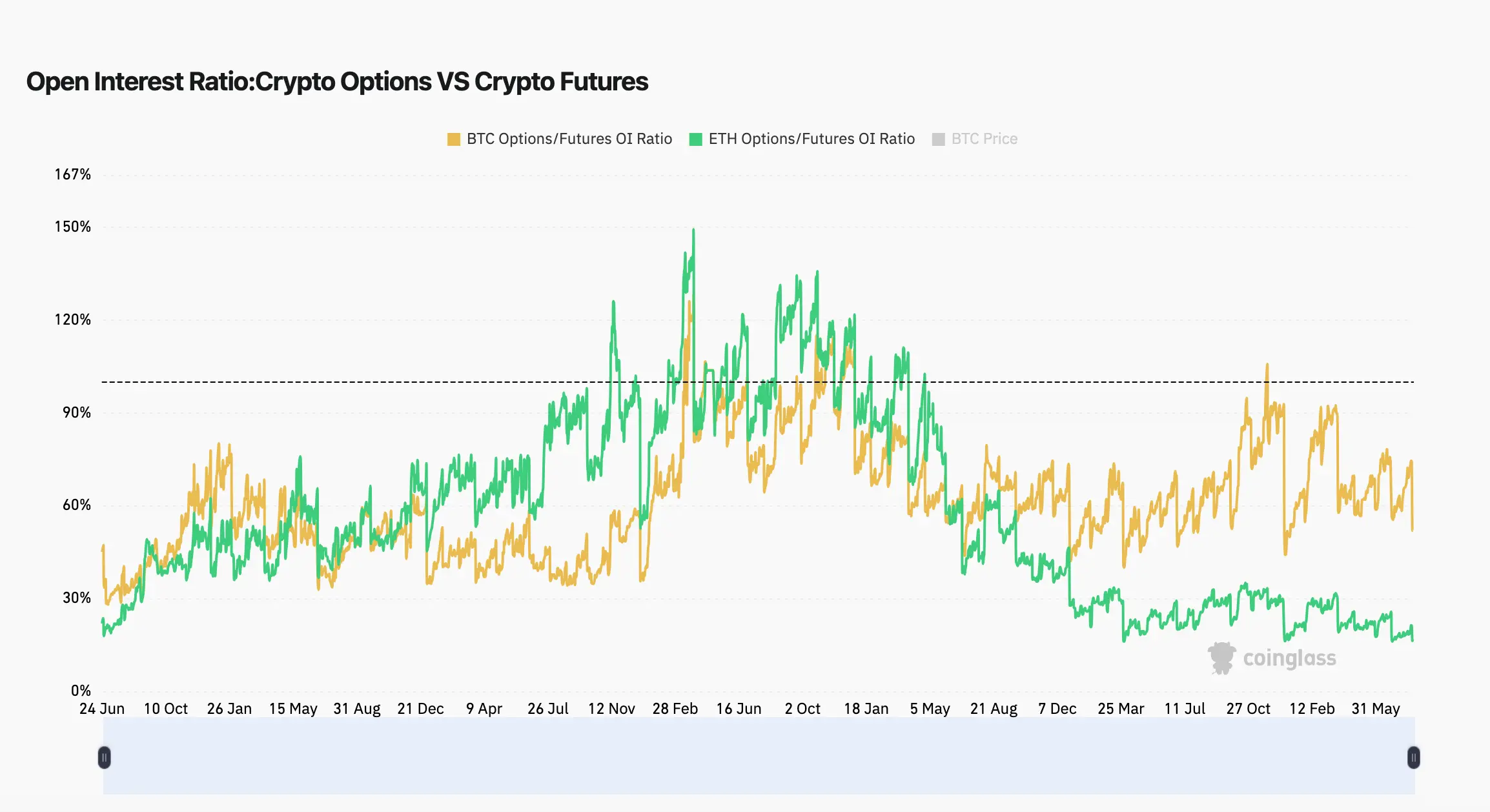
In the first half of 2026, the BTC options/contract open interest ratio remained long-term in the 80%-90% range, indicating that options have become an important part of the BTC derivatives market, with a relatively mature market foundation for both risk management and trading strategies.
In contrast, the ratio for ETH has dropped to 15%-25%. Although ETH options trading volume continues to grow, overall derivatives trading is still dominated by perpetual contracts, and the options ecosystem remains in a relatively early development stage.
This differentiation indicates that the options markets for different assets are entering different development stages, which also means that the competitive landscape among various trading platforms for different cryptocurrencies may not evolve along the same path.
II. The Cryptocurrency Options Market Enters a New Competitive Landscape
After two years of rapid growth, the cryptocurrency options market has not only expanded in size but also begun to change in its competitive landscape.
For a long time, Deribit maintained an absolute leading position due to its liquidity and institutional client advantages. However, entering 2026, as cryptocurrency CEX platforms continued to make strides, market share began to undergo the most significant redistribution in recent years.
1. Deribit's monopoly loosens, and Bybit's share jumps to second
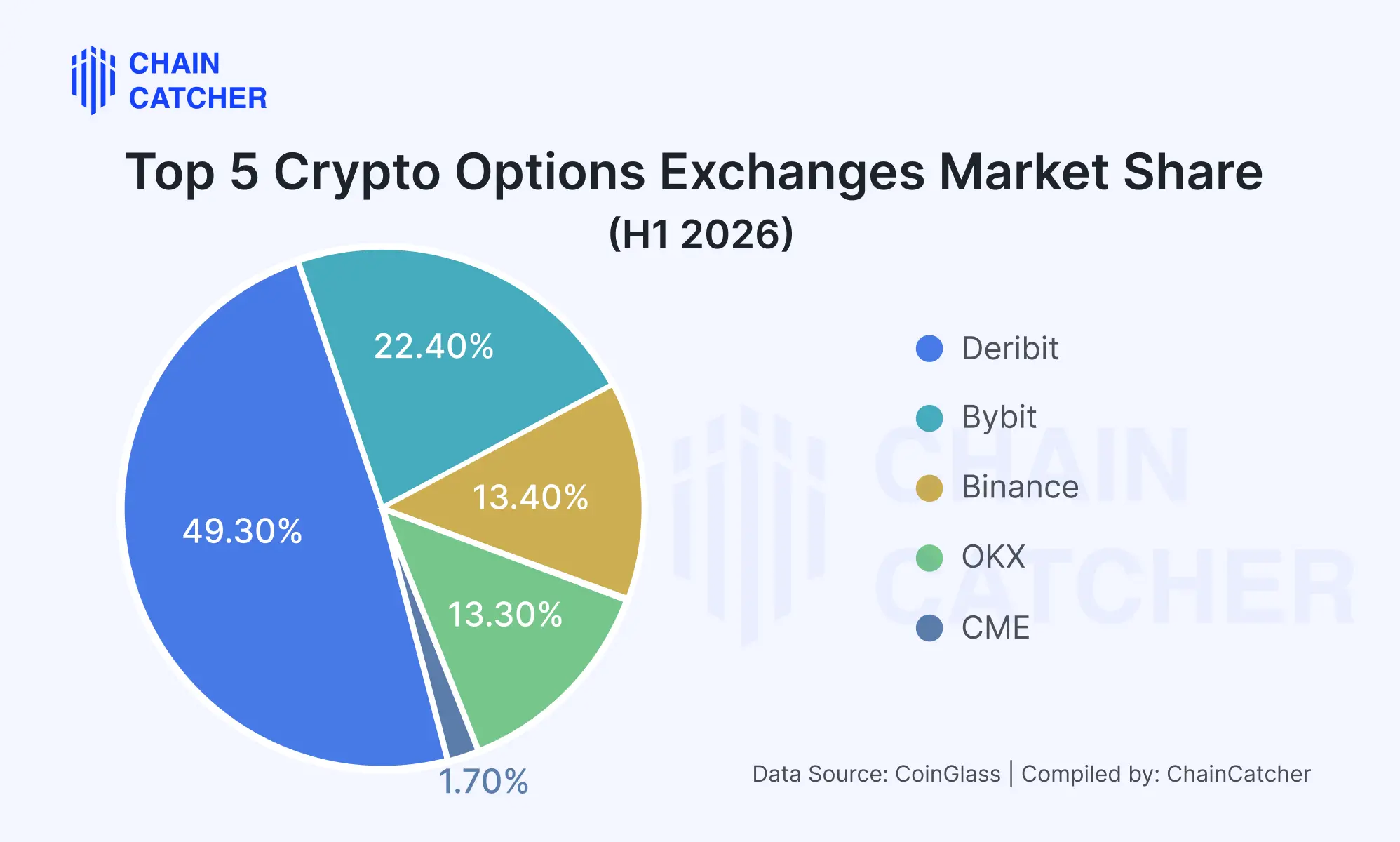
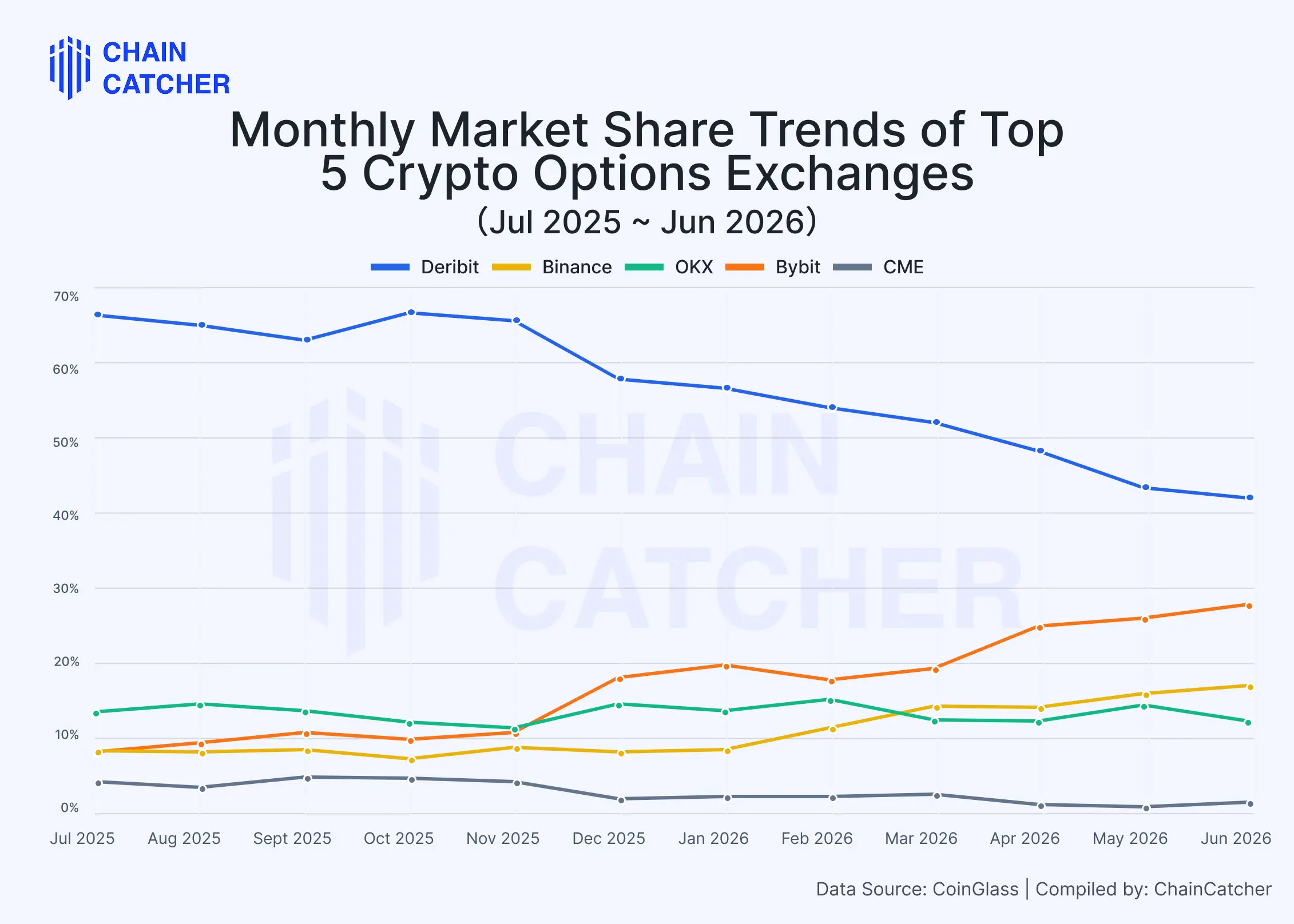
In terms of trading volume, Deribit still ranks first, but its monopoly position has clearly weakened. In the first half of 2026, its share was 49.3%, meaning nearly half of the market's trading volume still flows through this established options platform. However, looking back over the past 12 months, Deribit's share has declined from 66.2% in July 2025, rebounding to 66.5% in October 2025, but has not returned above 60% since then, dropping below 50% for the first time in April 2026 and falling to 41.8% in June. This trend indicates that Deribit's long-standing absolute monopoly is being eroded.
Bybit is the most prominent variable in this landscape change. In the first half of 2026, its share reached 22.4%, ranking second. Its share growth has not been gradual but has shown a stepwise breakthrough: in August 2025, it first exceeded Binance at 9.3%; in December 2025, it jumped from 10.6% to 17.9%, surpassing both Binance and OKX to become the top CEX internally; it continued to climb, reaching 27.7% in June 2026. This means Bybit increased its market share by nearly 20 percentage points in 12 months.
Binance (13.4%) and OKX (13.3%) have shares that are close, but neither has formed a trend-breaking movement in the past 12 months. CME's share fell from 4.1% in July 2025 to 1.7%, making it the platform with the most significant share loss during the same period.
From the evolution of the competitive landscape, Deribit holds a 49.3% share of the entire market, while the three major CEX platforms combined account for 48.9%, nearly splitting the market evenly, transitioning the options market from Deribit's single dominance to a "one strong player with many others" structure.
2. BTC, ETH, SOL: Differentiated competitive landscapes emerge in different options markets
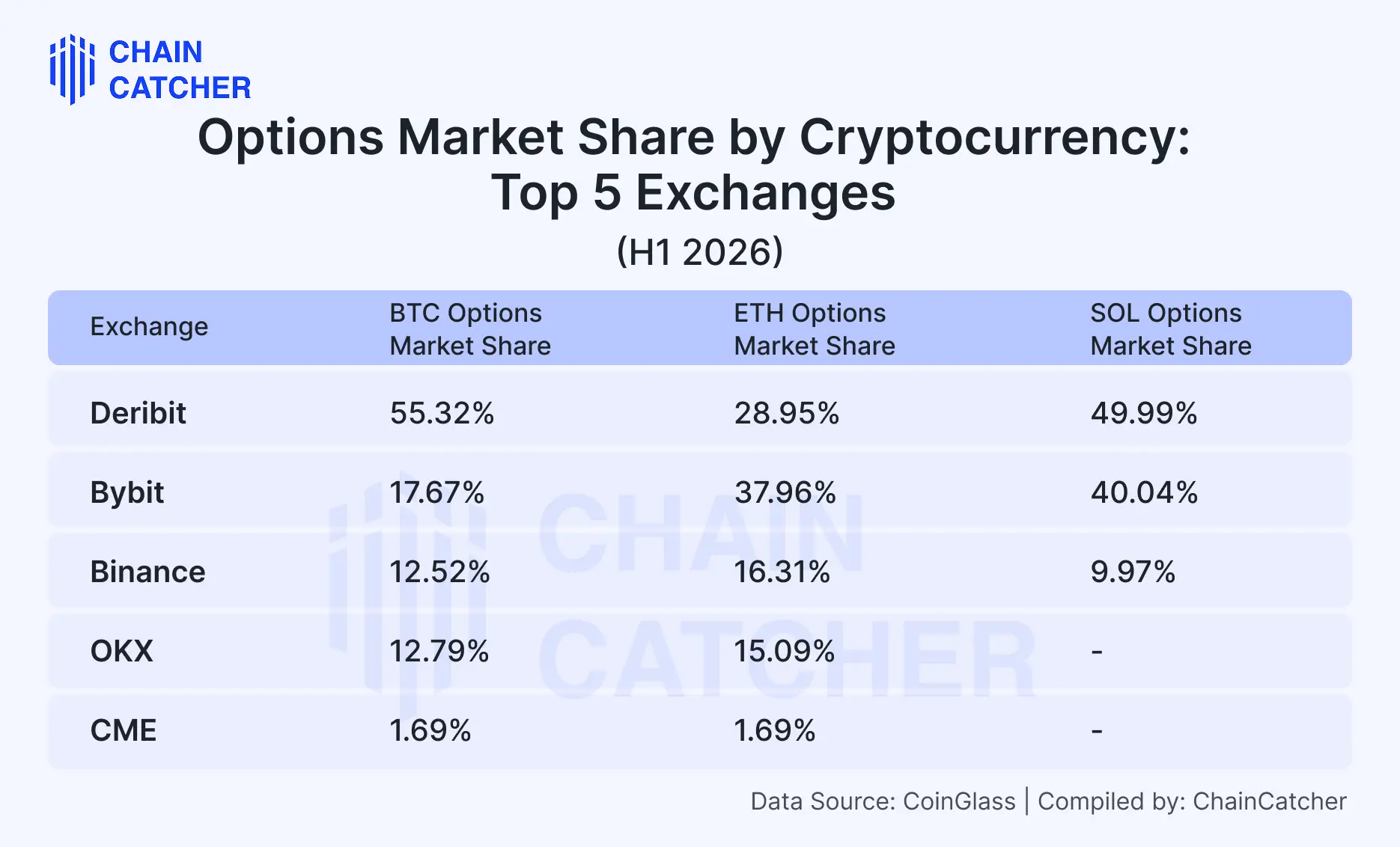
Breaking down the data by major cryptocurrency options, the advantages of different exchanges are clearly distinct.
In BTC options, Deribit maintains a leading position with 55.3% of the share, remaining the platform with the most concentrated liquidity for BTC options. Bybit ranks second with 17.7%, while OKX and Binance account for 12.8% and 12.5%, respectively, with CME at only 1.7%. Deribit's moat in BTC options remains deep and has not been significantly shaken.
In ETH options, a decisive change has occurred. Bybit ranks first with a 38.0% share, surpassing Deribit (29.0%) for the first time in a single core category, with Binance (16.3%) and OKX (15.1%) in third and fourth place, respectively, with some distance from the top two. CME also participates with a 1.7% share.
In SOL options, Deribit (50.0%) and Bybit (40.0%) form a strong duo, with Binance in third at 10.0%. From a monthly trend perspective, Bybit's share has exceeded Deribit for several months since February.
Overall, Deribit still holds a dominant advantage in BTC options, but the competitive landscape has undergone substantial changes in ETH and emerging varieties. Deribit and Bybit remain the top two in all three major categories.
3. Capital accumulation and user structure: Differentiated patterns between institutions and retail
Trading volume reflects flow, while open interest (OI) reflects capital depth. When combined, the differences in user structure across platforms are significant.
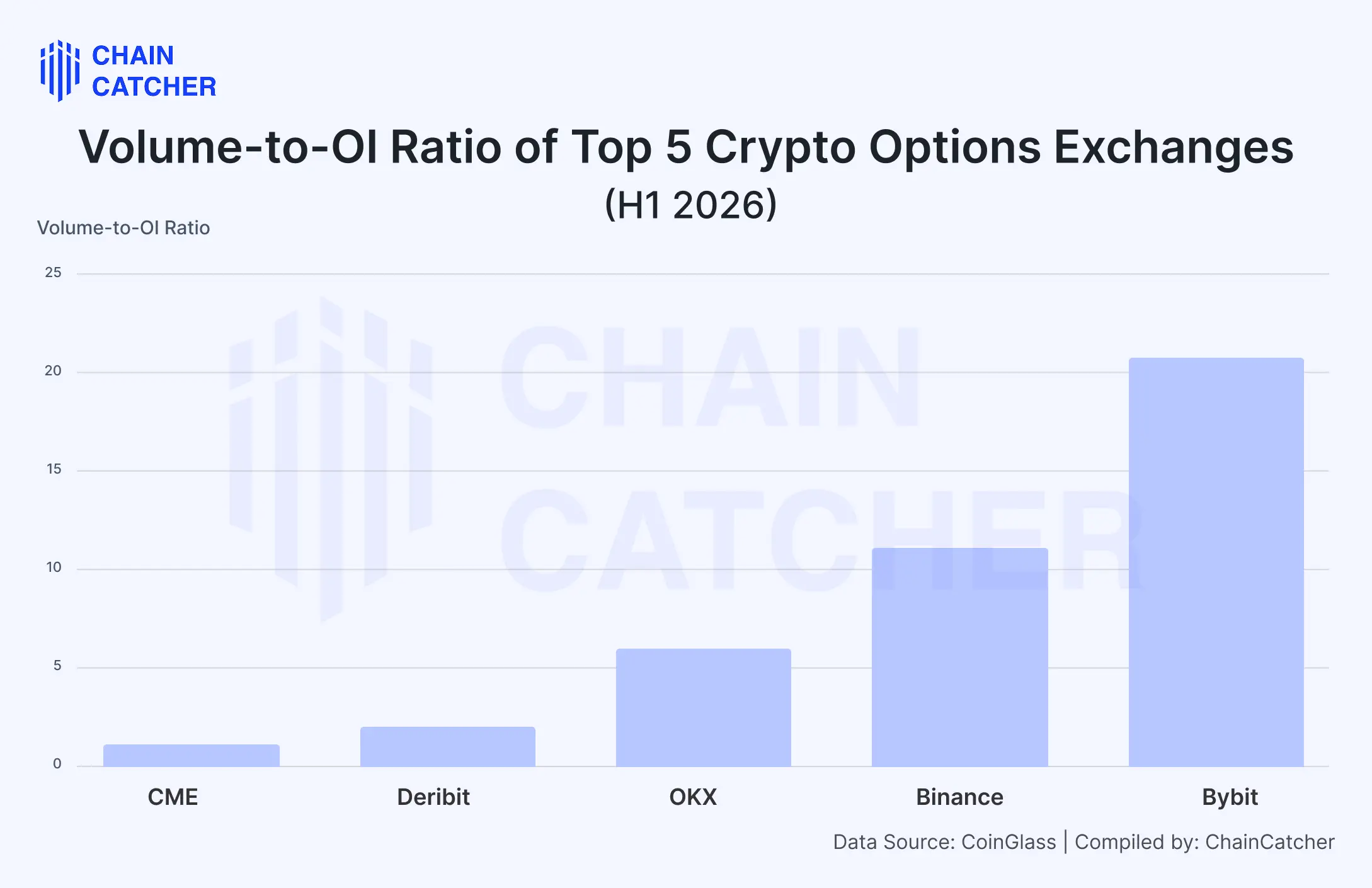
Deribit shows a significant gap between its 80.5% OI share and 49.3% trading volume share, with a Volume/OI ratio of only 2.1. This indicates that Deribit attracts long-holding, low-turnover capital, with strategic positions from institutional clients being the main component.
Bybit presents a completely opposite form. Its Volume/OI ratio of 20.7 is the highest among the five exchanges, with a trading volume share of 22.4% corresponding to only 3.7% OI share. Users frequently open and close positions, with small individual position sizes and short capital stay durations, typical of retail high-frequency traders.
The differences between the two are not a matter of superiority but rather a natural result of serving different customer groups. User-side data further confirms this trend of user structure differentiation. In the first half of 2026, according to Bybit, the average daily active trading users (DAUT) for options remained stable in the range of 6,000-9,800; the monthly Taker Volume average exceeded $30 billion. The combination of high DAUT and high Taker Volume indicates that its 22.4% trading volume share is not merely due to institutional market makers trading against each other, but rather the accumulation of genuine trading behavior from retail users.
Binance's Volume/OI ratio is 11.8, and OKX is 5.7, both positioned in the middle range between Deribit (2.1) and Bybit (20.7). Over the past 12 months, neither has shown significant shifts in their Volume/OI ratios, indicating relatively stable positioning.
A turnover rate of 11.8 suggests that Binance users have significantly shorter holding periods than those on Deribit and OKX, aligning more closely with Bybit's high-frequency characteristics. This ratio may be related to Binance's large base of contract users.
A turnover rate of 5.7 is relatively low among CEXs, closer to Deribit, indicating that OKX options users have a higher proportion of professional traders and institutions, with longer holding periods and a greater tendency towards portfolio holding and risk management operations.
Another noteworthy trend is that Bybit is the only platform with continuously growing OI in the first half of the year, rising from $1.54 billion in January to $1.77 billion in June, an increase of 15%. During the same period, Deribit's OI fell from its quarterly peak, while CME experienced a halving. Bybit's OI growth direction contrasts with other platforms, indicating that as its retail user base expands, the accumulation effect of OI is beginning to show.
III. Case Analysis: How to Break Through in a Deribit-Dominated Market?
The options market inherently exhibits a Matthew effect; the more concentrated the liquidity, the better the market maker quotes and depth, further concentrating users and capital towards the top players. Deribit's sustained market share above 60% over the years exemplifies this logic.
However, over the past 12 months, this pattern has been disrupted, and Bybit has emerged as the fastest-growing platform in terms of options market share. The following analysis uses Bybit as a case study to explore its specific path to share growth in the Deribit-dominated market across four dimensions: product positioning, user conversion, mechanism design, and category extension.
1. Differentiated competition, avoiding Deribit's advantageous market
Since its establishment, Deribit has positioned itself for professional traders and institutional clients. This product logic works smoothly for BTC options but objectively creates a barrier that retail users find difficult to cross: large contract sizes, high margin requirements, complex trading interfaces, and the need to learn specialized terminology for effective operation.
Bybit's entry logic is that options can accommodate both professional and ordinary users simultaneously; the key lies in how to design the product. It retains professional features such as European options and full strike price contracts while making several targeted adjustments at the front end: lowering the minimum trading unit, providing strategy templates instead of requiring users to combine them themselves, and relaxing margin thresholds.
2. Migration of contract users
Options and contracts have a natural connection in user demand. A user holding a long position in contracts facing downside risk will most directly hedge by buying put options. Traditionally, however, Deribit requires users to register separately, deposit funds separately, and learn new interfaces and operational logic, making cross-platform migration costly.
Bybit's advantage lies in its status as a leading derivatives platform. According to CoinGlass data, in Q1 2026, its total contract trading volume accounted for about 10.6% of the entire market, ranking third; its OI market share was about 13.8%, ranking second. Among over 80 million registered users globally, contract users can directly access the options section within their accounts without needing to open new accounts, transfer funds, or adapt to new interface logic. This "using contracts → using options" migration path significantly reduces users' decision-making costs.
This means that Bybit's growth in options business is not merely about acquiring new users but rather tapping into the demand of existing contract users. It has a mature derivatives ecosystem as a foundation, resulting in a naturally lower customer acquisition cost compared to starting from scratch.
3. Mechanism-level "removing barriers"
Bybit has made a series of adjustments to its product mechanisms, essentially addressing the same issue: breaking down the barriers of institutional-level products layer by layer to a level acceptable to ordinary traders.
First, Bybit's Unified Trading Account (UTA) allows funds within the same account to be freely allocated among spot, contracts, and options, enabling hedging operations to be completed within one account, enhancing the trading experience.
Second is margin efficiency. In the traditional model, each contract is counted separately for margin, and even holding a spread combination does not allow for margin reductions. Bybit's combined margin system supports margin deductions for options combinations, allowing retail users with limited capital to support more strategy combinations with the same amount of funds.
Additionally, regarding settlement currencies, past cryptocurrency options platforms have long settled in BTC and ETH, requiring users to bear the price volatility risk of the settlement currency while judging the rise and fall of the underlying asset. Bybit fully migrated to USDT settlement in February 2025, making profit calculations more intuitive and closer to the habits of contract users.
Each of these three changes is not complex on its own, but the combined effect is that options have transformed from "a specialized tool that requires dedicated learning" to "a feature that can be easily used within an account." When a contract user can directly operate options within their account, their willingness to try will significantly increase.
4. Category expansion, seeking new growth space
XAUT (gold) options are a product launched by Bybit in 2026 and the only options platform actively expanding underlying asset categories beyond BTC/ETH/SOL.
Although Bybit has broken through from the retail end, the launch of XAUT options indicates that its ambitions extend beyond just cryptocurrency assets.
The significance of this step lies not in the trading volume scale of XAUT options itself but in breaking out of the framework of "competing in Deribit's home turf." The demand for derivatives of RWA assets has long been met by traditional financial markets, and few have ventured into this area among cryptocurrency options platforms. If a platform can extend options tools to broader asset categories like gold beyond cryptocurrency assets, the market space it faces will no longer be the limited "cryptocurrency options market" but a larger cross-asset derivatives market.
Currently, this direction is still in its early stages, but it provides an observable perspective: whether there exists a path to achieve incremental customer acquisition through category expansion outside the Deribit-dominated cryptocurrency options market.
Conclusion
In the first half of 2026, the cryptocurrency options market exhibited two core changes.
First, the monopoly structure has been broken. This is also the most significant structural change in the past 12 months. Deribit's trading volume share has fallen below 50% for the first time, and the combined share of CEX platforms is nearly equal to that of Deribit. The market has shifted from a single dominant player in Deribit to a "one strong player with many others" structure. Deribit still retains depth and pricing power, but the incremental flow is clearly shifting towards CEX platforms. This trend has been validated across BTC, ETH, and SOL, as the monopoly of a single platform across all varieties is being gradually dismantled.
Second, the retail end has become the main growth driver. Unified accounts, USDT settlement, combined margin, and other product modifications have lowered the participation threshold for options. Options are no longer exclusive tools for institutions but are evolving into infrastructure accessible to a broader range of users, with Bybit being the platform showing the most significant data performance in this trend.
Looking ahead to the next phase of options, the market growth logic may further evolve from "retail penetration" to "asset category expansion." A noteworthy signal is that Bybit has begun extending options tools to RWA tracks such as XAUT gold options, a segment of derivative demand for real-world assets that has long been monopolized by traditional financial markets, with few cryptocurrency options platforms having previously ventured into this area.
If this direction proves successful, it would open a channel between traditional assets and cryptocurrency assets, expanding the entire tradable pool from crypto-native assets to a broader range of real-world assets, further enlarging the market space. As more RWA asset options are gradually introduced, the reachable user base will grow, and the market landscape is expected to undergo a new round of reshuffling.
 Risk warning




Popular articles