72 trillion won in a single day, foreign investment net purchases reached a record on Friday! Wall Street: The funding headwinds for Korean stocks have dissipated
 Core Viewpoint

 On July 31, South Korea's KOSPI stock market set a historical high for foreign net purchases in a single day at 7.2 trillion won, with monthly selling pressure significantly narrowing, and domestic pensions shifting from selling to buying. At the same time, regulators raised the threshold for single-stock leveraged ETFs to curb volatility. Citigroup believes that the funding headwinds have turned into tailwinds and maintains its KOSPI index target of 10,000 points unchanged.
Author: Zhang Yaqi, Wallstreet News
The funding situation in the South Korean stock market is undergoing a substantial turnaround. Foreign capital's net buying on a single day has set a historical record, and the selling pressure from domestic institutions has significantly eased. Coupled with regulatory tightening on leveraged ETF access, multiple factors point to a marginal improvement in KOSPI market volatility.
On July 31, foreign capital net bought approximately 7.2 trillion won in KOSPI stocks in a single day, setting the highest single-day net buying record ever. According to news from the Wind Trading Desk and a report released by Citigroup research analyst Jin-Wook Kim, this figure marks a fundamental reversal of the large-scale net outflow trend of foreign capital that had persisted for several months. Citigroup currently maintains its KOSPI target level at 10,000 points and believes that the headwinds from capital flows are further dissipating.
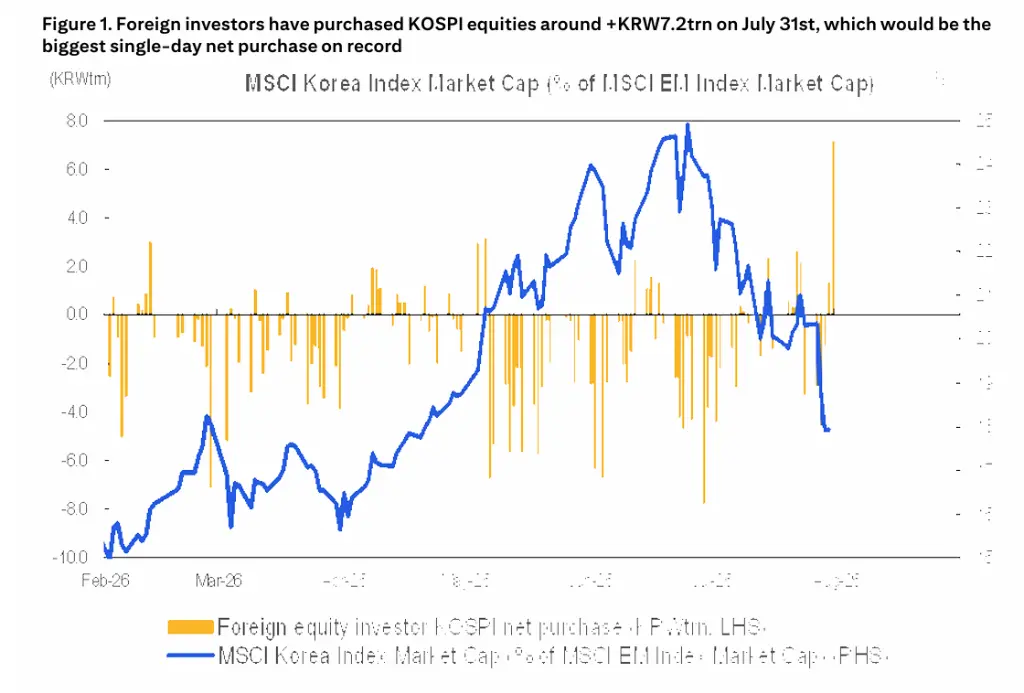
In terms of market impact, the monthly net selling scale of foreign capital in July has significantly narrowed to 9.8 trillion won, compared to net sales of 48.4 trillion and 44.5 trillion won in June and May, respectively. Meanwhile, domestic pensions and funds turned to net buying of KOSPI stocks at 1.0 trillion won in July, contrasting with net sales of 2.2 trillion and 2.4 trillion won in May and June, respectively. Citigroup believes that the headwinds in the funding situation of the South Korean stock market have clearly weakened, while the tailwinds from fundamentals and policies are gaining strength.
Record Net Buying by Foreign Capital, Monthly Selling Significantly Narrowed
The scale of foreign capital's return is unprecedented in historical data. The net buying of 7.2 trillion won on July 31 far exceeds any previous single-day record, marking a significant shift in foreign capital's attitude towards KOSPI.
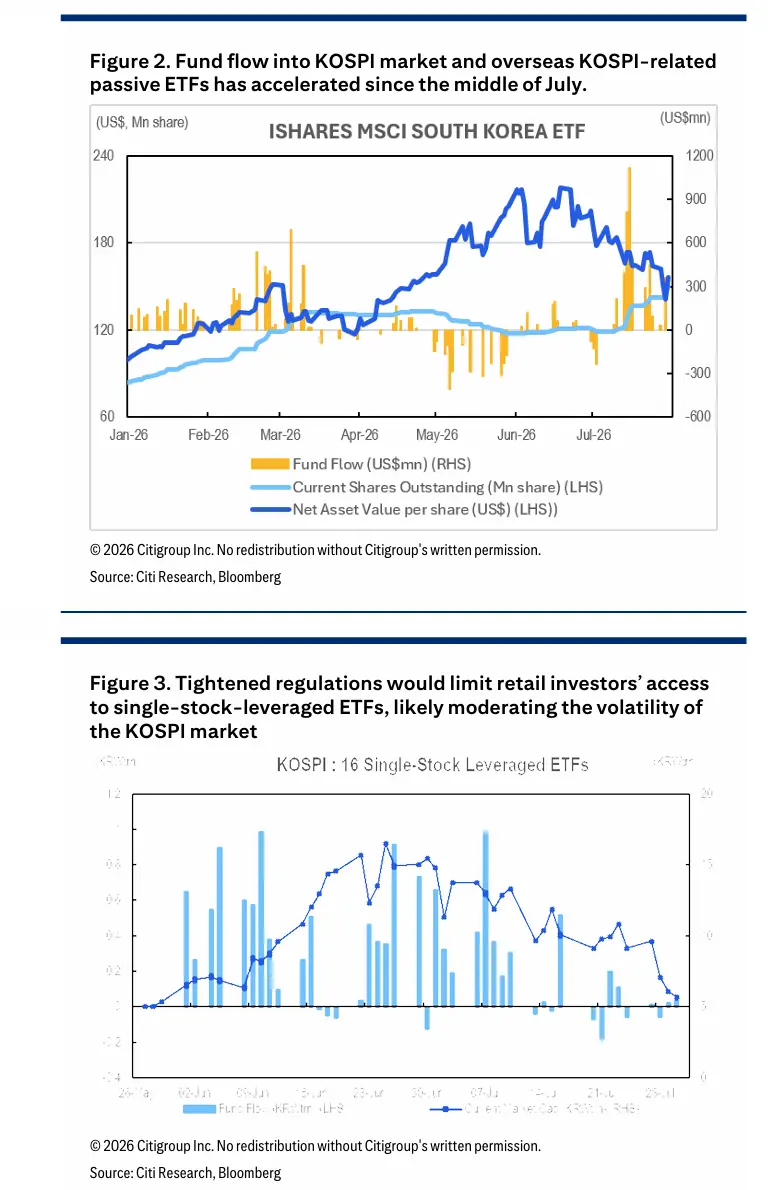
According to the Citigroup research report, this round of KOSPI adjustment is mainly driven by foreign capital's rebalancing operations and profit-taking. However, since mid-July, the pace of capital inflow into the KOSPI market and overseas KOSPI-related passive ETFs has noticeably accelerated, and this trend was further reinforced at the end of the month.
From the monthly data perspective, the net selling scale of foreign capital in July narrowed to 9.8 trillion won, a significant decrease compared to previous months—with net sales of 48.4 trillion and 44.5 trillion won in June and May, respectively. This narrowing indicates that the selling pressure from foreign capital that previously dominated the market downturn has significantly eased, and the momentum for buying on dips is accumulating.
Regulatory Tightening on Single Stock Leveraged ETFs Helps Stabilize Market Volatility
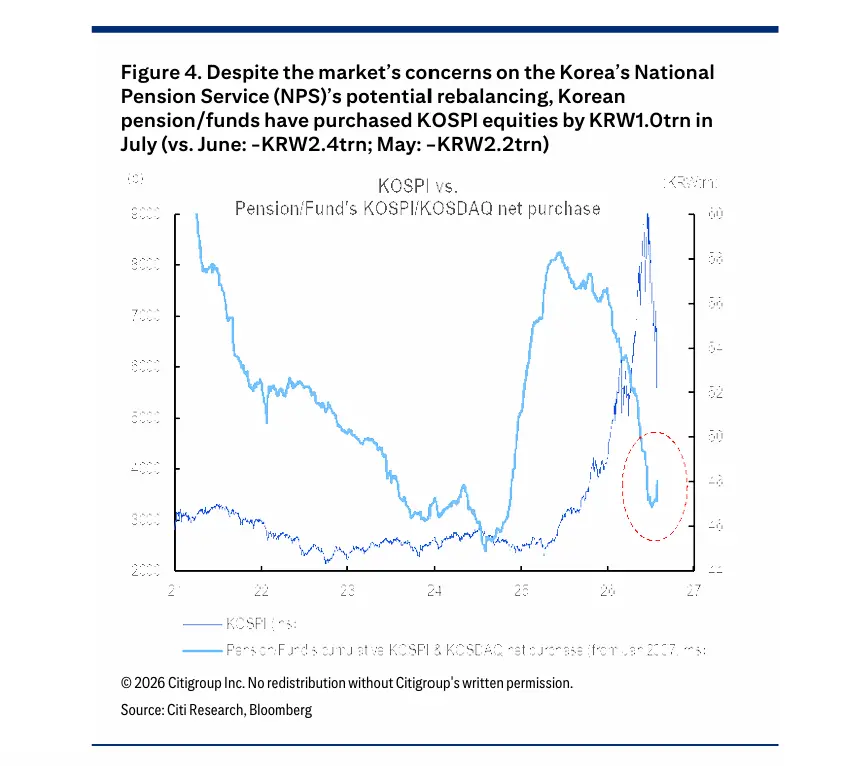
The South Korean Financial Services Commission (FSC) officially tightened the entry threshold for retail investors into single stock leveraged ETFs starting July 31, and the new regulations will suppress overall volatility in the KOSPI market.
Specifically, the minimum margin requirement for retail investors participating in single stock leveraged ETFs has been raised significantly from 10 million won (including stocks and cash) to 30 million won (cash only). After the implementation of the new regulations, the market effect was immediate—according to a report by Yonhap News on July 31, the trading volume of major single stock leveraged ETFs has dropped to about 50% of the monthly average since the new rules took effect. Meanwhile, the market value of 16 single stock leveraged ETFs has also shown a significant shrinkage.
Citigroup believes that the decrease in retail participation in high-volatility instruments helps to stabilize short-term fluctuations in the KOSPI market, providing a more stable operating environment for the market.
Concerns Over National Pension Rebalancing Eased, Fund Buying Turns Positive
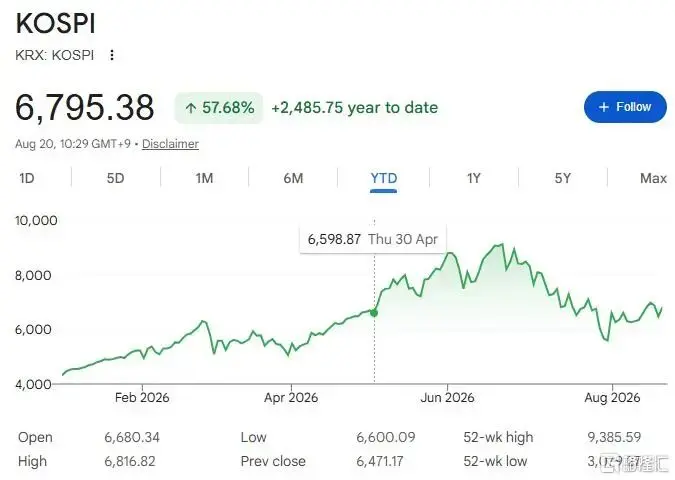
There were previous concerns about the potential selling pressure from the South Korean National Pension Service (NPS) due to potential rebalancing operations, but the actual data from July shows that institutional funds have quietly shifted direction.
In July, South Korean pensions and funds collectively net bought KOSPI stocks at 1.0 trillion won, in stark contrast to net sales of 2.2 trillion won in May and 2.4 trillion won in June. Citigroup research points out that when the KOSPI was around 6,500 points, the domestic stock allocation ratio of the NPS had dropped to 24.2%, down from 29.4% in May.
Citigroup believes that considering the potential public backlash if the NPS significantly reduces its domestic stock holdings, it is highly likely that the NPS will maintain an overweight position in domestic stocks for a longer period, with a domestic stock allocation ceiling that could reach 28.8% or even higher. Additionally, Citigroup expects that if the KOSPI can rise to the 9,000 to 10,000 point range this year, the NPS may gradually resume its rebalancing operations in Korean stocks.
Citigroup Maintains Target Price of 10,000 Points, Focus on Policy Support Possibilities
Against the backdrop of multiple positive signals, Citigroup research maintains its KOSPI target level at 10,000 points for the year and lists several supportive factors for this target.
Citigroup believes that the fundamentals of the memory chip industry are robust, and coupled with the current historical low valuation of the KOSPI, this forms the core support for the market. Meanwhile, South Korea's strong economic fundamentals and friendly policy mix are generating new upward momentum.
Notably, Citigroup also points out that if the market environment requires it, South Korean financial authorities may provide liquidity support, including intervention tools such as establishing a stock market stabilization fund, which provides a certain degree of policy bottom support for the market. Citigroup believes that as the headwinds in the funding situation continue to dissipate, the combined effects of the aforementioned fundamental and policy factors will become increasingly evident.

 Risk warning

Popular articles