








Korean stocks violently rebound, multiple positive factors resonate
 Core Viewpoint

 The South Korean stock market rebounded strongly, with the KOSPI index rising over 5%. Both SK Hynix and Samsung Electronics rose over 8%, boosted by the doubling of the scale of U.S. Treasury buybacks and the substantial shareholder return plans of the two semiconductor giants.
Today, the Korean stock market welcomed a strong rebound. As of the time of writing, the KOSPI index in Korea rose over 5%, currently reported at 6848.81 points. Among them, SK Hynix rose over 12%, and Samsung Electronics rose over 8%. During the trading session, the Korea Exchange activated the Sidecar mechanism, suspending programmatic buying of KOSPI.
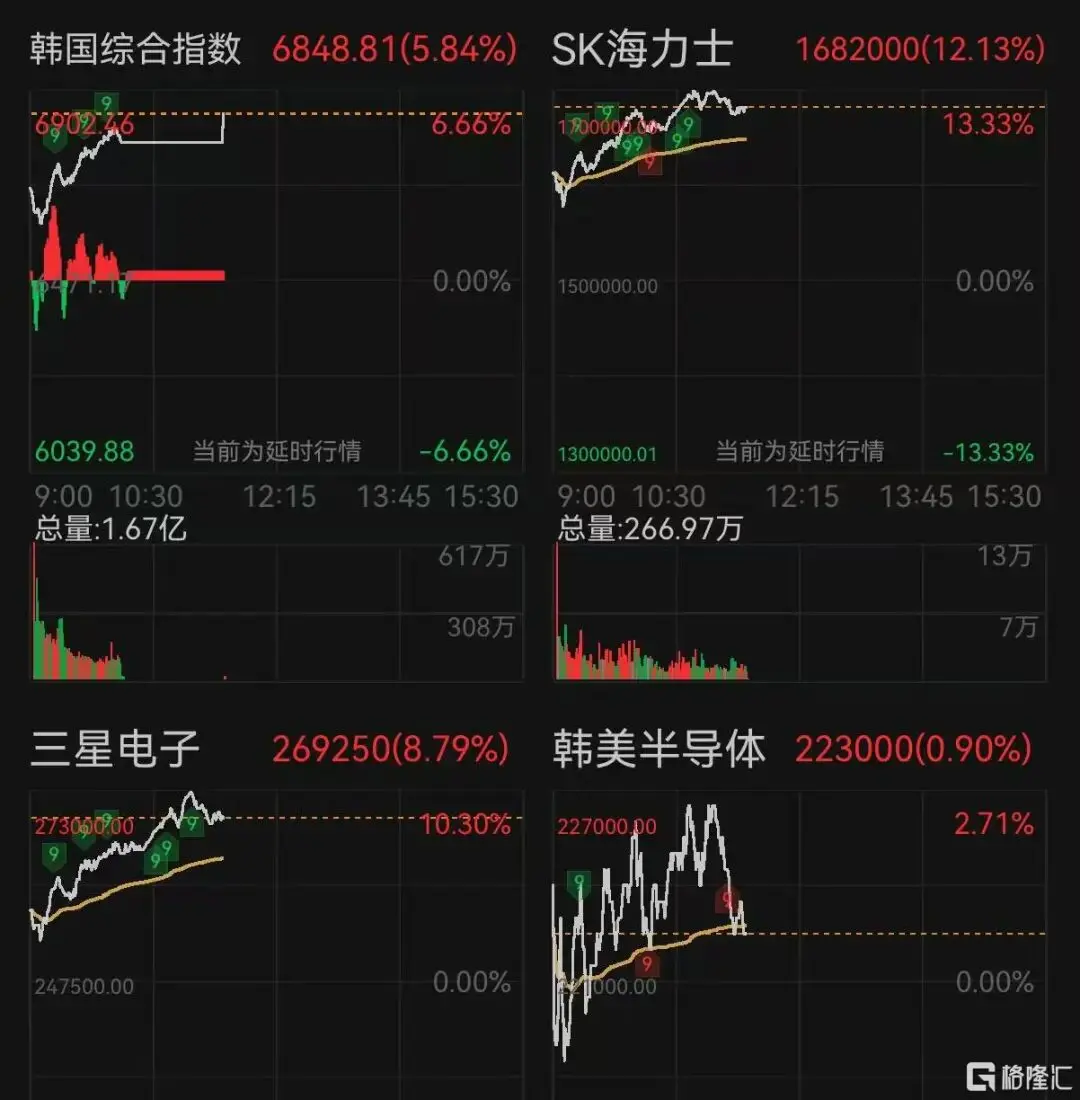
The Southbound Double Long Samsung Electronics ETF rose over 8%, while the Southbound Dongying SK Hynix leveraged up to 2x rose nearly 4%.

Multiple Positive Catalysts
The direct catalyst for this surge comes from changes in U.S. bond market policies.
On Wednesday, U.S. Treasury Secretary Janet Yellen announced that the one-time repurchase size of long-term government bonds with maturities of 10 to 30 years would be at least doubled from $2 billion to $4 billion to curb the decades-high bond yields. After the announcement, as of the time of writing, the yield on 30-year Treasury bonds fell to 5.18%, and the three major U.S. stock indices slightly rose overnight.
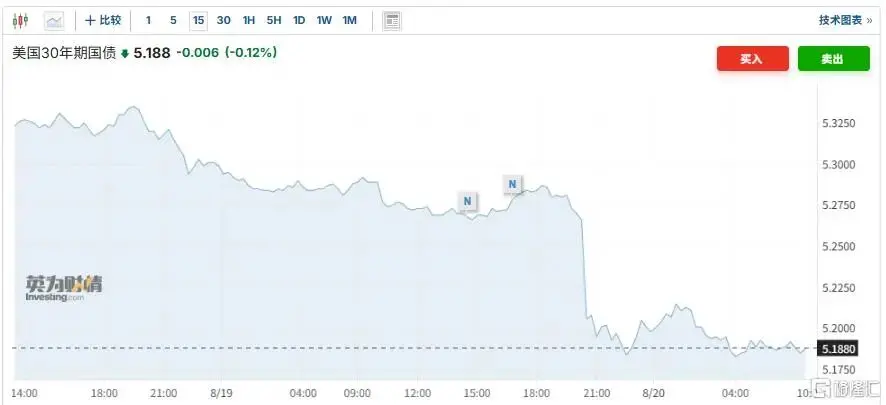
Analysts believe that the signal of "intervention if necessary" released by this move is more significant than the repurchase itself. Matt Maley, chief market strategist at Miller Tabak, stated that this measure "could potentially boost the prices of risk assets in the short term."
Market sentiment towards risk assets has warmed, leading to a strong technical rebound in the Korean stock market. According to data from the Korea Exchange as of 10 AM, foreign investors net bought 682.341 billion won, and institutional investors net bought 750.326 billion won; individual investors net sold 1.445809 trillion won.
On the individual stock level, positive support has also formed.
On August 19, SK Hynix announced that it would repurchase and cancel approximately 24.07 million shares of treasury stock over the next three months, totaling 40 trillion won (approximately $28.6 billion), accounting for 3.3% of the issued shares. The company also raised its shareholder return target for 2025 to 2027 to over 50% of cumulative free cash flow, with more dividend details to be disclosed with the third-quarter financial report.
SK Hynix stated that this move stems from the company's belief that the current stock price does not adequately reflect its value. At the end of the second quarter, the company's net cash was approximately 69 trillion won, sufficient to support large-scale returns.
Park Jun-young, an analyst at Hanwha Investment & Securities, stated that the 40 trillion won repurchase is likely not a one-time shareholder return. "We expect this measure will lead to a continuous reduction in the number of shares, driving up the per-share value."
It is worth noting that another semiconductor giant, Samsung Electronics, is also experiencing frequent positive news. Due to surging demand, it is reported that Samsung has raised the prices of some new orders for advanced chip foundry services by up to 15%, with the price increase logic extending from memory to foundry. Samsung also stated that it would "soon" disclose details of its shareholder return policy for this year and beyond. It is said that the company plans to hold a board meeting in August to determine and announce a shareholder return policy of up to 100 trillion won (approximately $71.9 billion), the largest in the history of Korean companies.
Upgrading Korean Stocks to Overweight
This year, the Korean stock market has experienced a rare "roller coaster" trend. Driven by the AI storage supercycle and the "value enhancement plan" reform, the KOSPI index once reached a historical high of 9100 points in June, with a half-year increase of over 100%. However, since the end of June, the market has rapidly declined under pressures of AI capital expenditure concerns and profit-taking, with a pullback of over 30% from the high point at the end of July. Nevertheless, the KOSPI's year-to-date increase still exceeds 57%, making it one of the best-performing major indices globally.
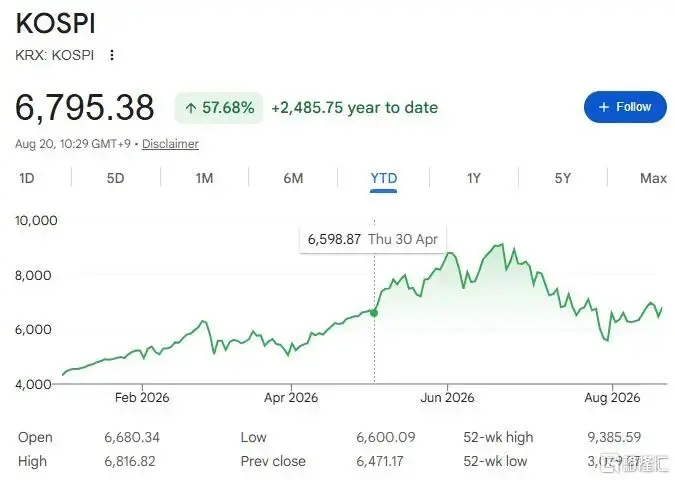
Herald van der Linde, head of Asia-Pacific equity strategy at HSBC, stated that the previous correction has actually cleared a lot of excess leverage. "The volatility of the Korean stock market remains high, but it has retreated from its peak." The bank upgraded its rating on the Korean stock market from neutral to overweight, believing that as long as domestic demand remains strong, mechanical selling by foreign capital should not become a major obstacle.
In addition, due to strong business driven by artificial intelligence, S&P has upgraded the rating of SK Hynix to "A-."
SK Group Chairman Chey Tae-won bluntly stated that next year will see the "most severe storage shortage," with new production capacity unable to keep up with the pace of demand explosion. According to TrendForce, the global HBM market size is expected to grow by 120% year-on-year by 2026, with a supply gap of 15% to 20%. Bank of America channel research also shows that the wave of storage price increases is far from over, with NAND spot prices rising by up to 10% in a single week, and 1Tb wafer quotes soaring over 500% year-on-year, while DRAM spot prices have risen for 18 consecutive weeks.
In this regard, Paul Meeks, head of technology research at Freedom Capital Markets, believes that the storage demand brought by AI and long-term customer agreements still support the industry's fundamentals, but concerns about high valuations and the peak of the storage chip price cycle have exacerbated short-term volatility.
Market participants remind that after a rapid rise, there may be short-term profit-taking pressure, and the third-quarter performance realization, U.S. interest rate path, and external disturbances may all intensify market volatility.
 Risk warning



Popular articles





