What does Waller think? Will there be an interest rate hike in September? The market will be entangled before the Federal Reserve's "Jackson Hole Symposium" in August
 Core Viewpoint
 The Morgan Stanley report points out that Federal Reserve Chairman Waller is deliberately shifting to a communication strategy of "clear goals, ambiguous paths," emphasizing that inflation remains high, will return to target, and confidence, while avoiding specific action paths. The market cannot simply assume that tightening financial conditions can replace central bank interest rate hikes. If future inflation data continues to exceed expectations, Waller may shift to a more aggressive rate hike at the September meeting, which constitutes one of the biggest interest rate risks currently. The market is waiting for further policy clues from the August Jackson Hole annual meeting.
Author: Li Jia, Wall Street Journal
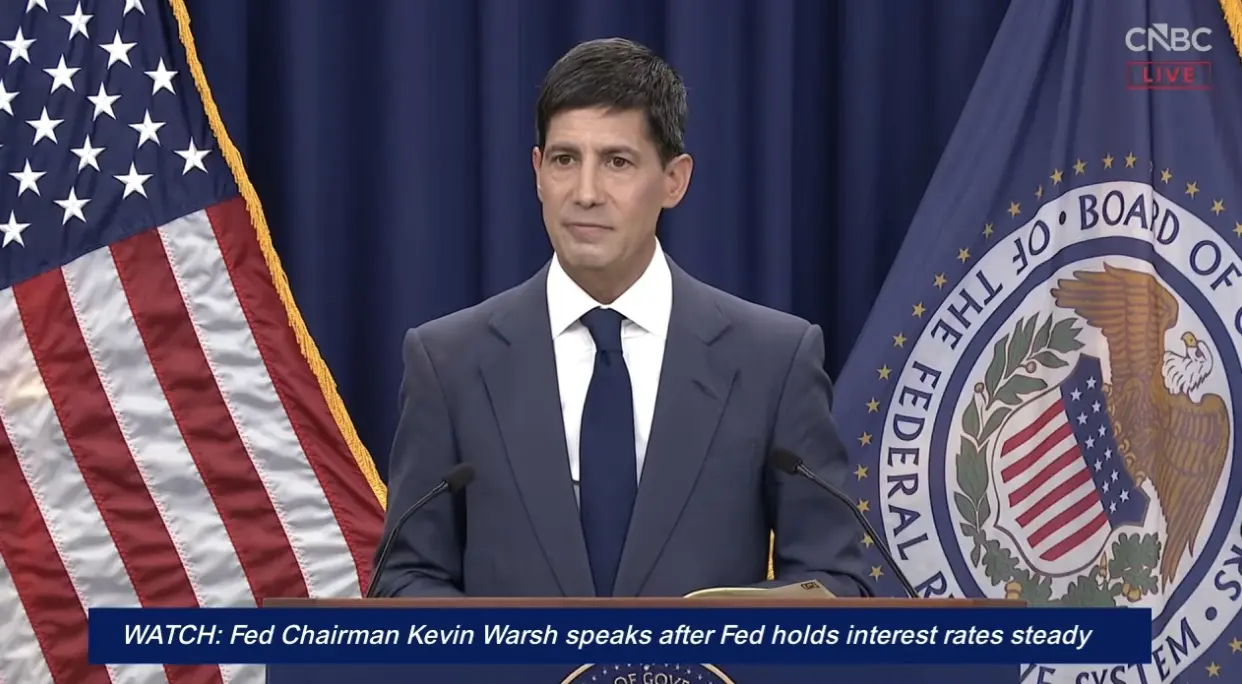
Federal Reserve Chairman Waller's first press conference released a policy signal of "clear goals, ambiguous paths." As the Jackson Hole annual meeting in August approaches, the market will closely watch how Waller defines the Fed's reaction function and whether there is a risk of an unexpected rate hike at the September meeting.
Morgan Stanley's latest report believes that Waller is deliberately changing the way the Fed communicates with the market. He clearly conveyed three signals: current inflation is still relatively high, the policy goal is to bring inflation back to target levels, and there is confidence in achieving this goal. However, he consistently avoids the question that the market is most concerned about—what specific path the Fed will take to achieve this goal.
This means that the core of the market's game in the coming weeks will revolve around one question: if financial conditions continue to tighten and are still insufficient to suppress inflation, will Waller choose to actively strengthen policy tightening? The Jackson Hole annual meeting may become an important window to observe this policy shift.
Waller's Communication Logic: Clear Goals, But No Path Provided
Morgan Stanley's research on Waller's previous statements at FOMC meetings found that he is intentionally widening the gap between the Fed and market expectations.
Waller repeatedly emphasizes only three dimensions: past inflation judgments—current inflation remains at a high level; future policy goals—promoting inflation back to target; and confidence in achieving the goal—maintaining a high degree of certainty about this.
But the problem is that this communication framework does not tell the market how the Fed will act.
In the past, the Fed typically helped the market form policy expectations through forward guidance, while Waller prefers to let the market judge economic trends on its own and assess the possible policy paths the Fed might take. He is not concerned about discrepancies between market and Fed views, nor will he adjust policy positions to cater to market expectations.
Tightening Financial Conditions Do Not Mean the Fed Will Remain Passive
The decision to pause rate hikes at the July FOMC meeting was influenced by the fact that financial conditions had already tightened in advance. Factors such as rising market interest rates and asset price adjustments have partially taken on the role of tightening monetary policy, which Waller seems to acknowledge.
However, Morgan Stanley believes that the market cannot simply infer that as long as financial conditions tighten, the Fed will reduce its actions.
Waller does not believe that market-driven tightening can completely replace central bank policy. He is focused on whether the tightening of financial conditions truly achieves the effect of suppressing inflation, rather than merely observing changes in market indicators.
If future data shows that tightening financial conditions have not effectively reduced inflationary pressures, Waller may choose to take action again. This is also an important reason for his avoidance of providing a clear policy path—he wants to retain sufficient policy flexibility.
September Rate Hike Expectations Carry Risks, Market Awaits Signals from Jackson Hole
Currently, the market has largely priced in a 25 basis point rate hike at the September meeting, but Morgan Stanley warns that inflation data in the next two months may disrupt this expectation.
If inflation data for July and August continues to exceed expectations, the market may re-bet on the Fed taking a more aggressive tightening path. Investors may believe that the previous tightening of financial conditions was insufficient to suppress demand, and the Fed needs to apply further pressure on the economy through actual rate hikes.
In this scenario, Waller's policy choices at the September meeting may show a significant shift compared to July. He may judge that the market environment has not yet reached a sufficiently tight level, thus adopting a more hawkish policy action than what is currently priced in by the market.
Morgan Stanley believes that this constitutes one of the biggest tail risks in the current interest rate market. As the August Jackson Hole annual meeting approaches, investors will continue to seek clues about the policy reaction function from Waller's speeches and reassess the likelihood of a rate hike in September.

 Risk warning


Popular articles