Circle's Q2 revenue of $701 million fell short of expectations, with Arc being the biggest highlight
 Core Viewpoint

 The circulation of USDC still maintains a target of a 40% compound annual growth rate over several years, and the full-year guidance for other income has been raised nearly twice.
Author: Zhou, ChainCatcher
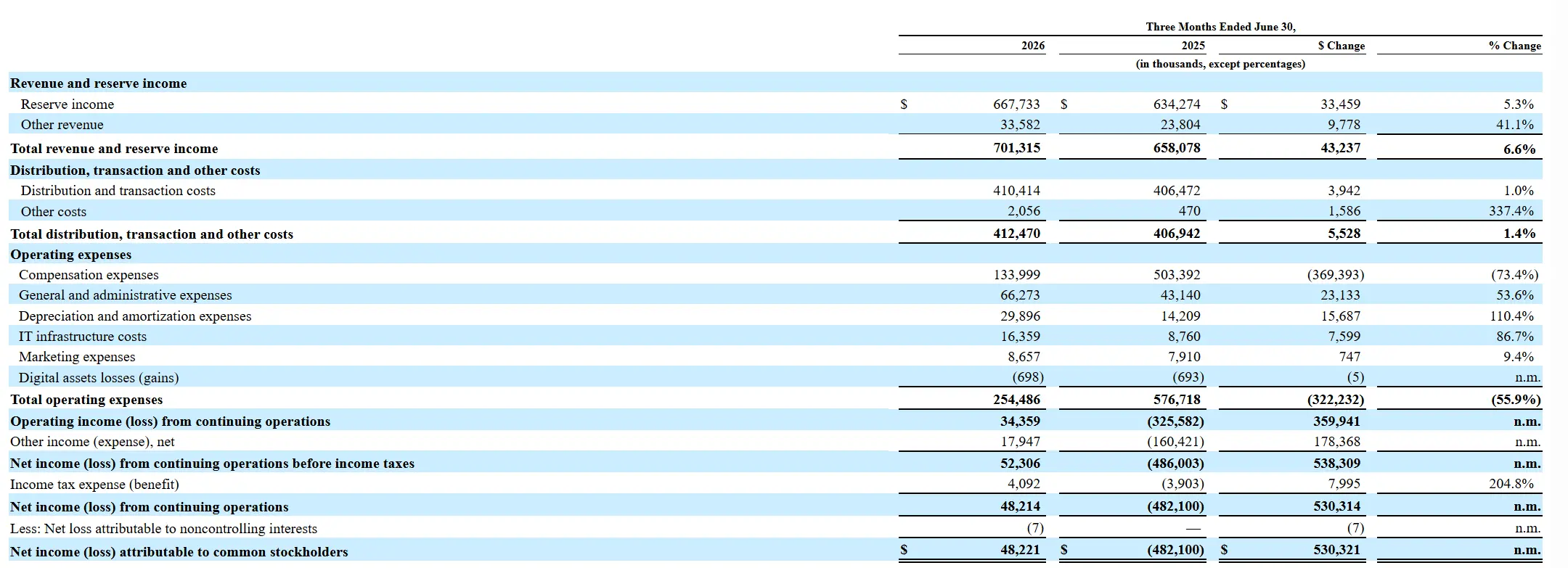
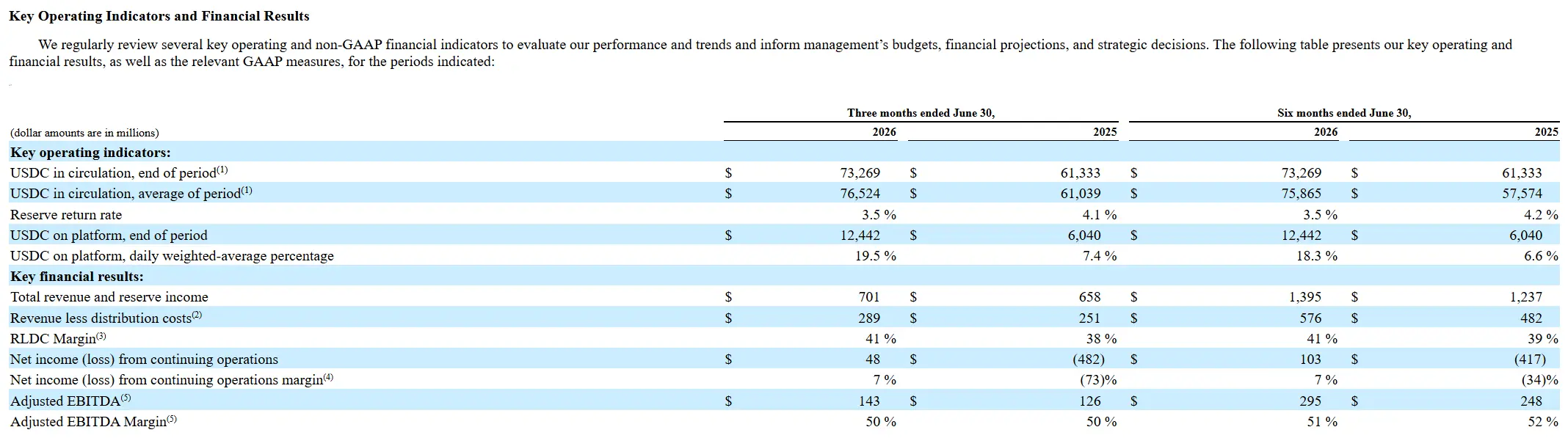
Circle released its Q2 2026 financial report before the US stock market opened on August 5. The company's total revenue and reserve income for the quarter was $701 million, a year-on-year increase of 7%; adjusted EBITDA was $143 million, a year-on-year increase of 8%; diluted earnings per share were $0.18.
In terms of net profit, the company recorded $48.2 million, compared to a loss of $482.1 million in the same period last year. This significant improvement was mainly due to the one-time recognition of large equity incentive expenses during the IPO period in Q2 of last year, which inflated the year-ago comparison base.
From an expectation standpoint, the quarterly revenue fell short of Wall Street's consensus estimate of approximately $713 million, marking Circle's second consecutive quarter of revenue missing expectations after Q1. The adjusted earnings per share of $0.18 exceeded the market expectation of $0.16.
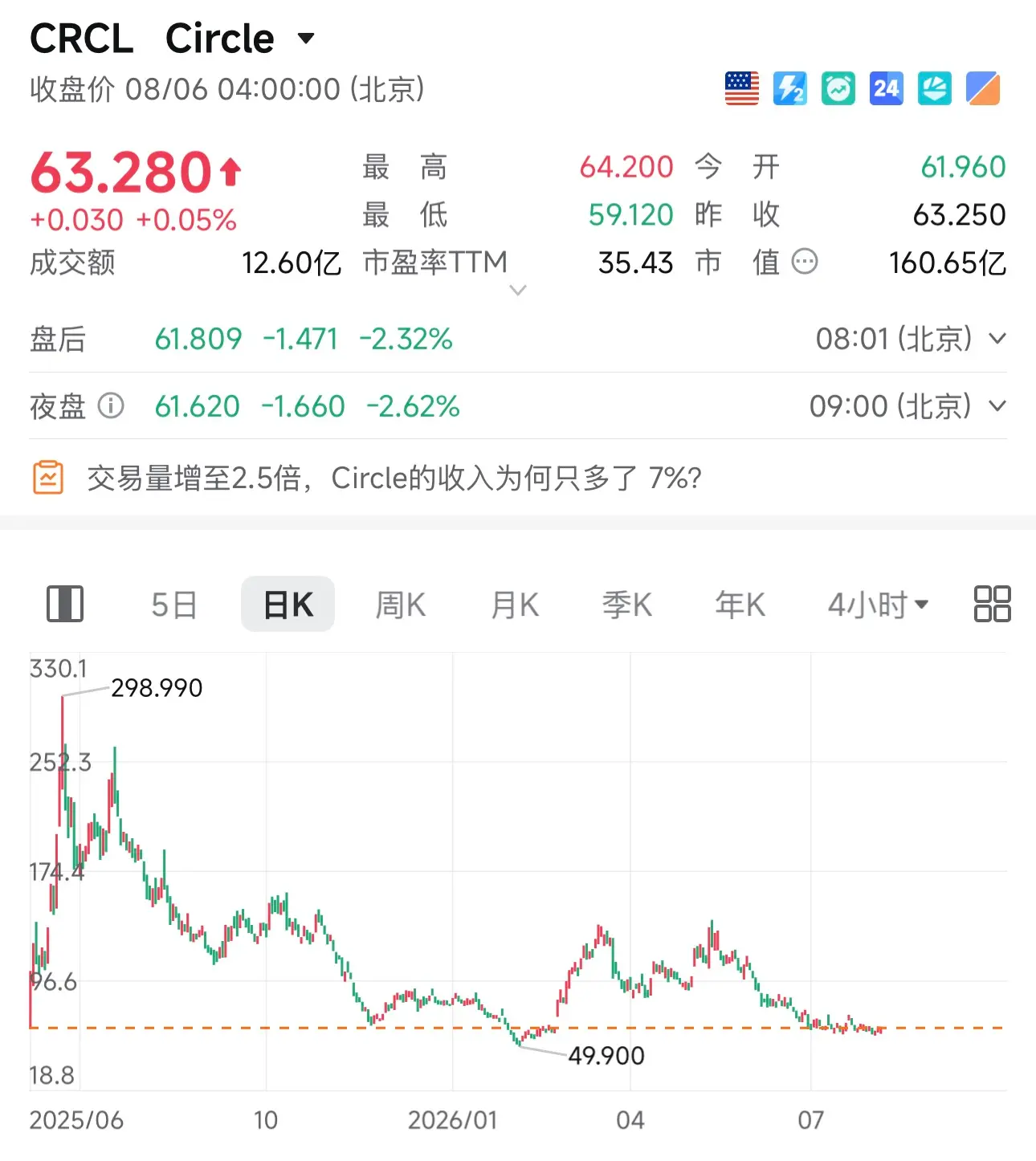
After the financial report was released, Circle's stock price experienced significant volatility. It initially rose over 8% in pre-market trading, then turned to a nearly 3% decline during the day, before narrowing the loss. The cumulative decline of CRCL this year is about 20%, with a current market capitalization of approximately $16 billion.
Key Financial Data Overview
Q2 Revenue of $701 million, USDC Circulation Increased by 19% Year-on-Year
According to the financial report, by business segment, reserve income remained the main source of revenue for the quarter. The company's reserve income in Q2 was $668 million, a year-on-year increase of 5%, mainly driven by a 25% year-on-year increase in average USDC circulation, while the reserve return rate decreased by 66 basis points year-on-year, partially offsetting the growth rate.
Other income was $34 million, a year-on-year increase of 41%, with growth coming from subscription and service revenue.
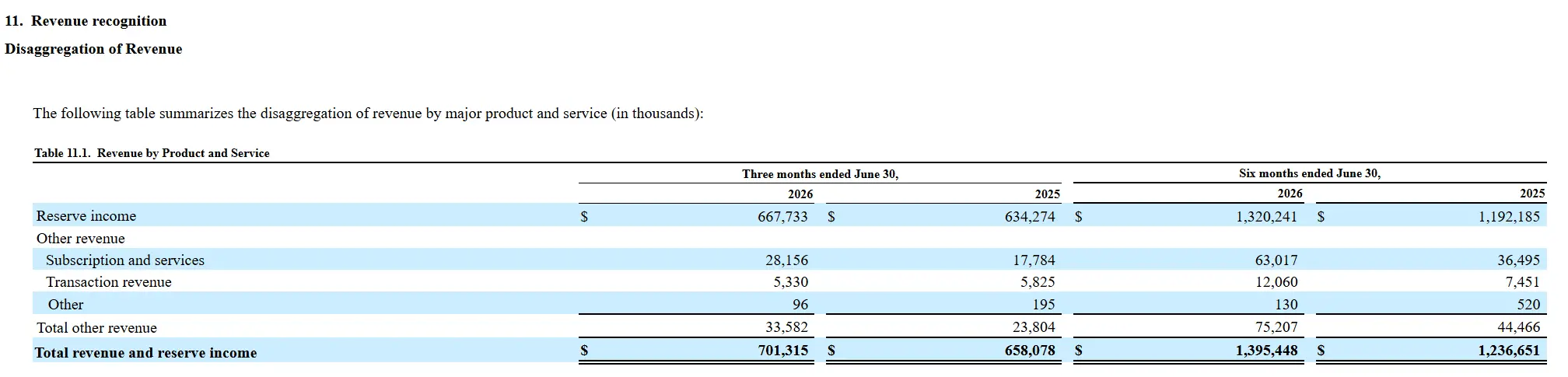
On the cost and profit side, total distribution, transaction, and other costs for the quarter were $412 million, a year-on-year increase of 1%. Operating expenses were $254 million, a year-on-year decrease of 56%, with the decline also affected by the high base of IPO equity incentives from the same period last year. Excluding related factors, adjusted operating expenses were $146 million, a year-on-year increase of 23%, mainly directed towards product development, infrastructure, and AI capabilities.
In terms of profitability metrics, revenue after distribution was $289 million, a year-on-year increase of 15%, with RLDC profit margin at 41%, an increase of 302 basis points year-on-year.
On a quarter-on-quarter basis, revenue for the quarter slightly increased from $694 million in Q1, while adjusted EBITDA decreased from $151 million in Q1 to $143 million. Diluted earnings per share decreased from $0.21 in Q1 to $0.18.
In terms of core operational metrics, the end-of-period USDC circulation was $73.3 billion, a year-on-year increase of 19%, lower than the $77 billion at the end of Q1 and below the nearly $80 billion peak earlier in the year. The average circulation for the quarter reached a new high of $76.5 billion, with a reserve return rate of 3.5%.
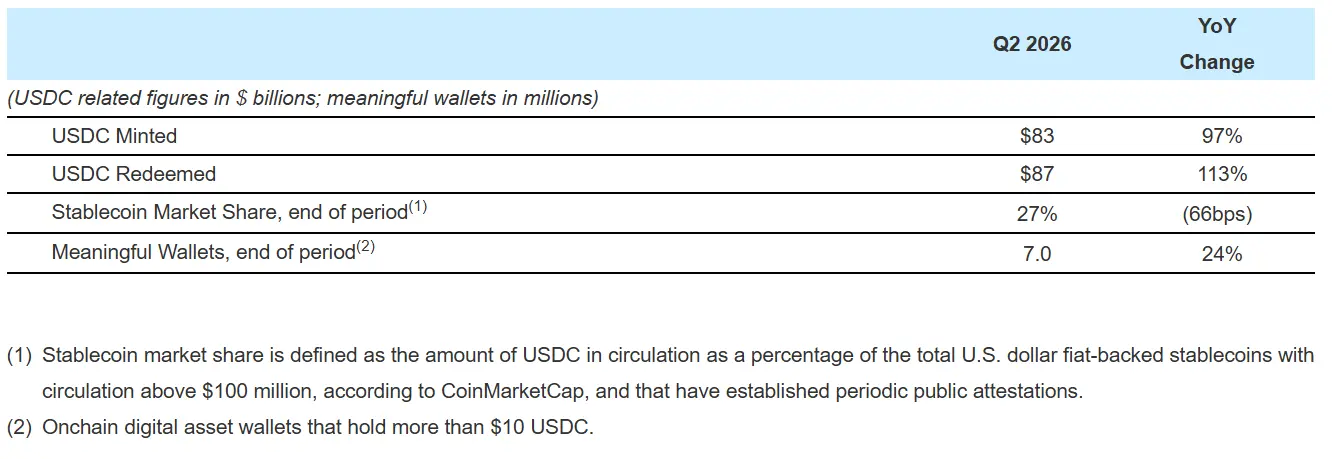
On-chain transaction volume was $14.8 trillion, a year-on-year increase of 151%, with growth slowing from 263% in Q1. The stablecoin market share was 27%, a year-on-year decrease of 66 basis points. There were 7 million active wallets, a year-on-year increase of 24%. The USDC held on the Circle platform was $12.4 billion, a year-on-year increase of 106%, accounting for 17% of the total circulation.
Among other digital assets, EURC increased by 2.2 times year-on-year, and USYC increased by 10 times, with assets under management exceeding $3 billion.
Business Progress
In terms of business progress, Circle has received approval from the Office of the Comptroller of the Currency to establish the national trust bank Circle National Trust, and has received approval from the New York Department of Financial Services to establish the digital asset trust company Circle New York Trust.
As of the end of Q2, the annualized trading volume of CPN over the past 30 days reached $14.7 billion, a quarter-on-quarter increase of 76%; a total of 175 financial institutions are registered, a quarter-on-quarter increase of 29%.
Following the launch of payment infrastructure for agents in the first half of the year, Circle launched Agent Stack in May 2026—currently having over 900 paid services, with 99.3% of x402 agent payment transaction volume settled in USDC. Circle plans to launch a more comprehensive product roadmap for agents in the second half of the year, which includes enabling agents to earn revenue.
The Arc blockchain is scheduled to launch its public mainnet on September 16, with founding validator nodes including institutions such as BlackRock, DTCC, Galaxy, Mastercard, Visa, and Standard Chartered. BlackRock plans to deploy the BUIDL fund to Arc, and DTCC will achieve asset tokenization on Arc. Newly integrated institutions for the quarter also include BNY, Standard Chartered, Nium, JCB, Grupo Bind, and Marex.
Wall Street Ratings
In fact, prior to the financial report release, there was a significant divergence in Wall Street's valuation judgment of Circle.
Morgan Stanley downgraded Circle's rating from hold to underweight, significantly lowering the target price from $106 to $38. Mizuho Securities analysts gave a hold rating last Friday, lowering the target price from $50 to $45.
In contrast, TD Cowen initiated coverage of Circle with a buy rating and a target price of $82. Analyst Bryan Bergin believes that the market may be underestimating Circle's potential to transition from a stablecoin issuer to a broader financial infrastructure platform.
Key Information from the Conference Call
During the conference call, company management also disclosed several key pieces of information.
Distribution Agreement with Coinbase Renewed Under Existing Terms
Co-founder and CEO Jeremy Allaire announced that the distribution agreement between Circle and Coinbase has been renewed under existing terms, and USDC will continue to be embedded as a core asset in all Coinbase products.
Regarding the distribution competition that the market is concerned about, Allaire stated that Circle and Coinbase have jointly reached a revenue-sharing arrangement with Hyperliquid. As of the end of the quarter, approximately 90% of the USDC held by Hyperliquid is stored on the Coinbase platform, with about 10% on the Circle platform, and the related impact will be reflected starting in Q3.
70% of Intent Companies in the Open USD Alliance are Already Circle Partners
Notably, during the Q&A session of the conference call, the competitive landscape was one of the focal points for analysts.
On June 30, the Open Standard, in collaboration with Visa, Mastercard, Stripe, BlackRock, Coinbase, and over 140 institutions, announced plans to launch a revenue-sharing stablecoin called Open USD, which features no fees for minting and redeeming, with most reserve earnings distributed to partners.
On the day the news was released, Circle's stock price fell sharply by 17%, with the market concerned about its impact on USDC's business model, which relies on reserve earnings.
Citigroup analyst Pete Christensen raised this question during the meeting: In a situation where reserve earnings sharing is gradually becoming an industry standard, how will Circle, constrained by its existing economic arrangements with Coinbase, compete for distribution channels?
Allaire responded that Circle has signed distribution cooperation agreements with over 150 companies and often collaborates with Coinbase on distribution efforts; the joint revenue-sharing arrangement with Hyperliquid is one example.
He added that about 70% of companies expressing interest in participating in such alliance projects are already partners in the Circle network, and on the day of the financial report release, Circle also announced that Visa and Mastercard would expand their cooperation as key infrastructure partners for Arc.
ARC Token Pre-sale Confirmed Revenue of Approximately $180 Million
Regarding Arc, Allaire introduced that the testnet has processed over 500 million transactions, covering nearly 3 million wallets, achieving almost zero downtime, and stated that Arc's potential may exceed that of USDC itself.
In terms of ARC token economics, as of Q2, the ARC token pre-sale has raised approximately $242 million, issuing 807.5 million tokens at a uniform issuance price of $0.30 each, corresponding to a fully diluted valuation of approximately $3 billion.
The pre-sale was completed in two rounds, with the first round in May issuing 740 million tokens for about $222 million, and the second round closing at the end of June with an additional 67.5 million tokens for about $20.25 million.
a16z crypto led with approximately $75 million, with participants including BlackRock, Apollo, ICE, SBI, Janus Henderson, Standard Chartered Ventures, ARK Invest, Haun Ventures, Bullish, and others.
In terms of distribution, Circle received 25% of the initial supply of 1 billion tokens for operating validator nodes and earning staking rewards, with 60% allocated to network builders and users, and 15% set aside for long-term reserves.
Q&A Highlights
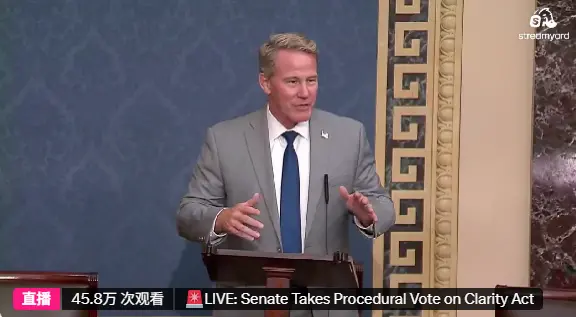
On the policy front, Allaire mentioned that the CLARITY Act is currently being negotiated between the two parties and is expected to advance in the Senate this week, while emphasizing that the previously passed Genius Act will take effect in January 2027.
The agent economy was another focus of the conference call. Allaire mentioned that Cloudflare has announced support for x402 and USDC's agent wallets. Within Circle, 86% of employees use AI tools weekly, and over 1,100 AI applications have been released this year.
Management also discussed changes in market structure. Last week, nearly 75% of the trading volume on the Hyperliquid platform came from real-world assets, with USDC accounting for 40% of the collateral for Binance and Hyperliquid perpetual contracts. In the prediction market, Polymarket's spot trading volume increased more than 8 times year-on-year, and it is a strategic distribution partner of USDC.
Additionally, CFO Jeremy Fox-Geen clarified that Circle currently has no plans for quarterly dividends and mentioned that the addressable size of the money market is approximately $120 trillion, of which about $60 trillion is non-interest-bearing funds.
Full-Year 2026 Performance Guidance
Fox-Geen stated that approximately $180 million in pre-sale revenue is expected to be recognized in 2026 and has been included in the upwardly revised guidance, which will directly contribute to net profit.
In terms of performance guidance, Circle has significantly raised its full-year other income guidance from the previous $150 million to $170 million to $310 million to $330 million, with the upward revision including the confirmed revenue from the ARC token pre-sale.
The full-year RLDC profit margin guidance has been raised from 38% to 40% to 41.7% to 43.7%, and if excluding Arc-related revenue, it is close to the midpoint of the original range.
The full-year adjusted operating expense guidance remains unchanged at $570 million to $585 million, with the company expecting to fall at the high end of this range.
Regarding USDC circulation, Circle maintains its target of a multi-year compound annual growth rate of 40%.

 Risk warning


Popular articles