The U.S. labor market cools unexpectedly: Non-farm payrolls decreased by 23,000 in July, with job revisions down by 103,000 in the previous two months
 Core Viewpoint

 The U.S. labor market has shown significant signs of cooling, prompting the market to quickly reprice its expectations for the direction of the Federal Reserve's monetary policy.
Author: Wall Street Journal
The U.S. labor market has shown significant signs of cooling, prompting a rapid repricing of market expectations regarding the Federal Reserve's monetary policy direction.
The U.S. Bureau of Labor Statistics released data on Friday showing that non-farm payrolls decreased by 23,000 in July, far below the market expectation of an increase of 80,000, while the data for the previous two months was also revised down by more than 100,000. This is a clear sign of weakening in the labor market after a period of consistently exceeding expectations earlier this year.
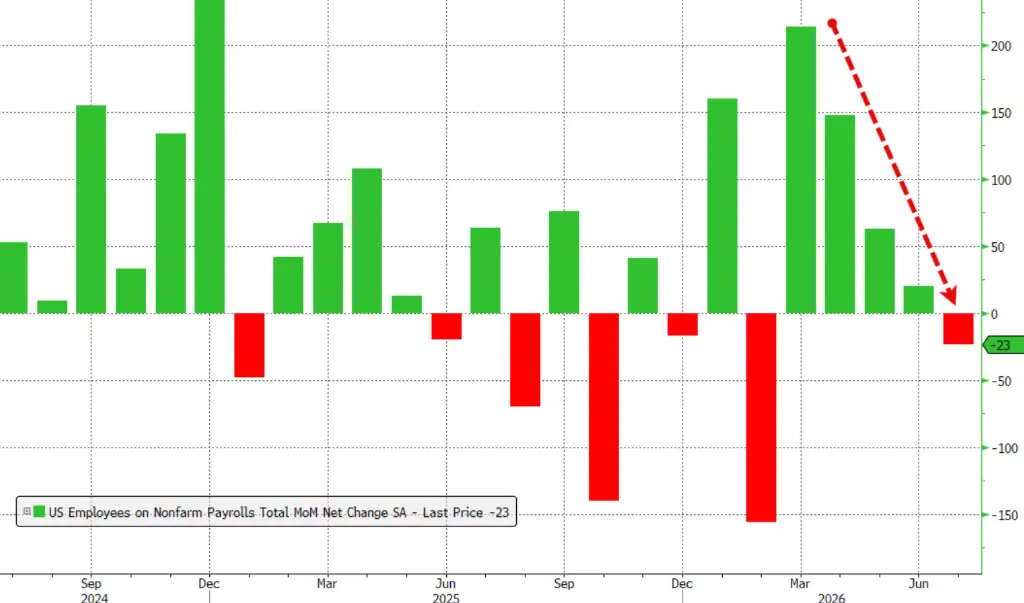
After the data was released, U.S. stock index futures quickly surged, traders lowered their bets on the Federal Reserve raising interest rates in 2026, and implied expectations for rate cuts subsequently increased.
Employment Data Weakens Overall, Downward Revisions Deepen Concerns
The non-farm payrolls decreased by 23,000 in July, marking the worst performance in recent times. Meanwhile, the data for May and June was revised down by a total of 103,000, indicating that the previous strength of the job market may have been overestimated.
The systematic downward revisions across multiple months have led the market to adopt a more cautious view of the overall trend in the labor market.
Regarding the unemployment rate, the July figure was 4.1%, lower than the previous value and the expected 4.2%. The labor force participation rate further declined to 61.4%, the lowest level in over five years.
Analysts pointed out that the decline in the unemployment rate is accompanied by a continued drop in the labor force participation rate, which means that more people are exiting the labor force rather than the unemployment rate declining due to improvements in employment, and this should not be interpreted too optimistically.
Policy Expectations Repriced, Rate Cut Bets Heat Up
The unexpected weakness in employment data directly impacted market expectations regarding the Federal Reserve's policy path. Following the data release, traders lowered their bets on the Federal Reserve raising interest rates in 2026, and expectations for an earlier rate cut timeline subsequently increased.
Previously, Federal Reserve officials had repeatedly emphasized that policy decisions would be based on data, and the consecutive months of downward revisions in employment, coupled with the unexpected negative growth in July, provided a more substantial market basis for rate cut expectations. The subsequent trends in inflation and employment data will continue to influence the market's judgment on the pace of the Federal Reserve's actions.

 Risk warning