In the big scoop about Sun Ge and Jing Tian, there is a valuable lesson about the current most valuable U.S. stocks

 In the AI era, storage chips are no longer just "commodities." Currently, there are no signs of oversupply or industry downturn, and the demand from AI customers remains strong.
Waking up, a traffic genius emerged within the sect.
For a moment, those investment groups, U.S. stock bloggers, and cryptocurrency KOLs, who usually discuss investments, seemed to have lost interest in the matter—no one was talking about price fluctuations, no one was discussing Nvidia's trends, no one was chatting about AI narratives, and everyone turned to gossip about Sun Ge and Jing Tian's sensational news.
However, while indulging in gossip, investors might actually learn something that could enhance their own investment skills from this situation.
A clever comment from cryptocurrency mogul Yi Lihua: "Jing Tian's biggest problem is that she hasn't learned to invest; she has always had a trading mindset, exchanging money for goods, and surprisingly wants to raise prices on the spot. If she had learned an investment mindset, first having a child with Sun Ge and trying to have as many as possible, then forget about 50 million dollars, even 500 million dollars wouldn't be a problem, and the child would have a right to inherit assets worth hundreds of billions. Whether a star or an ordinary person, learning to enhance cognition is true wealth; short-term trading does not last, while trend investing is the true path."
The words may be rough, but the reasoning is sound. At this unique moment, applying this "investment mindset" to the current U.S. stock market might reveal some previously unclear insights.
1. What is the current situation of the U.S. stock market?
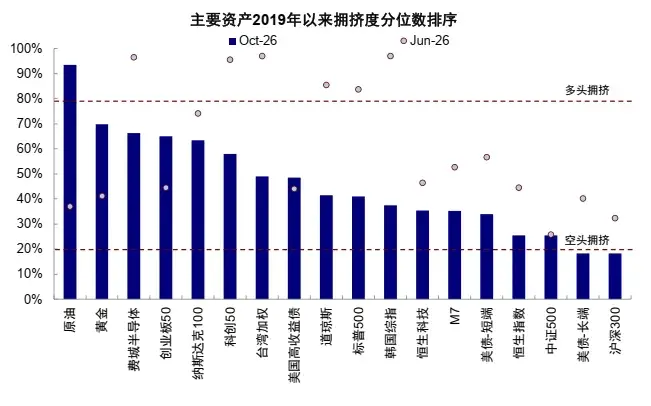
First, let's look at the macro perspective. The pressure from U.S. debt has recently formed a substantial drag—aside from a few popular stocks like Nvidia, the overall U.S. stock market has been suppressed. Meanwhile, the narrative around "de-dollarization" is gaining traction: gold prices have risen over 10% in the past month, and Bitcoin has surged over 20% in the past week.
Next, let's examine the AI sector. Uncertainty is clearly on the rise. Previously, star stocks like Hynix, SanDisk, and Micron faced significant declines from their highs, and now they have returned to a position that is neither high nor low, with both bulls and bears holding firm opinions.
The bearish camp includes Dalio, who has publicly warned of an AI bubble. The bullish camp, however, has endorsements from industry leaders—SK Hynix CEO Kwak Noh-Jung recently stated that the global shortage of memory chips is expected to last until the end of 2030, with a low risk of oversupply. He further pointed out that in the AI era, memory chips are no longer just "commodities," and there are currently no signs of oversupply or industry downturn; demand from AI customers remains strong.
2. Both sides have their reasons, resulting in trillion-dollar giants fluctuating like meme coins
When there is a significant divergence between bulls and bears, and both sides seem to have valid arguments, the market enters a special state: it increasingly relies on company earnings reports or important speeches to substantiate future predictions.
The consequence is that a favorable earnings report or an explosive conference call can often ignite the market in the short term, causing giants with market capitalizations of tens of trillions to fluctuate as if they were meme coins.
The best example occurred this morning: Nvidia released a favorable earnings report yesterday, combined with Jensen Huang's "AI turning point theory," ultimately leading to Nvidia's nearly 9% surge. A company with a market value of several trillion dollars sees its price movements dictated entirely by a single speech—this is not the madness of an individual, but rather a reflection of the entire market structure.
3. Switching to an investment mindset, the answers become clearer
However, if we abandon short-term trading thinking and stop focusing on buying low and selling high, but instead re-examine the situation with an investment mindset, some different answers will emerge.
Is the uncertainty of AI narratives increasing, making short-term price fluctuations difficult to judge? Then it might be better to buy into those long-term assets linked to AI narratives that are suitable for long-term holding. For example, Google, which we have introduced multiple times and which even Buffett continues to increase his stake in, is one dynamic worth focusing on in this market condition.
Is the depreciation of the dollar a long-term narrative? Then appropriately allocate gold and Bitcoin as long-term hedges—recently, both asset classes have surged over 10% and 20%, indicating that the market is voting with real money.
Trading thinking focuses on next week's price movements, while investment thinking bets on the direction of the next decade. If Jing Tian had understood this principle earlier, she wouldn't have been trying to raise prices on the spot.
In the end, the takeaway from indulging in gossip is actually the same principle: whether in relationships or investments, short-term bargaining will never win against long-term value binding. Short-term trading does not last, while trend investing is the true path. The gossip will eventually fade, but this principle is worth keeping.
Disclaimer:
This article is written by a third-party author and is for informational and educational reference only. It does not represent the views, positions, or investment advice of BIT and its affiliates. The market opinions, individual stocks, digital assets, investment strategies, and related analyses mentioned in the article are solely the author's personal views and do not constitute any form of investment, financial, trading, legal, or tax advice, nor do they constitute an offer, solicitation, or recommendation for any asset or financial product.
 Risk warning