Interlace collaborates with Cregis to host a high-end closed-door cocktail party, focusing on the ecological integration of TradFi, payments, and digital assets

 This event brought together founders, CEOs, and executives from financial institutions, foreign exchange, asset management, payment, and cryptocurrency sectors to discuss key topics such as stablecoin infrastructure, RWA, institutional-level digital asset tokenization, and AI-driven financial infrastructure.
With the continuous development of emerging fields such as AI, stablecoin payments, and asset tokenization, the traditional financial system and digital asset ecosystem are accelerating their integration, with payments being one of the most important bridges. On the evening of August 27, during Bitcoin Asia 2026, a closed-door event titled "The Future Financial Landscape | Connecting Financial Institutions, Payments, and the Crypto Ecosystem," co-hosted by Interlace and Cregis, and sponsored by JoinCare, was held in Hong Kong.
This event brought together founders, CEOs, and executives from financial institutions, foreign exchange, asset management, payments, and the crypto field to discuss key topics such as stablecoin infrastructure, RWA, institutional-level digital asset tokenization, and AI-driven financial infrastructure.
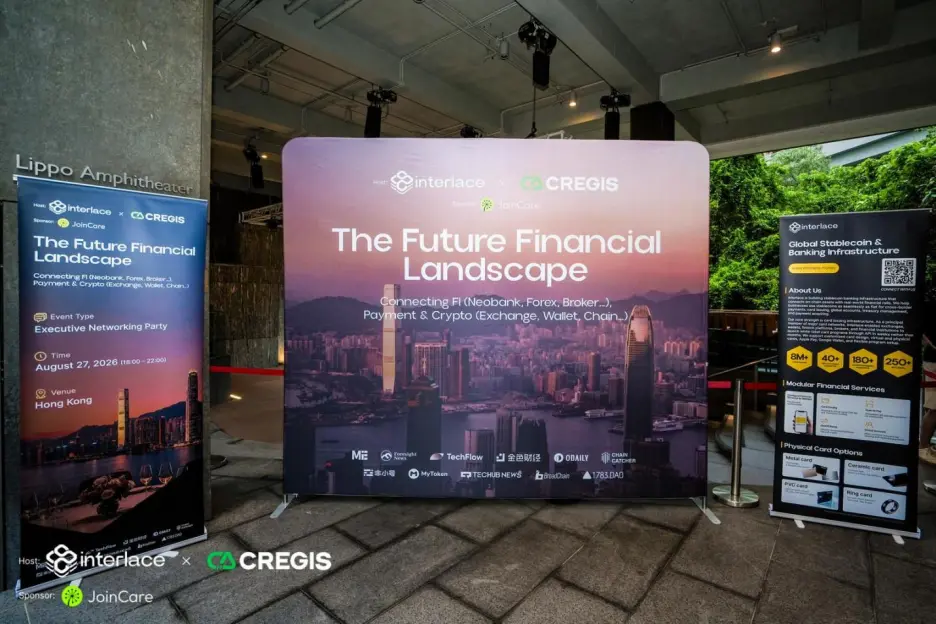
TradFi and Web3 Gather to Discuss the New Financial Landscape
At the dinner, Interlace and Cregis delivered opening remarks and shared industry insights on the development of future financial infrastructure.
In his opening remarks, Interlace CSO Jasper stated that while global business activities continue to cross borders, the financial and payment systems still face multiple regional, policy, and infrastructure barriers. Stablecoins provide a new settlement method for global value transfer, but completing on-chain settlements does not mean that payments are truly completed; infrastructure around compliance, risk control, accounts, cards, and local payment networks remains indispensable. Jasper believes that the key to future stablecoin payment infrastructure is not to replace existing financial tracks but to further connect on-chain funds with accounts, cards, and global business scenarios, allowing stablecoins to truly become financial infrastructure that can be embedded in real commercial systems.
Cregis Head of Brand Thomas shared industry observations on digital asset payment and custody infrastructure, emphasizing the core role of enterprise-level digital asset infrastructure: as institutional demand for secure management, payments, and fund operations of digital assets continues to grow, infrastructure with compliance custody capabilities and security architecture is becoming a key link connecting traditional finance and the crypto ecosystem.
Interlace CMO Eva unveiled the upcoming physical card product matrix at the event, which includes metal cards, LED cards, ceramic cards, and ring cards, and announced the official global recruitment of the physical card partner program, inviting industry partners to co-build a new payment ecosystem. Interlace will provide partners with flexible profit-sharing models and professional product support.
This high-end closed-door dinner provided a space for direct communication and exploration of cooperation among industry participants from traditional finance, payment institutions, and the digital asset field through in-depth exchanges. As more traditional assets explore on-chain transformation, the connection between the digital asset market and traditional capital markets is deepening; meanwhile, stablecoins are gradually moving from being on-chain asset trading mediums to broader payment and settlement infrastructures.
Attendees generally believe that the development of future financial infrastructure relies not only on single technologies or product capabilities but also on forming synergies between different financial networks to support the entry of digital assets into broader real commercial scenarios.
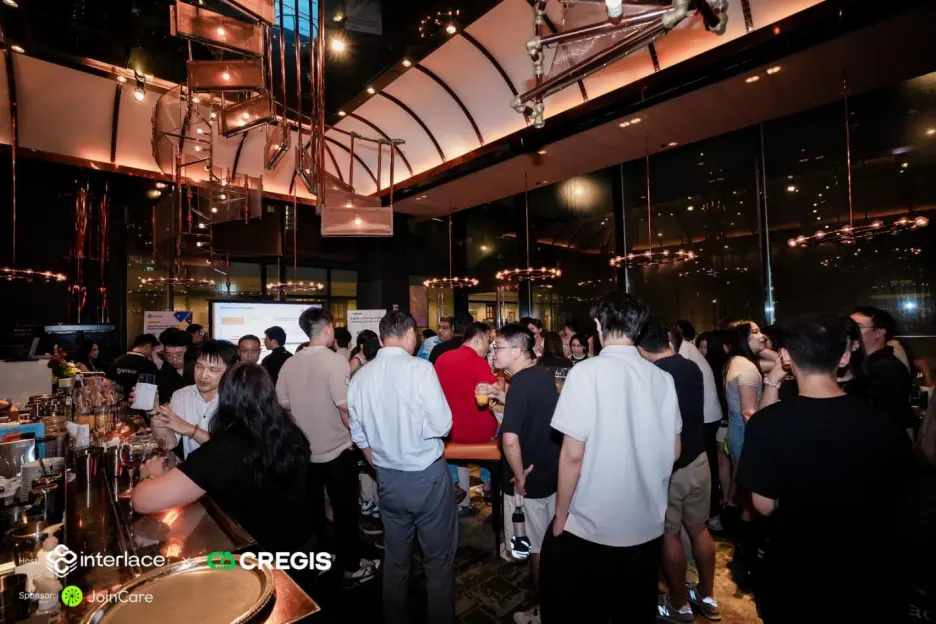
Interlace Partners with Ecosystem Partners to Explore Next-Generation Financial Infrastructure
As one of the co-hosts of this event, Interlace is committed to building stablecoin infrastructure that connects on-chain assets with real-world financial networks, providing enterprises with card issuance, stablecoin payment, and global fund management infrastructure services. Currently, Interlace has served over 20,000 enterprise clients and issued more than 8 million cards.
Cregis, also a co-host of this event, provides secure and efficient digital asset payment and fund operation support for enterprises with its wallet infrastructure and compliance custody capabilities. Currently, Cregis has established a deep presence in over 50 countries and regions, including Asia, the Middle East, and Latin America, serving over 4,000 enterprise clients.
As a sponsor of the event, JoinCare is an open decentralized science (DeSci) incubation platform aimed at bringing together researchers, experts, developers, and community forces to jointly assess and promote the development of promising early biomedical projects.
This closed-door dinner provided a high-quality direct communication platform for leaders in traditional finance, payment institutions, and the digital asset field. Various parties reached preliminary cooperation consensus on dimensions such as payments, asset custody, financial innovation, and strategic investment. From stablecoin payments to RWA, from digital asset institutionalization to AI-driven financial services, different technologies and financial infrastructures are accelerating the integration of traditional finance and the digital asset ecosystem.
It is worth mentioning that on the afternoon of August 27, Interlace also participated as a co-host in payment-related activities organized by ecosystem partners such as Avalanche and Tether, engaging in in-depth exchanges with industry leaders through thematic sharing and roundtable discussions.
In the future, Interlace will continue to work with top global industry partners to implement stablecoin payments, enterprise-level payment infrastructure construction, and Neobank digital asset innovation applications, jointly promoting the evolution and development of next-generation financial infrastructure towards a more open, efficient, and interconnected direction.
 Risk warning


Popular articles