Wash put the eagle down, U.S. stocks closed lower, will September really bring interest rate hikes?
 Under the leadership of Jerome Powell, the Federal Reserve is clearly more data-dependent than its predecessor. Interestingly, the recent employment reports have all fallen short of expectations, and the deviations are significant—this means that any further signs of weakness could severely undermine the market's bets on a rate hike in September.
Source: BIT Securities
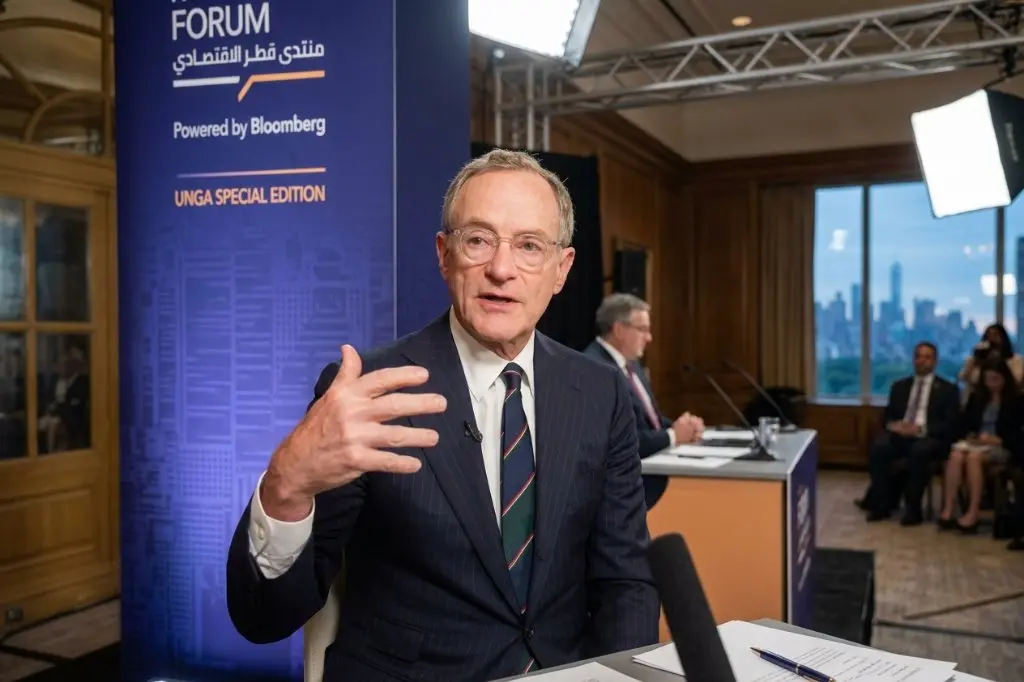
Last Friday, at the Jackson Hole Global Central Bank Conference, Federal Reserve Chairman Waller finally spoke up, and his opening remarks were clear hawkish signals: If the underlying inflation in the United States does not clearly and quickly fall back to the 2% target, the Federal Reserve "still has work to do."
He did not commit to raising interest rates in September, but laid out the policy path clearly—2% is a hard target, short-term interest rates are the main tool, and if inflation does not meet the standard, the work is not finished.
1. The Hawkish Confidence: Data Indeed Does Not Favor
Waller's hawkish stance is backed by data. The inflation indicator most valued by the Federal Reserve—the PCE price index—has a 12-month change rate of 3.7%, and the six-month change rate has even reached 4.1%; the comparable CPI is also at a high level, and the core indicators of both PCE and CPI cannot be suppressed.
These indicators are not perfect, and the picture they paint is clear: the U.S. economy is not weak enough to require interest rate cuts, and inflation is not good enough to allow for complacency. With neither side being favorable, the Federal Reserve can only choose to hold firm.
The market immediately cast its vote: the three major U.S. stock indices collectively closed lower, and Bitcoin, which had been rising, also encountered resistance and fell to around $78,000.
2. An Intriguing Question: Will the Person Promoted by Trump Really Act Impartially?
Waller's hawkish remarks will naturally suppress U.S. stocks in the short term. But an intriguing question arises: Does this person, who was personally promoted by Trump to the position of Federal Reserve Chairman, truly intend to act impartially?
Not necessarily. From another perspective, at this current juncture, Waller's hawkish stance may actually be more meaningful than a dovish one.
First is the maintenance of credibility. He must present a clear and tough attitude towards inflation; otherwise, doubts in the market are unlikely to cease.
Secondly, there is a compromise with reality—he really cannot easily raise interest rates. Currently, a significant portion of U.S. inflation stems from oil prices driven up by the U.S.-Iran conflict and the chain reactions of tariff policies, all of which are closely related to Trump's policies. Using interest rate hikes to suppress this inflation is not very efficient and could directly harm Trump's electoral prospects during the sensitive period before the midterm elections.
Therefore, using hawkish rhetoric for expectation management while not implementing interest rate hikes has become the most cost-effective choice for Waller: it maintains the image of central bank independence without harming the political interests of his promoter.
3. Following This Logic, A Counterintuitive Deduction
If this judgment holds, then the current concerns of some investors about "U.S. stocks continuing to decline before the midterm elections" may not be valid.
The logical chain is as follows: Waller's interest rate hike is more like a feint, with the actual policy focus being to stabilize the situation; and for the sake of Trump's electoral prospects, U.S. stocks may actually continue to rise before the midterm elections.
Of course, it must be emphasized that this is just a set of speculations. Investors can certainly position themselves based on this deduction, but speculation is just speculation—wise practice is to hedge risks in judgment.
4. Before the September Meeting, Two Data Reports Determine Fate
Before the September Federal Reserve meeting, there will be a non-farm payroll report and a CPI inflation report to be released, interspersed with several key data points.
The Federal Reserve under Waller is clearly more data-dependent than its predecessor. Interestingly, the recent employment reports have all fallen short of expectations, and the deviations are not small—this means that any further signs of weakness could significantly undermine market bets on a rate hike in September.
5. In Conclusion
Breaking down Waller's speech reveals two layers: On the surface, it is a strong statement on inflation, maintaining the independence of the Federal Reserve; beneath the surface, it is a web woven from political constraints and the reality of the inflation structure, which likely determines a gap between "what is said" and "what is done."
For investors, rather than betting on "whether the hawkish stance is real," it is better to focus on more honest indicators—the non-farm payroll and CPI. Rhetoric can manage expectations, but data will not cooperate with performances. Before September, every round of sharp market fluctuations will likely revolve around these two reports.
Disclaimer: This article only represents the author's logical deductions and market analysis based on publicly available information and does not represent the views of BIT. It does not constitute buy or sell advice for any securities, derivatives, or trading platforms. The specific brokerage names or trading strategies mentioned (such as options hedging) are for theoretical case illustration only and do not constitute any form of business promotion or trading guidance.
 Risk warning



Popular articles