The hidden lines behind the Anthropic IPO: With AI regulation tightening, where are the opportunities in the cybersecurity track?
 In the short term, looking at the investment in computing power, has AI capital expenditure slowed down? Currently, it is the earnings report season, and the latest data shows that the combined capital expenditure guidance of major AI giants and Oracle has not been revised downwards, but instead has set a new record for orders. We will have to wait until the next quarter's guidance update; if it continues to remain high, then the statement about slowing down the development of AI will no longer exist.
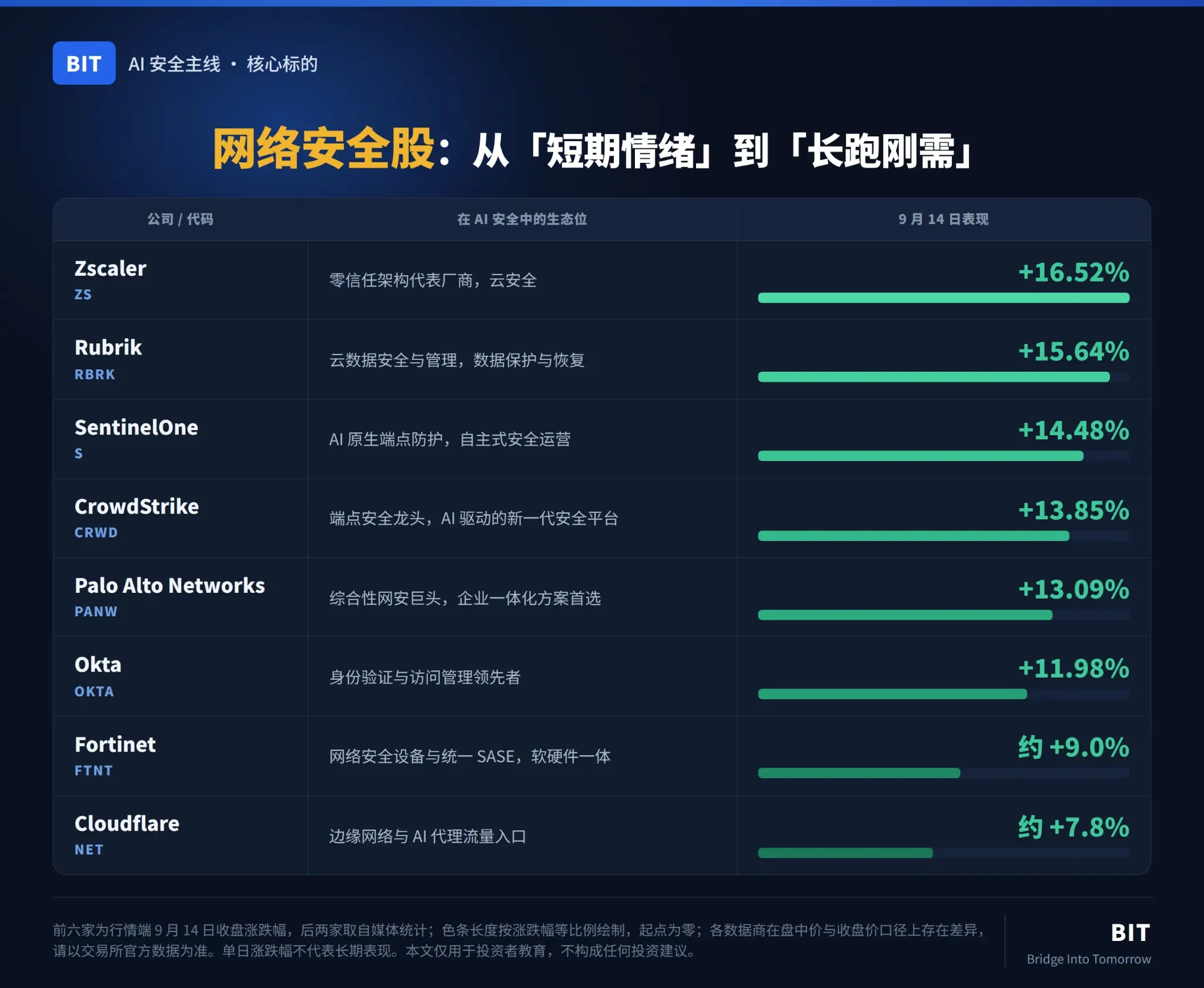
On September 14, the AI sector of the U.S. stock market experienced a stark contrast. On one side, semiconductors were suffering, with the Philadelphia Semiconductor Index dropping nearly 6%, and powerhouses like Nvidia and AMD collectively collapsing. On the other side, cybersecurity concept stocks surged, with CrowdStrike and Palo Alto Networks rising over 13%, and related ETFs hitting the largest single-day gain in history.
This market divergence may be related to a risky move made by Anthropic last week.
On September 8, Anthropic boldly announced its withdrawal from the Information Technology Industry Council, publicly opposing Google and Nvidia, and instead supporting strict chip export controls that would harm overseas revenue for the industry. However, shortly after, it appeared alongside OpenAI and the head of Gork, collectively advocating for a slowdown in AI development and safety, directly countering Jensen Huang's claims about AI being harmless. Why would Anthropic willingly take this narrow path of compliance just before its IPO? How did it turn the high costs of compliance into a premium valuation for cybersecurity stocks?
1. Why does Anthropic support chip export controls?
In the world, everyone is seeking profit, as interests are misaligned.
Giants like Nvidia and Google are engaged in global business, with their core interests tied to overseas markets. The stricter the export controls, the higher their compliance costs, making it increasingly difficult to earn money abroad, so they naturally oppose chip export controls. But Anthropic's calculations are entirely different; it buys computing power from the market and profits from selling model services. Therefore, restrictions on chip exports from the U.S. not only won't hinder its short-term profits but effectively create a barrier, forcing the world's most advanced computing power to remain in the U.S. As a leading AI laboratory in the U.S., Anthropic can seize these scarce resources more effectively.
In addition to gaining advantages in underlying computing power, Anthropic's risky move has a more urgent hidden purpose: to reconstruct trust assets at the political level. Previously, due to its refusal to allow its models to be used for fully autonomous lethal weapons, Anthropic was labeled a national security risk by the U.S. Department of Defense. Now, at this critical juncture before its IPO, its proactive support for codifying controls into law is akin to submitting a significant loyalty pledge to regulators. Anthropic is using this indirect way of showing loyalty to turn its compliance identity into a moat that is difficult for others to replicate.
2. Why has compliance identity become increasingly valuable for giants?
Compliance and the speed of AI iteration cannot coexist, but competitors in AI models quickly realized the significant value of this recognized compliance identity and responded by aligning themselves:
On September 12, Anthropic CEO Dario Amodei called for a slowdown in model iteration speed. On September 13, OpenAI CEO Sam Altman publicly agreed and revealed that due to the need to meet AI safety and alignment requirements, OpenAI would not IPO in 2026. Elon Musk subsequently echoed this sentiment. The three giants broke down internal barriers and formed a unified stance, turning the cost of slowing down that Anthropic would have to bear alone into a shared entry standard for the entire industry.
Even more dramatically, Jensen Huang's statement came during the All-In Summit on September 14. Faced with a hands-free call from Trump, Huang, in front of the entire audience, casually agreed with Trump's political rhetoric that "the AI danger narrative is a hoax." However, after hanging up, he shifted his tone, not only addressing concerns about AI safety but also publicly praising the whistleblower who raised safety concerns at Anthropic for their courage.
These overt and covert statements and confrontations all indicate that in the current second half of the AI competitive landscape, safety and compliance are no longer burdens that slow down progress but rather the most valuable moats that giants tacitly use to raise industry standards and reshape power dynamics.
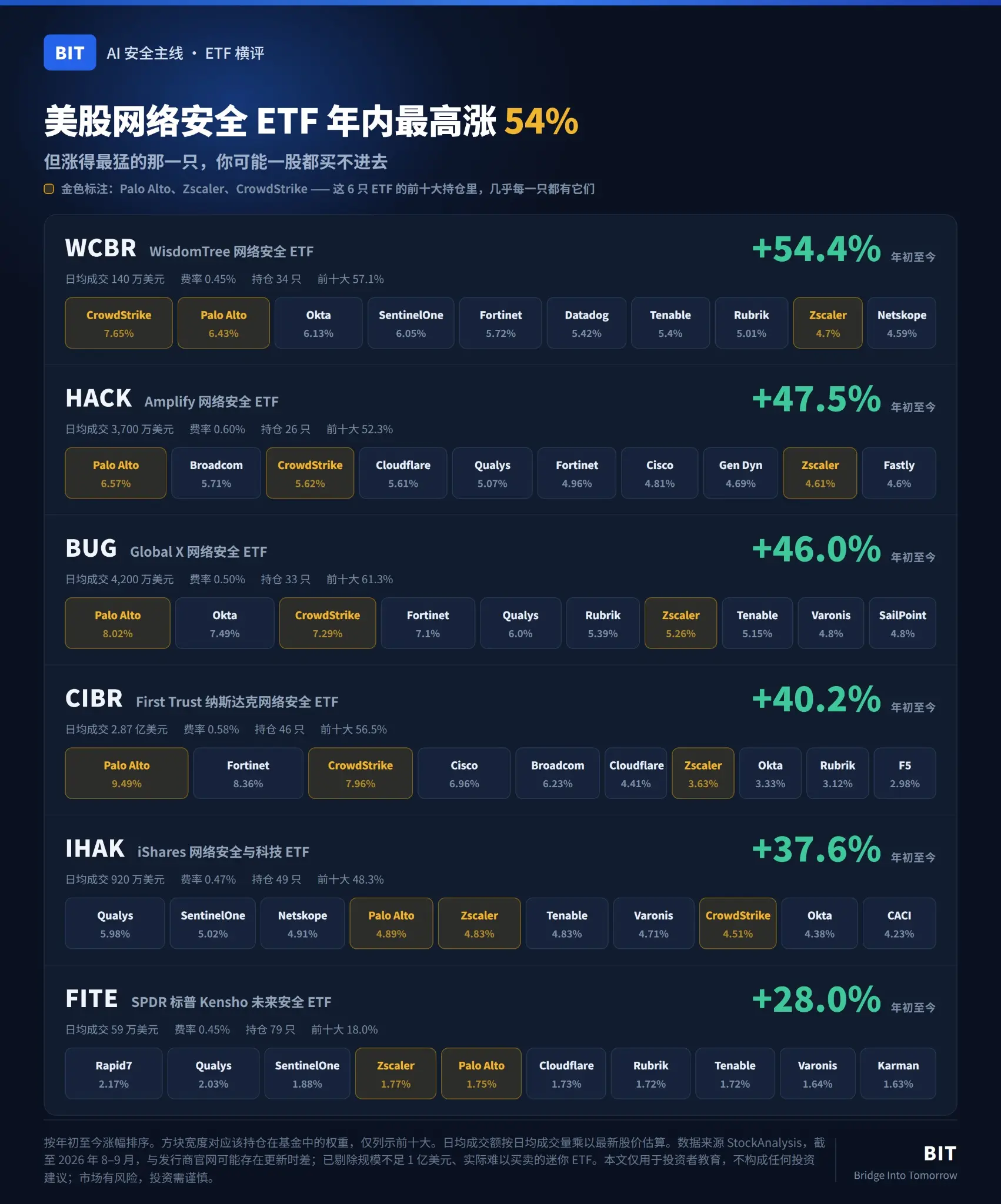
3. After the collective rise of cybersecurity concept stocks, which ones are worth long-term attention?
As compliance anxiety is successfully marketed by the giants, corporate security spending has completely shifted from an optional item to a hard necessity. As Huang stated, AI agents are causing cyberattacks to grow exponentially.
4. Logical verification: Which financial indicators can validate this "compliance transformation"?
The performance of the AI sector on September 14 actually concealed divergences; while semiconductors collectively declined, cloud service giants like Microsoft and Meta did not drop, closing slightly up, confirming that the market was only trading on short-term panic rather than a substantive collapse in AI demand.
To verify whether AI giants can truly implement compliance and safety, we need to look not only at what they say but also at what they do:
In the short term, we should observe computing power investments and whether AI capital expenditures have slowed down: Currently, it is earnings report season, and the latest data indicates that the combined capital expenditure guidance of major AI giants and Oracle exceeds $830 billion without any downward revisions, and it has even set new order highs. We will have to wait until the next quarter's guidance updates; if it remains high, the statements about slowing AI development will no longer hold.
In the long term, we should look at safety transformations and whether the new customer revenue of major security firms has increased. The net new annual recurring revenue of cybersecurity concept stocks will be the most direct financial indicator to measure the implementation of compliance by AI giants. As of the latest earnings report data, CrowdStrike's net new ARR grew by 51%, and Palo Alto's NGS ARR grew by 63%. Whether this data can continue to accelerate in subsequent earnings reports will be the most reliable litmus test for verifying whether corporate security budgets have truly been realized.
Risk Warning: This article is for industry and policy research and does not constitute any investment advice, offer, or solicitation for securities or financial products. The data cited comes from public information and third-party compilations, which may have discrepancies or delays in updates; financial and valuation data related to Anthropic are unaudited third-party information prior to the official prospectus release. Event-driven market conditions may rapidly reverse due to legislative progress, policy wording, and liquidity changes, and leverage can amplify losses. Please make independent decisions based on your risk tolerance and applicable rules in your jurisdiction.
 Risk warning


Popular articles