After the re-anchoring, how far can USDe's recovery go this time?
 Core Viewpoint

 In the past month, the supply of USDe has rebounded, the price of ENA tokens has surged, and the stock price of the treasury company StablecoinX has reached a historic high.
Author: Zhou, ChainCatcher
On September 22, around 1 PM, USDe briefly fell below $1 in the Binance spot USDe/USDT trading pair, reaching a low of $0.9202, before returning to around $0.9996 within minutes. ENA dropped over 7% during the day.
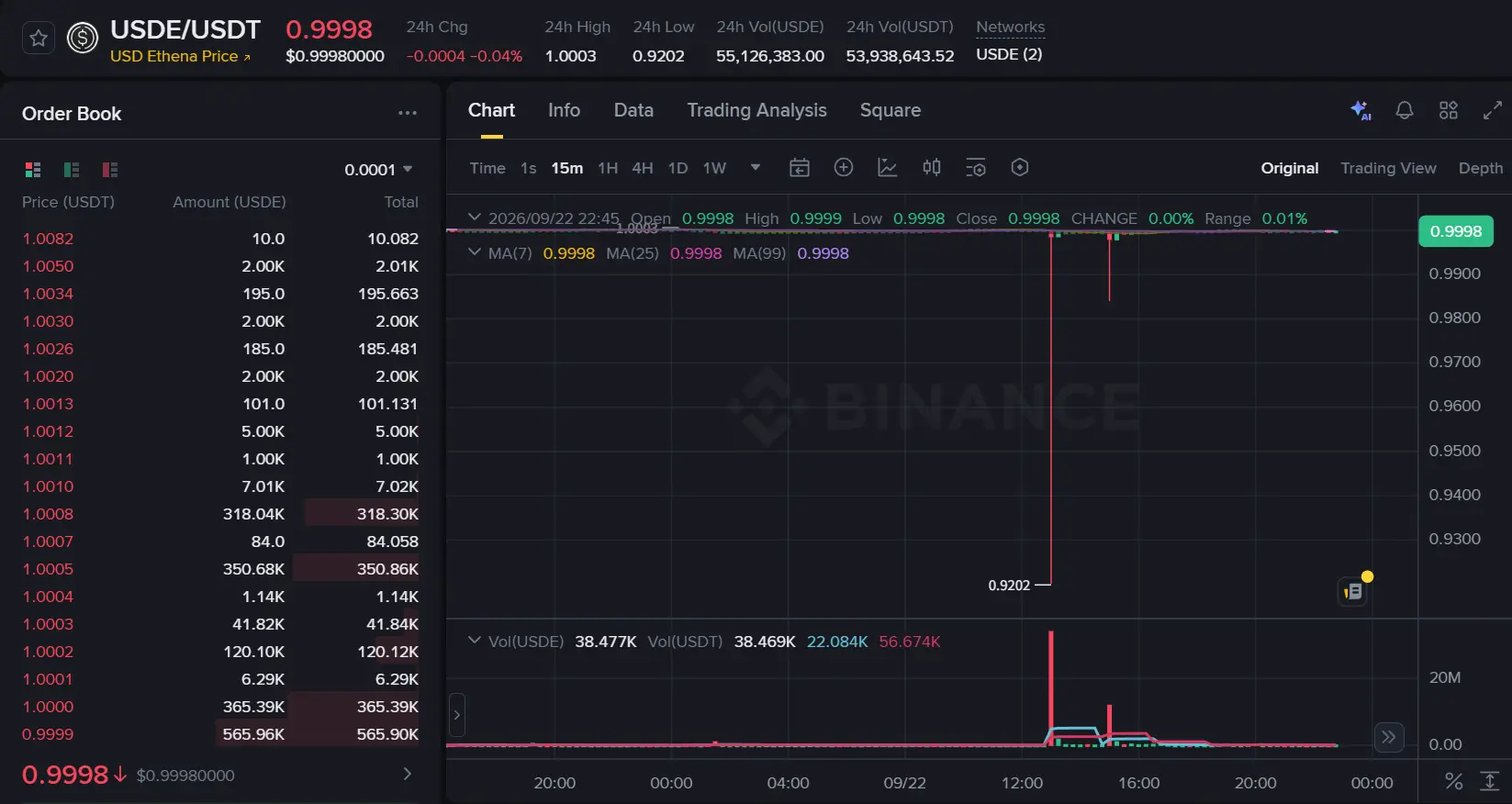
This fluctuation occurred before a scheduled wallet upgrade on Binance at 2 PM. During the upgrade, all network deposits and withdrawals were paused for about an hour, with the overall maintenance window lasting until 5 PM. However, there is currently no evidence to suggest that this decoupling was directly triggered by this maintenance.
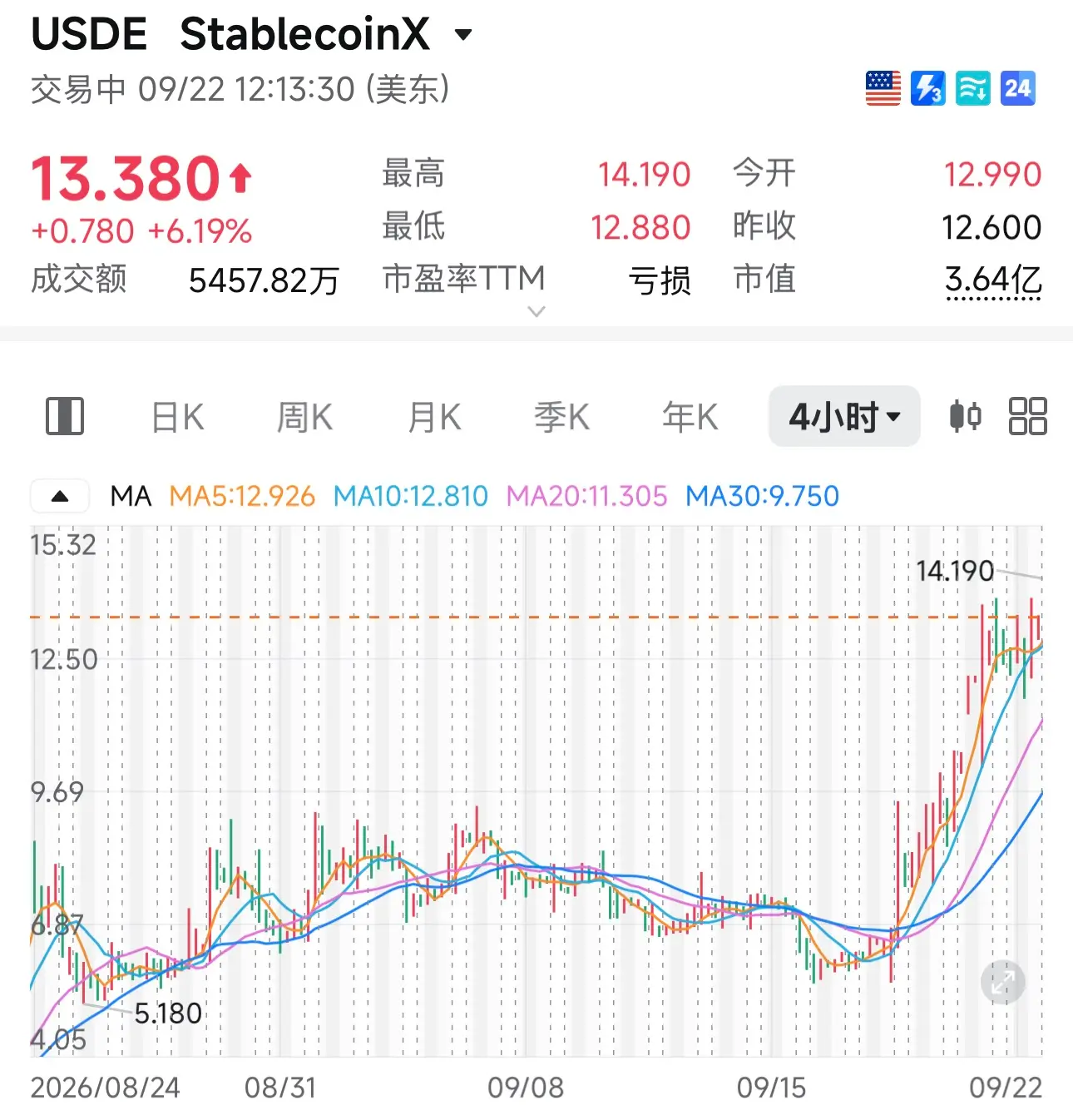
Last year, the supply of USDe once approached $15 billion, followed by several months of significant losses. In the past month, the scale has increased from about $4.1 billion to nearly $4.9 billion. During the same period, ENA rose by about 30%, and the stock price of Nasdaq treasury company StablecoinX, which holds related assets, increased from just over $5 to about $14, setting a new historical high.
In this rebound, how much is driven by market expectations for its token buyback, how much is due to the actual recovery of the protocol's scale and revenue, and how much is merely an amplification of sentiment?
USDe Bled for Ten Months, Just Rebounding Before Decoupling Again
This is not the first time USDe has decoupled. During the crash triggered by massive liquidations on October 11 last year, USDe fell to $0.65 on Binance. In contrast, this fluctuation to $0.92 seems more like a minor episode, as the protocol's minting and redemption were not affected.
Crypto analyst Chen Mo stated that the order book for USDe on centralized exchanges has always been thin, while it is also used as collateral for contract positions. The risk transmission from October 11 began here. He mentioned that subsequently, Binance included the actual redemption price of USDe in the price index, no longer solely referencing the order book quotes, theoretically preventing a repeat of the chain liquidation seen on October 11.
Data shows that after October 11, the supply of USDe was halved from its peak and maintained at a low level for several months.
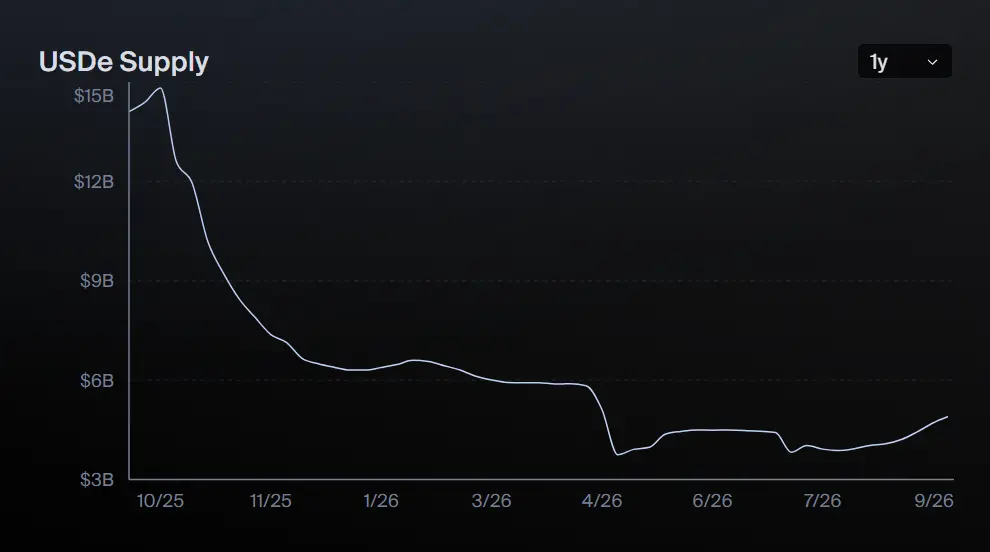
In April this year, the cross-chain bridge of the liquidity re-staking protocol Kelp DAO was attacked, resulting in a loss of about $292 million, accounting for approximately 18% of the circulating rsETH. Ethena itself had no exposure to rsETH, but due to the use of related cross-chain bridge technology, it prudently paused its bridging services.
Platforms like Aave and SparkLend simultaneously froze the rsETH-related markets, and panic spread along the liquidity re-staking chain, pulling USDe into the turmoil. From April 19 to 23, USDe was redeemed for about $1.68 billion, dropping to $3.9 billion by the end of the month, marking the second low point since October 11.
It is important to note that Ethena truly relies on the funding rates of hedge assets like BTC and ETH. If this income weakens, the interest rate spread between sUSDe's external quotes and U.S. Treasury yields will be rapidly compressed.
During this wave of redemptions in April, the yield on sUSDe dropped to around 3.5%, only slightly higher than U.S. Treasury yields, which was a direct reason for the accelerated capital withdrawal at that time. The protocol relied on the more than $90 million immediate buffer maintained in the redemption contracts to withstand this wave of concentrated redemptions, and the reserve fund was not passively used throughout.
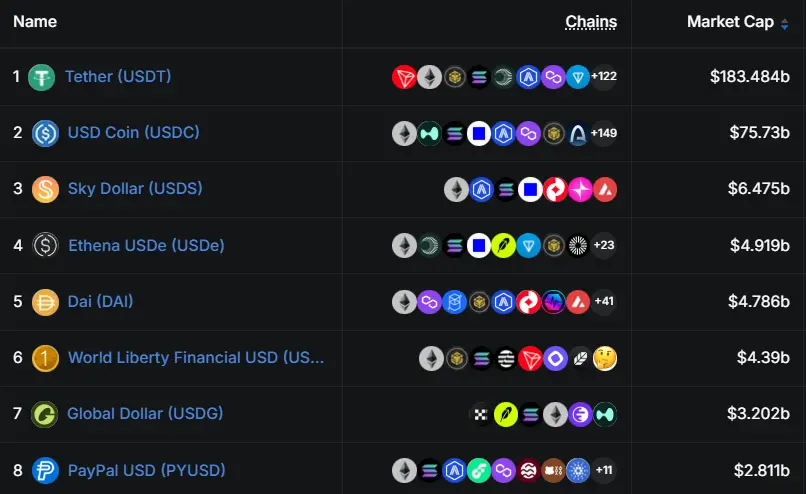
According to DefiLlama data, the current supply of USDe is about $4.9 billion, making it the fourth largest stablecoin in the network, only behind USDT, USDC, and Sky Dollar, with a gap of less than $200 million from the fifth-ranked Dai.
Ethena Tokenomics Reform, Buyback Expectations Fully Loaded?
At the end of August this year, the Ethena Foundation announced significant reforms to its tokenomics, proposing to use protocol revenue to buy back ENA. ENA holders are voting to decide on the "fee switch," which states that when the circulation of USDe reaches $7.5 billion, 95% of the net income from Ethena's brand business will be used for programmatic purchases of ENA, with the remaining 5% for growth.
This proposal was passed with a high vote in the governance vote on September 2. The foundation also funded the buyback of previously unlocked ENA shares from some early investors and assigned the protocol's intellectual property and value to the foundation, placing it under the governance framework of ENA holders.
This reform also includes ending the monthly unlocks that lasted for over a year, changing the originally monthly released investor shares to a one-time permanent unlock on October 5.
This arrangement may instinctively lead people to think that the end of the unlock is a positive sign, but the actual situation is more complex. As early as the end of 2024, the protocol had set a version of thresholds, including USDe supply exceeding $6 billion, historical cumulative income exceeding $250 million, and access to four of the five major mainstream contract exchanges.
In September 2025, the supply of USDe once surged to $12 billion, and these conditions were basically met, yet the plan remained stuck in the risk committee approval and token holder voting stage, never formally initiated. Shortly thereafter, the October 11 incident occurred, halving the supply of USDe, and this version of the plan fell through.
Currently, the supply of USDe is still $2.6 billion short of the target set by the reform. Based on the average recovery speed since the April low point, the monthly growth is about $200 million, meaning it would take approximately 13 months to fill this gap. If calculated based on the accelerated pace observed in the last month, the time could be shortened to about 3 months.
It is worth mentioning that StablecoinX, which holds about 20% of the total supply of ENA, has seen its stock price perform better than other treasury companies, with its stock price rising from just over $5 to a high of $14.19 during intraday trading on September 22 over the past week. Especially after the ENA lock-up exemption agreement reached with Ethena on September 17, the stock price hit historical highs for three consecutive days.
From Earning Funding Rates to a New Bank That Hasn't Yet Run Smoothly
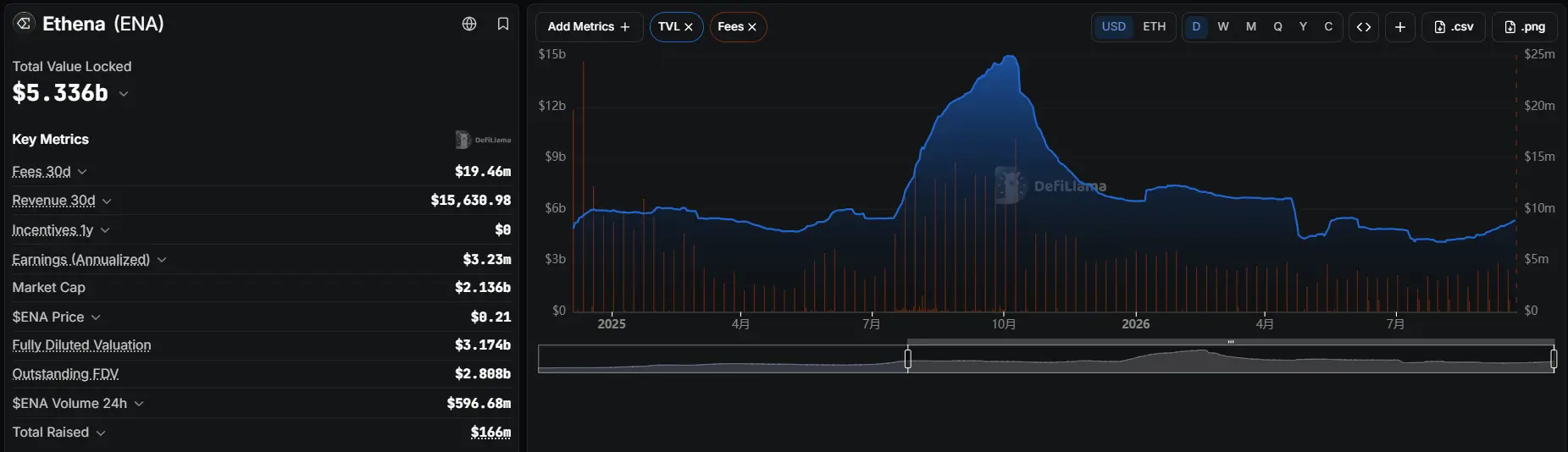
According to DefiLlama data, in the past 30 days, the total fees generated by the protocol were about $19 million, but the revenue accounted for only over $10,000. The fees include portions distributed to sUSDe holders, minting fees, and reserve fund shares, while revenue only counts the minting fees and that small portion entering the reserve fund.
Currently, minting fees are basically waived, and the reserve fund has not distributed shares for a long time, meaning that almost all the income generated by the protocol is distributed to sUSDe holders and distribution channels, and has not truly flowed to ENA token holders.
Since the April low point, the system-backed assets have introduced categories like RWA, institutional lending, and DeFi lending that were previously absent.
A known solid relationship is with another stablecoin under Ethena, USDtb, which is supported by the tokenized fund BUIDL under BlackRock.
In June, Janus Henderson also announced a cooperative direction, with this asset management company managing approximately $480 billion planning to include USDe in its cash management strategy and explore distributing income products through ETPs.
Coinbase Ventures completed its first investment in Ethena, planning to bring related products to its over 100 million users, while Anchorage Digital provides support in institutional lending and custody.
Launched in September, Ethena Pay is, to some extent, a response to the question of self-sustainability. Market analysis points out that the logic of this product is similar to the revaluation path of ether.fi, aiming to transform the protocol from earning through bull and bear cycles into a new bank that earns from daily transaction fees.
Who Is Amplifying This Round of Market?
In the past month, another faster and more direct force pushing ENA upward has been sentiment.
On September 20, BitMEX co-founder Arthur Hayes publicly called for ENA, setting a target price of $0.5.
In his article "Yen-quake," he mentioned that the U.S. and Japan are jointly intervening in the yen exchange rate, and the Federal Reserve may adjust the FIMA mechanism to inject liquidity into the market, which would push up Bitcoin prices, thereby driving the basis yield of Bitcoin back up, making USDe's yield attractive again, leading to a capital influx and subsequently an increase in ENA.
However, Hayes has certain vested interests with Ethena. In the $6 million seed round financing completed by Ethena in July 2023, Hayes's family office Maelstrom was one of the investors, with Dragonfly as the lead investor.
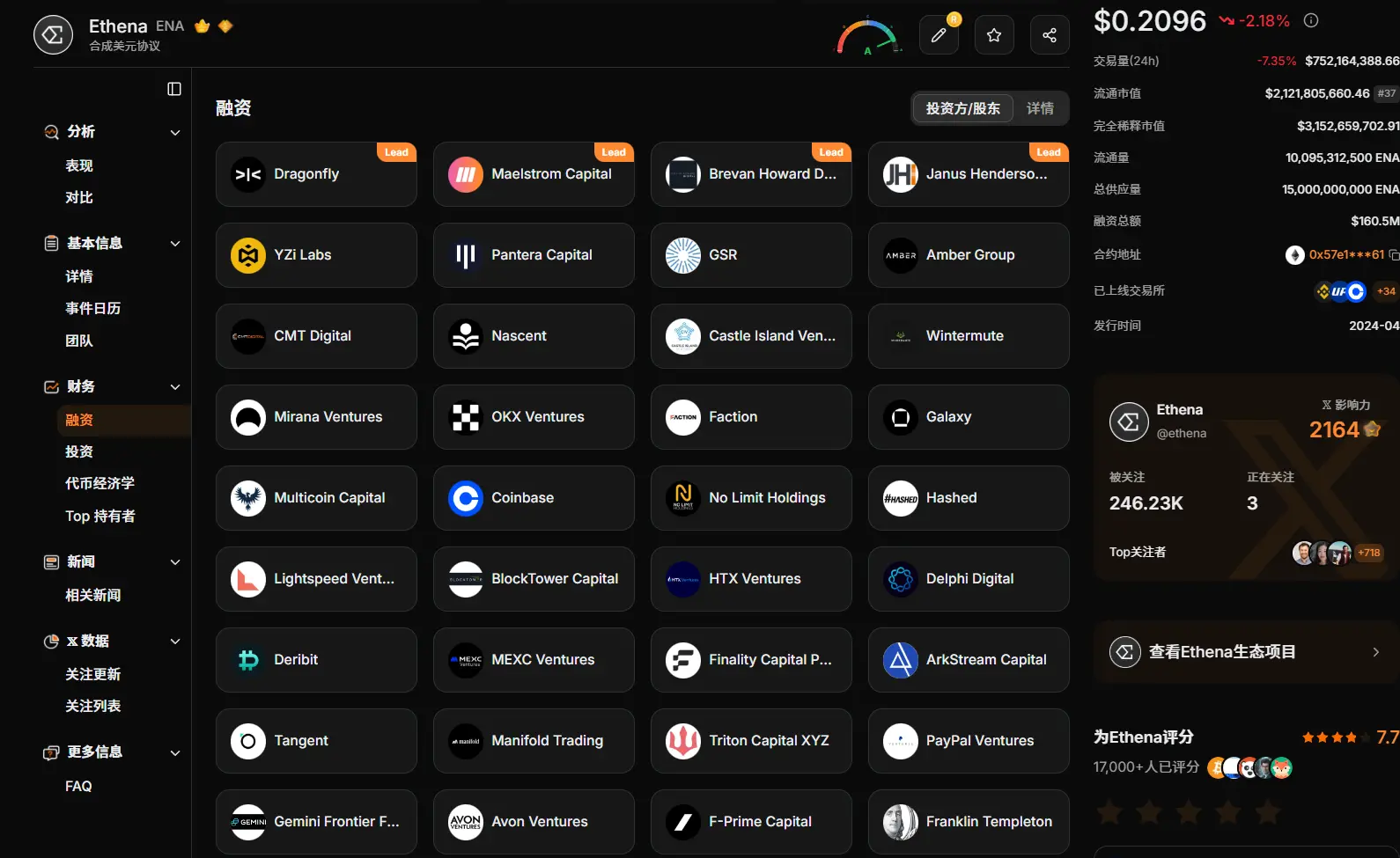
KOL BITWU also pointed out that ENA is still the largest position in Hayes's on-chain marked addresses, and he had already built this position a month before the public call, with unrealized gains reaching 146% by the time of the call. Hayes's calls are often correct in direction but frequently wrong in timing, and he often contradicts what he says and does.
As for whether this round of rebound can hold, it ultimately comes down to two points: whether the supply of USDe can reach the $7.5 billion threshold within a reasonable time to truly activate the buyback mechanism, and whether the market can smoothly digest the batch of tokens unlocked on October 5, rather than becoming the starting point for a new round of selling pressure.

 Risk warning