BlackRock Releases the "Smart Economy White Paper": How Digital Assets Connect Intelligence, Business, and Computing
 Core Viewpoint

 When AI begins to autonomously purchase data, invoke services, and acquire computing power, stablecoins and tokenized assets are expected to welcome a new application market.
Author: BlackRock
Compiled by: Jiahua, ChainCatcher
Executive Summary
The rapid development of artificial intelligence is the most prominent technological trend of this era. At the same time, digital assets are also on the rise, potentially transforming financial infrastructure.
In the past, both developed largely along their own paths; now, as AI systems become increasingly capable of interacting with financial and economic networks, these two paths are beginning to converge.
This article examines the increasingly close relationship between the two and explains why the widespread application of AI may lead to a demand for digital assets that has not yet received sufficient attention, expand the use of digital assets, and drive growth in related applications.
The convergence of AI and digital assets is possible because they share a common foundation: AI is machine-native intelligence, while digital assets are machine-native currency. This alignment is particularly important with the rise of agent-based AI.
Agent-based AI refers to systems that can invoke external tools and infrastructure to plan and execute multi-step tasks around established goals with limited human intervention. Blockchain provides programmable infrastructure that connects intelligence with economic activities. These capabilities allow AI to not only generate content but also take actions in the real world, including shopping and initiating financial transactions.
Specifically, we explore three main areas of convergence:
• The tokenization of assets on blockchain and the tokenization of language by large language models have structural similarities. Large language models break human language into tokens and encode them as numbers for the model to understand and process.
Blockchain represents economic value and associated rights as digital asset tokens, allowing machines to verify their transfer and settlement. While their functions differ, both convert real-world inputs into formats that machines can directly use.
• Agent-based commerce requires machine-native payment channels. The rise of agent-based AI and machine-to-machine payments may increase the demand for blockchain and other programmable payment infrastructures; stablecoins, native crypto assets, and other on-chain assets can serve as machine-native payment and settlement tools on these channels.
Existing channels like ACH and card networks already support a large number of automated transactions, but account opening requirements and settlement costs may make them unsuitable for round-the-clock, very small, and programmatically executed transactions. New protocols like x402 and ACP are being deployed on blockchain networks, developing in parallel with the transformation of traditional payment channels, providing transaction and settlement support for more complex agent-based workflows.
• Computing power is becoming a potentially massive new market for digital assets. Computing power, the processing capability required to train and run AI systems, is becoming an increasingly important economic resource. Analysts estimate that by 2030, the annual revenue of hyperscale cloud providers' cloud businesses could exceed $1 trillion.
As AI agents are able to perform more complex tasks and operate autonomously, standardized rights representing computing power usage may become an important use of digital assets for financing and programmable settlement.
Overall, the proliferation of AI may continue to drive the adoption of digital assets, and digital assets may also support the AI economy: AI understands information and decides how to act, while blockchain provides machine-readable assets and programmable settlement. This connection has not yet received sufficient attention. As the digital economy increasingly involves autonomously operating systems, digital assets may become a more important infrastructure within it.
Tokenization of AI and Digital Assets
Architecturally, the tokenization of AI and digital assets has similar purposes: to transform information and economic rights into discrete, standardized representations that machines can process directly.
AI tokens carry information, while digital asset tokens represent certain values, ownership, or other economic rights.
In large language models, tokenizers break human-readable text into smaller units, typically words, subwords, or characters, and assign numerical identifiers to them. The embedding layer then converts these identifiers into vectors for model computation.
The model generates digital token IDs and decodes them into human-readable text. By continuously transforming input text into standardized digital units, large language models can efficiently process large amounts of input using highly parallel computations that modern chips excel at.
Blockchain handles value storage tools and economic rights in a functionally similar way, but with different technical implementations. Digital asset tokenization represents financial assets or real-world assets such as cash, fund rights, securities, or other ownership rights as standardized digital tokens recorded on a distributed ledger. Existing on-chain assets like stablecoins can be transferred through smart contracts.
At the transaction level, these assets are represented by machine-readable transaction data and applicable rules. The network verifies whether transactions are authorized and valid, while smart contracts or transaction scripts execute specific asset permissions and conditions. These mechanisms update the ledger by transferring token balances. Once a transaction is recorded and reaches sufficient final confirmation according to the network's consensus rules, it becomes part of the network's official ledger state.
In the blockchain process, smart contracts execute transaction logic and specific rules for financial assets. Checks such as AML (Anti-Money Laundering), KYC (Know Your Customer), and KYA (Know Your Agent) are typically conducted off-chain to verify identity and compliance data, with the verification results then sent on-chain to determine whether the transaction meets the conditions.
For tokenized real-world assets, these controls still fall within a broader legal and regulated service framework and rely on authoritative off-chain registration systems; at the same time, they reduce reliance on closed databases and manual reconciliation.
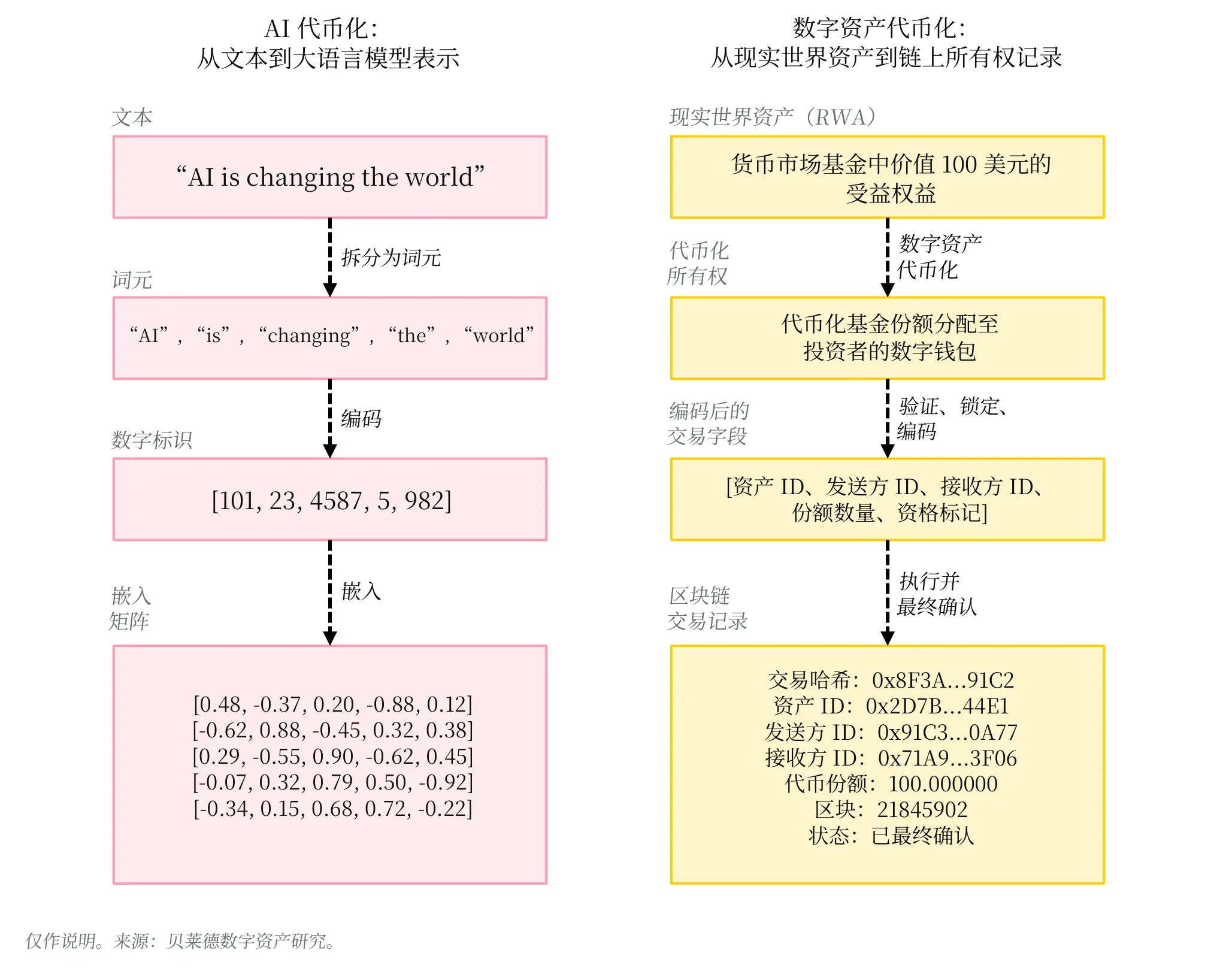
Figure 1: Schematic of the Tokenization Process in Large Language Models and Blockchain Transactions
These two processes, one encoding information in human language and the other encoding economic rights, become increasingly important as intelligent systems and transaction execution gradually converge.
Both use structured, machine-readable representations. Therefore, compared to many traditional systems that are disconnected from each other, AI agents based on large language models can read blockchain data more directly. The representation of different asset classes is more standardized, which can reduce the work of developing interfaces for each system separately, making it easier for agents to coordinate complex processes involving multiple assets.
Through programmable interfaces, agents can verify balances and rules before executing authorized transactions and validate settlements after transactions, reducing reliance on manual processes.
Recent research by the Bitcoin Policy Institute provides preliminary support for this framework: in controlled simulations, the model's responses tend to favor using stablecoins for everyday payments and Bitcoin for long-term storage. These findings reflect the model's responses in the simulation, not observations of actual behavior of AI agents.
However, they suggest a possible AI-native currency architecture: stablecoins for transactions and Bitcoin for storage. The following discussion will explore how this shared machine-native foundation may support agent-based payment scenarios that traditional financial channels struggle to complete efficiently and at low cost.
Payments and Settlements for AI Agents
As the capabilities of AI agents enhance and real-world applications expand, they increasingly require payment and asset infrastructure suitable for machine-initiated, rapid transactions.
Cryptocurrency-native blockchain channels are particularly well-suited for round-the-clock, high-frequency, machine-to-machine (M2M) transactions of amounts less than a cent, such as API calls, on-demand data retrieval, and pay-per-use computing fees.
At the same time, transformed traditional payment systems will continue to play an important role in connecting agents with human-operated businesses and consumers in business-to-machine (B2M) and consumer-to-machine (C2M) transaction scenarios.
Stablecoins, native crypto assets, tokenized real-world assets, and other programmable tools can support transactions and digital ownership around the clock, including using assets as collateral, at the level of granularity required by transactions and asset shares.
More broadly, tokenization can provide standardized, machine-readable representations for different asset classes, reducing the work of developing interfaces between financial systems one by one, allowing agents to coordinate increasingly complex processes more efficiently.
Many existing payment channels are less suitable for high-volume, low-value agent-based transactions. Major limitations include:
• Processes such as account opening, credential configuration, and authorization may require human involvement;
• Fees required for merchants to accept payments may render very small transactions economically unfeasible;
• There are limitations on settlement and final confirmation. Most ACH transactions can settle within one business day or less; card authorizations are almost instantaneous, but final confirmation for merchant settlements and dispute resolution may take longer;
• As the volume of machine-initiated transactions grows, the system's scalability may be limited.
Agent-based payment protocols are built on foundational standards like MCP and A2A: MCP helps agents connect to external systems, while A2A facilitates communication between agents.
Anthropic is set to launch MCP (Model Context Protocol) in November 2024, providing a unified standard for AI applications to access external data and workflows. Google plans to launch A2A (Agent2Agent) in April 2025, enabling agents on different platforms to communicate and collaborate.
Agents using MCP and A2A will also invoke various agent-based payment protocols to complete complex processes involving payments.
The open payment protocol x402 developed by Coinbase utilizes the HTTP 402 "Payment Required" status code, allowing machines to initiate payments. This protocol does not rely on a specific blockchain, with stablecoins like USDC being one of its early major applications; it is also becoming a potential standard for high-speed machine-to-machine transactions.
x402 provides round-the-clock, near-real-time, verifiable settlements, reducing counterparty risk for resource providers, allowing them to deliver requested data or services immediately upon confirming receipt of payment.
By using digital currencies like stablecoins held in on-chain wallets, x402 can support high-frequency, low-value transactions without human intervention. If transactions settle on permissionless networks, increased usage may lead to greater demand for block space and validator services, further increasing the demand for native crypto assets.
However, the ultimate value this demand can bring to native assets still depends on the fee structures, staking, and transaction fee payment mechanisms of each network.
Other emerging standards connect agent-based transactions with existing payment channels and establish authorization and verification rules for trusted financial transactions.
The machine payment protocol MPP developed by Stripe and Tempo supports charging for APIs and other HTTP resources, allowing flexible settlement through stablecoins or traditional payment methods. The agent-based commerce protocol ACP developed by Stripe and OpenAI enables agents to automatically complete checkouts programmatically while allowing sellers to continue using existing business and payment infrastructures.
Google's agent payment protocol AP2 uses cryptographic authorization credentials and audit trails to prove that users have authorized transactions; Visa's trusted agent protocol TAP helps merchants verify trusted agents and securely receive payment credentials.
Figure 2 illustrates a simplified agent-based payment process.
Human users (1) request agents to book flights and hotels within a specified budget. The main AI agent (2) accesses the user's calendar, preferences, and authorized payment information through the MCP connector, and then (3) delegates the data collection task to a specialized AI sub-agent responsible for travel via A2A. The sub-agent (4) calls paid flight and hotel price APIs, with the associated costs paid through x402 and settled on-chain. The main agent completes the booking based on the returned information (5) through the checkout systems of airlines and hotels, and finally (6) returns the itinerary and receipt to the user.
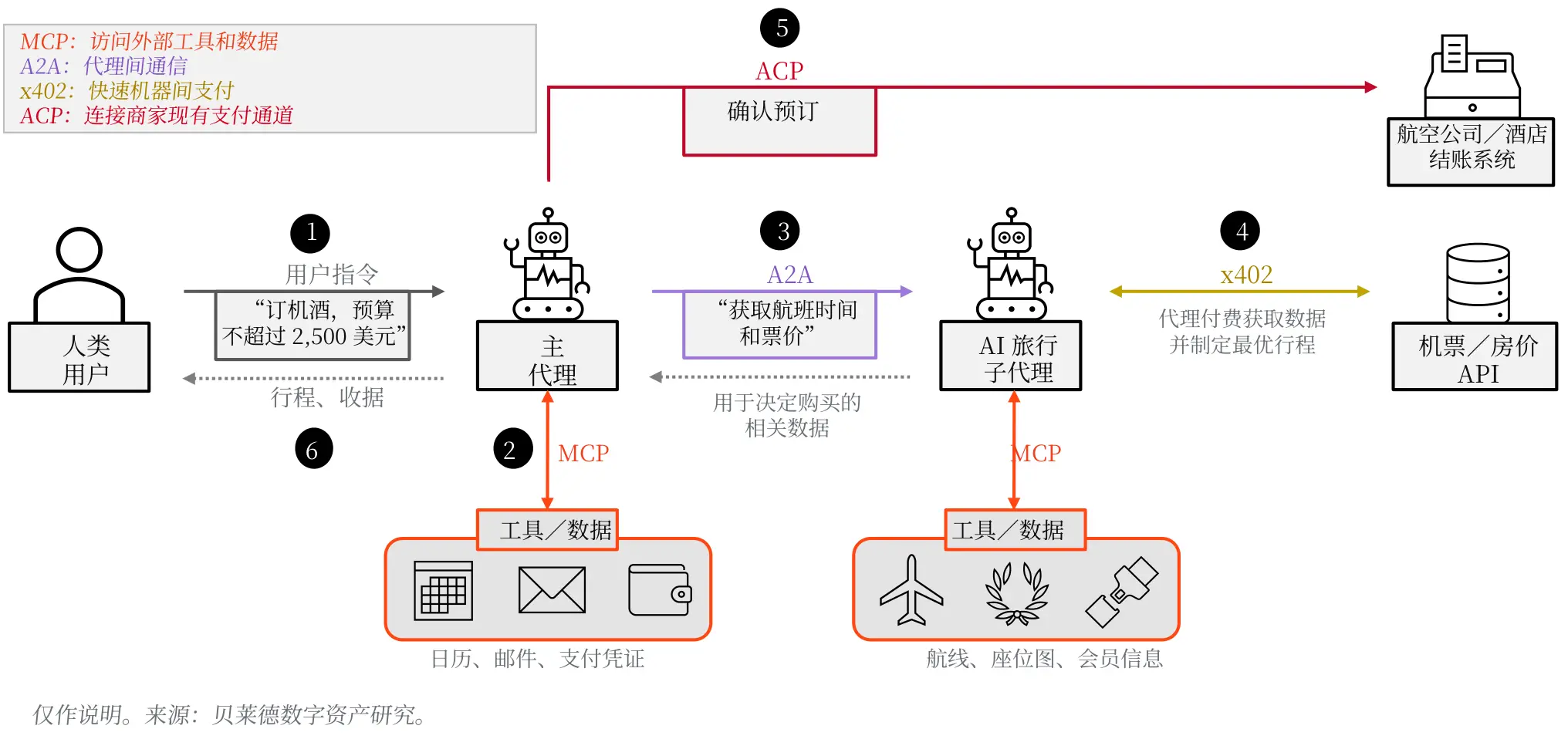
Figure 2: Schematic of the agent-based workflow with collaboration between basic protocols and financial agreements
Various types of digital assets can support agent-based commerce, but stablecoins may become the primary tool in transactions.
Stablecoins are digital tokens designed to maintain a stable value relative to a reference currency, with the most common reference currency being the US dollar. Price stability makes them a reliable unit of account and enhances the predictability of pricing and settlement.
Stablecoins represent the largest tokenized real-world asset class: as of September 2026, the circulating market value exceeds $300 billion. Adjusted stablecoin transaction volume surpassed $11 trillion in 2025, comparable to the annual transaction volume of Visa and Mastercard.
However, these metrics are based on different statistical criteria and cannot be directly compared. Stablecoin transaction volume is still far below the $93 trillion transferred via ACH in 2025; however, from 2020 to 2025, the compound annual growth rate of stablecoin transaction volume was 80%, compared to about 8.5% for ACH.
Regulatory rules are becoming increasingly clear, including the US GENIUS Act, the EU MiCA, Hong Kong's stablecoin licensing system, and Singapore's stablecoin regulatory framework, which should help stablecoins continue to gain popularity and grow.
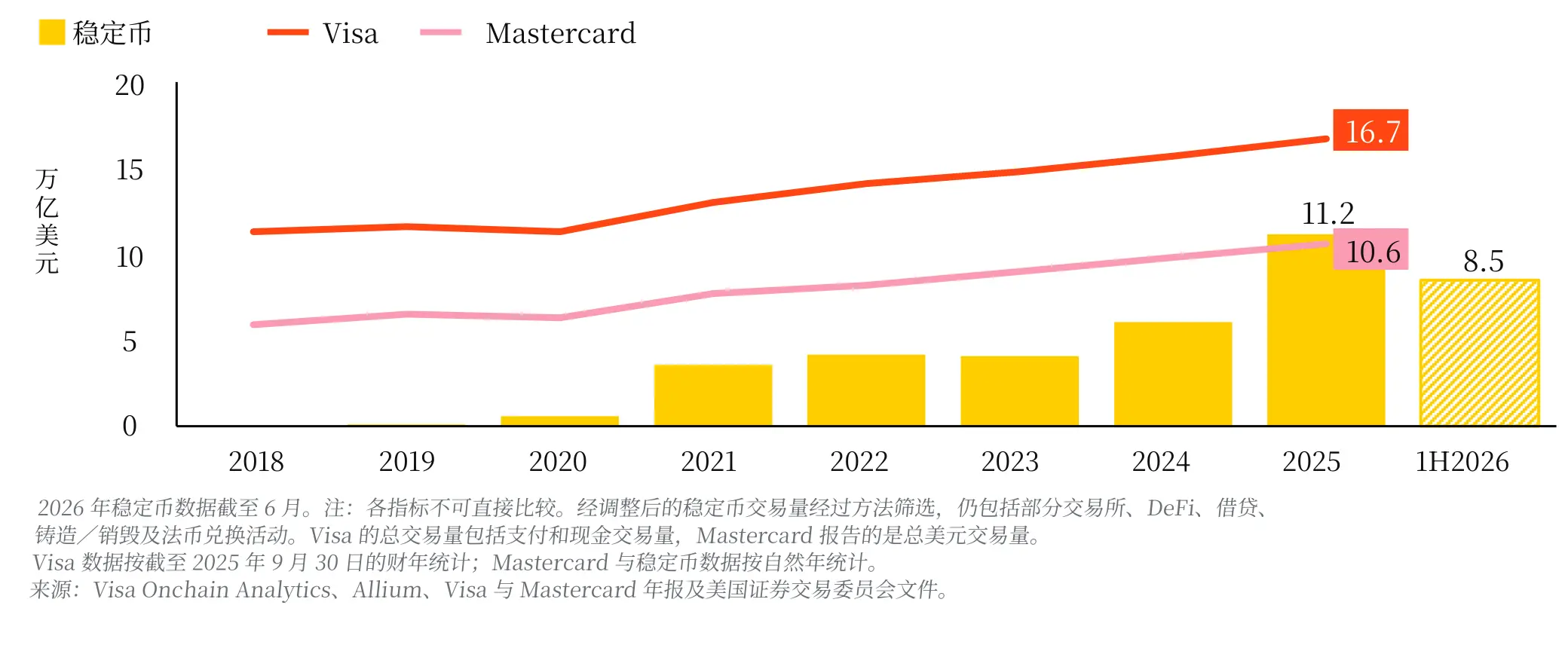
Figure 3: Transaction volume of stablecoins compared to major card networks
For digital assets, this growth's impact extends beyond stablecoins to the blockchain networks that support stablecoin issuance and settlement.
Many major stablecoins are issued on multiple blockchains, allowing market participants to choose supported settlement networks based on cost and technical compatibility. These networks include general-purpose permissionless networks like Ethereum, as well as networks specifically designed for stablecoins, such as Circle's Arc.
On Arc, USDC is designed as the native asset for paying gas fees. On permissionless networks, native crypto assets like ETH are used to support consensus, pay validator rewards, and transaction fees, as well as complete settlements. As stablecoin activity expands, demand for block space and network services may increase, leading to a corresponding demand for native assets related to usage.
However, the extent to which this demand can bring value to native assets depends on the fee structures, staking, and transaction fee payment mechanisms of each network. Arc also offers another complementary model: increased payment activity may further expand the use of USDC as a settlement asset and transaction fee payment tool.
Digital Asset Opportunities in the Computing Power Market
AI systems and agents require significant computing power and energy to operate. Investors are primarily focused on the massive capital expenditures needed to build AI infrastructure, with estimates suggesting that cumulative AI capital expenditures will exceed $5 trillion between 2025 and 2030. However, the ongoing operational expenditures supporting AI deployment are equally noteworthy.
A substantial portion of this operational expenditure flows into the AI cloud computing power market: this market generates revenue by providing computing power from existing IT equipment and the electricity needed to run that equipment. As the market expands, computing power is becoming an independent, large, and increasingly investment-grade economic resource, potentially giving rise to new categories of digital assets.
If we roughly measure the market size by the main cloud business segments of hyperscale cloud service providers, analysts' combined expectations for Amazon Web Services, Microsoft Intelligent Cloud, and Google Cloud indicate that by 2030, their total revenue will be approximately $1.1 trillion, with a compound annual growth rate of 29% compared to 2025.
As computing power becomes a more critical economic input, the market's demand for pricing, allocation, and financing and hedging tools for computing power will also increase.
Historically, large resource markets have gradually developed trading infrastructures to improve liquidity and risk management. We believe that as AI applications expand, computing power may follow a similar path. Recent market developments have already revealed this trend, including GPU-backed financing arrangements and financing platforms designed around long-term, usage-based computing power revenue.
These financing methods reflect that acquiring advanced GPUs and building computing power for cutting-edge models requires substantial upfront investment. As models advance, both training and inference demands are expected to continue growing. Inference refers to the computational process of handling requests and generating results after a model is deployed.
As the real-world applications of AI expand, it is expected that by 2030, inference will become the largest AI workload, further increasing its share of electricity demand in data centers. Potential inference users encompass businesses and individual consumers, far outnumbering the highly concentrated training market participants, and are more dispersed.
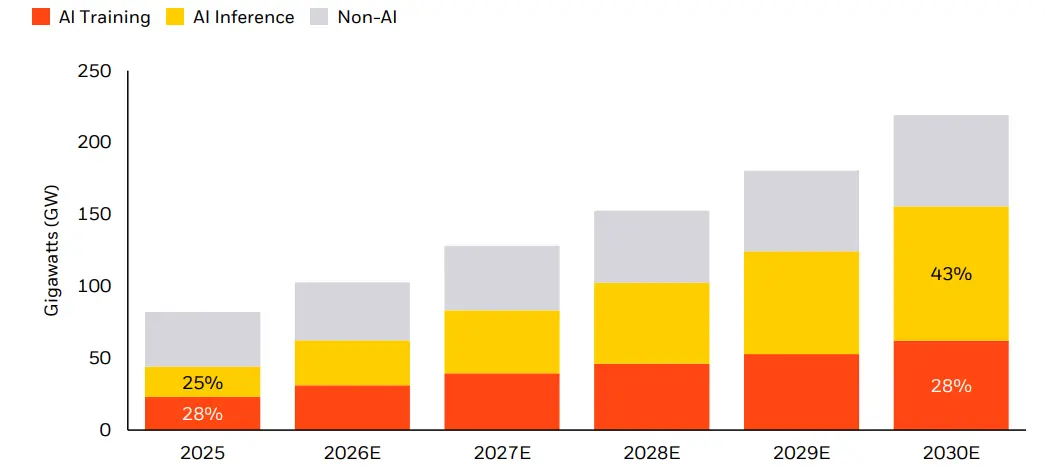
Figure 4: Global data center electricity demand, categorized by workload
Even as this market is forming, achieving scale for standardized computing power products still requires addressing significant challenges in contract design and market structure.
These challenges include considering the significant differences in production efficiency of different generations of chips, cost variations across regions, especially energy price disparities; as well as establishing viable standards for cash settlement and contract delivery of computing power.
We believe these design issues are important but ultimately solvable.
Mature commodity markets manage differences between assets and price variations across regions through basis trading, contracts for difference, and other methods; these experiences can be referenced by the computing power market. On-chain tokenized markets may leverage shared settlement infrastructure to support contracts segmented by region and hardware type.
As these frameworks mature, we expect standardized products, including exchange-traded computing power futures, to enhance price discovery transparency and help computing power suppliers and users hedge risks more effectively.
Standardized computing power contracts may also generate rights to acquire computing power and related usage rights. These rights can be represented, transferred, used as collateral, and settled through programmable infrastructure. This, in turn, may attract more institutional investors, making computing power a new opportunity in the digital asset market.
If the application of agent-based AI expands, agents may increasingly seek, configure, optimize, and pay for computing power through programmable payment channels like x402, making the value of this mechanism more apparent.
Agents can query real-time market APIs to compare available computing power based on price, performance, latency, location, and hardware type, then configure resources best suited for a specific workload. MCP and A2A can help agents acquire data and coordinate with each other, while x402 can support settlement based on per-use, per-model processing token counts, or per-task.
This mechanism is expected to enable on-demand, flexible, and immediate access to computing power while reducing manual intervention. Although agent-based payment activities are still in their early stages, the structural compatibility of autonomous agents and machine-native payments makes it a direction worth noting in ecological development.
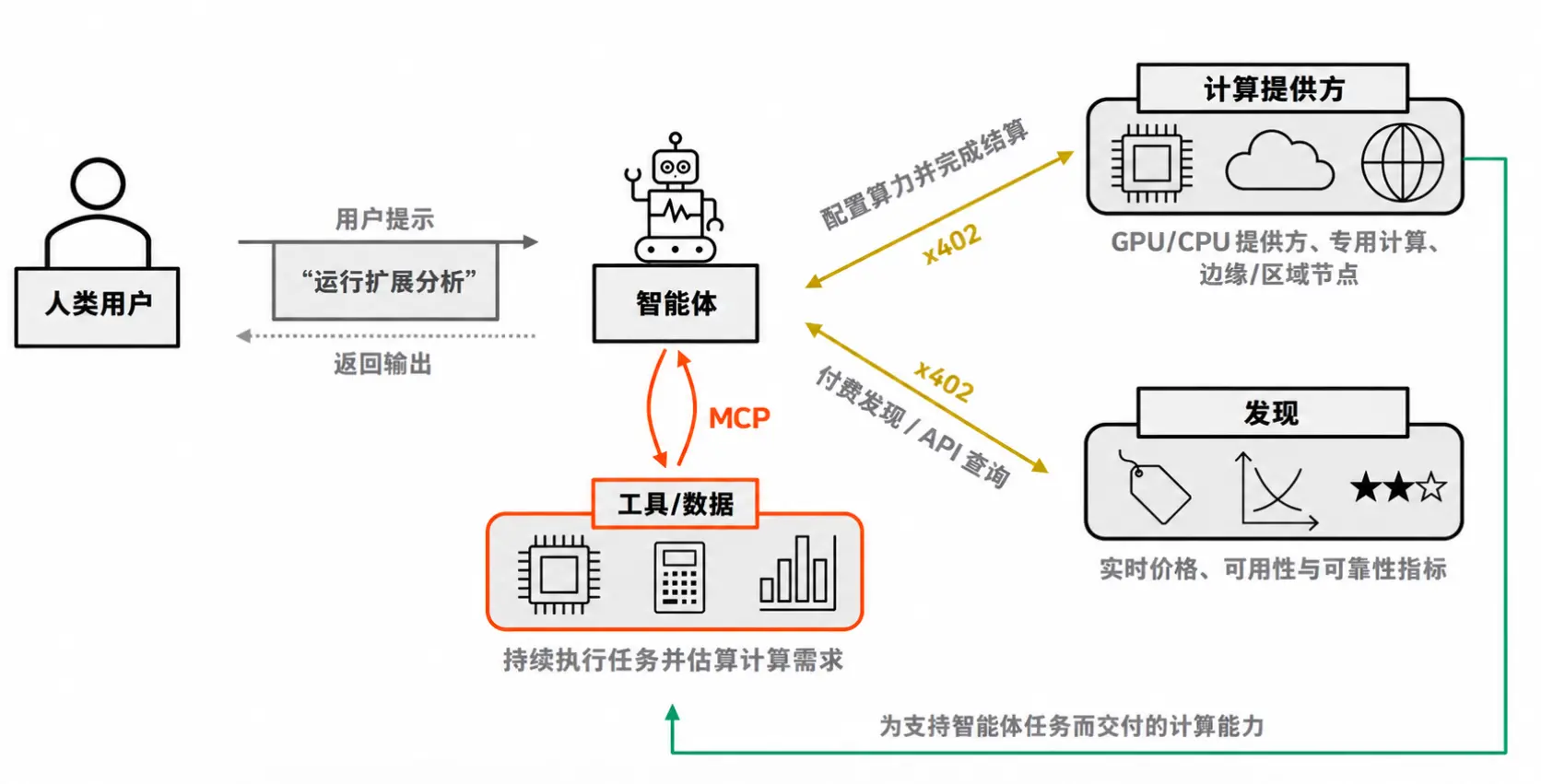
Figure 5: Schematic of the workflow for agents optimizing and acquiring on-demand computing power
Stripe agreed to acquire OpenRouter in August 2026. This is an early sign that model routing and computing power usage optimization are beginning to enter the financial infrastructure built around AI.
OpenRouter allocates tasks among over 400 models from more than 80 providers based on workload demands and trade-offs between cost and performance, indicating that efficient allocation of scarce computing power has economic value.
Stripe's own business layout is also noteworthy: it has ventured into payments, stablecoins, billing, and agent-based commerce; this transaction shows that computing power procurement, usage-based billing, and programmable settlement may gradually converge. We believe that in the future, agents may autonomously seek computing power and make payments through blockchain and other programmable payment channels.
Conclusion
As machines play a larger role in economic activities, AI and blockchain-based digital assets are increasingly converging. The tokenization of assets on the blockchain and the tokenization of large language models have established structured, machine-readable representations, enabling AI agents to interface more directly with programmable assets.
Stablecoins and protocols like x402 may support high-frequency, small-value, round-the-clock transactions. Meanwhile, a standardized and liquid market for computing power rights may allow agents to seek computing power, optimize usage, arrange financing, and make payments as inference demand expands.
Currently, the entire ecosystem is still in its early stages, with limited agent-based payment activities and liquidity in the computing power market. As AI applications expand and agent system capabilities enhance, digital assets may become increasingly important in the economic infrastructure of AI, expanding the use of stablecoins, tokenized real-world assets, and native crypto assets supporting blockchain settlements.
 Risk warning