Last night, Meta surged by 11%. What new AR/VR products are worth looking forward to at this week's Meta Connect?

 The strong fluctuations in this round of the capital market are largely due to the explosive performance of Muse, the latest AI assistant under Meta, as well as the market's high expectations for the upcoming Meta Connect conference.
Last night, U.S. chip stocks rose in sync with Meta. Meta's stock price jumped over 6% at the open, continued to rise throughout the day, and closed up 11.43%, reaching a new high since early February this year. Meanwhile, the Philadelphia Semiconductor Index surged over 3%, ARM soared 13%, and chip giants like Intel and AMD also followed suit, with AMD's market capitalization surpassing $1 trillion for the first time. This strong movement in the capital market is largely driven by the explosive performance of Muse, Meta's latest AI assistant, and the market's high expectations for the upcoming Meta Connect conference.
1. Multiple Wall Street firms raise Meta's target price; how does Muse change the form of social products?
Muse quickly completed its multi-platform layout and topped the charts in the U.S. market, prompting several Wall Street firms to adjust their target prices and watchlists for Meta. Muse launched simultaneously on mobile, web, and social platforms in early September, followed by the release of the Mac version, and last Friday, it surpassed the long-dominant ChatGPT to reach the top of the U.S. App Store's free chart. On the same day, Wells Fargo raised its target price for Meta to $796, while Citigroup placed it on a 90-day catalyst watchlist.
How does Muse differ from competitors like ChatGPT and Claude? Meta's main differentiation lies in directly embedding Muse into social content on WhatsApp, Facebook, and Instagram. This means that hundreds of millions of users can use Muse directly within existing chat and social media apps. Moreover, Muse fully covers the web and Meta's AI glasses; if you start a task on one device, it can quietly complete the work in the background even if you exit the interface. Another differentiating factor is its "memory" capability: Muse inherits your social data upon launch, clearly knowing what you have saved, who you follow, or what you have searched for in the Marketplace. The official use case promoted is "automatically organizing your saved recipes into a shopping list," but the core logic behind it is that it can utilize this social data to organize users' daily rhythms, personal interests, and to-do lists.
According to official information, in addition to social platforms, Muse further integrates with Gmail, Apple, and Google Calendar, helping draft and send emails, book restaurants, book flights and hotels, track product prices, and even scan your email receipts to identify subscriptions you may have forgotten to cancel. It can even negotiate car prices and reduce bills in the background, ultimately settling payments directly through Stripe's Link wallet.
What distinguishes Muse from Meta's previous AI products? In terms of product positioning, Muse marks Meta's transition from traditional chatbots to personalized agents capable of autonomously executing complex tasks. Unlike last year's version of Meta AI, which focused on image and short video generation, Muse is positioned as a digital agent that can "get things done" for users. It can seamlessly connect to Gmail, calendars, and third-party dining and travel services, even autonomously completing complex web operations like sending emails, ordering food, and filling out forms through the browser. In terms of business model, Muse offers a free basic version while also launching subscription tiers of $20 and $100 per month to meet varying levels of demand.
2. Meta's deep integration with AMD, ARM, and others complements its self-developed chips
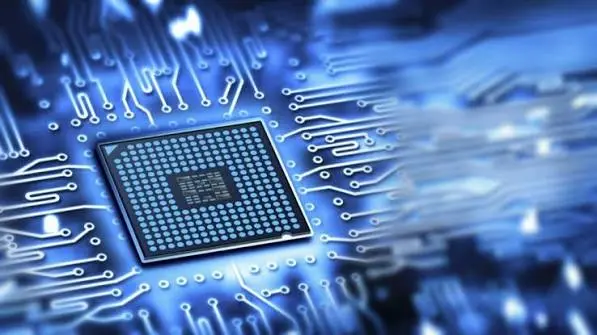
The large-scale application of AI entities like Muse is changing the demand structure for data center CPUs. AI entities need to handle complex processes such as planning, web browsing, tool invocation, and state maintenance, which consume a significant amount of CPU resources rather than relying solely on GPUs. Industry data shows that under equivalent data center power, the number of CPU cores required for AI workloads is about four times that of traditional AI systems. Muse's rise to the top of the App Store is seen by some market participants as a signal of "AI moving from demonstration to everyday use," prompting a reevaluation of CPU demand forecasts.
AMD—On February 24 this year, AMD officially announced an expansion of its strategic cooperation, providing multi-year order support for its computing power expansion. The expanded strategic cooperation between Meta and AMD involves GPU deployments on a scale of up to gigawatts, with the total scale of this multi-year agreement reportedly expected to reach hundreds of billions of yuan (please verify the original report's currency), making it Meta's largest computing power procurement commitment outside of Nvidia. As a result, the market expects that if Muse's user base continues to grow, AMD's order visibility may improve, but this ultimately depends on the progress of the agreement.
ARM—On March 24 this year, Meta and ARM deepened their cooperation to develop dedicated CPUs, collaboratively advancing the development of hardware ecosystems and self-developed chips. The jointly developed "ARM AGI CPU" is the first data center processor in ARM's history designed specifically for the AI era, aimed at supporting gigawatt-level AI deployments in conjunction with Meta's self-developed MTIA chip. Since ARM charges licensing fees based on shipment volume, the market has raised its expectations for its licensing revenue. Meanwhile, Meta is also advancing the self-developed AI acceleration chip MTIA based on the RISC-V architecture, with Broadcom as the system integration partner. Together, these form a balanced computing power landscape of "Nvidia GPUs, AMD GPUs, jointly developed CPUs, and self-developed MTIA," complementing each other.
3. Five highlights of this week's Meta Connect conference: VR headsets, AI glasses, display glasses, systems, and black technology demonstrations
The upcoming Meta Connect conference will be a key moment to test whether Meta's "AI + hardware" narrative can deliver. The keynote speech will be delivered by Mark Zuckerberg, focusing entirely on breakthroughs in AI technology, smart glasses, and VR hardware. This will not only be an important ecological showcase following Muse's explosion but will also bring new technological directions to the developer sub-forums.
New VR/MR hardware—codenamed Phoenix, a lightweight split headset: This is the most anticipated hardware of the conference, resembling a pair of goggles rather than a traditional headset, with an extremely thin body. It connects to a pocket-sized computing box via a single cable, offloading most of the weight from the head. Industry predictions suggest the entire device will weigh around 100 grams, primarily relying on eye tracking and gesture tracking, no longer depending on controllers, with a focus on large-screen entertainment and video content rather than gaming. It should be noted that multiple sources indicate that the actual release date of Phoenix has been postponed to the first half of 2027, and September 23 may only be a form release or preview rather than a sales launch.
AI glasses—codenamed Luna, smart glasses without a camera: Reports indicate that Meta will launch smart glasses without a camera, using more microphones to interact with Meta AI, possibly in two versions, planned for release this fall. The removal of the camera has two considerations: first, the frame can be made thinner and closer to regular glasses; second, it addresses ongoing privacy concerns regarding "spy glasses."
Display glasses—second-generation Meta Ray-Ban Display: It is expected that both eyes will be upgraded to full-color displays, while Meta may further open the application ecosystem and usage scenarios, attempting to transform the Display series from an accessory product into a true platform—Meta has already opened the Wearables Device Access Toolkit to developers, allowing access to the AI glasses' camera, audio, and display capabilities.
Systems and AI—next-generation VR/MR operating system: Since Phoenix has eliminated the controller, "using your eyes to look and your fingers to pinch" must transition from an interaction option to a system-level logic. Therefore, the next-generation operating system is expected to integrate eye tracking and gesture tracking more deeply into the system layer, and the AI entity Muse may also be written into part of the system capabilities.
The biggest surprise—holographic calls targeting Apple's Personas: Reports suggest that Meta may demonstrate a set of "holographic video calls" based on an advanced version of Codec Avatars around Phoenix. This photo-realistic digital human technology has been under development by Meta since 2015, and if realized, it would mark the first time Meta stands on the same level as Apple's Personas in the realm of virtual avatars.
4. What does Meta's AI glasses and headset hardware supply chain look like?
Qualcomm (QCOM), as the core chip supplier, occupies a central position in Meta's smart hardware supply chain. Whether for the next-generation headset or smart glasses, the core SOC chips are supplied by Qualcomm, with the main processor accounting for a significant portion of the overall BOM cost. Qualcomm not only possesses dedicated chip design capabilities and ecosystem adaptation experience but is also actively promoting high-density optical interconnect technology to extend into AI infrastructure, which is seen as one of the factors supporting its valuation.
NXP (NXPI) and Sony (SONY), as key component manufacturers, provide core support for power management and optical sensing for hardware devices. NXP, as an MCU supplier, is responsible for handling sensor data collection and low-power wake-up tasks, which significantly impact the device's battery life. Sony, as a leader in image sensors, continuously provides critical sensor support for headsets and display glasses. These manufacturers together constitute the main supply chain for Meta's smart hardware.
Disclaimer|This article is compiled and analyzed based on publicly available market information, industry rumors, and news reports, involving a large amount of predictive content. The statistical criteria and time intervals for individual stock and index fluctuations may not be completely consistent, and the actual published content, supply arrangements, and stock price performance are subject to significant uncertainty, based on official announcements and market trends. It should be particularly noted that the general rise in U.S. stocks last night was not driven by a single factor: in addition to Meta and AI narratives, the easing of the situation in the Middle East also constituted an important macro benefit, combined with oil prices falling below $100, leading the market to withdraw some geopolitical risk premiums, thus restoring overall risk appetite. Therefore, the stock price increases mentioned in the article should not be entirely attributed to changes in the fundamentals of Meta or the AI industry chain itself. This article does not constitute investment advice, and the individual stocks mentioned do not represent any buy or sell recommendations. The market carries risks, and decisions should be made cautiously.
 Risk warning