








OpenAI's revenue disappoints, severely impacting AI stocks, with the S&P and Nasdaq falling for two consecutive days, the chip index dropping over 3%, and crude oil briefly rising over 5%
 Core Viewpoint

 The Nasdaq fell more than 1%, marking its largest drop in over seven weeks, while the Dow Jones made a risky rebound. Chip stocks saw Intel drop over 5%, Broadcom fall over 4%, NVIDIA decline nearly 3%, Oracle decrease over 5%, CoreWeave drop nearly 8%, and optical communication stocks Coherent fall nearly 10%, with Applied Optoelectronics down nearly 14%. U.S. Treasury yields initially rose and then fell, with the 10-year yield down 5 basis points.
Author: Bao Yilong
The geopolitical situation in the Middle East continues to ferment, and disruptions in oil transportation in the Gulf region have driven oil prices to surge. Meanwhile, reports that OpenAI's actual revenue is far below previous expectations have reignited market doubts about the return on investment in artificial intelligence, leading to a sharp decline in tech stocks.
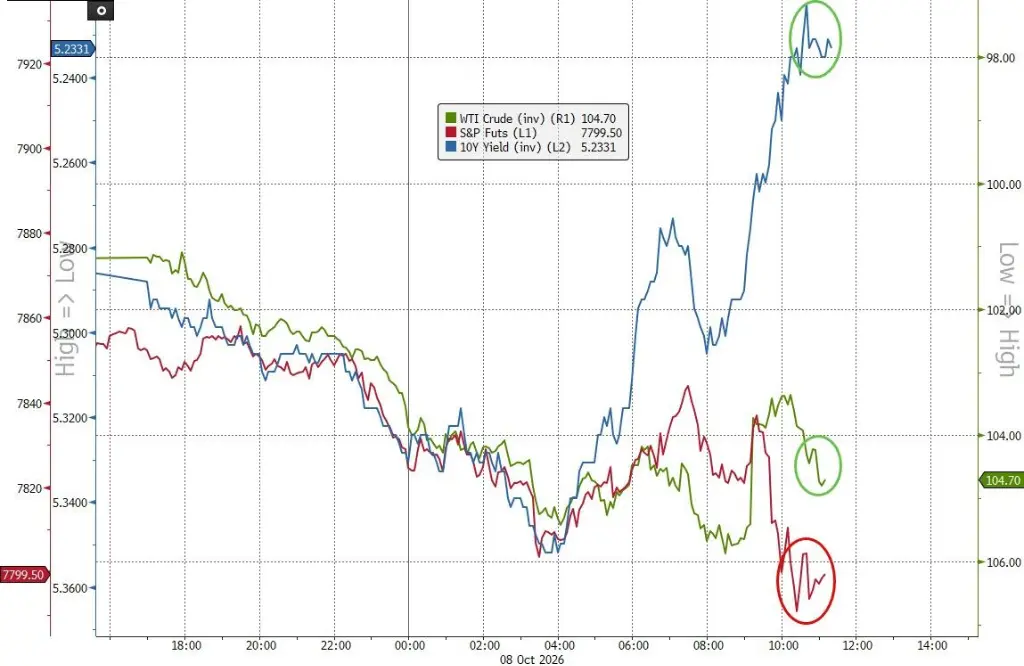
The tech sector in the U.S. stock market has become the biggest drag. According to Wall Street Insights, OpenAI's annualized revenue based on current performance is approximately $50 billion, while some previous media reports had expected figures close to $70 billion.
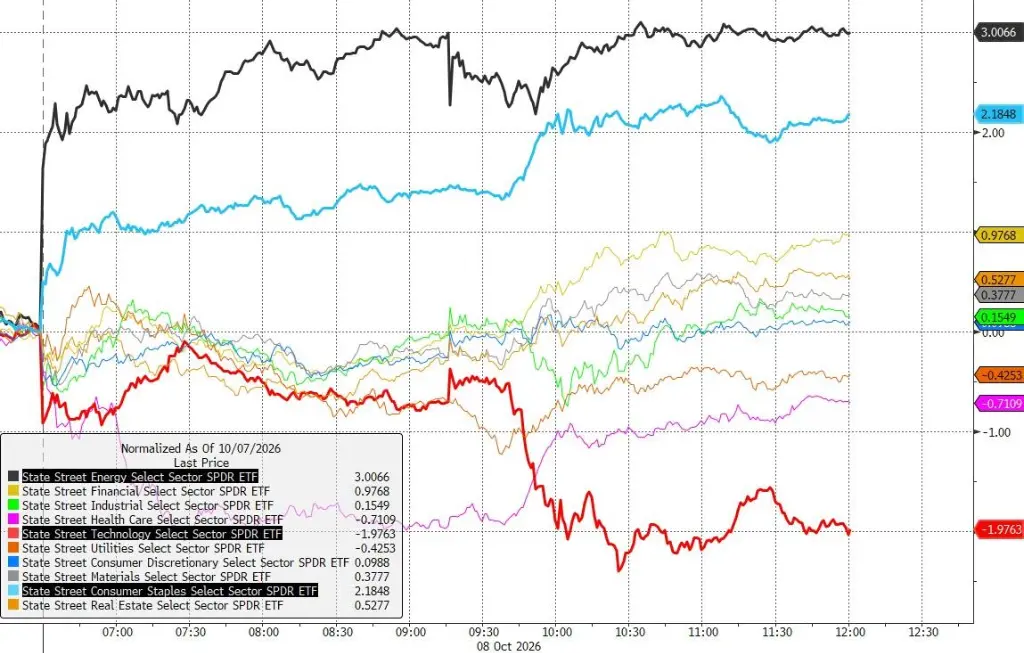
This discrepancy has dampened investment sentiment in chip stocks, with the Nasdaq 100 index falling 1.4% in a single day, marking its worst performance since July. The Dow Jones Industrial Average, on the other hand, rose slightly by 0.10%. Among the eleven sectors of the S&P 500, six rose and five fell, with energy and consumer staples leading the gains, while technology and consumer discretionary lagged. Oracle fell 5.58%, and Micron Technology dropped 4.79%.
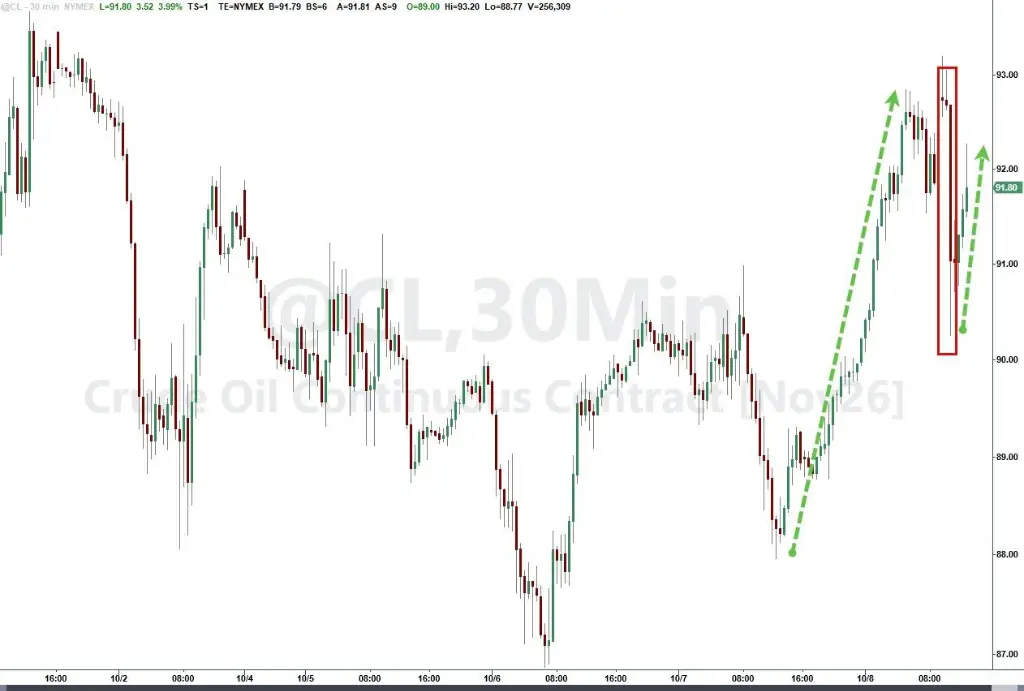
At the same time, oil prices surged significantly, with WTI crude oil futures rising by more than 4% at one point, and the benchmark Brent spot price approaching wartime highs. U.S. Treasury yields initially rose due to the increase in oil prices but later fell back due to safe-haven buying triggered by the drop in stocks following the OpenAI report.
Multiple Escalations in the Middle East, Crude Oil Soars
The crude oil market has once again fallen into severe volatility driven by geopolitical factors.
Wall Street Insights mentioned that U.S. media reported that Trump is considering launching new strikes against Iran before the midterm elections. According to Xinhua News Agency, Iran-backed Houthi forces attacked two airports in Saudi Arabia, resulting in three deaths, and the Saudi-led coalition immediately announced the destruction of 82 Houthi targets within Yemen. The UK Maritime Trade Operations Office reported that a tanker was hit by multiple projectiles off the northwest coast of Qatar, resulting in casualties.
Shipping data outlines the level of tension. Iran has expanded its attacks from the Strait of Hormuz to the Persian Gulf and the Gulf of Oman. Data from the Belgian research firm Kpler shows that only seven tankers passed through the Strait of Hormuz on October 6, the lowest since July 23.
Wall Street Insights noted that Hurricane Idalia in the U.S. Gulf of Mexico has added another layer of disruption. Companies like Shell and Chevron have reduced offshore production, and refinery operations may also be affected.
Amid multiple overlapping news, oil prices surged significantly, with WTI crude oil futures rising by more than 4%, and the benchmark Brent spot price approaching wartime highs.
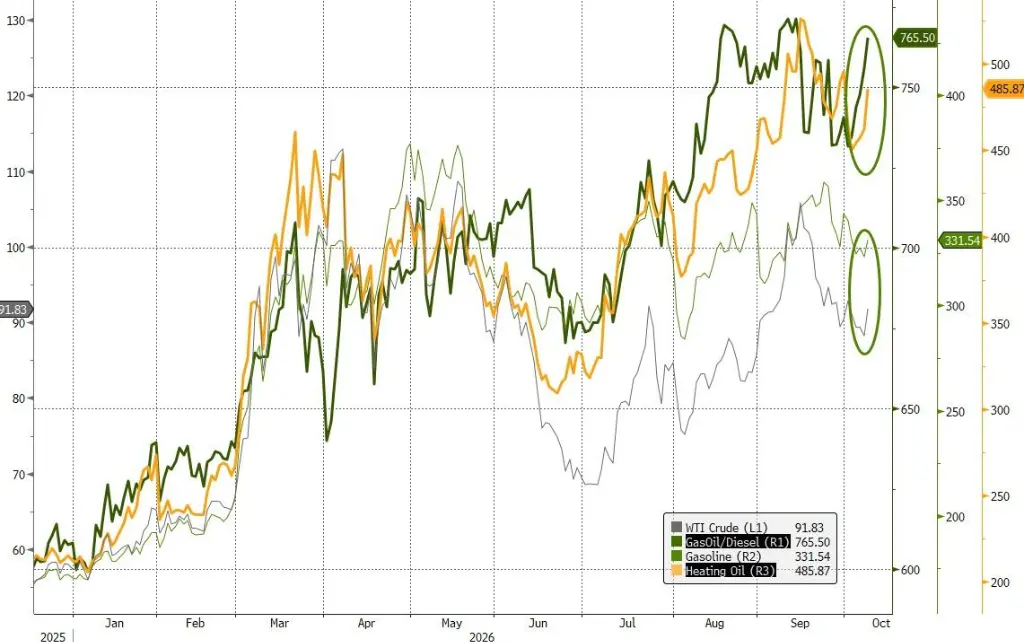
Refined oil prices have risen again, with diesel prices skyrocketing this week.
However, Trump later stated on social media, "We are having productive discussions with the Islamic Republic of Iran… We will not attack Iran at any time before the midterm elections," leading to a sharp drop in oil prices, which partially retraced gains. However, according to Axios, Iranian officials are highly skeptical of Trump's statement, fearing a third surprise attack, so oil prices ultimately did not close lower.
Arne Lohmann Rasmussen, Chief Analyst at Global Risk Management, stated:
The entire narrative about the flow through the Strait of Hormuz has been completely overturned.
Amin Nasser, CEO of Saudi Aramco, warned:
The supply elasticity buffer is worryingly thin; if supply disruptions continue, it will drag down economic growth and push up inflation.
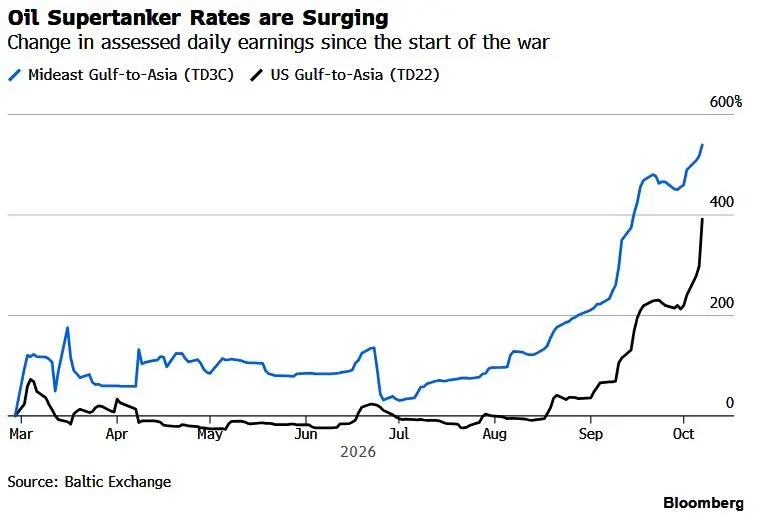
In terms of shipping, the daily rental rate for very large crude carriers transporting oil from the Middle East to China reached $1.4 million, setting a historical record.
OpenAI Revenue Discrepancy Sparks AI Sector
On Thursday, U.S. stocks continued to decline, with the S&P and Nasdaq falling, while the Dow rose against the trend.
The S&P 500 closed down 0.47% at 7765.36 points, the Nasdaq Composite Index fell 1.25% to 27193.34 points, the Dow Jones Industrial Average rose 0.10% to 51231.64 points, and the Russell 2000 slightly increased by 0.03%.
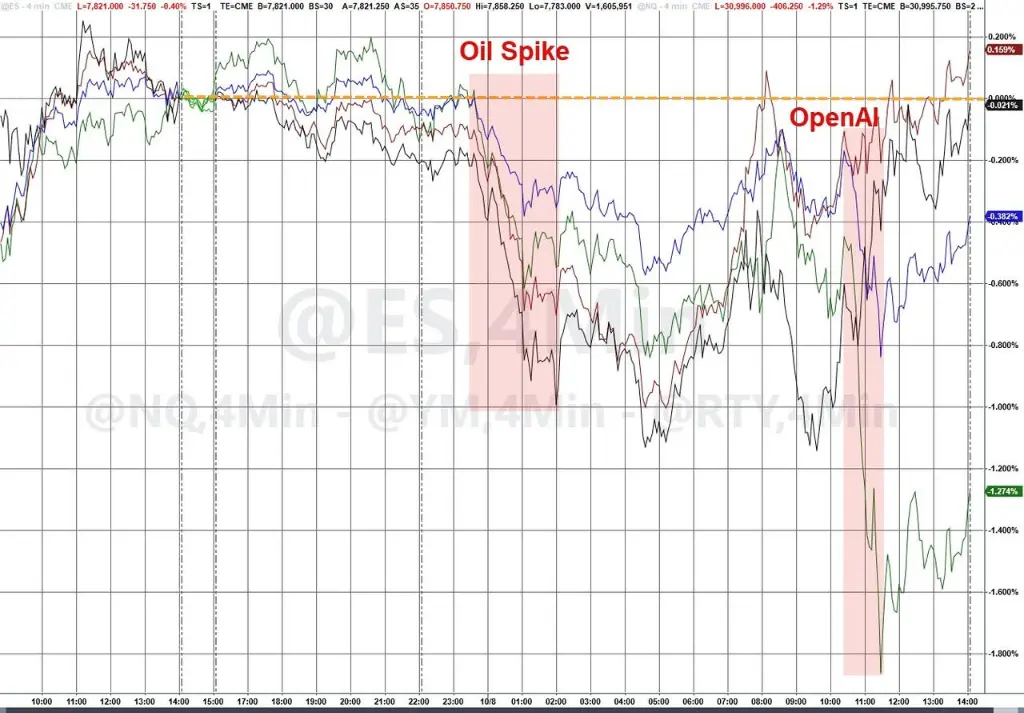
Wall Street Insights mentioned that OpenAI's current annualized revenue is about $50 billion, which is approximately $20 billion lower than the $70 billion disclosed by some previous media, a significant gap. This news quickly spread throughout the entire tech industry chain, with the chip stock index falling 3.4% in a single day.
The AI sector generally suffered heavy losses. Nvidia fell about 3% that day, Oracle dropped over 5.5%, and AMD, Broadcom, Intel, and Advanced Micro Devices all saw declines between 4% and 6%.
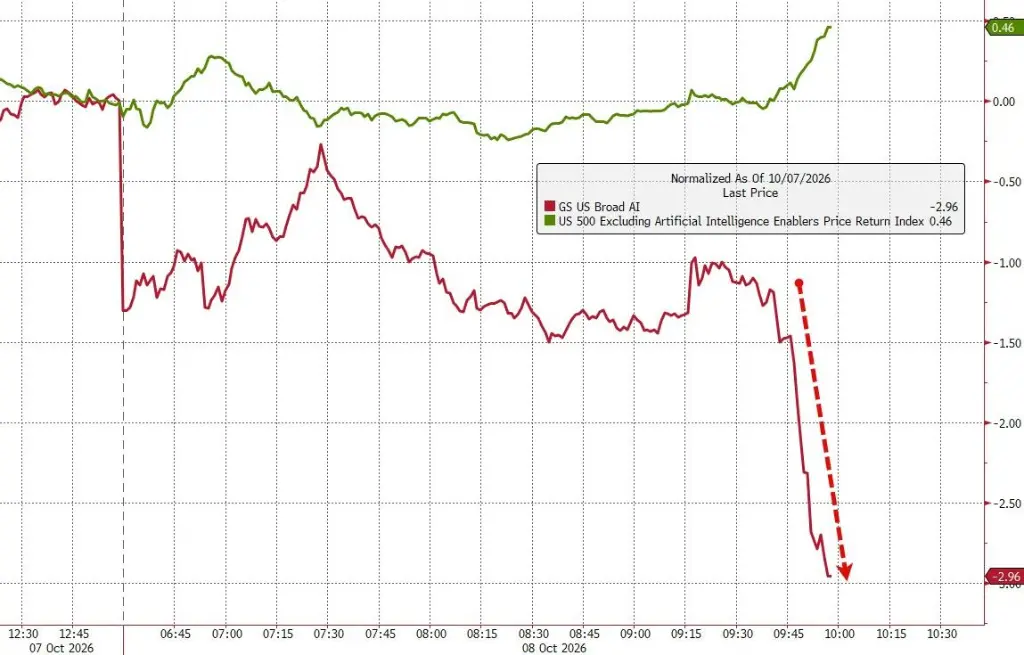
Data center stocks and optical communication stocks plummeted, falling about 7%. Cloud service stocks Nebius and CoreWeave both dropped over 7%, while optical communication stock Applied Optoelectronics fell 13%, and Coherent dropped 9.62%.
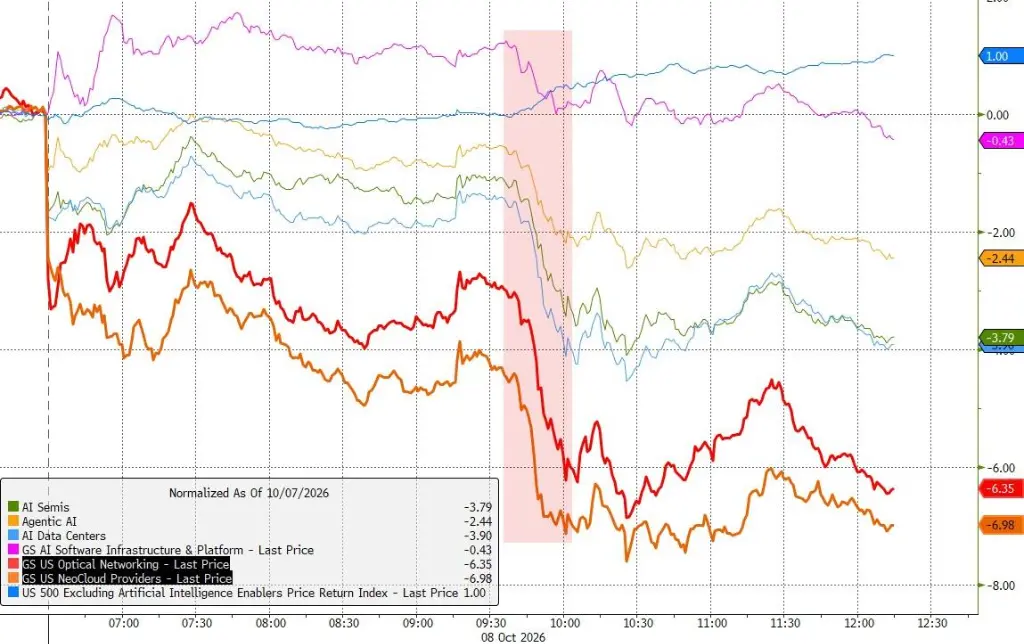
The impact of this revenue data discrepancy on the market is not only about the numbers themselves but also shakes the core logic supporting the narrative of massive capital expenditure in AI, questioning whether the demand for AI terminals is truly that strong. More importantly, this expectation gap arises against the backdrop of continuously declining token costs.
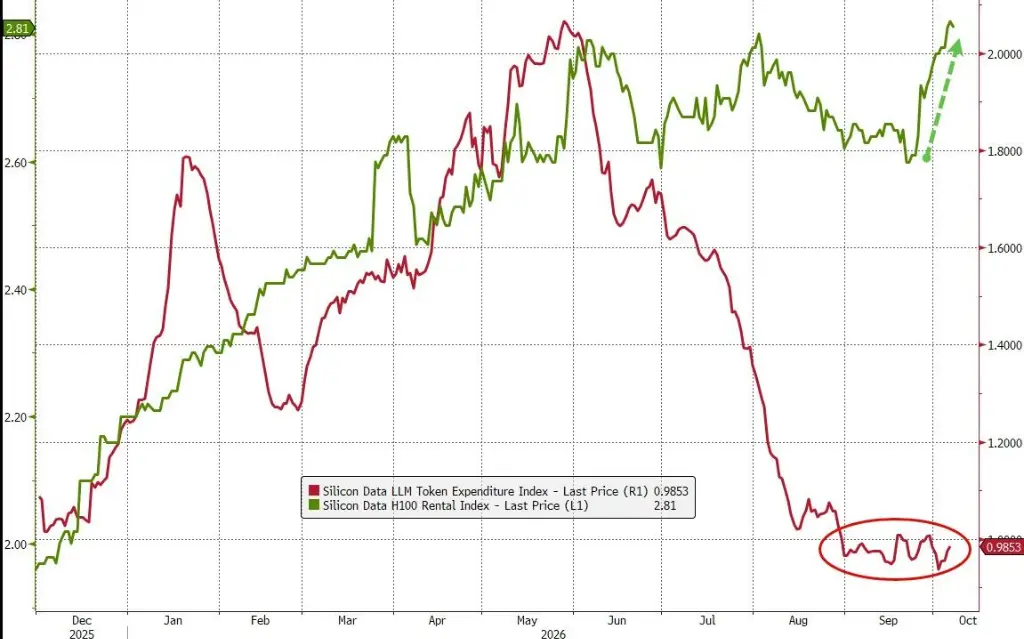
Goldman Sachs' trading desk also pointed out additional factors exacerbating the pressure on AI-related sectors: disappointing performance from Samsung and TSMC failed to meet the market's high expectations; reports that major AI players like Oracle and Broadcom plan to further finance through the bond market added capital pressure.
Matt Maley from Miller Tabak stated:
Investors are beginning to question how long this massive AI expenditure can be sustained against the backdrop of significantly rising borrowing costs.
Ulrike Hoffmann-Burchardi from UBS Wealth Management maintained confidence in structural opportunities in AI in a recent report but also emphasized the importance of diversified investment, noting:
In the context of rising capital costs due to higher yields, issues of returns, AI safety, financing, and execution-related ongoing concerns could trigger phase fluctuations.
On that day, influenced by soaring oil prices, the U.S. energy sector performed the best, while the consumer staples sector showed weakness.
U.S. Treasury Yields First Rise Then Fall, Long End Performs Relatively Strong
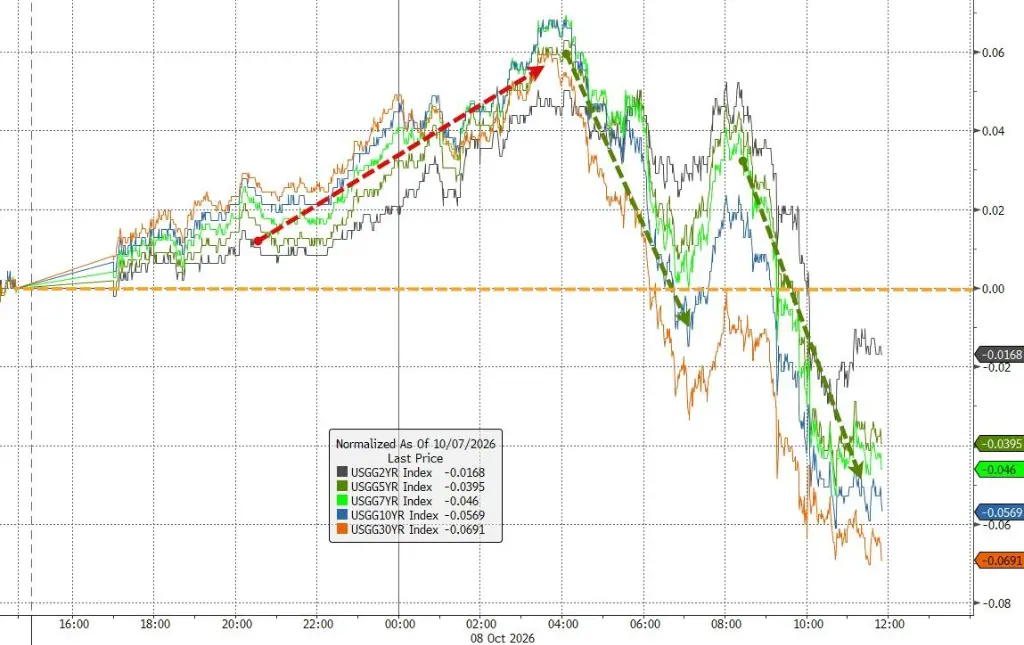
The surge in oil prices initially drove U.S. Treasury yields to test the previous trading day's highs, but as Trump’s comments temporarily suppressed oil prices, buying pressure surged; subsequently, the OpenAI report was released, leading the market to judge that the competitive pressure of AI capital expenditure on Treasury funding had marginally decreased, further supporting long-term Treasuries.
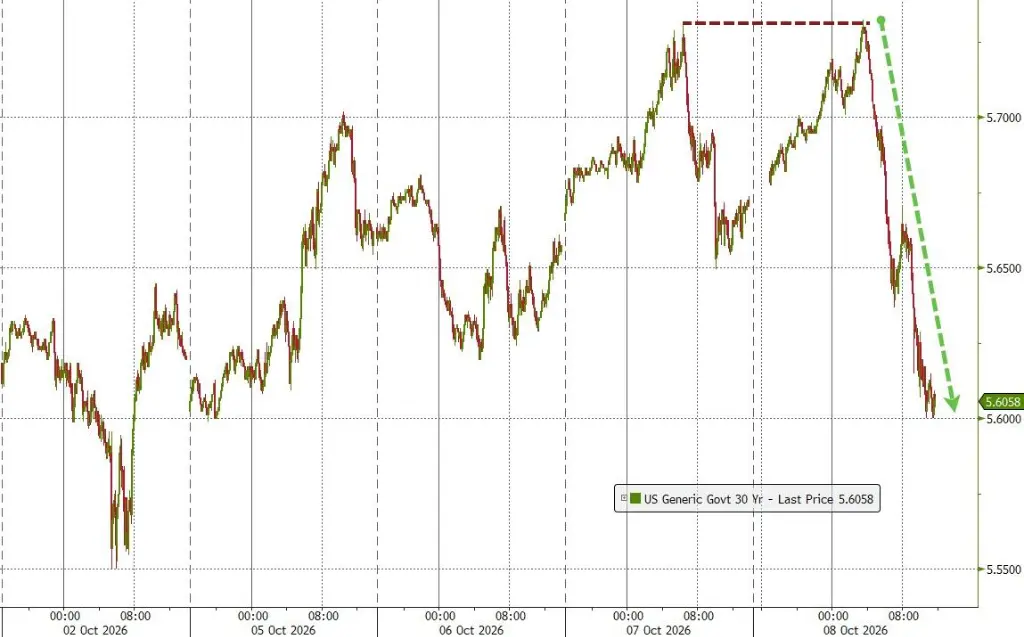
The yield on the 10-year U.S. Treasury fell by 5 basis points to 5.227%, the 30-year yield fell by 5.9 basis points to 5.602%, and the 2-year yield fell by 1.3 basis points to 4.751%.
The auction of 30-year U.S. Treasuries constituted a turning point. The U.S. Treasury issued $22 billion in 30-year bonds, with a winning rate of 5.618%; the bid-to-cover ratio was 2.54 times, higher than the average of 2.41 times in the previous six auctions; indirect bidders, including foreign investors, received 72.3%, also higher than the previous six auctions' average of 69.1%.
Molly Brooks, a rate strategist at TD Securities, believes:
Demand has held up, which is a positive signal for investors looking to enter the long end.
Vincent Ahn, a portfolio manager at SLW Investments, pointed out that the significance of the 30-year Treasury yield lies in "this is the maturity that the Federal Reserve cannot control, and it is also the maturity that the global market must voluntarily hold."
Regarding Federal Reserve officials, Fed Governor Christopher Waller stated that further rate hikes may still be necessary, but there is no need to tighten at consecutive meetings; St. Louis Fed President Alberto Musalem hinted that rates should continue to rise over the next six to nine months but did not explicitly support a rate hike at this month's meeting.
U.S. Dollar Fluctuates to Close Flat, Bitcoin Under Pressure, Gold Slightly Rises
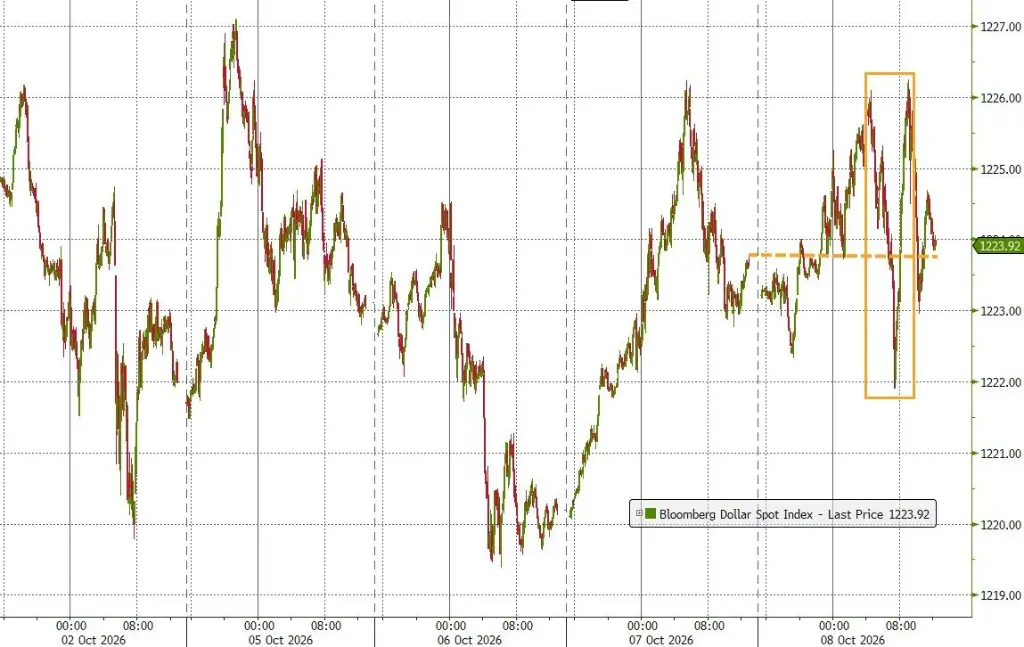
The foreign exchange market also experienced significant intraday volatility, with the Bloomberg Dollar Spot Index ultimately closing flat, and the euro rising slightly by 0.2% to $1.1215.
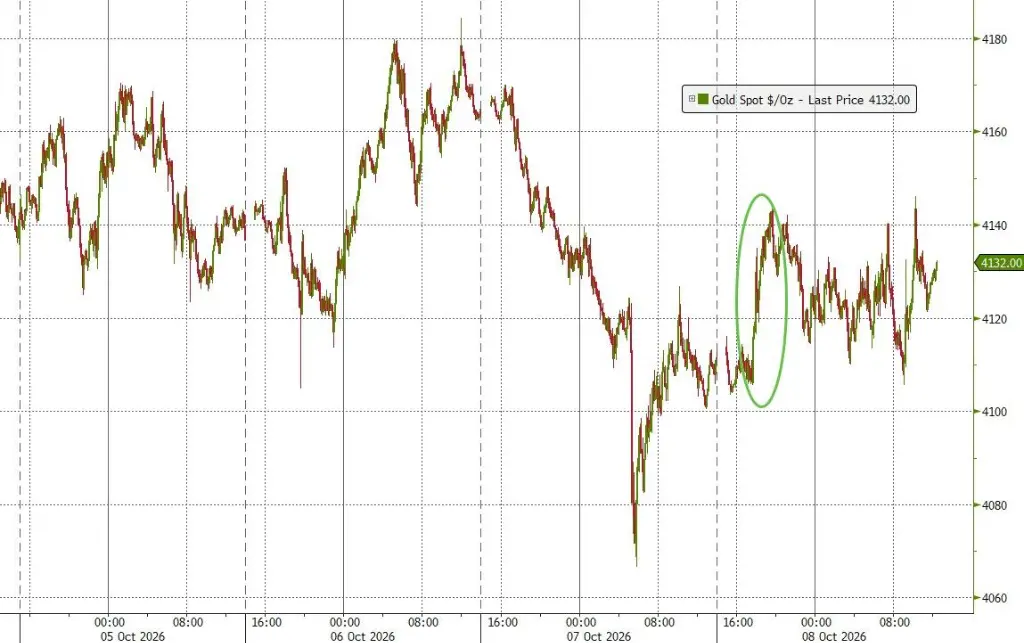
Gold rose 0.6% to $4134.68 per ounce, and the gold-silver ratio climbed back to 70 times, reaching a two-month high.
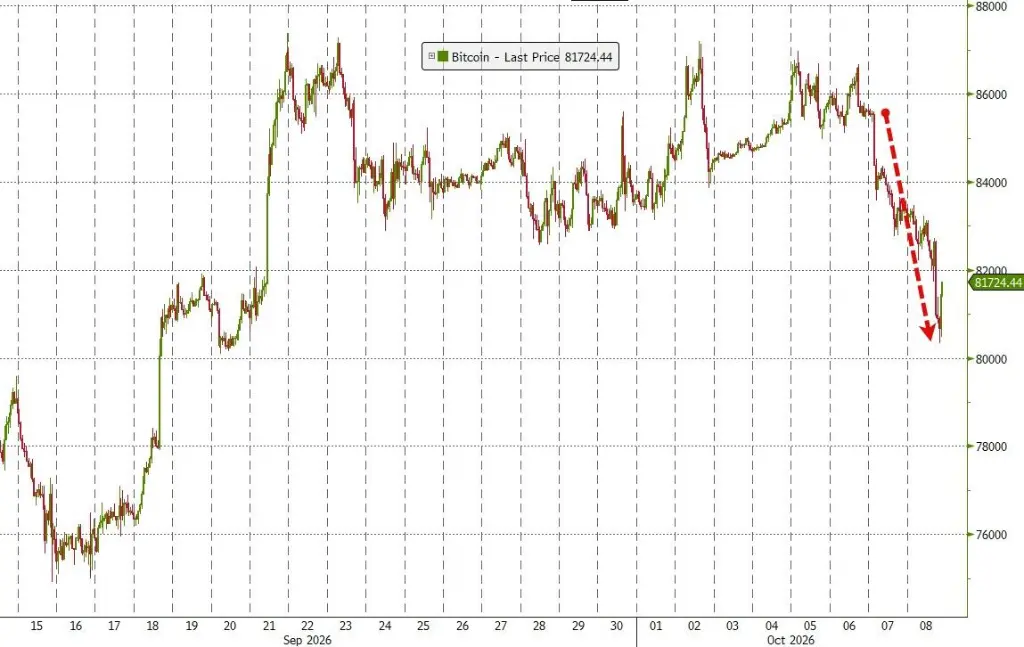
The cryptocurrency market showed weakness, with Bitcoin falling 1.9% to about $81,800, and Ethereum dropping over 4%.
 Risk warning




Popular articles





