Galaxy Research Director: How do we view the impact of the Anthropic IPO on market liquidity?
 Core Viewpoint


 Anthropic priced its IPO at $83, raising $81.3 billion, with the first transaction dropping from $111.50 to the mid-$90s. Hyperliquid's perpetual contracts were priced closer to the closing range in the weeks leading up to the listing, rather than the opening pulse. Alex Thorn believes that the market freeze and panic-driven runs this week, combined with the AI apocalypse narrative, have put the stock market and Bitcoin in extreme fear, but the way forward is still to keep moving ahead.
Author: Alex Thorn, Galaxy Research Director
Compiled by: Gu Yu, ChainCatcher
This weekend, the apocalyptic sentiment reached a climax, coinciding with Anthropic's listing on Nasdaq.
On Wednesday evening, Anthropic completed the largest IPO in history, with an offering price of $83 per share. When the company updated its prospectus last week, the expected price range was $70 to $78. Strong demand prompted this AI company, known for its Claude chatbot, to expand its offering size, selling approximately 980 million shares and raising $81.3 billion, exceeding the initially planned 825 million shares. This figure surpassed the $75 billion raised by Elon Musk's SpaceX during its listing in June, and the IPO pricing implies that this company, founded barely six years ago, is valued at around $1.5 trillion. Goldman Sachs and Morgan Stanley led this transaction, just as they previously led SpaceX. Before the opening, Cboe's JJ Kinahan stated that demand was nearly seven times the offering size, and sources from CNBC reported that retail demand was the largest in history.
The stock began trading on Thursday at 11:48 AM Eastern Time on Nasdaq under the ticker ANT. The first transaction price was $111.50, 34% higher than the IPO price, briefly pushing the company's market value to $2 trillion. The stock hit an intraday high of $114.99 within a minute of the first trade, then continued to decline for the remainder of the trading session. As of 2:18 PM Eastern Time, the stock price was in the mid-$90s, at $94.67, up about 14% from the offering price. The drop from the opening price was unusually steep. According to Yahoo Finance, among the 20 large U.S. IPOs since 2008, only Coupang performed worse at the same point on its first day; the average gain for this group was about 3.5%. The broader market also faced selling immediately after the stock opened. As Anthropic began trading, the stock market fell to its daily low, with chip stocks including Nvidia and Broadcom erasing gains. The listed ANT options are set to begin trading on Monday.
On the blockchain side, Hyperliquid once again demonstrated the success of its pre-IPO perpetual contract market. Its market accurately predicted the trading pricing: the trading prices of perpetual contracts in recent weeks were well above the $70 to $78 range, indicating demand exceeded the underwriters' initial targets. The perpetual contract ultimately traded about 7% lower than the opening price, with contract prices around $103.67 at 8:40 AM Eastern Time, approximately 25% higher than the $83 offering price. The perpetual contract prices on Thursday morning roughly aligned with market consensus (Cboe's Kinahan stated that the first trade should fall around $103 or $104), but ultimately both the perpetual contracts and market professionals misjudged, with the first trade concluding at $111.50.
However, the perpetual contracts accurately captured the final trading position of the stock. For most of the time leading up to the listing, the perpetual contracts were in the mid-high $90s. As of November 17, they were around $96.93, with an hourly chart the night before pricing showing $98.83, and briefly dipping below $94 during an earlier tech stock sell-off. After the opening spike and subsequent drop, the stock price returned to this range, trading in the afternoon around $94 to $97. It can be said that the sustained equilibrium price of the perpetual contracts over the week better estimated the "fair" value on the first day, which appeared to be a brief spike in demand.
Our View
Watching Anthropic employees applaud in the Nasdaq trading hall as a company primarily framed by the media narrative that AI could kill us all completes its IPO feels strange.
This week has been the most apocalyptic in recent memory, set against the backdrop of Microsoft's O365 outage on Thursday, a nationwide FAA ground stop on Friday, and a banking system disruption on Monday, with reports of even the NSA's internal communication system being interfered with (twice?). Costco reported a wave of panic buying, people withdrawing cash from banks, and doomsday preparation content going viral. Discussions among traders included which solar batteries to buy, how to store large amounts of food in New York City apartments, and the best routes to escape the city in case of a grid collapse. Thus, it seems fitting that the S-1 risk factors of this sensational IPO include "the end of humanity." (Although we are not stock analysts, we agree that the end of humanity could have a substantial impact on Anthropic's profitability.)
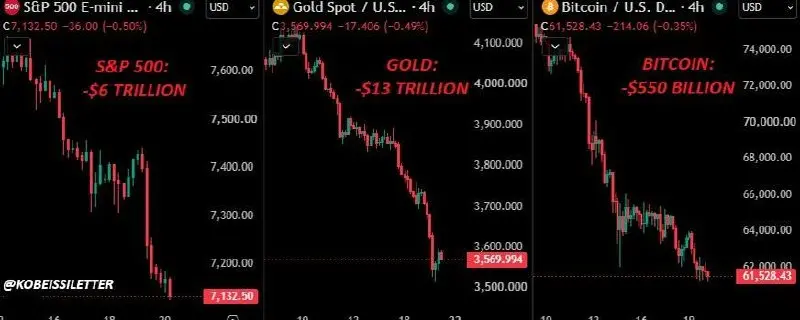
Since October 1, the S&P 500 has fallen 7%, gold has dropped 12.2%, and BTC has decreased by 25%. U.S. Treasury bonds have depreciated, inflation remains high, interest rates are expected to rise, and commodities are declining, with Democrats primarily coming to power on the back of addressing the "affordability crisis." Our own Bitcoin Fear and Greed Index is near historical lows (indicating "extreme fear"), and the trading levels of the VIX are comparable to those at the outbreak of the Iran war in March, though not yet at the levels seen during the "tariff fiasco" in April 2025. Stanley Druckenmiller stated that he is "more uncertain than ever after 50 years in investing," with his firm's stock position "basically flat." Another Wall Street figure, Howard Marks, in a memo titled "An Outsider's Thoughts on AI" on November 11 argued that the astonishing pace of AI development is a significant risk, even for Anthropic. Paul Tudor Jones stated in mid-October that "2027 will be a very difficult year for the stock market." Therefore, it can be said that the stock market intellectuals are feeling uneasy.
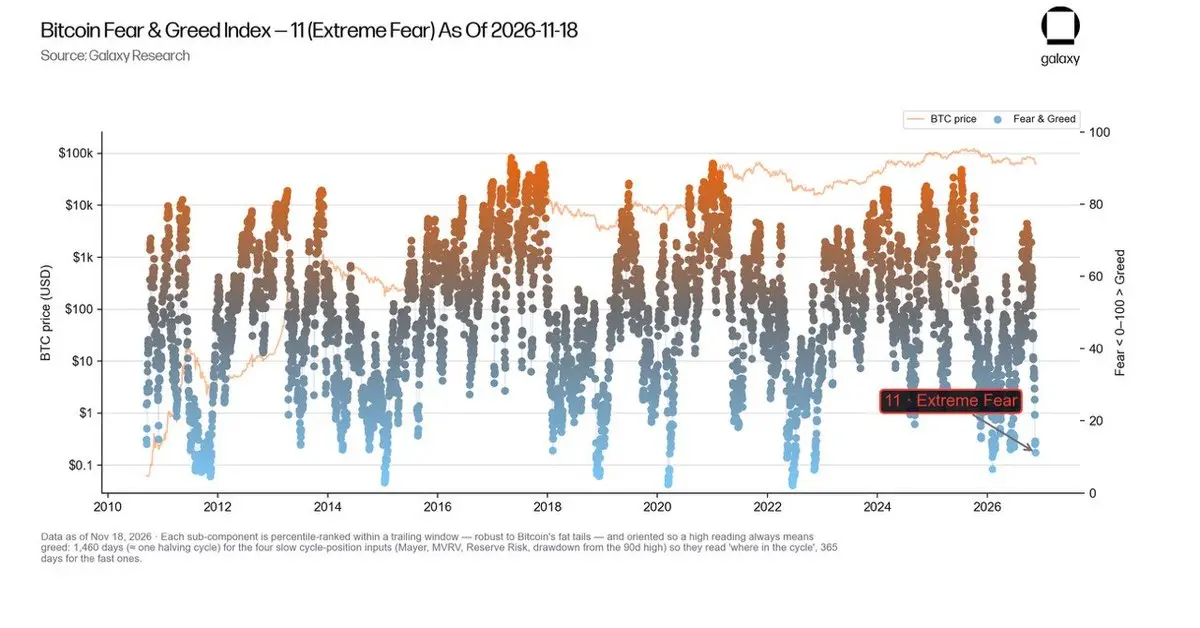
There is speculation that the recent headwinds facing risk assets have been exacerbated by liquidity withdrawal caused by allocators pulling back assets to purchase the Anthropic IPO. This intuitively makes sense, but there is not much evidence to directly support this claim. Bitcoin's price behaved similarly during the weak trading before the June SpaceX IPO, hitting a bear market low of $57,717 on Coinbase on July 1. Whether BTC and other risk assets will gain some respite after ANT becomes a public company remains to be seen.
The reality is that Americans feel fear and are psychologically traumatized. Polarization has long been a feature of the American political landscape, but the overwhelming victory of the Democratic Party is so severe that a significant shift is expected in areas such as tax policy, AI policy, and legislative priorities. Coupled with the relentless drumbeat of cyber vulnerabilities and the broad spectrum of AI outcomes—ranging from the possibility of a permanent utopia to the imminent extinction of the species—it is not hard to understand why the market is unstable. There is a sense that one more piece of major bad news could push the market over the edge—be it a significant cyber attack, an escalation of the Iran or Ukraine wars, an outbreak of a pandemic, or a major natural disaster. On the other hand, significant peace agreements or initiatives resulting from meetings between Trump, Xi Jinping, and Putin, the cessation of major regional conflicts, or legislative breakthroughs in Congress could alleviate these fears.
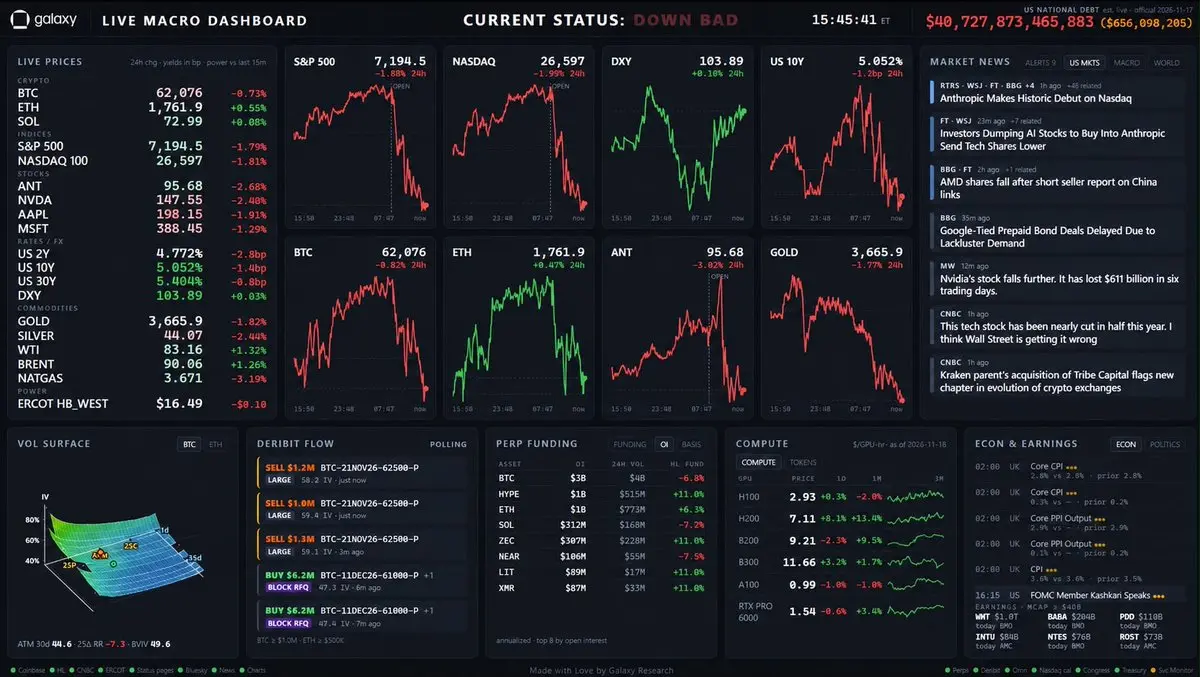
As people say, if you are going through hell, keep going. The only way out is through. Everything is different now, yes, but everything is still okay. Bitcoin continues to produce blocks without interruption, and I just wrote a nifty new dashboard to monitor the situation. ------ Alex Thorn
For additional risks related to digital assets, please refer to the risk factors contained in the filings that Galaxy Digital Inc. submits to the U.S. Securities and Exchange Commission ("SEC") from time to time, including its Form 10-Q quarterly report, which can be accessed at www.sec.gov.
ChainCatcher reminds readers to view blockchain rationally, enhance risk awareness, and be cautious of various virtual token issuances and speculations. All content on this site is solely market information or related party opinions, and does not constitute any form of investment advice. If you find sensitive information in the content, please click , and we will handle it promptly.

Popular articles