Scan to download
BTC $75,076.53 +0.13%
ETH $2,340.96 -0.55%
BNB $629.09 +0.69%
XRP $1.44 +1.81%
SOL $88.40 +3.37%
TRX $0.3260 +0.07%
DOGE $0.0977 +0.95%
ADA $0.2557 +1.95%
BCH $449.84 +1.56%
LINK $9.44 +1.72%
HYPE $43.78 -3.52%
AAVE $113.74 +6.93%
SUI $0.9862 +0.43%
XLM $0.1666 +3.65%
ZEC $334.23 -2.80%
BTC $75,076.53 +0.13%
ETH $2,340.96 -0.55%
BNB $629.09 +0.69%
XRP $1.44 +1.81%
SOL $88.40 +3.37%
TRX $0.3260 +0.07%
DOGE $0.0977 +0.95%
ADA $0.2557 +1.95%
BCH $449.84 +1.56%
LINK $9.44 +1.72%
HYPE $43.78 -3.52%
AAVE $113.74 +6.93%
SUI $0.9862 +0.43%
XLM $0.1666 +3.65%
ZEC $334.23 -2.80%

clarity

J.P. Morgan: Negotiations on the CLARITY Act have entered the final stage, with disputes narrowed down to 2-3 core issues

JPMorgan analysts have stated that negotiations for the U.S. "Cryptocurrency Market Structure Act" (i.e., the CLARITY Act) have entered the final stages, with both sides reaching compromises on a few remaining contentious points. The number of disputes has been reduced from over a dozen to 2-3 core issues, with discussions on stablecoin rewards being "in a good place." While banks express concerns about stablecoins offering similar yields to deposits, there is an overall bipartisan compromise trend. JPMorgan believes that "there is no perfect bill," and once passed, the bill will provide important regulatory clarity for the integration of digital assets into the U.S. financial system.The "Cryptocurrency Market Structure Act" is currently in advanced negotiations in the U.S. Senate, with Senate staff stating that the draft is "very close" to resolution, but the final text has not yet been released, nor has a formal vote been scheduled. The remaining major disagreements focus on stablecoin rewards, DeFi regulation, and token classification issues. Although optimism is rising, there is still a risk of delays due to the 2026 midterm elections, which could lead to a more uncertain political environment. If the bill is ultimately passed, it will delineate the regulatory authority between the SEC and CFTC, providing a long-term regulatory framework for stablecoins, DeFi, and the entire cryptocurrency industry.

White House Advisor: Multiple differences in the "Clarity Act" are gradually being resolved, and the compromise plan for stablecoin yields is expected to be maintained

Patrick Witte, the Executive Director of the White House Digital Assets Presidential Advisory Committee, stated on Monday that substantive progress is being made in Senate negotiations surrounding the Clarity Act, with a compromise reached on the issue of stablecoin yields expected to hold, and the focus of negotiations has shifted to other unresolved topics.The issue of stablecoin yields was previously the biggest obstacle to advancing the bill. Banking lobbyists successfully persuaded some senators that providing yields similar to bank interest to stablecoin holders would threaten the traditional banking deposit base, causing the bill to reach an impasse. Witte stated, "We hope that the compromise reached will be durable and stable. Resolving this issue is a prerequisite for advancing other pending matters." Last week, the White House economic advisors released a report downplaying the risk concerns raised by the banking industry; in response, the American Bankers Association rebutted on Monday, claiming the White House's arguments were flawed.In addition to stablecoin yields, the bill also faces several disagreements, including illegal financial protection mechanisms in the DeFi space and a demand from Democrats to prohibit senior government officials (specifically targeting President Trump) from profiting from the crypto industry. Witte did not disclose which topics have reached consensus but indicated that negotiations have "made considerable progress behind the scenes," stating, "We are very close to comprehensively resolving these issues." The Clarity Act still needs to go through the Senate Banking Committee's markup review process before being submitted for a full Senate vote. Witte expressed optimism about reaching a final agreement, noting that many issues that previously seemed stuck have gradually been resolved.

U.S. Senator warns that the CLARITY Act should be passed as soon as possible, or the regulatory window may close until 2030

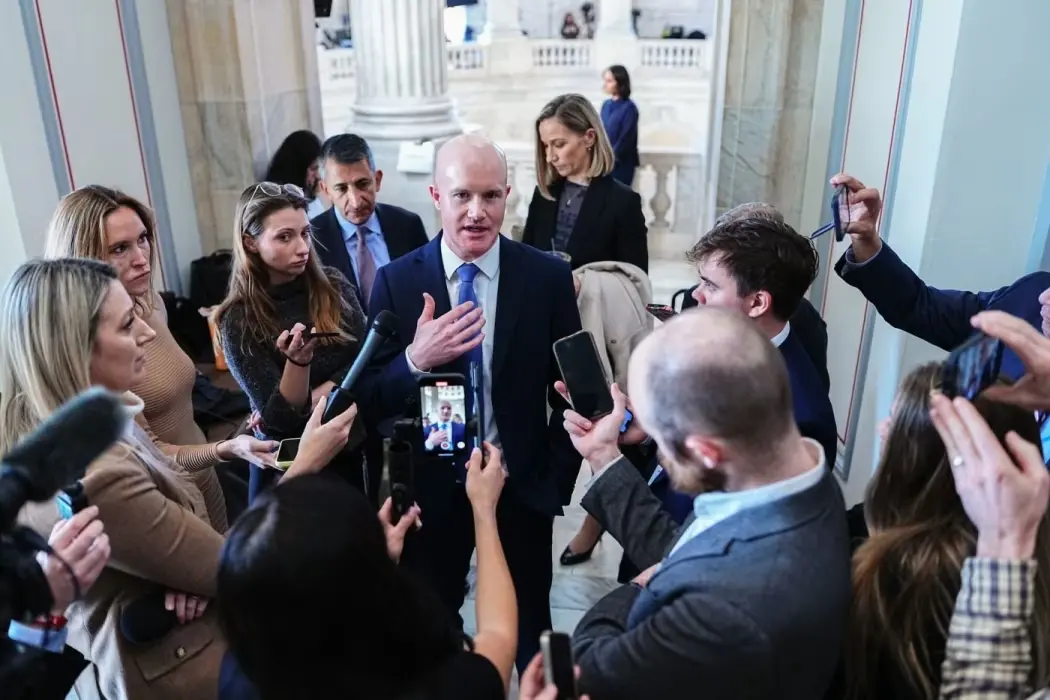
U.S. Senator Cynthia Lummis stated that the United States should not continue to delay the legislative process of the CLARITY Act, or it may take nearly four years to push for improvements in the regulatory framework for the cryptocurrency industry again.She posted on social media platform X, saying, "This is our last chance to pass the CLARITY Act before at least 2030," and emphasized that "we cannot let the future of American finance be put at risk." The bill aims to provide a clearer regulatory structure for the cryptocurrency industry, clarifying the responsibilities of regulatory agencies to promote industry innovation and market development. With the U.S. midterm elections approaching, there are concerns that congressional priorities may shift, slowing down the legislative process.Former White House AI and cryptocurrency affairs head David Sacks also expressed support for advancing the bill as soon as possible, stating, "Now is the time for action," and anticipated that the relevant market structure legislation would ultimately be signed into law by the president. In the industry, several individuals, including Coinbase CEO Brian Armstrong, have recently called for an expedited legislative process, believing that clear rules will promote innovation and increase market participation. On the regulatory side, SEC Chairman Paul Atkins also expressed support for advancing comprehensive market structure legislation to avoid ongoing regulatory uncertainty affecting industry development.

Coinbase Chief Legal Officer: The "Clarity Act" is "very close" to reaching an agreement on the stablecoin yield issue

Coinbase Chief Legal Officer Paul Grewal stated in an interview with Fox Business that the upcoming "Clarity Act" is "very close" to reaching an agreement regarding the debate on stablecoin yields.Grewal mentioned that the cryptocurrency market structure bill is progressing, although the debate surrounding stablecoin yields continues. He noted that all parties are gradually realizing that while reward mechanisms are important, other key elements in the bill are also crucial for achieving President Trump's vision of making the U.S. the "global crypto capital."The U.S. banking industry has previously lobbied for the "Clarity Act" to include provisions that prohibit crypto platforms from offering yields on idle stablecoin balances, arguing that this could lead to a significant outflow of bank deposits. In response, Grewal stated that there is currently no evidence indicating that deposit outflows are actually occurring and pointed out that the issue of stablecoin yields should not be conflated with other challenges facing the banking industry.Grewal expressed optimism about the bill's prospects, stating that he expects the Senate Banking Committee to initiate review hearings in the coming weeks and ultimately hold a full vote.Coinbase and its CEO Brian Armstrong have previously publicly opposed versions of the bill that prohibit rewards on idle stablecoin balances, arguing that such restrictions would stifle innovation in the U.S. and harm consumer interests. Meanwhile, Coinbase's stock price (COIN) has fallen 50% over the past six months amid a prolonged downturn in the crypto market, closing down 0.9% at $172.99 on Wednesday.

Opinion: If the CLARITY Act is not passed, the U.S. government may strengthen cryptocurrency regulation in the future

Peter Van Valkenburgh, Executive Director of Coin Center, stated that if the cryptocurrency market structure bill CLARITY fails to pass, a future unfriendly U.S. government may once again strengthen regulations on the cryptocurrency industry. If the legislation related to developer protection in the CLARITY Act and the Blockchain Regulatory Certainty Act is rejected in favor of short-term business interests and the current regulatory environment, the industry may face adverse situations.Peter Van Valkenburgh indicated that the purpose of passing the CLARITY Act is to legally bind future governments rather than relying on the current government's attitude; without relevant legal protections, the cryptocurrency industry may be affected by enforcement discretion, policy changes, and uncertainty. According to his disclosure, the CLARITY Act has been stalled in the Senate due to banks, cryptocurrency companies, and legislators failing to reach consensus on key terms, including whether to allow stablecoin yields. The bill covers a registration framework for cryptocurrency intermediaries, digital asset regulation, and token classification, among other topics.Furthermore, in the absence of legislative clarity, future government departments may strengthen enforcement against developers of privacy tools, viewing them as unregistered money transmission entities, while existing regulatory interpretive guidance may also be revoked. Previously, former SEC Chairman Gary Gensler faced criticism from the industry for promoting policy through enforcement actions and settlements with cryptocurrency companies rather than through formal rulemaking. Since he stepped down on January 20, 2025, the SEC has withdrawn several long-standing enforcement cases against cryptocurrency companies and issued more lenient regulatory guidance.

Circle's stock price once fell by 18%, and the U.S. Clarity Act draft aims to limit stablecoin rewards

On Tuesday morning, US stocks saw the issuer of USDC, Circle (CRCL), drop by as much as 18%, while the crypto platform Coinbase (COIN) fell by about 8%. CoinDesk reported that the latest draft of the U.S. Clarity Act aims to restrict rewards on stablecoin balances, including prohibiting rewards for passive stablecoin balances and banning structures that are "economically equivalent to interest."Mizuho analyst Dan Dolev stated that the draft may prohibit payments of earnings solely for holding stablecoins and limit any practices that make the program equivalent to bank deposits in any way. The report mentioned that the GENIUS Act previously prohibited issuers from directly paying earnings to users, but issuers and platforms arranged rewards through methods such as distributing earnings from reserve assets; among them, Circle earns interest on the assets backing USDC and shares it with Coinbase, which uses this to provide rewards to users.Keyrock digital asset researcher Amir Hajian noted that the latest draft of the Clarity Act points to the aforementioned "earnings penetration" model by prohibiting arrangements that are "economically equivalent to interest." Additionally, USDT issuer Tether announced that it has hired one of the "Big Four" accounting firms to conduct a comprehensive audit of its USDT reserves. The report also pointed out that this drop occurred after Circle's stock price had risen by 170% since early February, with Clear Street analyst Owen Lau suggesting that the market reaction may be excessive; market participants are also factoring in expectations of interest rate hikes.

The latest draft of the "CLARITY Act": Prohibits earning profits solely from holding stablecoins

According to CoinDesk, cryptocurrency industry practitioners saw the latest provisions regarding stablecoin yields in the revised version of the Senate's "Digital Asset Market Clarity Act" during a closed-door review meeting on Capitol Hill on Monday. The initial impression is that the relevant language is too narrow and not clear enough.The new provisions were announced last Friday by Senators Angela Alsobrooks and Thom Tillis. According to a person familiar with the current draft, the new provisions will prohibit earning yields solely from holding stablecoins, while restricting any practices that equate the program with bank deposits, and setting further limitations on other potentially allowed activities, with the specific identification mechanism for activity-based stablecoin rewards still unclear.This compromise stems from the lobbying struggle between the cryptocurrency industry and the banking sector: the banking industry insists that stablecoin rewards should not be similar to interest-bearing bank deposits, arguing that such competing products could harm the banking sector and suppress lending. The final compromise allows for reward programs based on user stablecoin activities but prohibits rewards based on balances.The closed-door review aims to push the Senate Banking Committee to schedule a hearing, which is an important step for the bill toward a full Senate vote. A similar version of the "Clarity Act" was passed in the House of Representatives last year, and another version has also passed the Senate Agriculture Committee's markup process. The advancement of the bill still faces other obstacles: all parties need to reach an agreement on the DeFi regulatory framework, and Democrats insist on including provisions that prohibit senior government officials from profiting personally from the cryptocurrency industry, a provision clearly targeting President Trump.
app_icon
ChainCatcher Building the Web3 world with innovations.