Scan to download
BTC $74,633.86 +0.55%
ETH $2,341.34 +0.30%
BNB $673.57 -0.82%
XRP $1.42 -4.56%
SOL $81.67 -4.53%
TRX $0.2795 -0.47%
DOGE $0.0974 -3.83%
ADA $0.2735 -4.22%
BCH $476.71 -0.49%
LINK $8.64 -2.97%
HYPE $28.98 -1.81%
AAVE $122.61 -3.42%
SUI $1.03 -2.56%
XLM $0.1605 -4.62%
ZEC $260.31 -8.86%
BTC $74,633.86 +0.55%
ETH $2,341.34 +0.30%
BNB $673.57 -0.82%
XRP $1.42 -4.56%
SOL $81.67 -4.53%
TRX $0.2795 -0.47%
DOGE $0.0974 -3.83%
ADA $0.2735 -4.22%
BCH $476.71 -0.49%
LINK $8.64 -2.97%
HYPE $28.98 -1.81%
AAVE $122.61 -3.42%
SUI $1.03 -2.56%
XLM $0.1605 -4.62%
ZEC $260.31 -8.86%

clarity

The chairman of the CFTC in the United States announced that it will strengthen the regulatory clarity of DeFi, crypto derivatives, and prediction markets

According to CoinDesk, the chairman of the Commodity Futures Trading Commission (CFTC), Mike Selig, has updated the agency's ongoing plans to provide much-anticipated regulatory clarity for decentralized finance (DeFi) developers, crypto derivatives, and prediction markets.Selig stated this week at the FIA Global Clearing Markets Conference in Boca Raton, Florida, that the U.S. is reclaiming its leadership in the digital asset space through closer coordination among regulators.He mentioned that he is advancing the "Project Crypto" initiative in collaboration with Securities and Exchange Commission (SEC) Chairman Paul Atkins, announcing the end of internal disputes between the CFTC and SEC. In his speech, Selig reiterated that the CFTC will issue guidance clarifying how so-called prediction markets (referred to as event contracts in regulation) can list and trade products under U.S. law, and will initiate a rulemaking process to solicit public input on regulatory approaches for this rapidly growing sector.He also stated that the CFTC plans to address one of the most controversial regulatory issues in the crypto industry: "There has long been uncertainty about whether software providers trigger CFTC registration requirements," Selig said, "We intend to tackle this issue head-on." The agency is also dealing with the classification of crypto perpetual derivatives, which dominate the global crypto market.

The negotiations for the "Clarity Act" have entered a critical window period, with deep involvement from the White House becoming a unique variable

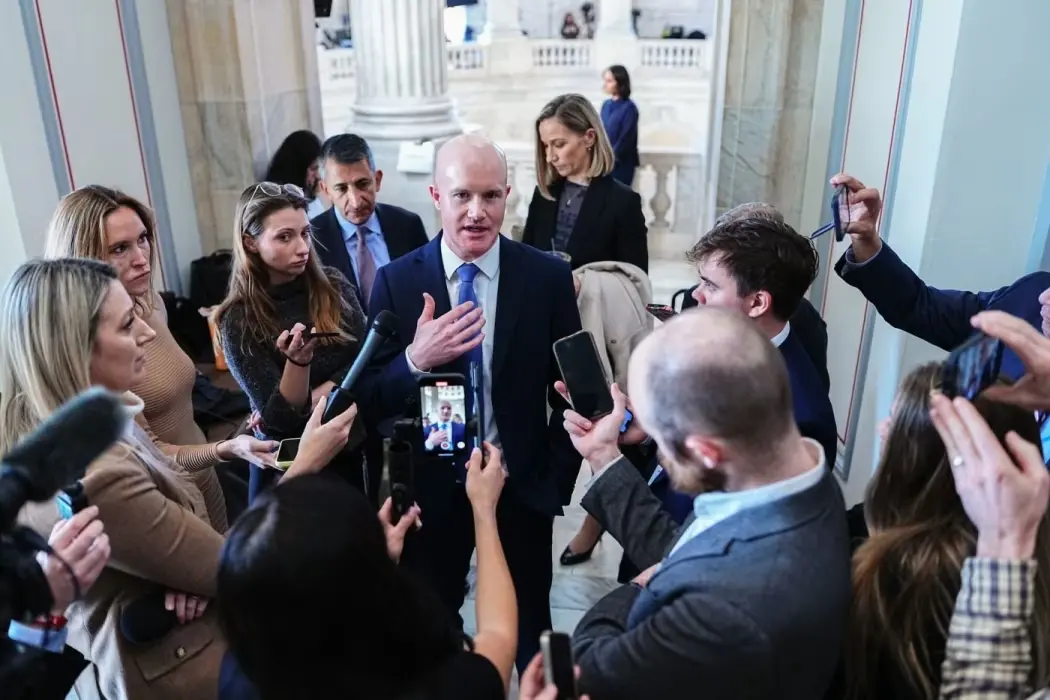
Kristin Smith, president of the Solana Policy Institute, recently shared her views on the legislative progress of the Clarity Act. She stated that although the bill faces resistance due to the withdrawal of support from Coinbase CEO Brian Armstrong and controversies in the banking sector, its complexity determines the long-term nature of the legislative process. Current negotiations exhibit two new characteristics: first, senior officials from the White House are directly involved, with presidential aides like David Sacks pushing for dispute resolution; second, traditional financial institutions are participating in negotiations for the first time.If the Senate Banking Committee can complete its review of the bill by March or April, there is hope to advance the legislation before the July recess; otherwise, the next window will not open until the fall. Smith, who previously led the Blockchain Association and spearheaded the passage of the Genius Act, believes that despite facing opposition from figures like Elizabeth Warren, the support from key Democrats such as Chuck Schumer and the ongoing pressure from President Trump are changing the odds of the bill's passage. On Wednesday, after Trump urged the banking sector to make concessions in a post on Truth Social, expectations in the market for the passage of cryptocurrency legislation within the year have noticeably increased.

Analysis: The passage of the CLARITY Act is expected to drive BTC's strength against the trend, fueled by the logic of currency depreciation and regression

According to CoinDesk, amidst the impact of the Middle East conflict on global stock markets and commodities, Bitcoin has risen against the trend, reaching a one-month high and helping to revitalize the overall cryptocurrency market. After falling nearly 50% from its historical high in October last year, Bitcoin had once been in the oversold territory.Following the outbreak of this round of key conflicts, traditional assets have significantly declined, while BTC's relatively strong performance has reinforced its temporary "safe-haven narrative." Market analysis suggests that this round of increase is mainly driven by three factors:The return of the "fiat currency depreciation" logic, as the intensifying Middle East conflict exacerbates global fiscal pressures, which may lead to expectations of more easing and deficit expansion, strengthening the "fiat currency depreciation" narrative, prompting some funds to be reallocated to digital assets.There may be expectations for a de-escalation in the Middle East situation. Although there has been no response from the U.S., this news has strengthened market expectations that "the conflict may not spiral out of control for a long time," supporting the recovery of risk asset sentiment.The CLARITY Act is close to being passed, aiming to clarify the legal status of stablecoins, which is beneficial for the cryptocurrency market.
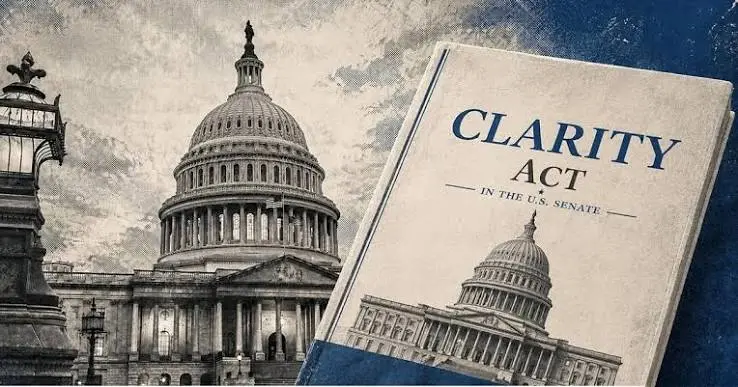
Investment bank TD Cowen: If Trump agrees to fill the Democratic vacancies at the SEC and CFTC, the progress of the CLARITY Act may be effectively promoted

According to The Block, investment bank TD Cowen stated that filling the Democratic vacancies at the U.S. Securities and Exchange Commission and the Commodity Futures Trading Commission could help advance negotiations on the U.S. crypto market structure bill.The investment bank pointed out that the biggest obstacle to the passage of this bill is not its core framework (i.e., whether digital assets should be regulated as securities by the SEC or as commodities by the CFTC), but rather a political dispute surrounding conflict of interest rules.Democrats are pushing for a ban to prevent senior government officials and their families from engaging in specific financial transactions involving digital assets. TD Cowen noted that, given Trump's involvement in the crypto project World Liberty Financial, this proposal would affect Trump and his family. Bloomberg estimated last month that Trump has made about $1.4 billion from his crypto project. The Trump family also holds a 20% stake in the mining company American Bitcoin.According to TD Cowen, it is unlikely that Democrats will abandon this demand, as the party has used Trump's crypto asset holdings as campaign material ahead of the midterm elections. Last month, no Democratic senators voted in favor of a bill in the Senate Agriculture Committee, citing concerns over Trump's crypto project. It remains unclear whether Democrats will support the Senate Banking Committee's bill.TD Cowen stated that Republicans oppose the proposal because they believe Trump would veto any legislation requiring his family to divest their crypto asset holdings. The report added that this disagreement has already caused a political stalemate, even as industry groups continue to negotiate the crypto regulatory framework.One possible path forward is for both parties to reach a compromise. In this scenario, Trump would agree to fill the Democratic vacancies at the SEC and CFTC. In return, Democrats would accept conflict of interest provisions that would only take effect after the next presidential inauguration.

Bitwise: Support for the CLARITY Act Wavers, Crypto Industry Faces a Critical Crossroads

The cryptocurrency asset management company Bitwise stated in its latest blog that as the U.S. CLARITY Act is stalled in Congress, the crypto industry is facing a critical turning point, with short-term trends potentially shifting from a speculative bull market to a more challenging "results-driven" phase.Bitwise Chief Investment Officer Matt Hougan pointed out that the CLARITY Act is crucial for "cementing" the currently relatively friendly crypto regulatory environment into a long-term legal framework. Without clear federal legislation, the crypto industry will remain exposed to the risks of future government policy swings. Recently, market expectations for the passage of the bill have significantly cooled, with related probabilities on Polymarket dropping from about 80% at the beginning of the year to around 50%. Coinbase CEO Brian Armstrong has also publicly stated that he has withdrawn support for the bill due to concerns that the current draft may harm consumer interests and stifle competition.Hougan believes that if legislation continues to stagnate, the crypto industry may need to emulate disruptive companies like Uber and Airbnb, which grew in regulatory gray areas, to make stablecoins and tokenized assets an "indispensable" infrastructure in the U.S. economy within the next three years. If successful, regulation will eventually be forced to follow; if scaling fails, future political changes could severely impact the industry.In terms of market impact, Bitwise sees two potential paths: if the CLARITY Act passes in a viable form, the market may quickly price in expectations for the definitive expansion of blockchain finance, driving prices significantly higher; conversely, if the legislation fails, the market may enter a wait-and-see period, with valuations suppressed by regulatory uncertainty, and returns becoming more reliant on real-world applications.Wall Street firm Benchmark also noted that legislative setbacks will delay rather than end the maturation process of the crypto industry, with the U.S. market potentially remaining below its potential level for some time. Capital is likely to favor Bitcoin-related exposure, robust balance sheets, and cash-flow-generating infrastructure, while remaining cautious in regulatory-sensitive areas such as exchanges, DeFi, and altcoins.
app_icon
ChainCatcher Building the Web3 world with innovations.