Hashed: Top Ten Trends in the Crypto Space for 2023

 Hashed discusses the trends that may emerge in the field of encryption in 2023, and below is a specific list of vertical areas.
Original Title: ++Top 10 Trends in 2023: An Overview by Hashed++
Original Author: Simon Seojoon Kim
Compiled by: Qianwen, ChainCatcher
As the cryptocurrency industry continues to gain mainstream adoption, its infrastructure is becoming more refined, and user experience and security are increasingly important for end users. In this regard, wallet providers play a crucial role in facilitating access to decentralized applications and will bridge the gap for thousands of new users. Of course, challenges remain, especially for ordinary users, as private key management and signing protocols are still very complex.
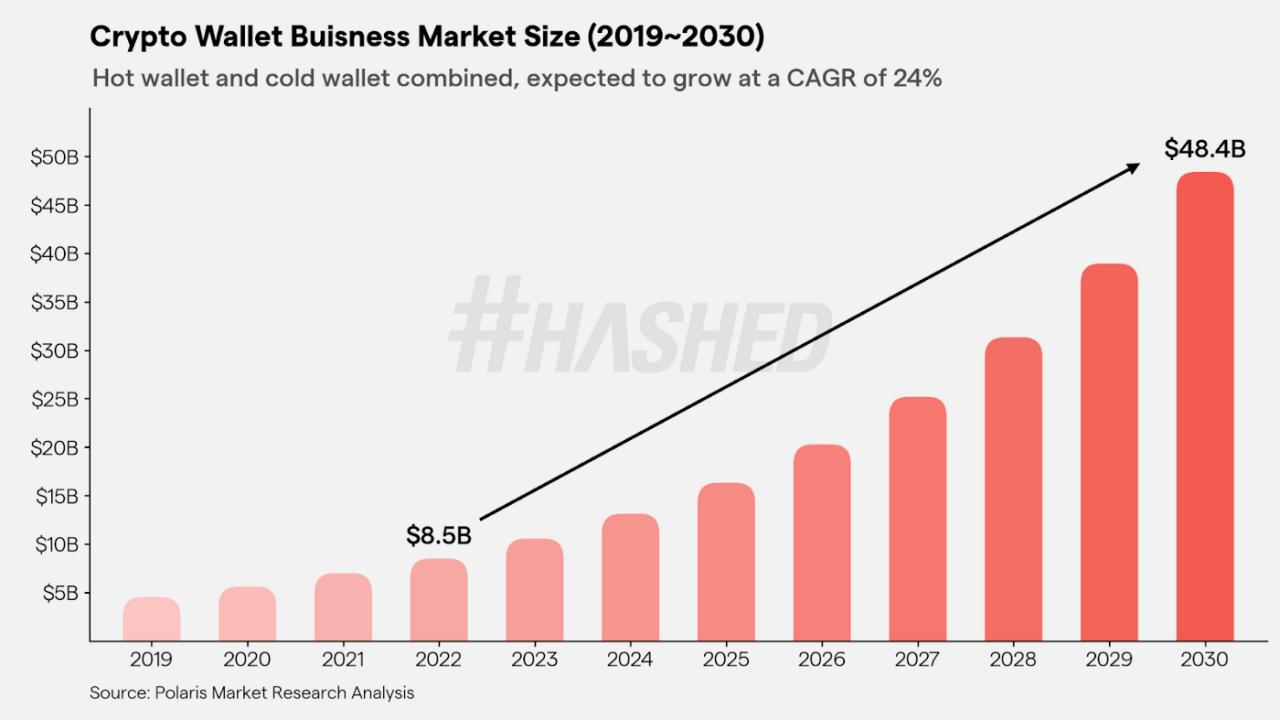
Solutions to complex issues such as wallet key management and signature authentication for ordinary users are gaining increasing attention. One such solution is Web3Auth, which utilizes multi-party computation (MPC) technology to provide a non-custodial login experience, eliminating the need for mnemonic phrases. The platform Magic offers developers wallet and SDK options that allow users to log into dApps via email and SMS without the need for mnemonic phrases. Additionally, Ramper focuses on providing seamless social login and single sign-on (SSO) for users unfamiliar with cryptocurrency through its mobile SDK, enabling access to blockchain applications.
With the exponential growth in mobile device usage, wallet companies should prioritize mobile services to attract a larger audience. Coin98 is a rapidly growing platform with 6 million users, targeting to become a leading mobile super app by emphasizing enhanced security for mobile transactions and improved user experience. Meanwhile, Robinhood is launching a standalone wallet application that allows users to effortlessly manage their assets while seamlessly integrating with various DApps to address long-standing issues such as cumbersome design and high fees.
Smart contract wallets are also a solution. They can be programmed with features such as spending limits and automated transactions, and enhance security through multi-signature capabilities. These wallets cater to users with varying needs and levels of understanding, such as Argent which offers social recovery and limit order features, and Safe which is a non-custodial wallet that allows users to securely store and manage their digital assets through multi-signature functionality.
Moreover, there is room for development in smart contract wallets within the Ethereum ecosystem. For instance, Account Abstraction (AA) aims to unify the two types of Ethereum accounts: externally owned accounts (EOA) and contract accounts (CA). AA will eliminate the need for EOAs to have private keys, allowing accounts to operate like smart contracts and releasing potential use cases for improved key management and multi-signature functionality. Visa recently demonstrated the potential of AA by establishing an automated payment solution on StarkNet. As attention to AA increases, we foresee that the NEAR Protocol will attract builders, as their account model has already implemented using multiple key pairs as keys.
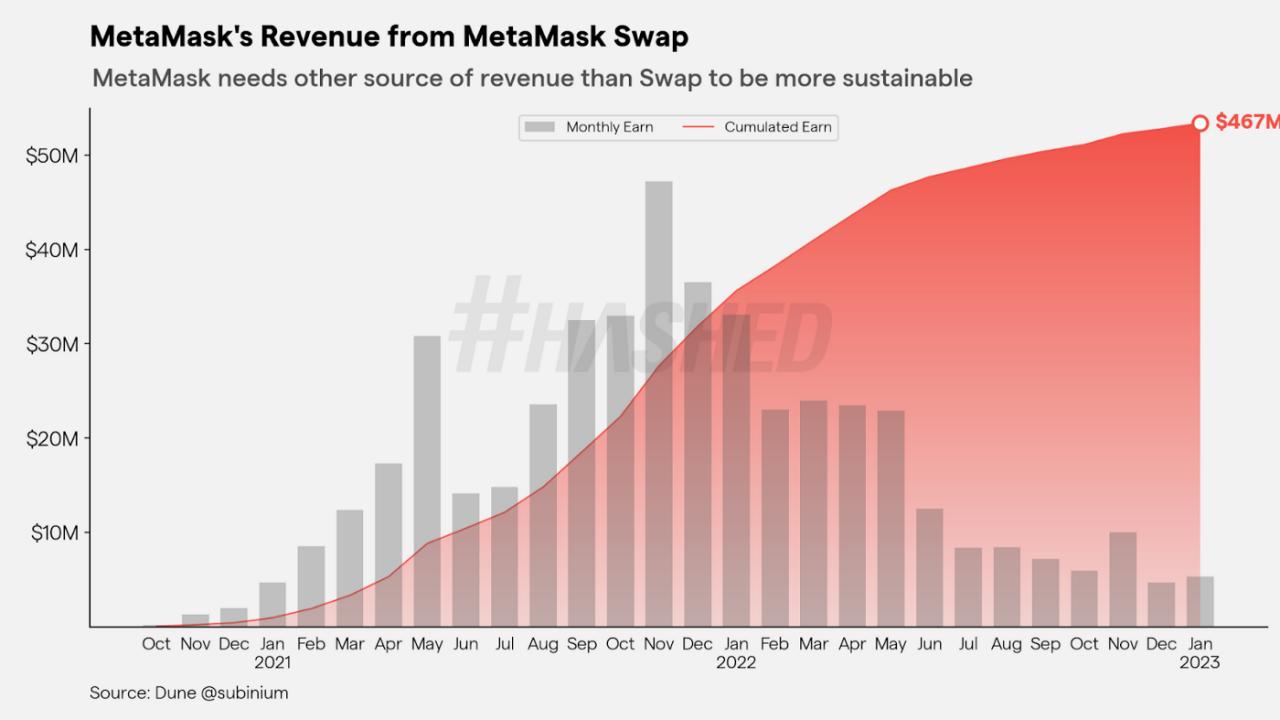
MetaMask is recognized as a leader in the cryptocurrency wallet space and is participating in the competition with MetaMask Flask. Flask allows developers to customize their own versions of the MetaMask wallet. MetaMask Snaps is the first feature of Flask, enabling anyone to extend MetaMask's functionality and leverage it with different blockchain protocols. Currently, most of their sales come from spot trading, leading to a monotonous revenue stream. This revenue model has generated over $450 million in revenue in just over two years since its launch, but it is highly susceptible to market fluctuations. However, if they successfully build a dApp ecosystem on their product, they could easily stand out as a profitable ecological platform.
2: Integrating Web3 Elements into Digital Identity, Moving Towards a Decentralized Society
Current digital identity systems have several areas for improvement. One major issue is fragmentation, where individuals have multiple identities across different platforms, leading to a lack of accuracy and continuity in personal identity verification. Privacy and security are also concerning issues, as individuals often need to provide sensitive information to establish digital identities on various platforms, which can lead to identity fraud and financial crime if this information is used or shared without consent. Additionally, the centralized control of digital identity by platform service providers raises concerns, as digital identities are often controlled by a few companies or organizations, potentially leading to users lacking control over their own identities.
Blockchain technology can provide differentiated solutions to these issues by using private wallets, allowing individuals to verify their digital identity by proving ownership of specific tokens or NFTs. Storing assets and information on the blockchain can enhance the accuracy and reliability of digital identities. Blockchain-based identities enable individuals to consolidate multiple online identities into a unified, self-sovereign entity, granting them control and autonomy over their digital identity. CyberConnect is a company building a decentralized social graph protocol that uses Web3 state tokens (W3ST) and network connection profiles (ccProfiles) to provide users with composable, self-sovereign identities.
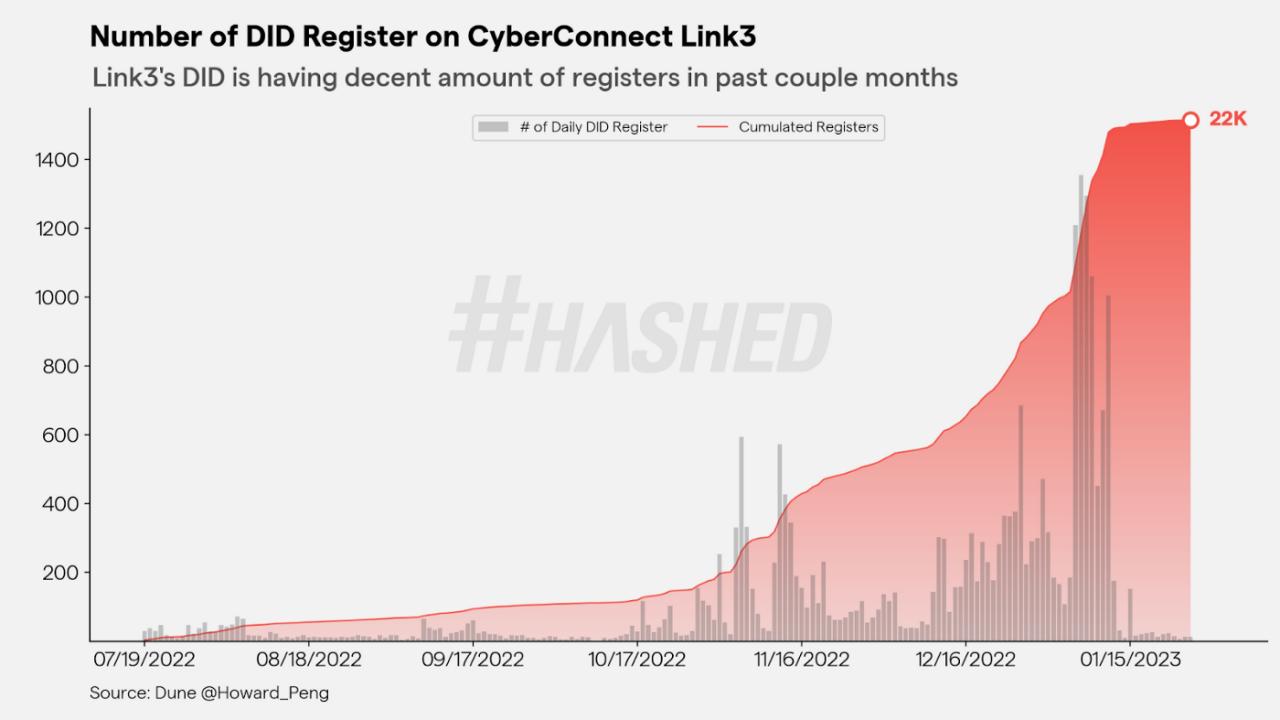
Digital identities can also be created and managed without the use of tokens or NFTs. Several Ethereum-based projects, such as Disco and Orange Protocol, use DIDs (Decentralized Identifiers) and VCs (Verifiable Credentials) as a complement to soulbound tokens (SBT). Of course, a single solution may not meet all privacy needs, and achieving optimal security and privacy may require a combination of on-chain solutions like SBTs and off-chain solutions like VCs. Additionally, progress should be made in developing better data storage solutions that provide privacy and partial decentralization while seamlessly integrating across different identity layers.
With Web3 identities, users will be able to easily find, connect, and even establish gated communities with others who share similar interests, such as utilizing the same DeFi protocols, owning NFTs, or playing blockchain games. This new form of identity can also integrate with existing identity systems to create a seamless and interoperable digital identity, opening up a range of business opportunities.
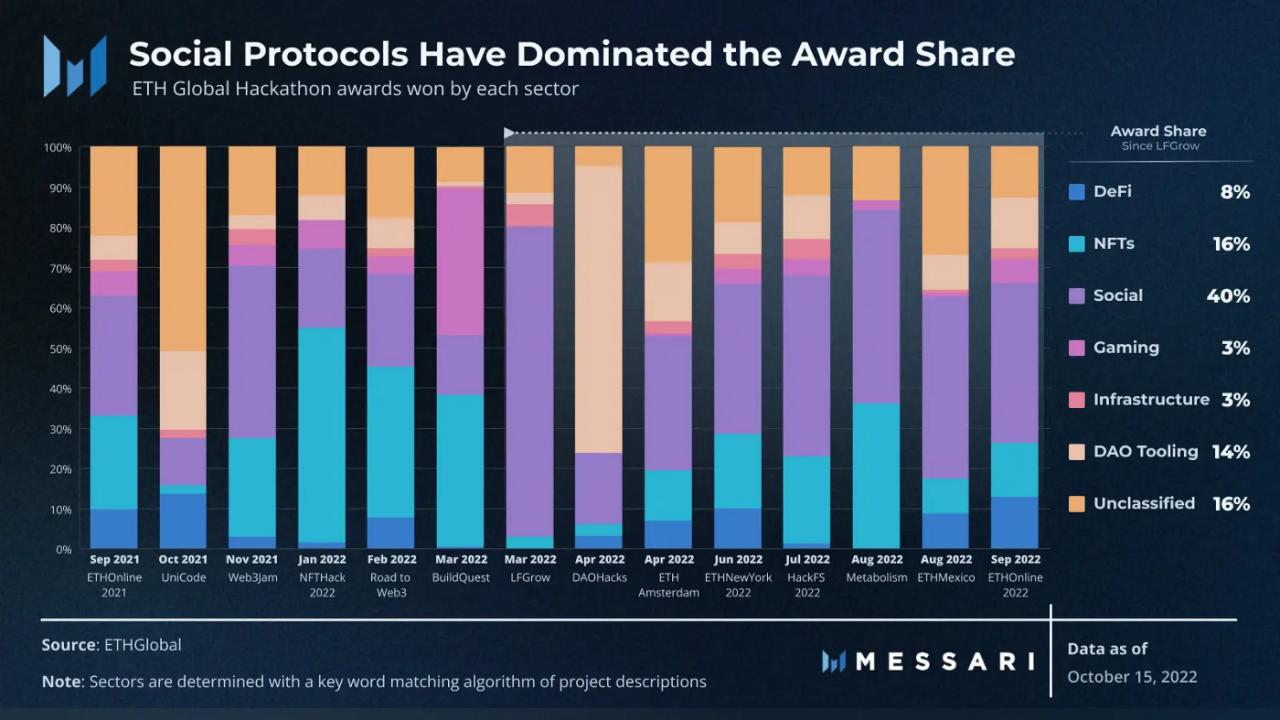
Decentralized social networks have been a growing trend throughout the year, with 40% of award-winning projects falling into this category. Lens Protocol has over 60 projects that have completely spun out from hackathons, experimenting around social graphs. Farcaster and DeSo have raised significant funds amid this immense interest. This year, we can expect to see preliminary developments of blockchain-based social applications that leverage network effects through shared social graphs.
3: Optimizing the Use of ZKP to Achieve Privacy in Account-Based Smart Contract Platforms
Currently, Zero-Knowledge Proofs (ZKP) are primarily applied in the crypto space to enhance scalability through verifiable off-chain computations. As scalability solutions continue to advance, privacy is also receiving more attention, as ordinary user experiences such as voting, governance, and payments can greatly benefit from the implementation of privacy.
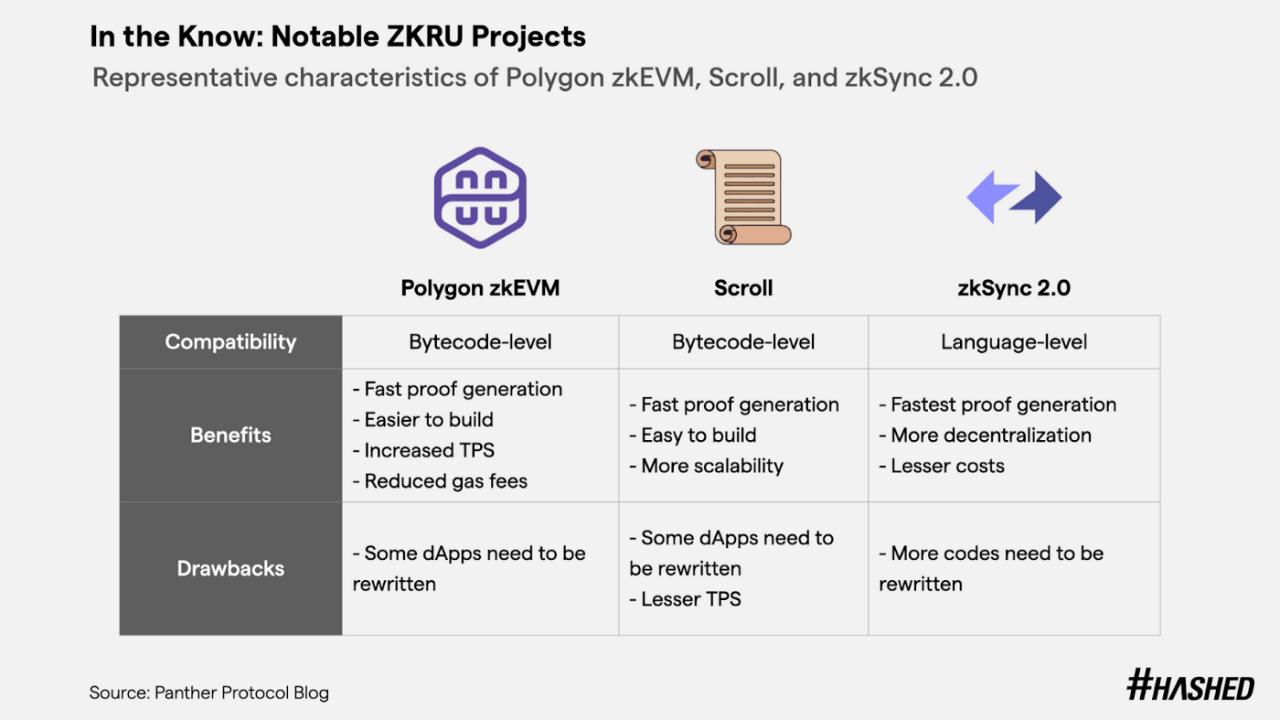
Implementing privacy in account-based smart contract platforms (like Ethereum) is challenging because encrypting the ledger state while maintaining its verification presents a series of complex issues. Some prominent teams are working to address this challenge. A common approach among these protocols is to incorporate "notes" from the UTXO model into account-based systems, making ownership and its transfer more explicit.**
The Aztec Connect SDK allows Ethereum protocols to integrate with Aztec’s private rollup, utilizing an encrypted UTXO architecture to achieve privacy. ZK.Money is based on Aztec Connect, providing a private DeFi yield aggregator that integrates with major projects like AAVE and Uniswap. Additionally, Polygon Miden is introducing a "hybrid UTXO and account-based state model" for EVM-compatible ZK rollups to support private transactions, consisting of locally executed off-chain data.
To facilitate experimentation and innovation in privacy-enhancing technologies, it is essential to reduce friction for developers on these infrastructures. Web3 development has introduced a series of unfamiliar challenges, such as fragmented indexing and additional security concerns, so the complexity of increasing privacy should be abstracted as much as possible. Undoubtedly, this effort will further mature in 2023, nurturing more sophisticated testing grounds for exciting applications.
4: Programmable NFT Technologies Represented by Dynamic NFTs Will Continue to Evolve
In recent years, the landscape of NFTs has undergone a significant transformation, especially for those existing in the form of profile pictures (PFPs). However, in the second half of 2022, the trading volume of image-based NFTs noticeably decreased as users began to crave more functionality. As a result, the NFT ecosystem is undergoing a transformation to meet this changing demand. Ethereum Improvement Proposals have become a benchmark for gauging the development direction of the Ethereum community, with most recent proposals focusing on NFT standards, indicating the community's desire for NFTs with additional utility. We believe that 2023 will be a pivotal year, as various NFTs, including dynamic NFTs, will address these issues by providing new functionalities.
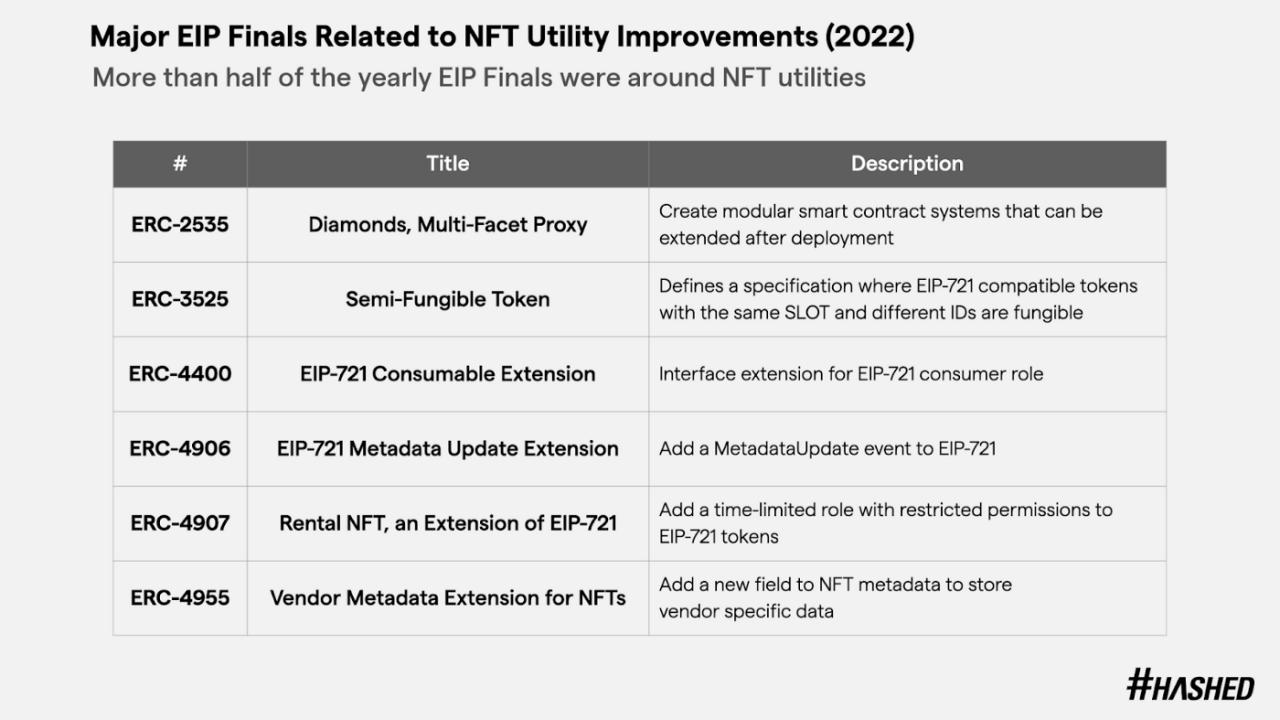
Dynamic NFTs are a unique type of NFT that can adapt and evolve based on certain triggers within their smart contracts. These triggering events can result from on-chain or off-chain occurrences, or even real-world events. Changes in the characteristics of dynamic NFTs are typically achieved by modifying their metadata.
In addition to dynamic NFTs, there is an increasing discussion in the community about other programmable NFTs that possess advanced functionalities, such as executable NFTs and NFTs with separated permissions and shared ownership. This opens up various possibilities for interaction and engagement among creators, collectors, and gamers. Programmable NFTs are expected to gain significant traction in the blockchain ecosystem as they create advanced use cases that go beyond traditional representations of digital ownership through images or records. These NFTs offer a wealth of possibilities, such as creating interactive experiences, representing unique and complex digital assets, and developing new financial instruments.
At the same time, to achieve widespread adoption of dynamic NFTs, the reliability of triggering events that lead to NFT changes needs to be addressed. To accomplish this, it is necessary to implement more reliable oracles and establish clear NFT standards to verify the authenticity of triggering events while also promoting transparency and fairness in the smart contract rules governing dynamic NFTs.
As the blockchain ecosystem continues to attract more game developers, artists, and entrepreneurs, their level of creativity is also on the rise. The emergence of dynamic NFTs is expected to add a new excitement to the NFT ecosystem in 2023. A large number of talented creators in this field will open up endless possibilities for new imaginative use cases.
5: Exploring Diverse NFT Utilities, SMEs and Creators Will Drive a New Wave of Adoption
Despite the ongoing bear market leading to a decline in sales volume, NFTs are becoming an increasingly popular way for companies to connect with customers. Major companies like Coca-Cola, Twitter, and Visa have started using NFTs as a means to enhance their brand image. Disney has already partnered with one of its subsidiaries, Marvel, to launch NFT-based digital collectibles. To support this effort, they are actively seeking to hire experts with knowledge and experience in this field.
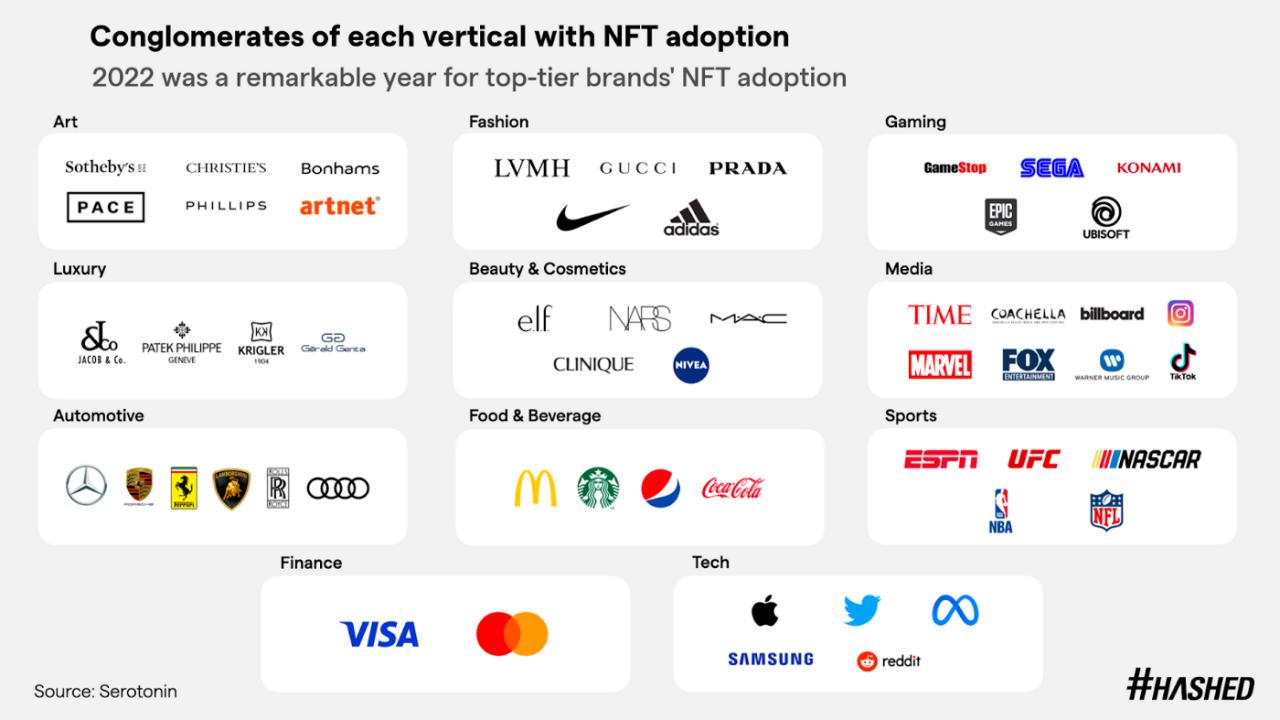
Despite the foreseeable mainstream success of NFTs, they often lack emotional value and sustainability for holders. Simply put, after acquiring an NFT, holders may not feel a strong connection to it over time and may not know what owning it entails. While many NFT projects or studios offer phased benefits as outlined in their roadmaps, they often fail to provide a sense of belonging and true ownership of the underlying IP and content, such as the community feel and exclusivity offered by Yuga Labs’s Bored Ape Yacht Club.
To address these barriers, some teams are working to demonstrate how NFTs can provide genuine, sustained utility and a sense of belonging/ownership within the holder community. For example, Modhaus is revolutionizing the K-pop entertainment industry, allowing fans to engage at a higher level by providing ownership through NFT-based governance and voting. TripleS is a unique K-Pop group that utilizes blockchain technology to give fans more influence in important decisions, such as choosing the sub-groups of TripleS from the very beginning and deciding on individual members of each sub-group.
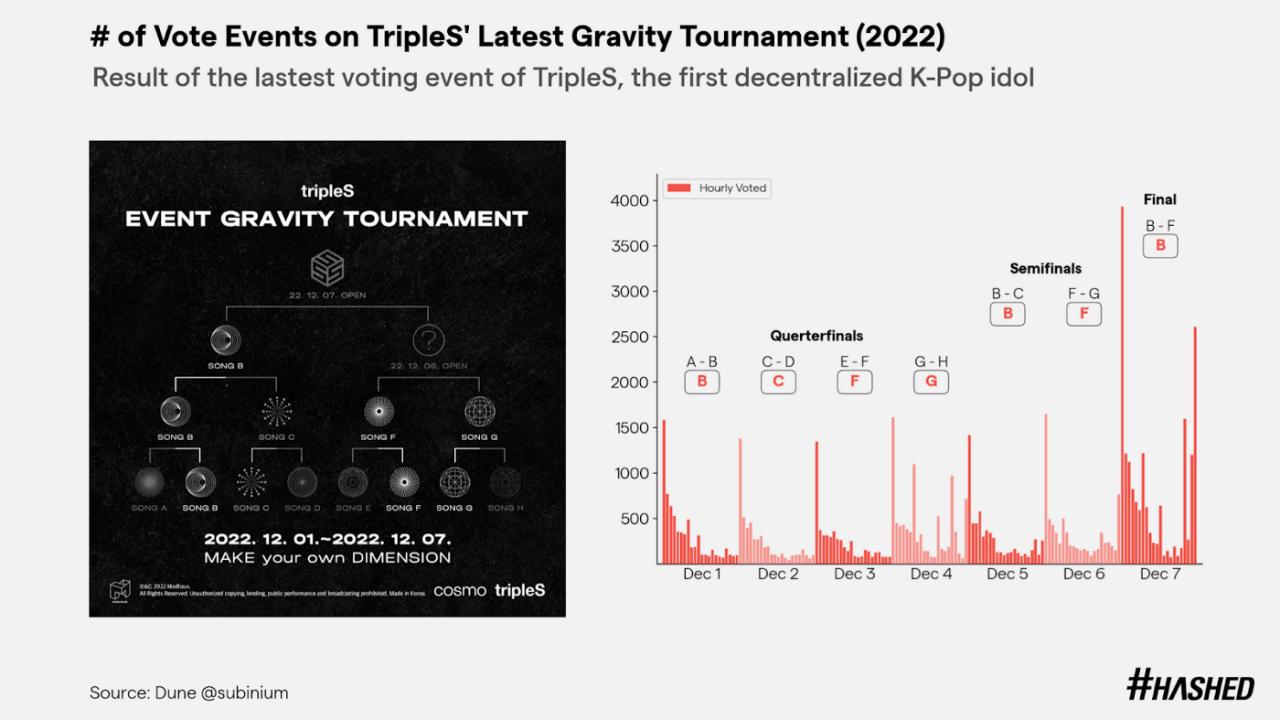
In 2023, SMEs and individual creators will embrace NFTs as a means to enhance and maintain customer loyalty, echoing the leading role of large enterprises using NFTs in the previous year. This includes incorporating NFTs into membership and loyalty programs for real-world communities, such as local restaurants and social events. The tangible benefits brought by NFTs, such as exclusive offers at offline events, will facilitate widespread adoption of NFTs.
To achieve broader adoption of NFTs, it is essential to reduce entry barriers for users through user-friendly wallet services. For instance, Reddit Vault allows users to easily claim collectible avatars. At the same time, it is equally important to enable users unfamiliar with cryptocurrency to effectively utilize Web3 stack tools. The demand from long-tail brands and businesses for enhancing user experience within the NFT community is growing, which will drive the demand for services like RareCircles or CIETY that can launch communities without requiring coding or technical expertise.
Leading NFT marketplace OpenSea has recently launched "Drops," a tool for creators to launch their NFT projects. It has also introduced customizable landing pages on EVM chains aimed at enhancing the experience for SMEs and creators.
6: Blockchain Games Will Adopt Strong IPs, Being More User-Friendly for Ordinary Users
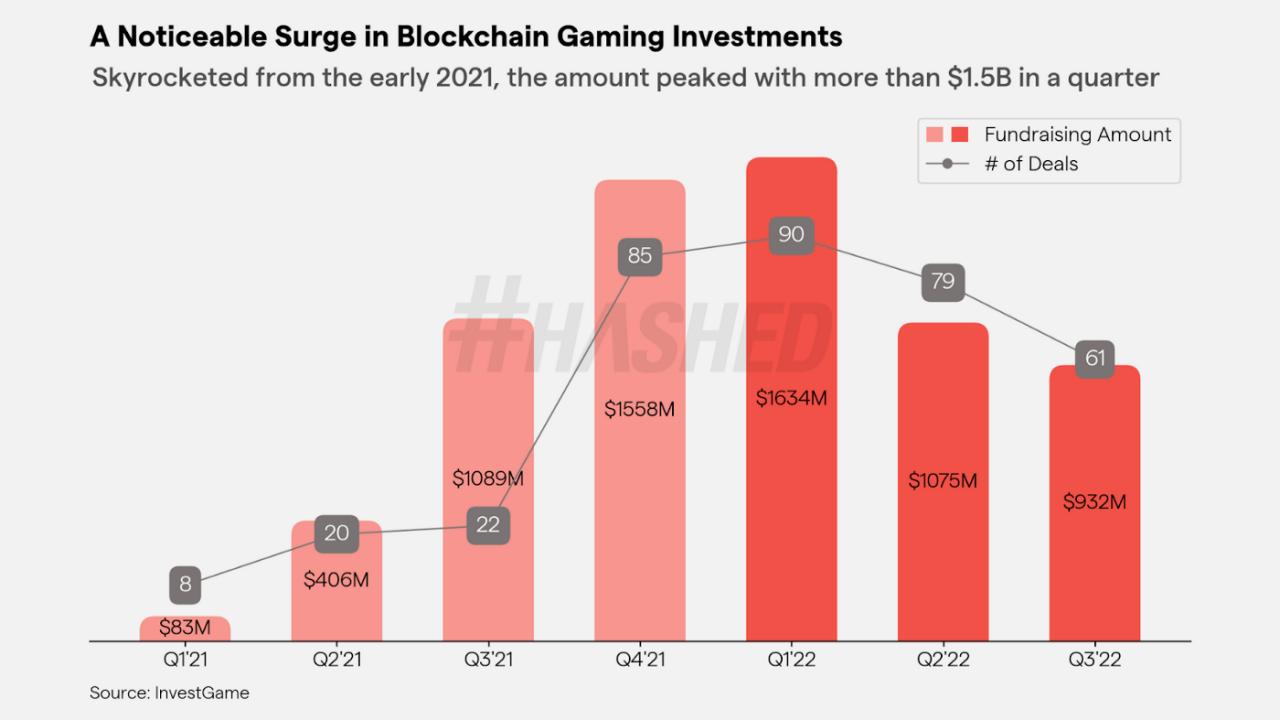
Although blockchain games have only been launched in the past two years, they saw unprecedented growth by the end of 2021. Moreover, with the emergence of novel concepts such as gaming guilds, the evolving gaming ecosystem in Southeast Asia has made GameFi a highly focused area for cryptocurrency builders and traditional gaming groups.
Due to macroeconomic conditions and market turbulence, the development of blockchain games did not reach the anticipated heights between 2021 and 2022. Nevertheless, the blockchain gaming sector, including GameFi, has seen over $5 billion in funding annually since Q4 2021, and we expect more AAA games to officially launch in this space in 2023.
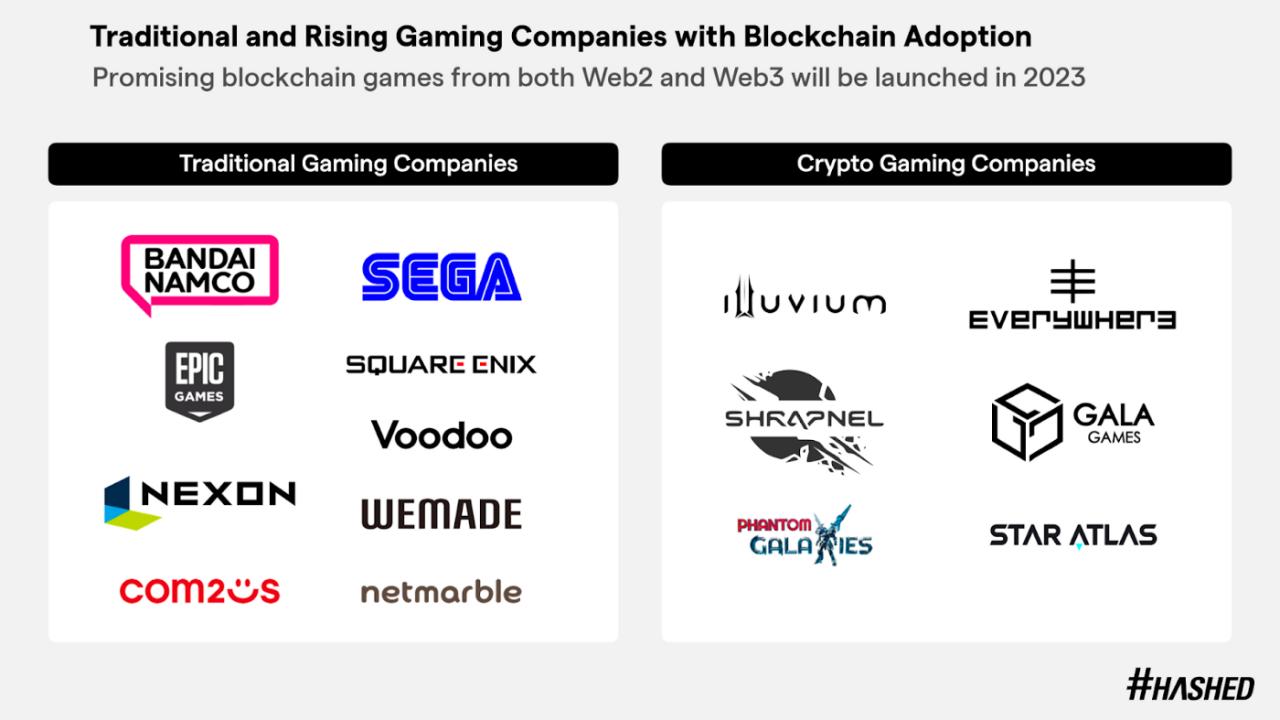
To provide innovative experiences for gamers, we often see the adoption of well-known IPs, such as popular web comics and movies, and even mature blockbuster game IPs combined with blockchain technology. South Korean conglomerates like Nexon and Netmarble, as well as global companies like SEGA, Bandai Namco, and Square Enix, are also working to integrate their IPs into games. For example, user-generated content (UGC) platforms using popular characters and storylines (like the Gundam Metaverse) are gaining attention. Nexon has also announced a creator-driven ecosystem blueprint that will leverage its major IP MapleStory Universe to connect with blockchain. In the future, more content companies will expand their game IPs by utilizing blockchain.
However, the entry barrier for blockchain games is still high for ordinary users, and this pressing issue remains unresolved. Axie Infinity is one of the most successful blockchain games, boasting over 2 million MAUs in 2021, but it faced challenges in attracting more users due to the difficulties of creating wallets and purchasing assets. In the future, it is expected that the entry barrier will be lowered, allowing players to enjoy blockchain games without needing a wallet, or the wallet creation process will become smoother.
In 2023, simplified onboarding tools are expected to gradually advance to attract more players, while blockchain infrastructure will provide convenient mobile SDKs to facilitate the launch of top games. Multi-chain wallet services specifically designed for the gaming sector, such as Sequence and FaceWallet, will collaborate with numerous blockchain gaming companies to enhance accessibility. Additionally, infrastructure companies will make similar efforts, such as ImmutableX recently announcing the launch of Immutable Passport. These collaborations will help create a more seamless and user-friendly experience for all gamers.
7: Building Resilient Infrastructure for the Next Generation of DeFi, NFT-Based Virtual Goods Will Rise
In the real-world economy, production and finance are closely related. Production activities are based on natural resources and infrastructure, while the financial sector enhances the growth of these activities by providing loans and other financial tools. For example, a farmer might establish a ranch and raise cats (production), while banks and securities firms can leverage this by providing financing or listing on exchanges (finance), helping farmers expand their businesses.
However, until 2022, the crypto economy lacked this balance. Infrastructure-level projects, such as cryptocurrency exchanges and money markets, collapsed (finance), leading to instability in financial markets and hindering the flourishing of utility and community projects (production). The foundation of the crypto economy, which is blockchain technology (infrastructure), is in place, but more production-focused projects are needed to support its growth.
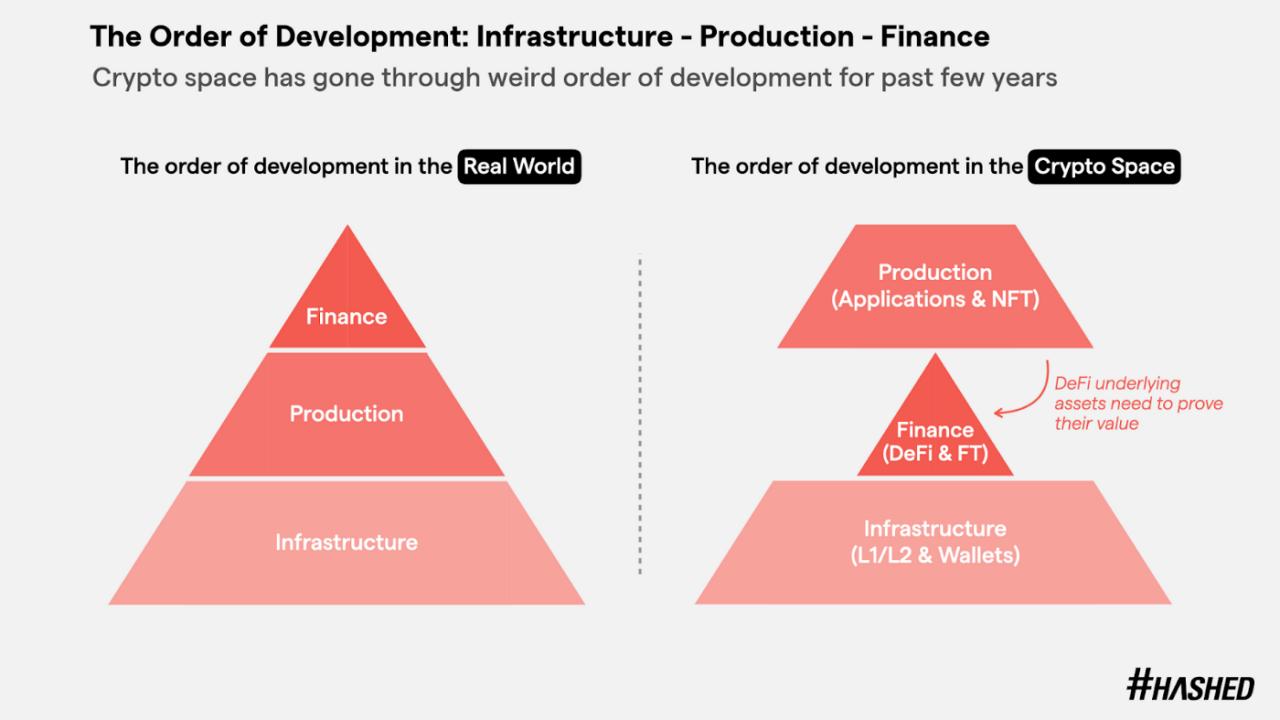
Major DeFi tokens have interdependent values, where the value of one token relies on the usage and value of other tokens within the DeFi ecosystem. This creates a fragile structure, where a decline in the value of one token can impact the entire DeFi market, leading to sharp declines in value during regulatory uncertainty or skepticism towards the entire industry.
The primary challenge for the blockchain industry is to establish a solid infrastructure that makes it easier for the masses to use and truly adds value to the commodity production market. Fortunately, the trading volume in blockchain has been steadily increasing. Currently, five leading L1 projects have trading volumes exceeding 1 million, providing scalable and private modular solutions that are user-friendly and easy to onboard, as well as offering digital identity solutions.
In addition, digital products are slowly emerging, including non-fungible assets generated through L1 block space. Ethereum remains the largest smart contract platform, generating a significant amount of NFT trading even after the last NFT summer, with total trading volume exceeding $35 billion. Although activity in the NFT community has decreased and OpenSea's trading volume has declined, secondary NFT trading remains strong, exceeding $780 million monthly.
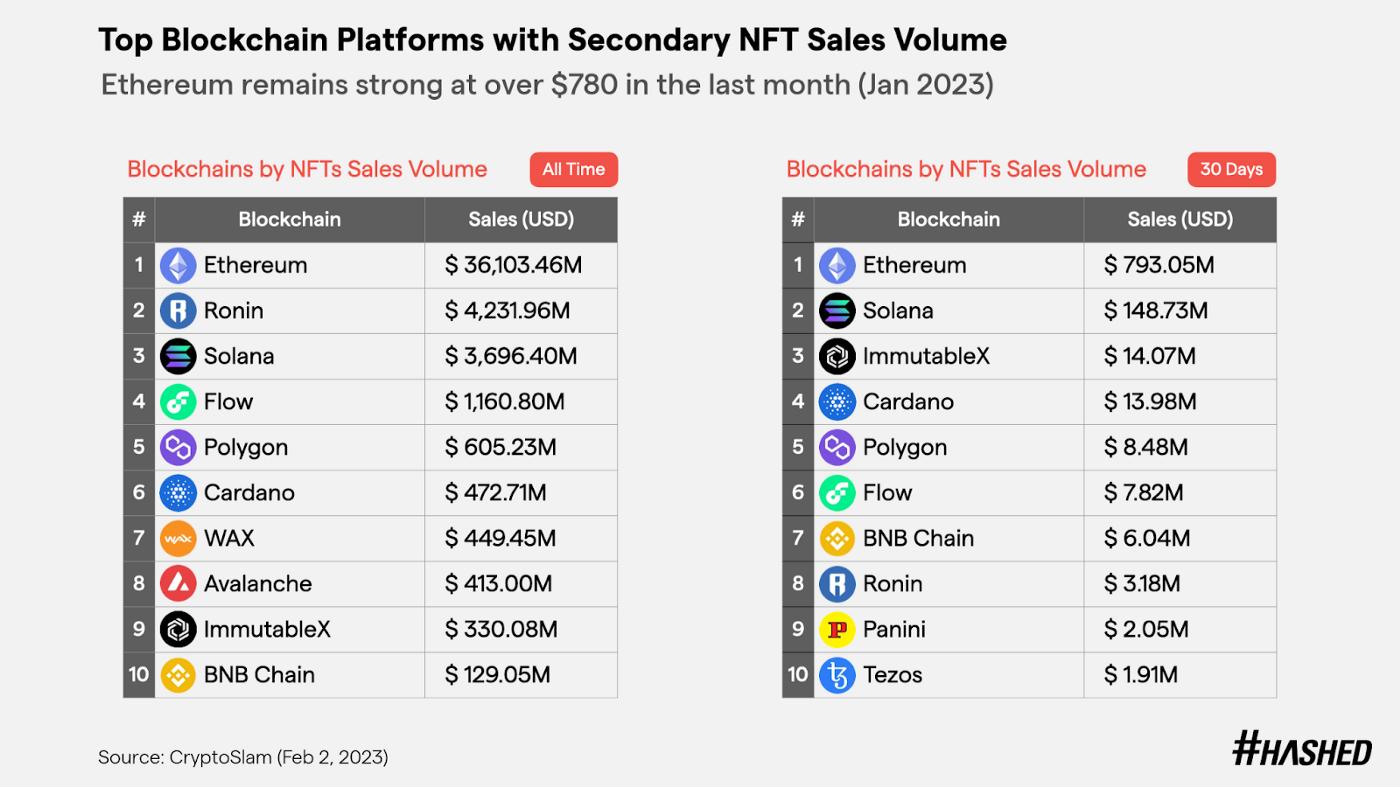
Ethereum is no longer the only ecosystem; other communities are also thriving due to the scarcity of non-fungible goods. Large enterprise NFT projects like Starbucks' "Odyssey" on Polygon and the popularity of Reddit Collectible Avatars have attracted millions of Web2 users. Despite a more than 80% drop in TVL and accelerated DeFi user attrition, Solana has maintained nearly $150 million in secondary trading volume monthly. In mid-2022, Solana NFTs, like Y00ts, successfully created a unique community distinct from the Ethereum NFT community. During the bear market from August to October 2022, the number of UAWs for Solana NFTs increased nearly fourfold.
New types of virtual goods will emerge, potentially starting from blockchain games and metadata. These sectors accounted for the largest fundraising amounts in Q1 2022. Additionally, using programmable NFTs to represent real assets in virtual worlds will be discussed in greater depth.
As infrastructure participants gradually accumulate valuable virtual items and stabilize the infrastructure, established financial models will operate within specific infrastructures. Exchanges like OpenSea and Blur, lending platforms like NFTFi and BendDAO, and various experimental models, including derivatives platforms, are continuously evolving, although there are currently no clear winners.
DeFi smart contracts can be rapidly applied to other blockchains; however, products like NFTs and the communities built around them can never be copied and pasted. In 2023, the development of the blockchain ecosystem will focus on creating minimal production scales to support these financial primitives, rather than being limited to DeFi infrastructure. Mainstream blockchains will concentrate on building a robust ecosystem around NFT-based products that are difficult to replicate, such as NFT communities and blockchain games.
8: Artificial Intelligence Will Play a Significant Role in Blockchain Game Development and Beyond
The field of artificial intelligence has made significant progress since its inception. It has evolved from early research in natural language processing (NLP) and problem-solving in the 1950s to the latest developments in data synthesis and machine learning (ML). This has led to widespread adoption of AI across various industries, including healthcare, finance, media, and transportation.
With the success of large language models (LLMs), there is growing anticipation that AI will see widespread application in 2023, with ChatGPT being a prime example. The blockchain gaming industry will greatly benefit from advancements in AI, particularly in simplifying traditional game development processes and enhancing gaming experiences—all achieved through generative AI.
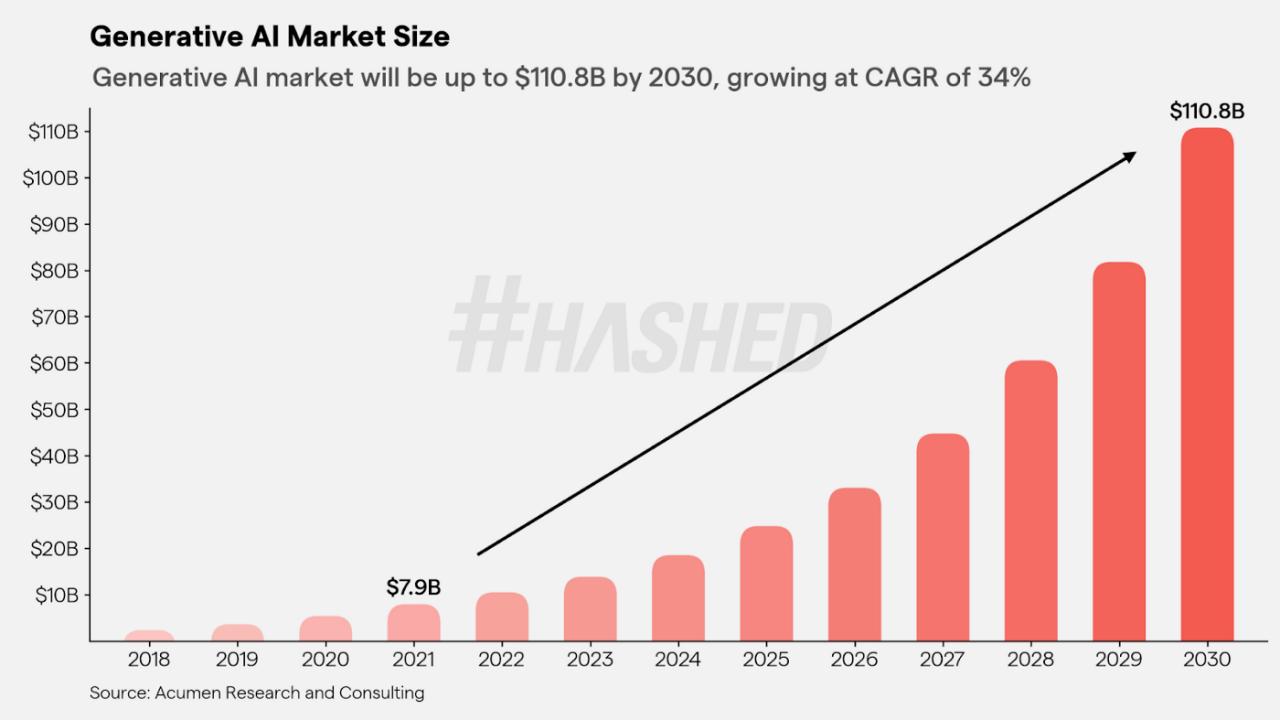
Generative AI is a field that has developed over the past decade, but it has only recently reached a level where it can mimic or even surpass human capabilities in image, language, and speech recognition. The market was valued at $8 billion in 2021 and is expected to exceed $63 billion by 2028.
Currently, AAA game developers allocate a significant portion of their budgets to content creation, which is a major bottleneck in today's gaming industry. Top game studios require at least three years to complete production, necessitating developers to predict consumer trends years before product release. In cryptocurrency games, the development cycle becomes even more challenging, as crypto players' preferences can change rapidly and are unpredictable.
Generative AI can serve as a powerful solution to this problem. By collecting user behavior data from a core group of community testers across multiple game iterations, developers can train models to create unique, generated content tailored to specific audiences, such as levels, characters, and items. This content is generated programmatically and evolves based on real-time changes in user behavior. This not only provides players with a diverse, dynamic gaming experience but also helps developers reduce the need for manual content creation.
Beyond gaming, we are also excited to see the potential of AI in other cryptocurrency verticals. Predictive risk management is becoming increasingly popular among trading teams, who train generative AI models to generate synthetic financial data to simulate different market conditions—prices, CEX/DEX trading volumes, order book depth, AMM liquidity, etc. This helps traders understand how to identify and respond to potential risks under various market conditions.
AI-driven smart contract auditing is another area we are focusing on. The current auditing process is cumbersome, inefficient, and costly. We hope that future auditing AI models can be trained with large datasets of existing smart contract code, along with information about vulnerabilities, bugs, and attack patterns. After thorough data processing and cleaning, the model should be able to automatically analyze and audit new smart contract code inputs.
The most effective AI solutions are those that refine the data collection process—whether in terms of quantity or quality. We envision a future driven by incentivized data markets. Decentralized computing protocols like Filecoin and dFinity, as well as distributed GPU rendering protocols like RenderNetwork, are leading examples. With the emergence of distributed AI protocols, parts of the ecosystem can be tokenized while leveraging incentives to encourage user participation and data sharing, further strengthening AI-based models. This symbiotic relationship between users, AI, and tokens holds immense potential to revolutionize the industry.
9: Institutional Finance Will Enter the Crypto Market Through Blockchain Infrastructure
It is predicted that in 2023, the scale of institutional financing will grow significantly, partly due to the increasing adoption of tokenized real-world assets (RWA: representing claims on underlying assets) and progress made in enterprise-level staking and unsecured lending.
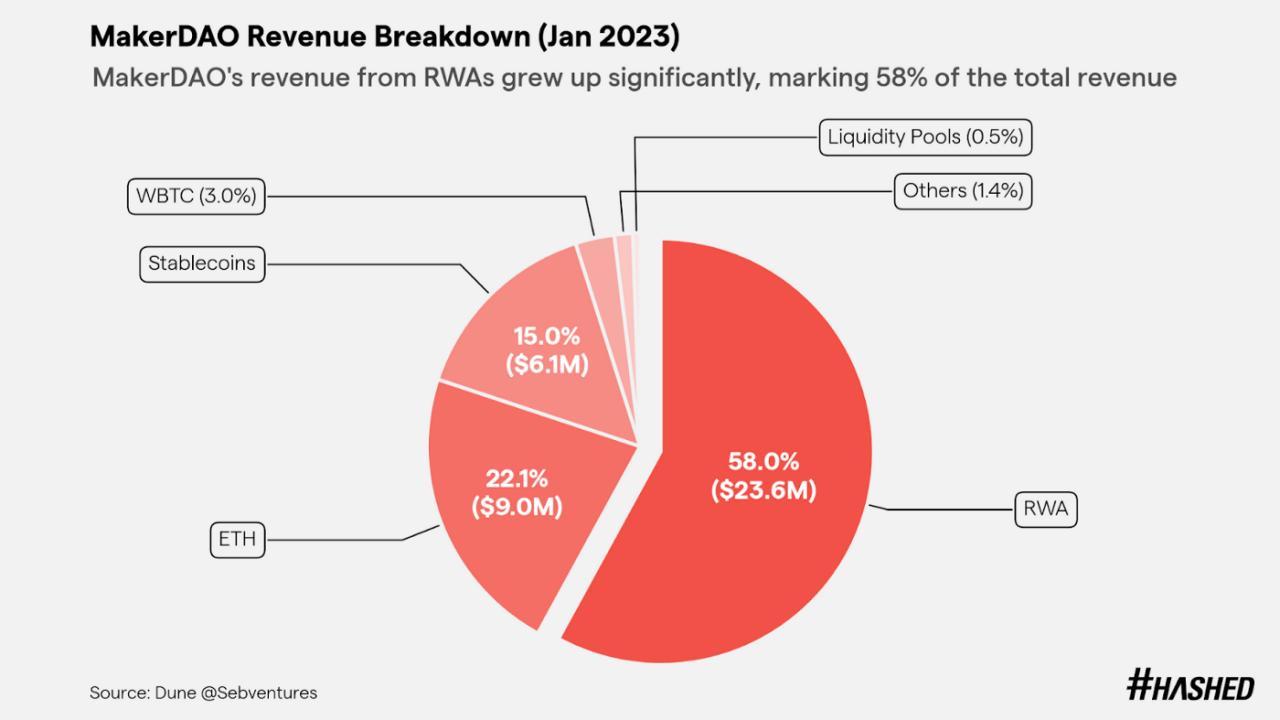
Currently, the most successful application of real-world assets (RWA) is stablecoins, with market leaders including USDT, USDC, and BUSD among the highest market cap tokens. Crypto-native organizations have shown clear initiative in RWA, such as MakerDAO investing $500 million in U.S. Treasuries and corporate bonds, diversifying investments into other types of RWA like real estate, invoices, and business loans. RWA now accounts for nearly 60% of Maker's total protocol revenue, demonstrating the potential in this area.
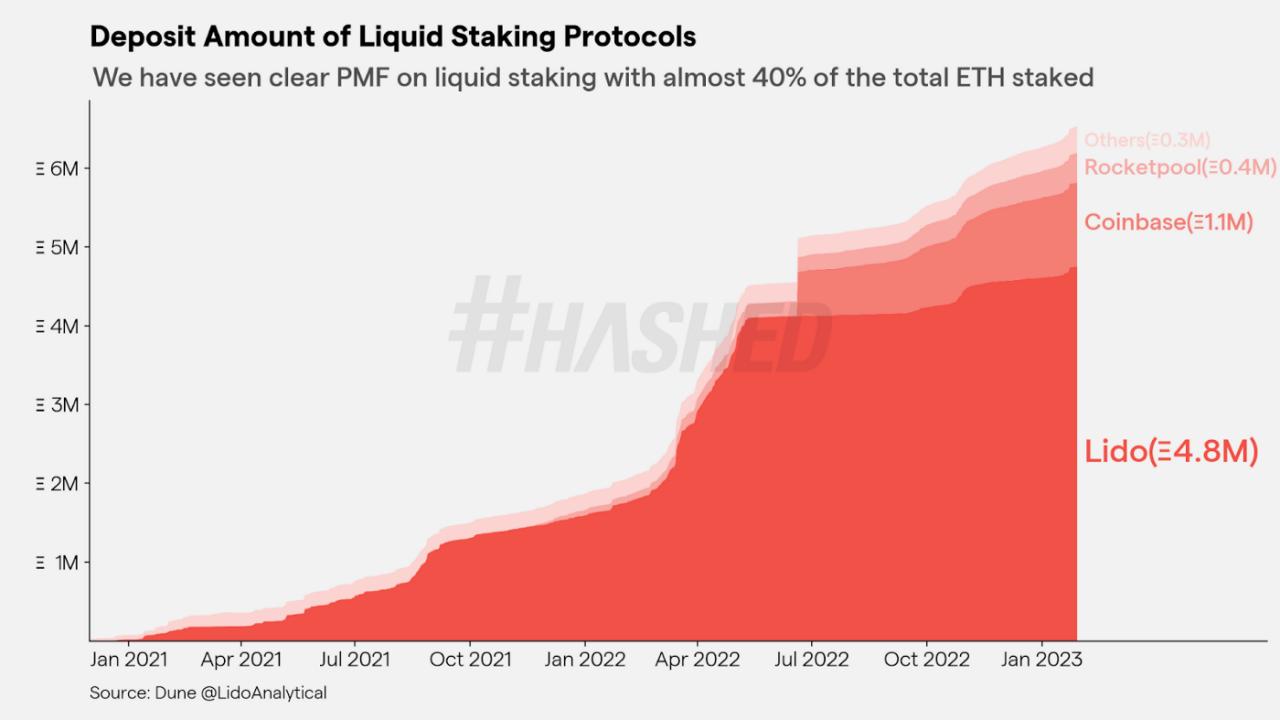
Another significant development in institutional finance is the growth of enterprise-level liquid staking, driven by the expansion of the LSD (liquid staking derivatives) sector. Companies like Alluvial are establishing enterprise-level liquid staking standards that connect institutional capital with PoS blockchains. This allows token holders to stake their tokens and receive tokens that can be used as collateral, thereby enhancing capital efficiency. The effectiveness of demand for liquid staking has been proven by the expansion of this market, with the total token staking rate improving from 21% to nearly 40% within a year.
Over the past two years, decentralized lending has developed rapidly, but most lending models currently require over-collateralized debt positions, leaving on-chain borrowers lacking access to universal credit opportunities. The DeFi space has become quite complex, with a steep learning curve, and is fragmented across multiple dApps and infrastructures, making it difficult to manage positions and generate sustainable yields. The bear market has revealed that yield farming cannot be sustained, and the rise of unsecured P2P lending is seen as a more sustainable source of yield. On-chain unsecured lending offers transparency, allowing guarantors to actively lend. Projects like Maple Finance and Goldfinch are actively working to provide capital to real-world institutional enterprises in a decentralized manner.
However, the DeFi space is not without challenges. The lack of clear regulations for cryptocurrencies is a major uncertainty for the industry. If the industry can drive iterative progress in on-chain tokenization and securitization with clear guidelines, it would greatly benefit the sector and open up broad possibilities for genuine, cash-generating activities.
Overall, we believe that institutional development is an inevitable progression for DeFi, while CeFi will continue to solidify its position. Traditional financial institutions are expected to experiment more with mature DeFi protocols like MakerDAO, AAVE, and Centrifuge. Additionally, a significant number of startups are expected to focus on enabling traditional financial institutions to enter the cryptocurrency market in a regulatory-compliant manner. This characteristic has the potential to create a larger financial layer, especially in emerging markets where millions of entrepreneurs are denied access to the financial system.
10: Emerging Markets Led by India Will Rise, Challenging the U.S. Dominance in Innovation and Open Source
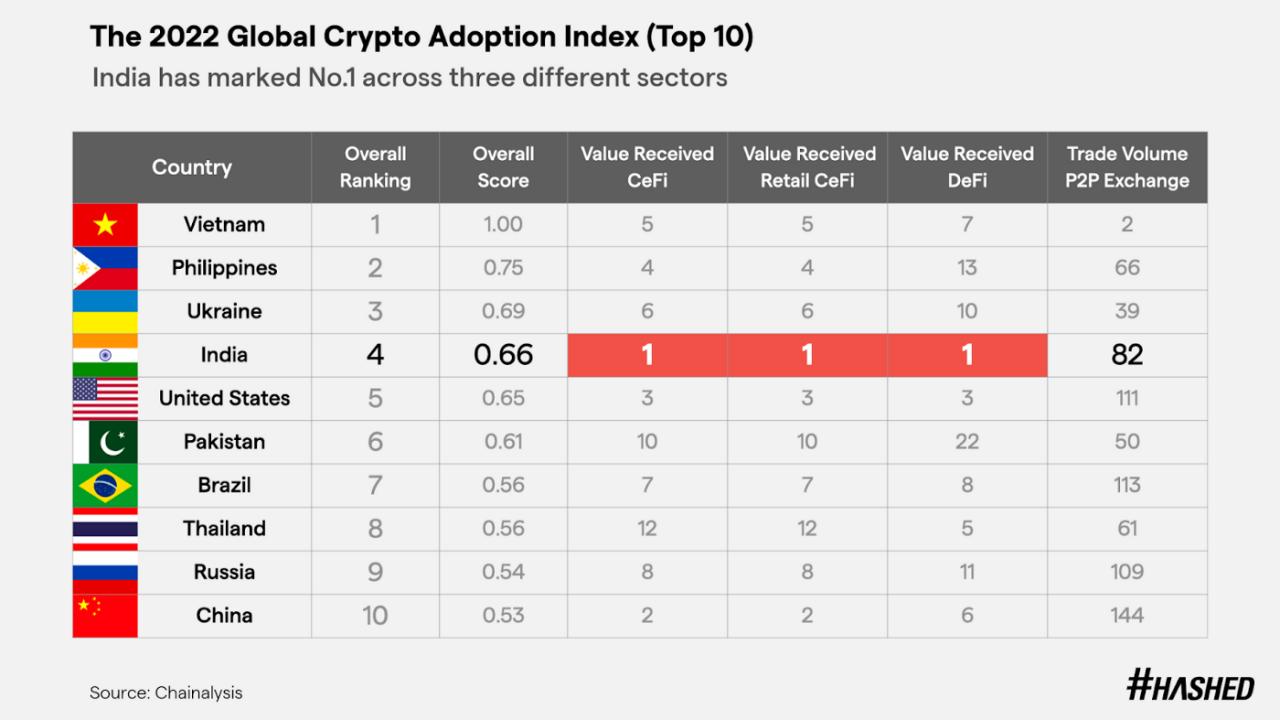
The cryptocurrency space is witnessing a continuous influx of new participants, particularly in emerging markets like India. According to Chainalysis's 2022 Global Crypto Adoption Index released last September, India leads in both centralized and decentralized transfer amounts, showing significant levels of cryptocurrency adoption among emerging economies. At the same time, from the vendor perspective, the U.S. has long been the center of global blockchain innovation, but the rapid technological advancements occurring in emerging countries represented by India are now posing a challenge to the U.S.
Over the past decade, India has developed into a tech innovation hub and is considered one of the leading sources of tech talent in the world. With over 3,500 engineering colleges producing more than 1.5 million engineering graduates annually](https://www.business-standard.com/podcast/education/which-states-produce-india-s-engineering-workforce-122093000085_1.html), India is set to become the world's largest software developer base, surpassing the U.S. by 2024. Moreover, this talent pool is no longer just executives for multinational companies, but is becoming high-value roles in innovation.
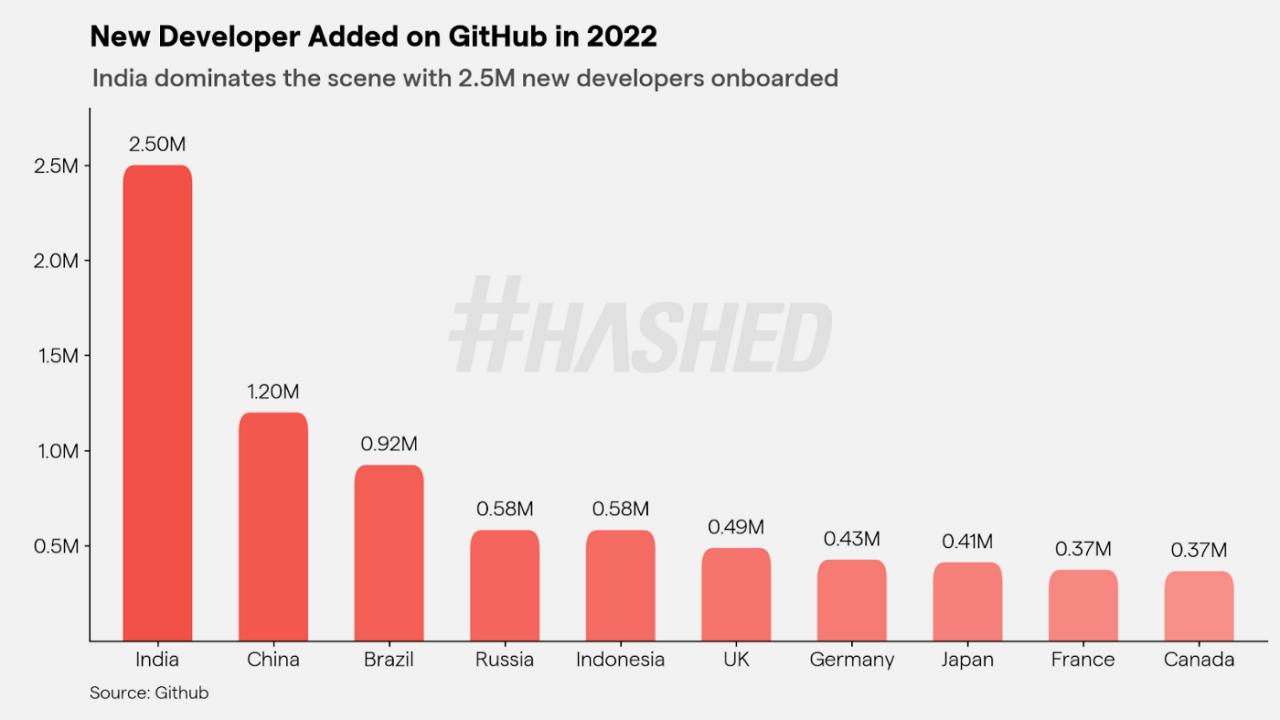
Additionally, in terms of open-source contributions, India is witnessing the fastest growth globally, with 9.7 million developers on GitHub, second only to the U.S. In 2022 alone, 2.5 million new users from India joined GitHub.
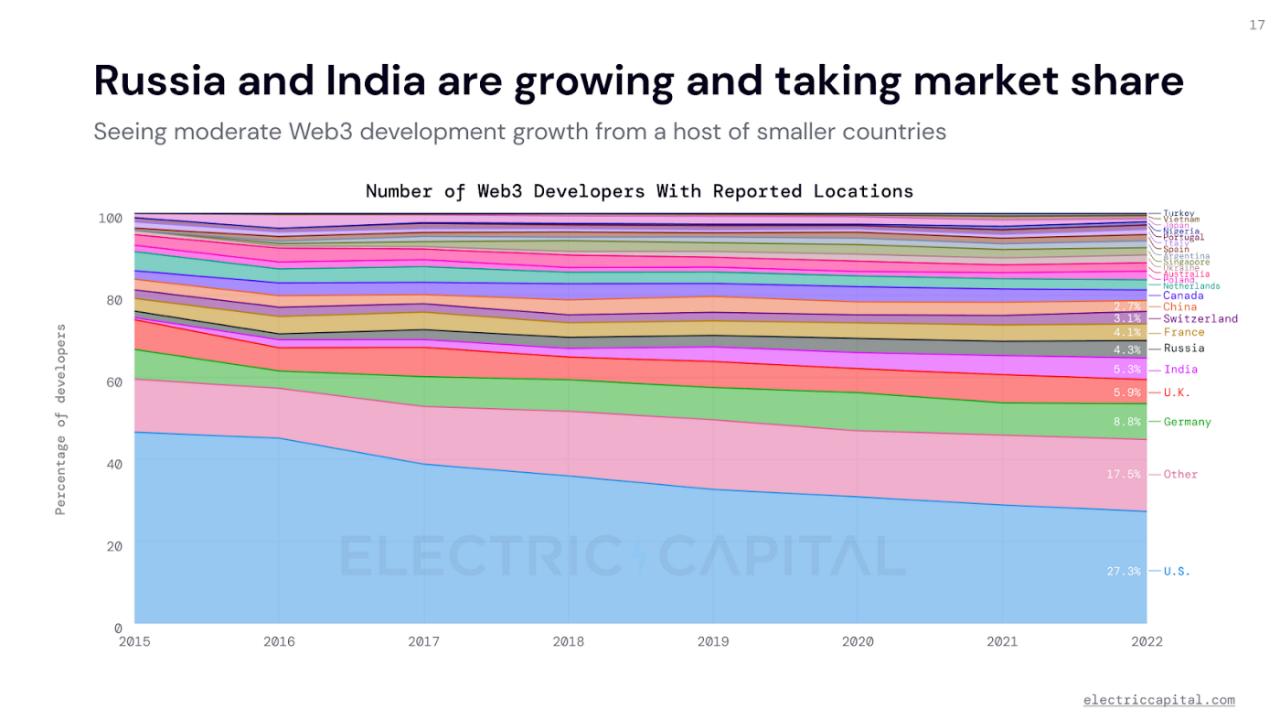
The biggest beneficiaries of this tech talent pool are the "Software as a Service" industry. It is predicted that India's SaaS industry will grow 25 times over the next decade, reaching $50-70 billion. Indian founders have delivered several globally recognized SaaS products and developer tools, including Freshworks, Zoho, Hasura, and Postman. With the right ecosystem support, India could also lead the next wave of innovation in the emerging blockchain world. According to the 2022 Developer Report, as the U.S. market share of Web3 developers continues to decline, India has steadily increased its market share to over 5% in a relatively short time and has already ranked among the top four globally in terms of the number of Web3 developers.
India's SaaS sector has seen exponential growth and activity, with over 500 former employees from Indian SaaS companies becoming entrepreneurs. This trend continues in the blockchain infrastructure space, as some founders have spun out from Web3 companies to start their own ventures. Early employees from leading Web3 projects in India, such as Polygon, have begun establishing blockchain infrastructure projects.
The evolution of SaaS and infrastructure in the blockchain space may reflect the journey of India's SaaS revolution, albeit at a much faster pace due to low costs, technical proficiency, a large English-speaking talent base, improved technological infrastructure, software-first approaches, and the modular nature of cryptocurrencies, along with COVID-accelerated digital GTM trends.
These factors may position India as the center of the blockchain infrastructure movement, where founders will build products across horizontal and vertical domains. We will watch closely how these innovative Web3 projects from India navigate short-term volatility while demonstrating long-term growth.
 Cảnh báo rủi ro
 Cảnh báo rủi ro