Dogecoin has become popular, and people are reminded of its dad and mom

 The past and present of Dogecoin: Why did the founders abandon it?
This article was published on Deep Tide, authored by Mark Serrels.
Dogecoin has exploded, rising over 800% in 24 hours, with a market cap nearing $10 billion, landing in the top ten cryptocurrencies.

This cannot be described as madness; if I were to add an adjective, let me curse, it’s really f***ing crazy.
But let’s calm down; we don’t want to talk about prices. Setting prices aside, we hope readers can take a moment to reflect on the story behind Dogecoin: its birth, why it rose, and why its creators ultimately distanced themselves from it, even turning against it?
The story of Dogecoin brought tears to my eyes while writing, and we hope it prompts you to think about cryptocurrency, social networks, and what you truly want.
Let’s begin.
On June 22, 2014, Jackson Palmer, who called himself an "ordinary geek," was at the NASCAR event held at Sonoma Raceway in California. He was a twenty-something Australian with no interest in racing.
He surveyed the scene.
Beneath him was a massive crowd and the overwhelming roar of engines. Racing towards him at high speed was the high-performance car #98 Moonrocket, which was no different from the other cars on the track, except for one key detail.
On the hood was a dog, a Shiba Inu, which became famous in the Doge meme that went viral in 2013.
It read: "DOGECOIN" in capital letters, with "digital currency" written below.
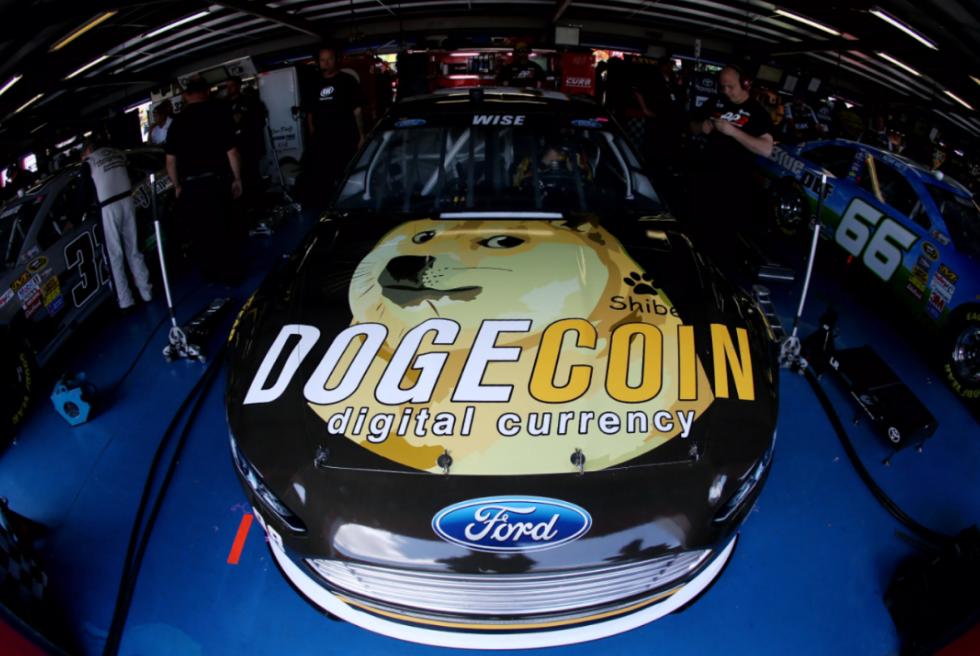
Palmer described the situation at the time with words like "crazy," "surreal," and "madness."
Dogecoin was originally just a tweet he made, and now it had become a cryptocurrency that was worth something in the real world. Six months later, he looked at a joke he had casually made, which somehow manifested into something tangible, a Dogecar flying down the track.
It reminded Palmer of how crazy this world is.
This is the story of Dogecoin, a joke that became too real to escape.
1. The Birth of Dogecoin
Dogecoin is a cryptocurrency that, like Bitcoin, enables peer-to-peer transactions on a decentralized network.
One important distinction is that Bitcoin is the original proof of concept for blockchain, groundbreaking in its own right. Some believe Bitcoin is a technology that could change the world, potentially altering the way currency operates in the 21st century.
Dogecoin is a derivative digital currency featuring an image of a Shiba Inu.
Adrian Lee, a senior finance lecturer at the University of Technology Sydney, said, "I’m puzzled as to why Dogecoin has such a high value."
At one point, Dogecoin was valued at $2 billion, which is hard to comprehend, and now it’s nearing $10 billion, making it even more difficult to understand.
"Dogecoin is an easily replicable coin," Lee said, "I don’t know how it distinguishes itself from Bitcoin. I just think it has to do with the timing of its creation."
"And the dog."
If you’ve been surfing the internet over the past decade, you might have heard of the Doge meme. The iconic meme expresses its inner monologue with comic-style captions: "Such scare," "So noble," "Wow!"

In 2013, as this internet meme was nearing its peak, Palmer, a marketer from one of the world’s largest tech companies in Australia, made a joke combining two of the hottest topics on the internet: cryptocurrency and Doge. It was a joke about the bizarre world of various derivatives of cryptocurrency and Bitcoin.
"Invest in Dogecoin," Palmer tweeted, "I’m pretty sure it’s the next big thing."
This tweet garnered a lot of attention.
For laughs, Palmer decided to keep the joke going. He bought the domain Dogecoin.com and uploaded a photo of the Shiba Inu on a coin.
He left a note on the website. If you want to make Dogecoin a reality, please contact me.
2. The Bell Tolls
On the other side of the world, Billy Markus, a software engineer at IBM obsessed with video games, saw Palmer’s message. He had just completed "Bells," a project he had been working on in his spare time.
Bells was a cryptocurrency named after the currency used in the Nintendo game "Animal Crossing." It was 2013, during the initial cryptocurrency gold rush. Markus saw that Bitcoin’s code was open-source, and he decided to spend a weekend doing something quirky. He tried to create his own cryptocurrency for "fools."
Bells was strange; the main difference from regular cryptocurrencies was its rewards: they were completely random. If you mined Bitcoin with a decent home computer, the rewards were consistent.
If you mined Bells, you wouldn’t know if the reward was one Bell or 500 Bells.
This was because Bells wasn’t meant to be serious; it was a video game-based digital currency telling the story of animals living in a village going fishing together.
The cryptocurrency community didn’t really get the joke.
"People were just smashing it," Markus laughed, quickly realizing that there was little overlap between crypto enthusiasts and gamers.
"I thought to myself, I’m retired now. I don’t need to do this anymore."
But then Markus read Palmer’s message on dogecoin.com, and that was the moment he decided to come out of crypto retirement.
3. Ctrl + F Bitcoin
When Palmer didn’t immediately respond to Markus’s offer to help build Dogecoin, he started working anyway.
"Dogecoin," Markus said, "went from seeming interesting to actually doing it, took about three hours. Creating a new cryptocurrency is almost trivial."
It was a search-and-replace job.
Ctrl+F 'Bitcoin', replace with 'dogecoin'.
Markus admitted that he found large chunks of code in Bitcoin’s source code completely incomprehensible, but he knew enough to change some core elements for Dogecoin.
For example, Markus created 100 billion Dogecoins (instead of Bitcoin’s 21 million) and made them easier to mine (Dogecoin was nearing depletion, while Bitcoin’s final coin won’t be mined until 2140).
He changed the font (of course to comic font) and replaced every mention of "mine" with "dig" (because dogs don’t mine, they dig…).
Then, during his lunch break, Markus launched Dogecoin.
4. The Lightning Growth of Dogecoin
Pre-mining, the act of hoarding cryptocurrency before releasing it to the public, is something almost every serious cryptocurrency launch does to make money.
But Markus and Palmer didn’t pre-mine any Dogecoin because they didn’t intend to seriously launch a cryptocurrency.
"We thought it was a big joke that would die off," Palmer laughed.
According to Markus, Palmer didn’t even know how to mine cryptocurrency.
Markus had a powerful gaming computer with two graphics cards, so he officially became the first person to mine Dogecoin. But considering the nature of mining (it gets harder over time), Billy’s computer was unable to mine Dogecoin after about five minutes.
Markus split what he mined with Palmer, and that was it. Both ended up with about $5,000 worth of Dogecoin.
And that was all the Dogecoin they had.
In the online crypto circles, Dogecoin quickly gained popularity. Posts on forums spread rapidly, and the name Dogecoin echoed in the dark corners of the internet.
But it’s almost certain that Reddit was the main driving force behind Dogecoin’s rapid rise to crypto stardom. The Dogecoin subreddit exploded almost immediately, bringing with it the infrastructure needed for any cryptocurrency to succeed: mining pools, services.
"It moved at lightning speed," Markus explained. "Within minutes, we thought, 'Wow, this is something we can’t control.'"
But it was Reddit’s "tip bot" that propelled Dogecoin into the stratosphere.
If a user posted something like "Hey, 'dogebot' tip this person 5 Dogecoins," that Reddit user would automatically receive 5 Dogecoins. People were sending Dogecoins back and forth, a feel-good movement that cost almost nothing in the real world.
"I loved it," Markus said. "At the time, Dogecoin was worth nothing, but getting five Dogecoins felt better than getting two cents."
Reddit users continuously shared Dogecoin back and forth, expanding its user base and increasing its value as a cryptocurrency.
"Almost everyone using Reddit had Dogecoin," Palmer said. "I think that was key to its success."
5. The Power of Charity
In January 2014, while Palmer was at a local bar in Sydney, having a few drinks, his phone began to buzz.
Earlier that evening, Palmer and the Dogecoin community brainstormed a ridiculous idea (but a brilliant one).
The Jamaican bobsled team had qualified for the Winter Olympics for the first time in a decade, but they didn’t have enough money to attend. As a fan of the comedy "Cool Runnings," Palmer and the Dogecoin team decided to do something.
They posted a Dogecoin address on the subreddit and asked for donations. A few hours later, they raised $25,000.
At that point, Palmer’s phone started vibrating.
"I thought, I need to get back to the computer quickly," Palmer laughed.
So Palmer and his friends stumbled back home from the bar, grabbed six packs of beer, and started figuring out how to send 26 million Dogecoins to the Jamaican bobsled team.
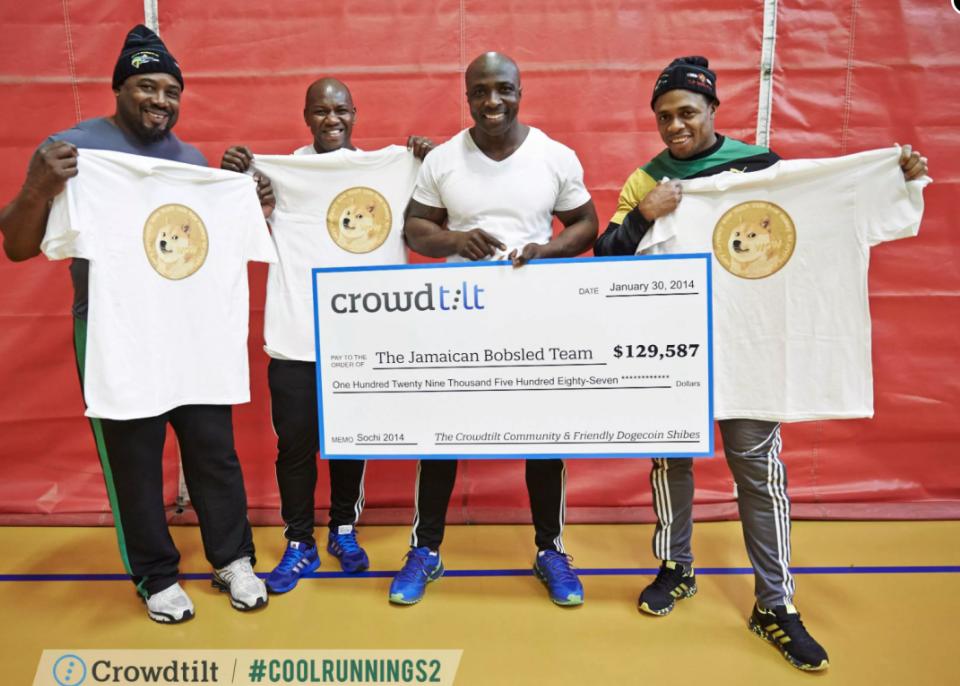
This was a gesture symbolizing the early spirit of Dogecoin.
In Markus’s words, they were allergic to the word "investment." Both Palmer and Markus donated all their Dogecoins to these large charitable initiatives: they helped build wells in Kenya and raised funds to train assistance dogs for children with autism.
"We wanted to create some charitable power," Palmer explained.
But as the community grew, it became difficult to maintain the original spirit that initiated Dogecoin. People began to care about Dogecoin’s price. They were literally and symbolically investing in it.
And that made Markus uneasy.
"I don’t mind someone spending ten bucks to get some Dogecoin," Markus said. "Like buying a movie ticket or something, that’s fun.
"But when someone puts in $20,000? That makes me very, very uncomfortable."
Markus began to clash with community members. For him, Dogecoin was still a "fool’s" cryptocurrency, but here it had inflated into a currency people were trading with real money. To him, Dogecoin was a silly thing that should remain silly. Many in the community disagreed.
Eventually, he had enough.
"I thought, 'Well, this is stupid; I don’t want to be the leader of a cult.'"
Markus decided to walk away from Dogecoin.
6. Moolah
Moolah pushed Dogecoin to the brink of danger.
Palmer described it as "the PayPal of cryptocurrency," and from the start, Palmer was very cynical.
Moolah was run by a man who called himself Alex Green, a Brit aiming to help people buy and sell Dogecoin through a cryptocurrency exchange, and they infiltrated the Dogecoin community with astonishing efficiency.
Green initially gained favor by distributing Dogecoins in exchange for votes of approval on the Dogecoin Reddit forum. He was also generous with community charitable efforts, donating $2,500 to cancer charities or $3,000 to help get the DogeNascar vehicle on the track.
The community loved it, and soon Moolah began hiring people from the Dogecoin community for key positions in the company.
"Green started building his business on top of Dogecoin," Palmer said.
Markus watched from a distance, not a fan.
Despite stepping back from the daily operations of Dogecoin, Markus attended a Dogecoin conference partly organized by Palmer. He wanted to catch up with some old gang members. By chance, he encountered representatives from Moolah, who were drinking $200-a-bottle Cristal in a bar, and they poured Markus a glass.
"I felt really uncomfortable," Markus recalled. "I said, no matter what happens here, I just don’t want to be involved."
"I just handed the glass to someone else."
Many key figures in the Dogecoin community shared Markus’s skepticism, especially Palmer, who had been cautious about Moolah from the start. But when concerns were raised, they were mostly silenced by a community that was receiving free currency.
Later, Moolah began soliciting investment funds from the Dogecoin community, and many people donated Dogecoins. Why not donate? Moolah had been generous in the past, and it made sense to return the favor.
Moolah received over $300,000 in investments from the Dogecoin community, in three rounds of funding.
Then everything collapsed.
A few months later, in October 2014, Moolah went bankrupt. The Dogecoin community ultimately lost every penny they invested.
Things got worse. A former girlfriend of Green contacted Palmer and other members of the Dogecoin community. She revealed that Green’s real name was Ryan Kennedy, and he was notorious in the UK anime community for running a company very similar to Moolah.
Suddenly, the British police got involved. After a three-year investigation, Kennedy (real name) faced multiple charges of fraud and money laundering. At a preliminary hearing at the Bristol Crown Court in September 2017, he denied all charges.
But Kennedy had to answer for more serious and disturbing crimes. In May 2016, he was tried and convicted of three counts of rape against three women. According to media reports, he smiled as he was led away from the courtroom.
"Kennedy made his victims believe they had no choice but to comply with his demands," senior prosecutor Ben Sampson said. "He emotionally, sexually, and physically abused them, placing his needs above all else."
Ryan Kennedy is currently serving an 11-year sentence in a UK prison.
7. Remember This Moment
In the months following Moolah’s bankruptcy, Palmer struggled. He distanced himself from Dogecoin, from the community to the entire cryptocurrency space.
"From a mental health perspective, the energy I put in wasn’t helping me," he explained.
Like Markus, Palmer also decided to walk away from Dogecoin.
Palmer has since re-emerged on the cryptocurrency stage. He now runs his own YouTube channel. He has no interest in launching another cryptocurrency and has no connection to Dogecoin. He describes himself as a crypto skeptic, saying, "Cryptocurrency is a solution to a problem."
What problem does Dogecoin solve?
"I don’t think it solves any problems," he said. "If anything, it exists as an educational tool. It’s a reminder that we can’t take this stuff seriously."
"I hope people see Dogecoin and say, I’m not going to put all my money into this. Because right now, a coin with a dog on it is worth $500 million."
Aside from occasional donations, neither Palmer nor Markus holds any significant amount of Dogecoin.
Back in January 2014, Markus posted a message on the Dogecoin subreddit; praising the community and its achievements. A year later, after the Moolah disaster, it had been reshared. Trying to recapture the spirit of Dogecoin’s inception.
It was a timely reminder of what we had lost.
"I can’t know how fleeting all this is," Markus wrote two months after creating Dogecoin.
He wrote about how proud he was—of the community, for the incredible work they did raising funds for various charities. He thanked everyone for their incredible work.
"I hope everyone remembers this moment," he said. "My hope is that Dogecoin will always be remembered deeply by people."
 Risk warning
 Risk warning



Popular articles